
Is Ayahuasca safe? While it’s a complex question, many find that, for most healthy individuals, the brew itself isn’t harmful. Its safety largely depends on your physical health, mental state, and—most importantly—the environment in which you consume it.
The Acknowledged Risks of Ayahuasca Use
When you ask if Ayahuasca is safe, you’re touching on a complex topic. This isn’t like taking an aspirin where the side effects are well-defined. The safety of an Ayahuasca journey is a delicate dance between your biology, your psychology, and the environment you’re in.
The first thing to understand is the difference between an intense, challenging experience and a genuinely dangerous one. Powerful emotional breakthroughs, deep introspection, and even physical purging (like vomiting or diarrhea) are standard parts of the process. While they can be incredibly uncomfortable, these things aren’t usually dangerous in themselves. In many traditions, they’re seen as a vital part of the cleansing.
Distinguishing Expected Effects from Dangers
The real risks appear when specific contraindications are ignored. This isn’t about Ayahuasca being “good” or “bad.” It’s about whether it’s the right tool for the right person in the right context. The biggest risks don’t come from the brew itself, but from how it interacts with pre-existing health conditions or other medications.
To get a clearer picture, let’s look at the key elements that influence the safety of an Ayahuasca experience. The table below breaks down the main factors you absolutely need to consider.
Summary of Key Ayahuasca Safety Factors
| Safety Factor | Description | Importance |
|---|---|---|
| Medical Screening | A thorough review of your physical health, including cardiovascular, neurological, and metabolic conditions. | Critical. Certain heart, liver, or neurological issues are absolute contraindications. |
| Mental Health History | An honest assessment of personal and family history of psychosis, bipolar disorder, or schizophrenia. | Critical. Ayahuasca can trigger or worsen these conditions in vulnerable individuals. |
| Medication Interactions | Checking for contraindications with prescription drugs, especially antidepressants (SSRIs, MAOIs), and other substances. | Critical. Can lead to life-threatening conditions like serotonin syndrome. |
| Facilitator Competency | The experience, training, and integrity of the person leading the ceremony. | High. A skilled facilitator manages the space, supports participants, and knows how to handle emergencies. |
| Set and Setting | Your mindset (“set”) and the physical/social environment (“setting”) of the ceremony. | High. A calm, supportive setting is essential for a positive and safe experience. |
As you can see, these factors are not just minor details—they form the very foundation of a safe journey.
“The core principle of Ayahuasca safety is that preparation and screening are everything. A journey that might be therapeutic for one person could be genuinely harmful to another if these critical steps are ignored.“
The Growing Need for Safety Awareness
As Ayahuasca travels from its Amazonian roots to the global main stage, getting this right has never been more important. The practice is spreading far beyond the traditional cultural container that historically guided its use, which means the responsibility for safety now falls on providers and participants.
A detailed report on the globalization of Ayahuasca use found that over four million people from the Americas, Europe, and Australasia have consumed the brew. In 2019 alone, an estimated 820,000 people participated, and only 10% of them were from the Indigenous groups where the practice originated.
This massive surge in popularity makes it crystal clear: we urgently need clear, evidence-based information on how to approach this powerful medicine responsibly.
How Ayahuasca Actually Works in Your Body
To better understand Ayahuasca’s safety, you need to know how it affects your body. The experience doesn’t come from a single chemical, but from a synergistic partnership between two plants. This interaction is precisely what makes the journey possible, but it’s also where the most serious risks come from.
First, you have the leaves, typically from the shrub Psychotria Viridis. These provide DMT (dimethyltryptamine), a seriously powerful psychedelic. Here’s the catch: if you only ingested DMT, nothing would happen. An enzyme in your gut called Monoamine Oxidase (MAO) would break it down instantly, long before it ever reached your brain.
That’s where the second ingredient, the Banisteriopsis Caapi vine, comes in. It contains a special class of compounds called Monoamine Oxidase Inhibitors (MAOIs). The MAOIs from the vine effectively act as a key, unlocking the door and allowing the DMT to enter the bloodstream and work its magic.
Why the MAOIs Are So Important
This MAOI action is the key that unlocks the whole experience, but it also means you’re temporarily switching off a vital system in your body. MAO enzymes don’t just deal with DMT; they’re constantly working to regulate crucial neurotransmitters like serotonin, dopamine, and norepinephrine. They also process an amino acid called Tyramine, which is found in a surprising number of everyday foods.
When those enzymes are offline, your body can’t manage tyramine anymore. This is where things can get dangerous, and it’s something anyone considering Ayahuasca absolutely has to understand to stay safe.
The flowchart below gives you a bird’s-eye view of what goes into a safe Ayahuasca journey, all stemming from these fundamental biological facts.
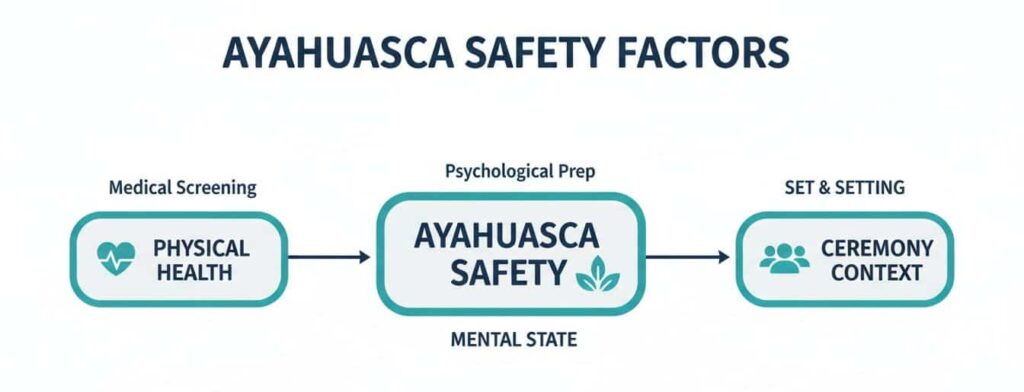
As you can see, your physical health, your mental state, and the ceremony setting are all intertwined. Ayahuasca’s unique pharmacology is the thread that connects them all.
Serotonin Syndrome and Hypertensive Crisis: The Two Big Risks
Putting your MAO enzyme system on pause creates two major, potentially life-threatening risks if you mix Ayahuasca with certain medications or foods.
Serotonin Syndrome: Many antidepressants, especially SSRIs, work by increasing the amount of serotonin floating around in your brain. If you combine them with an MAOI from Ayahuasca, your system can get completely flooded with serotonin. This is a very dangerous situation. Symptoms can start with agitation and confusion but can quickly escalate to a high fever, seizures, and in rare cases, can even be fatal.
Hypertensive Crisis: This is a sudden, extreme spike in blood pressure that can trigger a stroke or heart attack. It happens when someone who has taken an MAOI eats foods high in Tyramine. Because the body can’t break the Tyramine down, it builds up and causes blood vessels to clamp down hard.
“The bottom line is this: The risks aren’t just theoretical. Mixing Ayahuasca with the wrong foods or medications can have devastating medical consequences. This is exactly why rigorous screening and careful preparation are non-negotiable.”
To steer clear of these dangers, a strict preparatory diet—often called the “Dieta”—is absolutely essential. This means cutting out all foods that are rich in Tyramine.
Common High-Tyramine Foods to Avoid:
Aged cheeses (like cheddar, blue cheese, gorgonzola)
Cured or smoked meats and fish (salami, pepperoni, bacon)
Fermented foods (sauerkraut, tofu, miso)
Overripe fruits
Red wine and beer on tap
It’s just as critical to be 100% honest with your facilitator about any and all medications you are taking. The Harmala alkaloids behind the MAOI effect are complex, and you can learn more about these beta-carbolines and how they work. Getting your head around this basic pharmacology is the first real step in making an informed decision about whether Ayahuasca is a safe choice for you.
Navigating the Physical and Psychological Terrain
To really answer the question “is Ayahuasca safe?”, we have to be honest about the hurdles, both physical and psychological, that can come up. The experience can be incredibly profound, but getting there often means walking through some uncomfortable—and sometimes downright difficult—territory. Knowing what to expect is crucial for making a truly informed choice.
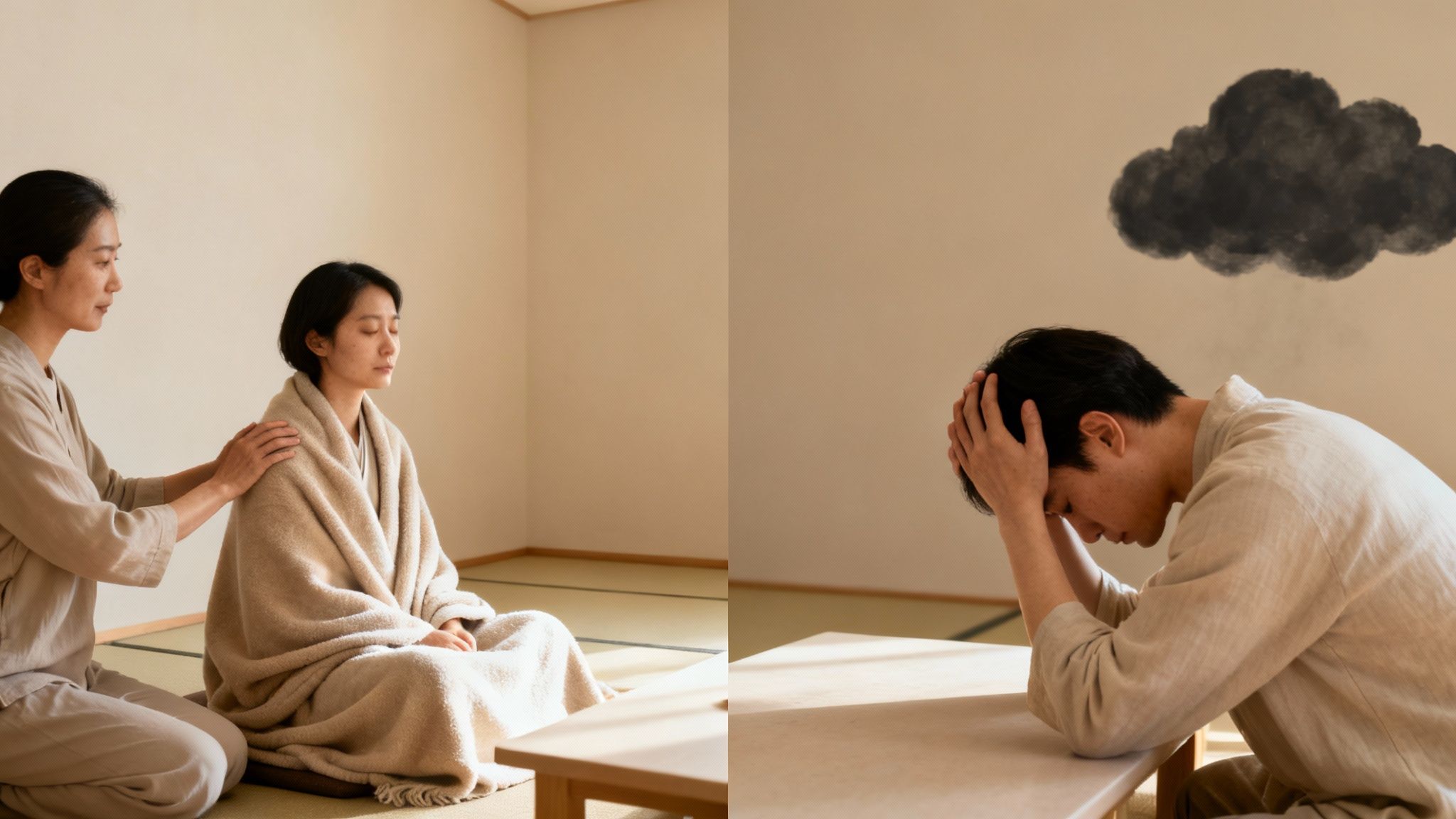
The most famous physical effect is, of course, the purge. Nausea and vomiting—often called “La Purga”—are considered a standard part of the process for most people. It’s unpleasant, no doubt about it, but for a healthy person, it’s not typically a medical concern.
You might also experience diarrhea, a temporary spike in blood pressure, or a faster heart rate. These are common reactions that usually fade as the brew wears off. Still, this is exactly why a proper medical screening, especially for any heart conditions, is crucial. If you’re curious about this part of the process, you can learn more about why vomiting is a common part of the Ayahuasca experience.
The Spectrum of Psychological Risks
While the physical process usually ends quickly, the psychological experience can be significantly more complex and prolonged. The Ayahuasca journey is deeply personal and utterly unpredictable. It can dredge up emotions, memories, and old wounds you thought were long buried, and it does so with incredible intensity.
For some, this can feel like heightened anxiety, unease, or fear. People often label these moments a “bad trip,” but in a well-run ceremony, they’re seen as opportunities to face your own shadows. This is where a skilled facilitator is worth their weight in gold; they hold the space so you can navigate that inner storm without getting lost in it.
It’s important to understand the difference here:
A Challenging Experience: This is an intense, difficult journey that feels tough in the moment but ultimately leads to a breakthrough. It’s hard work, but you come out the other side with important insights and valuable lessons.
A Harmful Experience: This is when the journey destabilizes someone psychologically, potentially triggering a latent mental health issue or causing lasting distress that doesn’t resolve.
The line between a challenge and harm often comes down to two things: your personal vulnerabilities and the quality of the support you have during and after the ceremony.
What the Data and Drinkers Say
Fortunately, we have some solid research to give us a clearer picture. A huge Global Ayahuasca Survey of over 10,000 people found that while physical side effects are common, they’re rarely serious.
“The study showed that while 69.9% of people reported physical issues (mostly nausea), only 2.3% actually needed medical help for them. Even more telling, 55.9% reported adverse mental health effects, but a massive 88% of them later saw those difficulties as a key part of their positive growth. You can dive deeper into the findings of this comprehensive survey on Ayahuasca safety.“
This information really gets to the heart of it: for most, even the toughest moments are eventually seen as beneficial. But that doesn’t erase the very real risks for a small number of people, especially those with certain mental health predispositions.
The Risk of Activating Latent Psychosis
This is the most serious psychological risk to consider:Ayahuasca can potentially trigger a psychotic episode in someone who is already vulnerable. For anyone with a personal or immediate family history of schizophrenia, bipolar disorder, or other psychotic disorders, the brew’s powerful effects can be incredibly destabilizing.
This isn’t something to take a chance on.. For these individuals, the experience can push them far beyond therapeutic difficulty and into a genuine psychological crisis that can last long after the effects of the medicine have dissipated. This is precisely why a thorough and honest screening process is the absolute cornerstone of responsible Ayahuasca facilitation. It’s there to protect those who could be seriously harmed.
When Ayahuasca is a Bad Idea: Critical Safety Exclusions
Ayahuasca has a powerful reputation for healing, but it’s crucial to understand that it is not for everyone. Answering the question “is Ayahuasca safe” starts with a hard look at who should steer clear entirely.
For some people, the risks are simply too high. This isn’t a matter of spiritual readiness or personal courage; it’s about straightforward biology and brain chemistry. The potent compounds in the brew can clash dangerously with certain pre-existing health conditions, creating a recipe for harm rather than healing. Full transparency about your health history is the single most important safety measure you can take.
Serious Medical Conditions
Certain physical health issues create a high-stakes environment for an Ayahuasca journey. The brew puts significant stress on the body, especially the cardiovascular system, making it a no-go for anyone with a history of heart trouble.
These conditions are widely considered absolute reasons to avoid Ayahuasca:
Heart Problems: This includes uncontrolled high blood pressure, a history of heart attack, heart disease, or stroke. The MAOI in Ayahuasca can cause a sudden, sharp spike in blood pressure—a potentially catastrophic event for a fragile cardiovascular system.
Severe Liver or Kidney Disease: Your liver and kidneys are responsible for processing and clearing the compounds from your body. If these organs are compromised, the alkaloids can accumulate to toxic levels.
Epilepsy or Seizure Disorders: Ayahuasca stimulates intense neurological activity. For someone prone to seizures, this could lower the seizure threshold and provoke an episode.
It’s vital to discuss these and any other serious medical diagnoses with a potential facilitator. This isn’t just a formality; it’s a foundational safety step. A trustworthy facilitator will always prioritize your well-being and will not hesitate to turn you away if the risk is unacceptable.
Hard Lines on Mental Health
Just as important are the psychological red lines. The sheer intensity of an Ayahuasca experience can be profoundly destabilizing for individuals with a predisposition to certain mental health disorders. This is where some of the most serious psychological risks lie.
“The most significant psychological danger with Ayahuasca is its potential to trigger latent psychosis. For anyone with a personal or close family history of psychotic disorders, the experience can act as a switch, pushing them into a crisis that could last long after the medicine has worn off.“
This is why a personal or immediate family history of the following conditions is a firm contraindication for drinking Ayahuasca:
Schizophrenia: A disorder defined by psychosis.
Bipolar Disorder: The experience can mimic or trigger manic episodes.
Psychosis: Any personal history of psychotic episodes or breaks from reality.
The deep ego-dissolution and powerful visions common in these experiences can easily overwhelm a vulnerable mind. This is a risk that simply isn’t worth taking. To learn more, our guide on figuring out if Ayahuasca is right for you offers a deeper look at this.
To make this crystal clear, here’s a checklist of conditions that pose a serious risk. If anything on this list applies to you or your immediate family, Ayahuasca is likely not a safe path for you.
Medical and Psychological Contraindications Checklist
| Condition Category | Specific Examples | Reason for Contraindication |
|---|---|---|
| Cardiovascular Health | Uncontrolled High Blood Pressure, Heart Disease, History of Heart Attack or Stroke, Aneurysm, Heart Murmurs | Risk of hypertensive crisis (a severe, dangerous spike in blood pressure) due to MAOI interaction with tyramine and body chemistry. |
| Psychiatric History | Schizophrenia, Bipolar Disorder (especially Type 1), Psychosis, Borderline Personality Disorder (severe cases) | High risk of triggering latent psychosis, mania, or severe, prolonged psychological destabilization. |
| Neurological Health | Epilepsy, Seizure Disorders, Brain Tumors, History of Head Injury with neurological complications | Ayahuasca’s intense neurological stimulation can lower the seizure threshold and trigger an episode. |
| Organ Function | Severe Liver Disease (e.g., Cirrhosis), Severe Kidney Disease | Impaired ability to metabolize and clear the alkaloids from the body, leading to potential toxicity. |
| Metabolic Disorders | Type 1 Diabetes (unstable), Pheochromocytoma | The experience can dramatically affect blood sugar and hormone regulation, creating a risk of medical emergency. |
| Pregnancy/Breastfeeding | Currently Pregnant or Breastfeeding | The effects of Ayahuasca alkaloids on fetal development and infants are unknown and pose an unacceptable risk. |
This list is a starting point, not an exhaustive encyclopedia. It’s a tool to help you begin an honest conversation with yourself and any potential facilitator about your personal health landscape.
What the Research Says About Risk
Modern science is beginning to validate what traditional practitioners have known for centuries. The Global Ayahuasca Survey, a landmark study, identified several factors linked to a higher chance of negative experiences. These included pre-existing physical health problems and being of an older age at the time of the first ceremony.
More importantly, the research confirmed that context is everything. Unsupervised or poorly managed settings present a much greater danger than structured ceremonies led by experienced guides. Safety isn’t just about your personal health—it’s also about where you drink, who you drink with, and how the space is held. You can read more about these risk factors and their context in the scientific literature.
In the end, it boils down to two non-negotiable principles: radical self-honesty and vetting your facilitator. It’s your job to provide a full and truthful picture of your health. It’s the facilitator’s job to use that information to keep you safe.
Applying Harm Reduction and Best Practices
Knowing the risks of Ayahuasca is one thing. Actively managing them is another, and it’s where your power truly lies. This is the core idea behind harm reduction—a set of practical, real-world strategies designed to minimize potential dangers while maximizing the chance for a profound and beneficial experience.
This approach moves beyond a simple “good or bad” verdict. Instead, it asks a much more useful question: “How can this be done as safely as possible?” It’s not about trying to eliminate every single risk, which is impossible, but about taking deliberate, well-informed steps before, during, and after a ceremony. By embracing these best practices, you shift from being a passive passenger to being an empowered participant in your own journey.
The Critical Role of Screening and Preparation
A safe Ayahuasca experience begins long before you ever taste the brew. The groundwork is laid through absolute honesty and meticulous preparation, which together form the single most important safety filter you have.
Any responsible facilitator or retreat center will insist on a thorough medical and psychological screening process. This isn’t just a formality—it’s a massive green flag. Be ready to share your complete health history, including every medication or supplement you take, any past mental health struggles, and any family history of conditions like bipolar disorder or schizophrenia. Withholding information just to get accepted into a retreat is a dangerous gamble with your health.
Just as crucial is the preparatory ‘Dieta’. While this practice has deep spiritual roots, its modern function is a essential safety measure. Following the Dieta—which means eliminating Tyramine-rich foods and stopping specific medications—is what prevents a dangerous spike in blood pressure or the development of serotonin syndrome. Consider it more as crucial medical preparation rather than an optional ritual.
Evaluating the Facilitator and Setting
Once you’ve done your own part, the next layer of safety comes down to the person guiding the ceremony and the environment they’ve created. A facilitator’s job is so much more than just pouring a cup of medicine.
A genuinely qualified guide is a skilled space-holder. They know how to manage a group’s collective energy, offer quiet support during intensely difficult moments, and—critically—recognize the difference between a tough psychedelic journey and a genuine medical emergency.
“The quality of facilitation is probably the single biggest factor determining a safe outcome. An experienced, grounded guide creates a container of trust that allows people to surrender to the experience. In contrast, an inexperienced or negligent facilitator can easily turn a challenging but productive experience into one that is genuinely harmful.“
When you’re vetting a facilitator or retreat center, look for these key indicators of a safe, well-run operation:
Small Group Size: A manageable facilitator-to-participant ratio is essential. If a facilitator is trying to manage 20, 30, or more people on their own, there’s no way they can provide adequate support to everyone.
Clear Emergency Protocols: Ask them directly: What is the plan for a medical emergency? They should have a clear, rehearsed answer that includes how they get someone to a nearby hospital or clinic.
Experienced Support Staff: Seek out assistants who are both qualified and trained. Their role involves supporting individuals who face difficulties, thereby allowing the lead facilitator to maintain a consistent presence for the whole group.
Focused and Present Leadership: The facilitator should not be drinking a full dose of Ayahuasca along with the participants. Their focus must be entirely on the group’s safety and well-being, which is impossible if they are deep in their own process.
A truly safe setting feels calm, professional, and secure. It’s a space where you feel seen and cared for, not one that feels chaotic, disorganized, or cultish.
The Necessity of Post-Ceremony Integration
The real work doesn’t stop when the ceremony ends. In fact, it’s often just beginning. The insights, raw emotions, and buried memories that surface during an Ayahuasca journey can be staggering, and integration is the process of making sense of it all.
This is how you carefully weave the lessons from the experience into the fabric of your everyday life. Without a plan for integration, a profound experience can turn into lasting confusion, anxiety, or psychological distress. A responsible retreat won’t just send you on your way; they’ll offer structured integration support. This could look like follow-up video calls, group sharing circles, or referrals to therapists who specialize in this kind of work.
This post-ceremony care is what helps turn a powerful ceremony into lasting, positive change. It’s a vital part of the answer to “is Ayahuasca safe?” in the long run. By prioritizing these harm reduction pillars—screening, preparation, a safe setting, and integration—you give yourself the best possible chance to navigate this powerful medicine responsibly.
Choosing a Reputable Ayahuasca Retreat
Finding the right Ayahuasca retreat can be very challenging. As interest in Ayahuasca has surged, so has the number of places offering it. The catch? This world is almost entirely unregulated, meaning that ensuring your safety is your responsibility.
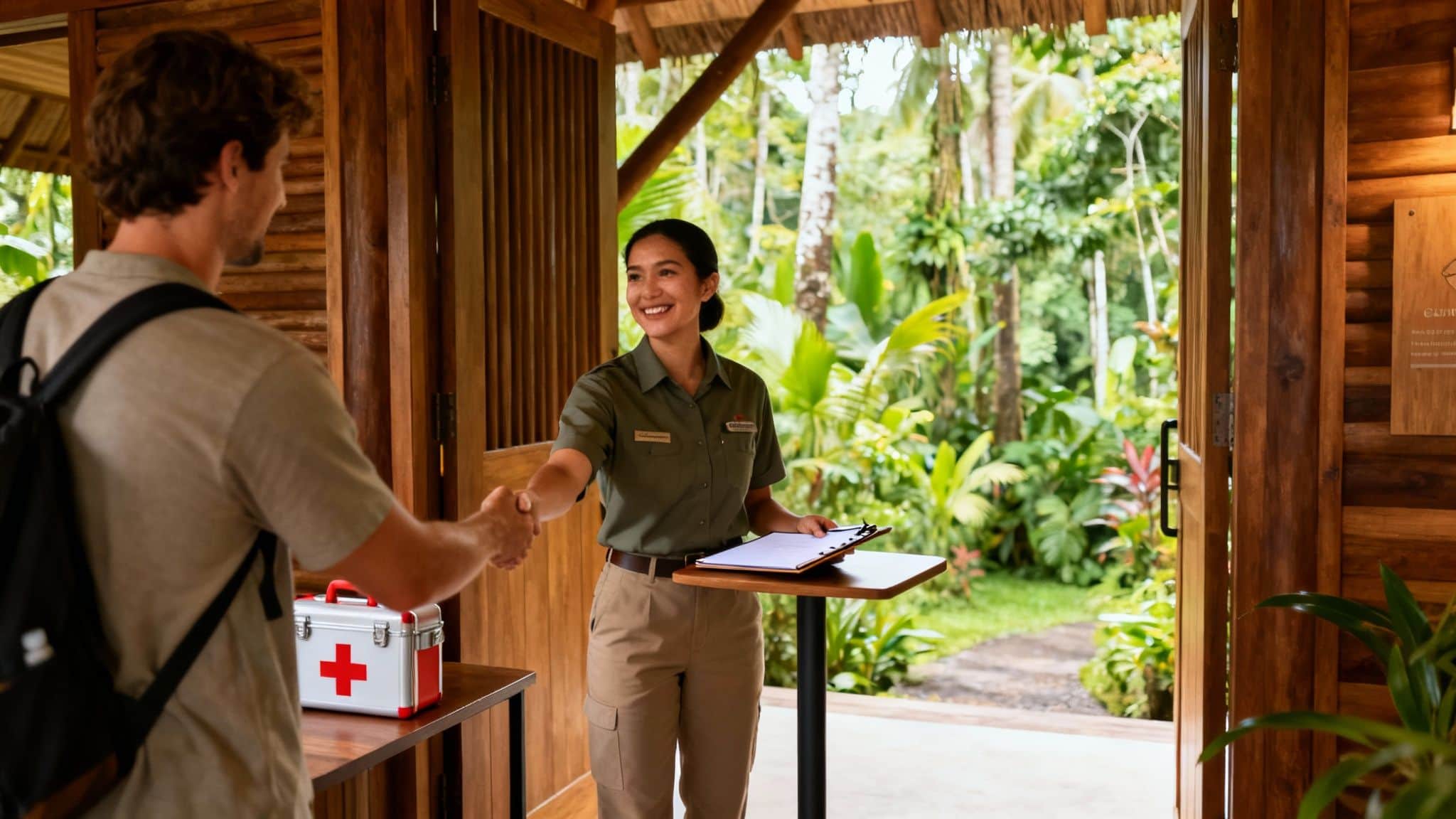
This is probably the single most important decision you’ll make in this entire process. A well-run retreat with experienced, ethical facilitators creates a secure container for what can be a profoundly healing journey. A poorly run one can, at best, be ineffective and, at worst, be genuinely dangerous.
Essential Questions to Ask Any Retreat
Before you consider putting down a deposit, you need to conduct your due diligence. Don’t feel bad about asking tough, direct questions—any reputable retreat will appreciate your diligence and provide clear, transparent answers.
Your main goal is to get a solid feel for their safety protocols, the depth of their experience, and their ethical compass. Here’s what you need to dig into:
What is your screening process? They absolutely must have a detailed medical and psychological intake form. If they don’t ask about your health history, what medications you’re on, or your mental health background, that’s a gigantic red flag. Walk away.
What medical support is available on-site? Find out if they have staff trained in first aid or, ideally, more advanced emergency medical response. Ask them point-blank: How far is the nearest hospital, and what is your exact plan if something goes wrong?
What is the facilitator-to-participant ratio? A safe ceremony is all about having enough support in the room. You’re looking for a ratio of about one facilitator or skilled helper for every 5-7 people. If you hear about one person trying to manage a room of 20 or more, they simply can’t provide the individual attention needed.
What is your integration protocol? The work doesn’t stop when the ceremony ends. A reputable retreat understands this and provides structured support for making sense of it all afterward. This could be group sharing circles, follow-up calls, or resources for finding integration therapists back home.
Think of these questions as your first line of defense. The quality of their answers will tell you everything you need to know about how seriously they approach the work.
Critical Red Flags to Watch Out For
Knowing what to look for is only half the challenge; you also need to know what to avoid. The unregulated nature of Ayahuasca tourism attracts a mix of deeply committed healers and, unfortunately, opportunistic or even predatory individuals. Keep your radar on for these warning signs.
“A provider’s primary responsibility is your well-being, not guaranteeing a specific outcome. Be extremely cautious of anyone who promises miraculous cures, downplays the risks, or pressures you to ignore your intuition.“
Here are some clear signs that are serious causes for concern:
Guarantees of Healing: No one can promise a specific result. Anyone claiming they can “cure” your depression or solve all your problems is selling snake oil.
Downplaying Risks: If a facilitator brushes off your concerns about medication interactions or your mental health history, they are not putting your safety first. This is a deal-breaker.
Lack of a Screening Process: A center that will take anyone with a credit card is operating negligently. A proper screening is non-negotiable for a safe experience.
Cult-Like Dependency: Watch out for facilitators who set themselves up as all-knowing gurus, demand unquestioning loyalty, or encourage you to cut ties with your friends and family.
Unclear Lineage or Training: A legitimate facilitator should have no problem talking about who they learned from, what tradition they practice, and the depth of their training. Vague answers are a bad sign.
Ultimately, choosing a retreat is a mix of diligent research and trusting your gut. By asking the hard questions and being aware of these red flags, you can dramatically increase your chances of finding a safe, supportive, and truly healing environment.
Common Questions About Ayahuasca Safety
When you’re exploring something as profound as Ayahuasca, it’s natural to have some very specific, important questions about safety. Let’s get right to some of the most common concerns people have.
Can You Die From Drinking Ayahuasca?
This is the big one, and it deserves a straight answer. Yes, deaths have occurred, but they are incredibly rare and almost always preventable.
When you look into these tragic cases, you find a pattern. The causes are typically undisclosed heart conditions, a dangerous mix with prescription drugs like antidepressants, or outright negligence from an unprepared or unqualified person leading the ceremony.
The brew itself isn’t considered toxic to a healthy person who has been properly screened. The key takeaway here is that safety isn’t about the plants, but the context. It all comes down to full medical transparency and having a truly competent team to guide you.
What Is the Ayahuasca Dieta?
You’ll hear a lot about the ‘Dieta’. Think of it as a set of dietary and lifestyle guidelines you follow in the days or weeks leading up to a ceremony. While it has deep spiritual roots, its most urgent purpose is purely medical.
The most critical part of the Dieta is avoiding foods high in a compound called Tyramine—things like aged cheeses, cured meats, and fermented soy products. The Ayahuasca vine contains a natural MAOI, and mixing it with Tyramine can cause a hypertensive crisis, which is a sudden, life-threatening spike in blood pressure. Adhering to the Dieta isn’t just tradition; it’s a non-negotiable safety measure.
How Long Should I Be Off Antidepressants?
Mixing SSRIs (the most common type of antidepressant) with Ayahuasca is a serious medical risk. It can trigger a potentially fatal condition called serotonin syndrome. There’s no single, official timeline that applies to everyone, but a widely accepted safety standard among experienced facilitators is to be completely off SSRIs for at least 4-6 weeks before a ceremony.
“This is absolutely crucial: You cannot and should not do this on your own. You must work with your prescribing doctor to create a plan to safely taper off your medication. Stopping antidepressants cold turkey can have severe consequences, and your doctor’s supervision is a mandatory part of this process.“
Disclaimer: The information provided on Ayahuasca.com is for educational purposes only and is not intended as medical advice, diagnosis, or treatment. Ayahuasca is a powerful traditional Amazonian medicine and may not be suitable for everyone. Always consult with a qualified healthcare professional before making decisions related to health, mental well-being, medications, or the use of Ayahuasca.