
Why Mexico Is a Top Destination for Ayahuasca Retreats
Ayahuasca retreats Mexico is a search that often starts with practical questions: Is it safe, what does it cost, and how do you choose a center? This guide walks through those questions so you can evaluate your options carefully.
When people think of ayahuasca, the Amazon jungle often comes to mind. But over the last decade, Mexico has quietly become a major hub for this profound healing work, and for good reason. It offers a unique combination of accessibility, stunning natural beauty, and a deep respect for healing traditions.
For many in North America and Europe, getting to Mexico is far simpler and less stressful than planning a multi-leg journey deep into the Amazon. This practical advantage means you can arrive more rested and ready to focus on your inner journey.
But convenience doesn’t mean compromise. Mexico’s own rich history of indigenous spirituality creates a powerful and welcoming space for plant medicine. Many of the best facilitators here weave traditional Amazonian practices with local wisdom, creating a supportive and truly unique container for healing.
The Ideal Setting for Healing
The place where you do this work matters immensely. The environment isn’t just a pretty background; it’s an active part of your healing process. Mexico’s incredible geographic diversity offers a whole spectrum of energetically powerful settings perfect for the deep inner work of an ayahuasca ceremony.
You can find ayahuasca retreats in Mexico tucked into all sorts of landscapes, each with its own distinct energy:
Lush Jungles: The dense, vibrant jungles of places like the Yucatán Peninsula offer a powerful connection to the raw, wild energy of nature. It’s an immersive, grounding experience.
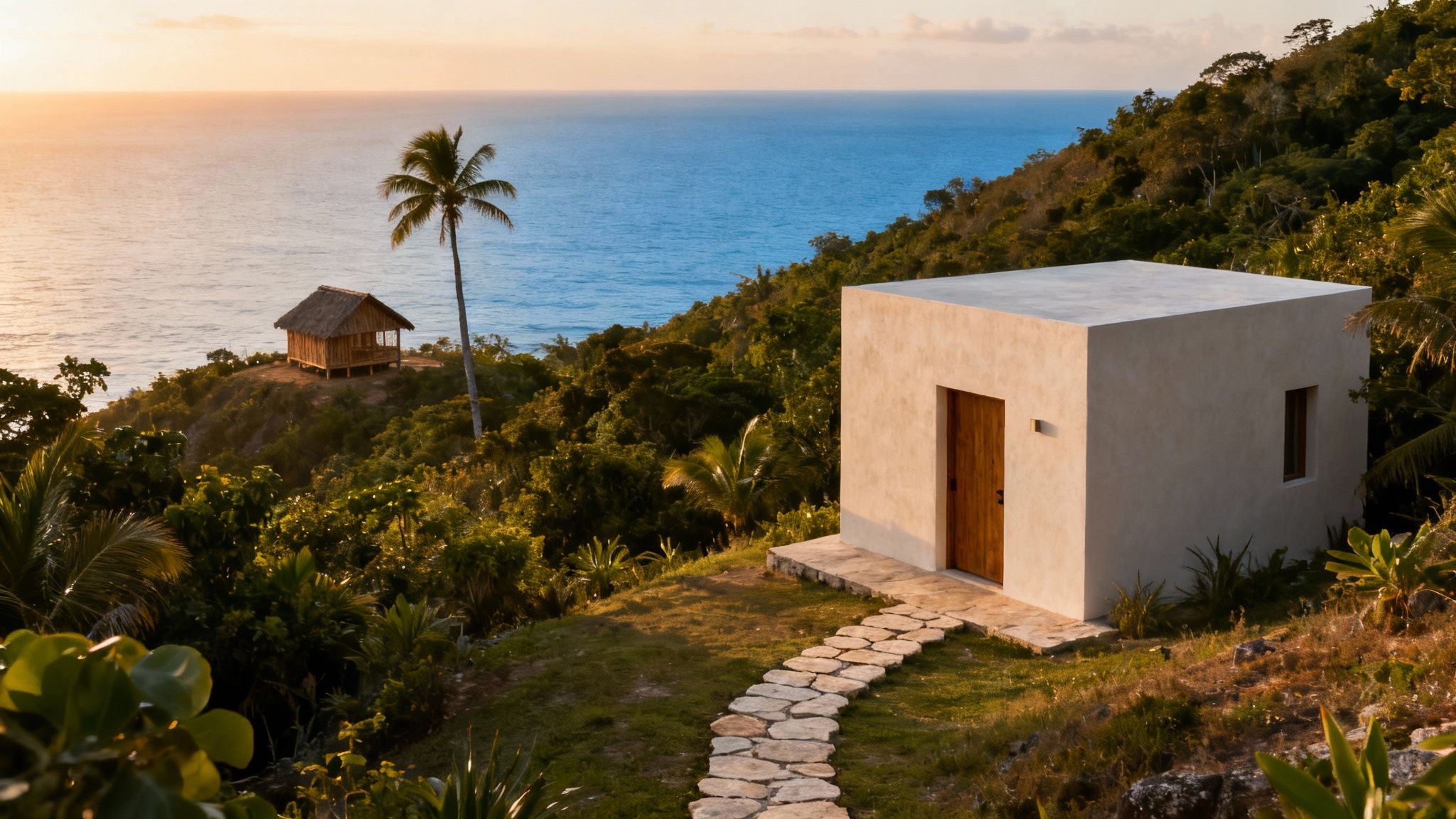
Serene Coastlines: Retreats along the coast near Tulum or the Riviera Nayarit let you pair the intensity of ceremony with the vast, calming presence of the ocean.
Tranquil Mountains: High in the country’s interior, mountain retreats provide a sense of seclusion and profound quiet, creating the perfect space for deep, uninterrupted reflection.
“This blend of natural beauty and spiritual heritage creates a container—a safe and sacred space where you feel held and supported. It’s this unique combination that allows for the vulnerability and openness required for a truly meaningful experience.”
A Focus on Integrated Wellness
The best retreats in Mexico understand a fundamental truth: the work doesn’t start or end with the ceremony. They take a much more holistic approach, recognizing that true healing is a complete process.
This means you’ll often find programs built around practices that prepare your mind and body beforehand and, crucially, help you make sense of it all afterward. Yoga, meditation, breathwork, and even traditional temazcal (sweat lodge) ceremonies are frequently part of the package.
This strong focus on integration is what makes the difference. It gives you the tools to carry the insights from your visions back into your everyday life and turn them into real, lasting change. This complete, well-rounded approach is what truly sets the premier ayahuasca retreats in Mexico apart.
Understanding the Legal Realities of Ayahuasca in Mexico
So, is ayahuasca actually legal in Mexico? This is almost always the first question people ask, and the answer isn’t a straightforward “yes” or “no.” The truth is, ayahuasca exists in a complex legal gray area, and understanding the nuances is crucial before you even think about booking a retreat.
Let’s break it down. On one hand, the main psychoactive ingredient in the brew, DMT (Dimethyltryptamine), is a Schedule I controlled substance under Mexico’s General Health Law. That classification puts it in the same league as drugs considered to have a high potential for abuse with no accepted medical use.
But here’s the twist: the law never actually mentions ayahuasca itself—the traditional tea brewed from the Banisteriopsis caapi vine and the Psychotria viridis leaf. This critical omission is where all the ambiguity comes from. Because the plant mixture isn’t specifically outlawed, many retreats have managed to operate, often under the banner of religious freedom or as a protected indigenous cultural practice.
What This Ambiguity Looks Like in Practice
This legal limbo means that while many centers operate openly, there’s an inherent risk. Enforcement can be inconsistent and unpredictable. It’s a bit like driving on a road with no posted speed limit—most of the time, you can travel just fine, but you’re always subject to the interpretation of the officer who might pull you over.
This isn’t just a theoretical risk. While Mexico doesn’t have a federal law banning ayahuasca, there have been some high-profile legal challenges. Back in 2022, for instance, several respected indigenous healers were arrested when they tried to enter Mexico with ayahuasca paste intended for ceremonies. One of them was José Campos, a well-known shaman from Peru’s Shipibo-Conibo tribe.
Incidents like these are a stark reminder of just how fragile the legal situation is. They show that even experienced spiritual leaders can run into serious trouble, which really drives home the importance of choosing a retreat that is well-established, discreet, and knows how to navigate the local landscape.
A Global Perspective on Ayahuasca Legality
To get a better handle on Mexico’s unique situation, it helps to see how it stacks up against other countries where ayahuasca is popular. The legal climate varies wildly across the globe, creating a patchwork of rules that directly impacts the safety and growth of ayahuasca tourism.
Peru: Here, ayahuasca is celebrated. Since 2008, the government has officially recognized its traditional use as a national cultural heritage, giving retreats a solid legal foundation to operate openly and without fear.
Brazil: Much like Peru, Brazil has granted specific religious groups, such as the Santo Daime and União do Vegetal (UDV), the legal right to use ayahuasca as a sacrament in their services.
United States: The U.S. is on the other end of the spectrum. The legal status is extremely restrictive. While the Supreme Court has made a few exemptions for specific religious groups, for the general public, possessing or drinking ayahuasca is illegal.
This global context shows why Mexico is such a unique middle ground. It’s more accessible than the United States but lacks the clear-cut legal protections you’d find in Peru. You can dive deeper into the worldwide legal landscape in our article on the globalization of ayahuasca and harm reduction.
“The key takeaway is that while ayahuasca ceremonies happen regularly in Mexico, they operate within a space of legal tolerance, not explicit permission. This tolerance can shift, making it essential to prioritize centers with deep local roots and experience navigating the environment.”
Ultimately, this legal uncertainty is exactly why doing your homework and vetting a retreat is so critical. The best centers have a long track record of operating safely and quietly. They understand the local culture and legal landscape, and they know how to conduct their work in a way that minimizes risk for everyone involved—facilitators and guests alike.
Choosing a center like this isn’t just about getting a quality experience; it’s a fundamental step for your own safety and peace of mind. You’re placing your trust in people who have proven they have the wisdom and experience to hold a secure space for this profound work, even with all the legal ambiguity swirling around them.
How to Prioritize Your Safety on a Plant Medicine Journey
Deciding to work with ayahuasca is a massive step, and your safety has to be priority number one. This goes way beyond finding a retreat with nice photos. It’s about making sure the people you trust have rock-solid medical and psychological safety measures in place. The journey can be physically grueling and emotionally raw, which makes a thorough screening process an absolute must.
Think of the ayahuasca brew as a powerful key—one that unlocks some very deep, old doors inside your mind and body. And like any powerful tool, you need a stable foundation before you start using it. Any reputable center worth its salt knows this and will insist on a comprehensive medical intake to make sure you’re truly a good candidate for this kind of work.
This screening isn’t just a formality. It’s a crucial safety net designed to flag any pre-existing conditions that could turn a profound experience into a dangerous one. It protects you, and it protects the facilitators.
Critical Medical and Psychological Contraindications
A responsible ayahuasca retreat in Mexico will screen you for a whole host of health issues. This is because ayahuasca contains potent MAO inhibitors (MAOIs), which can interact dangerously—sometimes even fatally—with certain foods, drugs, and medications. This is exactly why being 100% honest on your medical forms is not just important, it’s essential for your well-being.
Here are the key things a retreat should always ask about:
Cardiovascular Health: Ayahuasca gives your heart a workout, temporarily raising your heart rate and blood pressure. If you have a history of serious heart conditions like arrhythmias, heart failure, or uncontrolled high blood pressure, this medicine is almost certainly not for you.
Psychological History: While many people come to ayahuasca for healing, it isn’t a magic bullet for every mental health struggle. A personal or family history of psychosis, schizophrenia, or bipolar disorder can be serious contraindications. The experience could potentially trigger a severe episode, and that’s a risk no responsible facilitator will take.
Medication Use: This is one of the biggest red flags. Common antidepressants like SSRIs and SNRIs can cause a life-threatening condition called serotonin syndrome when combined with the MAOIs in ayahuasca. You absolutely need to understand which foods and meds to avoid with MAOIs is crucial for your safety.
“The screening process isn’t there to judge you. It’s a fundamental act of care. A center that skips this step or just brushes over it is telling you, loud and clear, that they don’t have your safety at heart. Avoid them.”
Acknowledging the Real-World Risks
The boom in ayahuasca’s popularity has, unfortunately, opened the door for a lot of unregulated and flat-out unsafe operations. These risks aren’t just theoretical. The U.S. Embassy in Peru, for instance, has issued health alerts specifically warning its citizens about ayahuasca tourism. They cite reports of everything from severe illness and psychological breakdowns to assault, robbery, and even death at centers that lack proper medical oversight. You can read the full health alert from the U.S. Embassy to get a better sense of what can go wrong.
This is precisely why putting in the effort to find a vetted, professional retreat is so critical. A safe center doesn’t just screen you properly; it has a clear, practiced plan for what to do if things go sideways.
What a Safety-First Retreat Looks Like
When you’re looking at potential ayahuasca retreats in Mexico, you’re not just a customer. You’re interviewing them for the most important job in the world: keeping you safe while you are in one of the most vulnerable states of your life.
Here’s what a genuine commitment to safety actually looks like:
Detailed Medical Intake Forms: They should be asking for the works—your full physical history, mental health background, and a complete list of every medication and supplement you take. No shortcuts.
Medical Staff or Support: The best centers have a medically trained professional either on-site or on-call. They also have a clear, rehearsed emergency plan and know exactly how long it takes to get to the nearest hospital.
Clear Communication: They should be able to answer any and all of your safety questions without getting defensive or vague. They’ll walk you through their protocols so you understand how they operate.
Making sure a retreat has these safeguards in place is the single most important decision you’ll make. It creates a secure container for your journey, which is what allows you to finally let go and surrender to the process with trust and peace of mind.
A Step-by-Step Guide to Choosing a Vetted Retreat
Trying to find the right ayahuasca retreat in Mexico can feel like navigating a maze, especially when your safety is the top priority. Making the right choice is the single most important decision you’ll make on this journey. This guide isn’t about vague advice; it’s a practical framework to help you tell the difference between a genuinely supportive healing space and a risky, profit-first operation.
Think of it like hiring a specialist for a life-changing procedure. You wouldn’t just go with the one who has the flashiest website. You’d dig deep—checking their credentials, their track record, and what past patients have to say. That same level of care is essential here.
Assessing the Facilitators and Their Lineage
The heart and soul of any retreat are the facilitators—the shamans, healers, or guides holding the space for everyone. Their experience, training, and, most importantly, their integrity, are everything. A stunning location is worthless if the people leading the work aren’t equipped to handle the powerful, and sometimes unpredictable, nature of ayahuasca.
When you’re looking into facilitators, what you want to see is transparency and depth. A trustworthy center will be upfront about where their leaders trained and the tradition they come from.
Experience and Training: How long have they been serving the medicine? Where did they learn, and who were their teachers? Look for a solid connection to an established lineage, like the Shipibo-Conibo tradition from Peru, or proof of a long-term apprenticeship under a respected elder.
Cultural Context: Authentic ayahuasca practice is woven into deep cultural and spiritual traditions. Centers that respect this connection tend to foster a more grounded and sacred atmosphere. It’s helpful to understand the transformations of traditional ayahuasca practices to see why this heritage is so vital.
On-Site Presence: The lead shaman shouldn’t just be a famous name who drops in for a quick appearance. They need to be present, engaged, and available throughout the retreat, guiding the energy of the ceremonies and the group.
A facilitator’s job isn’t just to pour a cup of medicine. They are there to create a secure energetic container, a bubble of safety where you can fully surrender to your journey, knowing you’re protected no matter what comes up.
Prioritizing a Low Participant-to-Facilitator Ratio
Picture this: you’re in a deeply vulnerable state during a ceremony and need help, but the staff is so busy you feel completely alone. This is exactly why the participant-to-facilitator ratio is a crucial, non-negotiable detail.
A small group ensures you get the individual attention you might need, whether it’s a grounding touch, a reassuring word, or just help getting to the bathroom. An ideal ratio is no more than five or six participants per facilitator. This simple number can mean the difference between feeling like you’re at a crowded concert and being held in an intimate, well-supported healing circle.
The Non-Negotiable Medical Screening
As we’ve already touched on, a comprehensive medical screening is the clearest sign that a retreat takes your physical and mental safety seriously. Any center that glosses over this, rushes you through a form, or has no formal intake process should be crossed off your list immediately. Your health isn’t something to cut corners on.
This is the very first and most important question you need to ask.
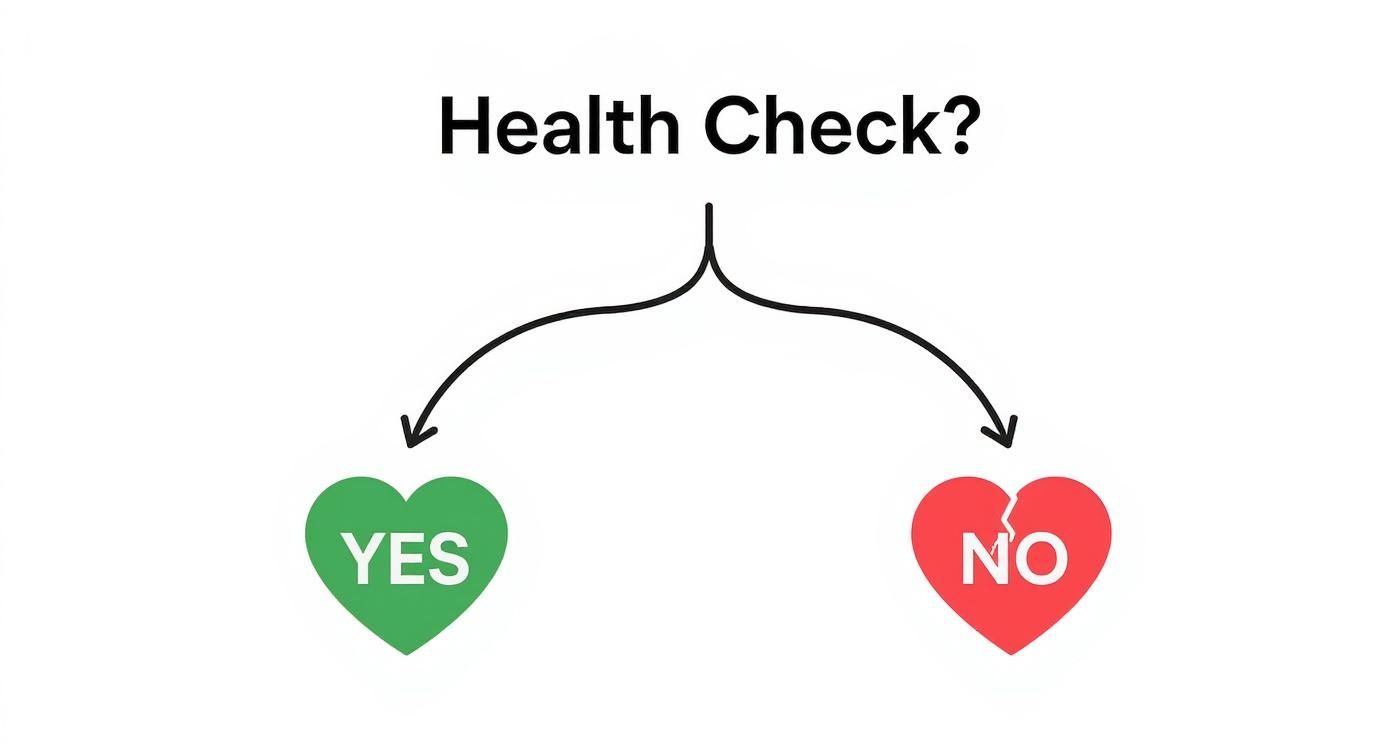
A proper screening is much more than a simple questionnaire. It should be a deep dive into your medical history, any medications you’re taking, and your psychological background. Often, this is followed by a personal call to discuss any potential issues. This isn’t about being nosy; it’s about responsible, professional care.
Vetting Your Ayahuasca Retreat: Red Flags vs. Green Flags
As you do your homework, you’ll start to see clear patterns emerge. The table below breaks down what to look for—the green flags of a professional, ethical center—and the red flags that should make you run the other way. Learning to spot these signals is your best tool for staying safe.
| Evaluation Criteria | Green Flag (Signs of a Reputable Retreat) | Red Flag (Warning Signs to Avoid) |
|---|---|---|
| Medical Safety | Requires a comprehensive medical and psychological screening form and a follow-up call. | No medical screening, or just a brief, surface-level questionnaire. |
| Facilitator Credentials | Transparent about facilitator lineage, training, and years of experience. | Vague or unverifiable claims about “ancient shamanic wisdom” with no real details. |
| Group Size | Small, intimate groups with a low participant-to-facilitator ratio (e.g., 5-to-1). | Large, crowded ceremonies where individual attention is impossible. |
| Communication | Answers all questions patiently and directly. Openly discusses safety protocols. | Evasive, defensive, or annoyed by detailed questions about safety. |
| Marketing & Booking | Provides clear, all-inclusive pricing. Focuses on healing and preparation. | Uses high-pressure sales tactics like “only 2 spots left!” or makes miracle cure claims. |
| Integration Support | Emphasizes the importance of integration and offers resources or follow-up support. | The focus is entirely on the retreat itself, with no mention of life after the ceremony. |
| Testimonials | Offers genuine, detailed reviews from past participants you can verify. | Only has generic, glowing reviews or no reviews at all. |
Ultimately, using this checklist helps you cut through the noise. A center that ticks the “Green Flag” boxes is showing you, through its actions, that your well-being comes first.
Finding the right ayahuasca retreat in Mexico takes time and effort, but it’s the most crucial investment you can make in your healing journey. By following this framework, you empower yourself to find a center that is not only powerful but, above all, safe.
Budgeting for Your Retreat and What’s Included
Let’s talk about the financial side of things. Planning for an ayahuasca retreat in Mexico isn’t like booking a typical vacation—it’s more like making an investment in a profound, professionally guided healing experience. The price tag reflects the entire ecosystem of support you’re stepping into: the expertise of the facilitators, the safety protocols, and the dedicated care that makes this kind of deep work possible.
Costs can swing pretty widely. What drives the price? Think about the length of the stay, the comfort level of the accommodations, the background of the facilitators, and what other therapeutic activities are on offer. A no-frills, traditional center might be on the lower end, while a place with resort-style amenities and a full menu of wellness services will naturally be more of an investment.
Breaking Down the Costs
Most vetted retreats make things simple by offering an all-inclusive package. Prices are influenced by the retreat’s duration, location, and the specific services provided. You’ll find that established centers typically charge anywhere from $2,500 to $10,700 for programs lasting one to three weeks.
For a standard one-week retreat, a realistic budget is between $3,000 and $6,000. On top of that, you’ll want to factor in another $1,500 to $3,000 for flights, travel insurance, and any other travel-related expenses. For a deeper dive into what goes into these figures, you can find more detailed pricing insights on ayahuasca retreat costs at Arkanainternational.com.
So, what are you actually paying for? A solid, all-inclusive package in Mexico usually covers:
Accommodations: A place to rest and recharge for the entire stay.
Meals: Every meal is specially prepared to align with the dieta, the crucial pre-ceremony diet that ensures safety and helps the medicine work effectively.
Ayahuasca Ceremonies: This is the heart of the retreat, usually involving two to four ceremonies guided by experienced practitioners.
Integration Support: Group sharing circles are standard, and some centers offer one-on-one sessions to help you unpack and understand your experiences.
Other Activities: Think supportive practices like yoga, meditation, breathwork, or even a traditional temazcal (sweat lodge) ceremony.
“Remember, you are paying for safety, expertise, and a supportive container. A suspiciously low price can be a major red flag, potentially indicating a lack of experienced staff, inadequate medical screening, or an unsafe environment.”
A Glimpse into a Typical Retreat Schedule
Okay, so you’ve got the budget. But what does a week actually feel like? Every center has its own unique rhythm, but a well-run program is carefully structured to walk you through a cycle of preparation, deep ceremonial work, and integration.
This is an immersive experience. The goal is to unplug you from your daily grind so you can turn your focus completely inward. Your days will likely be a gentle mix of quiet, personal reflection and structured group activities, all designed to prepare you for the intensity of the nighttime ceremonies.
Here’s a rough sketch of what a week might look like:
Arrival and Orientation (Day 1-2): These first couple of days are all about settling in. You’ll meet the team and your fellow participants, get oriented, and start setting your intentions. Often, this period includes an opening circle and maybe a gentle cleansing ritual like Kambo to prepare your body.
Ceremony and Deep Work (Day 3-5): This is the core of the experience. Ayahuasca ceremonies are held at night, and the days that follow are deliberately kept low-key. The focus is on rest, journaling, and joining group integration circles where you can share and begin to make sense of what you’re learning
Integration and Closing (Day 6-7): The final days are dedicated to helping you ground your insights before heading home. You might have a final integration workshop, a gentle heart-opening cacao ceremony, and a closing circle to wrap up the journey and prepare you to re-enter your life with a fresh perspective.
Integrating the Experience for Lasting Change
Here’s something many people don’t realize until it’s too late: the ayahuasca ceremony isn’t the finish line. It’s the starting gun. The incredible visions, the deep emotional purges, and the life-altering insights you receive are just the seeds. The real work—and the real, lasting change—begins when you get home, during the all-important period we call integration.
Think of integration as the conscious act of weaving the threads of your psychedelic journey into the fabric of your everyday life. Without it, even the most profound revelations can evaporate like a dream, leaving you with nothing more than a wild story to tell. Integration is the bridge that connects the ceremonial space to your real world.
And this process actually starts before you even pack your bags. The traditional preparation, known as the dieta, isn’t just about physical cleansing. It’s the first step in learning to quiet the outside world so you can truly hear what the medicine wants to show you.
Preparing Your Mind and Body
Proper preparation lays the groundwork for a truly meaningful experience. Just like a farmer carefully tills the soil before planting, you’re preparing your own inner landscape. It’s a discipline of body and mind, a tangible way of showing respect for the journey you’re about to undertake.
The dieta is central to this. It usually means giving up certain foods and activities for at least a week before your first ceremony. This isn’t a punishment; it’s a purification.
Physical Purity: Cutting out salt, sugar, caffeine, red meat, and highly processed foods helps clean out your system, making your body far more receptive to the plant’s subtle energies.
Mental Clarity: The dieta also asks you to step back from the constant noise of modern life—think social media, sensational news, and violent movies. This helps quiet the chatter in your head.
Spiritual Intention: This period of simplifying and abstaining is a powerful way to set your intention. It’s a signal to yourself, and to the medicine, that you are serious about this work.
By dialing down the inputs, you create the space for profound outputs. This intentional focus is the true beginning of your integration journey.
Practical Strategies for Post-Retreat Integration
Once you’re home, the world comes rushing back with all its demands, distractions, and old habits. This is where your integration practice becomes your anchor, helping you hold on to the clarity you fought so hard to find. The goal is to nurture the insights from your ayahuasca retreat in Mexico so they can actually take root and grow.
“Integration is the art of translating mystical experiences into practical, everyday wisdom. It’s the process that turns a temporary state of being into a permanent trait of character.”
A few simple, powerful practices can make all the difference.
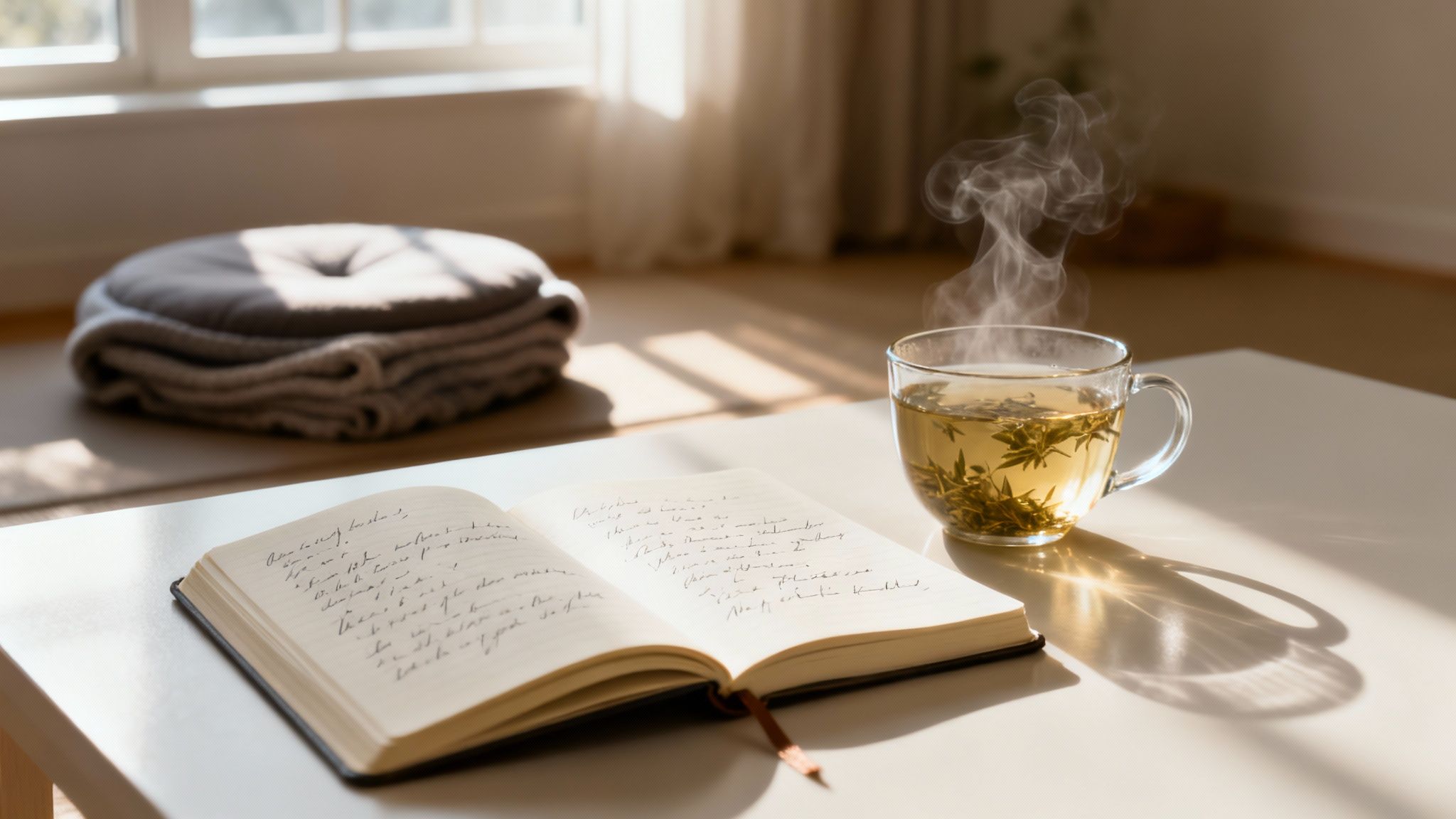
Journaling: Your head will be buzzing with visions, feelings, and fragmented ideas. Get it all down on paper without judging or editing. This isn’t about writing a masterpiece; it’s about creating a map of your inner world so you can start to connect the dots.
Meditation and Mindfulness: A daily meditation practice, even for just 10 minutes, is huge. It helps you stay connected to that quiet, centered place you found in ceremony and teaches you to observe your thoughts and feelings without getting lost in them.
Time in Nature: Ayahuasca has a powerful way of reminding us that we are part of the natural world. Make time to walk in a forest, sit by the ocean, or even just find a quiet park. It grounds your energy and reinforces that feeling of connection.
Community and Support: You absolutely do not have to do this alone. Sharing what you went through with trusted friends, a therapist, or an integration group is vital. Many people find that working with a professional integration coach provides the structure and guidance they need to turn insights into action.
Ultimately, integration is an ongoing promise to yourself. It reframes the retreat, not as a quick fix, but as a powerful catalyst in a lifelong journey of healing and discovery. It’s this patient, dedicated work that turns a profound experience into a profound life.
Frequently Asked Questions About Ayahuasca Retreats in Mexico
Let’s dive into some of the questions that are probably on your mind as you consider an ayahuasca retreat in Mexico. Getting clear, straightforward answers can help you move forward with a lot more confidence.
What Should I Pack for a Retreat?
When you’re packing, think comfort, practicality, and respect for the ceremony. Every retreat center will give you a detailed list, but a few items are always a good idea. The key is layers—jungle nights and ceremonial spaces can get surprisingly cool, even in Mexico.
Comfortable Clothing: For ceremonies, the tradition is often loose, light-colored, or white clothing made from natural fabrics. Beyond that, just bring enough comfy, casual clothes for the rest of the week’s activities.
Essential Toiletries: Stick to natural, unscented products. Strong chemical smells can be disruptive to others during the ceremony, so it’s best to keep the environment as pure as possible.
A Journal and Pen: Don’t even think about leaving this behind. You’ll want to capture the thoughts, feelings, and insights that come through. It’s an invaluable tool for integration later on.
A Reusable Water Bottle: Hydration is absolutely critical throughout this process.
A Flashlight or Headlamp: You’ll be glad you have this for finding your way around the property in the dark.
What Is the Role of the Shaman or Facilitator?
The shaman or facilitator is so much more than the person who simply serves the medicine. Think of them as the energetic anchor for the entire experience. Their primary job is to create, hold, and protect the sacred space where you’ll do your work.
They guide the entire journey using traditional songs, or icaros, which are a core part of the ceremonial technology. These songs aren’t just music; they are used to direct the energy in the room, communicate with the plant spirits, and offer protection to everyone present. A good facilitator is deeply experienced in navigating the spiritual world and knows how to provide grounded support if you hit a challenging part of your journey. They ensure the container is strong, which is what allows you to truly let go and trust the process.
“The facilitator’s integrity and experience are paramount. They act as your spiritual guardian during one of your most vulnerable states, making their expertise a critical component of a safe retreat.”
What Actually Happens During a Ceremony?
Ayahuasca ceremonies almost always happen at night, usually inside a dedicated ceremonial space like a maloca (a traditional round hut). You’ll find your spot, typically a mat or cushion, and sit as part of a circle with the other participants. The shaman will open the space with a prayer or by setting an intention, and then they will serve each person a small cup of the ayahuasca brew.
The medicine usually takes effect within an hour. From there, the experience is intensely personal and varies wildly from person to person. It might involve powerful visions, deep emotional releases, and profound spiritual realizations. Purging (vomiting) is very common and is seen as a physical and energetic cleansing—it’s a welcome part of the process. The shaman steers the energy with their songs, and trained assistants are always on hand to help if you need anything. A ceremony typically lasts for several hours, often concluding in the early hours of the morning.