
The Ayahuasca dieta is a traditional practice of physical and spiritual preparation that is absolutely essential for a safe and profound ceremony. It’s a dedicated period of cleansing the body and quieting the mind by eliminating specific foods and activities, which in turn makes you more receptive to the medicine’s teachings.
Understanding the Ayahuasca Dieta and Its Crucial Role

Think of the Ayahuasca dieta as a conversation with the medicine that begins weeks before you ever sit in ceremony. It’s so much more than just a diet; it’s a foundational practice that prepares your entire being—body, mind, and spirit—for the journey ahead. This ancient tradition is deeply rooted in both indigenous wisdom and modern pharmacological safety.
The dieta really serves two critical, interconnected purposes. First and foremost, it ensures your physical safety. The Ayahuasca brew contains powerful MAOIs (Monoamine Oxidase Inhibitors), which can have dangerous, even life-threatening, interactions with certain foods and medications. Following the dieta is non-negotiable for eliminating these risks.
Second, this practice acts as a profound energetic and spiritual cleanse. It helps quiet the internal “noise” created by processed foods, stimulants, constant media consumption, and intense emotional states. This purification process sensitizes your whole system, allowing you to connect more deeply with the plant’s subtle yet powerful guidance.
The Twin Pillars of Preparation
The dieta truly rests on two main pillars—one grounded in physical science and the other in spiritual receptivity. You can’t have one without the other; both are equally important for a meaningful experience. Ignoring either can lead to serious physical discomfort or a much weaker connection to the medicine.
“The core principle is simplification. By removing external and internal distractions, you create a clear, quiet space within yourself. This allows the spirit of Ayahuasca to be heard without interference.”
This tradition has deep historical roots. In the Amazon, more than 70 Indigenous groups have long upheld the dieta, using a disciplined fast from salt, sugar, spices, and sexual activity to attune themselves to the plant spirits. While the practice has certainly adapted as its use has spread globally, its essence as a vital cleanse remains unchanged. You can discover more insights about this tradition and its modern context at Psychedelic.Support.
To get a clear, at-a-glance view of how these pillars work together, this table breaks down the core principles of the dieta.
Table: Core Principles of the Ayahuasca Dieta
| Principle | Physical Purpose (Safety) | Spiritual Purpose (Sensitivity) |
|---|---|---|
| Dietary Purity | Avoids dangerous tyramine/MAOI interactions, reduces inflammation, and lessens digestive load. | Clears energetic “static” from processed foods, creating a clean internal canvas. |
| Abstinence | Reduces physiological stimulation (e.g., from caffeine) and hormonal fluctuations. | Conserves vital energy (Qi or life force), directing it inward for the ceremony. |
| Mental Quietude | Lowers stress hormones like cortisol, calming the nervous system. | Fosters introspection and reduces mental clutter, making it easier to receive insights. |
| Respect & Intention | The act of discipline primes the body and mind to treat the experience with seriousness. | Creates a sacred container for the journey, signaling respect for the plant and tradition. |
Understanding these reasons helps transform the dieta from a list of rules into a meaningful part of the process itself.
Why This Preparation Matters
Embarking on this journey without proper preparation is like trying to navigate a vast ocean without a compass. The dieta is your compass, aligning your internal landscape for the path ahead. It fosters the discipline, respect, and intention that are so crucial for the ceremony itself.
- Enhances Safety: The dieta minimizes the risk of dangerous physical reactions, such as a hypertensive crisis caused by tyramine-rich foods interacting with the brew’s MAOIs.
- Deepens Connection: A purified body and a quieted mind can perceive the subtle teachings of the medicine with far greater clarity and depth.
- Builds Discipline: Committing to the dieta is an act of respect for the tradition. It also prepares you mentally for the challenges and breakthroughs of the ceremony.
Ultimately, the Ayahuasca dieta is an act of devotion to your own healing and growth. It’s the very first step in a powerful process of self-discovery, ensuring you arrive ready to receive everything the medicine has to offer. By embracing this practice, you honor yourself, the tradition, and the sacred plant.
For a deeper dive into the practical steps, check out our guide on how to start preparing for your Ayahuasca journey.
The Science Behind Your Dieta Food Restrictions
While the Ayahuasca dieta is a practice deeply rooted in spiritual tradition, its food restrictions are also backed by some very real, modern science. These rules aren’t just arbitrary; they’re a critical safety measure designed to prevent some potentially dangerous physical reactions. When you understand the “why,” you’re not just following the rules—you’re taking an active role in protecting your own well-being.
At the heart of it all is a specific chemical interaction between two key players: the Monoamine Oxidase Inhibitors (MAOIs) in the Ayahuasca brew and an amino acid called tyramine, found in a surprising number of common foods. This relationship is the number one reason your diet needs to be so carefully managed.
Imagine Monoamine Oxidase as your body’s dedicated cleanup crew. It’s an enzyme that breaks down certain chemicals, including tyramine. When you eat a slice of aged cheddar, this crew swoops in, neutralizes the tyramine, and keeps it from messing with your blood pressure. It’s a seamless, everyday process.
The MAOI and Tyramine Interaction Explained
Here’s the catch: the Ayahuasca brew contains the Banisteriopsis caapi vine, which is a powerful natural MAOI. The MAOIs in the vine essentially tell your body’s cleanup crew (the Monoamine Oxidase enzyme) to take a break. This is a crucial step that allows the visionary DMT in the brew to become orally active, but it also leaves you temporarily defenseless against tyramine.
With the enzyme sidelined, tyramine levels can shoot up dangerously high. This flood of tyramine can trigger a massive release of norepinephrine, a hormone that aggressively constricts blood vessels and sends your heart rate soaring.
The result? A frighteningly rapid spike in blood pressure known as a hypertensive crisis. Symptoms can include a pounding headache, a racing heart, chest pain, and nausea. This is the single biggest physical risk from a dietary mistake during an Ayahuasca dieta, and it’s 100% preventable by simply avoiding high-tyramine foods.
Key Foods to Strictly Avoid
Keeping yourself safe means getting serious about cutting out foods high in tyramine. Tyramine levels skyrocket in foods that are aged, fermented, or preserved. Think of it as a byproduct of time.
Here are the biggest offenders to steer clear of:
- Aged Cheeses: All of them. Cheddar, parmesan, blue cheese, feta—they are packed with tyramine.
- Cured and Processed Meats: Things like pepperoni, salami, prosciutto, bacon, and any smoked fish are off-limits.
- Fermented Foods: Say goodbye to sauerkraut, kimchi, pickles, soy sauce, tofu, miso, and kombucha for now.
- Overripe Fruits: Bananas (especially the peel), avocados, and figs can develop high tyramine levels as they get too ripe.
- Alcoholic Beverages: Red wine and tap beer in particular contain significant amounts of tyramine.
For a much deeper dive, you can learn more about the specific foods and medications to avoid with MAOIs in our comprehensive guide.
The Risk of Serotonin Syndrome
Beyond the tyramine risk, there’s another crucial interaction to be aware of, particularly if you’re taking certain medications. This one involves the neurotransmitter serotonin.
“Serotonin syndrome is a potentially life-threatening condition caused by too much serotonin activity in your nervous system. The MAOIs in Ayahuasca stop serotonin from being broken down. If you combine it with other things that also boost serotonin—like SSRI antidepressants—you can create a dangerous overload.”
This overload can trigger a cascade of symptoms, from agitation and confusion to a rapid heart rate, high blood pressure, and even seizures. It is absolutely vital that you tell your facilitator about every single medication and supplement you take, especially antidepressants, long before you arrive. They will give you a clear, safe timeline for tapering off these substances before your ceremony.
Understanding this science changes everything. The Ayahuasca dieta stops feeling like a list of restrictions and becomes a conscious act of self-care. Every meal choice is a deliberate step toward ensuring your physical safety, which allows you to walk into your ceremony with a clear mind and a body that’s ready to receive whatever the medicine has to teach you.
Your Pre-Ceremony Dieta Timeline and Checklist
Preparing for an Ayahuasca ceremony isn’t something you do the night before. It’s a deliberate process, much like tuning a delicate instrument—your body—to be perfectly receptive to the medicine. This timeline is your practical roadmap, designed to take the guesswork out of the process and break it down into clear, manageable steps.
The idea is to give your system plenty of time to cleanse and adjust. But it’s more than just physical; this process builds the mental discipline and focus that are just as vital for the journey ahead. By following a structured approach, you’ll arrive at your ceremony feeling clear, centered, and ready.
This visual guide shows you the key milestones in your preparation. You’ll see how the dietary changes ramp up as you get closer to your ceremony, starting with bigger food groups and ending with a very clean, plant-focused diet.
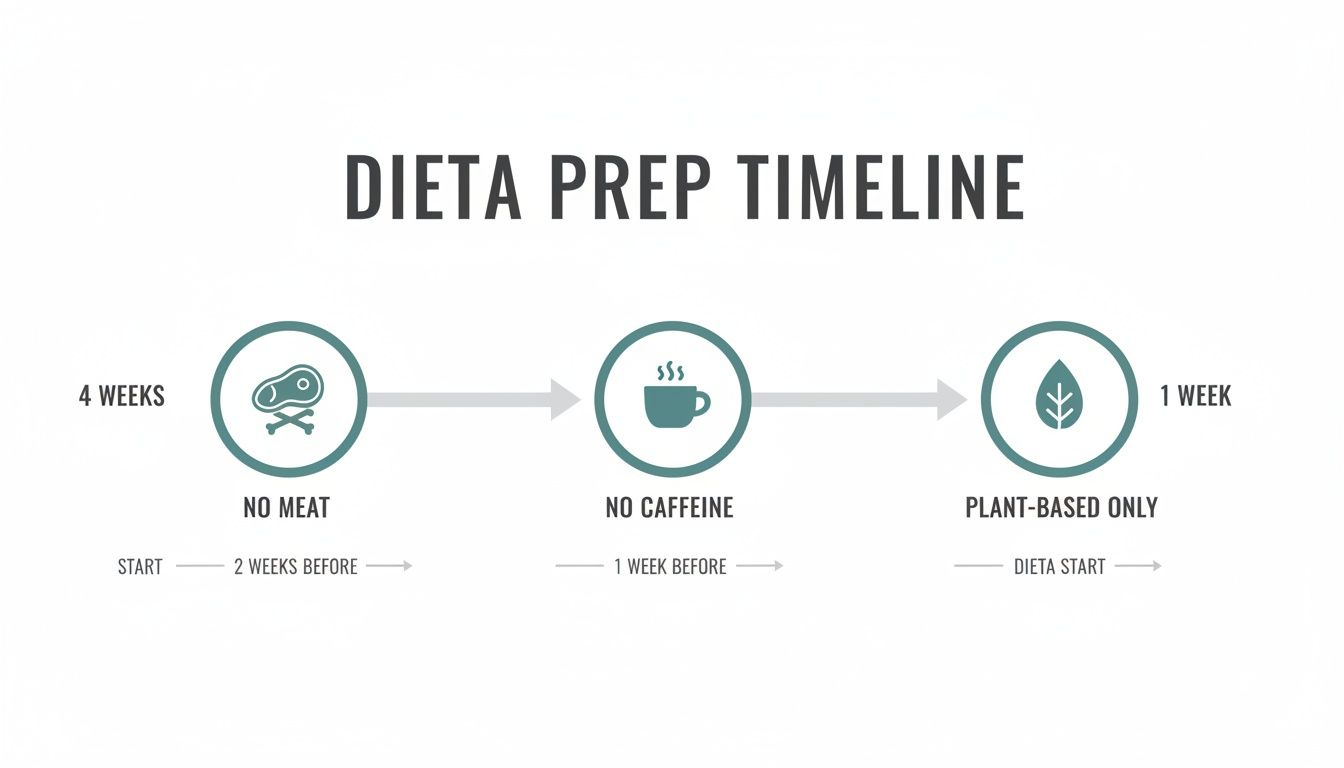
Four Weeks Out: The Gentle Beginning
Your journey starts a full month out. This first phase is all about making foundational shifts, gently guiding your body away from heavy foods that can create energetic and digestive sluggishness. The changes here are significant but absolutely doable, and they lay the groundwork for the more focused phases to come.
- Eliminate Red Meat and Pork: These are the first things to go. They are tough on the digestive system and are traditionally considered to carry a heavy energetic load.
- Reduce Heavy Oils and Fried Foods: It’s time to shift how you cook. Favor methods like steaming, baking, or light grilling. If you use oil, make it a light one like coconut or olive oil, and use it sparingly.
- Cut Out Processed Foods: Get into the habit of reading labels. If it’s full of artificial ingredients, preservatives, or heaps of refined sugar, leave it on the shelf.
This is also the perfect time to start paying closer attention to your body. Notice how you feel as you make these adjustments. You’ll likely start to feel lighter and have more energy—a great sign that your body is responding well.
Two Weeks Out: Deepening the Cleanse
With two weeks to go, the dieta sharpens its focus. This is when you begin removing stimulants and other substances that create a lot of “noise” in your nervous system. The goal is to bring a sense of calm to your entire being and purify your body on a deeper level.
“This stage is about more than just food; it’s about simplifying your sensory input. The less external stimulation you have, the more you can turn your awareness inward, which is the ultimate goal of this preparatory work.”
This is a critical period for both your physical and mental readiness.
- No Alcohol or Recreational Substances: This is a non-negotiable. All forms of alcohol and recreational drugs, including cannabis, need to be completely out of your system. They can interfere with the medicine and your ability to be fully present.
- Eliminate Caffeine: For many, this is the toughest step. I always recommend weaning yourself off coffee, black tea, and energy drinks slowly to avoid nasty withdrawal headaches. Herbal teas like chamomile or peppermint are your new best friends.
- Cut Refined Sugars and Dairy: Say goodbye to sweets, pastries, and most dairy for a while. These foods can cause inflammation and work against the cleansing process.
- Reduce Sexual Activity: Many traditions advise abstaining from sexual activity, including masturbation. The thinking here is that you are conserving your vital energy and directing it inward for the deep work of the ceremony.
The Final Week: The Sacred Homestretch
In the last seven days, your Ayahuasca dieta becomes its most disciplined. Your diet should now be incredibly simple, clean, and light. This final purification step is what truly prepares your body to receive the medicine safely and with maximum clarity.
Your daily habits should also reflect this inner quiet.
- Eat Simple, Whole Foods: Focus on a menu rich in vegetables, fruits, and whole grains like quinoa and rice. Some traditions allow for lean white fish, but check with your facilitator. Definitely avoid anything spicy, overly salty, or fermented.
- Mind Your Media Consumption: Step away from violent or sensationalized movies, stressful news cycles, and the endless scroll of social media. The goal is to cultivate a calm and stable mental space.
- Practice Mindfulness: Make time each day for meditation, journaling, or quiet walks in nature. This will help center your mind and clarify your intentions for the ceremony.
With Ayahuasca becoming more widely known, these traditional protocols are being adopted by a growing global community. It’s estimated that of the 4 million lifetime Ayahuasca users, roughly 90% are Westerners who diligently follow these dieta principles to prepare themselves. Research backs this up, confirming that risks are incredibly low and usually tied to poor screening or questionable brews, not the practice itself. You can read more about the research on Ayahuasca’s global consumption and safety.
Sample 1-Week Dieta-Friendly Meal Plan
To show you just how simple and nourishing this final week can be, here is a sample meal plan. This isn’t about deprivation; it’s about clean, vibrant eating.
| Day | Breakfast | Lunch | Dinner |
|---|---|---|---|
| Monday | Oatmeal with sliced banana & cinnamon | Quinoa bowl with steamed broccoli & carrots | Baked tilapia with a side of steamed asparagus |
| Tuesday | Scrambled eggs (no dairy/oil) | Lentil soup (no spicy seasonings) | Brown rice with sautéed zucchini & mushrooms |
| Wednesday | Apple slices with a small handful of almonds | Large green salad with cucumber, light olive oil | Steamed sweet potato with grilled chicken breast |
| Thursday | Smoothie with berries, spinach, and water | Leftover lentil soup | Quinoa with roasted root vegetables (beets, parsnips) |
| Friday | Plain cooked quinoa with a drizzle of honey | Steamed vegetables (green beans, cauliflower) | Baked cod with a lemon wedge and a side of brown rice |
| Saturday | Ripe pear and a handful of walnuts | Simple green salad with avocado | Vegetable broth with rice and shredded chicken |
| Sunday | Plain oatmeal | Small portion of brown rice with steamed greens | Very light meal: Steamed vegetables or a simple broth |
Feel free to mix and match these ideas based on what’s available and what your body feels good with. The key is to keep it clean, simple, and light.
What You Can Eat: Nourishing Your Body for Ceremony
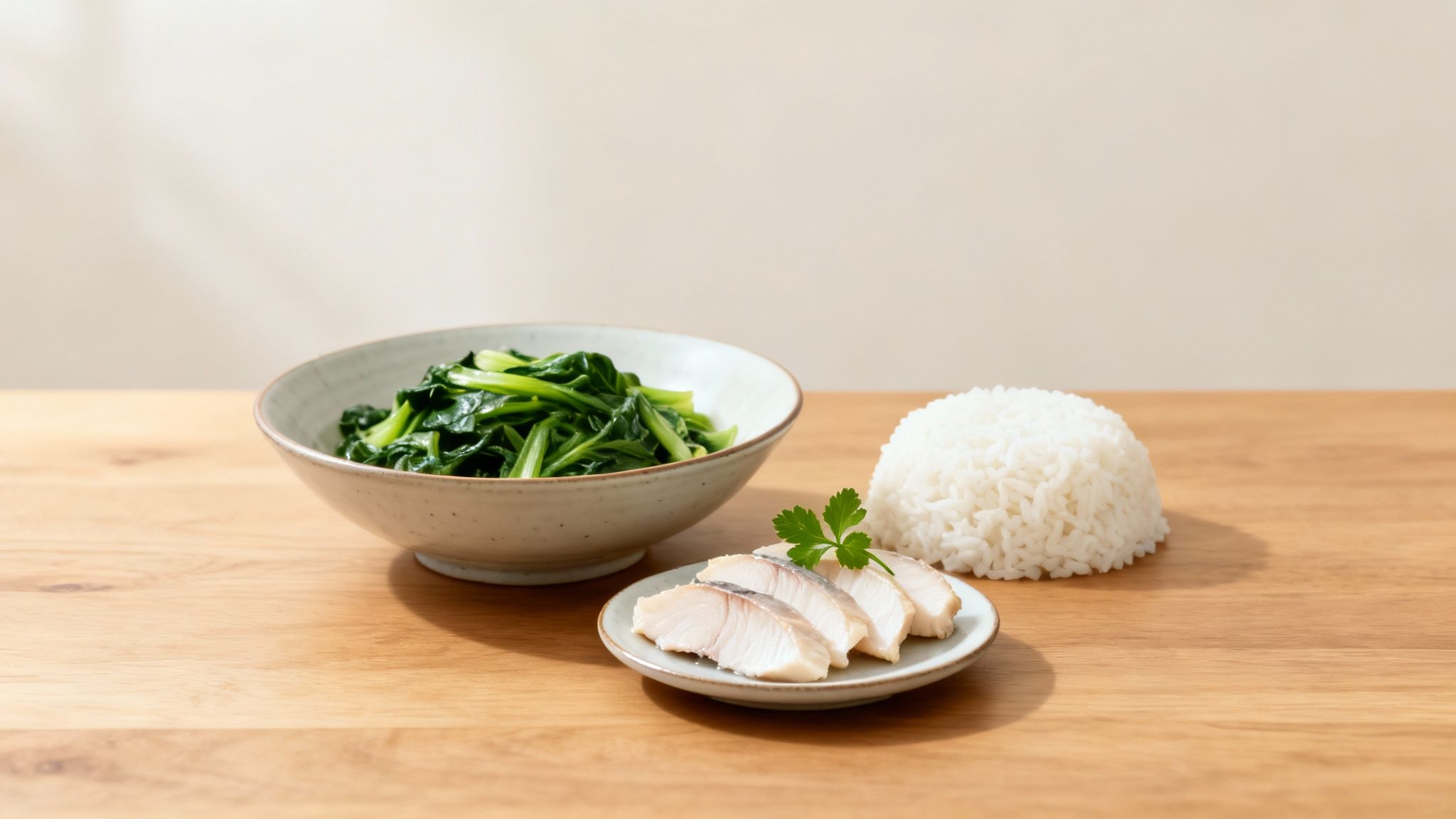
When you first see the long list of what you can’t eat, the Ayahuasca dieta can feel a bit intimidating. But it’s not about deprivation. It’s really an invitation to shift your focus to the simple, whole, and deeply nourishing foods that will prepare you for the journey ahead. Think of it as simplifying your plate to amplify your inner connection.
This process is a spiritual practice in itself—a way to show profound respect for your body and for the medicine. By consciously choosing clean, life-giving foods, you’re creating a calm and stable internal environment. You’re not just avoiding bad reactions; you’re actively building a foundation of physical clarity that allows for a much deeper and more meaningful experience.
Building Your Dieta-Friendly Plate
The guiding principle here is to eat fresh, unprocessed, and very minimally seasoned foods. Your kitchen becomes a space for intentional creation, where every meal is an act of preparation. The whole point is to nourish your body without making it work too hard, which frees up your energy and makes it easier to receive the medicine’s teachings.
Here are the food groups you can absolutely embrace:
- Fresh Vegetables: Most vegetables are your friends. Focus on leafy greens like spinach, root veggies like sweet potatoes and carrots, and staples like broccoli, zucchini, asparagus, and cucumber. Steaming or baking is always better than frying.
- Whole Grains: These provide a steady, grounding energy that’s perfect for this work. Quinoa, brown rice, oatmeal, and millet are all fantastic choices. They’re easy on the digestive system and packed with nutrients.
- Fresh Fruits: Stick to low-sugar fruits. Things like berries, apples, pears, and melons are great. Bananas are okay too, just make sure they aren’t overripe. They offer a bit of natural sweetness and hydration without spiking your blood sugar.
- Lean Proteins (with permission): This depends entirely on your retreat’s specific guidelines. If they give the green light, it’s usually for lean white fish like tilapia or cod, and sometimes organic chicken breast. Always prepare them simply—baked, steamed, or grilled with no heavy spices.
- Legumes: Lentils and beans can be a good source of plant-based protein. Just be aware that they can feel heavy for some people, so eat them in moderation and it’s wise to skip them the day right before your ceremony.
Simple Cooking for a Clear Mind
Preparing food for your Ayahuasca dieta brings you back to basics. When you remove all the heavy sauces, salt, and strong spices, you start to truly taste and appreciate the natural flavor of the food itself. This mindful approach to cooking is a powerful part of the mental preparation.
“Embracing the dieta is an opportunity to tune into your body more deeply. Pay attention to how different foods make you feel—lighter, clearer, and more vibrant. This is your body communicating its readiness for the journey ahead.”
This isn’t about eating bland, boring meals; it’s about getting creative with the ingredients you have.
Flavorful and Compliant Recipe Ideas
Cooking on the dieta can be a beautiful and rewarding process. It really challenges you to find flavor in simplicity and freshness.
Simple Quinoa Bowl:
- Ingredients: 1 cup cooked quinoa, steamed broccoli, diced carrots, and sliced cucumber.
- Preparation: Just combine everything in a bowl. If you want a little extra flavor, add a small amount of fresh, finely chopped cilantro or parsley. A tiny drizzle of high-quality olive oil can also be used if your facilitator says it’s okay.
Baked Tilapia with Asparagus:
- Ingredients: One tilapia fillet and a handful of asparagus spears.
- Preparation: Place the fish and asparagus on a baking sheet. You can add a squeeze of fresh lemon (if permitted) and a sprinkle of dill before baking at 400°F (200°C) for about 12-15 minutes, or until the fish flakes easily.
Nourishing Oatmeal Breakfast:
- Ingredients: 1/2 cup of rolled oats, 1 cup of water, a sliced banana, and a pinch of cinnamon.
- Preparation: Cook the oats with water until they’re nice and creamy. Top with the fresh banana slices and a light dusting of cinnamon for a warm, grounding start to your day.
When you focus on this wide array of approved foods, the Ayahuasca dieta stops feeling like a set of rules and becomes a joyful exploration of clean eating. Each meal turns into a mindful act, nourishing your body and preparing your spirit for the deep work to come.
How to Navigate Medications and Health Conditions
Let’s be perfectly clear: understanding how your medications and health history mix with Ayahuasca is the most important safety step you can take. While the Ayahuasca dieta puts a lot of focus on what you eat, the real non-negotiables lie in the world of pharmacology. Being completely, 100% honest with your facilitator isn’t just a good idea—it’s absolutely critical for your safety.
Certain medications can cause dangerous, sometimes even deadly, interactions with the MAOIs in the Ayahuasca brew. This isn’t something to guess about. You need to disclose everything you’re taking, whether it’s prescribed by a doctor, bought over-the-counter, or even a simple herbal supplement.
The Critical Risks of Antidepressants
The biggest red flag waves over antidepressants, especially SSRIs (Selective Serotonin Reuptake Inhibitors) and SNRIs (Serotonin-Norepinephrine Reuptake Inhibitors). These drugs are designed to increase the amount of serotonin floating around in your brain. The problem is, the MAOIs in Ayahuasca do something similar by stopping serotonin from breaking down.
When you combine the two, you risk a dangerous condition called serotonin syndrome. It’s essentially a toxic flood of serotonin in your system that can cause a cascade of frightening symptoms: severe agitation, confusion, a racing heart, dangerously high blood pressure, and in the worst cases, seizures or even death. There is absolutely no safe way to take these medications and drink Ayahuasca.
“Your retreat center will give you a strict timeline for tapering off these medications, something you must do under your doctor’s supervision. Typically, you’ll need to be completely off them for 4-6 weeks before your ceremony. This isn’t a suggestion; it’s a hard and fast safety rule.”
Other antidepressants, like Wellbutrin (bupropion), also pose serious risks. It isn’t an SSRI, but it still messes with brain chemistry in ways that can lead to dangerous complications. For a deeper dive, you can find firsthand accounts and expert opinions by exploring discussions on Wellbutrin and Ayahuasca safety.
Other Medications and Supplements to Disclose
It’s not just about antidepressants. A whole host of other substances need to be managed carefully, and that starts with full disclosure. Think of honesty as your primary safety tool.
Make sure you talk to your facilitator about any of these:
- Stimulants: ADHD medications like Ritalin or Adderall are a major concern. Mixing them with MAOIs can cause your heart rate and blood pressure to spike to dangerous levels.
- Blood Pressure Medications: Some drugs for hypertension can have unpredictable interactions, as Ayahuasca itself can have a significant effect on your cardiovascular system.
- Herbal Supplements: Don’t assume “natural” means safe. Supplements like St. John’s Wort, ginseng, or kava are pharmacologically active and can cause serious contraindications.
- Over-the-Counter Drugs: Even common cold medicines that contain dextromethorphan (DXM) or certain antihistamines can be risky.
Pre-Existing Health Conditions
Finally, your physical and mental health history is a crucial part of the screening process. Any responsible facilitator will have you fill out a detailed medical form to make sure this is a safe path for you.
You must be upfront about any history of the following:
- Cardiovascular Issues: A background of heart problems, high blood pressure, or aneurysms could make participating too risky.
- Severe Psychological Conditions: If you or your close family members have a history of psychosis, schizophrenia, or bipolar disorder, Ayahuasca is generally not recommended. The experience can be destabilizing and has the potential to trigger or worsen these conditions.
- Liver or Kidney Conditions: Your liver and kidneys are what process the brew. If they aren’t working at full capacity, you need to have a serious conversation with your facilitator and doctor.
This information isn’t medical advice, but a guide to help you ask the right questions. Your safety is everything. Make it your top priority by having transparent, thorough conversations with both your retreat center and your doctor.
Integrating Your Experience: The Post-Ceremony Dieta
The ceremony might be over, but the real work has just begun. Think of the post-ceremony Ayahuasca dieta as the crucial bridge connecting the profound visions and feelings from your journey back to the reality of your daily life. It’s a gentle landing, a way to ground yourself after flying so high.
Right after a ceremony, you’re in a state of incredible openness. Your physical body is sensitive, and your energetic field is wide open. I often compare it to a garden plot that’s just been tilled—the soil is rich and ready for new seeds, but it’s also defenseless against weeds. Jumping right back into heavy, processed, or overly stimulating foods can feel like a shock to the system, potentially clouding the very clarity you worked so hard to find.
Gently Returning to the World
The post-ceremony dieta is all about mindfully and slowly reintroducing foods. This process helps your body recalibrate, but more importantly, it honors the deep work you’ve just done. This physical act is a powerful metaphor for integration itself. Just as you thoughtfully reintroduce certain foods, you are also carefully weaving the lessons from the medicine into the very fabric of your life.
This integration period usually lasts for one to two weeks, but the most important thing is to listen to the specific guidance from your facilitator or shaman. The whole point is to gently wake up your digestive system, which has been through a significant cleanse and reset.
“The ceremonies are the easy part—our daily life is what brings the experience of the sacrament to life.” – A traditional healer.
This piece of wisdom gets right to the heart of it. The true measure of your journey is how you carry its lessons forward. The post-dieta is your very first step in that process, a continued act of respect for the medicine, the tradition, and yourself.
A Timeline for Reintroduction
If you can quiet the noise and listen, your body will tell you exactly what it needs. This transition is as much an exercise in profound self-awareness as it is in mindful eating.
Here’s a practical timeline to guide you, but remember to be flexible and tune into your own body:
- Days 1-3 Post-Ceremony: Stick as closely as possible to the strict dieta you followed before the ceremony. This means very simple, clean foods—think steamed veggies, quinoa, light soups, and plain broths. Your system is still incredibly sensitive during this time.
- Days 4-7 Post-Ceremony: Now you can start to slowly bring back some gentle flavors. This is a great time to reintroduce a little salt, a few mild spices, or some healthy fats like a slice of avocado or a drizzle of good olive oil. The key here is to add one new thing at a time and pay close attention to how your body feels.
- Week 2 and Beyond: If your body is feeling good and ready, you can begin reintroducing more complex foods. This might be where you bring back small amounts of dairy, citrus, or other things you’ve been avoiding. I’d still strongly suggest holding off on processed foods, heavy red meats, and alcohol for as long as you can to give your integration the best possible support.
Common Questions About the Ayahuasca Dieta
When you’re preparing for an Ayahuasca ceremony, especially for the first time, a lot of practical questions are bound to pop up. Getting those questions answered is the best way to walk into your journey feeling prepared and confident, not anxious. Let’s tackle some of the most common things people ask.
Getting a handle on these details helps shift your perspective. The dieta stops feeling like just a restrictive list of rules and becomes a meaningful part of the process—one you can approach with intention and care.
How Long Should I Follow the Ayahuasca Dieta?
While the exact timeline can vary, most experienced facilitators and retreat centers have a standard they recommend. You should generally plan to start cleaning up your diet 2-4 weeks before your ceremony. The final week leading up to it is when you’ll need to be the most strict.
The post-ceremony period is just as crucial. Plan to continue the dieta for at least 1-2 weeks afterward. Think of this as a “soft landing” that helps your system re-acclimate and gives you space to integrate the experience. But remember, the golden rule is to always follow the specific guidelines given by your retreat or facilitator—their protocol is designed for their particular medicine and tradition.
What Happens If I Accidentally Break the Dieta?
First off, don’t panic. Mistakes happen. The most important thing—and I can’t stress this enough—is what you do next. You must be completely honest with your facilitator and tell them immediately.
“Transparency is your greatest safety tool. Hiding a mistake is far more dangerous than the mistake itself, as it prevents your guides from providing the care you might need.”
The consequences really depend on what you consumed and how close it was to the ceremony. A small slip-up might not cause much more than some extra nausea during the journey. But a serious one, like eating a meal high in tyramine, could trigger a dangerous hypertensive crisis. Your facilitators are there to keep you safe, but they can only do that if they have all the information.
Is the Ayahuasca Dieta Vegan or Vegetarian Friendly?
Absolutely. The traditional Ayahuasca dieta is incredibly well-suited for anyone who eats a plant-based diet. In fact, you’ll probably find it very familiar.
The diet’s foundation is already built on eliminating red meat, pork, and often dairy, which aligns perfectly with vegetarian and vegan principles. The focus is squarely on simple, clean foods like vegetables, fruits, whole grains, and legumes, so you’ll have no trouble finding plenty of nourishing options.
Can I Drink Coffee or Caffeinated Tea?
This is a hard no. All stimulants, especially caffeine, need to be completely cut out. That means no coffee, black tea, green tea, or energy drinks.
Caffeine jacks up your system—it can increase your heart rate, raise your blood pressure, and amplify any underlying anxiety. This creates a state of internal agitation, which is the exact opposite of the calm, open, and receptive state you’re trying to cultivate for the ceremony.
Instead, this is a great time to explore non-caffeinated herbal teas. Brews like chamomile, peppermint, or ginger are fantastic substitutes. They’re not just compliant with the dieta; they actually help soothe your nervous system, which is precisely what you need.