
Ayahuasca effects on the brain begin with a complex cascade of neurological changes. More than a fleeting trip, the ayahuasca effects on the brain can involve deep psychological insights, emotional release, and, for some people, genuine therapeutic breakthroughs. Research suggests the brew may temporarily quiet the mind’s autopilot and spark new connections between parts of the brain that do not usually communicate as directly.
A First Look at Your Brain on Ayahuasca
When you drink Ayahuasca, you begin a remarkable conversation with your own neurology. The experience is often described as intense, visionary, and deeply personal. Beneath those subjective feelings, the ayahuasca effects on the brain involve a significant shift in normal brain function.
Think of your brain’s typical state as a busy city with well-worn traffic routes. Information flows along familiar highways, connecting predictable neighborhoods of thought, memory, and emotion. This efficiency is useful because it lets you function on autopilot for many daily tasks.
Ayahuasca, however, can act like a catalyst for a city-wide festival. It temporarily disrupts those main highways and opens up new side streets, alleyways, and footpaths. Suddenly, parts of your brain that rarely communicate are drawn into a lively conversation. This is one reason the ayahuasca effects on the brain can include novel thoughts, rediscovered memories, and fresh emotional perspectives.
The Two Key Players
This neurological event is driven by a powerful synergy between two main components in the brew. Understanding their distinct roles is the first step in appreciating the science behind the ayahuasca effects on the brain.
To make this clearer, let’s break down the two main active ingredients and what they do.
Ayahuasca’s Key Components and Their Brain Roles
This table gives a quick summary of the two active ingredients in the Ayahuasca brew and their specific functions in the brain.
| Component | Primary Role in the Brain | Analogy |
|---|---|---|
| N,N-Dimethyltryptamine (DMT) | A potent psychoactive compound that binds to serotonin receptors, specifically 5-HT2A, producing the visionary and immersive aspects of the experience. | The Messenger. DMT is the molecule that carries the message and helps unlock altered states of consciousness. |
| Monoamine Oxidase Inhibitors (MAOIs) | Compounds from the Banisteriopsis caapi vine that temporarily pause the MAO-A enzyme in your gut. This allows DMT to enter the bloodstream and cross into the brain. | The Gatekeeper. Without MAOIs, the DMT would be broken down before it could act, so they hold the gate open for the messenger. |
This chemical partnership is what makes the experience possible.
“The real power of Ayahuasca lies in this teamwork. Without the MAOIs from the vine, the DMT would be orally inactive, and the journey would never begin. This synergy is a central reason the ayahuasca effects on the brain are so distinct.“
What This Means for You
This fundamental shift in brain activity is one reason Ayahuasca is being studied for its potential to help with conditions linked to rigid thinking patterns, such as depression, PTSD, and addiction. By temporarily loosening old neural habits, the ayahuasca effects on the brain may create a window for new, healthier connections to form.
Before we go deeper into specific brain networks and long-term changes, it helps to keep one core idea in mind: the ayahuasca effects on the brain appear to create a state of heightened brain flexibility. This can open the door to new ways of seeing yourself and the world by changing how your brain communicates with itself.
The Chemical Magic Behind the Ayahuasca Experience
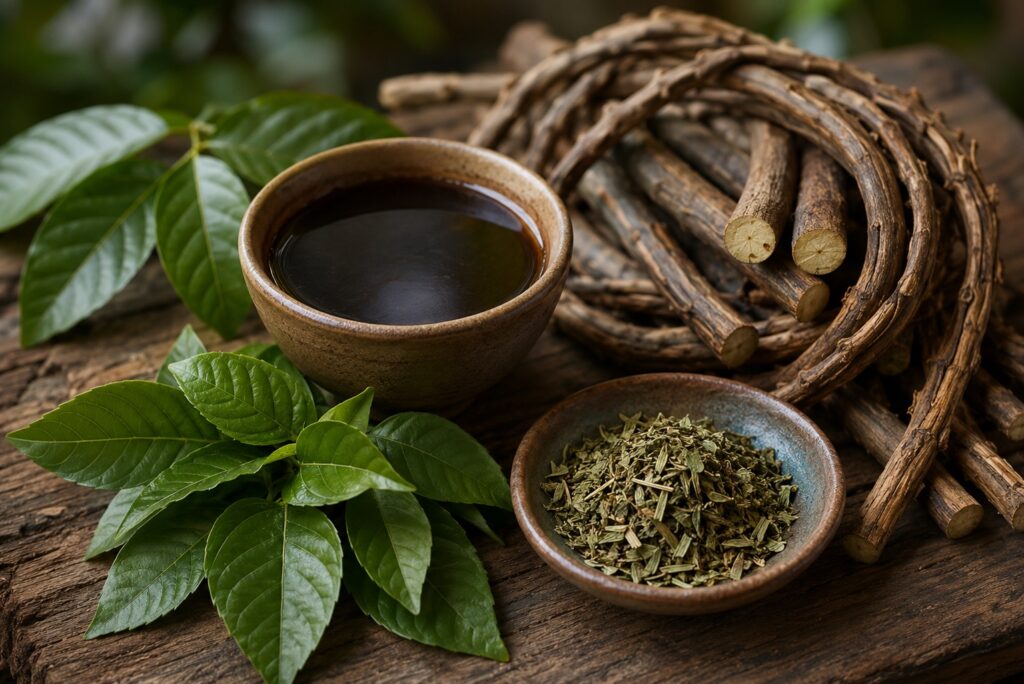
To understand the ayahuasca effects on the brain, you need to appreciate the partnership between its two main ingredients. Individually, they are interesting but limited. Together, they create a powerful chemical synergy that opens the door to an altered state of consciousness.
This dynamic duo is made up of N,N-Dimethyltryptamine (DMT), a potent psychoactive molecule, and a class of compounds called Monoamine Oxidase Inhibitors (MAOIs). The MAOIs come from the Banisteriopsis caapi vine, which forms the base of the brew, while the DMT often comes from the leaves of a plant like Psychotria viridis.
Believe it or not, our bodies already know DMT quite well, we actually produce it ourselves. The catch is that our digestive system has a very efficient enzyme called Monoamine Oxidase (MAO). Think of MAO as a bouncer at the door. If you try to drink DMT, this enzyme quickly breaks it down before it can get to your brain.
The Gatekeeper and the Key
This is where the key chemical interaction happens. The MAOIs from the caapi vine temporarily block the MAO enzyme in your gut.
With that enzyme inhibited, the DMT molecule can pass through, enter the bloodstream, cross the blood-brain barrier, and reach its destination. Without this crucial step, there would be no Ayahuasca journey and none of the classic ayahuasca effects on the brain.
Once inside the brain, DMT acts like a master key for a very specific type of lock, the 5-HT2A serotonin receptor. When DMT binds to these receptors, it triggers a broad chain reaction of neurological changes that contribute to the visionary, emotional, and immersive state associated with Ayahuasca.
This diagram gives a great visual of how the brew’s ingredients work together to foster new connections in the brain.
You can see how the synergy within the brew directly enables this heightened neural connectivity.
Why This Synergy Matters
The importance of this chemical teamwork cannot be overstated. If the MAOIs were not in the brew, the DMT would be destroyed in your stomach, and little or nothing would happen. This interaction is precisely what makes drinking Ayahuasca different from smoking or vaporizing DMT, which results in a much shorter experience.
The MAOIs do more than make DMT orally active. They also extend its effects over several hours. This slower timeline allows for deeper psychological exploration. On top of that, the MAOIs themselves, specifically the beta-carbolines like harmine and harmaline, have their own subtle psychoactive effects and therapeutic potential. You can dive deeper into the role of beta-carbolines in our detailed guide.
“The synergy between DMT and MAOIs does not just make the journey possible, it shapes its whole character. The slower, unfolding nature of the experience gives the mind more time to move through new landscapes of thought and feeling.”
Ultimately, this pharmacology is the foundation of the ayahuasca effects on the brain. It allows a natural molecule to bypass the body’s usual defenses and interact directly with core systems involved in emotion, perception, and cognition.
How Ayahuasca Creates a Waking Dream State
The pharmacology explains how the brew works, but the most striking ayahuasca effects on the brain appear when we look at brain activity during the experience. Your brain does not just perceive reality differently under Ayahuasca, it shifts into a distinct operating mode. This measurable change helps explain the vivid, dream-like visions many people report.
Think of your normal, everyday mind as a radio tuned to a single, predictable station. This is your waking consciousness, humming along with what are called alpha waves. These brainwaves are present when you’re awake but relaxed, such as when you are resting with your eyes closed.
When Ayahuasca takes hold, it is as if someone gently turns the dial. The familiar alpha station fades, and a more complex internal broadcast takes over.
Tuning Into the Dream Frequency
This new broadcast is driven by a profound change in your brain’s electrical patterns. Two key shifts happen at the same time:
- Alpha Waves Decrease: Your brain’s default wakeful rest signal gets turned down. This quieting of the alpha rhythm helps other signals come through.
- Theta Waves Increase: As alpha fades, there is a rise in theta waves. These slower brainwaves are associated with deep meditation, memory retrieval, and REM sleep, the stage where vivid dreams often occur.
This combination, less waking alpha and more dreaming theta, helps create the waking dream quality. Your body is awake, but the ayahuasca effects on the brain appear to place neural activity in a pattern that resembles internally generated dream states.
“This pattern is one of the clearest ayahuasca effects on the brain identified in neuroscience research. Brain activity becomes less rigid and more fluid, which may create fertile ground for new insights and connections.“
The Science Behind the Visions
This electrical retuning helps explain why the experience can feel deeply real and self-generated. A landmark study from Imperial College London’s Centre for Psychedelic Research offered a clear window into this process. Using EEG to monitor brainwaves, researchers observed a strong drop in alpha activity and a simultaneous increase in theta waves in volunteers who received DMT.
The results supported the idea that the brain enters a highly active but internally focused state, much like dreaming while awake. You can read more about the findings on this waking-dream state from the researchers themselves.
This neurological shift allows information from your own mind, including memories, emotions, and symbolic imagery, to move more easily into awareness. The analytical mind often softens its grip, giving subconscious material more space to emerge.
Understanding this process is vital. The visions are not random. They are tied to specific ayahuasca effects on the brain that create a hybrid state of consciousness. You can explore the nature of these visionary experiences in our guide.
How Ayahuasca Quiets Your Inner Critic: A Look at the Default Mode Network
Beyond vivid visuals, one of the most important ayahuasca effects on the brain involves a network called the Default Mode Network (DMN). Think of the DMN as your brain’s autopilot. It tends to be active when your mind is wandering, replaying memories, worrying about the future, or thinking about yourself.
This network is your inner narrator, the voice in your head that helps construct your sense of self. It is useful for planning and self-reflection. But sometimes this narrator gets stuck in repetitive loops, becoming an overactive inner critic.
In conditions like depression, PTSD, and chronic anxiety, the DMN is often in overdrive. This can trap people in rigid, negative thought patterns and make self-critical thinking feel relentless.
Hitting the Mute Button on Your Inner Narrator
This is where Ayahuasca steps in and does something quite profound: it temporarily quiets the DMN. Brain scans using fMRI have This is where Ayahuasca appears to do something significant. Among the more compelling ayahuasca effects on the brain is a temporary quieting of the DMN. Brain scans using fMRI have shown a decrease in blood flow and activity in core hubs of this network during an Ayahuasca experience, particularly in a region called the posterior cingulate cortex (PCC).
By lowering the volume on constant self-talk, Ayahuasca may create space for a different kind of awareness to emerge. With the usual narrator quieter, other parts of the brain involved in emotion, memory, and sensory processing can begin communicating in new ways.
This neurological shift may help explain feelings of interconnectedness and the experience often described as ego dissolution. Instead of seeing the world through the narrow filter of “me,” some people report a more expansive and less defensive perspective.
“One of the most meaningful ayahuasca effects on the brain may be this temporary shift away from self-focused processing and toward a more open, flexible mental state.”
This change may also be therapeutic. For some people, it becomes easier to observe thoughts and beliefs without getting caught in them. Long-held assumptions about identity, fear, and limitation can begin to feel less fixed.
The Power of a Quieter Mind
This temporary silencing of the DMN may open a powerful window for healing and change. By stepping outside your usual mental story, you may be able to:
- Reframe Painful Memories: Difficult experiences can be revisited from a more detached perspective, which may help reduce their emotional charge.
- Break Free from Rumination: The repetitive cycle of worry and self-criticism can briefly pause, showing that another mental state is possible.
- Feel Deeply Connected: With the sense of self softened, strong feelings of connection to others, nature, or life as a whole may arise.
These potential benefits are a major reason researchers are interested in the ayahuasca effects on the brain. The brew appears to interact with neurological patterns that can keep people mentally stuck.
The insights gained during this period of DMN suppression are not always fleeting. With proper integration, they may support healthier ways of thinking long after the ceremony ends.
Lasting Changes: How Ayahuasca Rewires the Brain
The experience does not necessarily end when the visions fade. Some of the most important ayahuasca effects on the brain may continue into the period after a ceremony, often called the afterglow. This is where neuroplasticity becomes especially relevant.
Imagine your brain is like a snowy hill, and your thoughts are sleds. Over time, repeated thoughts wear deep grooves into the snow. These grooves represent habits, automatic reactions, and familiar emotional patterns. An Ayahuasca journey can feel like fresh snowfall covering those tracks, giving you a chance to form new paths before the old ones become dominant again.
This is more than metaphor. Research suggests the ayahuasca effects on the brain may temporarily increase mental flexibility and make the brain more receptive to learning and change.
The Science of the Afterglow
So what is happening in the brain during this post-ceremony phase? This period may involve meaningful neurometabolic shifts, not just a subjective sense of clarity.
One landmark 2017 study used advanced MRI scans to examine participants’ brains just hours after an Ayahuasca session. Researchers found a decrease in glutamate, a key excitatory chemical, within the posterior cingulate cortex (PCC). The PCC is a major hub of the Default Mode Network and is often linked to self-referential thinking.
This reduction in glutamate was associated with higher scores in mindfulness, an effect that was still present two months later. You can dive into the full research on these neurometabolic changes here.
These findings offer one possible explanation for post-ceremony calm and mental clarity. The ayahuasca effects on the brain may include a shift away from habitual rumination and toward greater present-moment awareness.
Building a Healthier Brain
Ayahuasca may do more than quiet old patterns. Research interest has also focused on whether the brew’s compounds support new neural growth and connectivity. Some preclinical findings suggest effects related to neurogenesis and synaptic plasticity, especially in regions linked to memory and emotion, such as the hippocampus.
This kind of biological rewiring may have important implications for mental health:
- Better Emotional Balance: Stronger communication between the prefrontal cortex and emotional centers like the amygdala may improve stress regulation.
- A Foundation for Mindfulness: With the Default Mode Network dialed down, it may become easier to observe thoughts without being carried away by them.
- An Opening to Break Addiction: Greater neuroplasticity may create an opportunity to weaken rigid patterns tied to compulsive behavior.
This heightened flexibility is one reason integration matters so much. The ayahuasca effects on the brain may create the conditions for change, but daily actions afterward help determine whether those changes take root. For a deeper look at this process, check out our guide on Ayahuasca, neurogenesis, and depression.
“The journey may provide the blueprint for change, but integration is where those lessons are reinforced. Lasting benefits often depend on how insights are applied in real life.”
Ultimately, the lasting ayahuasca effects on the brain may reflect a period of unusual flexibility in which the mind has a chance to heal, reorganize, and adopt healthier patterns.
Navigating Your Journey with Safety in Mind

Understanding the ayahuasca effects on the brain is fascinating, but any exploration of this medicine should begin with safety. Ayahuasca has the potential for meaningful healing experiences, but that potential depends on respect, caution, and an honest understanding of the risks.
A major part of responsible preparation is knowing what challenges can arise. Ayahuasca can bring buried emotions to the surface, and navigating that intensity requires a safe, supportive setting. It is also important to understand that Ayahuasca is not appropriate for everyone, especially people with a personal or family history of psychosis or bipolar disorder.
Understanding the Risks
Physical safety matters just as much as emotional well-being. The MAOIs in Ayahuasca can have dangerous, sometimes life-threatening, interactions with other substances. This includes many pharmaceuticals, most critically SSRI antidepressants, but also some over-the-counter medications and certain foods.
This is why thorough medical screening with a qualified professional before a ceremony is essential. Full transparency about your medical history and everything you take, from prescriptions to supplements, is critical.
“A safe journey begins long before the ceremony itself. It starts with honest self-assessment, careful medical screening, and choosing a setting led with integrity and experience.”
To get a clearer picture of these risks, we can look at the Global Ayahuasca Survey, which gathered data from thousands of users. It found that while 55.9% of people reported some adverse mental health effects afterward, 88% of them viewed these challenges as a non-severe part of their growth process. On the physical side, neurological issues like fainting were reported by 4.1% of participants. You can dive deeper into the data in this comprehensive study on Ayahuasca’s effects.
How to Ensure a Safe Experience
Reducing risk starts with preparation. If you are considering this path, it is important to approach the ayahuasca effects on the brain with curiosity and caution at the same time.
Here are the cornerstones of a safe and supportive Ayahuasca experience:
- Choose Reputable Facilitators: Look for experienced guides who operate with integrity and transparency. Ask about their safety record, their medical screening process, and the facilitator-to-participant ratio.
- Prioritize Medical Screening: Never skip this step. A complete screening should cover your physical and psychological health history to identify contraindications.
- Commit to Integration Support: The journey does not end when the ceremony ends. Support from a therapist, coach, or trusted community can help turn insights into positive change.
Ultimately, the safest approach to the ayahuasca effects on the brain is an informed one. Careful preparation, honest health screening, and strong integration support create the best conditions for a meaningful experience.
Frequently Asked Questions About Ayahuasca and the Brain
When people start exploring the ayahuasca effects on the brain, a few questions come up again and again. Here are some of the most common ones.
Can Ayahuasca Permanently Change My Personality?
This is a common concern, and the answer is usually more nuanced than people expect. Ayahuasca is not likely to erase who you are. Instead, the ayahuasca effects on the brain may support lasting shifts in perspective, emotional habits, and self-understanding.
Think of it less as a personality rewrite and more as clearing away static. By supporting neuroplasticity, the experience may help the brain form healthier pathways and reduce old loops of anxiety or self-criticism. Many people report feeling more like their authentic selves afterward, not like someone entirely different.
Is the Ayahuasca Experience Just a Hallucination?
The word “hallucination” does not fully capture what many people experience. It can imply a meaningless distortion, while many of the ayahuasca effects on the brain involve a deep reorganization of internal information.
Rather than simply inventing things, the brain may be reprocessing memories, emotions, and subconscious material in a vivid symbolic form. With the Default Mode Network quieted and new communication opening between regions, the experience can become a rich internal dialogue rather than a random visual event.
“The visionary journey can be understood as your brain communicating in symbol, emotion, and metaphor. In that sense, the ayahuasca effects on the brain are structured and meaningful, not purely chaotic.“
How Does Neuroscience Explain Healing Trauma With Ayahuasca?
Neuroscience offers a useful framework for understanding why the ayahuasca effects on the brain may help some people work through trauma. Traumatic memories can become tightly linked to fear responses and difficult patterns of avoidance.
Ayahuasca appears to interact with this in a few important ways:
- Quieting the DMN: It may reduce the self-critical and defensive mental narration that often surrounds traumatic memories.
- Enhancing Connectivity: It may increase communication between memory-related and emotion-related regions.
- Promoting Reprocessing: This may allow difficult experiences to be revisited from a safer, less reactive perspective.
Through this process, some people find that the emotional grip of trauma begins to loosen. In that sense, one of the most clinically interesting ayahuasca effects on the brain is its potential to support emotional reprocessing and healing.
Disclaimer: The information provided on Ayahuasca.com is for educational purposes only and is not intended as medical advice, diagnosis, or treatment. Ayahuasca is a powerful traditional Amazonian medicine and may not be suitable for everyone. Always consult with a qualified healthcare professional before making decisions related to health, mental well-being, medications, or the use of Ayahuasca.