
Once a secret of the Amazon, Ayahuasca is now part of the global conversation. From clinical trials and media headlines to public policy and celebrity voices, ayahuasca in culture is entering the mainstream. This guide to ayahuasca in culture explores how global attention is reshaping the conversation around this sacred plant medicine.
The Journey into Global Consciousness
Ayahuasca’s journey from the heart of the Amazon to the forefront of Western wellness has been a rapid one. What was once the exclusive domain of indigenous shamans is now discussed on popular podcasts, featured in major documentaries, and studied in clinical settings. This isn’t just a random trend; it’s a powerful convergence of factors that are building its reputation as a profound tool for personal and psychological exploration.
The dialogue has definitely moved beyond niche forums. High-profile stories from public figures have piqued mainstream curiosity, while promising early research into its potential for treating conditions like depression and PTSD has caught the eye of the medical community. This surge in interest really reflects a much bigger cultural shift toward finding alternative and more holistic ways to approach mental health. It also shows why ayahuasca in culture has become such an important topic for researchers, journalists, and policymakers.
A New Chapter in an Ancient Story
This global awakening, however, comes with its own set of complexities. The very forces making Ayahuasca popular also create new challenges, raising tough but important questions about its place in the modern world. As its use expands, so do the debates around it, and ayahuasca in culture becomes more relevant to public discussion.
The evolving dialogue is focused on a few key areas:
- Cultural Context: How do we honor and preserve the sacred, indigenous roots of Ayahuasca as it becomes a global phenomenon?
- Media Narratives: How can we separate sensationalized hype from the nuanced reality of what happens in a ceremony?
- Legal Frameworks: How are governments responding to the growing demand for something that often lives in a legal gray area?
- Scientific Understanding: What is modern research actually telling us about Ayahuasca’s effects on the brain and its potential for healing?
“This expansion is more than just a passing interest; it’s a measurable cultural shift. The global Ayahuasca market has seen remarkable growth over the last decade. A critical insight from recent research is that while millions have now participated in a ceremony, only 10% of these users belong to the Indigenous groups for whom Ayahuasca is a foundational part of their knowledge systems. Discover more about these global consumption insights.”
Navigating this new territory demands a balanced perspective. It means holding a deep appreciation for its ancient traditions while also engaging with the scientific, ethical, and legal questions that come with its modern use. Understanding Ayahuasca in culture – media, policy & global viewpoints is essential for anyone looking to approach this powerful medicine responsibly.
Decoding Ayahuasca in Culture and the Media Spotlight
When Ayahuasca hits the headlines, the story that gets told is often a simplified, sensational one. You’ll see articles painting it as a miracle cure for everything that ails you, right next to stories framing it as a dangerous party drug. This whiplash-inducing coverage creates a confusing, polarized picture that almost never captures the reality of the practice. In many ways, this is why ayahuasca in culture deserves closer analysis.
The media tends to swing from one extreme to the other, leaving very little room for a balanced conversation. On one side, you have the “miracle cure” narrative. This is often fueled by a celebrity endorsement or a dramatic personal story. A famous actor shares a life-changing vision, and suddenly, Ayahuasca is sold as a quick fix for years of trauma or depression.
This kind of reporting definitely sparks curiosity, but it also has a way of stripping the medicine of its deep cultural and spiritual weight. A sacred tradition gets flattened into a trendy wellness product, and the story often leaves out the hard parts: the intense preparation, the potential for difficult experiences, and the profound respect the practice demands. Looking closely at ayahuasca in culture helps reveal what mainstream coverage often leaves out.
From Sensationalism to Reality
On the flip side, you get the “dangerous psychedelic” angle. These stories usually zoom in on rare, negative outcomes or depict ceremonial settings as completely unregulated and reckless. This creates a cloud of fear and stigma that can easily overshadow the very real healing that many people find. These contrasting narratives continue to shape how ayahuasca in culture is perceived by the public.
To really get the full picture, it helps to put these common media takes right next to what a responsible ceremony actually looks like.
Ayahuasca Portrayals: Media vs. Reality
The chasm between how Ayahuasca is often portrayed and how it’s actually practiced can be huge. The table below breaks down some of the most common myths you’ll see in the news versus the more grounded reality.
| Media Narrative | Ceremonial Reality |
|---|---|
| A quick-fix ‘miracle cure’ for mental health. | A challenging, long-term process requiring deep personal work, preparation, and integration. |
| A dangerous ‘party drug’ for psychedelic highs. | A sacred, often intense, spiritual practice guided by trained facilitators in a controlled setting. |
| A trendy wellness experience endorsed by celebrities. | A profound indigenous tradition with deep cultural roots, spiritual protocols, and a history spanning centuries. |
Seeing the contrast laid out like this makes one thing clear: good journalism on this topic has to go deeper than the clickbait. It needs to provide context, be honest about both the benefits and the risks, and always honor the cultural roots of the practice.
The Misinformation Around Safety
Media stories about Ayahuasca’s safety have had a huge impact on public opinion and even policy, but they often don’t line up with the scientific evidence. For instance, one major study looked at media-attributed Ayahuasca fatalities around the world and found 58 deaths that news outlets had linked to its consumption.
But here’s the critical detail the headlines often miss: not a single autopsy definitively pointed to acute Ayahuasca intoxication as the cause of death. The actual causes were frequently tied to pre-existing health issues, undisclosed medications, or other factors.
This gap between what’s reported and what’s real is exactly why it’s so important to approach this topic with a critical eye. It is also central to any serious discussion of ayahuasca in culture.
High-Profile Voices and Their Impact
There’s no denying that celebrity endorsements have thrust Ayahuasca into the mainstream. When public figures like Joe Rogan, Will Smith, or Aaron Rodgers talk about their experiences, they’re reaching millions of people who might never have heard of the brew otherwise.
This kind of exposure can certainly help reduce stigma and kickstart important conversations about mental health. But it’s not without its risks. These high-profile stories can accidentally fuel a wave of spiritual tourism that puts incredible strain on indigenous communities. The sudden demand from Westerners seeking an “authentic” experience can lead to the commercialization of sacred traditions, as discussed in articles about shamanic tourism in Iquitos, Peru.
At the end of the day, making sense of ayahuasca in culture requires you to be discerning. It’s about questioning the sensational claims, seeking out more balanced sources, and always remembering that the real story is far more complex and profound than any single headline could ever tell.
Navigating Ayahuasca Policy and Legality
Trying to understand the legal status of Ayahuasca feels a lot like staring at a tangled, contradictory world map. It’s confusing, to say the least.
The core of the issue is actually pretty simple. One of Ayahuasca’s key ingredients, Dimethyltryptamine (DMT), is a Schedule I controlled substance under the 1971 UN Convention on Psychotropic Substances. But here’s the twist: the plants themselves aren’t listed. This loophole creates a global patchwork of laws and local interpretations.
What this means is that the legality of Ayahuasca can change dramatically the moment you cross a border. In some countries, the brew is revered and protected as a cultural treasure. In others, possessing it could land you in serious trouble. If you’re exploring Ayahuasca, knowing the specific rules where you are isn’t just a good idea, it’s essential. This legal uncertainty is another reason ayahuasca in culture remains a growing international issue.
The Global Legal Landscape
Down in South America, several nations officially recognize Ayahuasca as part of their cultural fabric. Peru, for instance, declared it a national cultural heritage item back in 2008, which protects its traditional use. Brazil has a long history of permitting its use in religious ceremonies, specifically for groups like the Santo Daime and União do Vegetal (UDV) churches.
But head north, and things get a lot murkier. In the United States, the Supreme Court has made very specific exceptions for religious groups like the UDV, allowing them to legally import and use Ayahuasca. Outside of those narrow religious exemptions, the brew is illegal because of its DMT content.
Europe is a complete mosaic. Countries like Spain and Portugal have decriminalized the personal use of psychoactive substances, which creates a more tolerant atmosphere, though actually serving Ayahuasca is still a legal gray area. On the other end of the spectrum, places like France and the United Kingdom have extremely strict laws with almost no wiggle room.
This complex legal web is a source of constant debate. For anyone wanting to go deeper, understanding the tension between harm reduction versus benefit maximization in global Ayahuasca policy provides some really valuable insight into how different governments are trying to balance safety and access.
The way we talk about Ayahuasca in the media has a huge impact on public opinion and, ultimately, on policy. It’s crucial to think critically about the stories we’re told, especially when evaluating ayahuasca in culture.
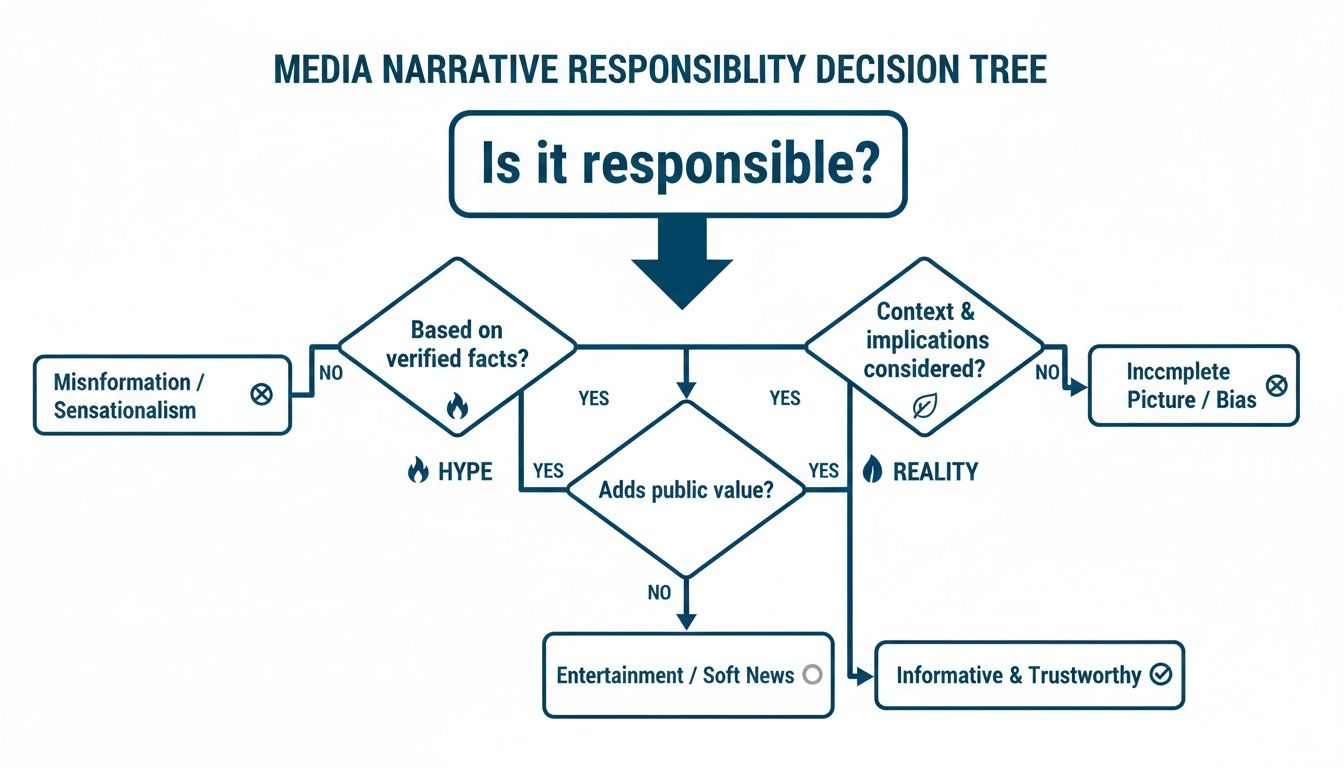
This kind of framework helps us sort through the noise and distinguish sensationalism from responsible, fact-based reporting when we’re trying to form an opinion.
The Push for Decriminalization and Regulation
As the global conversation around psychedelics matures, the tone around Ayahuasca policy is definitely shifting. More and more, advocates are pushing past simple prohibition. They’re calling for smarter legal frameworks centered on decriminalization, regulation, and safe, informed access. This movement is gaining momentum for a few key reasons:
- Growing Research: A steady stream of scientific studies is pointing to Ayahuasca’s potential for treating mental health conditions, which is putting pressure on regulatory bodies to take a second look.
- Human Rights Arguments: Many legal battles are fought on the grounds of religious freedom. The argument is that banning Ayahuasca unfairly stops people from practicing their spirituality.
- Public Health Focus: Supporters of regulation make a compelling case that a legal, controlled system would be much safer. It would allow for quality control, proper screening of participants, and a major reduction in the risks that come with underground ceremonies.
“At its heart, the policy debate boils down to one fundamental question: How can governments respect indigenous traditions and acknowledge potential therapeutic benefits while still managing public health and safety concerns?”
There’s no easy answer. The path forward will require a delicate balancing act, bringing together cultural, scientific, and legal perspectives. Crafting smart policy means finding a way to protect sacred practices while creating responsible guidelines for the modern world. This is a major part of the broader conversation around ayahuasca in culture.
It’s really important to remember that this is just an overview for informational purposes, it’s not legal advice. Laws are constantly changing, and how they’re enforced can vary from one jurisdiction to the next. Anyone even thinking about participating in an Ayahuasca ceremony needs to do their own homework on the specific laws in their location to fully understand the risks involved.
Bridging Ancient Wisdom with Modern Science
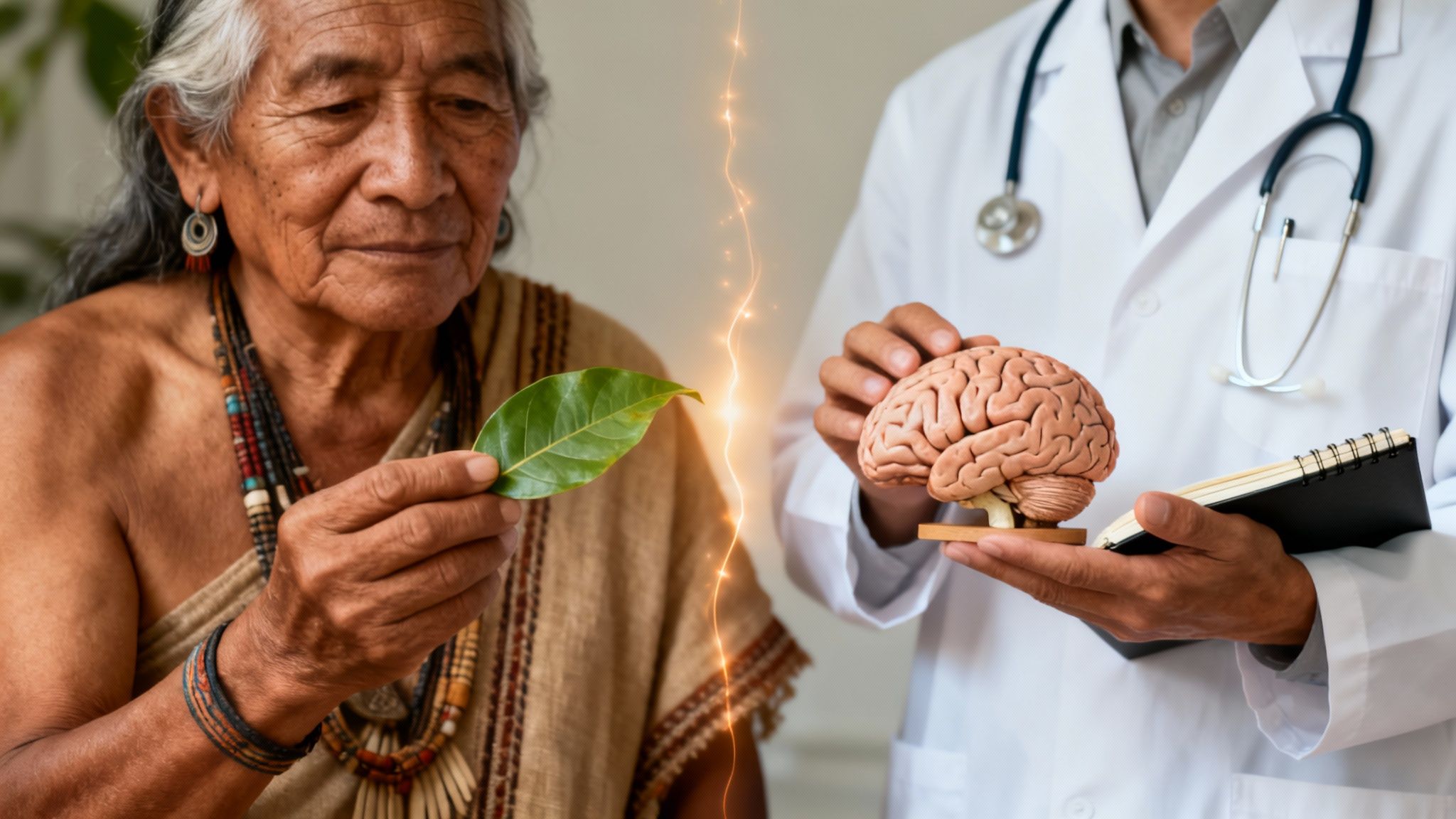
For centuries, indigenous Amazonian cultures have regarded Ayahuasca as a sacred medicine for the soul. It’s a cornerstone of their spiritual and community life. Now, modern science is starting to catch up, exploring what these traditions have long understood through the lens of neuroscience and psychology.
Researchers are digging into Ayahuasca’s potential to help with some of our most stubborn mental health challenges, like chronic depression, PTSD, and addiction. This isn’t about replacing ancient wisdom, but about building a bridge between two very different ways of knowing. We’re seeing a fascinating dialogue unfold where ceremonial knowledge meets rigorous scientific study.
As the line between ancient practice and modern therapy begins to blur, the world is finally paying closer attention to the healing potential held within this Amazonian brew. This scientific interest is another reason ayahuasca in culture now sits at the center of wider public discussion.
Forging New Pathways in the Brain
One of the most exciting areas of research is Ayahuasca’s effect on neuroplasticity, the brain’s incredible ability to rewire itself. Think of the destructive thought patterns that fuel depression or trauma as deep, well-worn ruts in a muddy road. It’s almost impossible to steer out of them.
Ayahuasca seems to act like a downpour of rain, softening the earth and giving you a chance to carve out new, healthier paths. It temporarily quiets the brain’s default mode network (DMN), the part of our mind responsible for self-talk, rumination, and replaying old stories.
By dialing down that inner critic, Ayahuasca can create a window where you’re able to see old problems in a completely new light. This isn’t just about the psychedelic experience itself; it’s about the potential for profound, lasting shifts in perspective. This growing body of research adds another layer to ayahuasca in culture.
Promising Findings and Necessary Cautions
The early scientific findings are genuinely promising, and they often validate what people have reported for generations. Studies show that participants frequently have transformative insights about their lives, relationships, and purpose. Many describe an uncanny ability to revisit and process difficult memories, especially from childhood, with a sense of clarity and emotional freedom they’ve never felt before.
You can read more about Ayahuasca’s potential therapeutic use to get a sense of how these personal insights are driving its growing reputation in wellness circles.
But it’s essential to keep our feet on the ground here. The science is still in its infancy, with most studies being small and lacking long-term data.
We have to remember a few key things:
- Controlled Settings: Nearly all clinical trials take place in sterile, highly controlled therapeutic environments, a world away from a retreat in the jungle.
- Participant Screening: Volunteers are meticulously screened to rule out pre-existing health conditions that could make Ayahuasca dangerous.
- Integration Support: Research participants almost always get professional psychological support before and after their sessions to help them make sense of what can be an overwhelming experience.
“Science isn’t “discovering” Ayahuasca’s healing power. It’s just beginning to understand the mechanisms behind the healing that indigenous cultures have facilitated for generations. Respecting this distinction is absolutely critical.”
Ultimately, this is about collaboration, not validation. By weaving together the deep, intuitive knowledge of indigenous traditions with the analytical tools of modern science, we can build a far richer and more responsible understanding of Ayahuasca in culture – media, policy & global viewpoints. This ensures its legacy is honored as its story continues to unfold on the world stage.
Indigenous Wisdom and Western Appropriation
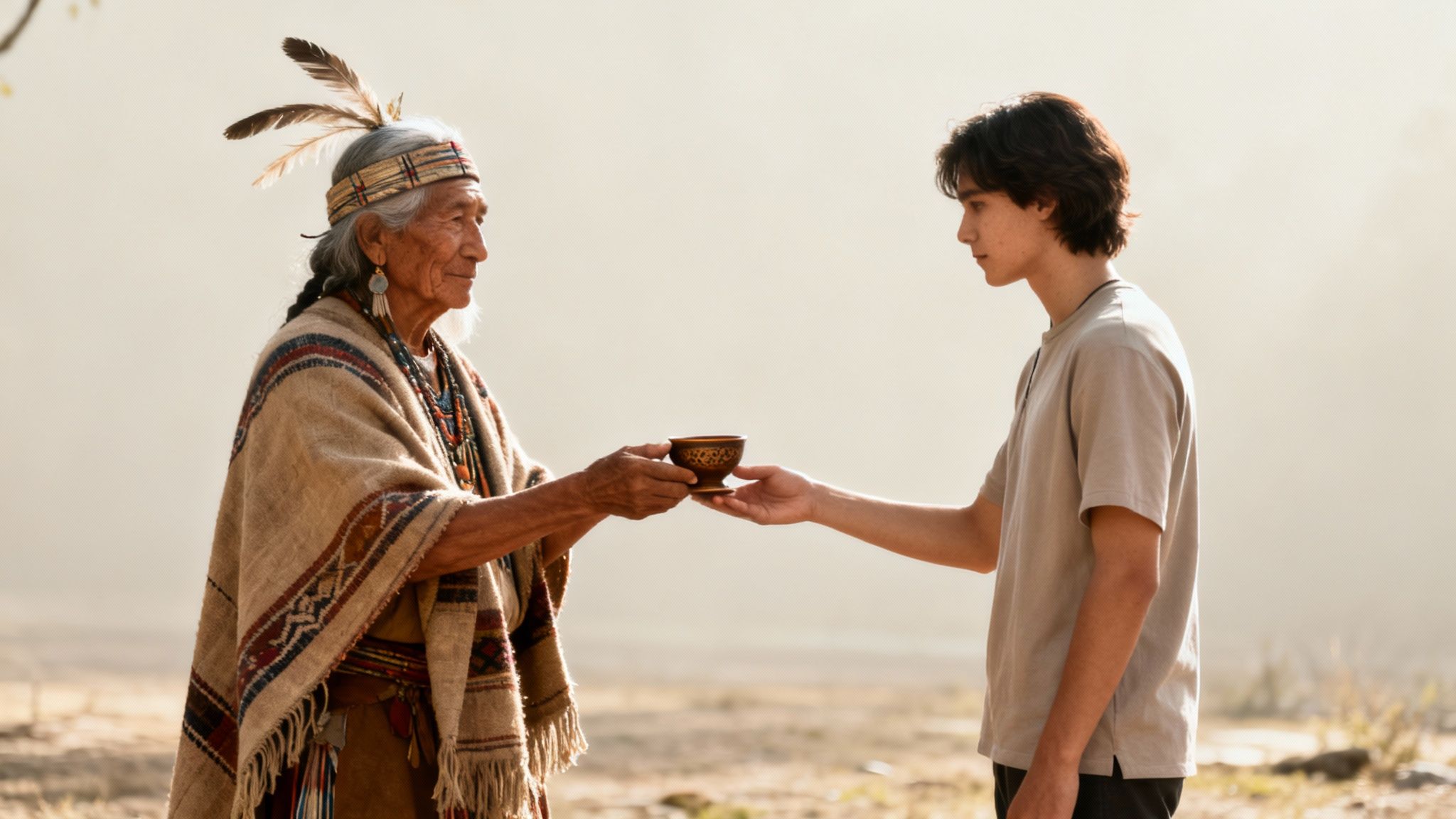
As Ayahuasca journeys from the Amazon rainforest to the global stage, it carries a heavy conversation on its back. This isn’t just about a plant medicine; it’s a dialogue about respect, responsibility, and the massive gap between a sacred tradition and a commercial trend. These tensions are central to ayahuasca in culture.
For countless generations in the Amazon, Ayahuasca has been so much more than a psychedelic brew. It’s seen as a living teacher, a conscious spirit, and a central pillar of society itself. Healers use it as a diagnostic tool, a gateway to the spirit world, and a way to maintain the delicate balance between their communities and the natural world.
The name itself, often translated from Quechua as “vine of souls,” hints at this profound connection. It’s a bridge between the living, their ancestors, and the jungle. In this context, healing isn’t a solo mission, it’s a communal act that ripples through people, families, and the environment. This is a world away from the highly individualistic wellness model common in the West.
The Rise of Spiritual Tourism
The explosion in Ayahuasca’s popularity has created a massive industry often called “Ayahuasca tourism.” Every year, thousands of Westerners fly to countries like Peru, seeking profound healing or a spiritual reboot. While most come with good intentions, the results for local communities are a mixed bag.
On one hand, this new economy can be a lifeline for Indigenous healers and their families, creating income where few other options exist. But on the other, the sheer scale of demand is putting immense pressure on both the culture and the ecosystem.
- Commercialization: Sacred ceremonies risk being repackaged into slick, marketable “experiences” designed for Western tastes. This can water down ancient protocols, shifting the focus from community healing to individual customer satisfaction.
- Ecological Strain: The key ingredients, especially the Banisteriopsis caapi vine, are being harvested at an unsustainable rate. This threatens the long-term survival of the very plant at the heart of the tradition.
- Economic Disparity: The money doesn’t always flow where it’s needed most. Foreign-owned retreat centers often capture the lion’s share of the profits, while the local communities that are the source of the medicine see only a fraction of the benefit.
“At its heart, this is a clash of worldviews. A Westerner often seeks Ayahuasca to heal personal trauma and “find themselves.” But in many Amazonian cultures, the medicine is used to restore balance to the collective, where distress is something that moves between people and places, not just inside one person.”
Navigating Appropriation vs. Appreciation
This leads us to the thorny issue of spiritual appropriation. It’s what happens when a dominant culture plucks sacred practices from a minority culture without permission, context, or respect for their original meaning. It’s the difference between genuine learning and mindless consumption.
When Ayahuasca is treated as just another wellness trend—stripped of its spiritual gravity and community context—it becomes appropriation. It ignores the centuries of knowledge, stewardship, and struggle that have kept this medicine alive. Taking the time to understand the traditions of the specific indigenous groups that traditionally use Ayahuasca is the first step toward engaging respectfully. Discussions of appropriation are also a major part of ayahuasca in culture.
The Path of Reciprocity
So, how can you approach this powerful plant in a way that’s responsible? The answer lies in the principle of reciprocity—or ayni, as it’s known in Quechua. It’s the fundamental practice of giving back, ensuring any exchange isn’t purely one-sided.
Reciprocity isn’t a one-time donation; it’s an ongoing commitment. It means asking hard questions. Does the retreat center you’re considering have Indigenous leadership or ownership? How are they supporting the local community and the sustainability of the plants?
A truly ethical approach to Ayahuasca culture – media, policy & global viewpoints requires us to shift from being passive consumers to conscious participants. Our personal healing journey should contribute to, not detract from, the well-being of the cultures that made it possible.
Your Path to Safe and Respectful Engagement
So, you’re considering an Ayahuasca experience. Moving from simple curiosity to actually participating is a big step, one that calls for careful thought and a whole lot of research. As Ayahuasca has grown in popularity, a huge marketplace has sprung up around it, offering everything from deeply traditional jungle centers to modern, wellness-style retreats.
Your first and most important job is to protect yourself. You need to be sure that whatever path you choose puts your physical, psychological, and spiritual well-being first.
This isn’t a passive process. A safe and respectful experience is built on conscious choices and asking the right questions. The idea is to find a setting, a “container”, that is not only physically secure but is also run by people with the integrity and experience to guide you through what can be an incredibly challenging, and often life-changing, journey.
This work starts long before you ever drink a drop of the medicine. It’s about doing your due diligence, looking inward, and approaching this sacred plant with the respect its indigenous origins deserve. Responsible participation is one more practical side of ayahuasca in culture.
Vetting Facilitators and Retreats
Choosing who will guide your experience is, without a doubt, the most important decision you’ll make. The person leading the ceremony is responsible for the safety and integrity of everything that happens. A great facilitator does so much more than just serve the brew. They create the ceremonial space, help you navigate the tricky territory of your own mind, and offer support when things get intense.
As you look into different options, what you’re really looking for is transparency. Pay attention to how willing they are to answer your questions. Be cautious of anyone who is vague about their background, training, or what they do in an emergency. Real expertise often comes with a dose of humility and a profound respect for the medicine’s power and the traditions behind it.
Your Vetting Checklist
Use this checklist as a guide when you’re sizing up potential retreats or facilitators. A provider you can trust should have no problem giving you clear, confident answers to these questions.
- Lineage and Training: Where did the facilitator learn their craft? What is their specific lineage or training background? Ask them how many years they’ve been serving Ayahuasca and who their teachers were.
- Medical Screening: How do they screen participants? A responsible center will require a detailed health history, including any mental health conditions and a full list of current medications. This is non-negotiable.
- Emergency Protocols: What happens if something goes wrong? Ask about their procedures for a medical or psychological emergency. Is there a hospital or clinic nearby? Is the staff trained in basic first aid?
- Group Size and Support: What’s the ratio of facilitators to participants? You want to know there are enough experienced people on hand to support everyone. How many helpers will be in the room?
- Preparation and Integration: The ceremony is only one part of the process. What guidance do they offer to help you prepare beforehand? Just as crucial, what support is available for integrating the experience into your life afterward?
- Reciprocity and Ethics: How does the retreat or center honor the roots of this medicine? Do they give back to the local community or support the indigenous cultures that have stewarded Ayahuasca for centuries?
“Making an informed decision is an act of self-care. It ensures your journey with Ayahuasca is grounded in safety, respect, and a clear understanding of the commitment you are making to your own healing and growth.”
Frequently Asked Questions
It’s natural to have questions when exploring a topic as complex as Ayahuasca. Let’s walk through some of the most common ones that come up.
Is Ayahuasca Legal Everywhere?
Definitely not. The legal status of Ayahuasca is a real patchwork quilt, varying wildly from one country to the next.
In its Amazonian homelands, places like Peru, Brazil, and Colombia, the brew is often legally protected as part of a sacred cultural and religious heritage. But step into the United States, Canada, or most of Europe, and the picture changes completely. There, its key psychoactive component, DMT, is classified as a controlled substance, placing the entire brew in a legally precarious, and often illegal, position.
While there are some specific legal carve-outs for certain religious groups (like the União do Vegetal), for the average person, getting involved with Ayahuasca can carry very real legal risks.
How Does Media Portrayal Differ from Reality?
The media often paints a picture that’s worlds away from the actual experience. You’ll see sensational headlines about celebrity trips or, on the flip side, horror stories that focus on rare, negative outcomes. This creates a very distorted public perception.
The reality is almost always more subtle and profound. For most people who engage with it respectfully, an Ayahuasca ceremony is an intensely personal and often difficult journey. It’s held in a carefully structured, sacred setting and is seen as a powerful tool for deep healing and self-discovery. It’s fundamentally medicine, not a party drug, a critical distinction that mainstream reporting often misses entirely.
“It’s crucial to distinguish between responsible journalism that explores the cultural and scientific context and clickbait that oversimplifies a complex tradition for shock value or entertainment.”
What Is Cultural Appropriation with Ayahuasca?
This is a big and important topic. Cultural appropriation happens when a dominant culture takes sacred indigenous practices, like an Ayahuasca ceremony, and uses them without permission, genuine understanding, or respect for their deep-rooted origins.
It can show up in a few different ways: commercializing the medicine for profit without giving anything back to the communities that have stewarded it for centuries, twisting or misrepresenting the traditions, or simply treating Ayahuasca as another superficial wellness trend, completely detached from its spiritual foundation.
What Does Reciprocity Mean in This Context?
Reciprocity is the vital practice of giving back. It’s about ensuring that our relationship with Ayahuasca and its cultural guardians isn’t purely one-sided or extractive. It’s a commitment to honor the source.
In practice, this can mean a few different things:
- Financially supporting indigenous-led organizations that work to preserve their culture and land.
- Becoming an advocate for the land rights and sovereignty of Amazonian peoples.
- Approaching the traditions with humility, integrity, and deep respect for the knowledge being shared.