
From the dense Amazon rainforest to the arid deserts of Mexico, human beings have a long and storied history with certain plants—those that can shift our awareness, alter our mood, and even open doors to different states of consciousness. These aren’t just curiosities of the botanical world; they are powerful teachers and healers that have been at the heart of cultures for thousands of years.
At their core, psychoactive plants contain natural compounds that interact with our central nervous system. When we ingest them, these compounds can temporarily change our perception, emotions, and thought patterns.
A Language of Molecules
Think of your brain as an intricate communication network running on chemical messengers called neurotransmitters. These messengers fit into specific receptors, like a key into a lock, to pass along signals.
The active compounds in psychoactive plants are molecular mimics. They are shaped so perfectly that they can also fit into these same neural locks, either amplifying, dampening, or changing the signals being sent. This simple interaction is what can lead to profound shifts in how we experience ourselves and the world around us.
Ancient Roots, Modern Insight
For millennia, indigenous cultures have known about this power. They didn’t just use these plants. They built relationships with them, developing sophisticated ceremonies and deep-seated traditions to guide people through these experiences safely. These psychoactive plants, healing plants, and traditional plant medicines were seen as sacred allies for healing, spiritual growth, and connecting with the divine. The ceremonial use of Ayahuasca, for example, is a rich tradition passed down for generations. You can explore which indigenous groups traditionally use Ayahuasca to get a sense of its deep cultural origins.
Now, modern science is catching up. Researchers are finally beginning to study what ancient healers have understood for ages, investigating how these plant-derived compounds, psychedelic plants, and natural psychedelics might help us tackle some of our most difficult mental health problems. It’s a fascinating moment where ancient wisdom is meeting rigorous scientific inquiry.
“The real power of these plants is in their chemistry and their ability to connect us—to our own minds, to our collective history, and to the natural world itself.”
This guide is designed to walk you through this incredible world with both respect and clarity. We’ll cover:
- How They Work: A deeper dive into the science behind the effects of psychoactive plants and psychedelic plants.
- Key Plant Teachers: A look at major examples like Ayahuasca, psilocybin fungi, Peyote, and Iboga.
- Modern Therapeutic Use: What the latest clinical research is revealing about the potential of psychoactive plants for mental wellness.
- Safety and Responsibility: Essential guidance on harm reduction, preparation, and integrating the experience.
Our goal is to create a bridge between cultural understanding and scientific knowledge, giving you a solid foundation for exploring these remarkable botanical partners.
How Psychoactive Plants Influence the Brain
The powerful experiences people have with psychoactive plants are rooted in very real, specific biochemical interactions happening inside the brain. A good way to think about it is to imagine your brain as a complex communication network. Neurotransmitters, like serotonin, are the messengers that carry signals related to your mood, perception, and thoughts.
Enter the active compounds from these plants, think DMT from Ayahuasca or psilocybin from certain fungi. Their molecular structure looks uncannily similar to our own serotonin. This striking resemblance is the key. It allows them to dock onto the brain’s serotonin receptors, particularly the crucial 5-HT2A receptor, and temporarily alter the normal flow of information. It’s like a guest conductor stepping in to lead the orchestra, creating entirely new harmonies and patterns of brain activity.
Remodeling the Mind’s Architecture
But this interaction does more than just shift your consciousness for a few hours. It can actually kickstart neuroplasticity, which is the brain’s remarkable ability to rewire itself by building new neural connections.
Picture your ingrained thought patterns as deep, well-trodden paths in a forest. After years of walking the same routes, it becomes almost automatic, and veering off course feels difficult. Psychoactive compounds act like a fresh, heavy snowfall. They cover those old, deep ruts, giving you the freedom to forge entirely new paths and see the landscape from a different vantage point.
This neurological flexibility is at the heart of why psychoactive plants, psychedelic medicines, and plant-based psychedelics are showing so much promise for helping people break free from the rigid, looping thoughts that define conditions like depression and anxiety.
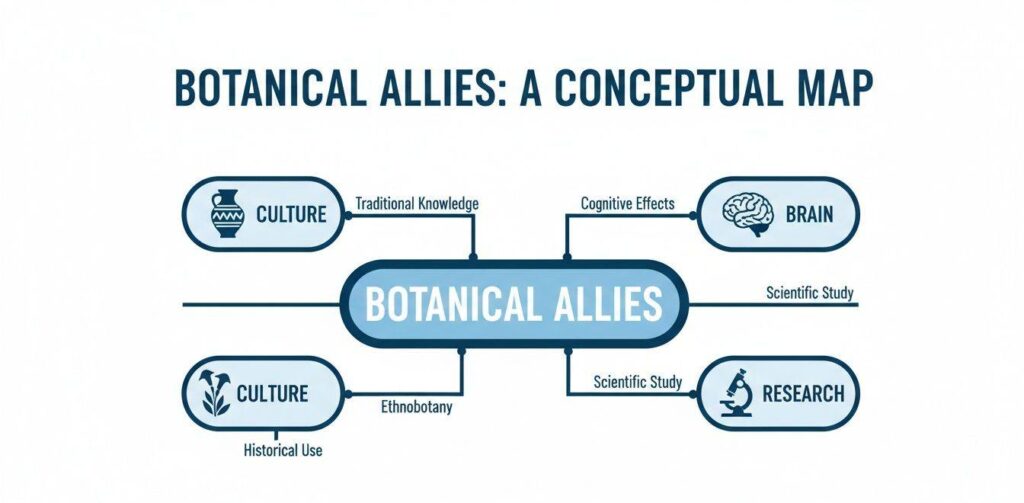
As you can see from the map, this story involves more than just brain chemistry. It’s a convergence of ancient wisdom, modern neuroscience, and clinical research, all feeding into a more complete picture of what these botanical allies can do.
This growing body of scientific evidence is also catching the eye of investors. The global market for psychedelic medicines, including therapies derived from Ayahuasca and psilocybin, was valued at USD 3.12 billion in 2025 and is forecasted to hit USD 8.50 billion by 2032. Some clinical studies are backing this up, with participants in Ayahuasca ceremonies reporting up to an 80% reduction in depression symptoms. Results like that are hard to ignore. You can dig into the numbers and trends in this detailed industry analysis.
Quieting the Brain’s Inner Critic
One of the most fascinating discoveries in psychedelic science has to do with a brain network called the Default Mode Network (DMN). This is a collection of brain regions that hums with activity when your mind is wandering, when you’re daydreaming, thinking about yourself, or worrying about the past and future.
For many people, especially those dealing with depression or anxiety, the DMN can become overactive. It’s like having an inner critic on a relentless, negative loop, constantly rehashing mistakes and anxieties.
“Research consistently shows that classic psychedelics temporarily and significantly reduce activity in the DMN. By quieting this “ego network,” psychoactive plants and psychedelic compounds can foster a profound sense of connection, expanded awareness, and a feeling that the boundaries of the self have dissolved.
When the volume on that inner critic is turned way down, a mental space opens up for new perspectives to take root. This neurological “reboot” allows people to step back and look at their own life stories and mental habits with a sense of detachment and compassion. This journey is about gaining access to a clearer, more objective view of reality, which is often the first real step toward healing.
Getting to Know the Major Psychoactive Plants and Fungi
The world of psychoactive plants is a vast and fascinating one, with every species carrying its own unique chemical fingerprint and deep cultural history. To really grasp their importance, it helps to get familiar with some of the most profound botanical teachers. Let’s dive into four of the most significant examples that continue to shape both ancient traditions and modern paths to wellness.
Ayahuasca: The Visionary Brew of the Amazon
Deep in the Amazon basin, indigenous cultures have long prepared a sacred brew known as Ayahuasca. This powerful entheogen isn’t from a single plant but is a brilliant combination of two: the woody vine Banisteriopsis caapi and the leaves of the Psychotria viridis shrub.
This mixture is a stunning example of jungle pharmacology. The Psychotria viridis leaves contain DMT (N,N-dimethyltryptamine), a powerful psychoactive compound that our bodies normally break down before it can take effect. But here’s the magic: the B. caapi vine contains harmala alkaloids, which act as Monoamine Oxidase Inhibitors (MAOIs). These MAOIs essentially switch off the body’s DMT-degrading enzymes, allowing it to work its visionary magic.
“Traditionally, Ayahuasca is consumed in ceremonies led by a shaman, or curandero. The experience is often described as a deeply introspective journey—one that can unearth profound emotional releases, spiritual insights, and a powerful sense of connection to the living world.”
Today, many people seek out Ayahuasca for its potential to heal deep-seated trauma, address depression, and foster personal growth. The ceremonial container remains central to its use, underscoring a deep respect for the tradition and the potency of the brew itself.
Psilocybin Fungi: The Earth’s Messengers
Often called “magic mushrooms,” fungi containing psilocybin have been part of human culture for millennia. We see evidence of their ceremonial use in ancient rock art from Spain to Algeria. There are over 200 known species of these mushrooms, with Psilocybe cubensis being one of the most widely recognized.
Their psychoactive power comes from two key compounds: psilocybin and psilocin. After you ingest them, your body quickly converts psilocybin into psilocin, which then interacts with serotonin receptors in the brain to produce the mushroom’s signature effects.
Those effects can include:
- Altered Perception: Reality can feel different. You might see intricate patterns, hear sounds in new ways, or lose your normal sense of time.
- Emotional Amplification: Feelings of joy, awe, and deep introspection can become much more intense.
- Ego Dissolution: The familiar feeling of “self” can temporarily fade, leading to a profound sense of being interconnected with everything.
Right now, psilocybin is a major focus of the modern psychedelic research renaissance. Studies are showing incredible promise for its use in treating conditions like stubborn depression and the anxiety people face at the end of life.
To help you get a clearer picture of these incredible plants and fungi, the following table provides a quick, comparative look at their origins, active compounds, and traditional roles.
A Comparative Overview of Key Psychoactive Plants
| Plant/Fungus | Primary Active Compound(s) | Geographic Origin | Primary Traditional Use |
|---|---|---|---|
| Ayahuasca | DMT & Harmala Alkaloids (MAOIs) | Amazon Basin, South America | Spiritual divination, healing ceremonies, and community rituals. |
| Psilocybin Fungi | Psilocybin & Psilocin | Worldwide | Religious ceremonies, rites of passage, and spiritual exploration. |
| Peyote Cactus | Mescaline | Mexico & Southwestern US | Sacrament in the Native American Church for spiritual communion. |
| San Pedro Cactus | Mescaline | Andes Mountains, South America | Shamanic healing, divination, and connection to nature. |
| Iboga Shrub | Ibogaine & other alkaloids | Central West Africa | Bwiti spiritual initiation rites and profound healing ceremonies. |
This table is just a starting point, of course. Each of these has a rich and complex story that goes far beyond a few bullet points, but it’s a great way to see how they fit into the broader landscape.
Mescaline Cacti: Peyote and San Pedro
The arid landscapes of the Americas are home to several psychoactive cacti powered by the alkaloid mescaline. The two most famous are Peyote (Lophophora williamsii) and San Pedro (Echinopsis pachanoi).
Peyote is a small, spineless cactus found in Mexico and the southwestern United States. It is a sacred sacrament for the Native American Church, where it’s used in all-night ceremonies to facilitate a direct connection with the Creator.
San Pedro, a tall, columnar cactus, grows in the Andes Mountains of South America. Its use in traditional shamanic practices goes back at least 2,000 years, where it is revered as a master healer and a tool for divination.
Though both contain mescaline, the journeys they offer are often described differently. Peyote is frequently reported as being more grounding, introspective, and physically intense. San Pedro, on the other hand, is often characterized by a more gentle, heart-opening, and expansive feeling.
Iboga: The African Root of Transformation
Hailing from the rainforests of Central West Africa, Iboga (Tabernanthe iboga) is a shrub whose root bark contains a powerful collection of alkaloids, most notably ibogaine. For the Bwiti spiritual tradition of Gabon and Cameroon, Iboga is a sacred plant medicine used in life-changing initiation rites and deep healing ceremonies.
Ibogaine is known for producing a unique state of consciousness, often described as a “waking dream,” where people may witness a panoramic replay of their life’s memories. This profoundly introspective state has earned Iboga its reputation as a stern but powerful teacher for confronting one’s past and breaking free from deeply ingrained patterns.
In the West, ibogaine has gained significant attention for its remarkable potential in treating substance use disorders, especially opioid addiction. The experience is known for being incredibly demanding, both physically and mentally, but many who go through it describe it as a reset button that catalyzes lasting change.
As you explore these powerful plants, you might find it useful to see a detailed comparison of their uses and effects; you can learn more by reading our guide on the differences between Ayahuasca, Iboga, and Ibogaine. Each represents a unique pathway to understanding the mind, spirit, and the world around us.
The Modern Science of Plant-Based Therapies
After decades of being pushed to the scientific fringes, psychoactive plants are staging a remarkable comeback. Top-tier research institutions are now conducting rigorous studies, and the findings are more than just promising—they’re profound. Modern science is finally beginning to catch up with what indigenous cultures have known for centuries: these plants hold incredible potential for healing the mind.
This resurgence is telling a powerful story. It’s one where ancient wisdom, once brushed aside as folklore, is now being illuminated by clinical data, sophisticated brain imaging, and firsthand accounts from study participants. The work is showing just how compounds from these plants can help us tackle some of our most persistent mental health crises, from debilitating depression to post-traumatic stress.
A New Chapter in Mental Healthcare
The renewed interest in psychoactive plants is sparking a fundamental shift in how we approach mental healthcare. Researchers are digging into how substances like psilocybin and the complex brew of Ayahuasca can trigger deep, lasting therapeutic change, especially for people who haven’t found relief with conventional treatments.
This scientific groundswell is making serious financial waves, too. The market for psychedelic therapeutics, many derived from these plants, was valued at USD 4.223 billion in 2024 and is projected to hit USD 11.387 billion by 2032. This growth is fueled by some truly eye-opening clinical results.
Consider a 2022 study from Johns Hopkins, which found that 67% of patients with PTSD achieved full remission after just two sessions of psilocybin-assisted therapy. In a similar vein, Ayahuasca trials have seen 72% of participants with treatment-resistant depression show major improvements after a single dose—an effect that appears to last longer than many other fast-acting therapies. You can discover more about these market insights and the research propelling the field forward.
Validating Ancient Healing Practices
Perhaps the most compelling part of this scientific movement is how beautifully it aligns with ancient knowledge. For generations, indigenous traditions have used these plants in carefully structured ceremonies designed for healing. Today, clinical protocols are unknowingly borrowing from this playbook, stressing the critical importance of a patient’s mindset, the therapeutic setting, and the presence of a trusted guide.
“Modern psychedelic-assisted therapy is about more than just administering a substance. It is about creating a supportive container where a person can safely explore their inner world, process difficult emotions, and access new perspectives—a framework drawn directly from traditional ceremonial use.”
This blend of old and new is giving us a much richer, more holistic model of healing. It acknowledges that true wellness involves more than just brain chemistry; it involves our psychological, emotional, and even spiritual dimensions. The data shows us what’s happening in the brain, while the wisdom traditions remind us how to navigate the journey with intention and respect.
Hope for Treatment-Resistant Conditions
One of the most exciting frontiers for this research is in helping people with conditions that have stubbornly resisted every other form of therapy. For those who have battled depression, PTSD, or addiction for years, therapies involving psychoactive plants are offering a tangible source of new hope.
The outcomes from recent studies are so striking for a few key reasons:
- Speed of Action: Unlike antidepressants that often take weeks or months to work, many people report feeling significant improvements within just days of a single session.
- Depth of Healing: These experiences tend to help individuals get to the root of their suffering, rather than simply masking the symptoms.
- Lasting Change: When paired with proper therapeutic support and integration, the insights gained during a session can lead to durable, positive shifts in outlook and behavior.
This is no magic bullet, of course. But it represents a powerful and much-needed new tool in the mental health toolkit. By combining the profound potential of these plants with the rigor of modern science, we are finally unlocking evidence-based paths to healing that felt impossible just a few years ago.
Navigating Your Journey Safely and Responsibly
Stepping into the world of psychoactive plants is a profound decision, one that calls for genuine respect and careful preparation. The quality of your experience has less to do with the plant itself and far more to do with your own inner world and the environment you’re in. Think of safety and responsibility as the bedrock of any meaningful journey.
This all comes down to two ideas you’ll hear a lot about: set and setting. “Set” is short for mindset—it’s everything you bring to the table emotionally and mentally. Your thoughts, your mood, your intentions for the experience. “Setting” is your physical and social environment—where you are, who you’re with, and how safe you feel. A calm, intentional mindset paired with a secure, comfortable space creates the best possible container for whatever unfolds.
Understanding Set and Setting
Your internal landscape, or set, is really the starting point. It’s always best to approach these experiences when you’re feeling relatively stable, not when you’re in the middle of a major life crisis. Being well-rested, clear-headed, and having a clear reason for your journey can completely change the outcome.
The setting, then, acts as your physical and emotional safety net. This means finding a place where you feel completely secure and know you won’t be interrupted. Having a trusted, sober guide or an experienced, vetted facilitator with you is absolutely non-negotiable. Their presence ensures you have support if things get challenging.
“The most powerful experiences with psychoactive plants happen when a prepared mind meets a safe, intentional space. This is the combination that allows for vulnerability, insight, and real growth to emerge.”
This has grown beyond a niche interest. The market for therapeutic psychoactives like Ayahuasca and psilocybin was valued at USD 3 billion in 2023 and is projected to hit USD 9 billion by 2032. That growth is fueled by some pretty compelling results. For example, one study found that 82% of Ayahuasca users still felt lasting spiritual insights and had less anxiety six months after a ceremony. For the millions of people dealing with depression, these are promising findings.
But here’s the key: experts agree that 80% of the long-term benefits don’t come from the experience itself, but from the thoughtful integration work you do afterward. You can explore more market data and research findings here.
Essential Safety Considerations
Before you even consider a journey, a thorough personal safety check is critical. Certain medical conditions and medications can create serious risks when mixed with psychoactive compounds. This is especially true for plants like Ayahuasca, which contains MAOIs (Monoamine Oxidase Inhibitors).
You absolutely need to screen for a few key things:
- Cardiovascular Health: If you have a history of heart conditions, this can be a major red flag.
- Psychological History: A personal or family history of psychosis or schizophrenia demands extreme caution and a conversation with a professional.
- Medications: Many common drugs, particularly SSRIs and other antidepressants, can have dangerous, even life-threatening, interactions with MAOIs.
Understanding these interactions isn’t optional. For example, knowing which foods and medications to avoid with MAOIs is essential to prevent serious health issues like serotonin syndrome. Always talk to a knowledgeable healthcare provider before making any decisions.
Choosing a Trustworthy Guide
If you decide to work with a facilitator or go to a retreat, doing your homework is paramount. A responsible guide puts your safety above absolutely everything else. They should be transparent, experienced, and happy to answer every single one of your questions.
When looking into a facilitator or retreat center, here are some good questions to ask:
- What is your training and lineage? Their background tells you a lot about their expertise and the tradition they work within.
- What does your medical screening process involve? A detailed intake process is a clear sign of a professional and safe operation.
- How do you handle difficult experiences? Knowing their plan for both psychological and medical support shows you how prepared they really are.
- What kind of integration support do you offer? The work isn’t over when the ceremony ends. Post-journey support is what helps you turn insights into lasting change.
Finally, you have to be smart about the legal side of things. Laws around psychoactive plants change dramatically from one country to the next, and even between states. Always research the specific legal status of any plant medicine in the location where you plan to work with it. Making informed, conscious choices is the best way to honor yourself, these ancient traditions, and these powerful botanical allies.
The Importance of Preparation and Integration
The journey with a psychoactive plant doesn’t start when the ceremony begins, and it certainly doesn’t end when the effects wear off. The most powerful and lasting transformations are often born in the quiet moments of preparation before and the dedicated reflection that follows. Think of preparation and integration as the essential bookends that hold the experience, giving it context, meaning, and direction.

Imagine the experience is like planting a seed. Preparation is the act of tilling the soil, removing the rocks, and making the ground fertile. Integration is the patient, daily act of watering and tending to that seed so it can grow into something resilient and beautiful. Without both, the seed of insight might never break through the surface.
Preparing the Ground for Growth
Proper preparation goes far beyond a simple checklist of what to eat or avoid. While following specific guidelines, like the traditional dieta for an Ayahuasca ceremony, is crucial for physical safety, the real work is about cultivating a receptive state of mind and spirit. It’s about creating a clear, intentional space within yourself.
This inner groundwork can look like many things:
- Setting Intentions: Gently ask yourself what you hope to heal or understand. A clear intention isn’t a demand; it’s more like a compass that offers a point of focus without shackling you to a specific outcome.
- Journaling: In the days or weeks leading up, writing down your thoughts, fears, and hopes can be incredibly revealing. You might uncover patterns or get a clearer sense of what’s truly calling for your attention.
- Mindfulness Practices: Even a few minutes of meditation or simple breathing exercises can help quiet the mental chatter. This builds the resilience needed to navigate the powerful and sometimes overwhelming emotions that can surface.
This whole process is about opening yourself to the unknown with a spirit of humility and curiosity. It’s an exercise in letting go of the illusion of control and trusting that the experience will provide what you need, not necessarily what you want.
“A psychedelic journey is a potent catalyst, but the real alchemy happens when you intentionally prepare your mind and heart. Preparation isn’t about controlling the trip; it’s about becoming a worthy container for whatever wisdom emerges.”
Turning Insight into Action Through Integration
Once the ceremony is over, the real work truly begins. This is integration—the conscious, often challenging process of weaving the insights, emotions, and lessons from your journey into the fabric of your day-to-day life. Neglect this step, and even the most earth-shattering revelations can fade away like a half-remembered dream.
Integration is an active and ongoing practice. It’s the bridge between the extraordinary state of consciousness you visited and your ordinary reality. It requires a deep well of patience, self-compassion, and a commitment to honoring what you’ve been through.
A few powerful integration practices include:
- Continued Journaling: Write about your experience in detail. Don’t edit or censor yourself—just capture the raw feelings, strange images, and fragmented thoughts as they arise.
- Creative Expression: Draw, paint, dance, or play music. These creative outlets can help you process the non-verbal, purely sensory aspects of your journey that words can’t touch.
- Mindful Movement: Practices like yoga, tai chi, or simply walking in nature can help you reconnect with your body, grounding the experience in a physical, tangible way.
- Community and Support: Sharing what you went through with a trusted friend, a dedicated support group, or a trained integration specialist is invaluable. It provides outside perspective and holds you accountable to the changes you want to make.
Ultimately, integration is about embodiment. It’s the process of taking the abstract wisdom you received and translating it into new behaviors, healthier relationships, and a more authentic way of being. This is how a single experience can ripple outward, creating positive and permanent change in your life.
Common Questions About Psychoactive Plants
It’s natural to have a lot of questions when you start exploring the world of psychoactive plants. Getting clear, honest answers is the first step toward making choices that feel right for you, whether you’re seeking healing, understanding, or personal growth.
What Happens in a Ceremony?
Ceremonies can look very different depending on the plant, the tradition it comes from, and the person leading it, but most follow a similar rhythm. They’re almost always held in a safe, controlled setting, often at night, and are guided by a facilitator, shaman, or guide with deep experience.
Participants usually get comfortable, either sitting up or lying down, before they take the plant medicine. The guide’s job is to “hold the space”—a term that means they maintain a safe and supportive energetic environment. They might use sound, like singing traditional songs (icaros) or playing a rattle, to help guide the journey and support people through whatever comes up.
The experience is intensely personal. For some, it might be filled with profound beauty and cosmic visions; for others, it can be a challenging but necessary process of releasing old emotions. When the strongest effects of the medicine begin to fade, the ceremony usually closes with a period of quiet integration and rest.
“The whole point of the ceremonial container is to create a space where you feel safe enough to completely let go, travel into your inner world, and work with whatever surfaces.”
Are Psychoactive Plants Legal?
This is a tricky one, as the legal status of these plants is a patchwork that changes dramatically from one country to the next, and even between states or cities. For instance, Ayahuasca is legally protected for religious use by specific, recognized churches in the United States and parts of Brazil, but is otherwise a controlled substance.
Psilocybin is another great example of this shifting landscape. It has been decriminalized in a handful of U.S. cities, and Oregon has legalized it for therapeutic use in licensed centers. Because the laws are constantly evolving, you must research the specific regulations for your own location before even considering working with these plants. Staying informed is non-negotiable.
How Do You Find a Reputable Guide?
Finding a trustworthy and experienced guide is probably the single most important decision you’ll make. A good facilitator’s number one priority is your physical and psychological safety. They should be completely open about their training, the tradition they work within, and how much experience they have.
Be on the lookout for guides and retreat centers that have a serious medical intake process. They should ask about your health history and be ready to answer all of your questions, especially about how they handle difficult or overwhelming experiences.
Word-of-mouth recommendations from people you trust are gold. Detailed online reviews can also offer a lot of insight. But above all, listen to your gut. A facilitator who is right for you will make you feel safe, respected, and truly seen.