
Welcome to our guide on 2C-B. If you’ve heard of it, you probably know it’s often described as a unique substance that sits somewhere between the heart-opening feel of MDMA and the visual-heavy world of LSD. Our goal here is to walk you through what it is, how it works, and how to approach it with safety and respect. Knowledge is always the best tool for harm reduction.
A Harm Reduction Guide to 2C-B

2C-B is a psychedelic phenethylamine that first came into existence back in 1974. It was created by the legendary chemist Alexander Shulgin and started gaining steam in underground club scenes across the US and Europe in the late ‘80s and early ‘90s. If you’re curious about its journey, you can explore a brief history of how it emerged and found its place in the culture.
This guide is designed to be a comprehensive resource on 2C-B’s effects, potential risks, and the practices that can help minimize harm. We want to empower you with solid information so you can make responsible, informed decisions for yourself.
The Creator and Its Discovery
You can’t talk about 2C-B without talking about Alexander “Sasha” Shulgin. He was a trailblazing chemist and pharmacologist who dedicated much of his life to psychoactive compounds. From his home lab, Shulgin synthesized and bioassayed hundreds of substances himself, famously documenting his findings in the books PiHKAL and TiHKAL.
Shulgin’s work was a methodical blend of scientific rigor and deeply personal exploration. 2C-B was born from his deep dive into the phenethylamine family, the same chemical class that includes mescaline and MDMA. For Shulgin, these were not just molecules; they were keys to unlocking the human mind.
“I am completely convinced that there is a wealth of information built into us… tucked away in the genetic material in every one of our cells. The psychedelic drugs… are tools which may be used to facilitate memory of this, and of other events.” – Alexander Shulgin
A Unique Place in Culture
After its creation, 2C-B flew under the radar for more than a decade. It was used quietly by some psychotherapists as a therapeutic tool before it ever hit the recreational scene. What made it stand out was its unique profile of effects, which helped it carve out its own distinct niche.
People who used it often reported a unique combination of experiences:
- Sensory Enhancement: Colors pop, music feels richer and more textured, and the sense of touch can become incredibly vivid.
- Mental Clarity: On lower doses, many people find they can maintain a surprisingly clear and functional headspace, which is not always the case with psychedelics like Ayahuasca.
- Emotional Openness: It can bring on a gentle wave of empathy and connection, but often without the intense emotional push that can come with other empathogens.
This particular blend of effects is why 2C-B became known for its versatility. The experience is highly dose-dependent, capable of producing anything from a mild, stimulant-like buzz to a full-on, deeply psychedelic journey. We’ll be exploring all these facets to give you the clearest possible picture of this compound.
Navigating Effects and Proper Dosage
People often describe the 2C-B experience as a vibrant, sensory-rich journey, but it’s quite different from other well-known psychedelics. If a substance like Ayahuasca is a deep-sea dive into your own psyche, 2C-B is more like putting on a pair of high-definition glasses that make the world sparkle with new life. The experience tends to point outward, enhancing your perception of the world around you.
The visual effects are really its signature. Colors can seem to pop, becoming brighter and more saturated. You might see surfaces gently breathe or ripple, or notice flowing geometric patterns, especially with your eyes closed. Crucially, these visuals rarely overwhelm your sense of reality in the way a high dose of another psychedelic might.
Emotional and Cognitive Sensations
Beyond the visuals, 2C-B is known for its warm, empathogenic quality. It often fosters a sense of emotional openness and connection with others, which might sound a lot like MDMA. The key difference, though, is the mental clarity. Many find they can still hold a conversation, think logically, and feel surprisingly lucid, especially on lower doses. This makes the experience feel much more manageable and less mentally taxing for some.
This substance also tends to bring on a noticeable physical energy, a gentle, stimulating buzz that can make you want to move, dance, or just appreciate the feeling of music and touch more deeply. It’s this unique blend of mental lucidity, emotional warmth, and sensory enhancement that gives 2C-B its distinct character.
“The real magic, and the biggest risk, of 2C-B lies in its dose-dependent nature. A few milligrams can be the difference between a light, social stimulant and a full-blown psychedelic adventure. This makes precise measurement an absolute necessity.”
Understanding this sensitivity is the single most important part of using 2C-B safely. What one person considers a light dose, another might find overwhelmingly intense. This is exactly why the “start low, go slow” rule is essential.
The Crucial Role of Dosage
With 2C-B, dosage is everything. The line between a fun, manageable experience and a challenging, intense one is incredibly thin, sometimes just a few milligrams. This steep dose-response curve means that a small error in measurement can lead to a radically different and much stronger experience than you bargained for. That’s why using a calibrated digital scale that measures to the milligram (0.001g) is non-negotiable.
When taken orally, the most common method, effects usually start to kick in within 45 to 75 minutes. They typically peak around the two-hour mark and the entire experience lasts somewhere between 4 to 8 hours. The journey is often broken down into a few distinct dosage tiers.
To give you a clearer picture, here are the generally accepted oral dosage ranges:
- Threshold (2-5 mg): At this level, the effects are incredibly subtle. You might feel a slight mood lift or a tiny shift in your senses, but nothing overtly psychedelic.
- Light (5-15 mg): This is often called the “sweet spot” for social or therapeutic settings. It brings on a noticeable mood boost, increased empathy, and mild visuals like brighter colors, all without muddying your thoughts too much.
- Common (15-25 mg): This is where you get the classic 2C-B experience. Expect distinct visual patterns, major color enhancement, and a strong sense of empathy. The “body load,” physical sensations like tingling or nausea, can also become more noticeable here.
- Strong (25-40 mg): In this range, the experience becomes intensely psychedelic. Visuals can be immersive, and both the physical and emotional effects are powerful. A dose this high is only for the very experienced, and it demands a completely safe and comfortable setting.
Of course, these are just guidelines. Your body weight, metabolism, and unique personal sensitivity all play a huge role in how you’ll react. When in doubt, always err on the side of caution.
The table below helps illustrate how the dose directly shapes the experience.
2C-B Dosage and Typical Effects (Oral)
This table outlines common oral dosage ranges for 2C-B and the corresponding intensity and type of effects, emphasizing that individual reactions can vary.
| Dosage Range | Threshold | Light | Common | Strong |
|---|---|---|---|---|
| Typical Dose | 2-5 mg | 5-15 mg | 15-25 mg | 25-40+ mg |
| Primary Effects | Subtle mood lift, gentle stimulation. | Enhanced senses, emotional openness, sociability. | Full psychedelic effects, strong empathy. | Intense, immersive psychedelic experience. |
| Visual Intensity | Minimal to none. | Low (e.g., brighter colors). | Moderate (e.g., patterns, trails). | High (e.g., complex geometry, fractals). |
| Mental State | Mostly clear, almost sober. | Clear and lucid, very sociable. | Psychedelic but generally coherent. | Deeply altered, potentially confusing. |
Ultimately, a responsible approach to 2C-B starts and ends with a deep respect for its potency. By understanding how just a few milligrams can completely change the journey, you can set better expectations and, most importantly, prioritize your own well-being.
How 2C-B Works and Critical Drug Interactions
To navigate a 2C-B experience safely, you have to look under the hood and understand what’s happening inside your body. At its core, 2C-B gets its psychedelic magic by interacting with the brain’s serotonin system. You can think of serotonin as a master controller for your mood, perception, and even how you think. 2C-B essentially acts like a special key that fits into specific serotonin “locks,” also known as receptors.
Its primary target is the 5-HT2A receptor. This is the same receptor that classic psychedelics like LSD and psilocybin activate to paint the world with their signature visuals and open up the mind. By stimulating this particular receptor, 2C-B reorganizes communication between different parts of the brain, leading to that well-known blend of heightened sensory perception and altered consciousness.
Understanding the Brain Chemistry
While 2C-B’s effect on the 5-HT2A receptor is the main event, its overall character is quite different from other psychedelics. It doesn’t cling to the receptor as tightly as LSD does, which is a big reason why its effects are typically shorter and often feel more mentally clear. This unique handshake with the brain creates its signature mix of brilliant visuals and emotional empathy, usually without sending you completely off-planet.
This interaction is also what makes understanding potential drug combinations so incredibly important. Since 2C-B is so directly involved with the serotonin system, mixing it with other substances that also poke and prod at serotonin can be a recipe for disaster.
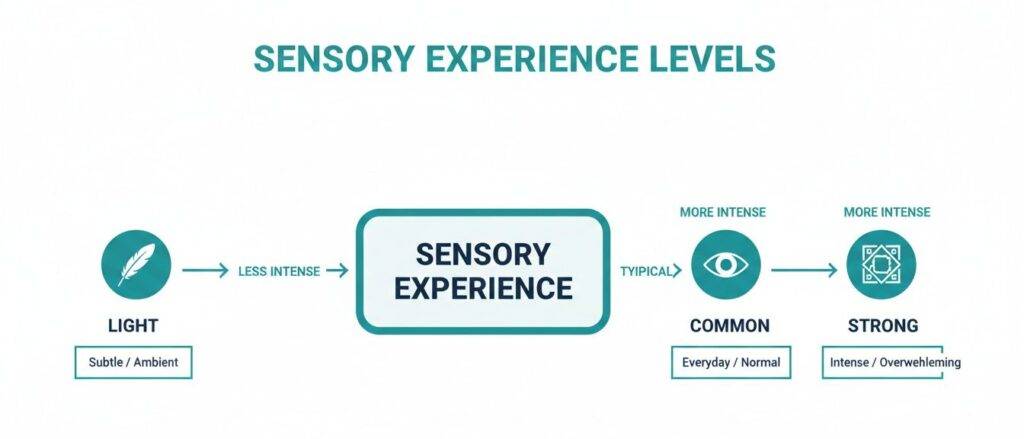
As this image shows, the intensity of the experience can slide along a scale, from a subtle shimmer added to reality all the way to a full-blown, powerful sensory voyage.
The Dangers of Ayahuasca and MAOI Combinations
One of the most dangerous interactions to be aware of involves Monoamine Oxidase Inhibitors (MAOIs). These are powerful compounds found in certain prescription medications and, crucially, in the plant ingredients used to brew Ayahuasca. MAOIs work by shutting down the enzyme that cleans up neurotransmitters like serotonin.
When you take an MAOI and then add a serotonin-mimicking substance like 2C-B, you’re setting up a dangerous chain reaction. The MAOI prevents your brain from clearing out serotonin, while 2C-B is actively stimulating the serotonin receptors. This leads to a massive, toxic buildup of serotonin.
“This flood of serotonin can trigger serotonin syndrome, a potentially fatal medical emergency. The symptoms range from agitation, confusion, and a racing heart to high blood pressure, rigid muscles, and seizures. Combining 2C-B with Ayahuasca or any MAOI is playing with fire, it’s extremely dangerous and must be avoided at all costs.”
To better understand this risk, we’ve put together a comprehensive guide on foods and medications to avoid with MAOIs.
Other Critical Drug Interactions to Avoid
MAOIs are not the only concern. Several other common substances create significant risks when mixed with 2C-B, and knowing about them is a cornerstone of responsible use. It is vital to be aware of any combination that could lead to an unpredictable or hazardous outcome.
Here are some other substances that should never be combined with 2C-B:
- SSRIs (Selective Serotonin Reuptake Inhibitors): These common antidepressants can unpredictably weaken or change 2C-B’s effects. More critically, the combination raises the risk of serotonin syndrome.
- Stimulants (e.g., amphetamines, cocaine): Mixing 2C-B with stimulants puts a tremendous strain on your heart and cardiovascular system. This can cause a dangerously high heart rate, skyrocketing blood pressure, and intense anxiety or paranoia.
- Tramadol: This opioid pain medication also affects serotonin levels, creating a serious risk of seizures and serotonin syndrome when taken with 2C-B.
- Lithium: Often prescribed as a mood stabilizer, lithium is known to cause severe and dangerous reactions with psychedelics, including a high risk of seizures and psychosis.
This is not just dry, academic information; it’s practical, life-saving knowledge. Being mindful of what you’re combining is one of the most powerful harm reduction tools you have.
Managing Potential Risks and Long-Term Concerns
While most people have positive experiences with 2C-B, a responsible approach means understanding what can go wrong and how to handle it. A challenging trip is not a failure; it’s a possibility with any psychedelic. Knowing how to navigate the rough patches can make all the difference.
Acute risks tend to fall into two camps: psychological distress and physical discomfort.
Mentally, things can get a bit wobbly. Feelings of anxiety or paranoia might bubble up, especially if the dose hits harder than you anticipated. The stimulant kick of 2C-B can also leave you feeling restless or agitated. If the experience becomes too intense, it’s easy to feel disoriented and scared.
Physically, your body might have a few things to say. Nausea is a classic, especially on the come-up. Some people also report muscle tension, chills, or what’s often called an uncomfortable “body load,” just a general sense of physical unease.

Strategies for Navigating a Difficult Experience
Your best defense against a tough journey is preparation and mindset. Most difficulties are manageable if you’ve set up a supportive space and have a few simple tricks up your sleeve.
Having a trusted, sober friend or “trip sitter” is key. This person is your anchor, they can offer a reassuring word, a grounding touch, or just help with simple things like grabbing a glass of water. Their calm presence can be incredibly helpful if you feel like you’re losing your footing.
If things start to feel difficult, here are a few practical techniques to try:
- Change Your Scenery: Sometimes all it takes is moving to a different room or stepping outside for some fresh air to completely shift the vibe.
- Focus on Your Breath: Deep, slow breathing is a powerful tool. It calms the nervous system and brings you back into your body in a gentle, centered way.
- Listen to Calming Music: A familiar, soothing playlist can act as a comforting guide, giving the experience a sense of structure.
- Verbal Reassurance: Remind yourself that what you’re feeling is temporary and caused by the substance. Hearing it said out loud, either by you or your sitter, can be surprisingly powerful.
Unregulated Markets and Contamination Risks
One of the biggest dangers of 2C-B has nothing to do with the molecule itself. It concerns the unregulated market it comes from. Since it’s illegal in most places, there’s zero quality control. The powder or pill you get might not even be 2C-B.
This is a critical safety issue. Substances are often mislabeled or cut with other, far more dangerous chemicals. For example, drugs from the potent and highly risky NBOMe family are sometimes passed off as 2C-B. These imposters can cause severe, sometimes fatal, reactions even in tiny amounts.
“The only way to know for sure what you have is to use a reagent test kit. Testing your substance is not an optional step; it’s an essential harm reduction practice that could literally save your life.”
It is vital to grasp the realities of a black market. Many of the same principles apply across the board, as you can read more about in this piece on the general risks and challenges of a spreading tradition in psychedelic use.
Hallucinogen Persisting Perception Disorder
A rare but serious long-term risk to be aware of is Hallucinogen Persisting Perception Disorder (HPPD). This is a condition where visual disturbances, like seeing trails, halos around lights, or “visual snow,” continue long after the trip is over.
No one knows exactly what causes HPPD, and it seems to affect only a very small fraction of people who use psychedelics. While the odds are low, it’s a real possibility that anyone considering 2C-B should know about. The condition can range from a minor annoyance to a genuinely distressing part of daily life. For this reason, anyone with a personal or family history of psychiatric conditions should be extremely cautious.
Legal Status and the Role of Reagent Testing
Before we go any further, we have to talk about the legal side of things. Knowing the law is a fundamental part of harm reduction. The reality is that 2C-B is a controlled substance in most countries.
In the United States, it’s a Schedule I drug, putting it in the same legal bucket as heroin and LSD. This classification means the government considers it to have a high potential for abuse with no accepted medical use. The situation is similar elsewhere: it’s a Class A drug in the UK and listed under Schedule III in Canada. These are serious classifications, and this information is not an endorsement, it is about giving you the full picture so you can make safe, informed decisions.
Why Reagent Testing Is Non-Negotiable
Because 2C-B comes from a completely unregulated market, you can never be 100% sure that what you have is actually 2C-B. This is probably the single biggest risk involved. It is not uncommon for other, far more dangerous research chemicals to be sold as 2C-B, especially potent compounds from the NBOMe family. These substances can have radically different effects and lethal dosage levels, creating a recipe for a medical emergency.
This is exactly why reagent testing is not just a good idea, it’s an essential safety measure.
“Reagent testing is a simple chemical process you can do at home to get a better idea of what a substance is. It won’t tell you the purity or strength, but it’s brilliant for confirming that the expected compound is present and, crucially, for flagging dangerous substitutions.”
Think of it as your first line of defense. Using a test kit is a straightforward harm reduction practice that helps you navigate the risks of an unpredictable supply chain. You can see a parallel discussion on managing risk in similar contexts by reading about the globalization of Ayahuasca and harm reduction.
How Reagent Kits Work
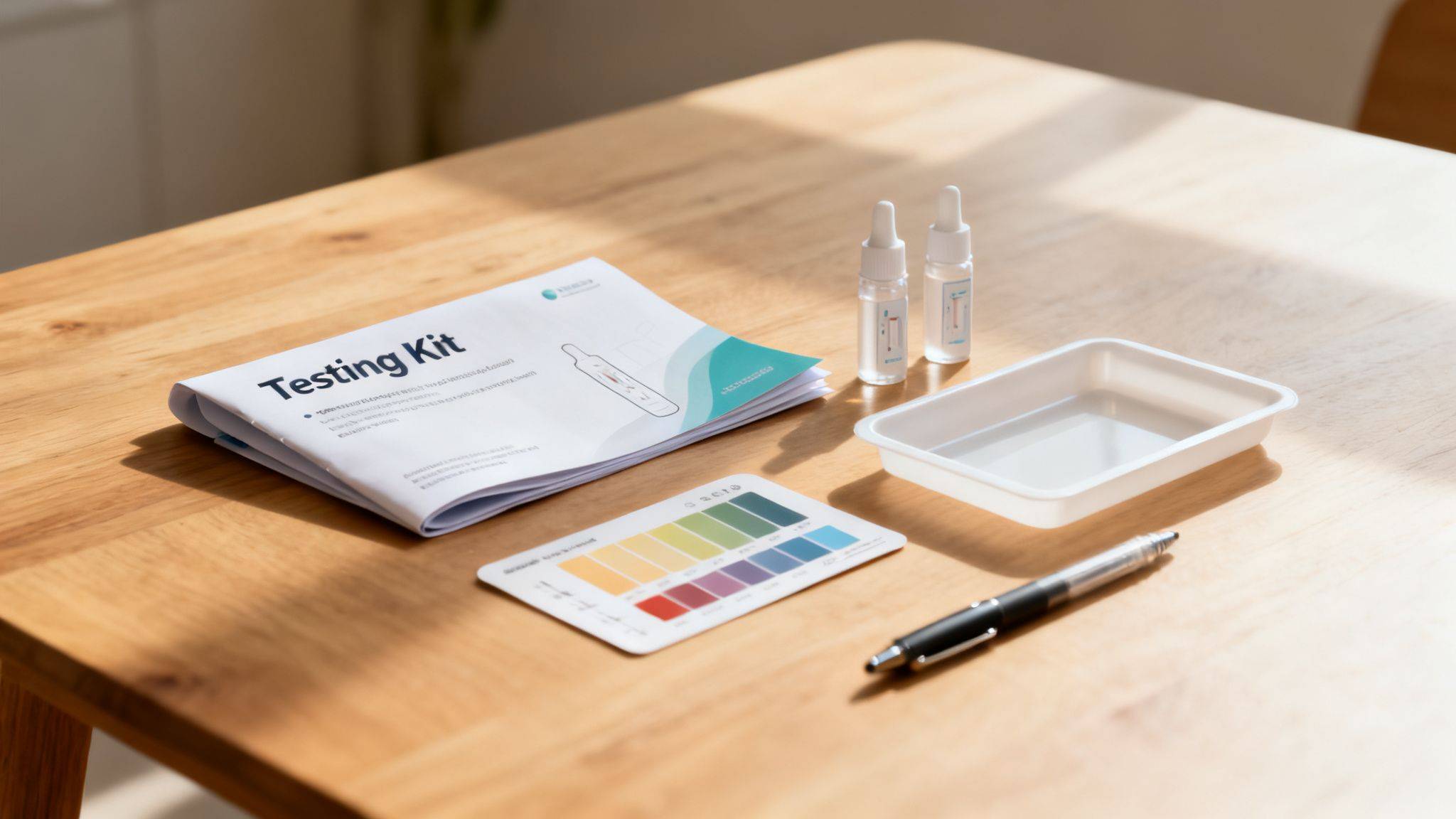
So, what are these kits? They’re just small bottles of specific liquid chemicals. When you add a drop of the reagent to a tiny, “grain of salt” sized sample of your substance, a chemical reaction causes a color change. You then match that color to a chart that comes with the kit to see if it lines up with the expected result for 2C-B.
For a more reliable result, it’s best to use a few different reagents, as each one reacts differently to various classes of compounds. For 2C-B, these are the go-to tests:
- Marquis Reagent: This is a great place to start. For 2C-B, it should produce a yellow-to-green color.
- Mecke Reagent: With this one, you’re looking for a reaction that turns from green to brown.
- Froehde Reagent: This should also turn a yellow or green color.
If you see a completely different color, or no reaction at all, that’s a massive red flag. It means your substance is not what you were told it was. For instance, a dark purple or black reaction with Marquis could point to a dangerous NBOMe compound instead. Testing is cheap, fast, and could literally save a life. This is a step you should never, ever skip.
The Journey After the Journey: Integration and Support
The 2C-B experience doesn’t just stop when the visuals fade. In many ways, that’s when the real work begins. This next phase is called integration, and it’s all about making sense of what you saw, felt, and thought, then figuring out how to carry those insights back into your day-to-day life.
Think of it this way: without integration, even a mind-blowing experience can evaporate like a dream you can’t quite remember. The process turns a fleeting, powerful moment into lasting, meaningful change. It’s the bridge between that other world and this one.
How to Ground Your Experience
There’s no single “right” way to do this, but a few simple practices can help you unpack everything that came up. The goal is to create a space to explore what happened without judgment.
You don’t need a complicated plan. Just a little consistent effort in the days and weeks that follow can make a world of difference. Try weaving some of these into your routine:
- Journaling: This is a classic for a reason. Just let your thoughts flow onto the page without censoring yourself. If you’re stuck, try prompts like, “What was the one feeling that kept coming back?” or “What surprised me the most?”
- Quiet Reflection: You don’t have to be a meditation master. Simply sitting in silence for a few minutes, focusing on your breath, can help you reconnect with the feelings and ideas from your experience.
- Creative Outlets: Sometimes words just don’t cut it. Try drawing, painting, making music, or even dancing to express emotions that are hard to verbalize. The goal is processing, not creating a masterpiece.
- Time in Nature: Getting outside can be incredibly grounding after a psychedelic experience. A simple walk in the park or a hike can help you feel more centered and connected.
“Integration is the deliberate work of turning a powerful experience into a powerful lesson. It’s an active process of listening to what the journey showed you and deciding how to carry it forward.”
When You Might Need More Support
Most of the time, people can navigate the aftermath on their own. But sometimes, an experience can leave you feeling rattled, confused, or just plain off. If you’re dealing with lingering anxiety, emotional turmoil, or lasting visual static (HPPD), it’s a good idea to talk to a professional.
Reaching out for help is not a sign of failure; it’s a sign of strength. Look for a psychedelic-informed therapist who understands this territory. They can offer a safe, confidential space to unpack difficult emotions and give you tools to find your footing again. If you feel overwhelmed or the situation is impacting your daily life, making that call is a brave and important step.
Answering Your Questions About 2C-B
Let’s tackle some of the most common questions that come up about 2C-B. Think of this as a quick Q&A to clear up any lingering curiosities you might have after reading the guide.
How Does 2C-B Compare to Ayahuasca or Psilocybin?
While they all fall under the “psychedelic” umbrella, the experience 2C-B offers is in a league of its own. Most people find it far more sensory and visual, with a warm, connecting quality that feels empathogenic. It’s often described as having a much clearer, more lucid headspace, without the profound, sometimes overwhelming, spiritual or mystical journeys that can define experiences with Ayahuasca or high doses of psilocybin.
The timeline is a major difference, too. 2C-B’s 4- to 8-hour duration is often seen as much more approachable than the longer commitments of other psychedelics. On a chemical level, they’re worlds apart. 2C-B does not involve a Monoamine Oxidase Inhibitor (MAOI) like Ayahuasca does, which gives it a completely different safety profile and set of potential interactions.
What’s the “Body Load” Like on 2C-B?
The term “body load” is just a way to describe the physical sensations a psychedelic can produce, separate from the mental effects. With 2C-B, this can be a real mixed bag, and it varies a ton between different people and different doses.
Some common physical sensations include:
- Nausea: This is a classic one, especially during the come-up as your system gets acquainted with the substance.
- Muscle Tension: You might notice some tightness in your jaw, back, or legs.
- Restlessness: A kind of buzzy, physical energy or jitteriness is pretty common, thanks to its stimulant-like properties.
- Temperature Swings: Feeling waves of hot or cold wash over you is not unusual at all.
Little things can make a big difference here. Staying hydrated, doing some light stretching, and focusing on your breath can really help ease these feelings and let you settle into the experience more comfortably.
“Keep in mind that body load is deeply subjective. What feels intense and distracting to one person might be barely noticeable to another. Just knowing it’s a possibility helps you navigate it calmly if it happens.”
Do You Build a Tolerance to 2C-B?
Yes, and it builds incredibly fast. If you tried to take 2C-B two days in a row, the effects on the second day would be a pale imitation of the first. This is a trademark of most psychedelics that act on the 5-HT2A serotonin receptor.
The good news is that this tolerance seems to fade pretty quickly compared to something like LSD. For most people, a few days to a week is enough for it to reset completely. It’s also important to be aware of cross-tolerance with other classic psychedelics. Taking LSD or psilocybin soon after 2C-B (or the other way around) will lead to a weaker experience for both.
Disclaimer: The information provided on Ayahuasca.com is for educational purposes only and is not intended as medical advice, diagnosis, or treatment. Ayahuasca is a powerful traditional Amazonian medicine and may not be suitable for everyone. Always consult with a qualified healthcare professional before making decisions related to health, mental well-being, medications, or the use of Ayahuasca.