
For so many people, the battle with depression feels like being stuck on a treadmill. You try different therapies, different medications, and maybe you get some temporary relief, but you never seem to address what’s truly at the root of it all. This frustrating cycle is why a growing number of people are looking toward less conventional paths for healing.
Ayahuasca has become a major focus of this search, capturing attention in both scientific circles and personal stories of recovery. It is certainly not a magic bullet, but Ayahuasca is now being seriously studied for its potential to bring about rapid, meaningful, and lasting antidepressant effects by helping people unlock profound psychological insights and release buried emotional weight.
A New Perspective on Healing From Depression
When the usual ways of managing depression don’t seem to get you very far, the search for something with more depth often begins. This is about recognizing that traditional medicine doesn’t work for everyone, not about dismissing it. For those who have spent years in therapy or on medication without finding real relief, the possibility of a different approach can be a powerful source of hope.
Ayahuasca, an ancient Amazonian plant medicine, offers a fundamentally different way of looking at healing.
Instead of focusing on symptom management, an Ayahuasca journey is often described as a deep dive into your own consciousness. It has a way of bringing things to the surface: old emotional wounds, unprocessed trauma, and the negative thought patterns you’ve carried for years. It’s an intense process, no doubt, but it allows you to face the very things that might be fueling your depression head-on.
Shifting from Management to Insight
The real difference is how it works. Many conventional treatments aim to adjust your brain chemistry to make day-to-day life more tolerable. Ayahuasca, on the other hand, seems to work on the level of perception and self-awareness.
Research suggests it temporarily quiets the brain’s default mode network (DMN). Think of the DMN as the part of your brain responsible for daydreaming, self-reflection, and rumination: the “me-story” network. In people with depression, this network is often stuck in overdrive, replaying negative thoughts and painful memories. By dialing it down, Ayahuasca can create a mental space for new perspectives to take root.
“The goal is to understand why you feel the way you do, not just to feel better. Ayahuasca can give you a new vantage point, a way to look at your life, your relationships, and yourself with a clarity you’ve never had before.”
What This Path May Offer
It’s crucial to understand that this is not an easy path. It takes courage, careful preparation, and a real commitment to integrating the experience afterward. But for many, the potential rewards are worth the challenge, and they are now being backed by clinical research. People who have gone through this process often report:
- A Profound Emotional Release: A powerful, cathartic letting go of grief, anger, or fear that may have been locked away for decades.
- Deep Psychological Insights: “Aha” moments of sudden clarity about the origins of personal struggles or self-sabotaging behaviors.
- A Renewed Sense of Connection: A powerful feeling of reconnecting with yourself, with others, and with the world, which directly counters the deep sense of isolation that depression creates.
This guide is meant to be a compassionate, evidence-based look at Ayahuasca and depression. We’ll explore it with respect for its indigenous origins while providing the practical information you need if you’re seeking a way out of suffering.
How Ayahuasca Interacts with the Depressed Brain
To really understand how Ayahuasca might help with depression, we have to look under the hood at what’s happening in the brain. The experience is a profoundly biological event, not just a psychological journey, kicked off by a complex brew of powerful plant compounds. This interaction creates a temporary but significant shift in brain chemistry and function, essentially opening up a new neurological landscape where healing can begin.
The magic of the brew comes from two key ingredients: DMT (dimethyltryptamine), a potent psychoactive molecule, and a vine loaded with MAOIs (monoamine oxidase inhibitors). Put simply, the MAOIs act like a gatekeeper, allowing the DMT to become orally active and cross into the brain. This partnership temporarily rewires how different brain regions talk to each other, giving people a chance to break free from the rigid, looping thought patterns that are so characteristic of depression.
Quieting the Brain’s Inner Critic
One of the most fascinating areas of research is Ayahuasca’s effect on the Default Mode Network (DMN). You can think of the DMN as your brain’s idle mode. It’s active when you’re mind-wandering, thinking about yourself, or dwelling on the past and future. For people struggling with depression, this network is often stuck in overdrive, trapping them in endless cycles of negative self-talk and rumination.
Ayahuasca seems to turn down the volume on the DMN. By quieting this persistent inner critic, it frees up mental resources and allows other parts of the brain to connect in novel ways. This “neural reset” can feel like breaking the chains of habitual negative thinking, opening a window to new perspectives and emotional states that previously felt out of reach.
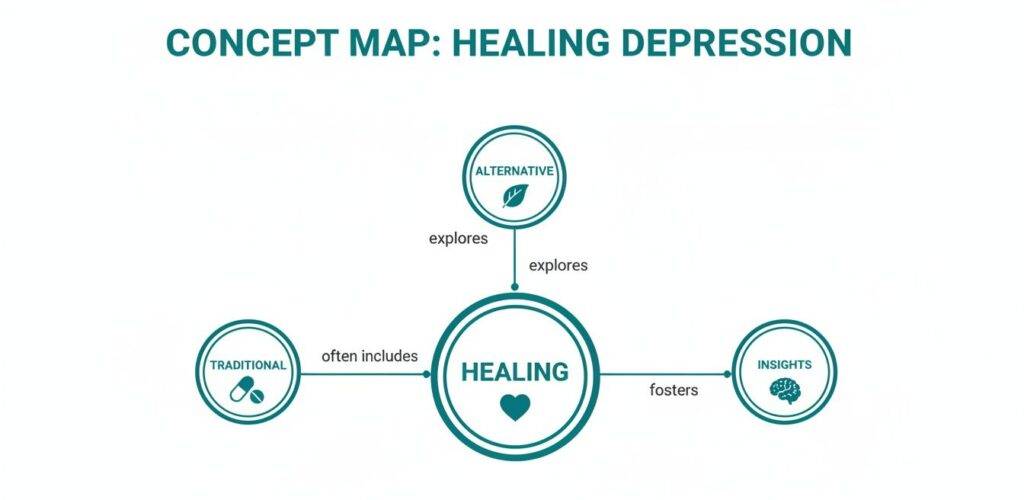
As the image shows, alternative paths like Ayahuasca often work by fostering new insights, which complements traditional approaches that focus more on managing symptoms.
Fostering Neurogenesis and New Connections
Beyond just quieting old, unhelpful patterns, emerging evidence suggests that Ayahuasca might actively help the brain build new ones. You can dive deeper into this topic in our article exploring ayahuasca, neurogenesis, and depression. This process of creating new neurons and pathways is known as neuroplasticity, and it’s absolutely vital for learning, memory, and regulating our mood.
“You could think of the experience as tilling the soil of the mind. It loosens up the compacted ground, making it more fertile for new, healthier ways of thinking and feeling to take root and grow.”
This increased brain flexibility is a key reason why the insights gained during a ceremony can stick around and lead to lasting change, rather than fading away.
This has practical support. One clinical trial in Brazil saw a single dose of Ayahuasca produce rapid and significant reductions in depressive symptoms, an effect that was seen within hours. The study involved patients with treatment-resistant depression, people for whom standard therapies had failed, highlighting the brew’s potential as a powerful intervention.
Ayahuasca vs. Traditional Antidepressants (SSRIs)
While both aim to alleviate depression, Ayahuasca and conventional antidepressants like SSRIs work in fundamentally different ways. The table below breaks down some of the key distinctions.
| Feature | Ayahuasca | SSRIs (e.g., Prozac, Zoloft) |
|---|---|---|
| Primary Mechanism | Decreases DMN activity, increases brain connectivity, promotes neuroplasticity. | Increases serotonin levels in the brain by blocking its reabsorption. |
| Onset of Action | Rapid antidepressant effects, often within hours to a day. | Gradual effects, typically taking 2-6 weeks to become noticeable. |
| Therapeutic Model | A short-term, intensive experience designed to create psychological insight. | Long-term, daily medication to manage symptoms and maintain mood stability. |
This comparison highlights that Ayahuasca is not simply a “natural Prozac.” It offers a completely different therapeutic paradigm, centered on a brief but profound experience that aims to get to the root of psychological distress, rather than managing symptoms over the long term.
Lasting Improvements in Mental Wellbeing
While an Ayahuasca experience unfolds over just a few hours, its positive ripple effects on mental health can last for months, even years. This is a catalyst for genuine healing, not a temporary high or a fleeting sense of escape. The journey can kick off a process that leads to lasting improvements in mood, emotional resilience, and your entire outlook on life.
The profound insights and emotional releases that occur during a ceremony are the seeds of this long-term change. Understanding your depression on an intellectual level is one thing; feeling a deep, physical release from the grief or trauma that has weighed you down is something else entirely. This kind of visceral experience can fundamentally reframe your relationship with your past and how you see yourself, creating a whole new foundation to build upon.
From Breakthrough to Lasting Change
The real work often starts once the ceremony is over. Ayahuasca can crack open a door to new ways of thinking and feeling, but integration is the process of walking through that door and weaving those lessons into the fabric of your daily life. This is the bridge that connects the immediate antidepressant effects to something far more durable.
Think of the ceremony as a controlled earthquake that breaks apart old, rigid mental patterns. Integration is the conscious, careful work of rebuilding on that newly cleared ground. It is about making deliberate choices that support the new perspectives you’ve gained.
This might look like:
- Better emotional regulation: Learning to respond to life’s triggers with more awareness instead of old, automatic reactions.
- A clearer sense of purpose: Gaining clarity on what truly matters, which can reignite motivation and a sense of direction.
- Healthier daily habits: Finding yourself naturally drawn to better nutrition, more time in nature, or more meaningful social connections.
What the Science Says About Long-Term Benefits
A growing body of scientific research backs up the potential for sustained relief; this is beyond wishful thinking or anecdotal chatter. Researchers are now tracking participants for months after their Ayahuasca experiences, and the findings consistently point toward its potential as a tool for long-term healing, not just a quick fix.
“The experience itself is the beginning of the journey, not the destination. The sustained benefits are a direct result of applying the insights gained during the ceremony to the challenges and opportunities of daily life.”
One standout longitudinal study from São Paulo, Brazil, followed adults for six months after they took part in Ayahuasca ceremonies. The researchers found significant, lasting reductions in depressive symptoms, measured using the Montgomery-Åsberg Depression Rating Scale (MADRS). Participants’ scores dropped dramatically right after their sessions, and these improvements held steady for up to 180 days. You can read the full research paper to see how Ayahuasca, paired with psychotherapy, also helped with anxiety and substance use issues.
This evidence reinforces a crucial point: Ayahuasca is not a passive cure you simply receive. The experience provides a powerful window of opportunity, a chance for a hard reset. The lasting impact is forged in the weeks and months that follow, as you actively work to integrate the medicine’s profound lessons into a new, healthier way of living.
Understanding the Risks and Ensuring Your Safety
While the research into Ayahuasca for depression is incredibly promising, this is not a path to be taken lightly. It’s crucial to approach this powerful medicine with a deep respect for its intensity and a serious commitment to safety. This is not a casual recreational drug, and it’s absolutely not for everyone.
Think of it this way: your first and most important step is to understand the risks. A thorough screening process with a reputable facilitator is a vital safeguard against severe, and sometimes life-threatening, complications, not just a box-ticking exercise. Being completely honest about your medical and psychological history is non-negotiable.
Medical and Psychological Screening
Before you even consider sitting in a ceremony, a full evaluation of your physical and mental health is essential. Certain pre-existing conditions create very real dangers, making it unsafe to participate. These are hard-and-fast rules for your wellbeing, not just suggestions.

Here’s what any responsible facilitator will be looking for:
- Cardiovascular Issues: Ayahuasca can temporarily spike your heart rate and blood pressure. For someone with a heart condition, hypertension, or a history of stroke, this can be extremely dangerous.
- Psychological History: A personal or family history of psychosis, schizophrenia, or bipolar disorder is a major red flag. The powerful nature of the experience can potentially trigger or worsen these conditions.
- Other Medical Conditions: Because your liver and kidneys are working hard to process the compounds in the brew, any severe issues with these organs can also pose a significant risk.
This screening is all about making sure you’re in a stable enough place, both physically and mentally, to handle the intensity of what can be a very challenging experience.
The Dangers of Medication Interactions
One of the most critical safety concerns is the interaction between Ayahuasca and many common medications, especially antidepressants. The brew contains Monoamine Oxidase Inhibitors (MAOIs), which can have dangerous and sometimes fatal reactions with other drugs that affect serotonin.
“This is incredibly important: combining MAOIs with antidepressants like SSRIs (Selective Serotonin Reuptake Inhibitors) can trigger a life-threatening condition called serotonin syndrome. This happens when your brain is flooded with a dangerous amount of serotonin, leading to severe symptoms like high fever, seizures, and loss of consciousness.”
This is precisely why you must safely and completely taper off any antidepressant medication, always under a doctor’s supervision, well before a ceremony. For a detailed list, you can learn more about the specific foods and meds to avoid with MAOIs. Please, never stop taking prescribed medication abruptly or without talking to your doctor.
A large PLOS Mental Health study of over 5,400 people found that 19.7% had a history of depressive disorders. The researchers found that a past diagnosis of depression could predict temporary periods of “feeling down” after an Ayahuasca experience. This really underscores the need for caution and strong support systems, especially for those who might be more vulnerable. This data reinforces just how vital proper screening is to minimize risks and create a safe container for healing.
Ultimately, your safety has to come first. The journey with Ayahuasca is one that demands respect, honest self-assessment, and a partnership with experienced people who put your well-being above everything else.
Finding a Safe and Ethical Ayahuasca Retreat
As more people look to Ayahuasca as a potential path out of depression, the number of retreats offering ceremonies has exploded. But here’s the catch: this space is almost entirely unregulated. That means the responsibility for finding a safe, ethical, and genuinely supportive environment falls squarely on you.
This decision is, without a doubt, the most important one you’ll make in this entire process. A well-run retreat provides a sturdy container for what can be an incredibly powerful and vulnerable experience. A bad one? At best, it’s a waste of time and money. At worst, it can be actively harmful. Your mission is to find a center that puts your physical, psychological, and spiritual wellbeing first, with no exceptions.
Vetting Facilitators and Their Background
The quality of your journey really comes down to the people leading it. A skilled facilitator, often called a shaman, curandero, or Ayahuasquero, has dedicated years, sometimes decades, to learning from the medicine. Their presence is what helps you navigate the often intense and unpredictable landscape of an Ayahuasca experience.
When you’re looking into a retreat, get specific with your questions about the facilitators:
- Training and Experience: How many years have they been serving Ayahuasca? Who were their teachers? What tradition or lineage do they come from? You’re looking for deep, lived experience, not a weekend certification.
- Healing Philosophy: What’s their approach to healing? You want to get a feel for whether they foster a compassionate, non-judgmental space where you can be fully yourself.
- Presence and Availability: Will the main facilitators be on-site and accessible throughout the retreat, or do they just pop in for the ceremonies? Consistent, grounded support is a hallmark of a professional operation.
A facilitator you can trust will be open and transparent about their background. They should come across as humble, grounded guides, not as charismatic gurus selling you on a miracle cure.
The Non-Negotiables for Safety
Beyond the facilitator’s experience, some very practical things are absolutely essential for your safety. Think of these as bright red lines. If a retreat crosses them, you walk away.
“A center’s commitment to safety is best measured by its screening process. A thorough medical and psychological intake is the single most important sign that they take their responsibility seriously and are equipped to handle this powerful work, not just paperwork.”
Look for a retreat with a clear, robust safety protocol. This must include a comprehensive medical and psychological screening process before they even think about accepting your payment. They need to ask detailed questions about your health history, all medications you’re taking, and any personal or family history of mental health conditions like psychosis or bipolar disorder. If a center is lax about this or brushes it off, that’s a massive red flag.
On top of that, dig into their on-the-ground support systems:
- Staff-to-Participant Ratio: You want a low ratio so you know you’ll get individual attention if you run into difficulties during a ceremony. A good benchmark to look for is at least one helper for every five participants.
- Medical Support: Do they have medically trained staff on-site or on call? What’s the plan if there’s a medical emergency? They should have a clear answer.
- Integration Support: What happens after you go home? A quality center knows the ceremony is just the beginning. The real work of integration starts when you return to your daily life. They should offer resources, coaching, or follow-up support to help you make sense of it all.
Choosing the right retreat takes real diligence. It requires you to vet the facilitators, demand rigorous safety standards, and ultimately, trust your gut. By doing your homework, you can find a space that can truly support your healing journey.
The Critical Role of Preparation and Integration
An Ayahuasca journey is a complete process, one that starts weeks before you even see the medicine and continues for months, sometimes years, afterward. It is not just about what happens during the ceremony. The two pillars holding up this entire structure are preparation and integration.
Skip these, and even the most earth-shattering insights can evaporate, becoming just another interesting story. But with intentional effort before and after, the experience can be a powerful turning point in your journey with depression.
Preparing Your Body and Mind
Proper preparation is all about creating the best possible conditions for healing to happen. It’s a way of showing respect for the medicine, for the people guiding you, and most importantly, for yourself. This phase is key to smoothing out potential difficulties and helping you open up to what the experience has to offer.
Picture your body and mind as the vessel for this journey. Preparation is the process of cleaning and clearing that vessel. A big part of this is the traditional dieta, or special diet.
The dieta usually means avoiding certain things to purify your system:
- Foods to Avoid: For at least a week or two beforehand, you’ll typically cut out red meat, pork, aged cheeses, fermented foods, and excessive salt, sugar, or spice.
- Substances to Stop: It’s essential to stop using alcohol, caffeine, and recreational drugs to create a clean internal environment and avoid dangerous interactions.
Mental and emotional prep is just as important as the physical. This is the time to carve out space for quiet reflection, maybe through meditation or journaling. It’s also when you’ll want to form a clear intention, a question you’re holding or a healing goal you want to work toward. A good intention acts like a North Star, giving your journey a sense of direction. For a deeper dive, check out our guide on preparing for your Ayahuasca journey.

Weaving Insights Into Your Daily Life
If preparation sets the stage, integration is where the real work begins. This is the delicate, ongoing process of taking the visions, emotions, and lessons from the ceremony and weaving them into the fabric of your everyday life. Ayahuasca can show you a door, but integration is the act of walking through it.
“The real healing from Ayahuasca doesn’t happen in the jungle; it happens in the choices you make on a Tuesday morning back home. It’s about taking that newfound clarity and applying it to your relationships, your habits, and your inner dialogue.”
Integration isn’t passive; it’s an active practice that takes patience and commitment. It is about consciously building new, healthier patterns that reflect the insights you’ve gained.
Some of the most effective integration practices include:
- Journaling: Get it all down on paper. Writing about your experience, your dreams, and your feelings helps you process everything and notice new patterns as they emerge.
- Working with a Professional: A therapist or integration coach who understands psychedelics can be a priceless guide, helping you make sense of what can be a very complex experience.
- Spending Time in Nature: Reconnecting with the natural world is incredibly grounding. It can help you stay tethered to the spirit of the medicine long after the ceremony ends.
- Mindful Movement: Practices like yoga, tai chi, or even just a quiet walk can help you process emotions that often get stored in the body.
Ultimately, preparation and integration are what make the difference between a fleeting psychedelic trip and a profound healing journey. They are the bookends that give the ceremony its meaning, its structure, and its power to help you create real, lasting change.
Common Questions About Ayahuasca for Depression
If you’re exploring Ayahuasca as a path for healing from depression, you probably have a lot of questions. It’s a big step. Let’s walk through some of the most common and critical things people want to know.
Can I Take Ayahuasca If I’m on Antidepressants?
This is a hard no. It is incredibly dangerous.
Combining Ayahuasca with most antidepressants, especially SSRIs (Selective Serotonin Reuptake Inhibitors), can trigger a life-threatening condition called serotonin syndrome. This is a severe medical emergency caused by a toxic overload of serotonin in your brain.
You must work with your doctor to safely and gradually taper off these medications. This is not a quick process and it can take weeks or even months to do it right. Any responsible Ayahuasca retreat will have a very strict screening process and will not accept anyone currently taking these medications.
Will Just One Ceremony Cure My Depression?
Ayahuasca is a powerful tool that can kickstart a profound change, but it is not a magic pill or a one-and-done cure. While studies do show it can have a rapid and significant antidepressant effect, real, lasting healing is a process that begins, not ends, with the ceremony.
“The experience can open doors to incredible insights and deep emotional release, but the real work and transformation happen when you take what you’ve learned and weave it into the fabric of your daily life.”
For most, healing is a longer journey. It might involve more than one ceremony over time, and it’s almost always supported by other practices like therapy, journaling, meditation, and making lifestyle choices that reflect the clarity you’ve gained.
What Is a “Challenging” Ayahuasca Experience Like?
A challenging journey can be intensely psychological and emotional. You might find yourself face-to-face with painful memories, deep-rooted fears, or the very thought patterns that have kept you stuck. It can feel like you’re getting right down to the source of your pain.
Physically, this often includes purging (vomiting or diarrhea). Within the ceremonial space, this is viewed as a vital part of the process, a cleansing of stuck energy and emotional baggage, not just a side effect. It can be uncomfortable, but these difficult experiences are often where the most meaningful breakthroughs happen. A good facilitator is there to hold a safe space, helping you move through the difficulty instead of fighting it.
Is Ayahuasca Legal?
The legal landscape for Ayahuasca is complicated and varies wildly from one country to another. In places like Peru, Brazil, and Costa Rica, its use is legal within certain traditional and religious frameworks.
In the United States, Canada, and most of Europe, however, its main active ingredient, DMT, is a scheduled controlled substance. This makes Ayahuasca itself illegal in most situations. There are some exceptions where religious groups have won legal exemptions for ceremonial use. It is absolutely essential to research the laws in your home country and any country you plan to travel to for a retreat. Protecting yourself legally is a fundamental part of engaging with this work responsibly.
Disclaimer: The information provided on Ayahuasca.com is for educational purposes only and is not intended as medical advice, diagnosis, or treatment. Ayahuasca is a powerful traditional Amazonian medicine and may not be suitable for everyone. Always consult with a qualified healthcare professional before making decisions related to health, mental well-being, medications, or the use of Ayahuasca.