
At its heart, Ayahuasca sacred reciprocity is about relationship. It is the deep understanding that when we work with this medicine, we are entering into a mutual exchange between ourselves, the plant spirits, and the lineage of people who have carried this knowledge for centuries. The experience is a living, breathing partnership based on giving and receiving, rather than a one-way transaction for personal gain.
What Is Ayahuasca Sacred Reciprocity
Think of it less like a service you buy and more like a profound friendship. A good friendship is not a ledger of who did what for whom. It is a natural, flowing cycle of support, care, and mutual respect that strengthens the bond over time. The relationship with Ayahuasca, when approached correctly, is built on this very same foundation.
This is a cornerstone of the worldviews held by the Amazonian cultures that have stewarded this medicine for generations. For them, it is a lived reality, a way of being in the world that honors the spirit in all things. Stepping into an Ayahuasca ceremony is like being welcomed into a sacred home where, as a guest, you have a responsibility to act with honor and respect.
The Foundation of Ayni
In the Amazon, Ayahuasca has never been seen as just a plant. It is a teacher, a spirit, and a direct line to the sacred principle of reciprocity, known as ‘ayni’ in the Quechua language. Ayni is the law of balanced exchange with the natural and spiritual worlds. It teaches that to receive, one must also give.
When you participate in a ceremony, you’re stepping into this ancient pact. In exchange for the healing and wisdom offered by the vine, you offer your respect, your commitment to live well, and your support for the traditions and ecosystems that make this healing possible. It’s a powerful agreement that now connects a global community, with reports suggesting that over four million people have now taken Ayahuasca.
This concept map shows just how interconnected this relationship is.
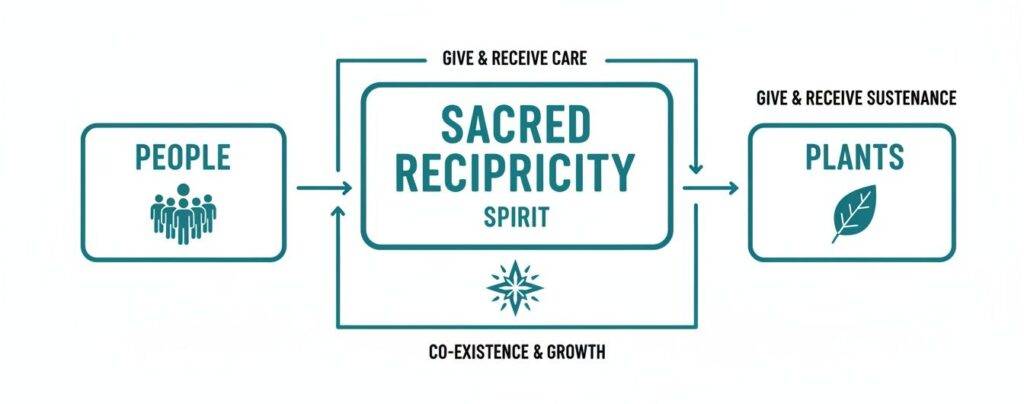
As you can see, it’s a circle. Each element, people, plants, and spirit, sustains and is sustained by the others. It’s a beautiful, self-reinforcing cycle of life and healing.
Why This Matters Today
Grasping the concept of reciprocity is essential for anyone considering a journey with this medicine. It frames your entire experience, from how you prepare your body and mind beforehand to how you carry the lessons back into your daily life. When you see the ceremony as a two-way street, you automatically show up with humility.
This mindset prompts you to ask much deeper questions:
- How can I honor the indigenous guardians of this tradition?
- What am I bringing to the ceremony as my offering, beyond just my problems?
- How will I use the healing I receive to benefit my family, my community, and the planet?
To help clarify this powerful concept, here’s a breakdown of the core principles of Ayni.
Core Principles of Ayni (Sacred Reciprocity)
| Principle | Meaning in Practice |
|---|---|
| Balance | Recognizing that every act of taking must be balanced by an act of giving. It is about maintaining equilibrium in our relationships with others and the Earth. |
| Mutuality | Understanding that we are in a collaborative partnership, not a consumer-provider dynamic. Healing is co-created with the plant spirits and the facilitator. |
| Respect | Showing deep reverence for the plants, the indigenous traditions, the ceremony space, the facilitators, and fellow participants. This includes listening more than speaking. |
| Responsibility | Accepting the duty to care for the traditions and the ecosystems that sustain this medicine, and to integrate the lessons received into a more conscious way of living. |
These principles are a mindset to cultivate, one that brings integrity and depth to the ceremonial experience.
“Approaching Ayahuasca with an awareness of reciprocity shifts the journey from a self-focused quest for a cure to a collaborative process of healing with a living intelligence. It is about building a relationship, not just having an experience.”
This foundational understanding of Ayahuasca sacred reciprocity is the key to engaging with the medicine in a way that is both ethical and profoundly meaningful. It prepares you for a journey that truly honors the plant, its traditions, and the great responsibility that comes with receiving its gifts.
Honoring the Indigenous Roots of Ayni
To truly understand what Ayahuasca sacred reciprocity means, we have to go back to the source. This is an ancient principle woven into the very fabric of Amazonian life. For cultures like the Shipibo-Conibo and Asháninka, reciprocity, or Ayni, is as natural as breathing. It is a worldview that guides every single interaction.
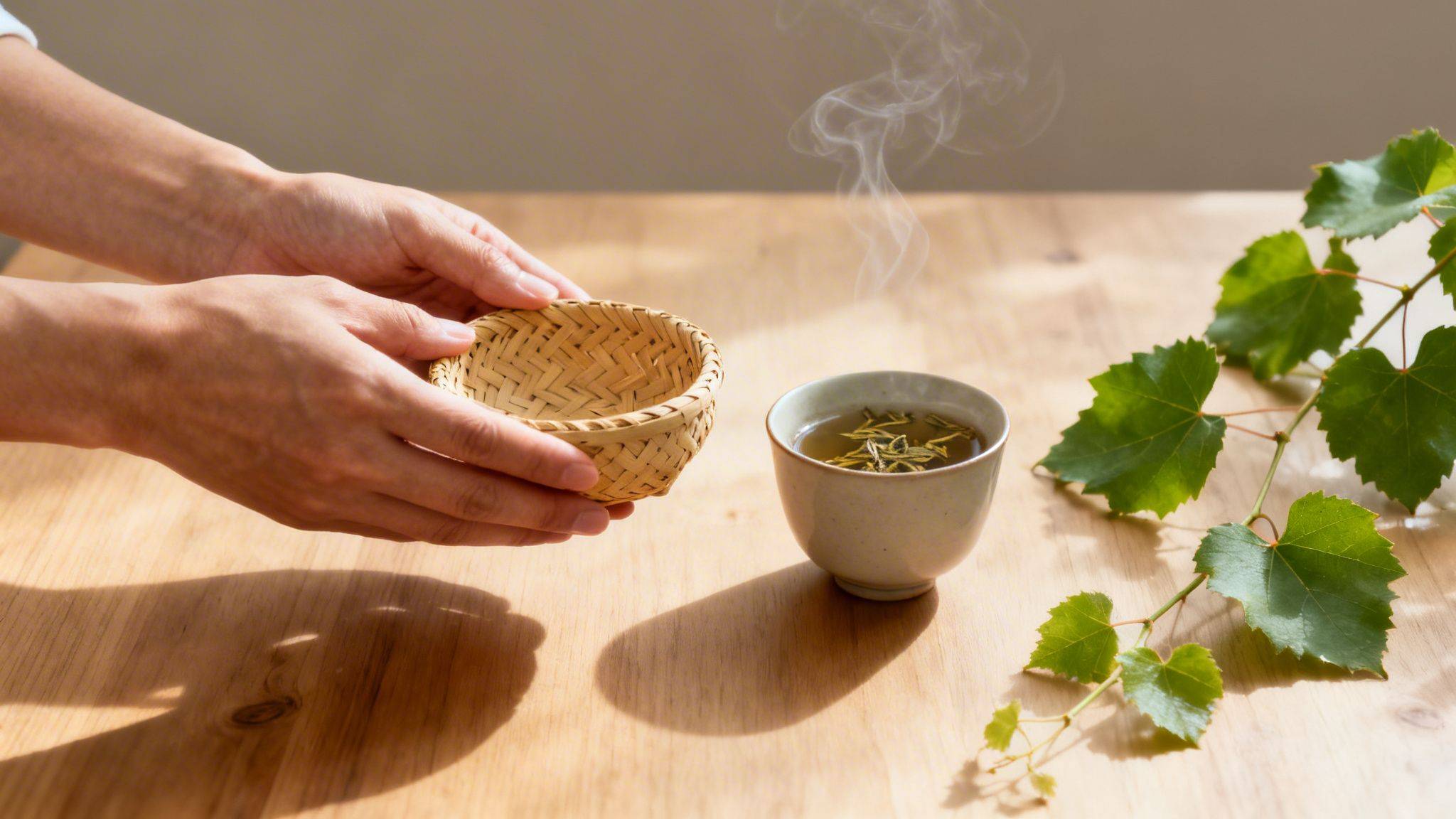
In these communities, Ayni is a daily practice that defines the relationship between people, the land, and the spirits of the plants. When a hunter takes an animal from the forest, he offers thanks and ensures nothing is wasted. When a farmer harvests her crops, she shares a portion with neighbors, strengthening the bonds of the community.
This constant rhythm of give-and-take creates a resilient social and spiritual ecosystem where everyone and everything is connected. The forest provides, and in return, the people serve as its guardians. This is the living, breathing world from which Ayahuasca emerged.
The Ceremony as an Act of Reciprocity
The Ayahuasca ceremony itself is a profound expression of Ayni. Even preparing the brew is a sacred act of giving back. The curandero, or shaman, enters into a deep conversation with the spirits of the Ayahuasca vine and the Chacruna leaf rather than just boiling plants.
This conversation happens through prayer, focused intention, and the sacred songs known as icaros. These are vibrational offerings, given to the plant spirits to ask for their guidance and healing, and not just pretty melodies. In exchange for this offering of respect and energy, the spirits open the doors to vision and insight for everyone in the ceremony.
“The icaros are a central part of the reciprocal exchange. The shaman sings to the plants, and the plants sing back through visions, healing, and teachings. It is a partnership built on sound, intention, and deep respect.”
This reveals a powerful truth: when you drink Ayahuasca, you are stepping into a relationship cultivated for millennia. You are an active participant in an ancient lineage of exchange, and that comes with real responsibilities. You can learn more by exploring community discussions about the complexities of cultural appropriation in Ayahuasca practices.
Connecting with the Medicine’s Guardians
Honoring these indigenous roots demands humility and a genuine desire to learn. It means accepting that the knowledge of Ayahuasca was nurtured over countless generations instead of being found in a lab. The people who stewarded this medicine developed their understanding through a deep, two-way relationship with the Amazon rainforest.
Their worldview is alive with plant teachers and spirit allies, a perspective often alien to the modern mind. By acknowledging this, we can approach the medicine as respectful guests instead of customers. We’ve been invited into a sacred tradition, and our role is to honor our hosts, the original guardians of this powerful medicine.
This simple shift in mindset changes the central question from “What can I get?” to “What can I give?” It forces us to consider our impact and our place in this vast web of connection. At its heart, Ayahuasca sacred reciprocity is about remembering we are part of a living system, and our actions either help it thrive or contribute to its decline.
Navigating Reciprocity in a Globalized World
The world is waking up to Ayahuasca. What was once a deeply regional, sacred practice has become a global phenomenon, drawing people from every corner of the Earth to seek its profound healing. This explosion of interest brings incredible opportunities for cultural exchange, but it also creates undeniable tension.
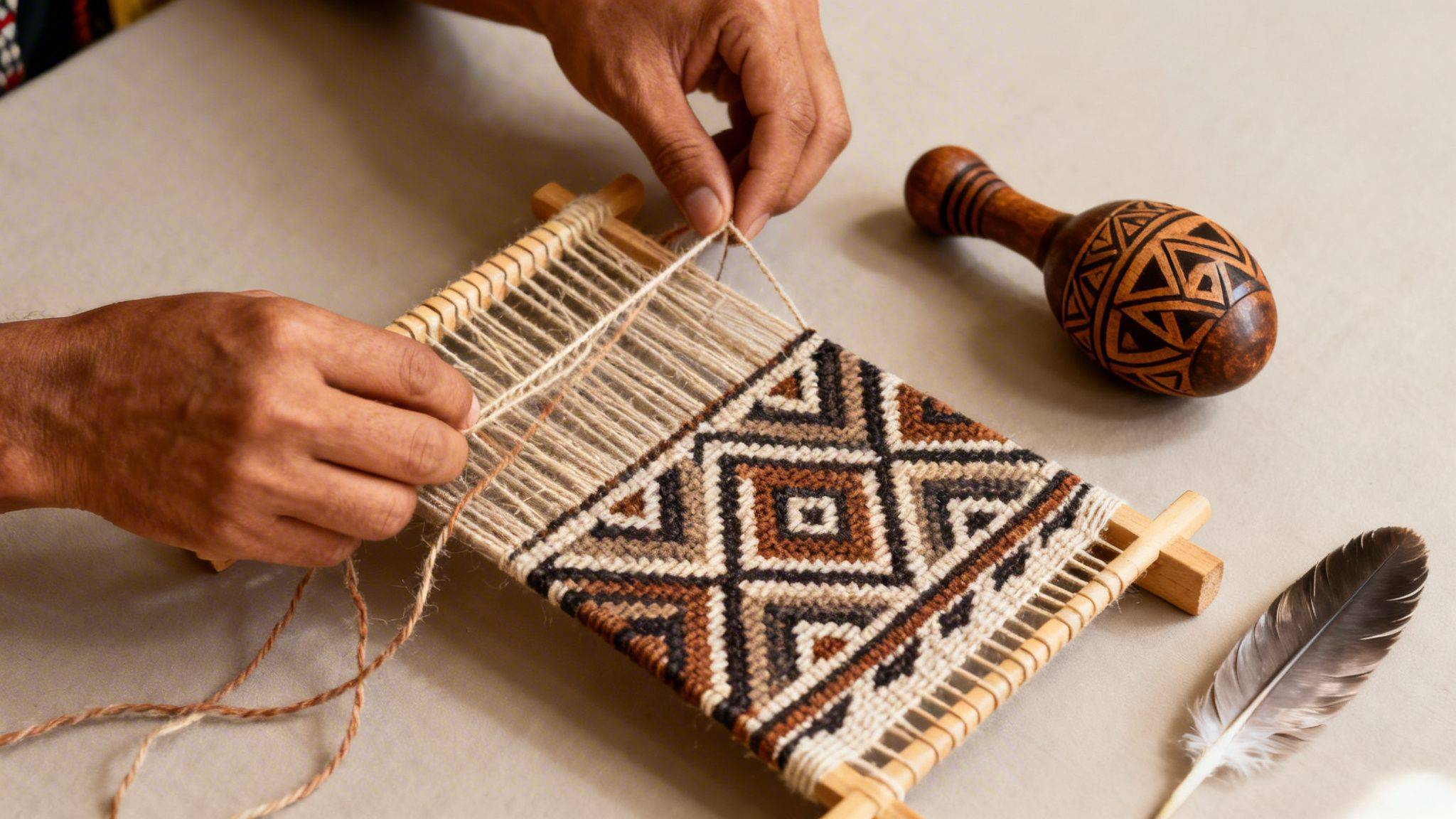
This surging demand places immense pressure on the very ecosystems and communities that have stewarded this medicine for millennia. The principles of Ayahuasca sacred reciprocity become more crucial than ever as we navigate this complex new landscape. We have to ask ourselves some tough questions about how to engage ethically and sustainably.
The Double-Edged Sword of Globalization
The global spread of Ayahuasca is neither inherently good nor bad; it just is. On one hand, it brings a long-overdue validation to indigenous knowledge systems that have often been dismissed. It also provides a vital economic lifeline for communities facing centuries of marginalization, empowering them to preserve their cultures and protect their lands.
But there’s a shadow side, and it’s just as real. The line between appreciation and appropriation can be dangerously thin. When sacred traditions are packaged and sold without their cultural and spiritual context, they risk becoming hollow commodities. This is the difference between an authentic exchange and a simple transaction. You can learn more about this crucial distinction between profit and reciprocity in the Amazon.
Confronting Cultural Appropriation
So, what does cultural appropriation actually look like in the world of Ayahuasca? It happens when elements of a culture are adopted by outsiders without permission, understanding, or respect for their original meaning. It can manifest in a few key ways:
- Ceremonies led by untrained facilitators who lack a genuine connection to an established lineage, stripping the practice of its sacred depth.
- Using indigenous symbols or songs as aesthetic props rather than as expressions of a deeply held spiritual worldview.
- Focusing exclusively on personal healing without acknowledging the collective responsibility to the medicine’s origins.
True Ayahuasca sacred reciprocity asks us to be humble students, not spiritual consumers. It calls on us to honor the source, seek guidance from those with authentic experience, and ensure our participation strengthens the tradition rather than watering it down.
The Environmental Toll of Popularity
The delicate balance of the Amazon rainforest is also at stake. The Ayahuasca vine (Banisteriopsis caapi) is not an agricultural crop you can just mass-produce. It needs to grow for years, sometimes decades, to reach maturity.
The explosion in demand has led to over-harvesting in many regions, threatening the long-term sustainability of the plant itself. Chacruna (Psychotria viridis), the other key ingredient, faces similar pressures. Ethical engagement means choosing retreat centers that are genuinely committed to sustainable harvesting, replanting initiatives, and the active conservation of the rainforest.
“The question we must all ask is not just “What can this medicine do for me?” but “How can my journey contribute to the well-being of the Amazon and its people?” This shift in perspective is the very essence of modern reciprocity.”
The globalization of Ayahuasca also brings a powerful, positive exchange. It allows for a bridge between ancient wisdom and modern science, where each can inform and validate the other. For instance, the integration of this medicine into contemporary mental health practices is a prime example of sacred reciprocity in action, especially when financial support and cultural advocacy from Western participants flow back to indigenous communities.
A landmark study, the largest of its kind, surveyed 7,576 participants across more than 50 countries and highlighted significant mental health improvements linked to this exchange. Amidst its rising popularity among an estimated 4 million lifetime users, its relative safety is also notable. Only 58 media-linked deaths were reported globally between 1994 and 2022, and none were forensically confirmed to be caused by Ayahuasca alone. This data underscores the potential for a responsible and mutually beneficial relationship as the tradition expands.
How to Practice Reciprocity Before You Go
Honoring sacred reciprocity begins the moment you decide to answer its call, not when you drink the medicine. Think of this preparation phase as your first real conversation with the spirit of Ayahuasca, a chance to show you are a respectful guest instead of just a tourist.
Your journey truly kicks off with the first intentional steps you take to honor its deep indigenous roots. This is an offering of your time, energy, and sincere respect for the tradition you’re about to enter, going beyond just the pre-ceremony diet.
Do Your Homework, Humbly
The first and most important way to show respect is to learn. Really learn. Take the time to understand the indigenous cultures that have held this medicine for countless generations. It’s crucial to grasp that Ayahuasca is the heart of a spiritual tradition, woven into the very fabric of Amazonian cosmology.
Genuine preparation means going past the usual blog posts and seeking out voices that honor the medicine’s true context. Dive into the history, the myths, and the real-world struggles these communities face today. Building this foundation of knowledge is an offering of respect that sets the stage for a much more meaningful experience. You can find some solid guidance by preparing for your Ayahuasca journey in a comprehensive guide.
Choose Your Ceremony with Care
Where you sit for ceremony is one of the most critical decisions you’ll make. This choice has a direct ripple effect, touching the communities and ecosystems connected to Ayahuasca. Making an ethical choice here is a powerful act of sacred reciprocity in itself.
Look for centers that are either indigenous-led or have deeply established, fair, and transparent relationships with local communities. Do not be shy about asking direct questions before you book anything:
- How does this center give back to the local people?
- Are the facilitators and local staff paid fairly for their work?
- What is their approach to harvesting the plants sustainably?
When you choose a center that puts ethics first, your financial contribution becomes part of the solution, helping the tradition thrive rather than fueling its exploitation.
“When your financial investment directly benefits the guardians of the medicine and the preservation of the forest, it becomes a genuine act of Ayni. You are participating in a cycle of support that helps the tradition thrive.”
Prepare Your Intentions and Your Offerings
Finally, think about what you’re bringing to the ceremony, both in spirit and in your hands. Setting clear, humble intentions is a huge part of this. The key is to shift your mindset from “What can I get?” to “What am I willing to give for this healing?”
Bringing a small, meaningful offering for the altar is a beautiful, tangible way to start this exchange. It does not have to be elaborate. It could be sacred tobacco (mapacho), fresh flowers, a stone from a place you love, or something you’ve created. This simple act shows you’ve come to give, not just to take.
Reciprocity Checklist Before You Go
This simple checklist can help frame your preparation as the beginning of a sacred exchange instead of a chore. It is about the difference between being a passive consumer and an engaged participant.
| Action Item | Why It Honors Reciprocity |
|---|---|
| Thorough Research | Shows respect for the tradition’s depth and complexity, moving beyond a superficial engagement. |
| Ethical Retreat Selection | Ensures your financial energy supports the indigenous stewards and sustainable practices, not exploitation. |
| Humble Intention Setting | Frames your journey as a request for guidance, not a demand for a product or outcome. |
| Meaningful Offering | Represents a physical gesture of gratitude and begins the reciprocal exchange with the spirits and facilitators. |
By taking these steps, you shift the entire dynamic. You arrive at the ceremony as a humble student, ready to listen, learn, and participate fully in the sacred give-and-take, not as a customer expecting a service.
Living Ayni: During and After Your Journey
The real work of Ayahuasca sacred reciprocity does not just happen in the prep phase. It truly begins the moment you step into the ceremony space and continues long after the final icaros have been sung. All your preparation lays the groundwork, but how you carry yourself during the experience and, crucially, how you live your life afterward is where the exchange truly comes alive. This is where intention becomes action.
During the ceremony itself, your most powerful offering is simply your presence. Your willingness to surrender. The spirits of the plants are there to meet you where you are, responding to humility, openness, and a genuine willingness to trust the process, not to be commanded or to fulfill a list of demands.
Reciprocity Within the Ceremony
Think of your role inside the ceremony as one of deep, active listening. This is about tuning into the subtle feelings, the messages from your body, and the potent silences in between, not just paying attention to the visions. It means letting go of the reins, even and especially when the journey gets difficult or uncomfortable.
This act of surrender is a profound way of giving back. It’s a non-verbal signal to the medicine, the facilitators, and the entire spiritual container that you trust their guidance. Something as simple as a quiet, internal “thank you” to the medicine after a challenging moment or a wave of clarity is a direct offering of respect. This gratitude naturally extends to the people holding space for you and to your fellow participants, who are all navigating their own vulnerable journey right alongside you.
“The most potent offering you can make during an Ayahuasca ceremony is your willingness to be fully present and to trust the process. It is a gesture of respect that the medicine meets with profound generosity.”
This back-and-forth dance of listening, surrendering, and offering thanks creates an incredibly strong container for healing. It affirms that you are a partner in this experience, not just a passive consumer.
Integration: The Ultimate Act of Reciprocity
The insights and healing you receive during a ceremony are like freshly planted seeds. For them to sprout and grow into something real, they need to be planted in the soil of your everyday life and tended with conscious care. This process is called integration, and it is the single most important expression of Ayahuasca sacred reciprocity.
Integration is how you say “thank you” with your life. It’s the deliberate effort to weave the lessons from your journey into the fabric of your reality. This is the very heart of Ayni, taking what you have received and using it to create a positive ripple in the world.
Of course, this looks different for everyone, but it always comes down to action.
- Community and Relationships: Maybe it means finally mending a broken relationship with a family member. It could be showing up with more patience for your kids or deciding to volunteer your time in your local community.
- Environmental Stewardship: For some, reciprocity blossoms into a fierce commitment to the planet. This might look like making more sustainable choices, joining local conservation efforts, or donating to organizations dedicated to protecting the Amazon.
- Advocacy and Awareness: Sharing your story of healing can be a powerful act, as long as it’s done responsibly. When you speak from a place of authenticity and humility, you help chip away at the stigma surrounding plant medicines and can advocate for preserving the indigenous traditions that steward them.
Tangible Ways to Live in Ayni
Beyond the deep work of personal integration, there are very concrete ways to keep the cycle of giving back flowing to the source. These actions help ensure that the traditions, the cultures, and the ecosystems that make this healing possible can continue to thrive for generations to come.
Consider these practical steps:
- Support Indigenous-Led Organizations: Find and contribute to non-profits that are directly run by, or in deep, ethical partnership with, the Amazonian communities that protect this medicine and the rainforest.
- Purchase from Indigenous Artisans: Buying textiles, jewelry, or other crafts directly from indigenous artists provides them with a sustainable livelihood that also honors and preserves their cultural heritage.
- Contribute to Reforestation Projects: Many ethical retreat centers and organizations have initiatives to replant Ayahuasca vines and other essential plants. Supporting these efforts is a direct and powerful way to give back to the Earth that gives so much.
Ultimately, living in Ayni after your journey is about embodying the profound interconnectedness you felt in the ceremony. It’s a deep-seated recognition that your healing was for your family, your community, and the world, not just for you.
Bringing the Spirit of Reciprocity Home
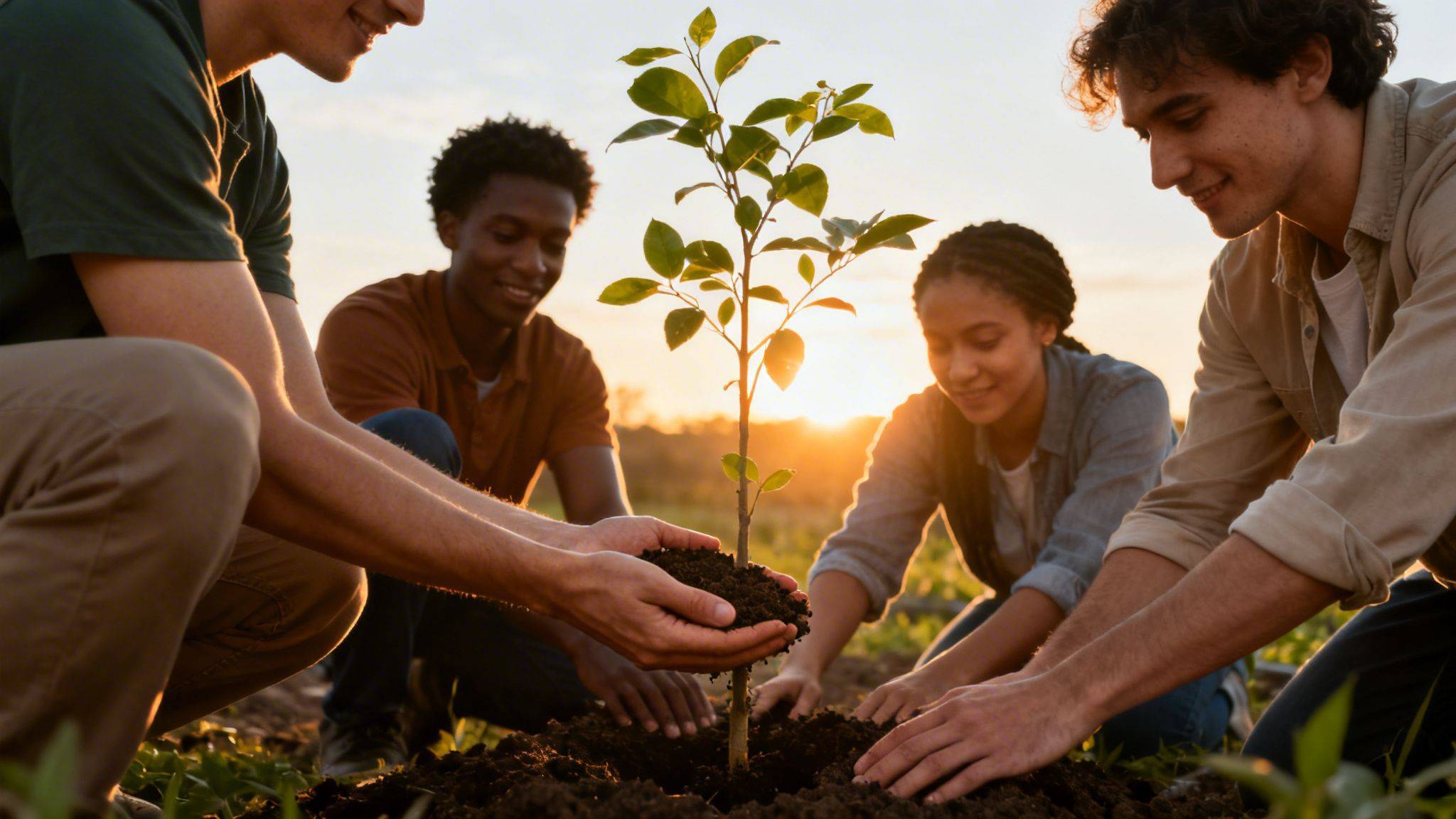
The ceremony is not the finish line. Far from it. An Ayahuasca journey is more like cracking open a door to a much deeper, more connected way of living. Think of Ayni, or sacred reciprocity, as the thread that ties it all together, linking the ancient wisdom of the Amazon with the very real ethical choices we face today.
This path asks us to see our personal healing as something woven into a much larger web of life instead of an isolated event.
It all starts with consciously honoring the medicine’s indigenous origins, preparing with humility, and choosing to sit with facilitators who walk a path of integrity. This relationship deepens in the ceremony itself through surrender and gratitude, but it truly comes alive in the integration that follows. Every single step is a chance to give back.
Living Ayni Every Day
True Ayahuasca sacred reciprocity means treating your experience as a catalyst for real, ongoing change. The profound insights you receive in ceremony are gifts meant to be shared through your actions and choices long after the retreat ends.
This is a powerful invitation to live in a state of Ayni in all parts of your life. What does that look like?
- It could mean directly supporting Amazonian conservation efforts.
- It might involve advocating for indigenous rights and cultural preservation.
- It could be as simple, yet profound, as becoming a kinder, more present, and compassionate force in your own community.
“The ultimate act of reciprocity is to become the healing you’ve received. It’s taking that profound feeling of interconnectedness from the ceremony and making it the blueprint for your life, creating positive ripples that extend far beyond yourself.”
When you live this way, you honor the deepest spirit of the medicine. You become a living steward of its wisdom, ensuring the sacred cycle of giving and receiving continues to flow. Your healing becomes your gift back to the world, completing the circle.
Your Questions About Ayni, Answered
Stepping into the world of Ayahuasca with respect often means asking some practical questions. It’s one thing to understand the concept of Ayahuasca sacred reciprocity, or Ayni, but it’s another to know how to put it into practice. Let’s clear up a few common points to help you walk this path with integrity.
What Should I Offer in an Ayahuasca Ceremony?
The most powerful offerings come from the heart and connect to your personal intention for being there. It is less about the object itself and more about the energy behind it. Think natural, symbolic, and personal.
Some beautiful, traditional options include:
- Sacred Tobacco (Mapacho): This is a classic offering in many Amazonian traditions, often used for cleansing, prayer, and setting intentions.
- Flowers or Plants: Fresh, vibrant flowers are a wonderful way to bring life and beauty to the altar and the ceremonial space.
- Special Stones or Crystals: A stone you found on a meaningful walk or a crystal that holds a special energy for you can be a potent offering.
- Artisanal Crafts: Something you’ve made yourself or a piece of local craftwork can be a beautiful expression of gratitude.
Ultimately, the best gift is one that carries your heartfelt gratitude, for the space, the facilitators, the spirits, and the medicine itself. It never hurts to check with the retreat center beforehand, as they might have specific traditions or suggestions.
How Do I Know if My Retreat Center Is Ethical?
This is a crucial question, and doing your homework is a massive part of practicing Ayni. A center that truly lives in reciprocity will not hide its commitments; it will be proud of them.
Start by looking for centers that are either indigenous-owned or can show you clear, long-standing, and respectful partnerships with local communities. Dig into their website. Do they talk openly about their sustainability practices? Do they explain how they support the local culture and environment? Look for evidence that they employ local staff at fair wages and contribute to community-led projects or conservation initiatives.
“A center that is truly committed to reciprocity will be transparent about its ethics. If you have to search for this information, that’s often a red flag.”
Do not be shy about sending an email. Ask them directly about their relationship with the land, the local people, and the traditions they practice. Remember, where you choose to put your money and energy is a powerful act of reciprocity all on its own.
How Can I Practice Reciprocity if I Do Not Have a Lot of Money?
Ayni is so much bigger than just a financial exchange. While money is certainly a helpful tool for supporting ethical centers and indigenous-led organizations, the most profound way to give back is through how you live your life after the ceremony.
The real offering is the integration of your healing. It is about taking the lessons from the medicine and weaving them into the fabric of your life. This could look like mending a broken relationship, volunteering for a cause you care about in your own neighborhood, or shifting your daily habits to live more sustainably.
It can also mean sharing your story in a responsible way that helps reduce the stigma around plant medicine or using your voice to advocate for indigenous rights. Every conscious action you take, inspired by your experience, continues the cycle of Ayahuasca sacred reciprocity. It’s how the healing ripples out from you into the world.