
Let’s cut right to the chase: Ayahuasca is not technically legal in Costa Rica, but it’s not illegal either. It exists in a legal gray area that can be confusing. The traditional plant brew itself is not named in any laws, but its active compound, DMT, is a controlled substance. This creates a delicate and complex situation for anyone traveling for a ceremony.
Your Essential Guide to Ayahuasca in Costa Rica
Trying to make sense of the laws around plant medicine can be a real headache, especially when things aren’t black and white. For those asking, “Is Ayahuasca legal in Costa Rica?” the answer is far from a simple yes or no. The country has a unique kind of legal ambiguity that has allowed a massive retreat culture to grow and thrive.
Think of this guide as your roadmap. If you’re considering a trip to this stunning corner of Central America for a sacred plant medicine journey, we’ll help you understand what this legal gray area really means for you as a traveler looking for a safe, supportive, and meaningful experience.
Understanding the Legal Nuances
The heart of the matter is the difference between the brew itself and its chemical makeup. Costa Rica’s drug laws, which take their cues from international conventions, list Dimethyltryptamine (DMT) as a controlled substance. But, and this is the important part, the law says nothing about the Banisteriopsis caapi vine or the Psychotria viridis leaf, the two plants used to make traditional Ayahuasca.
This omission is everything.
Imagine it this way: poppy seeds contain opium alkaloids, but you can buy them at any grocery store. The law targets the refined drug, not the natural plant it comes from. It’s a similar situation here. Ayahuasca contains DMT, but the brew itself has been left unregulated.
To give you a clearer picture, here’s a quick breakdown of how the law sees the plant brew versus the isolated chemical.
Ayahuasca Legal Status in Costa Rica at a Glance
| Aspect | Ayahuasca (Plant Brew) | DMT (Isolated Compound) |
|---|---|---|
| Legal Status | Unscheduled & Unregulated | Schedule I Controlled Substance |
| Specific Laws | Not mentioned in Costa Rican law. | Explicitly prohibited under Law 8204. |
| Enforcement | Generally unenforced for personal use in retreat settings. | Strict penalties for trafficking or possession. |
| Practical Reality | Widely used in retreats; tolerated by authorities. | Considered an illegal drug with serious legal risks. |
This subtle but critical distinction is what has allowed Costa Rica to become a major destination for Ayahuasca tourism. Dozens of retreat centers operate quite openly, attracting thousands of visitors every year who are seeking profound healing and personal insight.
This unique environment means ceremonies are accessible, but it also means the responsibility falls squarely on your shoulders to do your homework. With no specific government regulation for Ayahuasca retreats, the quality and safety standards can vary wildly. Your number one job is to find a professional, safety-first center and steer clear of any operations that might not have your well-being as their top priority.
Understanding the Legal Gray Area
If you’re asking, “Is Ayahuasca legal in Costa Rica?” you’re not going to find a simple yes or no in the country’s law books. What you’ll find instead is a fascinating legal landscape that has, almost by accident, allowed a vibrant retreat culture to take root and flourish. The entire situation turns on one crucial distinction: the difference between the plant brew and its main psychoactive ingredient.
Costa Rican drug laws are crystal clear on one point: DMT (Dimethyltryptamine) is an illegal, controlled substance. This is not surprising, as it lines up with international drug treaties that Costa Rica and many other nations abide by. But here’s the twist, the laws say nothing at all about the Ayahuasca brew itself, which is made from the Banisteriopsis caapi vine and leaves of the Psychotria viridis shrub.
This omission is not an oversight. It’s the whole reason this legal gray area exists.
The Brew Versus the Compound
Here’s a simple way to think about it. Imagine a law that bans pure, high-proof grain alcohol but says nothing about traditional, naturally fermented beer or wine. The beer obviously contains alcohol, but the law is aimed at the concentrated, isolated substance, not the age-old beverage. The legal situation with Ayahuasca in Costa Rica works on a very similar principle.
Because the plant brew isn’t explicitly outlawed, its use within a ceremonial context has been largely tolerated by authorities. It’s this specific legal ambiguity that has turned Costa Rica into a global hotspot for Ayahuasca seekers. This delicate balance allows retreat centers to operate in the open, free from the kind of legal crackdowns we’ve seen in other countries.
“At its core, Ayahuasca is neither explicitly legal nor illegal in Costa Rica; it is simply unscheduled. This means there are no specific laws governing its use, possession, or distribution, creating a unique space for the tradition to be practiced.”
This unique environment has fueled a massive industry. Costa Rica has become a top-tier destination for Ayahuasca retreats, attracting a slice of the more than 2 million tourists who visit its beautiful shores each year. Unlike nations with outright bans, this unscheduled status has allowed dozens of centers to serve a growing wave of spiritual travelers. For a deeper look, NewLifeRising.com offers great insights into the rise of psychedelic tourism in Costa Rica.
What This Means in Practice
Historically, the government has taken a hands-off approach. Authorities don’t typically interfere with established retreat centers or the people who attend them. Law enforcement is far more concerned with trafficking isolated drugs, not with someone drinking Ayahuasca in a structured, ceremonial setting. This has created a relatively safe haven for the practice.
But, and this is a big but, this lack of regulation puts a huge amount of responsibility squarely on your shoulders. No government oversight means no official standards for safety, no required qualifications for facilitators, and no mandated ethical guidelines. The quality and safety of retreats can vary wildly, from highly professional, medically-staffed centers to dangerously unprofessional operations.
A Thriving yet Unregulated Industry
The result is a landscape with more than 50 retreat centers now operating across the country. This incredible growth is a direct result of the legal gray area, but it should also serve as a serious warning. The open market requires you to be exceptionally diligent, not just optimistic.
Your safety is entirely in your own hands. It comes down to your ability to thoroughly vet a retreat, to dig into their safety protocols, the real-world experience of their facilitators, and their genuine commitment to the well-being of their guests. The legal ambiguity provides the opportunity, but it offers zero protection. This is a common thread in the global conversation around plant medicine, as seen in various legal challenges and interpretations. For deeper insights, you might be interested in our article discussing Ayahuasca in the Supreme Court.
Ultimately, navigating this legal territory is about being informed. Understanding that the brew is tolerated while pure DMT is illegal is the key to grasping the real risks and realities of a ceremony in Costa Rica. It’s a delicate dance between ancient tradition and modern law, and knowing the steps is essential for a safe journey.
Navigating Government Oversight and Warnings
So we know the law is a bit of a gray area. But what does that actually look like on the ground? How do Costa Rican authorities really treat the booming Ayahuasca retreat scene? This is where the legal theory meets reality.
For a long time, the government’s stance could be described as benign neglect. Law enforcement wasn’t kicking down the doors of reputable retreat centers. Their focus has always been on actual drug trafficking, not on people participating in a plant ceremony in a controlled, spiritual setting.
This hands-off approach allowed the industry to flourish, but don’t mistake that for a complete lack of oversight. Recently, things have started to shift. Officials are paying closer attention, not because they want to shut retreats down, but because they need to protect public safety and Costa Rica’s reputation as a top-tier wellness destination.
A Shift Towards Public Health and Safety
The biggest change we’ve seen has been the government’s reaction to the wild marketing claims coming from some corners of the industry. As more centers popped up, so did concerns about operators making wild, unsubstantiated promises about curing serious diseases, a dangerous game to play with vulnerable people.
This prompted a clear signal from the government: tolerance doesn’t mean a total free-for-all. This wasn’t a legal crackdown on Ayahuasca itself, but a much-needed public health intervention.
“The government’s main concern isn’t the ceremony, but the potential for real harm when centers make unsupported medical claims or operate without proper safety protocols. It’s about protecting people and the country’s vital tourism industry.”
This new focus became crystal clear when the Ministry of Health issued a warning against advertising Ayahuasca as a therapeutic treatment. They started pushing for sanitary registration and requiring certified practitioners to minimize health risks. This was partly in response to scary incidents, like reported convulsions in unregulated settings where Ayahuasca was combined with other potent substances like ibogaine. For more context, it’s helpful to understand the broader landscape of global psychedelic laws.
Understanding Sanitary Registration
What is this “sanitary registration” they’re talking about? It’s not as complicated as it sounds. Think of it like the basic health and safety permit that a restaurant or hotel needs to operate legally.
This registration simply confirms that a facility meets fundamental hygiene standards, has safe operational practices, and isn’t a hazard to public health. For an Ayahuasca retreat, it’s the government’s way of making sure the people in charge aren’t being reckless.
By demanding this registration, officials are basically drawing a line. They’re saying they will tolerate the ceremonies, but they won’t stand for operators who put their guests in danger by:
- Making unproven medical claims: Advertising Ayahuasca as a “cure” for cancer or serious mental illness is a massive red flag for the authorities.
- Lacking medical oversight: Running a center without medically trained staff on hand or clear emergency plans is seen as deeply irresponsible.
- Failing to screen participants: Not doing thorough health screenings to check for dangerous contraindications is a critical safety failure.
This approach is actually pretty balanced. The government gets that these retreats are important culturally and economically, but it’s also taking steps to manage the risks of a totally unregulated market. The goal here is to professionalize the space, not to dismantle it.
How to Choose a Safe and Reputable Ayahuasca Retreat
Now that we have a clearer picture of the legal situation in Costa Rica, let’s get into what really matters: how you can find a safe, ethical, and well-run retreat. Because Ayahuasca sits in a legal gray area, the industry is pretty much the Wild West, there’s very little official oversight. This puts the responsibility squarely on your shoulders to do your homework.
This isn’t just about scrolling through reviews to find a place with a nice pool. It’s about doing some serious due diligence to protect yourself, both physically and mentally. A high-quality retreat puts your safety above all else, while a poorly run one can be downright dangerous. Knowing how to spot the difference is absolutely critical.
Prioritizing Medical Safety and Screening
The very first thing you need to look at is a retreat’s medical protocol. This is non-negotiable. Legitimate, professional centers will have medically trained staff on-site and ready to help during ceremonies, think doctors, nurses, or paramedics. If they don’t, walk away.
Just as important is their screening process before you even book. A safe retreat will make you fill out a detailed medical questionnaire. They need to know about your physical health, your mental health history, and any medications you’re taking. Some health conditions, like serious heart problems, and many medications, especially SSRIs, can have dangerous interactions with Ayahuasca.
Any center that skips this step is a massive red flag. They should be asking you tough questions and, frankly, be willing to turn you away if you’re not a good candidate. A retreat’s willingness to say “no” is one of the strongest signs of its integrity.
This detailed screening is a crucial step in getting ready for your journey. For a full rundown of what you need to consider, our guide on preparing for your Ayahuasca journey will help you cover all your bases.
Evaluating the Facilitators and Ceremony Size
The experience and integrity of the person leading your ceremony, whether they call themselves a shaman, a curandero, or a facilitator, is everything. You need to dig into their background.
- Training and Lineage: How long have they been working with the medicine? Where did they learn, and what tradition do they come from? You’re looking for someone who has dedicated years, if not decades, to an apprenticeship.
- Reputation: Go on a deep dive for reviews, testimonials, and even interviews. What are past participants saying about their ability to create a safe and supportive container for the work?
- Transparency: Are they open about their practices and philosophy? A trustworthy guide will gladly answer your questions and won’t make over-the-top claims about their power or abilities.
Another huge factor is the size of the group. Smaller is almost always better. A ceremony with 10 to 15 participants allows the facilitators to give everyone individual attention. When you’re in a massive group, it’s far too easy for someone having a difficult time to go unnoticed.
“A retreat’s number one job is to create a secure container for a profoundly vulnerable experience. This is built on a foundation of solid medical oversight, experienced leadership, and a real commitment to individualized care.”
The Importance of Integration Support
The Ayahuasca ceremony itself is just one piece of the puzzle. What happens when you go back to your normal life is just as important, if not more so. This is where integration comes in.
Integration is simply the process of making sense of your visions and insights and figuring out how to apply them to your life. A reputable retreat will offer real support for this, which might look like:
- Group sharing circles in the days after a ceremony.
- One-on-one time with the facilitators.
- Access to an online community or follow-up calls after you leave.
- Referrals to integration coaches or therapists in your home area.
Any center that just sends you packing after the last ceremony isn’t doing its job. The real healing and growth happen when you can successfully weave the lessons from your journey into the fabric of your everyday life.
Choosing a retreat can feel overwhelming, but a simple flowchart can help you make a smart decision.
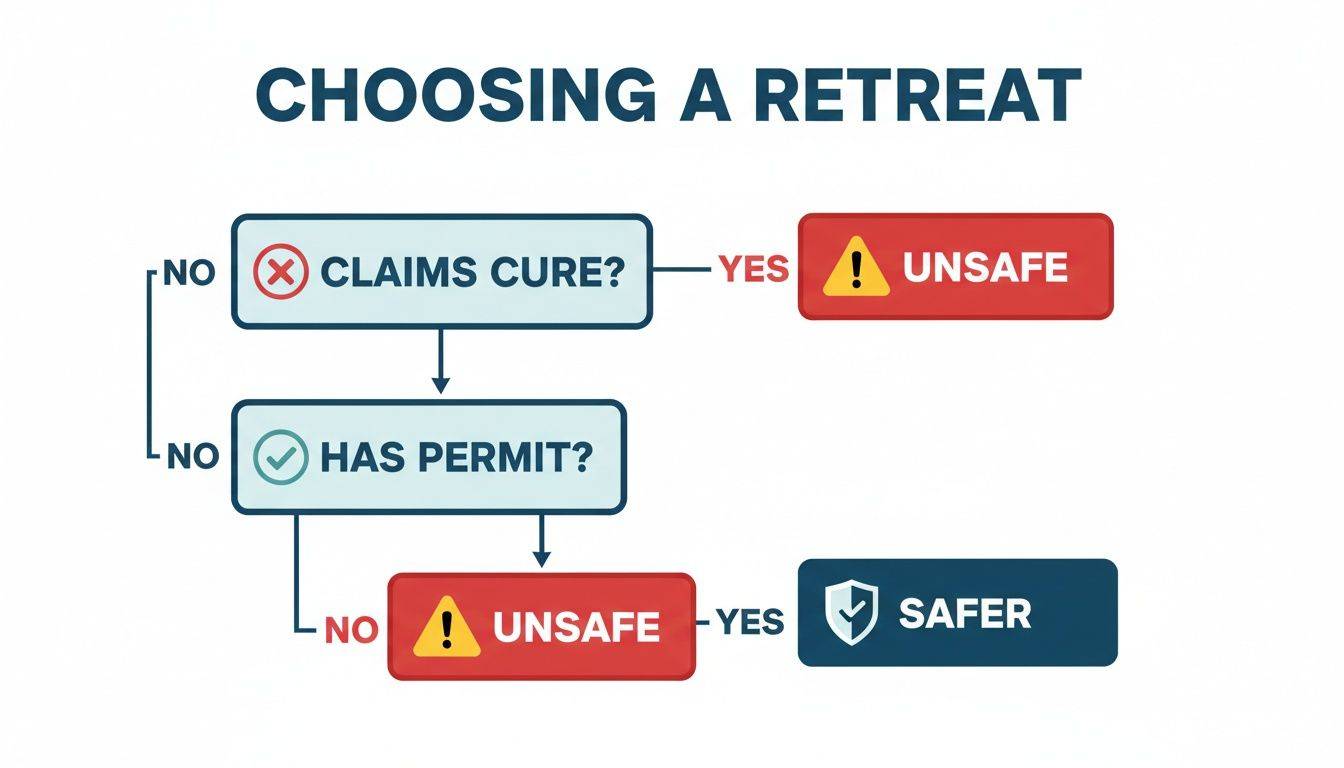
As you can see, asking straightforward questions about official permits and being wary of unrealistic “cure” claims can quickly help you filter out the unsafe options. Following a structured vetting process like this is your best defense in an unregulated market.
Vetting Your Costa Rica Retreat: A Safety Checklist
With the lack of formal regulation, you have to become your own safety inspector. This checklist is designed to help you ask the right questions and spot potential issues before you commit to a retreat.
| Safety Check | What to Look For | Red Flags to Avoid |
|---|---|---|
| Medical Screening | A mandatory, detailed health questionnaire (physical & mental). | No medical questions asked; acceptance without screening. |
| On-Site Medical Staff | A qualified doctor, nurse, or paramedic present during ceremonies. | No medically trained personnel available on-site. |
| Facilitator Experience | Decades of training in a recognized lineage; verifiable history. | Vague background; self-proclaimed “gurus” with no clear training. |
| Group Size | Small, intimate groups (under 20 people) with a high facilitator-to-participant ratio. | Huge ceremonies (30+ people) with only one or two facilitators. |
| Integration Support | A clear post-retreat program (sharing circles, follow-up calls, coaching resources). | No mention of integration; the experience ends when you leave. |
| Transparency & Communication | Willingness to answer all questions openly and honestly. | Evasive answers; pressure to book quickly; grandiose spiritual claims. |
| Authentic Reviews | Balanced reviews from multiple sources that feel genuine and detailed. | Only perfect, glowing reviews; reviews that seem fake or paid for. |
Think of this as your due diligence cheat sheet. If a retreat can’t provide satisfactory answers for the items in the “What to Look For” column, it’s best to keep searching. Your safety is paramount.
Practical Travel Tips for Your Journey
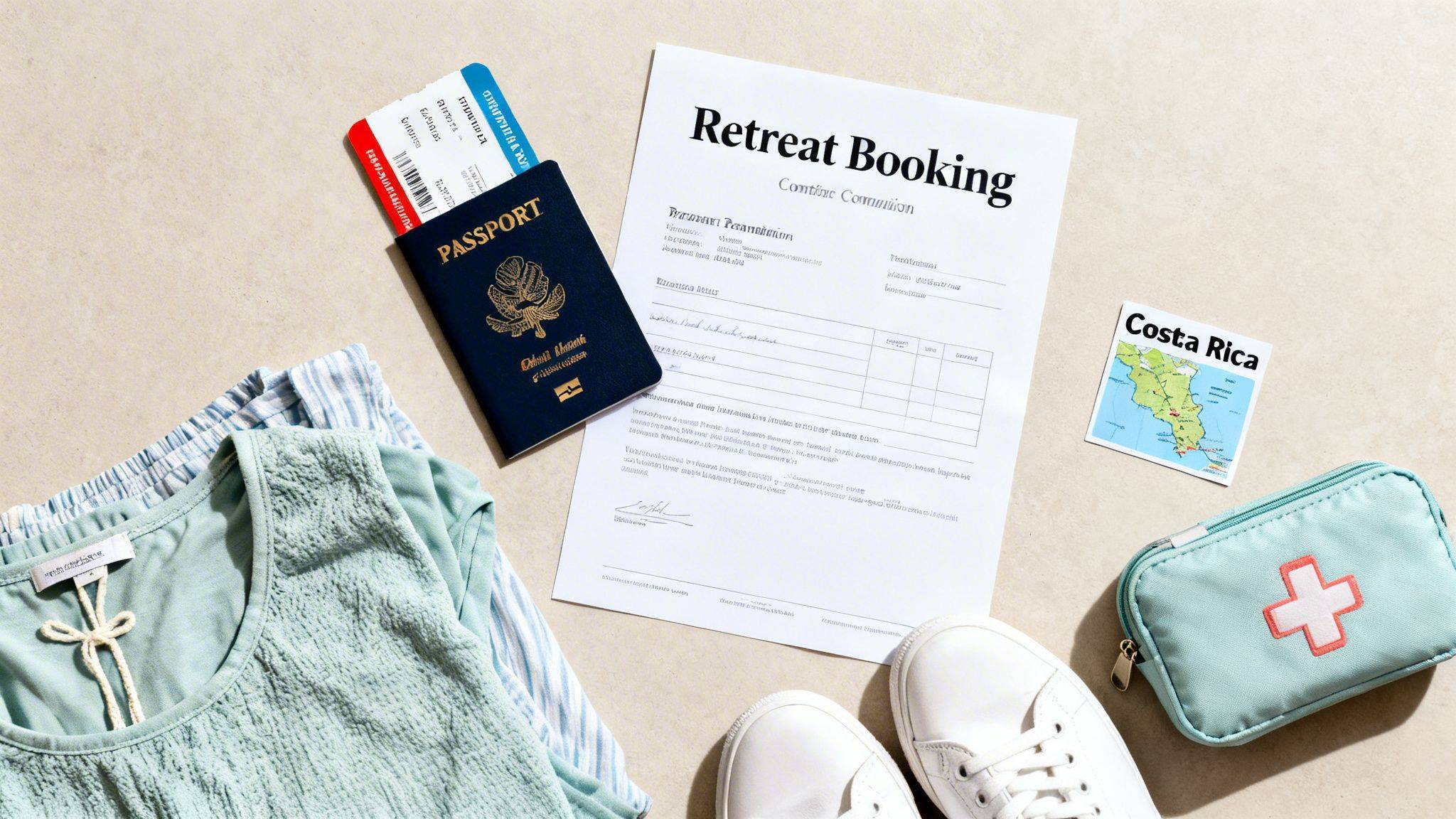
Planning your trip to Costa Rica goes beyond just booking flights and picking a retreat. A little thoughtful preparation can make all the difference, ensuring your journey is smooth, respectful, and safe from the moment you leave home until you return. This means getting smart about customs, understanding local etiquette, and traveling responsibly.
Let’s get the most critical rule out of the way first. It’s simple and completely non-negotiable: never, under any circumstances, attempt to transport Ayahuasca across international borders. This goes for both entering and leaving Costa Rica. Airport security is no joke, and getting caught with the brew can land you in serious trouble, including drug trafficking charges.
This is a hard line. While the legality of ceremonies inside Costa Rica is a complex gray area, there is absolutely no ambiguity at the border. Any reputable retreat will provide the medicine for your ceremony, sourced responsibly within the country. Your only job is to show up with an open mind and heart, not with a controlled substance in your suitcase.
Navigating Customs and Traveling Discreetly
When you land in Costa Rica, a customs official will likely ask the purpose of your trip. Honesty and discretion are key. You’re there for tourism, a wellness retreat, or even a yoga retreat. There’s no reason to bring up Ayahuasca, as it could just create unnecessary confusion or draw unwanted scrutiny.
You aren’t doing anything illegal by attending a retreat, but simple, clear answers are your best friends at immigration. Just keep your explanation focused on general tourism.
Cultural Respect and Local Etiquette
This journey is not just about connecting with the medicine; it’s a chance to connect with the rich culture of Costa Rica. The local people, known as “Ticos,” are famously warm and welcoming. Showing genuine respect for them, their traditions, and their land is a fundamental part of the experience.
Remember, you are a guest in their home. Many of the best retreats are located near small towns and indigenous communities that hold a deep, spiritual connection to the land.
- Learn a Little Spanish: Even just a few words like “hola,” “gracias,” and “por favor” go a surprisingly long way in showing respect.
- Support Local Businesses: When you can, buy souvenirs from local artisans, eat at the small local restaurants (called sodas), and hire local guides. This helps ensure the economic benefits of your visit stay in the community.
- Honor the Tradition: The sacredness of Ayahuasca is rooted in ancient indigenous wisdom. Approach your ceremony with humility and reverence for the traditions that have kept this practice alive. The growth of Ayahuasca tourism has had complex effects, and you can learn more about its impact on traditional ayahuasca practice in our detailed article.
“Your journey into the world of Ayahuasca is not just a personal one; it is an interaction with a culture, a community, and an ancient tradition. Traveling with awareness and respect enriches your experience and honors the medicine’s spirit.”
Practicalities for a Smooth Trip
Finally, let’s cover a few basic logistics to make sure your trip is stress-free. Costa Rica is a modern, accessible country, but a little prep work always helps.
- Money: Credit cards are widely accepted in most tourist spots, but it’s a good idea to carry some local currency, Costa Rican colones, for smaller purchases, especially if you’re in a more rural area.
- Packing: Think light, breathable clothing. Don’t forget insect repellent, sunscreen, and a reusable water bottle. And of course, bring any personal medications you require.
- Transportation: Arrange your ride from the airport to your retreat center ahead of time. Many centers offer their own shuttle service, which is almost always the easiest and safest way to go.
By taking care of these practical details and moving with cultural sensitivity, you set the stage for a truly profound and positive journey.
The Future of Ayahuasca Legality in Costa Rica
Trying to understand the legal landscape for Ayahuasca in Costa Rica is like walking a tightrope. On one side, you have the government’s unspoken agreement to look the other way when it comes to the plant brew, which has let a vibrant retreat culture blossom. On the other side, the law is crystal clear about its main psychoactive ingredient, DMT, and health officials are getting more vocal about safety concerns and wild healing claims.
This strange, “unscheduled” middle ground is exactly why Costa Rica has become one of the go-to places for Ayahuasca. For the time being, this gray area seems stable. But as the world wakes up to plant medicine, how long can that last? The current situation feels temporary, and what comes next will almost certainly be shaped by public health, money, and the shifting global conversation.
Potential Shifts on the Horizon
So, what could change? One very real possibility is that the government decides to step in with formal regulations. This wouldn’t necessarily mean an outright ban. Instead, Costa Rica could build a legal framework designed specifically for Ayahuasca retreats, pulling the practice out of the shadows and into a legitimate, supervised space.
If that happens, you could expect to see new rules like:
- Official Licensing: Retreats would likely need a special license to operate, proving they meet strict safety and operational standards.
- Practitioner Certifications: We might see official requirements for facilitators, demanding proof of proper training, lineage, and experience.
- Health and Safety Mandates: Things like mandatory medical screenings, on-site medical professionals, and clear emergency plans could become the law of the land.
This kind of evolution would follow the path other countries are starting to explore, moving from a legal gray zone to a fully regulated system. The goal would be to protect people while solidifying Costa Rica’s reputation as a world-class wellness hub. It would also finally draw a hard line between the professional, safety-first centers and the risky operators.
Your Role in a Positive Future
So, is Ayahuasca legal in Costa Rica? The answer for now is a complicated “yes,” existing in a legal limbo that opens the door to profound experiences. What happens next depends a great deal on the choices made by both the retreat centers and the people who visit them.
“By choosing to support only the most reputable, safety-conscious, and ethically-run retreats, you are casting a vote for a responsible and sustainable future for Ayahuasca in Costa Rica. Your diligence sends a powerful message that professionalism and integrity are what the community values most.”
Ultimately, you are in the driver’s seat of your own journey. The current setup in Costa Rica allows for deep, meaningful work, but only if you approach it with your eyes wide open and a strong sense of personal responsibility. Do your homework, vet your retreat like your life depends on it, and travel with respect for the local culture. The path is open, and if you prepare well, it can be an incredibly safe and rewarding one.
Frequently Asked Questions
When you’re considering a journey with Ayahuasca in another country, a lot of questions pop up. It’s only natural. Let’s get straight to the answers for the most common things people ask, so you can feel clear and confident about your travel.
Can I Be Arrested for Participating in an Ayahuasca Ceremony in Costa Rica?
This is a big one, and the short answer is: it’s extremely unlikely. So far, there haven’t been any known arrests of people just for attending a ceremony at a proper retreat center. The focus for law enforcement has always been on trafficking controlled substances, not on individuals engaging in personal spiritual work.
That said, because DMT is technically on the books as a controlled substance, a theoretical risk, however small, does exist. This is exactly why it’s so critical to choose a reputable, long-standing retreat. The best centers operate transparently and have a good relationship with their local community, which really is your best safeguard against any potential legal issues.
Is It Legal to Bring My Own Ayahuasca to Costa Rica?
Absolutely not. Trying to bring Ayahuasca across an international border is a serious offense. You’d be risking drug trafficking charges, which carry heavy penalties. Costa Rican customs officials will view the brew as a controlled substance, plain and simple.
Every legitimate retreat in Costa Rica will provide the medicine. It’s sourced locally and prepared by people who have been doing this for years. Don’t even think about traveling with Ayahuasca. It puts you in a terrible legal position and goes against the responsible practices the community is built on.
How Does Costa Rica’s Ayahuasca Scene Compare to Peru or Brazil?
Each country has its own unique flavor. Peru is often seen as the heartland, where Ayahuasca is part of the national cultural heritage. The experience there can be more rustic, deep-in-the-jungle, and closely tied to specific indigenous traditions. Brazil, on the other hand, has a long-established history of legally protected religious use within churches like the Santo Daime.
Costa Rica offers a different kind of experience. It shines when it comes to well-developed wellness and tourism infrastructure. Here, retreats often blend traditional ceremonial practices with modern comforts, professional medical screening, and in-depth integration support. This mix makes it a very popular choice, especially for people who are new to Ayahuasca and want to feel as safe and supported as possible.
“While the core experience with the medicine can be profound anywhere, Costa Rica’s emphasis on safety, comfort, and structured support creates a unique container that many find ideal for their first journey.”
What Is the Difference Between a Shaman and a Facilitator?
These terms get used a lot, and it’s good to know the distinction. The word shaman, or curandero in Spanish, usually refers to a traditional indigenous healer. They typically have a lifetime of training passed down through a specific Amazonian lineage, grounded in ancestral knowledge.
A facilitator is a more modern, broader term. It describes someone who guides ceremonies but might not come from an indigenous lineage. They should, however, still have years of intensive training with the medicine and be skilled at creating a safe and supportive space.
In Costa Rica, you’ll find both. The title isn’t what matters most. When you’re looking into a retreat, the crucial thing is to ask about the ceremony leader’s background, their training, their lineage (if any), and how many years of experience they have. Verifying their qualifications is a non-negotiable step in making sure you’re in good hands.
Disclaimer: This article is for informational purposes only and does not constitute legal advice. Laws regarding Ayahuasca vary by jurisdiction and may change. Responsibility for compliance with all applicable local, national, and international laws rests with the individual.