Ayahuasca remains federally illegal in the USA because it contains DMT, a Schedule I substance, and lawful access exists only through narrow religious exemptions for a handful of churches, not commercial retreats. A 2022 survey found that 69.9% of participants reported an acute physical effect, including 68.2% who reported nausea or vomiting, so legality and safety both deserve careful attention before anyone books a ceremony.
A person searching for an Ayahuasca ceremony USA may find church announcements, retreat advertisements, spiritual communities, and legal warnings in the same results. Those listings can look similar while representing very different legal positions, levels of medical preparation, and relationships to Indigenous and religious traditions.
The practical question isn’t only whether a ceremony exists. It’s whether the organization has a lawful basis for its work, whether its facilitators can respond to a medical emergency, and whether the participant understands the physical and emotional demands involved.
“Core question: Is the ceremony legally protected, medically responsible, culturally respectful, and appropriate for the person considering it?”
Why People Seek an Ayahuasca Ceremony in the USA
A prospective participant may arrive at this subject after months of reading, therapy, spiritual exploration, or personal difficulty. The attraction can involve healing, a search for meaning, curiosity about consciousness, or a desire to engage with a sacred tradition connected to Amazonian peoples. The motivation may be sincere, but sincerity alone doesn’t resolve the practical questions.
Search results often add to the confusion. One listing may describe a religious congregation. Another may advertise a private retreat in a rural setting. A third may promise transformation without explaining screening, emergency planning, or the legal basis for possession and administration.
Those differences matter because religious membership, local decriminalization, and lawful ceremony access aren’t interchangeable concepts. A participant may assume that a spiritual setting automatically provides legal protection, or that a city’s enforcement priorities change federal law. Neither assumption is safe.
This guide starts with federal law, then turns to physical safety, facilitator vetting, ceremony expectations, preparation, integration, and practical access choices. The sequence matters. A person who pays first and investigates later may discover that the advertised experience has no recognized exemption, weak screening, or little support after the ceremony.
The tradition also deserves more than wellness marketing. Ayahuasca ceremonies carry religious, cultural, and ethical dimensions that shouldn’t be reduced to a product description. A careful seeker can hold respect for Indigenous knowledge while applying modern safety questions about medication, cardiovascular health, mental health history, supervision, and aftercare.
The result should be a slower decision, not a fearful one. Clear information helps a person decide whether to continue researching, seek professional advice, or walk away from a particular invitation.
The Legal Status of Ayahuasca in the United States
Federal law provides the starting point. Ayahuasca contains DMT, which remains a Schedule I controlled substance, and legal summaries state that possession, distribution, importation, and use remain prohibited outside narrow religious protections. The statutory maximum punishment for possession or import of DMT, or a substance containing DMT, can reach 20 years of imprisonment (ICEERS’ United States legal overview).
That rule applies even when an organizer uses words such as ceremony, healing, sacrament, or retreat. A religious atmosphere doesn’t automatically create a federal exemption, and a commercial offering doesn’t become lawful because participants describe it as spiritual.
The Narrow Exemption Pathway
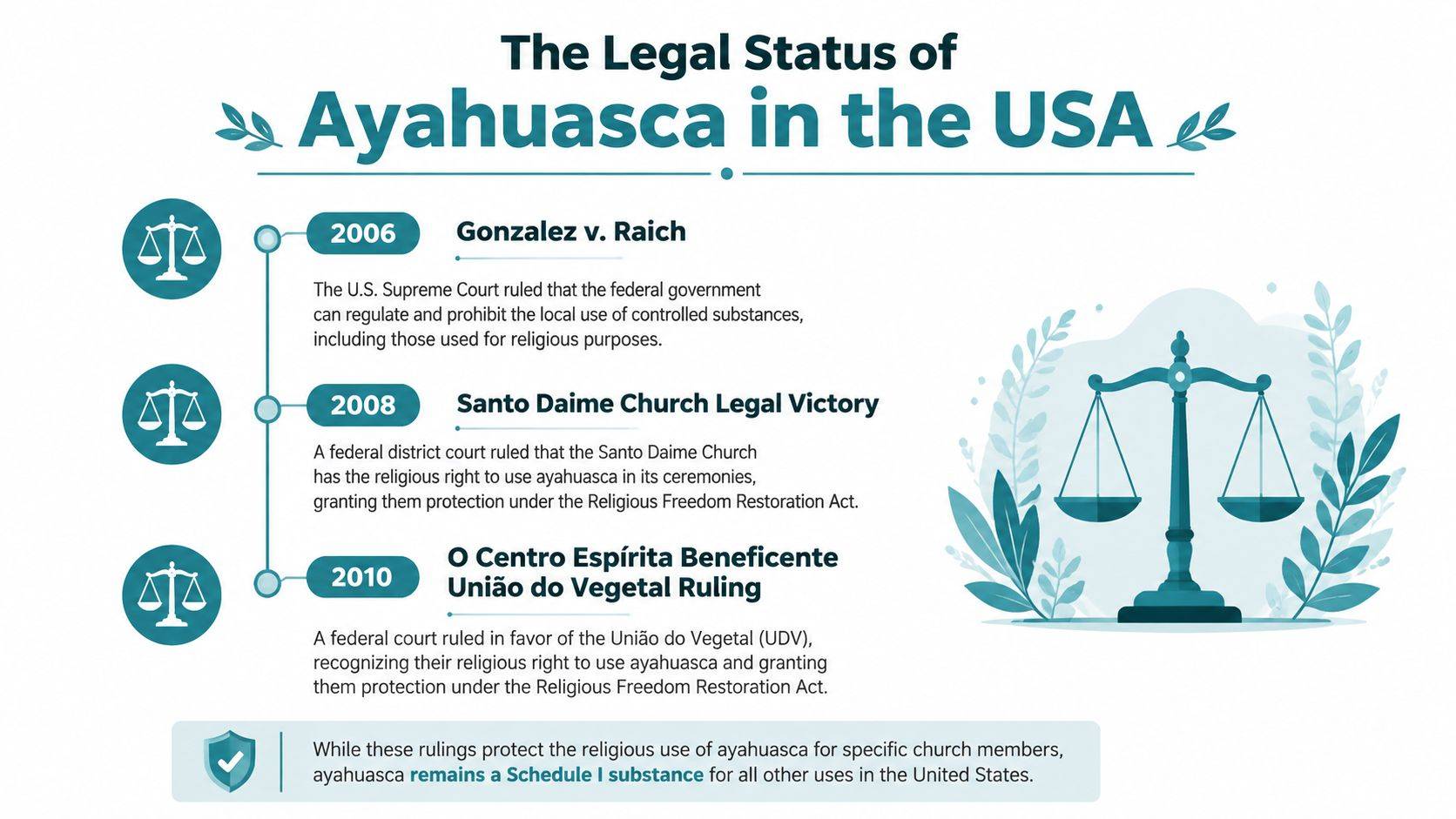
The major federal milestone came in 2006, when the U.S. Supreme Court upheld the União do Vegetal’s right to use ayahuasca under the Religious Freedom Restoration Act. A 2009 Ninth Circuit ruling later extended similar protection to certain Santo Daime churches. These decisions protected specific religious organizations and practices. They didn’t legalize ayahuasca for the public or create a general retreat license.
In April 2024, an Arizona-based church reached a federal settlement allowing ayahuasca importation and religious use. In May 2025, the DEA approved a church petition for ceremonial ayahuasca use without litigation, described as the first approval through that petition process (reporting on the DEA church petition approval).
What Legal Protection Doesn’t Mean
The exemption pathway is organization-specific and narrow. It shouldn’t be read as permission for a secular wellness business, an informal gathering, or a public commercial retreat to possess and administer ayahuasca.
A useful next step is to study how religious claims and DEA processes work through this explanation of RFRA and the DEA religious-exemption process. Prospective participants should ask a church to identify its legal basis clearly rather than relying on broad claims such as “protected by religion.”
Independent legal summaries published in 2025 and 2026 state that no state has fully legalized ayahuasca, while a Government Accountability Office summary reported that the DEA received 24 petitions for religious exemptions involving various controlled substances from fiscal years 2016 through January 2024, with none granted at that stage (legal summary of ayahuasca status). The practical mental model is simple: recognized religious protection is an exception, not a general market authorization.
Safety and Medical Considerations Before You Sit
Before joining a ceremony, consider a simple scenario: someone expects spiritual purging, then develops persistent vomiting, severe distress, or a rapid heartbeat. These reactions need attentive monitoring, not automatic dismissal as part of the experience.
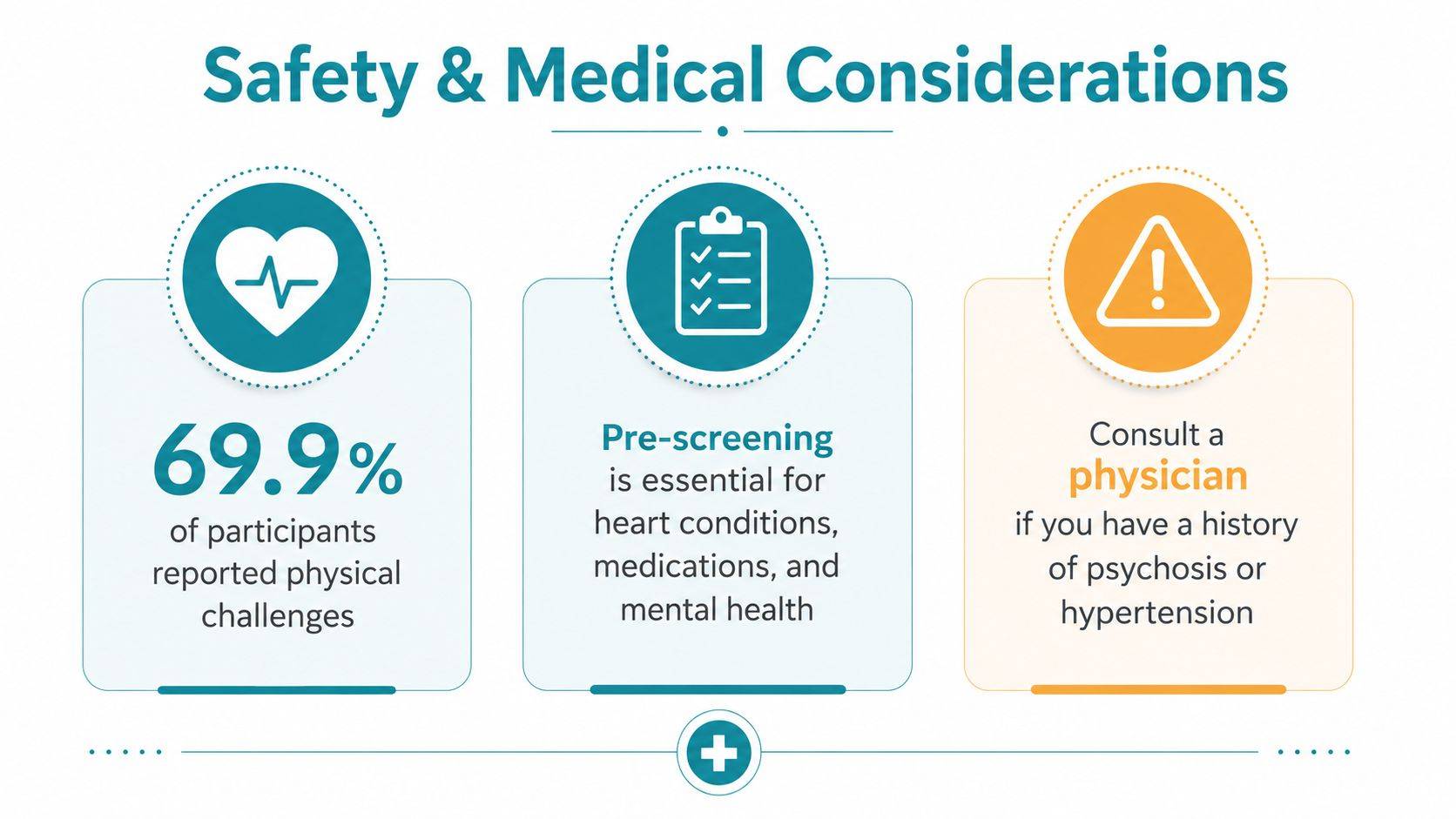
Ayahuasca’s physical effects deserve direct language. A 2022 global survey analysis found that 69.9% of participants reported an acute physical health effect. The most frequently reported effects were vomiting and nausea at 68.2%, followed by headache at 17.8% and abdominal pain at 12.8% (survey analysis reported by ScienceDaily). These figures describe reported experiences, not a prediction for every participant. They do show why a facilitator must distinguish expected discomfort from symptoms requiring medical attention.
A PubMed-indexed review reported no serious adverse events in controlled settings and described a relative safety profile when administration is supervised. It also identified nausea, vomiting, headaches, and temporary increases in cardiovascular measurements as common effects (PubMed review of Ayahuasca and DMT adverse events). A controlled setting is not a guarantee. It is more like a staffed crossing, where someone can notice trouble and respond early.
Screening Has to Be Specific
A responsible intake process asks about cardiovascular conditions, blood pressure, current medication, psychiatric history, pregnancy, seizure history, substance use, and previous reactions to psychoactive substances. A form covering only allergies or general fitness leaves important risks unexamined.
People with a history of psychosis, mania, serious cardiovascular disease, uncontrolled hypertension, or significant medication interactions need qualified medical guidance before considering participation. Antidepressants, stimulants, blood-pressure medication, and other substances may require careful review. A facilitator should not diagnose a participant or instruct them to stop prescribed medication. For a plain-language overview, review these ayahuasca safety and medical guidelines.
Disclosure Protects the Whole Group
Full disclosure helps a facilitator refuse participation when risk is too high, arrange suitable monitoring, and prepare an emergency response. Pressure to conceal medication, diagnoses, or pregnancy is a serious warning sign.
People comparing broader wellness options can browse wellness centers worldwide, while treating medical screening as a required criterion. No directory replaces a physician’s advice or a facilitator’s responsibility to screen carefully.
How to Vet Facilitators and Retreats in the USA
Choosing a facilitator resembles hiring a guide for a demanding wilderness trek. A warm personality and attractive setting may help, but they don’t demonstrate navigation skills, first-aid readiness, or the ability to respond when conditions change.
No single licensing body governs every Ayahuasca facilitator in the United States. Participants therefore have to perform their own due diligence before sending money, traveling, or sharing sensitive medical information.
Questions Worth Asking Before Payment
A serious conversation should produce clear answers rather than spiritual language alone.
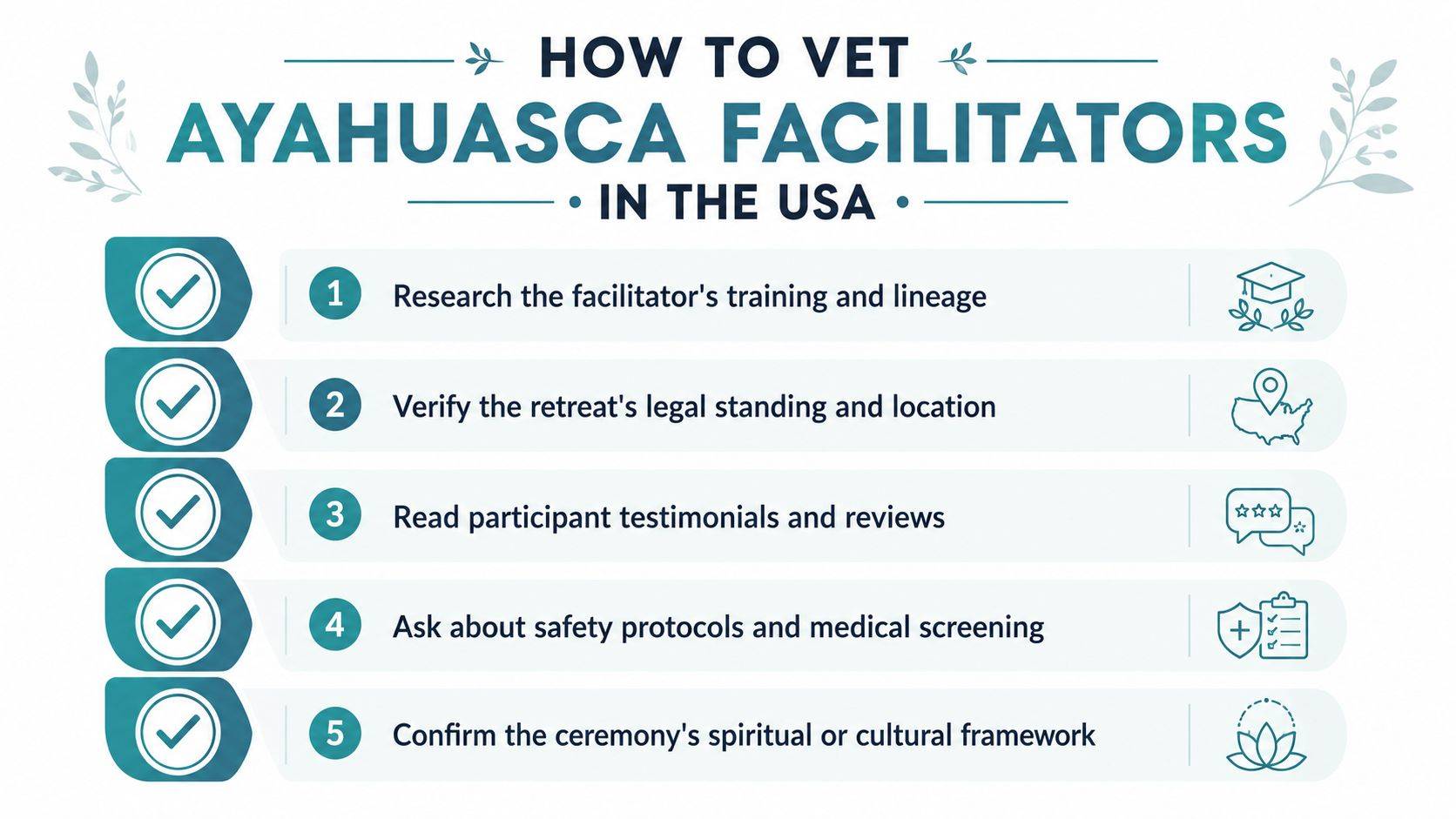
- Medical screening: What conditions, medications, and psychiatric histories lead to exclusion?
- Emergency response: Who monitors participants, what supplies are available, and how would emergency transport work?
- Training and lineage: Who taught the facilitator, and how does the group describe its relationship to the tradition?
- Participant support: Are references, independent reviews, or direct conversations with former participants available?
- Integration: What happens after the ceremony if someone feels distressed, confused, or emotionally overwhelmed?
- Legal basis: Is the organization relying on a recognized religious exemption, and can it explain that basis in precise terms?
A facilitator who responds thoughtfully may still not be suitable, but a facilitator who refuses basic questions has already supplied useful information.
Red Flags That Should End the Conversation
Pressure to reserve immediately, guarantees of emotional healing, vague answers about dosage or screening, and claims that “the medicine handles everything” all deserve caution. So does a refusal to explain who remains sober, how participants reach a bathroom, or what happens if a person becomes disoriented.
A credible organization can describe its spiritual framework without claiming universal authority. Respect for tradition should sit alongside practical accountability, not replace it.
What to Expect During an Ayahuasca Ceremony
A typical ceremony may take place in a dim or darkened room where participants lie or sit on mats. The facilitator may open the gathering with prayers, songs, or other ritual elements, then serve the brew individually. The exact sequence varies by lineage, church, location, and group.
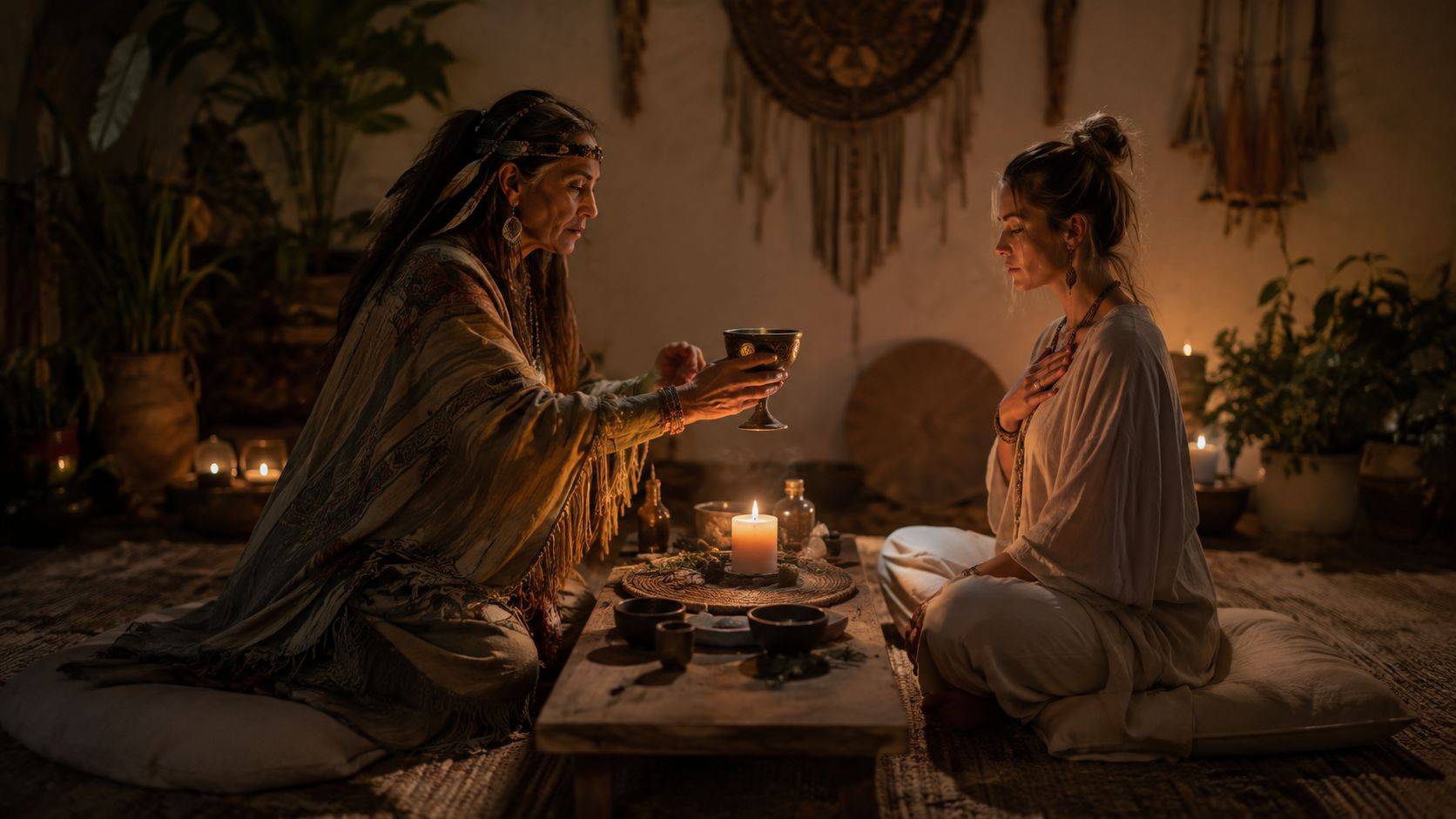
The first phase may feel quiet or uncertain. A participant may notice bodily sensations, changes in attention, emotional memories, visual effects, or growing nausea. Music can become a central anchor, while the facilitator’s songs help shape the atmosphere and provide continuity through a disorienting experience.
As the effects intensify, the body may ask for attention through sweating, shaking, crying, nausea, or vomiting. Purging is often treated within ceremonial traditions as a meaningful part of the process, but it remains a physical event that requires dignity, hygiene, hydration planning, and attentive supervision. A participant shouldn’t be shamed for purging or pressured to take more.
The Return Is Gradual
The strongest period eventually softens, although the return may feel uneven. One person may feel calm and inward, while another may feel tired, emotionally exposed, or uncertain about what happened. Each journey differs, and a dramatic visual experience isn’t a measure of spiritual value or personal progress.
A facilitator should explain how participants request help, leave the room safely, and access support during vulnerable moments. Participants also need a quiet transition after the ceremony rather than an immediate demand to socialize, travel, or make major decisions.
A short educational video can help a prospective participant understand why setting, supervision, and preparation deserve attention before attendance.
The hours afterward may bring relief, fatigue, insight, or unsettled feelings. A well-run setting plans for that period instead of treating the closing song as the end of responsibility.
Preparation and Integration That Shape the Outcome
Preparation begins before the ceremony date. Dietary guidance varies across traditions, so participants should ask the specific organization what it recommends rather than treating internet folklore as medical advice. Common preparation also includes reducing avoidable stress, arranging transportation and rest, protecting private time afterward, and clarifying personal intentions without turning them into demands for a particular vision.
A garden analogy helps. Preparation clears obvious obstacles and improves the soil, but it can’t force a particular plant to grow. Likewise, an intention can orient attention without controlling the experience.
Medical disclosure belongs in preparation, not as an afterthought. Participants should provide accurate information about diagnoses, prescriptions, supplements, substance use, and previous reactions. A qualified clinician can help assess personal risk, while a facilitator can decide whether the setting is appropriate.
Integration Turns Experience Into Practice
The ceremony may last one night, but understanding can unfold over a much longer period. Without deliberate processing, vivid impressions may fade, become confused with certainty, or remain disconnected from daily behavior.
Useful supports include a private journal, therapy with a qualified professional, an integration circle, moderated community forums, and conversations with trusted people who won’t sensationalize the experience. Writing can focus on concrete questions: What emotions appeared? Which relationships or habits need attention? What small action would reflect the insight?
Slow Interpretation Helps
Participants shouldn’t treat every image or thought as a literal instruction. Patience creates room to test meaning against values, relationships, health, and ordinary responsibilities. If sleep disruption, paranoia, persistent fear, or difficulty functioning continues, professional mental health support matters.
Integration also includes boundaries. A person may decide that a ceremony isn’t something to repeat, or that further participation requires stronger screening and support. Both decisions can reflect thoughtful learning.
Costs, Locations, and Lawful Access Pathways
Price comparisons become misleading when legal standing and support are left out. Retreat listings can vary according to accommodation, group size, facilitator access, medical screening, food, transport, and integration services. Published guidance commonly places one-week retreat experiences in a broad range of $1,200 to $5,000, so prospective participants should verify exactly what the fee includes rather than treating price as a safety signal (Ayahuasca retreat cost guidance).
The choices below involve different forms of uncertainty. The table describes categories, not recommendations.
Comparing U.S. Ayahuasca Access Pathways
| Pathway | Legal Standing | Typical Cost | Support and Screening |
|---|---|---|---|
| Recognized religious organization | Potential protection only within the organization’s specific exemption and practices | Organization-specific | May include structured religious participation, screening, and ceremony support |
| International ceremony in a jurisdiction where it’s permitted or tolerated | Depends on the destination’s laws and the operator’s licensing or registration | Often includes travel, lodging, and program fees | Quality varies, so medical staffing, screening, and emergency procedures require verification |
| Domestic commercial or informal retreat | Generally lacks a broad federal authorization for public retreat activity | Varies widely | Screening and emergency support may be inconsistent and must be investigated directly |
Cost Isn’t the Same as Legitimacy
A high fee can reflect comfortable accommodation rather than clinical preparation. A low fee can omit transportation, qualified support, medical review, or post-ceremony care. Participants should request a written breakdown of inclusions, cancellation terms, supervision arrangements, and the organization’s legal explanation.
Religious membership also deserves careful scrutiny. Joining a church solely to obtain access may create ethical, spiritual, and legal complications, especially if the organization treats membership as a purchase. A sincere religious structure should be explained in its own terms.
Domestic decriminalization or deprioritization in a particular locality doesn’t establish a lawful commercial retreat. Federal scheduling remains relevant, and state-level reform for another substance doesn’t automatically cover Ayahuasca.
Moving Forward With Clarity and Respect
A careful decision rests on three questions. Is the access pathway legally specific and credible? Is the setting prepared for common physical effects and serious uncertainty? Is the participant personally ready for screening, vulnerability, preparation, and integration?
Federal law still prohibits Ayahuasca outside narrow religious exemptions. The recognized pathway belongs to particular organizations and practices, not to every gathering that uses ceremonial language. The safety data also calls for balance: acute reactions are common, while supervised controlled settings have shown no serious adverse events in the reviewed evidence.
Before committing, a prospective participant should request the organization’s legal explanation, complete a thorough medical review, ask who remains sober and available, confirm emergency procedures, investigate training and lineage, and learn what support follows the ceremony. Any unanswered question is a reason to pause, not a challenge to overcome.
Educational resources, community discussions, and curated retreat information can support further research. Ayahuasca.com offers legal, preparation, integration, and retreat-directory material for people comparing options across different settings, but every participant still needs independent legal and medical judgment.
The seeker who began with a confusing search can leave with a more useful standard: respect the tradition, verify the facts, protect the body, and refuse pressure. That approach makes room for spiritual curiosity without surrendering practical responsibility.
Before paying for an Ayahuasca ceremony in the USA, write down the organization’s legal basis, screening requirements, emergency plan, facilitator background, total cost, and integration support, then review those answers with a qualified medical professional and an independent trusted adviser.
Disclaimer: This article is for informational purposes only and does not constitute legal advice. Laws regarding Ayahuasca vary by jurisdiction and may change. Responsibility for compliance with all applicable local, national, and international laws rests with the individual.