
Entheogens are a special class of psychoactive substances, most often plant-based, that are used with a specific spiritual, religious, or introspective goal in mind. The word itself comes from the Greek for “generating the divine within,” which really gets to the heart of the matter.
While all entheogens are technically psychedelics, the reverse isn’t always true. The real difference isn’t the substance, but the why and how of the experience.
What Entheogens Truly Mean
The term “entheogen” was coined to move the conversation beyond the stigma of recreational drug use. It reframes these powerful plants and compounds as tools for serious inner work.
Think of it this way: a hammer can be used to build a beautiful home or to smash a window. The tool itself is neutral; what defines its purpose is the intention of the person holding it. In the same way, a substance becomes an entheogen when it’s used with purpose and respect.
This is exactly why the concepts of set and setting are absolutely fundamental. They are the twin pillars of any responsible and meaningful entheogenic work.
- Set (Mindset): This is all about your internal landscape—your mood, your intentions, and your expectations heading into the journey. Approaching the experience with a mindset of openness, humility, and genuine curiosity is key.
- Setting (Environment): This refers to your physical surroundings. A safe, quiet, and comfortable space, often with trusted support, allows you to feel secure enough to let go and explore your inner world without distraction or fear.
When you deliberately prepare your mindset and create a supportive setting, you build the container needed for the substance to act as a true entheogen, opening the door to deep psychological insight or a powerful spiritual connection.
The Focus on Inner Experience
Unlike substances taken simply for a good time, entheogens are approached as catalysts for growth, healing, or connection to something larger than oneself. They are often seen as tools that can temporarily quiet the constant chatter of the ego, allowing us to see our own patterns and behaviors from a completely new vantage point.
This shift in perspective can be incredibly valuable for exploring life’s biggest questions. You can learn more about how entheogens relate to existential intelligence in our detailed article.
“An entheogen is not simply consumed; it is engaged with. The experience is an active process of self-discovery, where the substance acts as a key to unlock doors within the mind that are normally closed.”
A Modern and Global Perspective
Interest in entheogens is growing far beyond their traditional indigenous roots. Today, scientific research is working to understand their effects and potential on a global scale.
For example, the Global Psychedelic Survey 2025 is one of the largest studies ever conducted, gathering data on the experiences, motivations, and outcomes of people using these substances. With input from thousands of individuals across more than 85 countries, it’s helping to build a comprehensive picture of entheogen use in the modern world.
A Journey Through the History of Entheogens
The human connection with entheogens isn’t some new-age fad; it’s an ancient story, woven deep into the fabric of cultures all over the world. For thousands of years, these powerful plants and fungi weren’t seen as recreational drugs. They were sacred keys—tools for understanding the cosmos, healing the sick, and speaking with the divine.
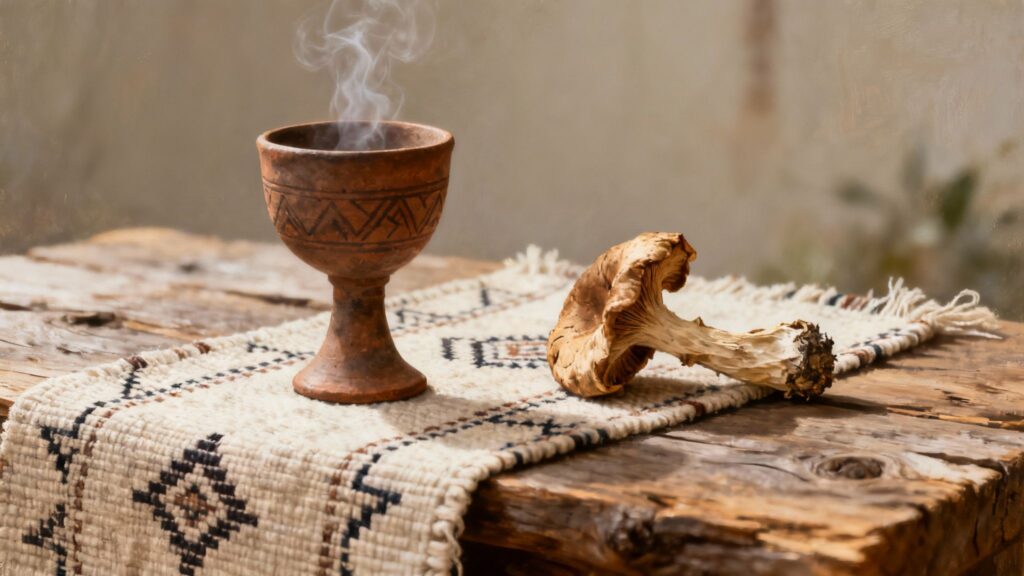
When we look back, we find a consistent pattern of reverence and ritual. Ancient peoples built sophisticated practices around these substances, placing them at the heart of their most important ceremonies.
Roots in Antiquity
Some of the oldest hints of entheogen use go back literally to the Stone Age. Rock art found in the Sahara, dated to somewhere between 7000 and 9000 BC, shows figures with mushroom heads. This strongly suggests that psilocybin-containing fungi were part of prehistoric rituals, not just for a casual trip but for deeply ingrained cultural purposes.
In ancient Vedic India, the sacred texts are full of references to a mysterious divine drink called Soma. While we don’t know its exact recipe today, scholars believe it was a powerful entheogen used in ceremonies to connect with the gods. The reverence for Soma shows a core belief: these substances were a direct line to the sacred.
The ancient Greeks had their own version with the Eleusinian Mysteries, secret rites that ran for nearly 2,000 years. Initiates would drink a brew called kykeon, which many researchers think contained an ergot-based entheogen, sparking the profound visions that were central to their spiritual tradition.
The Americas: A Cradle of Entheogenic Practice
Nowhere is the history of entheogen use more continuous and well-documented than in the Americas. For generations beyond counting, indigenous cultures here have nurtured a deep relationship with a whole host of sacred plants.
- Peyote Cactus: The use of peyote, which contains mescaline, goes back over 5,700 years among peoples in Mexico and the American Southwest. It remains a central sacrament in the Native American Church today, used for prayer, healing, and community guidance.
- Teonanácatl: The Nahuatl-speaking peoples of Mesoamerica, like the Aztecs, held psilocybin mushrooms in the highest regard, calling them teonanácatl—the “flesh of the gods.” Their ceremonial importance is carved into stone and painted in ancient codices.
- Ayahuasca: Deep in the Amazon Basin, indigenous communities have brewed ayahuasca for centuries. By combining two specific plants, they created a powerful medicine central to their cosmology. To truly grasp its cultural weight, you can explore the ancient traditions and complex origins of ayahuasca.
“This was never about “getting high.” These substances were always used in a structured, communal setting, with an experienced elder or shaman guiding the way. The purpose was clear: diagnosing illness, marking a rite of passage, or seeking wisdom for the tribe. The experience was inseparable from the community and its spiritual worldview.”
From Sacred Sacrament to Stigmatized Substance
The arrival of European colonizers was a brutal turning point. They saw these indigenous practices through a lens of fear and religious dogma, and they worked hard to stamp them out. Spanish conquistadors, for example, condemned the Aztec use of teonanácatl as devil worship.
This violent suppression forced many of these ancient traditions underground. The profound, spiritually integrated use of entheogens was systematically reframed as dangerous and sinful. Over the centuries, that perspective hardened, eventually leading to the 20th century’s global “war on drugs,” which wrote the stigma into law and cut many people off from their ancestral roots.
Knowing this history is absolutely crucial. It gives us the context for today’s renewed interest in entheogens, reminding us that we aren’t discovering something new. We are reconnecting with a deep and enduring part of the human story. This understanding helps shift the conversation from one of fear to one of respect, curiosity, and a genuine desire to learn from the wisdom of these ancient traditions.
Common Entheogens: A Look at Their Unique Personalities
The world of entheogens is rich and incredibly diverse. Think of each substance not just as a chemical, but as a key that unlocks a different door to your inner world. While they all share the ability to alter consciousness for spiritual or introspective work, they each have their own distinct character, history, and way of working with you.
Getting to know these differences is crucial. Some offer a gentle, reflective journey, while others guide you through a much more intense and demanding landscape. Let’s walk through some of the most well-known entheogens to get a feel for their unique nature.
Psilocybin: The Great Connector
Psilocybin is the compound that puts the “magic” in magic mushrooms. Its roots run deep in indigenous cultures, like with the Aztecs who revered the mushrooms as teonanácatl, or “flesh of the gods.” Fast-forward to today, and psilocybin is front-and-center in modern scientific research, showing incredible promise for mental health.
An experience with psilocybin often feels like hitting a reset button on the brain’s well-worn pathways. It quiets down the rigid, default mode of thinking that keeps us stuck in ruts. This frees up the mind to forge new connections, offering startlingly fresh perspectives on old problems, emotional wounds, or ingrained habits. People often walk away with a profound sense of connection to nature, a feeling of emotional release, and a memory of beautiful, intricate visual patterns.
The journey itself typically lasts a manageable 4 to 6 hours. This shorter duration, paired with its potential for deep insight, is a big reason why it’s a star player in clinical trials for conditions like depression and anxiety.
“A psilocybin journey is a bit like shaking a snow globe. It jumbles up the settled patterns of thought, and as the flakes gently resettle, they often form a completely new, more beautiful, and insightful landscape.”
Ayahuasca: The Deep Dive
Ayahuasca is a powerful ceremonial tea brewed from two Amazonian plants: the Banisteriopsis caapi vine and the leaves of the Psychotria viridis shrub. For countless generations, it has been the cornerstone of shamanic traditions throughout South America. The experience is famous for being an intense, direct dialogue with the deepest parts of your own psyche.
A ceremony is a serious undertaking, often lasting 6 to 10 hours or even longer. It frequently involves a physical “purge”—an essential part of the process that’s seen as a deep cleansing of both body and spirit. The journey is often filled with vivid, elaborate visions that might bring you face-to-face with past traumas, reveal hidden emotional patterns, or offer staggering spiritual clarity.
Many people don’t just feel like they’re watching a movie; they feel they are in direct conversation with an intelligent, guiding presence. It can be incredibly challenging and requires a great deal of courage, but the reward is often a life-changing breakthrough in self-awareness and healing.
Peyote: The Heart Opener
Peyote (Lophophora williamsii) is a small, humble-looking cactus that contains the powerful entheogen mescaline. Its sacramental use stretches back nearly 6,000 years in regions of Mexico and the Southwestern US. For members of the Native American Church, peyote is a sacred medicine used in prayer ceremonies to build community, heal the soul, and commune with Spirit.
The peyote journey is often described as a profoundly “heart-opening” experience. Where ayahuasca can be intensely internal and visionary, peyote has a way of connecting you more to the world and people right in front of you. The effects are long-lasting, typically 10 to 12 hours, and are known for bringing on a gentle clarity, an emotional warmth, and a deep sense of empathy for all living things.
While it can produce visuals, the feeling is primarily emotional and physical—a state of calm, quiet reflection and overwhelming gratitude.
Comparison of Common Entheogenic Substances
To put it all into perspective, it helps to see these powerful teachers side-by-side. This table gives a quick snapshot of their core characteristics.
| Entheogen | Active Compound | Typical Duration | Primary Cultural/Traditional Context |
|---|---|---|---|
| Psilocybin Mushrooms | Psilocybin, Psilocin | 4-6 hours | Mesoamerican (Aztec), Global |
| Ayahuasca | DMT, Harmala Alkaloids | 6-10 hours | Amazonian Shamanism |
| Peyote | Mescaline | 10-12 hours | Native American Church, Huichol |
Ultimately, each of these substances commands immense respect. Their effects are profoundly influenced by your internal state (set) and your external environment (setting), which just goes to show how critical intention and careful preparation are for any journey you might consider.
How Ancient Plant Medicines Are Reshaping Modern Therapy
For centuries, the healing power of entheogens was something you’d hear about from shamans and spiritual leaders, not scientists in lab coats. But today, a fascinating and unexpected bridge is being built between these ancient traditions and the cutting edge of modern neuroscience. Researchers are finally digging into how these substances actually work in the brain, and what they’re finding is pretty incredible.
It turns out these experiences aren’t just random visions. Entheogens actively shift brain function in ways that can lead to genuine, lasting therapeutic breakthroughs. When used within a structured therapeutic setting, they act as catalysts, helping people break free from deeply ingrained mental and emotional patterns.
Taking the Brain’s Autopilot Offline
One of the biggest discoveries in this field centers on a brain network known as the Default Mode Network (DMN). You can think of the DMN as your brain’s autopilot. It’s the part of you that chews on the past, worries about the future, and holds together your day-to-day sense of self.
In conditions like depression and anxiety, this DMN can get stuck in a rut. It becomes overactive and rigid, trapping people in repetitive loops of negative self-talk and stale thinking. It’s like having a depressing song stuck on a scratchy repeat.
This is where entheogens, especially psilocybin, do something remarkable. Brain scans show they temporarily quiet the DMN’s activity, essentially taking that autopilot offline for a while. This simple act can be enough to disrupt those stubborn, harmful thought patterns.
“When the DMN’s grip loosens, the brain enters a state of incredible flexibility and connectivity. It’s as if the walls between different brain regions temporarily come down, allowing for new pathways and novel connections to form. This “neurological reset” can provide a rare window of opportunity for people to see themselves and their problems from a completely new perspective.”
This new understanding is moving entheogens from the cultural fringe straight into the heart of clinical research. The mounting evidence is not only proving their potential but also sparking significant financial interest. The global psychedelic drugs market, which includes many entheogens, was valued at USD 3.12 billion in 2025 and is projected to hit USD 8.50 billion by 2032. That kind of growth shows a massive shift in both medical and public perception, driven by an urgent need for better mental health treatments. You can discover more insights about this growing market on CoherentMI.com.
Clinical Breakthroughs and Healing Potential
This ability to disrupt rigid thinking has opened the door to groundbreaking clinical trials at top-tier institutions around the globe. Researchers are showing that when used in a carefully controlled therapeutic setting, entheogens can be powerful allies against some of our most difficult-to-treat conditions.
The results from these studies have been consistently impressive:
- Treatment-Resistant Depression: Many people who have suffered for years without finding relief from standard antidepressants are seeing significant, lasting reductions in their symptoms after just one or two psilocybin-assisted therapy sessions.
- End-of-Life Anxiety: For terminally ill patients, entheogenic therapy has been shown to dramatically ease the fear and despair tied to their diagnosis, helping them find peace and acceptance.
- Post-Traumatic Stress Disorder (PTSD): Substances like MDMA (often used entheogenically) help people revisit traumatic memories without the usual overwhelming fear, allowing them to finally process and integrate those experiences in a safe, therapeutic space.
It’s absolutely critical to understand that the substance is just one part of the puzzle. The real work happens in the therapy itself—the careful preparation with a trained guide, the support during the experience, and the intensive integration afterward. This framework is what helps translate those profound neurological shifts into lasting healing.
This model is a world away from traditional pharmaceuticals. Instead of a daily pill to manage symptoms, entheogen-assisted therapy involves a few powerful sessions designed to get to the root of the problem. The goal isn’t just long-term management; it’s deep, sustained resolution. For a closer look at the research, the scientific investigation of ayahuasca provides a comprehensive review of past and current studies, highlighting the intricate science behind these ancient medicines.
How to Navigate an Entheogenic Experience Safely
A powerful, meaningful journey with entheogens doesn’t happen by accident. It’s an experience that you co-create through careful preparation, mindful navigation, and a real commitment to the work that follows. I’ve seen time and again that success hinges on three core pillars: the preparation before, the guidance during, and the integration after.
Before the Journey: Preparation and Intention
True safety starts long before you ever sit with the medicine. A thorough medical screening is the absolute, non-negotiable first step. Certain health conditions and medications, especially SSRIs, can have dangerous interactions with these powerful substances. Being completely honest with a qualified facilitator or medical professional about your health history isn’t just a good idea—it’s essential for your well-being.
Once you’ve cleared the medical checks, the inner work can begin. This is where you set your intention. Think of it as giving your subconscious a compass, not a map. You aren’t trying to control the journey, but rather to give it a direction—a question or a theme to return to when things get intense. Your intention might be as specific as healing a past trauma or as open as exploring your spiritual path.
Mastering “Set and Setting”
If you take away only one thing, let it be this: the two most critical factors influencing your experience are your “set and setting.” These are the internal and external containers for your journey. Getting them right is the single most important thing you can do to foster a safe and productive experience.
Set is all about your internal state—your mindset. It’s the sum of your thoughts, your mood, your expectations, and your readiness to engage with whatever comes up. The key is to cultivate an attitude of curiosity, openness, and surrender. It’s about being willing to face both the beautiful and the challenging without resistance.
Setting refers to your physical environment. This needs to be a place where you feel completely safe, secure, and uninhibited. It could be a quiet room in your home, a peaceful spot in nature, or a dedicated retreat center. The crucial elements are that it’s free from interruptions and includes a trusted, sober guide or “sitter” who can offer support.
“I often tell people to think of an entheogenic journey like sailing a small boat on a vast ocean. Your intention is the compass, your mindset (set) is your skill as a sailor, and your environment (setting) is the sturdiness of the boat itself. A storm might still roll in, but with these elements firmly in place, you’re prepared to navigate it.”
The process often used in therapeutic contexts, from initial assessment all the way to healing, is structured and intentional, as this visual illustrates.
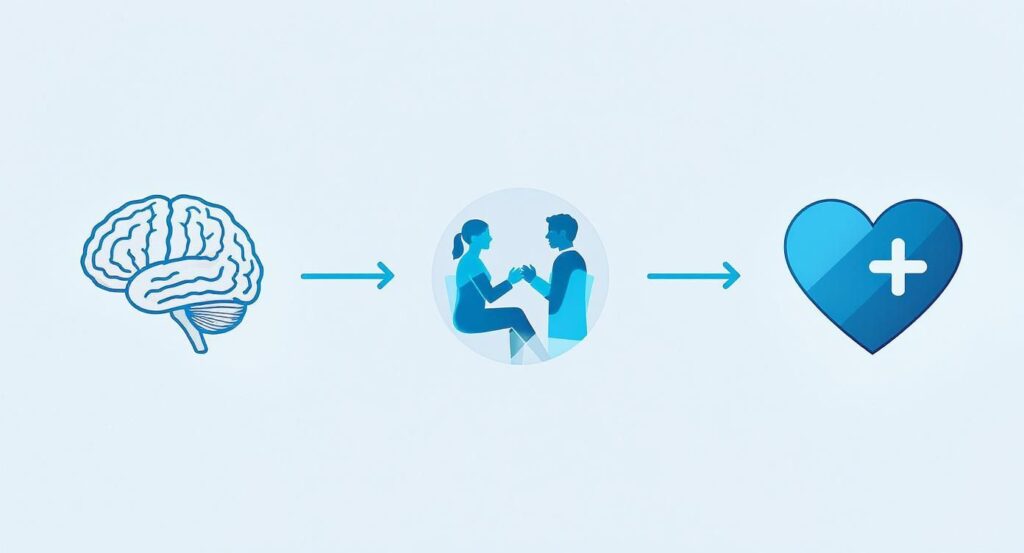
This flow highlights that the experience isn’t just an isolated event; it’s a pivotal part of a much larger arc of healing and growth.
After the Journey: The Real Work of Integration
Here’s a hard truth: the journey doesn’t end when the psychoactive effects wear off. In many ways, that’s when the real work begins. This is integration—the often-overlooked but absolutely vital process of making sense of what you experienced and weaving the insights into the fabric of your daily life.
Without this crucial step, even the most profound revelations can fade away like a dream. The goal of integration is to translate the wisdom gained from the journey into tangible, lasting change in how you live, think, and feel.
Effective integration looks different for everyone. It’s a personal process of finding what resonates with you. Some of the most effective practices include:
- Journaling: Writing down memories, feelings, and insights helps solidify them and can reveal deeper patterns you might otherwise miss.
- Meditation or Mindfulness: These practices are perfect for staying connected to the states of awareness and presence you may have touched upon.
- Creative Expression: Drawing, painting, playing music—these non-verbal outlets can be an incredibly powerful way to process what words can’t capture.
- Working with a Professional: An integration therapist or coach can provide invaluable, grounded support in unpacking complex visions and applying the lessons learned.
Ultimately, navigating an entheogenic experience is an act of deep personal responsibility. It takes courage to look within, preparation to create a safe container, and a genuine commitment to doing the work afterward. By honoring these principles, you create the best possible conditions for a journey that is not just safe, but genuinely life-changing.
Navigating the Legal and Ethical Maze
When you step into the world of entheogens, you’re also stepping into a complicated and often conflicting web of laws, cultural traditions, and personal ethics. The legal status of these powerful plants and substances is changing all the time, creating a confusing patchwork of rules that differ wildly from place to place. What might be an accepted spiritual practice in one country could land you in serious trouble just across the border.
This isn’t just about confusing laws; it’s about a massive cultural shift. For decades, prohibition has lumped these sacred tools in with dangerous street drugs. But that narrative is starting to crack. A surge of compelling scientific research and heartfelt advocacy is pushing for a new approach—one that recognizes their potential to heal deep-seated psychological pain.
The legal ground is definitely shifting, and the trend is clearly moving toward more open, regulated access in many parts of the world.
The Shifting Tides of Legality
Around the globe, the laws governing entheogens are all over the map. Some nations, especially those where plant medicine is woven into the cultural fabric, have created legal pathways for their use in specific religious or retreat settings. Others, however, are holding fast to strict, zero-tolerance policies.
The United States is a perfect example of this dynamic tension. While most entheogens like psilocybin are still illegal under federal law, a growing number of states and cities are forging their own path:
- Decriminalization: Places like Denver, Oakland, and Seattle have made a conscious choice to make personal use and cultivation of entheogenic plants and fungi the lowest priority for law enforcement.
- Medical Legalization: Oregon made history as the first state to legalize psilocybin for therapy in a supervised, clinical environment. Colorado has since passed similar groundbreaking measures.
This legal evolution is happening alongside a massive spike in public curiosity. The National Survey on Drug Use and Health revealed that by 2019, more than 5.5 million adults in the U.S. had used hallucinogens—a category that covers many common entheogens. This figure drives home the growing gap between old-school laws and what people are actually doing. You can dig into the full research from Columbia University about these findings to see the data for yourself.
Beyond the Law: The Ethics of the Experience
But just because something is legal (or decriminalized) doesn’t automatically make it right. A truly conscious and responsible journey with entheogens requires looking closely at the ethics involved. As these ancient practices enter the modern wellness space, it’s on us to engage with them in a way that’s both respectful and self-aware.
“Approaching these traditions requires more than just following the law; it demands humility. It’s about recognizing that we are guests in ancient practices, and our primary role is to listen, learn, and honor the sacred origins of these powerful medicines.”
Here are a few critical ethical questions to ask yourself:
- Appropriation vs. Appreciation: Are you participating in a way that honors the tradition and its lineage? Or are you just cherry-picking sacred elements for a personal high? A big part of ethical practice is supporting indigenous communities and learning from authentic knowledge keepers.
- Spiritual Bypassing: It’s easy to use spiritual concepts or intense experiences to avoid dealing with our real-world problems and emotional wounds. Entheogens are meant to be tools for confronting hard truths, not for escaping them.
- Finding a True Guide: The facilitator, shaman, or guide you work with is incredibly important. An ethical guide puts your safety first, has deep experience, and acts with total integrity. They won’t make wild promises or create a dynamic where you become dependent on them.
Successfully navigating this territory means doing your homework, asking plenty of questions, and moving forward with a profound sense of respect for the power you’re working with.
Got Questions? Let’s Talk Entheogens
As we’ve journeyed through the world of entheogens, you’ve probably got a few questions bubbling up. That’s a good thing. Let’s tackle some of the most common ones that come up when people first start exploring this topic.
Are These Substances Addictive?
It’s one of the first questions people ask, and for good reason. The classic entheogens—think psilocybin, LSD, and DMT—are widely considered to have a very low potential for creating physical dependence. You don’t typically see the kind of compulsive, repeated use that defines addiction.
In a fascinating turn, researchers are now looking at these very substances to help treat addiction, with promising studies on their use for alcohol and nicotine dependency. That said, it’s important to remember that any powerful experience can be approached in an unhealthy way, so responsible, mindful use is key.
What’s the Real Difference Between an “Entheogen” and a “Psychedelic”?
You’ll hear these terms used interchangeably all the time, but the distinction really gets to the heart of the matter. It all comes down to intent.
‘Psychedelic’ was coined to mean ‘mind-manifesting,’ and it describes the effect of the substance itself. Later on, the term ‘entheogen’—meaning ‘generating the divine within’—was introduced to highlight a specific purpose: using these substances within a spiritual, sacred, or healing context.
“The way I see it is this: all entheogens are psychedelic, but not all psychedelic use is entheogenic. An entheogen is a tool used specifically for a journey inward, for growth or spiritual connection.”
How Do You Avoid a “Bad Trip”?
The dreaded ‘bad trip’ is a term for an experience that becomes overwhelming, frightening, or intensely challenging. While you can never eliminate all risk, you can absolutely minimize the chances of one happening through careful preparation.
It really boils down to the classic wisdom of set and setting. ‘Set’ is your mindset—your intentions, your emotional state, your readiness. ‘Setting’ is your physical environment—making sure you’re in a safe, comfortable place, ideally with a trusted guide or sitter.
Many seasoned guides and practitioners prefer to reframe these experiences not as ‘bad trips’ but as ‘difficult journeys.’ From this perspective, the challenges that arise aren’t just things to be avoided; they are often the very source of profound lessons and healing, especially when you have the right support to integrate the experience afterward.
The information provided on Ayahuasca.com is for educational purposes only and is not intended as medical advice, diagnosis, or treatment. Ayahuasca is a powerful traditional Amazonian medicine and may not be suitable for everyone. Always consult with a qualified healthcare professional before making decisions related to health, mental well-being, medications, or the use of Ayahuasca.