
Is ayahuasca right for you? Determining that starts with understanding its true nature. Often misrepresented in the media, Ayahuasca is not a recreational drug but rather a traditional Amazonian plant medicine with a long history of use for profound healing and spiritual exploration. It’s important to look beyond the media portrayal to make an informed decision.
What Ayahuasca Is and How It Really Works
At its core, Ayahuasca is a powerful psychedelic brew that indigenous communities in the Amazon have been using for at least 1,000 years. It’s not a single plant, but a complex tea made by boiling two specific plants together for hours: the Banisteriopsis Caapi vine and the leaves of the Psychotria Viridis shrub.
The real magic is in how these two plants work together. It’s a fascinating display of biochemical synergy that is remarkably intelligent.
The Key and the Gatekeeper
Imagine that your brain is a locked room full of deep insights. The key to that room is a powerful psychoactive compound in the Psychotria Viridis leaves called DMT (N,N-Dimethyltryptamine). However, your gut has a “gatekeeper”—an enzyme called MAO (monoamine oxidase) which acts as a barrier by breaking down DMT.
This is where the Banisteriopsis Caapi vine plays its crucial role. The vine contains a special group of compounds called beta-carbolines, which are MAO inhibitors (MAOIs). They essentially tell the gatekeeper enzyme to take a break. With the MAO gatekeeper temporarily inactive, the DMT key can pass through your system, enter your bloodstream, and travel to the brain to unlock those doors of perception.
“It’s a truly remarkable example of indigenous botanical knowledge. Without the vine’s MAO-inhibiting properties, the DMT in the leaves would be completely broken down when you drink it, and the brew would have no effect.“
From Ancient Roots to Global Reach
For countless generations, Ayahuasca has been at the heart of shamanic traditions, serving various purposes:
Healing: To diagnose and treat a wide range of physical and emotional ailments.
Insight: To connect with the spirit world, nature, and one’s inner self.
Community: To strengthen social bonds and guide important decisions.
In the last few decades, its use has expanded significantly beyond the Amazon. Researchers estimate that over four million people across the Americas, Europe, Australia, and New Zealand have taken Ayahuasca. In 2019 alone, it’s thought that approximately 820,000 people drank the brew. This significant expansion illustrates how it has evolved from a sacred, localized practice to a therapeutic approach people are seeking out for wellness worldwide.You can find more data on the global spread of Ayahuasca from ICEERS.org.
Exploring the Potential for Personal Transformation
Most people who are interested in Ayahuasca aren’t just searching for a unique experience; they are seeking profound, lasting change. It’s often a call from deep within—a feeling that there’s more to life, a desire to heal old wounds, or a need to finally understand the repeating patterns that keep them going around in circles. The stories of life-altering breakthroughs are powerful, but what does that kind of transformation actually look and feel like?
Think of an Ayahuasca experience as a journey into your own subconscious. It can illuminate all the hidden beliefs, repressed memories, and ingrained emotional reactions that quietly run your life from behind the scenes. By bringing these insights into conscious awareness, it provides you with an opportunity to identify the root causes of your struggles, rather than just the surface-level symptoms.
Unpacking Emotional and Psychological Baggage
Imagine you have been carrying a heavy backpack throughout your life, filled with past traumas and limiting beliefs. You have grown accustomed to the weight, barely noticing it, yet it continues to slow you down and affect every decision you make. Ayahuasca helps with the process of removing that backpack, examining its contents, and consciously deciding what to keep.
For some, this looks like revisiting a painful childhood memory, but this time as a compassionate observer rather than a helpless victim. For others, it’s about confronting a lifelong fear of failure and seeing exactly how it has sabotaged their dreams.
“The goal isn’t to erase the past. It’s about changing your relationship to it, allowing you to integrate difficult experiences as sources of wisdom and strength, not just pain.”
This isn’t just anecdotal. The scientific community is paying close attention. In the largest international survey on Ayahuasca use, which included over 10,800 participants, researchers found that people who drank the brew more often reported significantly better mental health. Even for individuals with pre-existing diagnoses, this was the case, with some studies indicating that a single dose can have a significant positive effect on treatment-resistant depression. You can read more about these findings on psychological wellbeing at Psypost.org.
Common Areas of Personal Growth
Although each journey is unique, certain recurring themes emerge. People frequently report major shifts in key areas of their lives that lead to a more authentic and connected way of being. These changes are not just fleeting positive emotions; they can become the foundation for a whole new way of living.
Here’s a look at some of the common benefits people report after working with Ayahuasca.
Potential Areas of Transformation with Ayahuasca
| Category of Benefit | Common Outcomes and Experiences |
|---|---|
| Emotional Healing | A noticeable reduction in symptoms of depression, anxiety, and PTSD, often stemming from processing the root emotional events that fuel these conditions. |
| Breaking Addictive Patterns | By revealing the underlying emotional pain driving addictive behaviors, Ayahuasca can help people find healthier coping strategies and a renewed motivation to change. |
| Increased Self-Awareness | Gaining clarity about personal behaviors, motivations, and the unconscious beliefs that have been shaping one’s reality. |
| Spiritual Connection | Fostering a profound sense of connection to nature, the universe, and a feeling of being part of something much larger than oneself. |
These are just a few examples of the deep inner work that Ayahuasca can catalyze. The real change happens when you take the insights from a ceremony and integrate them into your daily life.
To explore this process in more detail, refer to our guide on Ayahuasca and personal transformation. Ultimately, deciding if this path is right for you means honestly asking if you’re ready to face the deepest parts of yourself—and to do the work that follows. Ayahuasca is a powerful tool, but the journey calls for courage, respect, and a genuine commitment to growth.
Understanding the Real Risks and Safety Concerns
When considering Ayahuasca, it’s essential to start with an objective evaluation of the associated risks. This experience should not be undertaken without careful consideration. Conducting an honest assessment of the physical and psychological risks is the first step in making a responsible decision.
The experience is quite demanding, both physically and mentally. Physically, many people experience what is known as “la purga” or the purge, which often involves vomiting and diarrhea. In traditional contexts, this is considered an essential part of the cleansing process, and it is physically exhausting.
From a psychological perspective, the experience can be even more challenging. An Ayahuasca journey often compels individuals to face deeply buried trauma, painful memories, and aspects of themselves they might prefer to avoid. This type of emotional deep-dive can be incredibly difficult, and without proper preparation, it may leave people feeling unsettled.
Critical Medical and Psychiatric Contraindications
Certain pre-existing health conditions and medications can create dangerous, even life-threatening, interactions with Ayahuasca. The brew contains MAO inhibitors, which temporarily alter the body’s chemistry. If the wrong substance is consumed during that time, serious complications can occur.
It is crucial to consult with a medical professional before pursuing this path. Important red flags include:
Psychiatric Conditions: For individuals with a family history of psychosis, schizophrenia, or bipolar disorder, Ayahuasca may pose serious risks. The intense nature of the experience can trigger latent psychotic episodes or exacerbate existing conditions.
Heart Conditions: Ayahuasca may cause a temporary increase in heart rate and blood pressure. Individuals with significant cardiovascular issues, such as hypertension, heart disease, or a history of heart attacks, could be at considerable risk.
Specific Medications: Combining MAOIs with certain drugs is extremely dangerous. This is especially true for antidepressants like SSRIs, which can lead to a potentially fatal condition called serotonin syndrome.
While this list doesn’t cover everything, it is crucial to fully disclose all medications, supplements, and health conditions to any retreat facilitator during their screening process. Our guide on foods and medications to avoid with MAOIs provides essential information for participants.
“The question “is Ayahuasca right for you?” shifts from a personal preference to a matter of medical safety when these contraindications are present. Honesty with yourself, your healthcare provider, and the facilitator is paramount.“
The following checklist highlights the most common issues that require careful consideration and medical consultation:
Key Contraindications Checklist
| Category | Specific Contraindications to Discuss with a Doctor |
|---|---|
| Psychiatric History | Personal or immediate family history of psychosis, schizophrenia, or bipolar disorder. |
| Medications | SSRIs, SNRIs, and other antidepressants; certain stimulants; some blood pressure medications; opioids. |
| Cardiovascular Health | High blood pressure (hypertension), heart disease, history of heart attack or stroke, arrhythmias. |
| Other Conditions | Severe liver or kidney disease, epilepsy or seizure disorders, diabetes (requires careful management). |
Remember, this table is a starting point for a conversation with a qualified medical professional, not a substitute for one.
Understanding the Context of Reported Fatalities
When discussing safety, it’s important to examine he data carefully. A report analyzing media-documented fatalities linked to Ayahuasca found 58 such cases worldwide, however, no autopsy has ever identified the traditional brew of Banisteriopsis caapi and Psychotria viridis as the cause of death.
This highlights a crucial point: the risks are seldom associated with the plant medicine when used properly. Instead, dangers arise from irresponsible practices, facilitators incorporating hazardous plant additives, or participants neglecting to disclose vital medical conditions. A safe setting, experienced guides, and comprehensive medical screening are imperative.
Mental and emotional readiness are just as important as physical health. The journey requires a willingness to surrender control, face significant discomfort, and explore one’s inner world. Seeking a quick solution or escape may result in Ayahuasca revealing the very aspects one is attempting to avoid. Genuine preparation involves humility, resilience, and establishing a strong support system for the ongoing work that continues well beyond the ceremony.
How to Find a Safe and Ethical Ayahuasca Retreat
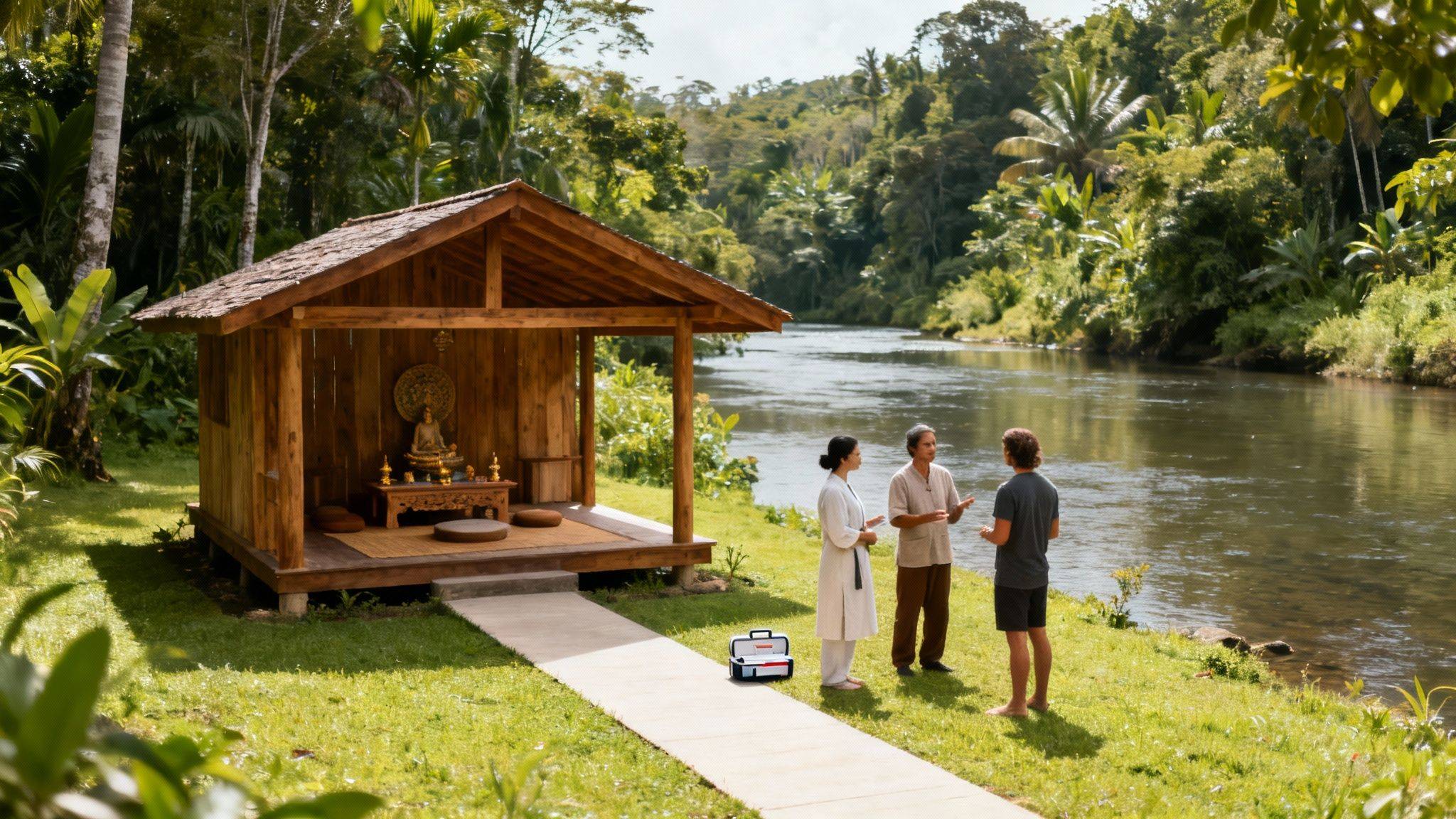
Deciding that Ayahuasca might be right for you is a big step. But the next decision is arguably even more critical: choosing where to have this experience. The people, the setting, and the safety measures in place can be the difference between a profoundly healing journey and a dangerously destabilizing one.
The world of Ayahuasca retreats is largely an unregulated frontier. That means the responsibility falls squarely on your shoulders to do your homework and properly vet any center you’re considering. Think of this less like booking a vacation and more like choosing a surgeon—it’s a major investment in your physical, psychological, and spiritual health. Safety and ethics are non-negotiable.
Vetting the Facilitators and Shamanic Team
The people holding the space during a ceremony are your lifeline. Their experience, integrity, and training are what ensure the entire experience is safe. A polished website or several positive testimonials are not sufficient; you have to dig deeper.
Search for facilitators with years of real-world experience—not just serving Ayahuasca, but holding space for people navigating incredibly intense psychological territory. This almost always means a long, dedicated apprenticeship under a recognized lineage, like the Shipibo tradition in Peru. Be cautious of self-proclaimed “shamans” with an ambiguous history or who lack extensive experience in this practice.
“The quality of a retreat is a direct reflection of the integrity of its facilitators. They should be grounded, humble, and completely transparent about their training, their own work with the medicine, and their absolute commitment to your safety.“
Don’t be shy. Ask direct questions about their background. How many years have they been serving? Who were their teachers? An ethical, experienced facilitator will be open to answering these questions. In fact, they’ll welcome them.
Medical Screening and Emergency Protocols
A reputable retreat center will prioritize your physical safety with the same diligence as your spiritual well-being. This begins with a thorough medical screening process. Before proceeding with a booking, you should be asked to complete a comprehensive health questionnaire. This form should include details about your physical and mental health history, as well as all medications and supplements you are currently taking.
This process goes beyond simply fulfilling requirements. As previously discussed, the interaction between Ayahuasca’s MAOIs and other substances can pose serious health risks. It is a significant concern if a center overlooks this step or fails to ask detailed follow-up questions. They must possess a thorough understanding of all contraindications and demonstrate a commitment to declining participation if the medicine poses a risk to an individual’s safety.
Inquire specifically about their emergency plan.
Medical Staff: Is there a doctor, nurse, or trained medic on-site or at least on-call during ceremonies?
Emergency Plan: What happens if there’s a medical emergency? How far away is the nearest hospital, and do they have a reliable way to get there, fast?
Staff Training: Is the support staff trained in basic first aid and CPR?
These questions are responsible inquiries. Retreats committed to safety and professionalism will have these protocols firmly established and will value your thoroughness.
Participant Support and Integration
The ceremony itself might only last a few hours, but the real work happens in the days, weeks, and months that follow. This is where the distinction between an ethical retreat and a superficial approach becomes evident. A center that merely provides the brew without further support does a disservice.
Search for retreats that offer a complete container for the work:
Pre-Retreat Preparation: They should provide clear guidance on the dietary dieta, help you think through your intentions, and offer resources to help you prepare for the experience.
On-Site Support: A healthy participant-to-facilitator ratio is vital. There should be a sufficient number of experienced team members available to provide individual assistance in case challenges arise.
Post-Retreat Integration: This component is crucial. Do they offer integration circles to assist in understanding your experiences? Are resources, follow-up calls, or connections to therapists provided to support you in processing everything once you’ve returned home?
Asking “is Ayahuasca right for you” is also about asking if you’re ready to commit to this whole process. Lasting change comes from weaving the insights from your journey back into the fabric of your life. A truly ethical retreat provides the tools and support necessary for this integration.
Remember the Importance of Preparation and Integration: “Before” and “After”
The Ayahuasca ceremony itself might only last a night, but considering it as the entire experience is a misconception. It’s more akin to reaching the peak of a mountain—the real journey includes the long, disciplined ascent and the thoughtful, careful return to everyday life.
The real work, which leads to lasting change, happens in the weeks leading up to the ceremony (preparation) and the months that follow (integration). Without these essential steps, even the most profound insights may dissipate like a fleeting dream, bringing you back to your original state. This isn’t a passive experience; it’s an active process you commit to well before and long after the medicine is served.
Getting Ready: How to Prepare for an Ayahuasca Journey
Consider preparation as the foundation for a successful journey. You are creating a clean and receptive space—physically, mentally, and spiritually—for the medicine to do its work. This demonstrates respect for the tradition, the plants, and most importantly, for yourself. This process typically begins several weeks prior to your retreat.
The most well-known aspect is the ‘dieta’, a traditional purification practice that simplifies consumption to calm the system and enhance sensitivity.
The majority of centers request that you refrain from:
Pork and red mea
Fermented foods (think aged cheese, soy sauce, tofu)
Excessive salt, refined sugar, and spicy foods
Caffeine and alcohol
There’s a practical reason for this—it cleanses the body and can help prevent physical discomfort during the ceremony. But there’s also a spiritual component. The discipline itself helps you focus and demonstrates your commitment to the path you’re about to walk.
Equally significant is your mental preparation. This is an opportunity to reflect and align with your intention. What’s calling you to this experience? What healing or clarity are you seeking? Your intention serves as a guiding star—a reference point to return to if you feel overwhelmed during the journey. Journaling is an excellent method to explore this, allowing you to examine your hopes and fears without judgement.
After the Ceremony: Weaving the Lessons Into Your Life
Once the ceremony is over, the real work truly begins. Integration is the process of making sense of the experiences, emotions, and insights gained, and determining how to incorporate them into daily life. A ceremony can feel like a lifetime of therapy, memories, and profound realizations condensed into several hours. Integration involves organizing complex information and translating it into practical real-world changes.
“Lasting transformation doesn’t happen in a single night of visions. It happens in the small, consistent choices you make every day that are informed by what you learned.“
Effective integration is a gradual and complex process that unfolds over weeks, months, or even years.
Here are several methods to support yourself:
Find a Professional: Working with a therapist or an integration coach who has experience with psychedelics can significantly impact your journey. They offer a safe space to explore challenging visions and provide you with practical tools to navigate your new perspective.
Connect with a Community: Returning from a significant experience can feel isolating, especially when the world around you may not fully comprehend it. Finding a community of people who have walked a similar path provides validation and a deep sense of understanding.
Stay Grounded: After an experience that feels quite extraordinary, it’s vital to reconnect with your body and the earth. Simple things such as walking in nature, practicing meditation, or doing yoga can help you stay centered.
Ultimately, deciding if Ayahuasca is right for you requires an honest assessment of your willingness to do this work. The magic isn’t just in the cup; it’s in your dedication to the entire journey.
Your Personal Checklist to Make a Final Decision
You’ve explored the potential, weighed the risks, and considered the commitment. Now, the final decision comes down to you. Answering the question “Is Ayahuasca right for me?” requires genuine self-reflection. It’s essential to consider your own current circumstances and readiness.
The questions below serve as a tool to help guide you through a process of introspection and self-reflection to help you gain a clearer understanding of your personal motivations, assess your level of readiness, and identify your true aspirations and hopes.
Assessing Your Motivations and Readiness
First, let’s look at the “why” behind your curiosity. A strong, grounded intention is the anchor that can hold you steady through what can be a very challenging experience.
Why now? Are you searching for a quick fix, or are you truly prepared to do the deep and challenging work that genuine healing requires?
What are my expectations? Are you hoping that Ayahuasca will magically solve your problems, or do you understand it as a powerful catalyst that requires your active participation and hard work?
Next, realistically assess your mental resilience. The journey can be profoundly beautiful, but it can just as easily lead you into your deepest fears and unresolved pain.
Am I prepared to face myself? Do you have the courage to confront your own shadow—the parts of yourself you’ve pushed away, suppressed, or denied?
Do I have a support system? Who can you turn to after the ceremony? Having a therapist, a trusted friend, or a community to assist you in processing your experience is absolutely vital.
This journey involves a three-part process rather than a single event, with the ceremony representing only one component of the overall experience.
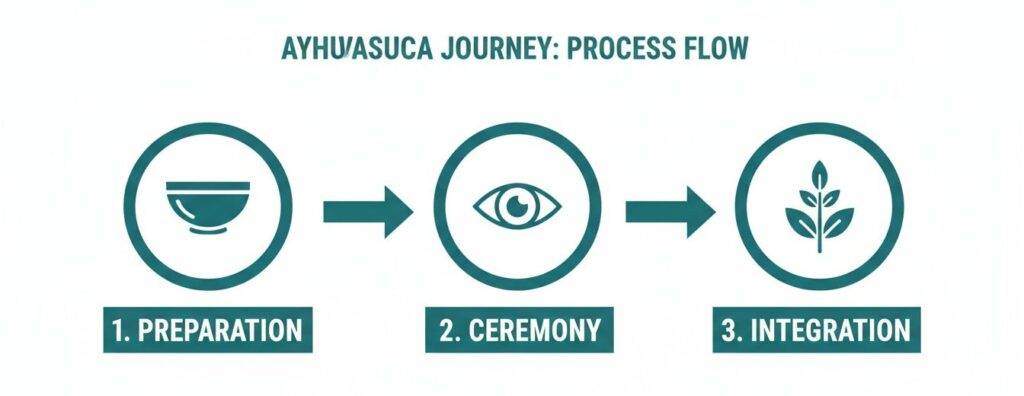
The work you do before you sit with the medicine—and, crucially, the work you do afterward—is just as important as the experience itself.
Evaluating Your Commitment and Health
Ensuring your physical and mental preparedness is crucial, both for your safety and for the medicine to work with you effectively.
“Answering these questions truthfully is the most important act of self-care you can perform at this stage. Your safety and well-being are the absolute priority.“
Have you been completely transparent about your physical and mental health history? This means carefully reviewing all medical and psychiatric contraindications, especially any medications you’re taking, like SSRIs.
And are you truly willing to commit to the entire process? This involves more than just the ceremony. It means dedicating real time and energy to the dietary and mental preparation beforehand and, equally important, the ongoing integration work that can continue for months, or even years afterward.
These questions are intended to guide you in determining whether this is the right path for you at this particular stage in your life, rather than providing simple “yes” or “no” answers.
Answering Your Lingering Ayahuasca Questions
Despite thorough research, it’s normal to still have some lingering questions. Let’s address some of the most frequently asked questions to provide you with more clarity.
What Does an Ayahuasca Ceremony Actually Feel Like?
It’s important to know that no two ceremonies are ever the same, and no two people will have the same experience. That said, there’s a general rhythm to how the journey often unfolds.
Usually, within an hour of drinking the brew, you’ll start to feel the first effects. This can begin with physical sensations—maybe a warmth, a buzzing, or even a bit of nervous anticipation. It’s the feeling of the medicine beginning to work.
From there, you’ll typically move into the peak of the experience. This is where you might encounter vivid, dream-like visions and take a deep, introspective journey into your own mind. The emotions can be incredibly powerful, ranging from overwhelming love and joy to profound sadness or grief. Physical purging, including vomiting or diarrhea, is quite common. In the tradition, this is viewed positively as an essential part of the cleansing and release process.
After a few hours, the intensity begins to fade. The shaman or facilitator will guide the group back to a calmer space, leaving you in a state of quiet reflection. Many people report feeling an immense sense of peace, clarity, and renewal as the ceremony draws to a close.
Is Ayahuasca Addictive?
The short answer is a clear no. From a clinical perspective, Ayahuasca is not considered physically addictive. Its active compounds, DMT and the MAO inhibitors, don’t lead to the physical dependency associated with substances such as opioids or nicotine.
“In fact, it’s quite the opposite. Ayahuasca is increasingly being used in dedicated treatment settings to help people break free from serious addictions. The medicine helps people get to the root of the psychological and emotional pain that fuels substance abuse in the first place, offering a pathway to healing rather than just another temporary fix.“
How Long Do the Effects of Ayahuasca Last?
It’s best to think about this on two different timelines: the immediate experience during the ceremony and the lasting impact on your life afterward.
During the Ceremony: The direct, psychoactive effects of the medicine typically last for about four to six hours. After that window, you’ll gradually return to your ordinary state of awareness, though you’ll likely feel tired and emotionally open afterward.
After the Ceremony: This is where the real work begins. The profound insights and emotional breakthroughs you have during the ceremony aren’t a magic fix. Their true power unfolds in the weeks, months, and even years that follow through a dedicated practice called integration. This is the ongoing process of taking the lessons from your journey and actively weaving them into your daily life. It’s in this integration phase that real, sustainable change happens.