
Think of an astronaut venturing into the vast, unknown expanse of outer space. A psychonaut is much the same, but their final frontier is the inner world—the intricate, mysterious territory of the human mind. This journey is defined by purpose, preparation, and respect for the tools used, whether they are ancient meditation practices or powerful plant medicines like Ayahuasca.
What Does It Mean to Be a Psychonaut
The name itself gives us a clue. “Psychonaut” literally means “sailor of the mind,” a combination of the Greek words psyche (soul or mind) and nautes (sailor). It perfectly captures the spirit of the endeavor: to navigate the often uncharted waters of your own consciousness with courage and a clear map.
This journey involves a disciplined practice, a dedicated path toward self-discovery, deep-seated healing, and sometimes, profound spiritual growth. A psychonaut approaches their inner world with the same seriousness an astronaut would give a space mission.
Intentionality as the Guiding Principle
What truly separates a psychonaut from someone using substances recreationally is intent. A psychonaut’s journey is always guided by a clear and powerful purpose.
This purpose could be anything from:
- Confronting and working through past trauma.
- Seeking a deeper understanding of reality itself.
- Building a stronger connection with the universe and their place in it.
- Shedding self-limiting beliefs and destructive patterns.
This intention is the compass for the entire experience, from the careful preparation beforehand to the crucial work of integrating the insights afterward. Without that “why,” the exploration can quickly become disorienting or meaningless.
“A psychonaut is someone who consciously and deliberately explores their own consciousness. This exploration is undertaken with a sense of purpose and a commitment to understanding the landscapes of the inner self.”
Psychonaut vs Recreational User: A Comparison of Intent
To draw a clearer line, let’s look at the core differences in motivation and approach between a psychonaut and a recreational user.
| Aspect | The Psychonaut | The Recreational User |
|---|---|---|
| Primary Goal | Self-discovery, healing, spiritual insight, personal growth. | Entertainment, socializing, escapism, sensory pleasure. |
| Approach | Structured, prepared, and respectful. Focus on “set and setting.” | Spontaneous and often casual. Little to no formal preparation. |
| Substance Role | A tool or “key” to unlock deeper states of consciousness. | The source of the experience itself; used for its effects. |
| Post-Experience | Focus on integration, journaling, and applying insights to daily life. | The experience is often treated as a standalone event to be remembered. |
While these are generalizations, this table highlights the fundamental difference in mindset. For the psychonaut, the journey is the work; for the recreational user, it’s the party.
More Than Just Substances
While powerful plants like Ayahuasca are often associated with the psychonaut journey, they are just one set of tools in a much larger kit. A true explorer of the mind knows how to use a wide range of practices to shift and examine consciousness—many of which require nothing but your own body and mind.
For instance, techniques like deep meditation, holotropic breathwork, sensory deprivation, and lucid dreaming are incredible ways to access non-ordinary states of awareness. These practices build the mental discipline and resilience needed to navigate more intense experiences safely.
A seasoned psychonaut understands that the journey inward requires balance, combining various methods for a more complete understanding of the mind. To go deeper, you might be interested in The Way of the Psychonaut, which explores this path in more detail. This guide will provide a framework for understanding the history, practices, and ethics of this profound inner voyage.
Tracing the Historical Roots of Inner Exploration
The drive to explore the mind isn’t some new-age trend. It’s a fundamental human impulse that goes back thousands of years. Long before anyone coined the word psychonaut, the original explorers of consciousness were the indigenous peoples of the Amazon basin. For millennia, these cultures have woven powerful plant medicines into the very fabric of their societies.
Of all these sacred plants, Ayahuasca is perhaps the most well-known, serving as a profound tool for healing, divination, and spiritual connection. In these traditions, the shaman or curandero is the original psychonaut. They are the masters of navigating non-ordinary states of consciousness, not for sport, but to diagnose spiritual illnesses, seek guidance from plant spirits, and bring healing to their community. Their journeys were essential for survival, wisdom, and the well-being of the whole tribe. This ancient, sacred relationship is the bedrock of the modern psychonaut concept.
The Western Awakening
This long lineage of inner exploration began to thread its way into Western thought more formally during the 20th century. A few visionary thinkers and writers started documenting their own careful, intentional journeys into the mind, bringing these powerful ideas to a whole new audience.
Aldous Huxley was one of the most important pioneers. His 1954 book, The Doors of Perception, was a meticulous account of his experiences with mescaline. Huxley didn’t write about chaotic hallucinations; instead, he framed these journeys as valid, valuable ways to understand the mind and reality itself. He brought the rigor of a philosopher and the open curiosity of a scientist to his experiences, which helped give the practice a legitimacy it lacked in the skeptical Western world.
“The man who comes back through the Door in the Wall will never be the same as the man who went out. He will be wiser but less cocksure, happier but less self-satisfied, humbler in acknowledging his ignorance yet better equipped to understand the relationship of words to things, of systematic reasoning to the unfathomable Mystery which it tries, forever vainly, to comprehend. – Aldous Huxley”
This idea gets right to the heart of the psychonaut’s ethos. The journey is meant to change you, leaving you with a bit more humility and a much deeper appreciation for the mysteries of it all.
From Counterculture to Modern Science
After Huxley, thinkers like Terence McKenna became major voices in the latter half of the 20th century. McKenna was a brilliant speaker and ethnobotanist who championed the idea of the “heroic dose” and wove together complex theories about how humanity co-evolved with psychoactive plants. His passionate, and at times radical, ideas inspired a new wave of explorers to see psychedelics as tools for both personal and planetary change. He helped cement the image of the psychonaut as a courageous voyager of the mind.
This rich history—stretching from ancient shamanic rituals to the philosophical deep-dives of Huxley and McKenna—is the essential backdrop for the psychonaut today. The current interest isn’t just a fad; it’s the latest chapter in an ancient human story. Now, this exploration is being met with a growing body of scientific research and a wellness movement that’s finally starting to recognize the incredible potential for healing and growth that these experiences hold. Understanding this lineage connects any modern-day psychonaut to a deep and meaningful tradition of inner discovery.
Exploring the Psychonaut’s Toolkit for the Mind
No explorer heads into the unknown without the right gear, and the same principle holds true for the psychonaut. The journey inward requires a unique set of tools designed to navigate the intricate landscapes of consciousness. This toolkit is surprisingly diverse, ranging from ancient, non-pharmacological practices to potent botanical allies.
The real bedrock for any serious psychonaut, though, are the disciplines that build mental fortitude and self-awareness without any substances at all. Think of these practices like an athlete’s physical conditioning; they strengthen the mind, making it more resilient and ready for whatever comes next.
Foundational Mind Practices
Long before considering a more intense journey, a psychonaut typically spends time mastering techniques that sharpen focus and heighten their sensitivity to internal states. These are powerful methods of exploration in their own right, fully capable of inducing profound states all on their own.
Some of the most common foundational practices include:
- Meditation: This is the cornerstone of mental training. Through a consistent mindfulness or concentration practice, a psychonaut learns to observe their thoughts without getting swept away by them. It creates a stable inner platform from which to launch any deeper exploration.
- Breathwork: Consciously controlling the breath—using techniques like Holotropic Breathwork or the Wim Hof Method—can dramatically alter one’s state of consciousness. It’s a powerful demonstration of how simple physiological shifts can unlock new perceptual doors, all without any outside help.
- Lucid Dreaming: This is the practice of becoming aware that you’re dreaming while you’re still in the dream. For a psychonaut, it’s the ultimate training ground for navigating other realities, offering a chance to consciously explore the symbolic, often bizarre, world of the subconscious.
These methods build what’s often called a strong “container” for the self, which is absolutely essential before working with more potent tools.
The Role of Psychoactive Allies
While those foundational practices are crucial, the psychonaut’s toolkit is most famously known for including psychoactive substances, especially psychedelics. These are never used casually. Instead, they’re approached as powerful instruments for gaining deep insight and accelerating personal growth.
One of the most revered allies in this category is Ayahuasca, the sacred brew from the Amazon. For a psychonaut, an Ayahuasca ceremony is a deep dive into the psyche—an opportunity to confront hidden patterns, heal old wounds, and connect with a deeper intelligence. It’s treated with immense respect, understood as a wise teacher, not a recreational drug.
“A psychonaut approaches psychedelics not as an escape from reality, but as a doorway to a deeper, more honest engagement with it. The substance is merely the key; the courage to turn it and walk through the door comes from within.”
The safety and effectiveness of any such journey boil down to two critical factors: set and setting. This principle is the North Star for any responsible psychonaut.
Mastering Set and Setting
The ideas behind set and setting are simple, yet their importance cannot be overstated. They are the twin pillars that support any meaningful and safe exploration of consciousness with psychoactive tools.
- Set (Mindset): This is all about your internal state going into the experience—your mood, your intentions, your expectations, and your fears. A positive, curious, and open mindset is vital. Preparing your ‘set’ might involve journaling about your intentions or simply getting into a calm, receptive headspace beforehand.
- Setting (Environment): This refers to the physical and social environment where the journey takes place. A safe, comfortable, and supportive setting is non-negotiable. This means being in a place where you feel secure, surrounded by trusted people who can offer support if things get challenging.
With an Ayahuasca journey, for example, a proper setting involves an experienced shaman or facilitator who knows how to hold a safe ceremonial space. This includes careful preparation, like following a specific diet, or dieta. You can get a better sense of how a traditional dieta prepares the body and mind by reading about what is a dieta.
By consciously managing both set and setting, a psychonaut can transform a potentially chaotic experience into a structured, intentional, and deeply insightful exploration.
Navigating an Ayahuasca Journey with Safety and Respect
Stepping onto the path of an Ayahuasca journey is a serious undertaking, one that demands deep consideration and a firm commitment to doing things the right way. Any seasoned psychonaut will tell you that the real work doesn’t start when you drink the brew—it begins weeks, sometimes months, before. This is the groundwork that separates a chaotic, overwhelming trip from a profound, healing voyage.
Think of it like building a sturdy vessel for a deep-sea dive. You need three things: a well-maintained vessel (your body), a clear mission plan (your mind), and a veteran captain (your guide). If any of these are weak, you’re asking for trouble. The whole point is to create a secure container for your consciousness, so you can explore its depths with courage and respect.
The Foundation of Preparation: The Dieta
When it comes to the physical side of things, it all starts with the dieta. This is a sacred practice of cleansing the body to prepare it to receive the medicine, more than just a diet in the modern sense. It’s a sign of respect for the plant spirits and a way to sharpen your own sensitivity to their wisdom.
For days or even weeks leading up to a ceremony, you’ll need to abstain from certain things. The list can vary, but it usually includes:
- Foods: Cutting out red meat, pork, spicy foods, anything fermented, and dialing way back on salt, sugar, and caffeine.
- Substances: This is non-negotiable. Alcohol, recreational drugs, and especially certain prescription medications must be completely eliminated.
- Activities: It’s also common to be asked to refrain from sexual activity and to avoid over-stimulating or negative media.
This purification process does more than just clean out your system; it allows the Ayahuasca to work more cleanly and powerfully, with fewer physical distractions. It’s also an act of discipline that signals your intention and commitment to the process.
Mental and Emotional Readiness
Just as you clean your body, you must also prepare your mind. Your mindset going into the ceremony—what we call the “set”—is one of the single biggest factors that will shape your experience. This means getting brutally honest with yourself about your intentions.
Why are you doing this? Are you hoping to heal old wounds? Find clarity on your life’s path? Or maybe you’re seeking a deeper connection to the spiritual side of life. A great practice is to write these intentions down, just to make them real. But here’s the trick: once you’ve set them, you have to be willing to let them go. You have to stay open to whatever the medicine decides you need to see.
“A psychonaut prepares not by trying to control the experience, but by building the resilience to surrender to it. The goal is to cultivate a state of humble curiosity and radical acceptance, ready to face whatever arises from within.”
This is also the time to be realistic about psychological risks. Ayahuasca can be a pressure-washer for the subconscious, bringing up suppressed emotions and buried memories with incredible force. If you have a personal or family history of serious mental health issues like psychosis or bipolar disorder, it is absolutely essential to speak with a trusted medical professional before even considering this path.
Finding a Safe Harbor: Vetted Facilitators and Retreats
Here it is: the single most important safety decision you will make is choosing who you drink with and where you do it. The environment, or the “setting,” can make or break the entire experience. A skilled, ethical, and experienced facilitator—whether you call them a shaman, a guide, or a curandero—is your lifeline.
A good guide does so much more than just pour the medicine. They are the energetic keepers of the space. They know how to manage the collective energy of the group, step in to provide support when someone is struggling, and ensure everyone remains physically and psychologically safe. They are the anchor in the often-turbulent waters of the psyche.
When you’re researching a retreat or facilitator, do your homework. Look for these signs:
- Experience and Lineage: Where did they learn? Are they open about their training and background in a recognized tradition?
- Safety Protocols: How thoroughly do they screen participants for medical or psychological issues? Do they have a plan for emergencies?
- Group Size: Smaller groups are almost always better. They allow for more personal attention and a more controlled, intimate setting.
- Integration Support: What happens after the ceremony? The real change happens when you integrate the lessons. Look for facilitators who offer post-ceremony support.
Preparing for your journey is a profound part of the journey itself. For a much deeper dive, you can check out our comprehensive guide on preparing for your Ayahuasca journey. At the end of the day, safety, respect, and deep preparation are what truly define the path of the psychonaut.
The Global Expansion of Ayahuasca Culture
What was once a sacred tradition quietly practiced deep in the Amazon basin has now exploded into a worldwide cultural movement. The use of Ayahuasca for healing and spiritual insight has traveled far beyond its jungle origins, drawing in curious seekers from all over the planet. This is a full-blown global phenomenon.
So, what’s fueling this? It’s a mix of things. There’s a widespread spiritual hunger out there, a deep-seated feeling that something is missing from modern life. At the same time, many people are growing frustrated with the limitations of conventional mental health treatments. Folks from Western countries are now journeying to places like Peru, Costa Rica, and Brazil, hoping for a breakthrough that traditional therapy couldn’t provide. This has sparked a whole economy around Ayahuasca retreat tourism.
A Movement of Millions
The sheer scale of this is hard to wrap your head around. Over the last two decades, the global Ayahuasca community has grown at an incredible rate. Today, it’s estimated that over 4 million people across the Americas, Europe, Australia, and New Zealand have participated in an Ayahuasca ceremony at least once.
Just in 2019, around 820,000 people drank the brew, which translates to nearly 5.5 million individual doses served. Here’s the most telling statistic: of those 4 million global participants, only 10% come from the indigenous groups where Ayahuasca is a core part of their culture. You can discover more insights about this global shift and what it means.
These numbers tell a clear story: a sacred plant medicine is quickly being woven into the fabric of global wellness culture. This brings incredible opportunities for healing, but it also creates some very real and complex challenges.
“The global reach of Ayahuasca reflects a collective search for deeper meaning. It highlights a universal human need to connect with something greater than oneself, a need that transcends cultural and geographical boundaries.”
The Modern Ayahuasca Landscape
This explosion in popularity has created a sprawling, diverse ecosystem of practitioners and retreat centers. If you’re a psychonaut considering this path, it’s crucial to understand this landscape to make safe and discerning choices. The options run the gamut—from rustic, no-frills ceremonies led by traditional indigenous shamans in the jungle to modern, comfortable retreat centers that integrate ancient rituals with contemporary therapeutic practices.
This graphic breaks down the core elements of preparing for a profound journey.
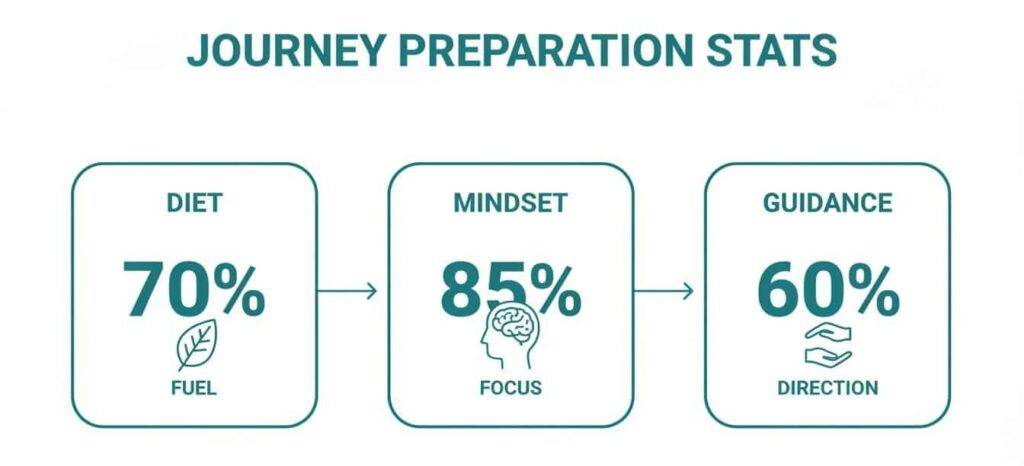
As you can see, a successful experience requires a holistic preparation of the body through diet, sharpening your mental focus, and securing trusted guidance.
The modern psychonaut has to learn to navigate this new territory with eyes wide open. The real task is to find facilitators and centers that honor the plant’s indigenous heritage while also offering the safety, container, and support needed for deep psychological work. As this sacred practice continues to find its place in the world, the responsibility lands squarely on each of us to approach it with respect, ethical awareness, and a serious commitment to our own integrity.
The Legal Maze and Ethical Tightrope
For any modern psychonaut drawn to Ayahuasca, the journey begins long before the first ceremony. You’re stepping into a space where ancient indigenous practices collide with a confusing, often contradictory, web of modern laws. It’s a landscape you have to navigate with care, understanding both the legal lines you can’t cross and the ethical responsibilities you must uphold.
The legal status of Ayahuasca is a global patchwork quilt. It’s legal for consumption in places like Bolivia, Brazil, Costa Rica, Colombia, Ecuador, Mexico, and Peru—countries where its indigenous and religious roots run deep. But cross a border, and the story changes completely. Its use is illegal in Chile, Australia, Canada, and most of Europe. You can dive deeper into the specifics of its legal standing here, but the bottom line is clear: what’s a sacred sacrament in one country could land you in serious legal trouble in another.
This fragmented reality means you have to do your homework. A ceremony that’s a legally protected religious right in Brazil could lead to felony charges just a few hundred miles away.
What About Religious Exemptions?
In some countries where Ayahuasca is otherwise banned, there are a few legal workarounds, almost always rooted in religious freedom. Groups like the Santo Daime and the União do Vegetal (UDV) have fought and won landmark court cases, successfully arguing that Ayahuasca is a central sacrament to their faith, much like communion wine for Christians.
These legal victories have created narrow, specific exemptions. They prove that the brew can be used legally, but only within a recognized and legitimate religious framework. For a psychonaut, this is a crucial distinction. The law often draws a sharp line between spiritual use inside an established tradition and purely personal, unsanctioned exploration.
“The legal complexities are a stark reminder that this path requires more than just internal readiness. A responsible psychonaut has to be a well-informed global citizen, fully aware of—and compliant with—the laws of the land.”
Your Ethical Compass
Legal questions are just the beginning. A much deeper set of ethical obligations comes with engaging with a practice born from indigenous wisdom. This journey is about approaching a sacred tradition with humility and profound respect, rather than engaging in spiritual tourism or consumption.
Here’s what that looks like in practice:
Honoring the Source, Not Appropriating It: True respect means seeking out facilitators with a clear, direct, and respectful connection to an established lineage. Be wary of those who simply repackage sacred rituals for a Western audience, stripping them of their context and giving no credit where it’s due.
Ensuring Fair and Direct Support: Many of the indigenous communities that are the traditional custodians of this knowledge face real economic struggles. It’s your ethical duty to make sure your financial contribution flows directly back to them, not just to a foreign tour operator or intermediary.
Being a Steward, Not a Consumer: The plants themselves, and the traditions that surround them, are not commodities to be bought and sold. A true psychonaut understands this. You approach the work with an attitude of stewardship, aiming to give back as much as you receive—whether that means supporting the local culture or helping protect the very ecosystems where these plants grow.
Ultimately, navigating this landscape responsibly is a core part of the psychonaut’s path. It’s what ensures the journey is one of integrity, respect, and a right relationship with the traditions that make it all possible.
Common Questions on the Psychonaut’s Path
As more people become curious about the inner worlds psychonauts explore, a lot of practical questions naturally come up. Let’s tackle some of the most common ones to help you navigate this path with a bit more clarity and wisdom.
How Is a Psychonaut’s Journey Different from Psychedelic Therapy?
It’s a great question, and the core difference really comes down to structure and supervision. Think of psychedelic therapy as a clinical process. It happens in a controlled setting, guided by a licensed professional, and it’s usually aimed at treating specific conditions like PTSD or severe depression.
A psychonaut’s journey, on the other hand, is a personal quest. It’s a self-directed exploration of consciousness, spirituality, or your own philosophy. While it can be incredibly healing, it’s not a replacement for clinical therapy. That said, a smart psychonaut will borrow heavily from therapeutic principles, especially when it comes to setting intentions and integrating the experience afterward.
What Is the Most Important First Step for an Ayahuasca Journey?
Before you even think about booking a retreat, the single most important first step is to do your homework and get brutally honest with yourself. Spend serious time learning what an Ayahuasca journey actually entails—it’s demanding on every level: physically, mentally, and spiritually.
This means reading up on the preparatory diet (the dieta), understanding the very real risks involved, and grasping why integration after the ceremony is non-negotiable. Just as critical is clarifying your own “why.” Ask yourself, “What am I truly seeking from this?” This groundwork is what makes the difference between a reckless trip and a respectful, meaningful journey.
How Can I Engage with Indigenous Traditions Respectfully?
This is crucial. Respectful engagement starts with where you choose to go. Look for facilitators and centers that have a transparent, ethical connection to the cultures these practices come from. Do they actively support the local communities? Do they honor the lineage of their traditions? Are their practitioners indigenous or have they undergone deep, long-term training?
“As a participant, you are a guest within a sacred tradition. Approach the ceremony with humility and a genuine desire to learn. This means listening carefully, following the facilitator’s guidance without question, and showing gratitude for the wisdom being shared.”
What Is the Role of Integration After a Psychedelic Experience?
Integration is where the real work begins. It’s the process of taking the profound insights you gained and weaving them into the fabric of your everyday life so they stick. Honestly, it might just be the most important part of the entire journey.
Without a conscious effort to integrate, those powerful, life-altering revelations can quickly fade into just a cool story or a distant memory. The potential for real change gets lost. Integration can look like many things: journaling, meditation, spending quiet time in nature, or working with a therapist or coach. It’s all about taking the lessons from that “inner world” and using them to improve your relationships, habits, and well-being back in the “outer world.”