
If you’ve landed here after searching for “iowaska,” you’re in exactly the right spot. The term you’re actually looking for is Ayahuasca, a powerful and sacred plant medicine from the Amazon rainforest with incredibly deep Indigenous roots. For many, it’s a key to profound healing and spiritual discovery.
Searching for Iowaska? Let’s Talk About Ayahuasca
When you typed “what is iowaska” into a search bar, you were probably chasing stories of a powerful experience that promises deep personal insight. It’s a common misspelling that points straight to Ayahuasca, a revered psychoactive brew used for centuries by Indigenous cultures throughout the Amazon basin.
Let’s be clear: Ayahuasca is a ceremonial medicine, a sacred tool, rather than a recreational drug. It’s traditionally prepared by brewing two specific plants together—the Banisteriopsis caapi vine and the leaves of the Psychotria viridis shrub. This specific combination creates a potent tea that opens the door to expanded states of consciousness, ideally guided by a trained shaman or facilitator.
To give you a quick overview, here are the core components of Ayahuasca.
Ayahuasca at a Glance
This table breaks down the fundamental aspects of the medicine, answering the core questions behind the ‘what is iowaska’ search.
| Aspect | Description |
|---|---|
| Common Name | Ayahuasca (also known as yagé, caapi, or la purga) |
| Origin | Amazon Basin (Peru, Brazil, Colombia, Ecuador) |
| Main Ingredients | Banisteriopsis caapi vine (contains MAOIs) and Psychotria viridis leaves (contains DMT) |
| Traditional Use | Healing, spiritual diagnostics, divination, and connecting with the spirit world |
| Primary Effect | Induces altered states of consciousness, often with intense visions and emotional release |
| Legal Status | Varies globally; DMT is a controlled substance in most countries, but religious use is protected in some |
Ultimately, Ayahuasca is a complex sacrament that demands respect and careful preparation, a far cry from a simple substance.
From Ancient Tradition to Global Phenomenon
For generations, Indigenous communities have worked with Ayahuasca to heal physical, emotional, and spiritual illnesses. The name itself comes from the Quechua language and is often translated as “vine of the soul” or “vine of the dead,” which speaks to its power to connect people with the spirit world and the very essence of their being.
In the last few decades, interest in Ayahuasca has exploded well beyond the Amazon. A groundbreaking 2023 report estimates that over 4.2 million people worldwide have now participated in an Ayahuasca ceremony. What’s truly striking is that an incredible 90% of them are non-Indigenous. This points to a massive global movement of people seeking the healing and perspective this medicine can provide. You can dive into the full report on Ayahuasca’s global consumption from ICEERS for a deeper look at the data.
“Ayahuasca is best understood as a tool for radical self-inquiry. It opens a dialogue with parts of your psyche that are normally hidden, allowing you to process buried emotions and find a greater sense of purpose and connection.”
The journey it offers is one of profound self-discovery, often described as a direct conversation with your own soul. It’s a unique opportunity to face personal challenges head-on, see your life from a completely new vantage point, and tap into a deeper sense of meaning. This is the true heart of what people are looking for when they search for “iowaska.”
How Ayahuasca Works: The Vine and The Light
To really get what makes Ayahuasca so powerful, you have to look at the incredible teamwork between its two core ingredients. On their own, neither of the plants used in the brew does much of anything. The real magic happens when they’re cooked together, creating a unique biochemical synergy that opens the door to a profoundly different state of consciousness.
This process is a beautiful example of what you might call plant intelligence—a kind of natural chemical poetry. The two main players are the Banisteriopsis caapi vine, which is often just called “Ayahuasca” or yagé, and the leaves of a shrub, usually Psychotria viridis, known as chruna.
One acts as a gatekeeper, and the other as a messenger.
The Gatekeeper and The Messenger
Think of your gut as having a built-in defense system. It’s an enzyme called monoamine oxidase (MAO), and its job is to break down certain compounds, including the powerful psychedelic molecule found in the chacruna leaves: N,N-Dimethyltryptamine (DMT). If you were to just eat those leaves, the MAO enzyme would neutralize the DMT long before it ever had a chance to reach your brain. Nothing would happen.
This is where the B. caapi vine comes in to play its crucial role. The vine is rich in a special class of compounds called harmala alkaloids, which are potent MAO inhibitors (MAOIs). These MAOIs temporarily tell the enzyme to take a break, effectively opening a gate that lets the DMT pass through your digestive system and into your bloodstream completely intact.
Once that gate is open, the DMT from the chacruna leaves—the messenger—is free to complete its journey. It travels to the brain, where it interacts with serotonin receptors, especially the 5-HT2A receptor, which is known to be a key player in how we perceive the world, regulate our mood, and form our thoughts.
This elegant partnership is what people are really looking for when they search for “what is iowaska.” It’s a sophisticated process perfected over countless generations in the Amazon.
“The synergy between the MAOI-containing vine and the DMT-rich leaves is the absolute foundation of Ayahuasca’s pharmacology. But it’s important to know the vine isn’t just a delivery vehicle for the DMT; it has its own distinct spirit and character that shapes the entire experience, often described as grounding, ancient, and wise.”
The diagram below helps visualize these core aspects of Ayahuasca, connecting its role as a sacred plant medicine to its Indigenous origins, its healing potential, and its capacity for deep spiritual insight.
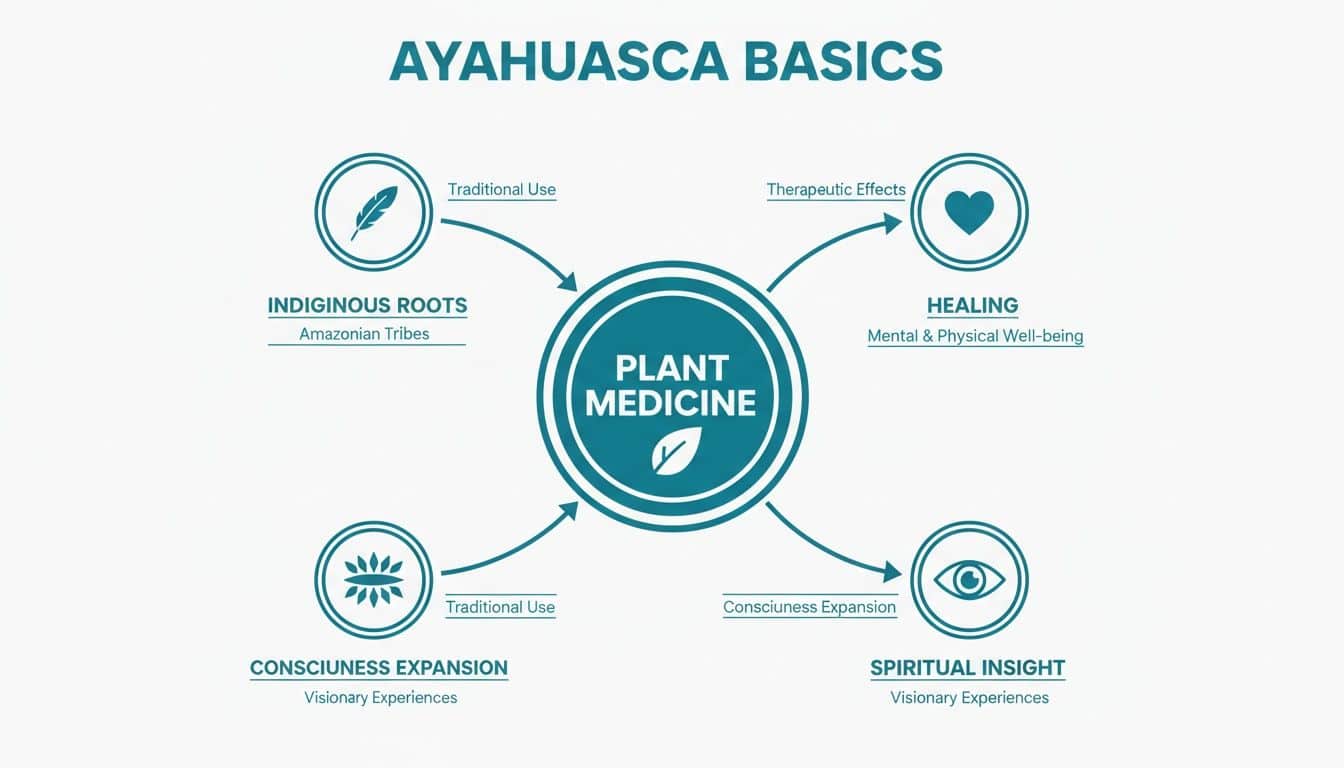
This really brings home how Ayahuasca is so much more than a simple chemical reaction. It’s a holistic tool, rooted in ancient tradition, and used for profound inner work.
Your Brain on Ayahuasca
So what happens when the DMT finally reaches your brain and connects with those serotonin receptors? It kicks off some major changes in neural activity. One of the most fascinating effects is its impact on the Default Mode Network (DMN). The DMN is the part of your brain that’s tied to your sense of self—your ego, your inner monologue, that voice in your head that replays old memories and worries about the future.
Research shows that Ayahuasca temporarily quiets the DMN right down. With this “inner critic” offline, other parts of the brain that don’t normally talk to each other can start to form new connections. This neurological shake-up can lead to:
- Vivid Visions: Accessing dream-like states filled with symbolic and often otherworldly imagery.
- Deep Emotional Release: Finally processing buried feelings and unresolved traumas that have been stuck for years.
- Profound Insights: Gaining stunningly new perspectives on your life, your relationships, and your purpose.
This neurological “reset” is what allows for such deep and meaningful introspection. For anyone curious about the nitty-gritty, you can learn more about the scientific investigation of Ayahuasca and explore the incredible studies being done on its effects. It’s this intricate dance between ancient plant wisdom and modern brain science that makes Ayahuasca such a compelling path for healing and self-discovery.
What to Expect in an Ayahuasca Ceremony
Walking into an Ayahuasca ceremony for the first time is a step into a profoundly different world. It’s natural to feel a mix of anticipation and uncertainty. While every ceremony is its own living, breathing event, knowing the general flow can help you feel more prepared and grounded.
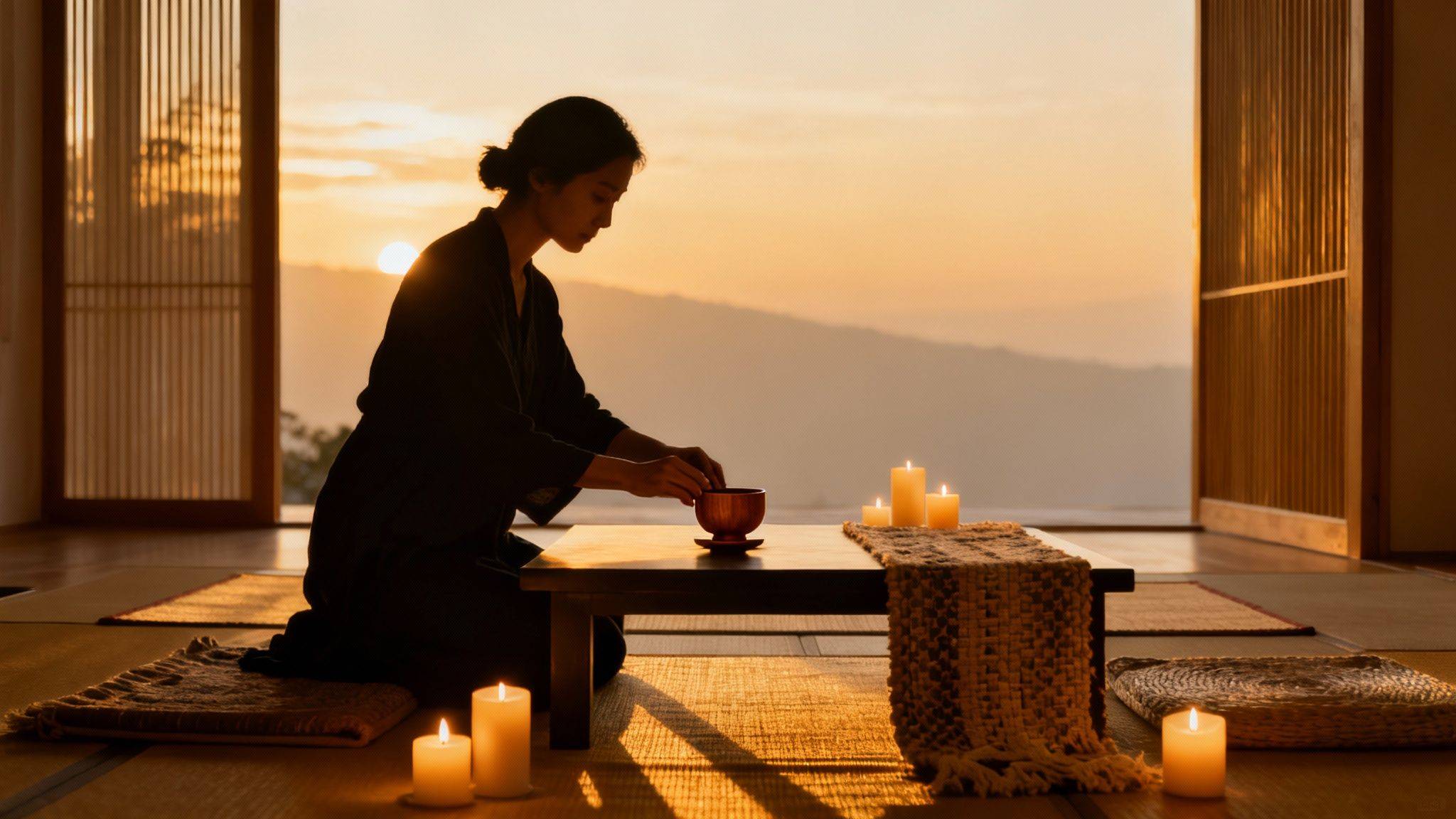
Ceremonies are almost always held at night in a dedicated space, often a circular hut called a maloca. This room is a sacred container, carefully prepared and energetically held to create a bubble of safety for the deep work ahead. You’ll likely find your spot in a circle with other participants, equipped with a mat, a blanket, and your own bucket and water.
The Role of the Shaman and the Icaros
The entire experience is orchestrated by a shaman, also known as a curandero/a or facilitator. This person is far more than just a server of the brew. They are the energetic anchor for the entire group, responsible for protecting the space, navigating the complex spiritual dynamics, and guiding everyone through the journey with their voice.
A key part of that guidance comes in the form of icaros, the sacred songs of the ceremony. These are vibrational medicine, tools the shaman uses to shape the experience. The icaros serve several crucial functions:
- Opening the ceremony: They call in protective spirits and set the energetic tone for the night.
- Deepening the journey: A specific icaro might be sung to help someone move through a difficult vision or emotional block.
- Healing and clearing: The shaman directs the sound to clear energetic blockages, soothe distress, and bring comfort.
- Closing the space: At the end of the night, songs help gently ground everyone and seal the protective energy of the circle.
The sound of the icaros becomes a lifeline, a familiar thread weaving through what can otherwise be a completely surreal inner landscape.
“The ceremony is a carefully orchestrated container for profound inner work. The shaman acts as the conductor, and the icaros are the music that guides the flow of energy, helping you navigate the depths of your own consciousness with support and intention.”
The Flow of the Night
After everyone is settled, the shaman will open the ceremony, often with spoken prayers or statements of intention. Then, one by one, each person is invited up to drink a small cup of the Ayahuasca brew. Be prepared for the taste—it’s famously earthy, intensely bitter, and not exactly pleasant.
Once everyone has had their turn, the candles are extinguished. You sit in darkness and silence as you wait for the medicine to take effect, which usually happens within 30 to 60 minutes. This is when the shaman begins to sing, and the real journey begins. A typical ceremony can last anywhere from four to eight hours, often stretching into the early morning.
The Spectrum of Experience
There’s no such thing as a “standard” Ayahuasca journey. The experience is radically personal and can be completely different from one night to the next, even for the same person.
A central, and often misunderstood, part of the process is “the purge.” This is a deep physical and energetic cleansing that can show up as vomiting, yawning, shaking, crying, or even laughing. In the Amazonian tradition, this is seen as a necessary release of old, stuck energy, emotional trauma, and physical toxins. While the idea can be daunting, it’s considered a vital and respected part of the healing process.
Beyond the purge, the inner worlds you might travel through are vast. You could witness vivid, symbolic visions that feel more real than reality, re-experience powerful memories and release long-held emotions, or receive crystal-clear insights about your life’s purpose. To get a better sense of the possibilities, you can explore more about the Ayahuasca experience and the many forms it can take. The journey is frequently challenging, but it’s often in facing those challenges that the most profound healing is found.
The Potential for Healing and Personal Growth
People find their way to Ayahuasca for countless reasons, but a single, powerful thread often connects them: a deep longing for healing and meaning. For many, the journey starts after feeling stuck for years, wrestling with problems that modern medicine or therapy haven’t quite managed to solve. They see the brew as a potent tool for finally getting to the heart of stubborn mental and emotional challenges, rather than a quick fix.
This is no longer just wishful thinking or campfire stories. A growing body of research is seriously investigating how Ayahuasca can help people work through complex issues like treatment-resistant depression, deep-seated anxiety, PTSD, and addiction. The idea is that the medicine offers a rare chance to access and process the roots of these conditions, instead of just trimming the branches.
Uncovering the Roots of Suffering
One of the most profound things Ayahuasca can do is pull material from your unconscious mind right into the light of day. Imagine your mind is an iceberg. We’re usually only aware of the small tip showing above the water. Ayahuasca can feel like a submarine ride, taking you deep beneath the surface to see the vast, hidden mass of beliefs, memories, and emotions that secretly runs your life.
This often means coming face-to-face with old, unresolved traumas or deeply ingrained patterns you never knew were there. Someone might vividly re-live a long-forgotten childhood moment or suddenly understand with perfect clarity why they keep repeating the same mistakes in relationships. By bringing these foundational experiences to the forefront, Ayahuasca creates an opportunity to truly process them, freeing people from burdens they’ve been carrying for decades.
This is not a passive viewing experience. It takes real courage to look at these truths and a genuine willingness to do the work.
Cultivating a Deeper Sense of Self and Purpose
Beyond just tackling specific problems, Ayahuasca often sparks a dramatic expansion of self-awareness. It tends to quiet down the brain’s “Default Mode Network”—the part of our mind responsible for our ego and those repetitive, looping thoughts we all have. When that internal chatter goes quiet, new perspectives can finally break through.
This shift can show up in a few key ways:
- Reconnecting with Emotion: Many people describe feeling their emotions with a purity and intensity they haven’t felt since they were children. This can build a powerful new sense of empathy for both themselves and others.
- Finding a Spiritual Connection: The experience can leave you with an unshakable feeling of being connected to everything—to nature, to the universe, to something much bigger than your individual self.
- Clarifying Your Purpose: By cutting through the static of daily anxieties, Ayahuasca can help you get back in touch with what you truly value, revealing a clearer sense of direction for your life.
This expanded perspective is often the key to what makes the changes stick. It can completely reframe how a person sees themselves and their place in the world.
“Ayahuasca is a powerful mirror that shows you your own inner world with unflinching honesty, rather than a magic pill that erases your problems. The real healing happens when you find the courage to look into that mirror and commit to integrating what you see into your daily life.”
The work is tough, but the potential for growth is immense. The insights you gain in a ceremony are like seeds. The real transformation comes in the weeks and months that follow, as you consciously apply those lessons to build new, healthier ways of thinking and behaving. That’s the difference between just having a powerful experience and creating lasting change.
Research is starting to back this up, showing a strong link between Ayahuasca use in supportive settings and improved wellbeing. A large-scale analysis from the Global Ayahuasca Survey, which included 7,576 participants, found that people with more lifetime use reported less psychological distress and greater personal growth. Even though 19.7% had a history of depression and 14.2% had anxiety disorders, their mental health scores pointed to solid psychological wellness, especially when their ceremonies took place in community-focused settings. You can learn more about how Ayahuasca use is linked to better mental health in the full survey findings. This data really drives home just how important context and community are for unlocking the medicine’s healing potential.
Navigating Safety Risks and Preparation
Deciding to experience Ayahuasca is a major step, and approaching it with care and respect is everything. This is about making sure you can do so safely, not just seeking a profound experience. That means taking a serious, clear-eyed look at the potential risks and committing to the right physical and psychological prep work.
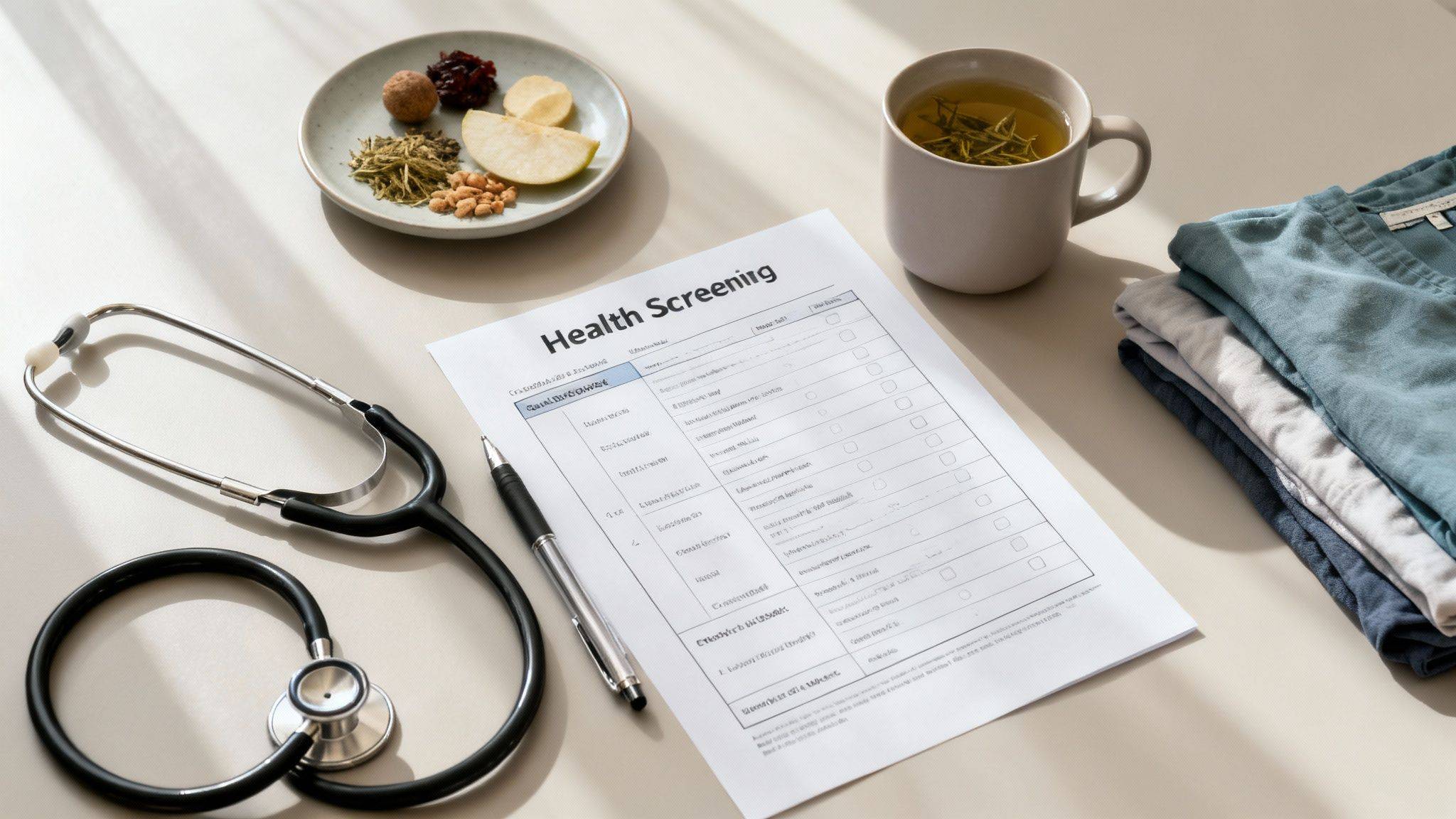
Your first and most important step is a thorough health screening. The hard truth is that Ayahuasca is not for everyone, and certain pre-existing conditions can pose serious dangers. Any reputable retreat will insist on a detailed medical history, but the responsibility to be honest starts with you.
Medical and Psychological Screening
Before you even think about booking a retreat, you have to be completely transparent with yourself and any facilitator about your health. The MAOIs in the brew can cause sharp spikes in blood pressure, making some conditions an absolute no-go.
Cardiovascular Issues: If you have a history of heart problems, high blood pressure, or aneurysms, you should not drink Ayahuasca. The risk is simply too high.
Psychological Conditions: While many people explore Ayahuasca for mental and emotional healing, it’s vital to screen for specific vulnerabilities. A personal or family history of psychosis, schizophrenia, or bipolar disorder often makes participating in a ceremony incredibly risky, as it could trigger or worsen these states.
Beyond these big ones, other issues like severe liver or kidney problems also need careful consideration. Having an open, honest conversation with both your doctor and a potential facilitator is non-negotiable. To help you think through this critical step, you can read our guide to help you in this important decision-making process.
Critical Medication Interactions
This is, without a doubt, the most urgent safety point. The MAOIs in Ayahuasca can have dangerous—and sometimes fatal—interactions with a whole host of pharmaceuticals, and even some over-the-counter drugs. It is absolutely essential to stop these substances for a significant time before and after a ceremony.
The most notorious and dangerous interaction is with Selective Serotonin Reuptake Inhibitors (SSRIs), a common class of antidepressants. Mixing MAOIs and SSRIs can trigger a life-threatening condition called serotonin syndrome, which floods the brain with a toxic amount of serotonin.
“You must be completely off any contraindicated medications, especially SSRIs, for several weeks (or more, depending on the drug) under your doctor’s supervision before drinking Ayahuasca. Never, ever try to do this on your own.”
The table below summarizes the most critical safety areas to review with a qualified professional.
Key Safety Considerations Before an Ayahuasca Ceremony
| Category | Specific Contraindications to Discuss with a Professional |
|---|---|
| Cardiovascular Health | High blood pressure, heart conditions, history of stroke, or aneurysms. |
| Psychological Health | Personal or close family history of psychosis, schizophrenia, or bipolar disorder. |
| Medications | SSRIs, other antidepressants, certain stimulants, opioids, and some over-the-counter cold medicines. |
It’s crucial to disclose everything, as your safety depends on it.
The Preparatory Dieta
Once you’ve passed the medical screening, it’s time for the next phase of preparation: the dieta. This is a traditional dietary and lifestyle protocol designed to get your body, mind, and spirit ready for the ceremony’s intensity. The dieta usually begins at least one to two weeks before you drink the medicine.
The whole point is to cleanse your system of heavy, processed foods and over-stimulating inputs. This makes you more sensitive and receptive to the experience. While the specifics can vary between traditions, most dietas require avoiding:
- Pork and Red Meat: These foods are considered energetically heavy.
- Fermented Foods: Things like aged cheeses, tofu, and soy sauce contain tyramine, which can react dangerously with MAOIs.
- Spicy and Fried Foods: These are often hard on the digestive system.
- Salt, Sugar, and Caffeine: Cutting these out helps purify the body and calm the nervous system.
- Sexual Activity and Media Overload: Abstaining helps you conserve your energy and turn your focus inward.
Following the dieta is an act of discipline that shows your respect for the process. It’s the first real step of the work, signaling your commitment long before you ever take a sip. You are creating a clean, clear vessel for the journey ahead.
How to Find a Reputable Ayahuasca Retreat
Choosing where to drink Ayahuasca is probably the single most important decision you’ll make on this path. This is about finding a safe, ethical, and well-held space that can truly support profound healing, not just a place with the best amenities. With the explosion of Ayahuasca tourism, you have to be discerning to tell the difference between a genuine healing center and a risky, profit-driven operation.
The search for “what is iowaska” often leads people to consider attending a ceremony, so learning how to vet a retreat is essential. Your focus should be squarely on safety, the experience of the people leading the ceremony, and the overall integrity of the center. A truly reputable retreat puts your well-being first, and that process starts long before you ever set foot on their property.
Vetting the Facilitators and Their Background
The person—or people—leading the ceremony is the heart of the entire experience. A skilled shaman, curandero, or facilitator doesn’t just show up; they bring years, often decades, of intensive training, usually passed down through a specific Indigenous lineage. This is a skill acquired through deep, lifelong commitment, not a weekend workshop.
When you’re looking at a retreat, don’t be shy about asking direct questions about the leaders:
- Experience and Training: How long have they been serving the medicine? Who did they learn from, and what tradition do they work within?
- Facilitator-to-Participant Ratio: This is a huge safety indicator. A ceremony with 30 participants and only one or two facilitators is a recipe for disaster. Look for a low ratio that ensures everyone gets attention if they need it.
- Support Staff: Are there experienced, sober assistants present? These helpers are crucial for supporting anyone going through a difficult moment, getting people to the bathroom, or just offering a grounding presence.
This background matters because the facilitator is responsible for managing the entire energetic space of the ceremony. They navigate incredibly complex spiritual and psychological territory and must be able to respond effectively to whatever comes up for participants.
A Rigorous Screening Process is Non-Negotiable
One of the biggest red flags you can find is a retreat with a casual or nonexistent medical screening process. A responsible organization will insist you fill out a detailed health questionnaire and will often want to have a direct conversation with you. They must be uncompromising about medical and psychological contraindications.
They should be asking about your complete physical health history, especially anything related to your heart, as well as your psychological background. This includes any personal or family history of conditions like psychosis or bipolar disorder. Be completely honest—they need all the information to ensure your safety.
“An ethical retreat will turn you away if the risk to your health is too high. Their willingness to say “no” is one of the strongest signs of their integrity. It shows they prioritize your safety over making money.”
The Crucial Role of Integration Support
The Ayahuasca ceremony is just the beginning. The real work often happens in the days, weeks, and months that follow as you try to make sense of your experience and weave the insights into your actual life. A high-quality retreat gets this and provides structured support for this vital phase.
Look for centers that offer more than just the ceremonies themselves:
- Post-Ceremony Sharing Circles: Before you leave, you should have a chance to talk about your experience in a safe, guided space with the group and facilitators. This is the first step in processing everything.
- Integration Resources: Does the center offer follow-up calls, connect you with integration coaches, or provide guides to help you navigate your journey once you’re back home?
- Community Connection: Some of the best retreats help you stay in touch with other participants, creating a valuable support system with people who understand what you went through.
Without proper integration, even the most earth-shattering insights can fade away and become just a cool story. A retreat that invests in this final piece of the puzzle shows they have a deep respect for the entire healing process and want to help you create lasting, positive change in your life.
Common Questions About Ayahuasca
As you dig deeper into the world of Ayahuasca (often misspelled “iowaska”), a lot of practical questions are bound to pop up. Let’s tackle some of the most common ones to give you a clearer picture of what to expect.
Think of this as the “nuts and bolts” section, covering the logistics and personal details of engaging with this powerful plant medicine.
How Long Does an Ayahuasca Experience Last?
A single Ayahuasca ceremony typically runs for about four to eight hours. It’s an all-night affair, usually wrapping up in the early morning.
The most intense part of the journey—the peak, where visions and deep emotional processing happen—generally lasts for two to four hours within that window. After that, the effects gently subside, allowing you to ease back into a more familiar state of mind. But don’t be mistaken; the work doesn’t just stop when the ceremony ends. The real integration of those insights can unfold over the days, weeks, and even months that follow.
“The ceremony is the concentrated event, but the integration period is where the lasting change really happens. What you learn in the medicine is the seed; how you tend to it afterward determines how it grows.”
Will I Remember My Experience?
Yes, most people remember their Ayahuasca journeys, often in vivid detail. The memories might feel more like a deeply symbolic dream than a chronological event, but the core emotions, visions, and breakthroughs tend to stick with you.
This is why having a journal on hand is so important. As soon as you feel able, write down everything you can recall. Capturing those insights before they start to fade is a critical first step in making sense of it all.
What Does Ayahuasca Taste Like?
There’s no sugarcoating it: Ayahuasca tastes awful. The brew is thick, earthy, and profoundly bitter. It’s a taste that many find genuinely challenging to get down.
The key is to change your mindset. Approach it with respect and intention, as a sacrament or a medicine you are choosing to receive, rather than a beverage you’re supposed to enjoy. This mental shift can make the physical act of drinking it much more manageable.
Is It Possible to Have a Bad Experience?
While Ayahuasca journeys can be incredibly difficult, the term “bad trip” doesn’t quite capture what’s happening. The medicine is known for bringing suppressed traumas, painful memories, and deep-seated fears to the surface so they can be healed. What feels intensely “bad” in the moment is often a profound energetic and emotional purge.
This is precisely why a safe setting and a skilled facilitator are non-negotiable. They create the container that allows you to move through these dark waters without getting lost. It’s a well-known saying in these circles that Ayahuasca gives you the ceremony you need, not the one you want. The most challenging nights often lead to the greatest breakthroughs.
Disclaimer: The information provided on Ayahuasca.com is for educational purposes only and is not intended as medical advice, diagnosis, or treatment. Ayahuasca is a powerful traditional Amazonian medicine and may not be suitable for everyone. Always consult with a qualified healthcare professional before making decisions related to health, mental well-being, medications, or the use of Ayahuasca.