
An ayahuasca ceremony isn’t just about drinking a psychoactive tea from the Amazon. It’s a sacred, highly structured ritual that Indigenous communities have used for generations for deep healing, spiritual insight, and self-exploration. This is a world away from a recreational drug experience; the entire process is held within an intentional, ceremonial container.
What Is an Ayahuasca Ceremony
Think of it less like a “trip” and more like a guided journey deep into the core of your own being. An ayahuasca ceremony is an intentional practice with profound cultural and spiritual roots, and it’s nothing like the sensationalized stories you might see in the media.
At its heart, the ceremony creates a sacred space for intense personal work. Many describe it as a kind of spiritual surgery. In this context, the shaman, or facilitator, is the surgeon, skillfully guiding you through the complex, often messy, landscapes of your inner world. The ayahuasca brew itself is the surgical tool, bringing light to the areas that need healing—old wounds, buried emotions, or deep-seated beliefs that hold you back.
A Journey Inward, Not an Escape
Unlike substances people might use to check out, ayahuasca is a medicine of confrontation. It’s meant to help you face yourself. Participants don’t just see pretty colors; they engage in a demanding and often challenging process of deep introspection. The point isn’t to see strange things, but to see yourself with startling clarity. Every part of the ceremony is designed to support this difficult but rewarding work.
“The ceremony is a container for profound self-reflection. It’s a space where the veil between your conscious and subconscious mind thins, allowing for insights that are often completely inaccessible in daily life. This isn’t about escaping reality—it’s about diving into it more deeply than ever before.”
A Global Phenomenon with Indigenous Roots
While the practice was born in the Amazon, it has spread remarkably far and wide. Recent studies suggest over four million people worldwide have now participated in an ayahuasca ceremony. This incredible growth points to a collective hunger for the kind of meaning and healing that modern life doesn’t always offer. Learn more about the global spread of ayahuasca.
This expansion, however, comes with a heavy responsibility to honor the tradition’s origins. A ceremony is not just about the tea; it’s a complete system built on generations of Indigenous wisdom. Understanding these foundational principles is the first and most crucial step toward approaching the experience with the deep respect it commands. As we break down the ritual’s key components, you’ll see how every element works in harmony to create a powerful environment for growth.
The Essential Elements of the Ritual
A traditional ayahuasca ceremony isn’t just a gathering; it’s a meticulously crafted ritual. Every element, from the guide to the diet, has a specific and profound purpose. These aren’t random rules but ancient practices, all working together to create a safe, sacred container for deep healing and exploration.
Understanding this structure helps peel back the mystery. You start to see the deliberate, time-tested wisdom behind each part of the process.
The Shaman: Your Spiritual Guide and Guardian
At the heart of any authentic ceremony is the Shaman, or facilitator. This person is so much more than just someone who serves the tea. They are the spiritual anchor, the energetic conductor, and the ultimate guardian of the entire experience.
A well-trained shaman serves as a bridge between the world you know and the spirit world you’re about to enter. Think of them as a highly skilled surgeon for the soul. Their deep connection to the medicine allows them to navigate the ceremony with precision, hold a stable energetic space, and provide direct support when someone is moving through a difficult moment. Their job is to open and close the sacred space, ensuring everyone feels protected from start to finish.
Icaros: The Power of Sacred Sound
One of the shaman’s most essential tools is the icaros—the sacred songs. These aren’t just background music. They are complex, vibrational melodies, sung or whistled, that literally steer the energy of the ceremony.
Each icaro has a distinct purpose. Some are sung for cleansing, others for protection, and some to call in specific healing energies. The songs are like an energetic rudder for your journey. When the visions feel turbulent or overwhelming, the right icaro can bring immediate calm and grounding. If you find yourself stuck in a painful memory or emotion, a different song can provide the force needed to break through. In this tradition, the icaros are considered medicine themselves, working in perfect harmony with the ayahuasca brew to guide the healing.
The visual below helps illustrate how these core elements flow together within the ritual.
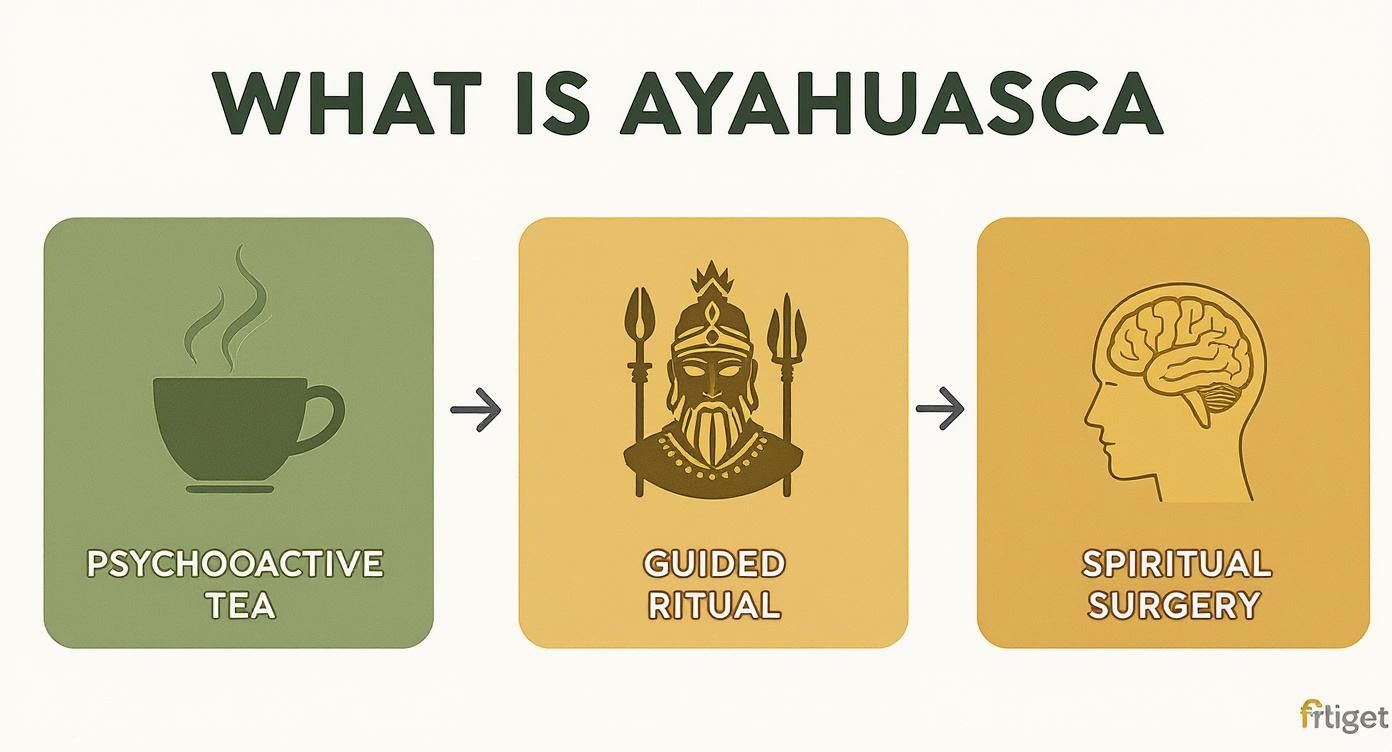
This flow shows how the journey begins with the tea and moves into a guided ritual, a process often described as a form of ‘spiritual surgery’ where deep inner work happens.
Dieta: Preparing the Vessel for Healing
The real work of an ayahuasca ceremony starts well before you ever arrive. The dieta, a specific pre-ceremony diet, is a crucial part of the preparation. This isn’t just about eating clean; it’s a spiritual practice meant to purify the body and quiet the mind, making you far more receptive to the medicine’s teachings.
The dieta typically means avoiding foods that are believed to interfere with the plant’s energy, such as:
- Pork and red meat
- Spicy and heavily processed foods
- Fermented items and aged cheeses
- Alcohol and recreational drugs
- Excessive salt, sugar, and oil
Following the dieta is an act of respect for the plant spirit. It’s a discipline that helps you show up with a clean internal slate, ready to do the work.
The Purge: An Energetic and Physical Release
Finally, an integral and often misunderstood part of the process is “the purge.” The idea of vomiting or having diarrhea can be unsettling, but in this tradition, it’s seen as a profound physical and energetic release.
It’s a powerful form of cleansing. You’re not just expelling physical toxins but also negative energies, emotional baggage, and old traumas that no longer serve you.
To help clarify how all these parts fit together, here’s a quick summary of the key roles and elements.
Key Roles and Elements in an Ayahuasca Ceremony
| Element | Role and Significance |
|---|---|
| Shaman/Facilitator | The spiritual guide and energetic guardian of the ceremony. They hold the space, sing the icaros, and provide support. |
| Icaros | Sacred songs used to direct the healing energy, provide protection, and help participants navigate their journey. |
| Dieta | A preparatory diet to cleanse the body and mind, showing respect for the medicine and increasing sensitivity to its effects. |
| The Purge | The physical act of vomiting or diarrhea, viewed as a deep cleansing of negative energy, emotional blocks, and spiritual impurities. |
Each element—the shaman’s guidance, the sacred icaros, the preparatory dieta, and the physical release—is designed to work in concert. Together, they create a robust, supportive framework for one of the most powerful experiences a person can have.
What to Expect During Your Journey
Walking into your first ayahuasca ceremony feels like standing at the edge of a vast, unknown territory. You’re about to embark on a deeply personal expedition, and the truth is, no one can tell you exactly what you’ll find—because no two journeys are ever the same.
The experience is shaped almost entirely by who you are in that specific moment. Still, understanding a few core principles can help you navigate this profound inner world with a bit more grace.
The entire experience hinges on two critical factors: your set and your setting. You can think of them as the compass and the map for your journey.
The Power of Set and Setting
“Set” is your internal landscape. It’s your mindset, your intentions, your emotional state, and whatever expectations you’re carrying with you. Are you walking in with a specific question? Are you feeling open, anxious, hopeful? These internal currents will absolutely color the nature of your experience.
The “setting” is everything external. This includes the physical space, the skill and presence of the shaman, the energy of the other participants, and the sacred container held by the icaros. A safe, supportive setting isn’t just a nice-to-have; it’s essential for this kind of deep work.
“A well-held ayahuasca ceremony combines a clear intention (set) with a secure container (setting). When both are strong, you have the best possible conditions for deep and meaningful work. This foundation allows you to surrender to the process, knowing you are protected.”
This combination of inner preparation and outer support is what makes the journey feel safe, even when it gets challenging.
The Spectrum of Possible Experiences
The ayahuasca journey is vast. It’s multifaceted and often unfolds in ways you could never predict. It is neither purely blissful nor entirely difficult; it is simply what it needs to be for your own healing.
Common Physical Sensations:
- Body Awareness: You might feel a heightened sensitivity to your body—anything from a gentle tingling to a feeling of being incredibly heavy or light.
- Temperature Shifts: It’s common to feel waves of hot or cold that have nothing to do with the room’s actual temperature.
- The Purge: As we’ve touched on, nausea and vomiting are often part of the process. It’s seen as a powerful physical and energetic release of old burdens.
Emotional and Psychological Journeys:
- Emotional Release: Deep, cathartic releases are incredibly common. You might experience profound joy, overwhelming grief, or liberating anger as old, stuck emotions finally surface to be felt and released.
- Confronting Trauma: The medicine can bring you face-to-face with difficult memories or deep-seated traumas, offering a new perspective and a chance to heal them at their root.
- Spiritual Connection: Many people report a powerful sense of connection to nature, the universe, or a divine presence. This often comes with feelings of unconditional love and a profound sense of unity with all things.
Navigating Visions and Insights
Visions are a well-known part of the ayahuasca experience, but they aren’t the ultimate goal. Think of them as the language the medicine uses to communicate with you.
- Geometric Patterns: Intricate, colorful, and shifting geometric shapes are often one of the first things people see.
- Archetypal Imagery: You might encounter symbolic figures, animals, or beings that carry deep personal meaning for you.
- Biographical Review: Some people experience a life review, seeing key moments from their past with startling clarity and emotional depth.
The real gift isn’t in the visions themselves but in the insights they bring. They act like mirrors, reflecting parts of yourself that need attention. The key is to approach whatever comes up with curiosity and surrender rather than fear. You might want a more detailed look into what the ayahuasca experience feels like to prepare yourself.
Ultimately, the best advice anyone can give you is to release all expectations. Trust that the medicine will give you exactly what you need, not necessarily what you want. Your role is to stay open, breathe through the challenges, and receive the lessons with a courageous heart.
Sorting Through the Safety and Medical Side of Things
An ayahuasca ceremony can be a deeply healing experience, but it’s a path that demands respect and careful preparation. Your well-being is the number one priority, so getting a clear picture of the risks involved is an essential first step. This isn’t about fear; it’s about being well-informed so you can make a safe and responsible choice.
The biggest medical hurdle comes from a key component in one of the ayahuasca vines: MAOIs (Monoamine Oxidase Inhibitors). Think of MAOIs as temporarily flipping a switch on an enzyme in your body that normally breaks down certain chemicals.
This is precisely what allows the DMT in the brew to become active, but it also means you have to be extremely careful about what else is in your system.
Medications and Health Conditions to Watch Out For
Mixing MAOIs with certain medications can trigger a dangerous, and potentially fatal, reaction like serotonin syndrome or a hypertensive crisis. This is why being completely upfront about your medical history and any medications or supplements you take is absolutely non-negotiable.
Here are the most critical combinations to avoid:
- Antidepressants: SSRIs (like Prozac and Zoloft) and SNRIs are at the top of the list. You must work with your doctor to safely taper off and ensure these are fully out of your system, which can often take several weeks.
- Certain Blood Pressure Medications: These can cause a sudden, dangerous spike in blood pressure when combined with MAOIs.
- Other Psychoactive Substances: The effects of mixing ayahuasca with other substances are unpredictable and can be incredibly risky.
Beyond medications, your physical health matters, too. The ceremony can be physically demanding. If you have a history of heart conditions, severe high blood pressure, or significant liver problems, ayahuasca is generally not recommended. The experience puts real strain on the body, especially the cardiovascular system. Being honest in your screening questionnaire isn’t just a suggestion—it’s your most important safety tool. For a detailed list, it’s worth reviewing our guide on foods and medications that interact with MAOIs.
A Realistic Look at the Psychological Risks
The ayahuasca journey is profoundly psychological. It can unearth buried trauma and offer incredible healing, but for some, this same intensity can be destabilizing.
“An ayahuasca experience is like a deep-sea dive into your subconscious. If you don’t have a strong foundation or are already struggling to stay afloat psychologically, the pressure can be too much.”
For this reason, people with a personal or family history of schizophrenia, bipolar disorder, or psychosis are strongly advised against drinking ayahuasca. The experience can amplify everything that’s already there, potentially triggering a latent condition or making an existing one much worse.
Even for those without these conditions, the aftermath isn’t always smooth sailing. A major Global Ayahuasca Survey revealed that 56% of participants felt some negative mental health effects, like anxiety or feeling emotionally raw, in the days or weeks after a ceremony. What’s telling, though, is that the study found the setting made a huge difference. Participants in traditional or church-based ceremonies reported fewer difficulties compared to those in more informal settings. You can discover more insights from this survey on PsyPost.
Any trustworthy facilitator will have a detailed screening process. It’s on you to be 100% honest. Hiding information about your medications or mental health history doesn’t just put you at risk—it jeopardizes the safety and integrity of the entire group.
Getting Ready for Your Journey and Bringing it Home
An ayahuasca ceremony isn’t something you just show up for. The experience doesn’t start with the first cup and end with the last song. It’s a journey that truly begins weeks before you even arrive and continues to unfold long after you’ve returned home.
The real, lasting change happens in the quiet moments of preparation and the gentle process of integration.
Think of it this way: the ceremony plants a seed of insight deep within you. Preparation is about tilling the soil of your mind and body to make it fertile. Integration is the patient, ongoing care—the watering and sunlight—that allows that seed to actually grow into something real and meaningful in your day-to-day life.
Without these crucial bookends, even the most profound experience risks fading into just a powerful but distant memory.
Preparing Your Mind and Body
How you prepare is an act of respect—for the medicine, for the tradition, and most importantly, for yourself. The goal is to create the best possible internal conditions for a deep and healing journey. This is about much more than just following the physical dieta; it’s about clearing out the mental and emotional clutter.
Here are a few key practices that can make all the difference:
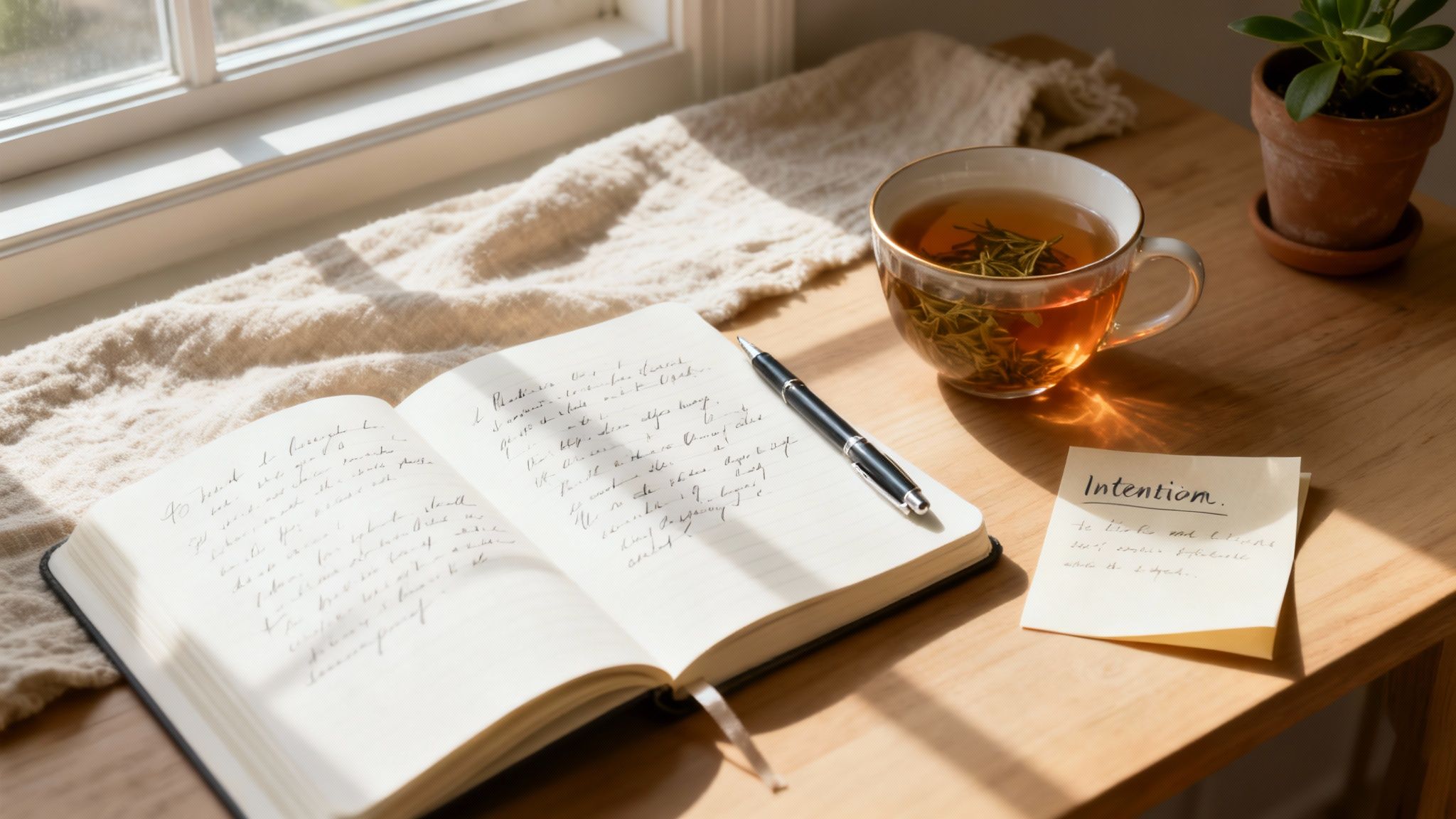
- Clarify Your Intention: Why are you being called to this work? Take some time to journal or meditate on what you hope to heal, understand, or release. Simply writing it down gives it a tangible focus.
- Practice Stillness: Quieting your mind beforehand can be a game-changer. Even 5 to 10 minutes of daily meditation helps you learn to observe your thoughts without getting tangled up in them—a skill you’ll be grateful for during the ceremony.
- Reduce Digital Noise: In the week or so leading up to your ceremony, try to step back from the constant barrage of news, social media, and intense entertainment. Creating a calmer internal environment is one of the best gifts you can give yourself.
Taking these steps helps you walk into the ceremony feeling centered and open, ready to receive whatever the experience has in store for you. For a deeper dive, check out this comprehensive guide on preparing for your ayahuasca journey.
The Gentle Art of Integration
The days and weeks following an ayahuasca ceremony are a uniquely delicate and vital period. The insights and feelings that came up are like freshly sprouted seedlings—they need gentle attention to truly take root in the soil of your life. Just jumping back into your old routine can easily trample this fragile new growth.
Integration is simply the process of weaving the lessons from your journey into the fabric of your everyday existence. It’s how a powerful night becomes lasting, positive change.
“Integration isn’t about desperately trying to cling to the peak moments of the ceremony. It’s about translating the wisdom you gained into new behaviors, healthier relationships, and a more authentic way of being in the world.”
This process looks different for everyone, but some practices are almost universally helpful. Research highlights just how crucial a supportive container is for a beneficial outcome. For example, one study found that a staggering 99.8% of regular attendees felt ayahuasca had a positive impact on their lives, a number that speaks volumes about the power of community and ongoing practice.
Here are some grounded strategies to support your integration:
- Journal Everything: Write it all down—the visions, the emotions, the confusing bits, the beautiful parts. Don’t worry about making sense of it immediately. Just create a raw record you can revisit as your understanding deepens over the coming weeks and months.
- Get into Nature: Connecting with the natural world can be incredibly grounding after such an expansive, otherworldly experience. Go for a quiet walk, sit by a river, or just take your shoes off and stand in the grass for a few minutes.
- Talk it Out: Share what you went through with a trusted friend, a therapist, or an integration specialist. Hearing yourself speak your insights out loud can bring surprising clarity and help them feel more real.
- Be Patient with Yourself: This is a big one. You might feel raw, overly sensitive, or even a bit disoriented. That’s a normal and healthy part of the process. Give yourself permission to rest and process without judgment.
How to Choose a Safe and Ethical Retreat
The explosion of interest in ayahuasca has led to a dizzying array of retreat options. They run the gamut from deeply traditional centers to slick, commercialized operations—and some that are outright dangerous. Because of this, vetting where you go and who you sit with isn’t just a good idea; it’s the most critical step you’ll take to safeguard your well-being on every level.
Knowing what to look for and what questions to ask shifts the power back into your hands. It helps you make a choice that honors not only your personal safety but the integrity of the tradition itself. Think of it less like booking a trip and more like a thoughtful interview process. A good facilitator will always welcome your questions.
Vetting Your Facilitator and Center
The person leading your ceremony—the shaman, curandero, or facilitator—is the anchor for the entire experience. Their skill, integrity, and experience are everything. The safety and potential depth of your journey rest almost entirely in their hands, making their competence absolutely non-negotiable.
Here are the essential questions you need to be asking:
- What is the shaman’s lineage and training? How long have they actually been serving the medicine? Did they undergo a lengthy, traditional apprenticeship with a recognized teacher? Real training isn’t a weekend workshop; it’s a commitment that often spans decades.
- What is the screening process like? A responsible center will always have a detailed medical and psychological screening. If they aren’t asking you about your health history and any medications you’re on (especially SSRIs), that is a massive red flag.
- What is the group size? Intimacy and attention matter. Smaller groups, usually under 15 people, create a much safer and more supportive environment. You should also ask about the ratio of facilitators to participants. How many assistants will be there to help?
- What kind of integration support is offered? The real work often begins after the ceremony ends. Find out if the center provides any resources to help you make sense of your experience. Do they offer integration circles, connect you with counselors, or provide any guidance for your return home?
Identifying Ethical and Sustainable Practices
Beyond your immediate safety, choosing an ethical retreat means thinking about the wider impact you’re having. True healing should be rooted in respect for the culture, the people, and the land that holds this tradition.
“Choosing a retreat is a vote for the kind of ayahuasca culture you want to support. Prioritizing centers that demonstrate deep respect for Indigenous communities and ecological sustainability ensures the tradition can continue in a healthy way for generations to come.”
Look for a center that walks its talk with integrity and a spirit of reciprocity:
- Relationship with Local Communities: Does the center operate as an isolated foreign bubble, or is it woven into the local community? Do they employ local people in meaningful, well-paid roles and give back in a tangible way?
- Sustainable Plant Harvesting: Ayahuasca is a finite resource from the Amazon rainforest. Ask them where their medicine comes from. Do they grow their own plants or work with ethical harvesters to prevent contributing to over-harvesting?
- Transparency and Honesty: Be very wary of anyone making grandiose claims or promising miracle cures. A grounded, trustworthy facilitator will be humble. They’ll be realistic about the hard work involved and focused on your well-being, not just on making a sale.
Common Questions About Ayahuasca Ceremonies
If you’re thinking about participating in an ayahuasca ceremony, it’s completely normal for a flood of practical questions to come up. Getting clear, honest answers can quiet the mind and help you focus on the real work of inner preparation. Let’s walk through some of the most frequent questions people have before their first journey.
Knowing what to expect on a practical level makes the whole idea feel less abstract and more grounded.
How Long Does an Ayahuasca Ceremony Last?
A single ayahuasca ceremony usually runs for about four to eight hours. Things typically get started after sunset, when the shaman or facilitator serves the tea. The darkness helps create a quiet, inward-focused space. You can expect the most intense part of the experience to last for two to four hours, with a gentle, gradual return to a more familiar headspace afterward.
But the ceremony itself is often just one piece of a larger container. Reputable retreats will frame the experience with an opening circle beforehand and a closing or integration circle the next morning. This turns the event into a much longer, more supported process.
What Does the Ayahuasca Brew Taste Like?
Let’s be blunt: nobody drinks ayahuasca for the taste. The brew is usually thick, with a very earthy, almost sludgy texture and an overwhelming bitterness. It’s a taste most people find genuinely difficult.
It helps to reframe this moment. Think of it as your first small act of surrender.
“The taste is a fleeting moment of discomfort in what will be a much longer, deeper journey. It’s a powerful, physical reminder that you’re about to engage with a potent medicine, not just some recreational tea. It sets the tone of respect and intention from the very first sip.”
Is It Okay to Go Alone?
Yes, absolutely. In fact, many people specifically choose to go to a retreat by themselves. Going solo gives you the freedom to dive fully into your own process without worrying about or being influenced by a friend’s experience happening right next to you.
You won’t feel isolated, though. Any well-run retreat is designed to build a powerful sense of community and mutual support. The shared vulnerability in the ceremony space often forges incredibly deep, fast connections with the other participants, creating a kind of temporary family.
Will I Remember My Experience Afterward?
For the most part, yes. The ayahuasca experience is typically very vivid and memorable, unlike other substances that can cause blackouts or memory loss. You’ll likely recall the major visions, emotional breakthroughs, and core insights with surprising clarity, especially in the first few days after the ceremony.
That said, it’s not like re-watching a movie in your head. It’s more like remembering a powerful dream—one that you lived and felt deeply. This is why journaling as soon as you can after a ceremony is so important. It helps you anchor the details before they start to feel distant, which is the crucial first step of integration.