
An Ayahuasca Iquitos retreat is more than just a trip; it’s a deep dive into traditional plant medicine right in the heart of the Peruvian Amazon. Iquitos has become the undisputed global epicenter for these journeys. It is the gateway to hundreds of centers where people from all walks of life come to sit in ceremony with indigenous Shipibo shamans. This remote jungle city is where ancient healing meets the modern quest for meaning.
Why Iquitos Is the Heart of the Ayahuasca World
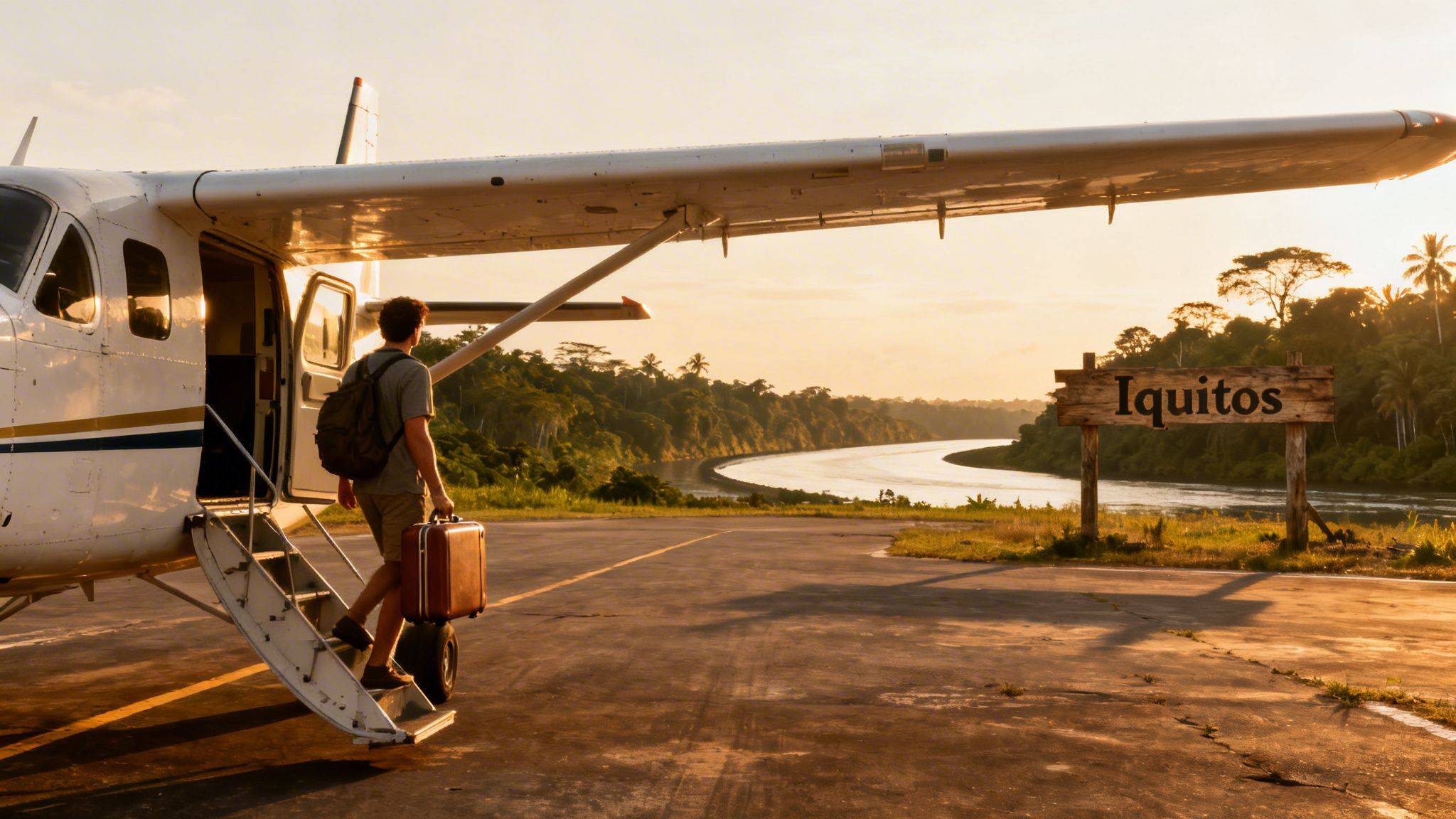
Tucked away in the Peruvian Amazon, Iquitos is a bustling city you can only reach by boat or plane. It’s an island, really, surrounded by a vast sea of green jungle. This very isolation is what has helped it become the world’s most important hub for authentic Ayahuasca experiences. Iquitos isn’t just a place on a map; it’s a living crossroads where generations of indigenous plant medicine knowledge are shared with the outside world.
The city itself hums with a unique energy. From its vibrant markets to the slow, steady pulse of the river, Iquitos is the launchpad for a profound journey, one that ultimately leads inward.
A Hub of Indigenous Wisdom
For centuries, the indigenous communities of the Amazon basin, especially the Shipibo people, have nurtured a sacred relationship with Ayahuasca. For them, it is not just a plant; it’s a cornerstone of their spiritual life and healing practices. Over time, Iquitos naturally became the bridge connecting this ancient wisdom with international travelers seeking healing and growth.
The shamans, or curanderos, who guide these ceremonies aren’t just facilitators. They are the living keepers of an ancestral lineage, holding knowledge passed down through countless generations. This is why an Ayahuasca retreat here is an opportunity to connect with something raw, authentic, and unbroken.
“The real power of an Iquitos retreat lies in its connection to the source. You aren’t just participating in a ceremony; you’re stepping into a culture where plant medicine is woven into the very fabric of life and the spirit of the rainforest itself.”
This direct line to experienced healers is the single biggest reason so many people make the pilgrimage to this specific corner of the world.
The Gateway for Global Seekers
As the largest city in the Peruvian Amazon, Iquitos serves as the logistical hub for the hundreds of retreat centers peppered throughout the surrounding jungle. This accessibility has fueled its reputation and sparked a boom in shamanic tourism.
The city’s infrastructure supports a surprisingly wide range of options, catering to different needs and budgets:
- Traditional Jungle Centers: These offer a rustic, immersive experience deep in the rainforest, where the focus is purely on the medicine work.
- Comfort-Oriented Retreats: For those who want the jungle setting without sacrificing modern conveniences, these centers provide amenities like private rooms and Western-style bathrooms.
- Specialized Programs: Some retreats are designed around specific healing goals, like trauma recovery or addiction treatment, and offer tailored support from trained staff.
The numbers alone speak to its global significance. In 2019, an estimated 62,000 people traveled to the Amazon and Costa Rica for Ayahuasca, and Iquitos was the main entry point for most of them. This well-established ecosystem offers a clear path for newcomers, helping them navigate what can feel like a complex and overwhelming world. If you’re curious, you can get a deeper look into the rise of shamanic tourism in Iquitos.
What Really Happens in an Ayahuasca Ceremony
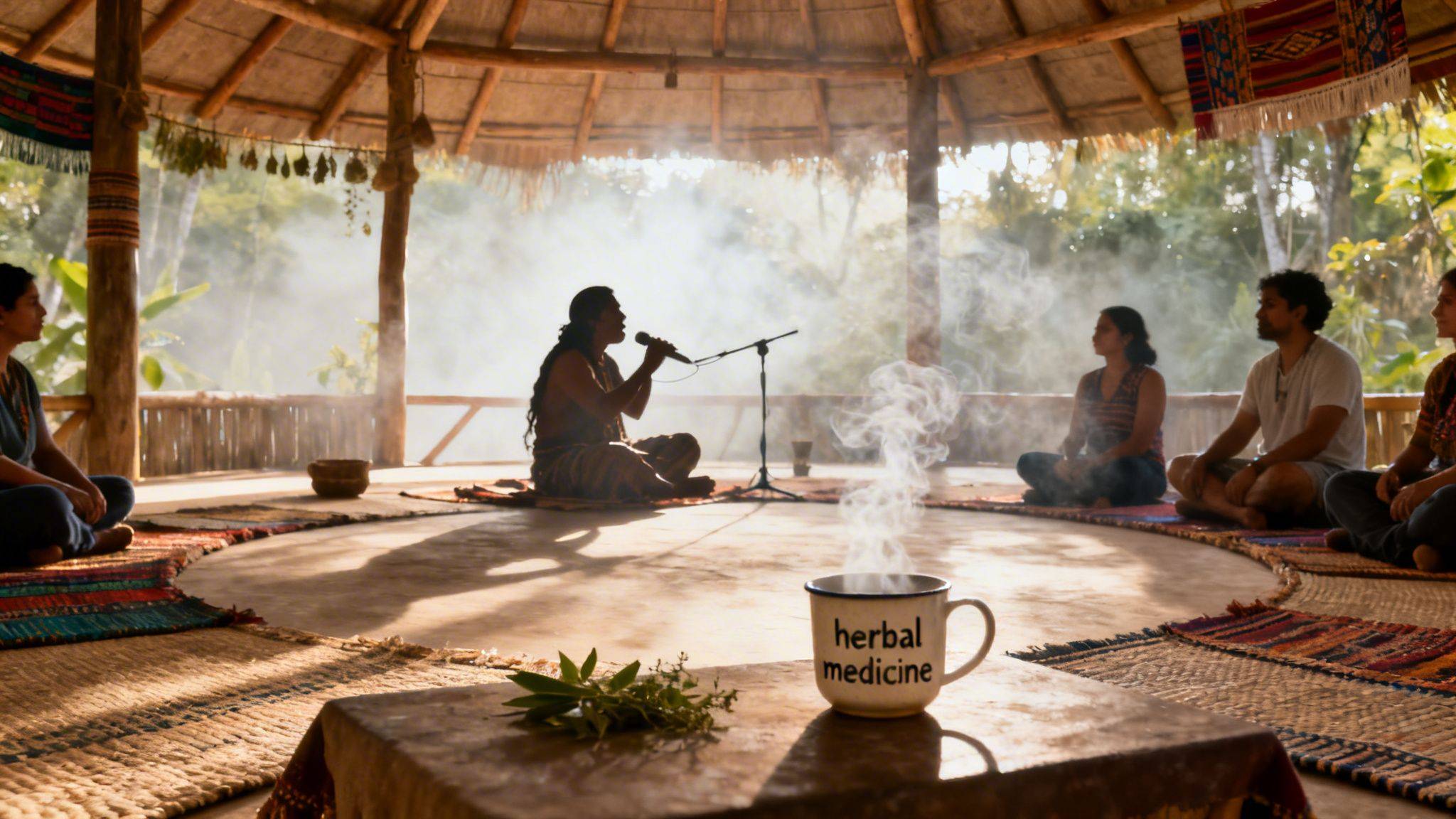
Walking into your first Ayahuasca ceremony is a step into the unknown. It’s an experience held in what’s known as a sacred container, a space intentionally created for safety, vulnerability, and some seriously deep inner work. Knowing what to expect can help calm the nervous mind, letting you sink into the process instead of fighting it.
At most any Ayahuasca Iquitos retreat, the ceremonies happen after dark inside a circular hut called a maloca. It’s a traditional structure, often with a thatched roof and open-air walls that let the symphony of the Amazon jungle become the soundtrack to your journey. You’ll find your spot, usually a mattress equipped with a bucket, blanket, and water, arranged in a circle around the shaman’s central workspace.
The Sacred Opening
The ceremony doesn’t just kick off with drinking the brew. It starts with setting the space. The shaman, or curandero, will often begin by smoking mapacho, a powerful Amazonian tobacco, and blowing the smoke over each person and throughout the maloca. Think of it as a spiritual reset, a way of clearing out energetic clutter and creating a protective bubble for the work ahead.
Once the space feels right, you’ll be called up one by one to drink the Ayahuasca. The brew is notoriously challenging, thick, earthy, and intensely bitter. After everyone has had their turn, the lights go out. You’re left sitting in the dark, in silence, waiting for the medicine to introduce itself.
The Shaman and the Icaros
The shaman is your guide and anchor for the night. They aren’t just pouring a drink; they are navigating the energetic ocean of the group and steering the collective journey. Their most important tool for this is the icaros, the sacred songs of the plants.
These songs aren’t just melodies. They are ancient, vibrational technologies used to:
- Call in allies: Shamans sing to invite the spirits of Ayahuasca and other plants to assist with healing and guidance.
- Hold the space: The icaros form a protective shield of sound, keeping disruptive energies at bay.
- Guide the visions: The songs can steer the experience, deepen a purge, or offer a hand of comfort when things get tough.
- Perform spiritual surgery: A shaman might sing directly to one person to help them work through a specific emotional knot or energetic blockage.
As the icaros fill the maloca, the medicine starts to weave its way through you. For a closer look at what that feels like, you can learn more about the Ayahuasca experience and its many layers. In the darkness, the shaman’s voice becomes a lifeline, a steady rhythm guiding you through whatever comes up.
The Physical and Visionary Journey
What happens next is profoundly personal and different for everyone, every single time. Still, there are some common signposts on the path. One of the most famous is the physical purge, or ‘la purga’. This often means vomiting or diarrhea, and it’s seen as a crucial part of the process, a deep cleansing that releases not just physical gunk but old emotional baggage, too.
“They call Ayahuasca ‘the great revealer’ for a reason. It has a way of bringing up everything you’ve pushed down: suppressed emotions, long-forgotten memories, and unconscious patterns. The visions aren’t just random hallucinations; they are often seen as direct messages from the plant spirit, delivering profound insights with stunning clarity.”
The journey can be breathtakingly beautiful, filled with geometric light, encounters with incredible beings, and a feeling of being connected to everything. It can also be incredibly challenging, forcing you to face hard truths or sit with your biggest fears. Whatever the medicine brings, the shaman and facilitators are there to make sure you are supported and safe as you explore the deepest parts of yourself.
Navigating Safety in a Complex Environment
When you decide to journey to the Amazon for an Ayahuasca retreat in Iquitos, safety has to be your number one priority. This is not just another trip; you’re signing up for a profound dive into your own consciousness, and that requires you to be in a vulnerable state. You should choose your retreat center with the same care and diligence you’d use to pick a surgeon.
Let’s be clear: the environment in Iquitos is complex. It’s home to some of the most authentic, heart-centered healers you could ever hope to meet, but it’s also an industry with almost no formal regulation. This reality puts the responsibility squarely on your shoulders to do the research and find a sanctuary that puts your well-being above everything else. A safe, secure container is the absolute bedrock for any meaningful work with Ayahuasca.
The Importance of Medical and Psychological Screening
The very first sign of a reputable retreat center is a comprehensive screening process. This isn’t just a formality; it’s the most critical indication that they take their duty of care seriously. The whole point of this intake is to flag any potential risks, not to pass judgment.
Your physical and mental health history really, truly matters here. Ayahuasca can have powerful, and sometimes dangerous, interactions with certain medical conditions and medications. For example, it’s a major risk to combine it with antidepressants, especially SSRIs, because of the potential for serotonin syndrome.
A proper screening process will always involve a detailed questionnaire that covers:
- Physical Health: You must disclose any history of heart conditions, high blood pressure, respiratory problems, or neurological disorders.
- Mental Health History: A personal or family history of conditions like psychosis or bipolar disorder might mean that Ayahuasca isn’t the right path for you, at least not right now.
- Current Medications: Be completely honest about every single prescription drug, over-the-counter medication, and supplement you are taking. No exceptions.
“A center that skips or rushes through this step is waving a massive red flag. Their commitment to safety starts long before you ever set foot in the jungle, and a thorough screening is non-negotiable.”
Red Flags to Watch Out For
In an unregulated space, knowing what to avoid is just as important as knowing what to look for. The boom in Ayahuasca tourism has, unfortunately, attracted some operators who simply don’t have the experience, integrity, or infrastructure to hold a safe space. Your awareness is your best defense.
The lack of oversight is a real issue. Serious safety concerns do cast a shadow over some of Iquitos’ Ayahuasca retreats. Media reports have attributed 58 deaths globally to Ayahuasca between 1994 and 2022. Of those, 40% (24 cases) were linked to tourist centers in Amazonian countries. While these numbers are a tiny fraction of the total Ayahuasca servings worldwide, they highlight the urgent need for better standards. The situation in Iquitos is stark; local authorities often don’t even have statistics on incidents, which only fuels concerns about safety. You can read more about the challenges facing the ayahuasca scene in the Amazon.
Here are some critical red flags that should make you walk away from a center:
- Excessively Large Ceremony Groups: There’s a limit to how many people a shaman and their team can safely manage. When groups get larger than 15-20 participants per shaman, resources get stretched thin. It becomes nearly impossible to give someone individual attention if they’re having a difficult time.
- Lack of Sober, Experienced Facilitators: The shaman’s job is to manage the energetic work of the ceremony. That’s why there must be sober, well-trained facilitators in the room to help with practical needs, everything from helping someone to the bathroom to providing a comforting, reassuring presence. They are a crucial layer of support.
- A Questionable Shaman: Look for complete transparency about the shaman’s training, lineage, and years of experience. Be very wary of anyone who makes grandiose claims of power, exhibits inappropriate behavior, or has a reputation for being unethical. A true healer is humble and dedicated to service.
- Vague or Nonexistent Emergency Protocols: Ask the hard questions directly. What is their exact plan for a medical emergency? How far is the nearest clinic, and what is the transport plan to get someone there? A professional center won’t hesitate; they’ll have a clear, rehearsed plan ready to go.
How to Choose a Reputable Retreat Center
Picking the right Ayahuasca Iquitos retreat is easily the most critical decision you’ll make. It’s the difference between a profoundly healing journey and an experience that feels unsafe or, at worst, harmful. Don’t think of this like booking a vacation; you’re choosing a team of guides for one of the deepest explorations you’ll ever undertake.
With a dizzying number of options out there, it’s easy to feel overwhelmed. The key is to have a clear process for checking out potential centers. Your mission is to find the genuine sanctuaries run with integrity and sidestep the opportunistic businesses that might be cutting corners on safety. This takes a bit of detective work, but it’s time well spent.
The Shaman and Facilitator Team
The people holding the space for you are everything. A real shaman, or curandero, isn’t a performer. They are a humble healer with a deep, lifelong connection to the medicine, often with decades of training passed down through a specific family lineage. Their sacred songs, known as icaros, are the very foundation of the ceremony, guiding the energy in the room.
Just as vital are the facilitators. These are the sober, grounded individuals who provide hands-on practical and emotional support throughout the night. They need to be experienced, compassionate, and always available to help you navigate a difficult moment, get you to the bathroom, or just offer a reassuring presence. A truly solid team works together seamlessly to create a container of complete safety and trust.
“The real measure of a center’s quality is its people. A gifted shaman and a team of caring, experienced facilitators create an environment where you can truly let go and do the work you came to do. Their expertise is your safety net.”
When you start contacting centers, don’t be shy. Ask direct questions. Any reputable retreat will not only welcome your diligence but will be happy to provide clear, transparent answers.
Vetting Retreats: Your Questions Checklist
Before you even think about putting down a deposit, you need to ask some hard questions. A center’s willingness to answer these in detail is a massive green flag, signaling their professionalism and true commitment to your well-being.
To make this easier, here’s a table outlining what you should be asking.
| Area of Inquiry | What to Ask | Why It Matters |
|---|---|---|
| The Shaman | “Can you tell me about the shaman’s specific training and lineage? How many years have they been serving medicine?” | Authenticity is key. You want someone with deep, verifiable experience, not someone who learned a few songs last year. |
| Facilitators | “What is the ratio of facilitators to guests in a ceremony? What kind of training do they have?” | A low ratio (1 facilitator for every 5 guests is a good benchmark) ensures you get personal attention if you need it. |
| Medical Safety | “What is your exact protocol for a medical emergency? Is staff trained in first aid? How far is the nearest hospital?” | This is non-negotiable. They must have a clear, rehearsed plan. “We’ll figure it out” is not an acceptable answer. |
| Group Size | “What is the maximum number of people in a single ceremony?” | Smaller groups (under 15-20 people) generally allow for a more intimate, controlled, and supportive environment. |
| Post-Retreat Care | “What kind of integration support do you offer after I go home?” | The real work often begins after the retreat. Support like follow-up calls or community groups is a sign they care about your long-term well-being. |
Think of these questions as your first line of defense. A center that can’t or won’t answer them clearly probably isn’t the right place for you.
This flowchart gives you a visual on how to start your research process.
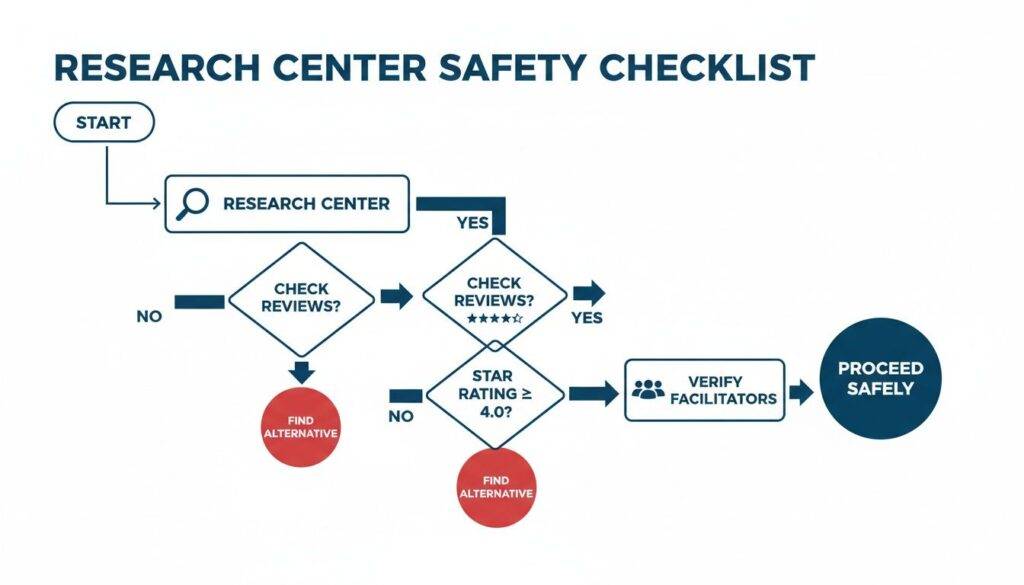
As you can see, everything starts with doing your homework, reading reviews, checking out the team, and making sure the fundamentals are in place before you go any further.
Finding the Right Fit for You
Not all Ayahuasca retreats are the same. In fact, the style and feel can vary dramatically, from rustic jungle camps to something closer to a wellness spa. Knowing the different styles will help you find a place that matches your intentions, personality, and comfort level.
Here’s a quick breakdown:
Traditional Jungle Camps: Think rustic, immersive, and minimalist. Lodging is often basic, with a very strong focus on the medicine and Shipibo traditions. This is for seekers who want a raw, authentic jungle experience and are perfectly happy without modern creature comforts.
Modern Comfort Centers: These places blend traditional ceremony with modern amenities. You can expect things like private rooms, Western-style bathrooms, and a more structured daily schedule with activities like yoga or meditation. This style is great for first-timers or anyone who values physical comfort.
Specialized Healing Centers: Some retreats are designed to address specific issues like trauma, addiction, or depression. They often integrate traditional shamanism with therapeutic support from trained psychologists or counselors. This is an excellent choice for individuals with specific healing goals who would benefit from a more targeted approach.
Ultimately, choosing an Ayahuasca Iquitos retreat is a deeply personal call. Do your research, read between the lines of reviews, and most importantly, trust your gut. When a center is open, honest, and puts your safety above all else, you’ll feel it.
So, What Does an Ayahuasca Retreat in Iquitos Actually Cost?
Let’s talk about the financial side of this journey. Thinking about the cost isn’t just about budgeting; it helps frame the experience for what it is, a serious investment in your healing and personal growth, not just another vacation. Prices in Iquitos can swing quite a bit, so let’s break down what you’re really paying for.
The cost of a retreat is a reflection of many things. The center’s reputation, the experience of its shamans, the intimacy of the ceremony groups, and the creature comforts on offer all play a part. You can expect a rustic, traditional center tucked deep in the jungle to be easier on the wallet than a place offering private bungalows and modern amenities.
What Drives the Price Tag?
The biggest variable, without a doubt, is the length of your stay. Most centers offer programs that range from a quick 7-day immersion to deeper, month-long dives. The number of Ayahuasca ceremonies included in your program is, naturally, another major factor in the final price.
Here are the main components that shape the cost of a retreat package:
- Amenities and Lodging: A shared room in a simple maloca (ceremonial hut) will cost less than a private, air-conditioned cabin with its own bathroom. It’s a trade-off between rustic authenticity and personal comfort.
- Group Size: Centers that keep their ceremony groups small, and many of the best ones do, often charge a premium. This ensures you get more focused, individual attention from the shaman and facilitators during your experience.
- Reputation and Lineage: Highly respected centers with well-known shamans, often with a deep, traceable lineage of knowledge, can command higher prices. You’re paying for their expertise and a proven track record of safety and integrity.
Ayahuasca tourism has become a huge part of the Iquitos economy. You’ll find programs starting around $2,000 for a 7-day retreat with four ceremonies. On the higher end, a four-week immersion, which might include up to twelve ceremonies and a master plant dieta, could run closer to $4,900. The scale of this is staggering: back in 2019, the region’s 232 centers welcomed 62,000 visitors for a total of 210,000 experiences. It really shows how Iquitos has become a global hub for this work. For a deeper look at program costs and the industry’s growth, you can check out this analysis of Ayahuasca retreats from the Hummingbird Healing Center.
What’s Typically Included in the Fee?
When you book a retreat, you’re usually paying for an all-inclusive package. This is a good thing; it means you can focus entirely on your inner work without getting bogged down by daily logistics. A clear breakdown of what’s covered is one of the first signs of a professional, transparent center.
A standard package almost always covers the essentials: your accommodation for the entire retreat, all your meals (prepared specifically for the Ayahuasca ‘dieta’), and, of course, the Ayahuasca ceremonies themselves.
“Think of the retreat fee as covering the entire container for your experience. It’s the structure that holds you safely, from the food that prepares your body to the expert guidance that supports your spiritual journey.”
Most centers also fold other supportive activities into their programs. These often include:
- Floral Baths: Traditional cleansing rituals using specific flowers and medicinal plants.
- Guided Jungle Walks: A chance to connect with the Amazon and learn about its powerful plant life from local experts.
- Integration Circles: Invaluable group sharing sessions that help you process and make sense of your ceremony experiences.
- Airport Transfers: Convenient transportation to and from the Iquitos airport, which removes a layer of travel stress.
Don’t Forget to Budget for the Extras
The package price is the heart of your budget, but it’s not the whole story. To get a realistic financial picture, you’ll need to account for a few other significant expenses.
Your round-trip flight to Iquitos (IQT) will likely be the biggest additional cost. You’ll also need to factor in travel insurance; nearly every reputable center makes this a mandatory requirement for participation. Lastly, it’s customary, and deeply appreciated, to leave a tip for the shaman and the hard-working support staff at the end of your stay.
Preparation and Integration: Where the Real Work Happens
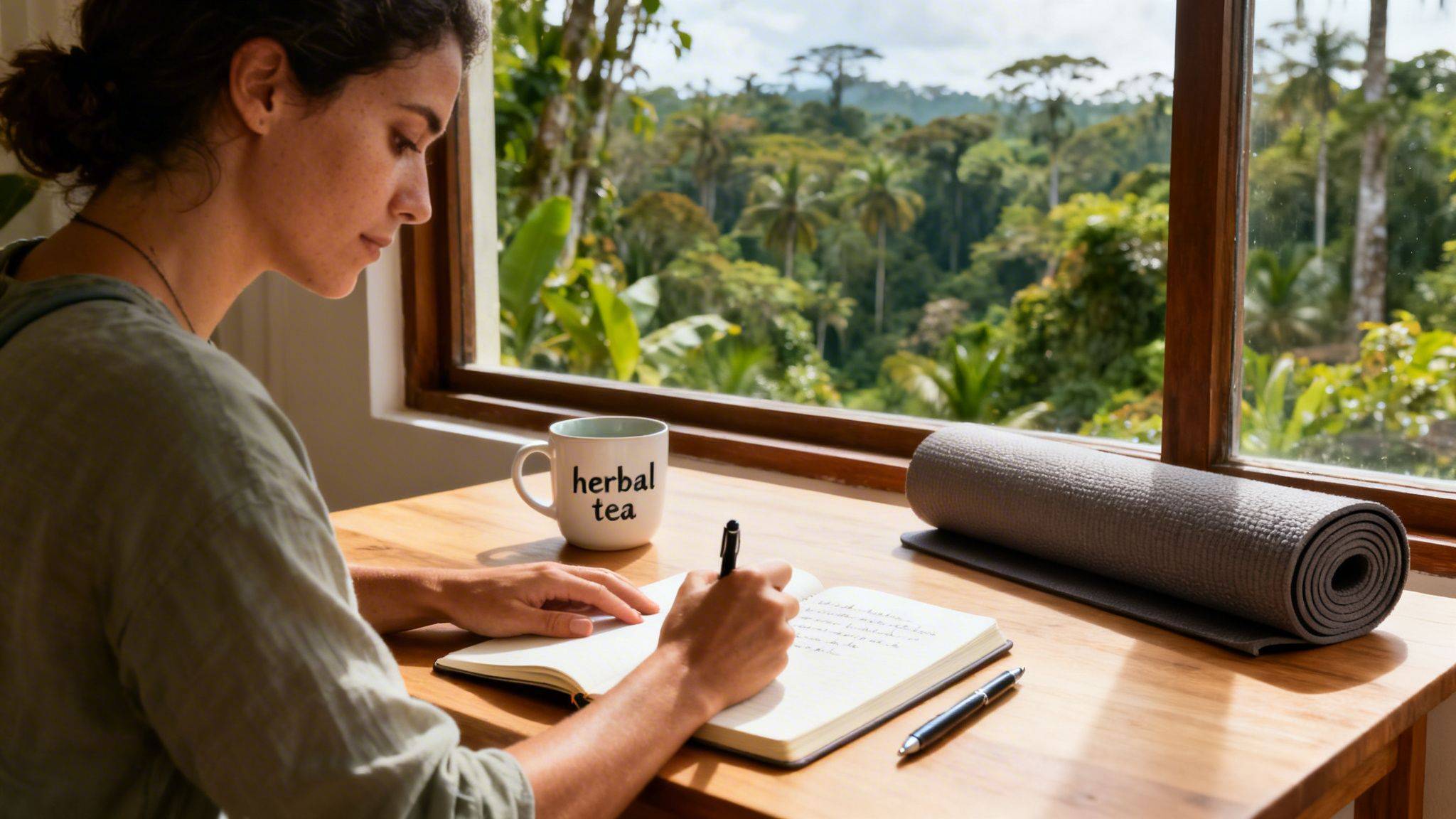
The ceremonies are the heart of an Ayahuasca Iquitos retreat, but the real work, the kind that creates lasting change, happens before you ever arrive and long after you’ve gone home. Think of the ceremonies as the peak of the mountain. Preparation is the climb up, and integration is the careful descent back into your life, bringing the summit view with you.
Skipping either of these phases is a common mistake. It’s like trying to build a house without a foundation or a roof. The preparation makes you a clear vessel for the experience, and integration is how you weave the profound insights from the ceremony into the fabric of your daily life.
Preparing Body and Mind for the Journey
Your preparation starts weeks before you step on a plane. The idea is to create a clean slate, both physically and mentally, to allow the medicine to do its work without unnecessary interference. The cornerstone of this process is the traditional preparatory diet, the ‘dieta’.
More than just a meal plan, the dieta is a spiritual practice. It’s a way of showing respect to the plants and purifying your system. The aim is to remove heavy, stimulating, or processed foods and energies that can muddy the waters and conflict with Ayahuasca.
“Preparation is an act of intention. By consciously choosing what you consume and how you spend your time, you are signaling to yourself and to the medicine that you are ready to engage with this process on a deep and respectful level.”
Plan to start the dieta at least one to two weeks before your retreat. Every center will provide its own specific guidelines, but the core principles are nearly universal.
Foods and Substances to Avoid:
- Pork and red meat: These are considered energetically dense and can weigh down the experience.
- Fermented foods: This includes aged cheeses, soy sauce, tofu, and pickled items.
- Excessive salt, sugar, and spice: Keep your diet simple, clean, and bland.
- Caffeine and alcohol: These must be completely eliminated.
- Sexual activity: Traditionally, this is seen as a way to conserve your personal energy for the intense healing work ahead.
Your mental and emotional preparation is just as vital. This is the time to get clear on your intention, the “why” that is calling you to the medicine. What are you hoping to heal, understand, or release?
Journaling, meditation, and spending quiet time in nature are all fantastic ways to connect with yourself and clarify your purpose. A clear intention acts as a rudder, helping you navigate the sometimes-stormy waters of the ceremony. For a deeper dive, check out our in-depth article on preparing for your Ayahuasca journey.
Integration: Weaving the Lessons into Your Life
When you return home, the journey has really just begun. This is where integration comes in. If the ceremonies are like shaking up a snow globe of your consciousness, integration is the slow, patient process of letting all the pieces settle into a new, more beautiful pattern.
This phase is absolutely critical. Without it, the powerful revelations you received can fade like a vivid dream, leaving you with little more than a good story. Integration is the work of grounding those cosmic insights into your everyday reality.
Practical Integration Strategies:
- Journaling: Get it all down on paper. The visions, the feelings, the confusing parts, the breakthroughs. This becomes an invaluable map of your inner world.
- Meditation and Mindfulness: These practices help you stay connected to that quiet, centered space you may have accessed in ceremony, making it easier to find again amidst daily life.
- Community Support: Talk to people who get it. Sharing your experience with fellow journeyers or in an integration circle can be incredibly validating and helps you feel less alone.
- Professional Guidance: Working with an integration coach or a therapist who understands plant medicine can be a game-changer. They can provide a safe container to unpack complex emotions and translate your insights into actionable steps.
Your Top Questions About Iquitos Retreats, Answered
As you start to plan this kind of journey, some very practical questions are bound to pop up. Getting clear, honest answers is the best way to feel prepared for what’s ahead. Let’s tackle a few of the most common ones.
Just How Physically Demanding Is It?
This is a fair question. The experience is definitely a challenge, but you don’t need to be an elite athlete. Most people in reasonably good health can manage it just fine.
The real test is more about discipline and resilience. The pre-retreat dieta requires you to be strict with your food, and the jungle itself, with its thick humidity and basic living conditions, asks you to be adaptable. The most intense physical part for many is “la purga” (the purge), which is a core part of the cleansing process. It is not pleasant, but it’s a vital part of the work.
Is It Safe to Go as a Solo Woman?
Yes, absolutely. A huge number of women travel to Iquitos on their own for Ayahuasca. The key is that any reputable center makes creating a safe, respectful, and supportive space for every single guest their top priority.
To feel confident, do your homework and vet any center you’re considering. Look for retreats that have experienced female facilitators on their team and a clear, public commitment to safety. When a center operates with integrity, it creates a sanctuary where everyone can feel secure enough to do their deep inner work.
“A well-run Ayahuasca retreat is designed to be a sanctuary. The safety and comfort of all guests, including solo female travelers, is a non-negotiable foundation for the sacred work being done.”
What’s a Master Plant Dieta?
You might hear this term and wonder how it differs from a regular retreat. A standard Ayahuasca retreat revolves around group ceremonies, which are incredibly powerful on their own.
A master plant dieta, on the other hand, is a much deeper dive. Think of it as an advanced practice. It involves a longer stay, often with long periods of isolation, and an even stricter diet. During this time, you work intimately with one specific “teacher plant” under the direct guidance of a shaman for more focused and profound healing.
Disclaimer: The information provided on Ayahuasca.com is for educational purposes only and is not intended as medical advice, diagnosis, or treatment. Ayahuasca is a powerful traditional Amazonian medicine and may not be suitable for everyone. Always consult with a qualified healthcare professional before making decisions related to health, mental well-being, medications, or the use of Ayahuasca.