
You’ve probably done the same thing a lot of curious first-timers do. You open a dozen retreat websites, see serene photos, polished language, and promises of balance, then realize the central question is much simpler, and much harder, than the marketing suggests. Which wellness retreats are structured well, priced fairly, and safe enough to trust?
The answer starts with a clear definition. Holistic healing retreats are immersive, time-bounded programs that work on body, mind, and daily habits together, usually through a planned mix of movement, reflection, nutrition, rest, and guided support. The strongest programs don’t offer one isolated treatment, they build a sequence that helps people step out of routine, reset their nervous system, and return home with something concrete to keep.
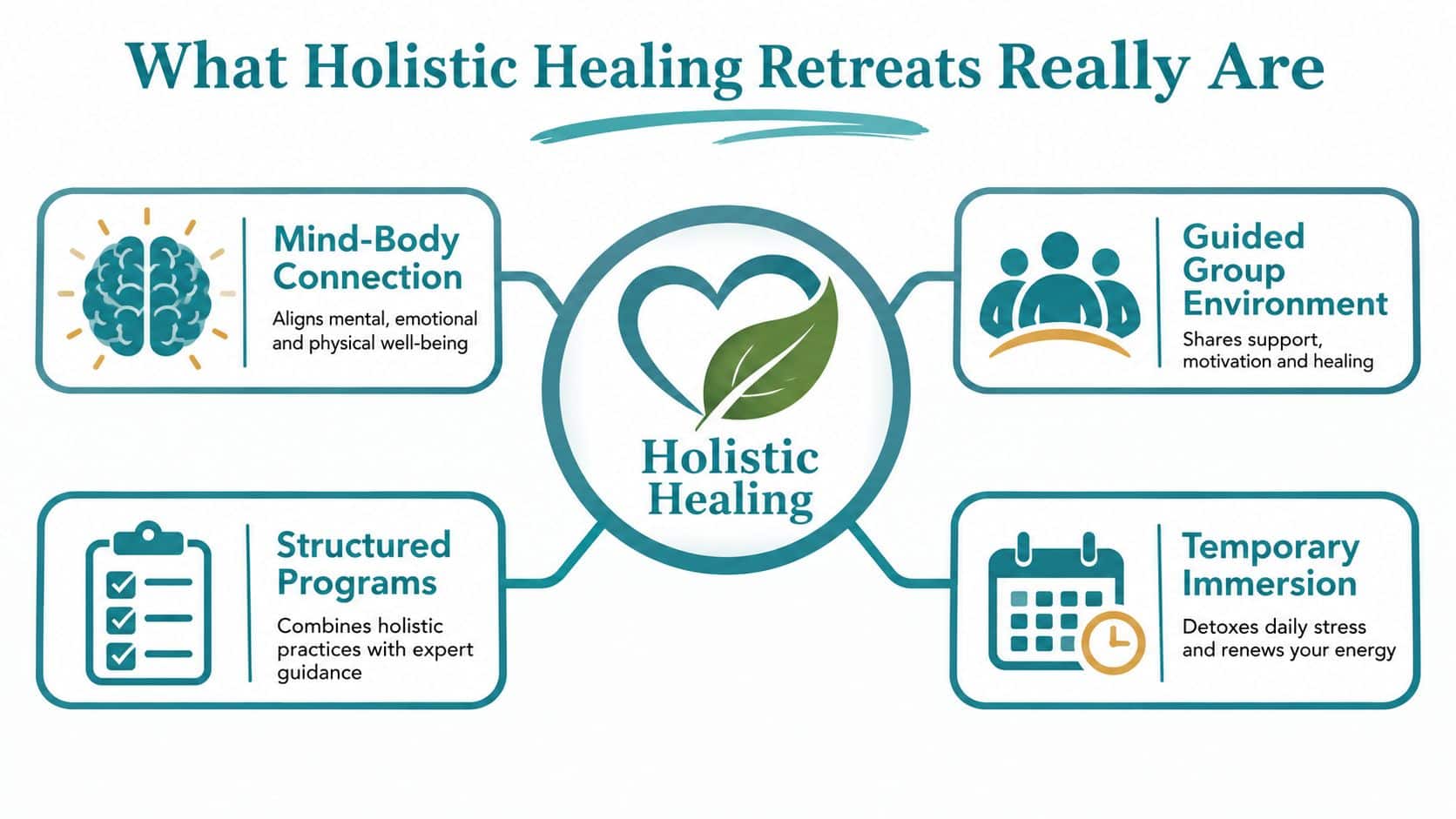
A useful way to sanity-check a listing is to ask whether it sounds like a retreat or just a pleasant stay. A spa holiday may include treatment slots but leave the rest of the day undefined. A true retreat usually has a daily structure, a facilitator or teaching team, and a clear arc from arrival to integration. For a broader travel context, the wellness travel in Tulum guide offers a helpful sense of how wellness-focused trips get framed in destination planning.
Common Words Worth Knowing
A facilitator is the person who guides the group experience, whether through meditation, movement, ceremony, or education. Integration means making sense of the experience afterward, then translating it into choices at home. Ceremony can describe a guided ritual, but the word gets used loosely, so the structure behind it matters more than the label.
“Practical rule: if a retreat description never explains the daily rhythm, the support team, or what happens after the program ends, it probably isn’t giving enough detail to judge quality.”
A well-designed retreat feels coordinated, not random. That’s the difference between a marketing page and a real program.
What Holistic Healing Retreats Really Are
A couple of nights into planning, many people start noticing the pattern. The websites look different on the surface, but the underlying promise is almost always the same, step away from normal life and come back clearer, calmer, or more grounded. The trouble is that the term is used for everything from luxury spa breaks to serious therapeutic programs, so the buyer has to read more carefully than the headline.
The Core Difference From A Spa Or Workshop
A spa vacation is usually built around comfort and pampering. A single-modality workshop focuses on one practice, such as meditation or yoga, and stops there. Wellness retreats combine multiple ingredients in a deliberate order, often including movement, rest, reflection, food, education, and guided conversation, so the experience changes both the body’s state and the person’s habits.
That structure matters because immersion creates continuity. When a participant repeats a practice every day, sleeps in the same environment, and talks through the experience with the same facilitator or small group, the retreat becomes more than a series of pleasant moments. It becomes a container for behavior change.
What The Language Usually Means
The word integration signals that the retreat expects participants to process the experience, not just have it. Temporary immersion means the person is out of their normal environment for a limited period, often long enough to interrupt routine without turning the trip into a permanent lifestyle change. And when a program uses the phrase guided group environment, that usually means the schedule includes shared meals, group sessions, or communal reflection rather than total privacy.
A sharp reader can spot the difference quickly. If a listing emphasizes scenery but stays vague about the daily structure, it may be selling destination appeal more than a comprehensive model. If it names practices, sequencing, support, and follow-through, it is much more likely to be authentic.
“A good retreat doesn’t just offer a place to rest. It gives a person a pattern to follow while resting.”
That’s the practical definition to hold onto. A retreat focused on whole-person wellness should make it clear how the parts connect, and why the sequence matters.
The Main Types Of Holistic Retreats
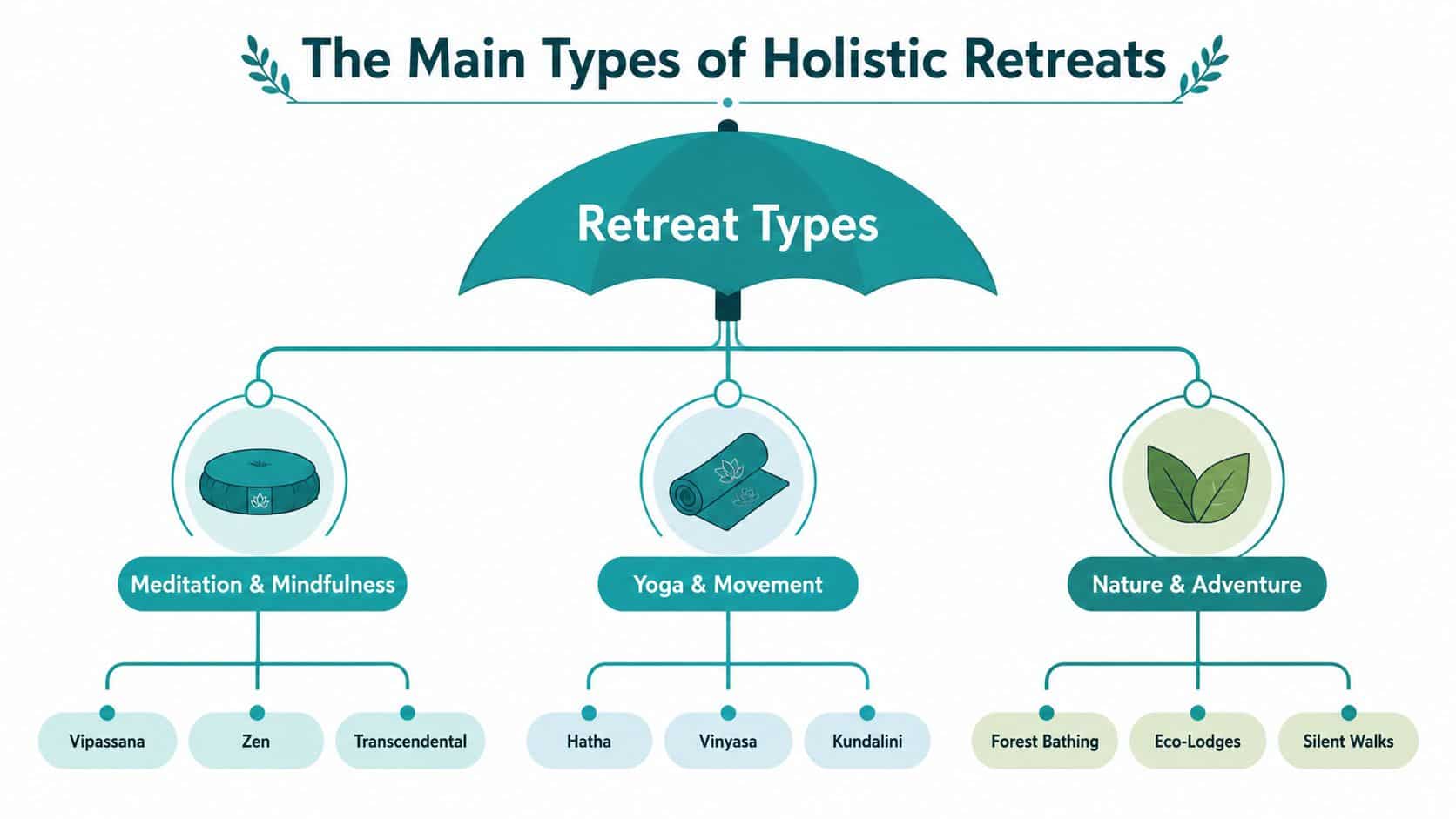
The category is broad, so it helps to sort programs by what they do during the day. Some retreats are quiet and inward. Some are movement-heavy and physical. Others are built around plant medicine, deep nature immersion, or more medically supervised wellness support. The right fit depends less on the scenery and more on the participant’s goal, temperament, and health context.
Meditation And Mindfulness Retreats
These retreats usually center on silence, seated practice, walking meditation, and simple routines. The daily rhythm tends to be repetitive on purpose, because repetition makes it easier to observe habits of attention. People often choose this format when they want mental clarity, fewer distractions, and a cleaner view of their own thought patterns.
Yoga And Movement-Based Retreats
Yoga retreats use physical practice as the organizing thread, then layer in breathwork, rest, and sometimes discussion. The body gets the main role here, so the day often includes several movement sessions and periods of recovery. This type tends to suit people who process stress physically, or who feel more settled when their hands, posture, and breath are actively involved.
Plant-Medicine And Ayahuasca Retreats
Some healing programs include plant-medicine work, including Ayahuasca, usually in highly structured ceremonial settings. These retreats are not casual wellness breaks, and the participant has to think carefully about screening, expectations, and support. They’re most relevant for people seeking deep psychological or spiritual work and who are prepared to treat safety as a central issue, not an afterthought.
Nature Immersion Retreats
Nature-based retreats use environment as part of the intervention. The schedule may include forest walks, unplugged time, outdoor reflection, or simple ecological living. These programs often appeal to people who feel over-scheduled, overstimulated, or disconnected from ordinary quiet.
Integrative Medical-Wellness Retreats
These are the most clinic-like programs in the category. They often combine assessments, nutrition planning, movement, and supervised care, then build the schedule around personalized goals. For readers comparing structure and support, the ketamine treatment guidance can help frame why screening and oversight matter whenever a retreat touches clinical territory.
A separate detail matters for readers deciding between spiritual and therapeutic formats. Some programs lean into transformation language, but the better ones make room for the boring parts too, meals, sleep, pacing, and recovery. That balance is what keeps a retreat from becoming just an intense weekend.
The most useful question is simple. What is the retreat organizing each day, and what kind of change is that structure designed to support?
Therapeutic, Spiritual, And Lifestyle Benefits
People often go in looking for one thing and come back with three. They may want lower stress, but discover they also want better habits. They may want spiritual clarity, but realize the true win was learning how to build a calmer routine at home. The strongest retreats work because they hold those outcomes together instead of chasing only one.
Therapeutic Gains
The therapeutic side is the easiest for beginners to understand. A good retreat removes common triggers, narrows the number of decisions a person has to make, and gives the nervous system a predictable schedule. That can make it easier to sleep, breathe, eat, and settle down, especially when the retreat includes enough structure to prevent the day from feeling chaotic.
Residential retreat research has also reported measurable short-term health effects. In a 1-week retreat study, participants showed substantial improvements across multiple health and well-being domains, and many of those gains were still present at 6 weeks (study). The important takeaway is that immersion can matter when the setting is structured well.
Spiritual And Emotional Shifts
Some guests are less interested in symptom relief and more interested in meaning. Retreats can create space for grief, clarity, forgiveness, or a renewed sense of purpose because ordinary obligations stop competing for attention. That kind of shift often appears when a person has enough quiet to notice what they’ve been avoiding.
A careful reader should also expect emotional intensity at times. A retreat can surface old material precisely because it gives the mind fewer escape routes. For a broader discussion of how people frame transformation in these settings, the Ayahuasca and transformation resource is a relevant reference point.
Lifestyle Changes That Stick
The lasting value of a retreat often shows up in small habits. People may start eating more deliberately, moving daily, journaling at night, or protecting quiet time after returning home. The point isn’t to become a different person overnight, it’s to leave with a rhythm that can survive ordinary life.
“Benefits tend to last when the retreat changes behavior, not just mood.”
That’s where the immersive format earns its keep. A retreat can help a person feel better in the moment, but the deeper value comes from building routines that still make sense after the trip ends.
For readers dealing with anxiety specifically, the holistic anxiety relief strategies resource is a useful companion because it shows how retreat-style calm has to translate into everyday coping, not just a temporary high.
Common Misconceptions Worth Leaving Behind
A lot of bad retreat decisions start with optimistic shortcuts. A beautiful location gets mistaken for quality. A long program gets mistaken for a good one. A natural-feeling practice gets mistaken for a safe one. Those assumptions are understandable, but they can lead people straight into expensive disappointment or, in some cases, harm.
Natural Does Not Automatically Mean Safe
The phrase natural is emotionally comforting, but it doesn’t answer the core questions. Who screened the participant? What training does the facilitator have? What happens if someone becomes overwhelmed, dehydrated, panicked, or medically unstable? Safety depends on process, not on the aesthetic of the program.
More Days Do Not Guarantee Better Results
Longer retreats can be useful, but duration alone doesn’t create depth. A poorly run longer stay can amplify fatigue, confusion, or boredom. A concise, well-structured program may do more good than a sprawling one that never lands on a clear rhythm.
Scenic Settings Can Hide Weak Facilitation
Ocean views, jungle cabins, and luxury interiors can distract from gaps in support. Some buyers assume that if the place looks polished, the people leading it must be equally prepared. That isn’t a reliable test. A retreat can be visually stunning and still be careless with screening, pacing, or follow-up.
One Experience Rarely Replaces Ongoing Work
A retreat can create insight, but insight has to be used. People sometimes expect a single week to solve patterns that were built over years. The better expectation is simpler, a retreat can be a catalyst, then integration work helps the change hold.
“Bottom line: the retreat setting matters, but the people running it matter more.”
That rule keeps the buyer focused on what predicts a safer, more useful experience. A good outcome usually comes from thoughtful design, not from atmosphere alone.
How To Vet A Reputable Retreat
This is the part that protects the budget and the body. A serious retreat should answer direct questions without getting defensive, and the buyer should assume that vague language is a warning sign until proven otherwise. The goal is to check whether the program is built for care, not just for enrollment.
Start With Screening And Contraindications
The first thing to look for is a real intake process. Reputable programs ask about medications, mental health history, physical conditions, recent crises, and anything else that could change the risk profile. If a retreat takes deposits before it asks those questions, that’s a problem.
Ask how emergencies are handled, who is on site, and what the protocol is if someone needs medical attention or wants to leave. A careful retreat will have a clear answer. A flimsy one will hide behind generalities like “we hold the space.”
Check Training, Lineage, And Accountability
Facilitator credentials matter, but so does fit. Some retreats are run by people with formal clinical backgrounds, others by teachers rooted in spiritual lineages, and some combine both. The buyer should look for clarity about who leads what, what they’re trained to do, and where their authority ends.
It also helps to ask whether post-retreat support is available. A program that anticipates questions after the experience is usually more serious than one that disappears the moment checkout ends. For structure and support references, the Rythmia-style retreat structure and support resource offers a useful lens on how organized follow-through can be presented.
Verify Legality And Reviews Carefully
Legal status depends on the location and on the participant’s home context, so that has to be checked separately. A retreat can be lawful in one country and still create trouble for a traveler once they return. The smartest buyers verify both the setting and the personal risk.
Independent reviews matter too, but hosted testimonials are only part of the picture. Look for descriptions that mention pacing, support, and how the staff handled problems, because those details are harder to fake than general praise. Ayahuasca.com can also function as one curated resource for retreat education and selection, but any listing should still be checked with direct questions before money changes hands.
A simple filter helps:
- Screening First: Confirm that the retreat asks about medications, diagnoses, and relevant medical history before accepting payment.
- Named Leadership: Identify who leads the sessions, what their role is, and whether they’re accountable for safety decisions.
- Emergency Clarity: Ask what happens if a participant panics, becomes unwell, or wants to stop.
- Independent Validation: Read reviews that mention process, not just atmosphere.
- Aftercare Plan: Check whether integration support exists before booking, not after returning home.
“If a retreat dodges basic questions, it’s already telling the buyer something important.”
A trustworthy program makes the safety conversation easier, not harder.
Understanding Real Retreat Costs
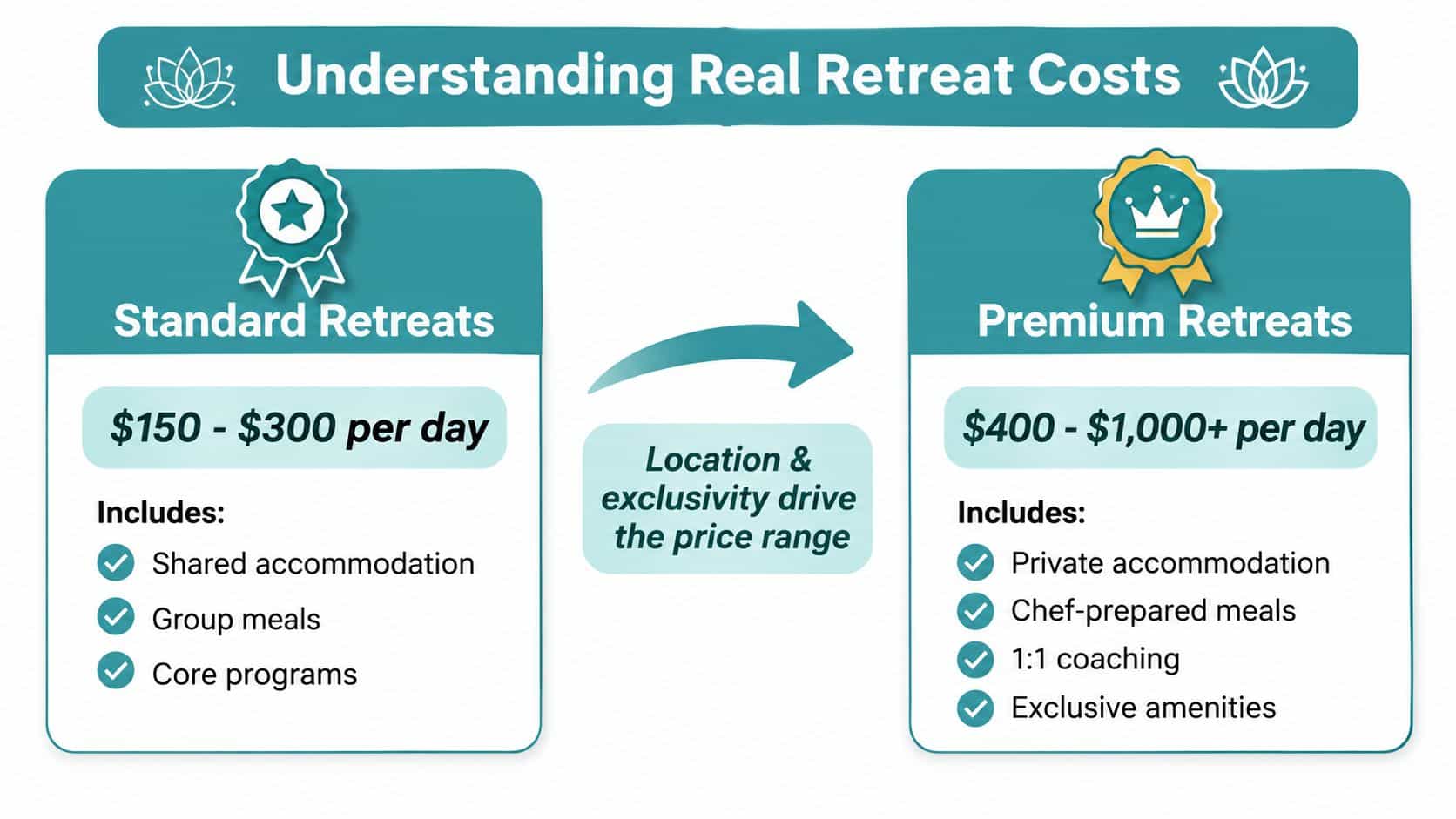
Price confusion drives a lot of bad comparisons. A low headline rate can hide missing transfers, shared lodging, or add-ons that show up later. A high rate can reflect better facilitation, but it can also just mean better rooms, better food, or a more exclusive location. Buyers need the full picture before deciding what a retreat is worth to them.
What The Market Data Suggests
Independent booking data suggests retreats commonly run USD $150 to $600 per day, with many programs lasting 3 to 7 days (retreat pricing data). More immersive retreats in places like Peru can reach USD $8,000 to $9,600 for a complete experience, and pricing can rise 20 to 30% for private ensuite rooms versus shared lodging (same source). Those figures make one thing clear, the final bill depends as much on privacy and setting as it does on the core program.
What Usually Changes The Bill
The headline rate is only part of the cost. Transfers, flights, private rooms, extra coaching, and follow-up sessions can all move the total higher. Some retreats bundle most essentials into one price, while others separate out everything beyond the base stay.
That’s why the buyer should ask for a written breakdown. If therapy, meals, lodging, and transport are separated, the retreat can be compared more accurately with another option that packages those items together. A bargain can become expensive once the missing pieces are added back in.
What Higher Prices Can Mean
A higher price sometimes buys better support, but not always. It may mean more privacy, quieter lodging, or a stronger guest experience rather than a better healing process. The smartest question isn’t whether the retreat is expensive, it’s what the extra money changes.
“Ask what is being paid for, care, comfort, or exclusivity.”
That distinction keeps the budget honest. A buyer who knows the line items can decide where to spend, where to share, and where not to compromise.
Preparation, In-Retreat Conduct, And Integration
Many first-timers treat a retreat like a self-contained event. That’s understandable, but it leaves out the part that makes the trip useful later. The experience works best when preparation, conduct, and integration are treated as one continuous process, not three disconnected moments.
Before Arrival
Preparation starts with honest disclosure. Any diet restrictions, medications, recent surgeries, mental health concerns, or past difficult experiences should be shared early, because the retreat team can’t support what it doesn’t know. A participant also needs to decide what the intention is, while leaving room for the actual experience to differ from the expectation.
Packing should support recovery, not performance. Comfortable clothing, a journal, and a realistic attitude matter more than overplanning every hour. The quieter the arrival, the easier it is to settle into the program’s rhythm.
During The Retreat
Once the retreat begins, the main job is to follow the schedule and avoid turning every sensation into a problem to solve. People who do well usually listen carefully, rest when asked, and keep expectations flexible. That doesn’t mean surrendering judgment, it means letting the structure do its work before deciding whether the experience is meaningful.
If something feels wrong, speaking up matters. A competent facilitator should welcome questions, adjust pacing when appropriate, and know when a participant needs additional care. Silence helps in some settings, but silence should never be required when safety is at stake.
After Return
Integration is where the retreat becomes useful in daily life. Journaling, peer reflection, follow-up sessions, and a slower re-entry into obligations can help the experience settle into memory and action. Without that period, the insights can fade under ordinary pressure.
A good post-retreat plan is specific. It includes sleep, food, and social boundaries for the first days back, plus a simple way to revisit the most important lessons. If a retreat offers integration support in advance, that’s usually a better sign than one that expects people to improvise later.
“Integration note: the insight matters, but the follow-through is where behavior changes.”
That’s the rhythm to protect. A retreat ends on a calendar, but its value depends on what gets carried home.
Choosing With Confidence And Your Next Steps
The simplest decision framework is also the most reliable. Clarify the intention, match the retreat type to that intention, vet the facilitators and safety process with real questions, understand the full budget, and reserve time for integration after the return. That sequence filters out most weak options before they become expensive mistakes.
If the retreat’s claims feel vague, ask for specifics. If the energy feels off during the stay, raise the concern early or leave if needed. If deeper support is still required afterward, look for integration work that helps translate the experience into ordinary life.
A good retreat should leave a person clearer about what helped and what didn’t. When the program, the budget, and the support all line up, the choice becomes much easier.
Disclaimer: The information provided on Ayahuasca.com is for educational purposes only and is not intended as medical advice, diagnosis, or treatment. Ayahuasca is a powerful traditional Amazonian medicine and may not be suitable for everyone. Always consult with a qualified healthcare professional before making decisions related to health, mental well-being, medications, or the use of Ayahuasca.