
Thinking about an Iowaska retreat in Costa Rica? You’re looking at a unique way to heal, surrounded by some of the most stunning and peaceful nature on the planet. These retreats bring together ancient Amazonian plant medicine ceremonies and modern, supportive settings, which is why Costa Rica has become a top spot for people searching for real personal growth.
Your Ayahuasca Journey in Costa Rica Begins Here
Deciding to work with Ayahuasca is a big deal. It’s a choice that demands thoughtful research and trustworthy guidance. Costa Rica, with its vibrant rainforests, reliable infrastructure, and an open-minded attitude toward wellness, has naturally become a global center for this kind of deep, internal work. The country’s tranquility is the perfect container for the kind of introspection Ayahuasca can bring.
Think of this guide as a conversation with someone who’s been there. Whether this is your first time even considering plant medicine or you’re an experienced journeyer looking for a new space to continue your work, we’ve got you covered.
We’ll walk you through everything that matters, from figuring out what actually happens in a ceremony to making sure the retreat you choose is safe and legitimate. Our goal is to demystify the process, replacing any nervousness with a sense of informed curiosity.
What This Guide Will Cover
We’ve laid this article out to give you a complete picture of what to expect from an Ayahuasca retreat in Costa Rica. We’ll dive into the most important topics so you feel completely prepared:
- Finding a Safe Retreat: We’ll cover the non-negotiables for choosing a center that puts your safety first. This includes everything from the facilitators’ background to the medical screening process.
- The Ceremony Experience: Get a real sense of what a ceremony is like: the flow, the role of the healers, and what you might experience from one moment to the next.
- Preparation and Integration: Learn why the work you do before you arrive and after you leave is just as important as the ceremonies themselves for creating lasting change.
- Logistics and Costs: We’ll get into the practical stuff: planning your travel, what to pack, and what you can expect to invest in a quality retreat.
“The real journey involves seeing with new eyes, not just traveling to new lands. An Ayahuasca experience is less of a destination and more of a new perspective on your inner world, a process that can lead to profound personal transformation.”
This guide is your roadmap. By the end, you’ll know exactly what makes up a well-run, supportive retreat, helping you choose a path that feels right for your own healing. For anyone curious about the deeper psychological shifts involved, our article on Ayahuasca and transformation is a great next step. We want to make this powerful topic feel approachable and clear, so you feel supported from start to finish.
What Happens During an Ayahuasca Ceremony
So, what’s it really like to be in an Ayahuasca ceremony? First, forget any idea of it being a casual or recreational event. It’s a profound, structured experience. The best way to think of it is as a guided expedition into your own psyche, with the shaman as your guide and the medicine as your map.
The ceremony itself takes place in a dedicated space, often a circular temple called a maloca. Everything is set up with intention. You’ll find mattresses arranged in a circle, each with blankets, pillows, and a “purge” bucket. This bucket is an essential tool, as physical release is a normal and even welcome part of the process. The whole atmosphere is quiet and reverent, creating a container of safety for the deep work ahead.
The Role of the Shaman and Facilitators
The shaman, or curandero, is the absolute anchor of the ceremony. Their job goes way beyond just pouring the brew. They are the energetic protectors of the space, a role they’ve trained for over years of disciplined work and dieting with sacred plants.
One of their most powerful tools is the icaros, or sacred songs. These chants are not just background music; they carry specific frequencies to guide the energy, cleanse the room, and steer the healing journey of each person. Alongside the shaman are facilitators. These are the people who provide hands-on support, whether it’s bringing you water, offering a comforting presence during a tough moment, or just ensuring you feel completely safe throughout the night.
The ceremony is the core of the experience, but it’s just one piece of a much larger journey.
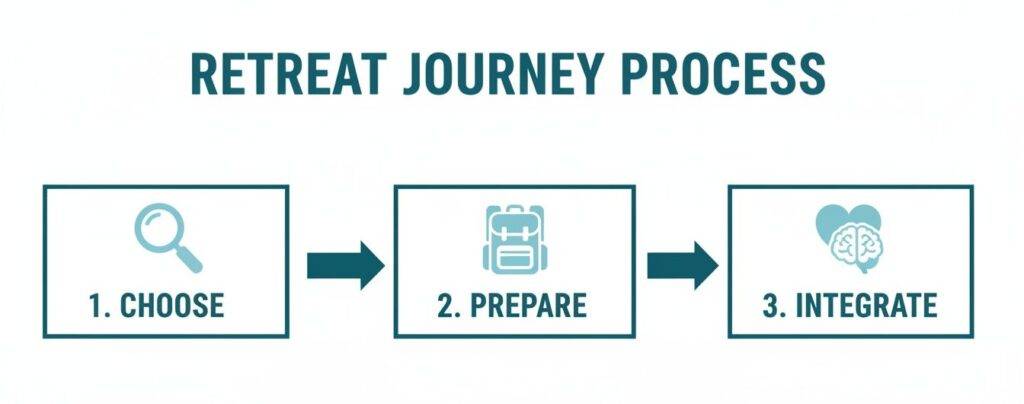
As you can see, a truly successful iowaska retreat costa rica is a complete cycle. It starts with choosing the right center, moves into deep preparation before you even arrive, and continues with dedicated integration long after you’ve gone home.
The Inner Journey with Ayahuasca
After you drink the medicine, the effects usually start to come on within 30 to 60 minutes. What happens next is unique to every single person, every single time. However, there are common threads. For many, it’s a powerful release of pent-up emotional and physical blockages. Old memories, deep-seated feelings, and even trauma can rise to the surface to finally be seen and processed.
The experience can be highly visual, with some people seeing everything from complex geometric patterns to vivid, movie-like scenes from their past. It can also be profoundly emotional, bringing waves of grief, forgiveness, bliss, or a feeling of universal love. This is the heart of the healing: facing these hidden parts of yourself from a place of support and safety.
“The ceremony is a mirror. Ayahuasca often shows you not what you want to see, but what you need to see for your own healing and growth. It illuminates the path by revealing the obstacles.”
It’s important to know that difficult moments are not only possible but are often the most healing parts of the journey. A well-run iowaska retreat costa rica will have skilled facilitators who know exactly how to support someone through a challenging vision or emotion. They’ll remind you to breathe, to surrender, and to trust the process.
As the night winds down, the medicine’s effects gently recede. You’re left in a state of quiet contemplation, often feeling a new sense of clarity, inner peace, and a deep connection to yourself and everything around you. From there, the real work of integrating these insights into your daily life begins.
How to Find a Safe and Reputable Ayahuasca Retreat
Picking the right Ayahuasca retreat in Costa Rica is hands down the most important decision you’ll make on this path. The center you choose sets the entire tone for your journey. It directly impacts your safety, how deep you can go, and what you ultimately take away from the experience. Think of it like choosing a surgeon for a critical operation; you wouldn’t just go with the one who has the flashiest website. You’d want the most experienced team, a sterile environment, and a solid plan for your recovery.
Finding a place you can trust means digging deeper than pretty pictures and glowing testimonials. You need a reliable way to check for the things that truly matter for your physical, mental, and spiritual well-being. It all comes down to asking the right questions and knowing what a good answer sounds like.
The Non-Negotiables of Safety and Support
Before anything else, let’s talk about safety. This is the absolute, unshakeable foundation of a responsible retreat. Any legitimate center will have clear, mandatory safety protocols in place long before you ever consider booking a flight.
The most critical piece of this puzzle is a thorough medical screening. This shouldn’t be a quick, one-page form. It needs to be detailed, asking about your entire physical and mental health history, including any medications you’re currently taking. Some drugs, especially SSRIs and other antidepressants, can have dangerous, even life-threatening, interactions with Ayahuasca. If a center skips this step or just glosses over it, that’s a massive red flag. Walk away.
Just as crucial is the team that will be holding space for you. You need to know:
- Who is serving the medicine? What is the lineage or tradition of the shamans or facilitators? How many years of experience do they have? Authentic healers often come from a well-established lineage, like the Shipibo tradition of Peru, and have dedicated decades to this work.
- What’s the participant-to-facilitator ratio? A low ratio is key. Look for centers that have no more than 5 to 7 participants per facilitator. This ensures that if you’re having a difficult time, there will be someone available to give you the individual support you need.
- Is there medical staff on-site? While emergencies are rare at well-run retreats, you want the peace of mind that comes with knowing a trained professional, like a doctor or nurse, is close by. It’s a crucial safety net you hope you never need.
Vetting the Retreat’s “Container”
You’ll often hear people talk about the “container” of a retreat. This isn’t just the physical place; it’s the entire energetic and emotional environment created by the staff, the setting, and the group itself. A strong, safe container is built on a bedrock of trust, professionalism, and genuine compassion.
This is where being trauma-informed becomes absolutely essential.
“A trauma-informed approach means the facilitators and staff understand that profound, often difficult, past experiences can surface during an Ayahuasca ceremony. They are trained to respond with skill and empathy, creating a space where you feel safe enough to face those emotions without being re-traumatized.”
You can usually feel this in the way they communicate with you from the very first email. It shows up in the structure of their program and the support systems they have in place. It’s all about creating an atmosphere of psychological safety, which is the only environment where true healing can really happen. A center that openly discusses its commitment to trauma-informed care is often a sign you’re in good hands.
Before we move on, let’s pull all these vetting points together. Use this checklist as you compare different retreats to make sure you’re covering all your bases.
Key Factors for Vetting an Ayahuasca Retreat
Use this checklist to compare and evaluate potential Ayahuasca retreats in Costa Rica to ensure they meet high standards for safety and support.
| Evaluation Criteria | What to Look For | Why It Matters |
|---|---|---|
| Medical Screening | A mandatory, in-depth health questionnaire reviewed by a medical professional. | Prevents dangerous drug interactions and ensures participants are physically and psychologically fit for the experience. |
| Facilitator Experience | Clear lineage, decades of practice, and verifiable training (e.g., Shipibo, Quechua). | Experienced healers know how to navigate the complexities of the medicine space and guide participants safely. |
| Staff-to-Guest Ratio | No more than 5-7 participants per facilitator or trained support staff member. | Guarantees individual attention and immediate support for anyone needing assistance during the ceremony. |
| On-Site Medical Support | A qualified doctor, nurse, or paramedic on-site or on-call 24/7. | Provides a critical safety net for the rare event of a physical or psychological emergency. |
| Trauma-Informed Care | Staff trained in trauma-informed practices; a stated commitment to psychological safety. | Creates a secure environment where past trauma can be processed without causing re-traumatization. |
| Integration Program | Structured post-retreat support, such as group calls, community forums, or coaching. | Helps translate ceremonial insights into lasting, positive life changes and provides support for challenges. |
| Transparency & Reviews | Clear communication, direct answers to questions, and a wealth of independent reviews. | Reputable centers have nothing to hide and are confident in the experiences of their past guests. |
This table isn’t just a list; it’s your framework for making a sound decision. By methodically checking each of these points, you can filter out the risky operators and focus on the centers truly dedicated to your well-being.
Beyond the Ceremony: The Importance of Integration
The powerful insights you receive in an Ayahuasca ceremony are really just the beginning of the work. The most important part happens when you go back to your normal life and figure out how to weave those lessons into your day-to-day existence. This is why post-retreat support, or integration, is a must-have, not just a nice-to-have.
Unfortunately, many retreats drop the ball here. They offer an incredible experience and then send you on your way, which can leave you feeling isolated and overwhelmed when you get home. The best centers know this and have built robust integration programs to support you. This could look like follow-up calls with your facilitators, access to an online community of fellow participants, or resources for finding a therapist who gets it.
For instance, some of the top-tier centers have made this a core part of their offering. A place like Soltara Healing Center, which is known for its deep immersion in Shipibo traditions, provides a full year of preparation and integration support. When you see that level of commitment, it shows they’re invested in your long-term healing, not just your week-long stay. As you vet your options, always ask: “What kind of support do you offer after I go home?” Their answer will tell you a whole lot about their true mission.
A Glimpse into a Typical Retreat Week
So, what does a week at an iowaska retreat in Costa Rica actually look like? It’s far more than just the ceremonies themselves. Think of the entire week as a carefully constructed container, designed to help you gently disconnect from your daily life, do the deep work, and then begin to make sense of it all.
The entire experience is paced intentionally. It’s a structured journey inward, not a vacation.
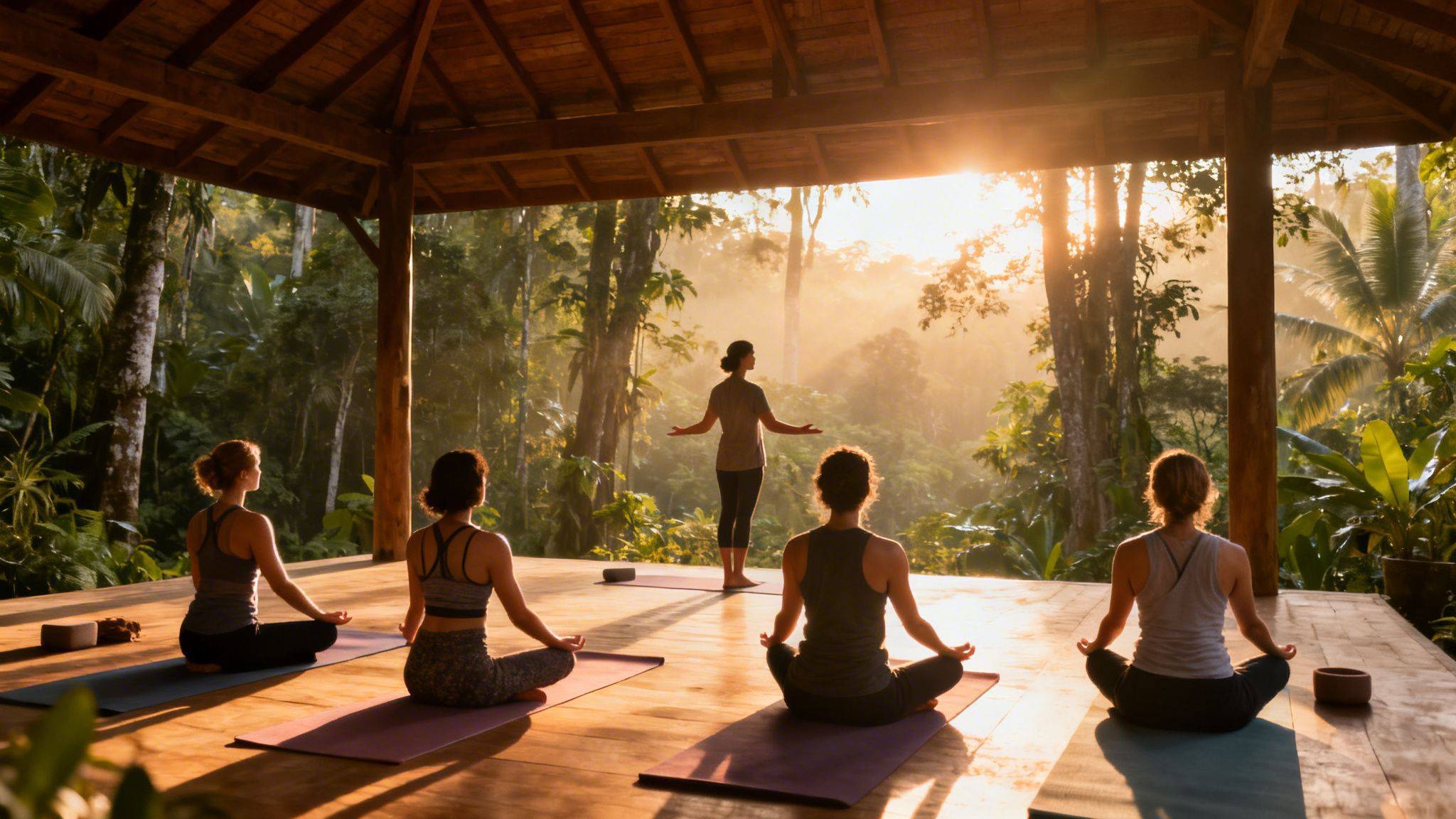
Your first day or two are all about easing in. You’ll get settled, meet the staff and the other people you’ll be sharing this experience with, and just start to feel the energy of the place. These initial days are deliberately slow-paced, giving you a chance to unplug and start turning your focus inward.
The Rhythm of a Retreat Day
Once things get going, the days settle into a gentle, supportive rhythm. Mornings are often dedicated to practices that help quiet the mind and connect you to your body.
- Mindful Movement: You might start the day with a gentle yoga class or a guided meditation. These practices are for more than relaxation; they help prepare your whole system for the intensity of the ceremonies.
- Nourishing Meals: The food is a crucial part of the process. You’ll follow a specific diet, the dieta, of clean, simple foods designed to work with the medicine, not against it. Sharing these meals together also builds a real sense of community.
- Group Sharing: Facilitated sharing circles are a cornerstone of the retreat. They create a safe, confidential space to talk about your intentions, fears, and whatever else is coming up for you. Hearing from others on the same path is incredibly powerful.
This daily structure is what holds you. Each element is there for a reason, creating a seamless flow from quiet reflection to the deep dive of the ceremony itself.
“The real work of an Ayahuasca retreat happens in the quiet moments between ceremonies. The yoga, the shared meals, the conversations, and the time spent in nature all create the foundation upon which profound insights can land and take root.”
The Ceremony Night Unfolded
Ceremony nights have their own distinct and sacred flow. Things usually get started in the late evening, often after a period of quiet personal time. You’ll gather in the ceremonial space (the maloca), find your spot, and the shaman or facilitator will open the circle with intentions and prayers.
After you drink the medicine, the journey begins. It’s guided by the sound of the shaman’s sacred songs, known as icaros, which help navigate the experience. The peak effects last for several hours, and facilitators are always present to offer quiet support if needed.
As the medicine gently wears off, the ceremony is formally closed. The next morning is always reserved for rest and integration. This almost always includes a group circle where you can begin to process and share your experience with the support of the group. This cycle of preparation, ceremony, and integration repeats, allowing you to go deeper with each round.
This well-thought-out approach is a big reason why Costa Rica has become such a trusted destination for this work. It draws thousands of seekers from all over the world every year. Centers like Rythmia Life Advancement Center, for instance, have welcomed a staggering 22,583 guests to date. As a medically licensed facility in Guanacaste, they’ve seen 97.84% of their guests self-report a ‘life-changing miracle,’ which speaks volumes about the impact of these structured programs. You can read more about Rythmia’s program and participant outcomes on their website.
Preparation and Integration: The Keys to Lasting Change
An Ayahuasca ceremony is more than a one-off event. The real, lasting benefits are built on two crucial bookends: the preparation you do before you even pack your bags, and the integration work you commit to after you return home.
Think of the ceremonies as the intense, powerful peak of a mountain climb. Your preparation is the training that gets you to the summit in the first place, and integration is the thoughtful, deliberate descent that ensures you bring all the wisdom and vistas back down with you into your daily life.
This groundwork is all about creating a receptive state for the medicine to do its best work. By cleaning up your body, quieting your mind, and settling your spirit, you’re essentially clearing away the static. This allows the insights to come through with more clarity and land more deeply. The effort you put in beforehand has a direct impact on the richness of your experience.
Setting the Stage: Intentional Preparation
Your prep work really should start weeks before your flight to your iowaska retreat costa rica. This is about more than just packing; it’s about cleansing your body through diet, clarifying your intentions, and calming your nervous system to create the best possible inner environment for the journey ahead.
The Physical ‘Dieta’ and Mental Clarity
The physical side of this is often called the ‘dieta.’ This is a traditional practice of simplifying your food intake to remove things that can clash with the medicine or create energetic “noise,” not a diet for weight loss. For at least two weeks beforehand, most centers will ask you to avoid:
- Pork and red meat
- Fermented foods and aged cheeses
- Spicy and heavily processed foods
- Alcohol, caffeine, and other stimulants
Beyond what you eat, setting a clear intention is absolutely critical. It’s about getting quiet and asking yourself, “What am I hoping to heal? Where do I need clarity?” This intention becomes your anchor, a guiding light that helps you navigate the experience and connect with the medicine’s intelligence.
A digital detox is also a game-changer. Even just stepping away from screens for a few days before you leave helps quiet the external chatter, making it easier to finally hear your own inner voice. To go deeper, check out our guide on preparing for your Ayahuasca journey.
Integration: Weaving the Experience Back into Your Life
The real measure of a retreat’s success isn’t what happens in ceremony, but how you integrate the lessons afterward. Insights can feel earth-shattering and crystal clear in the moment, but they can easily fade back into the noise of everyday life if you don’t actively work to weave them into your reality. Honestly, the real work begins when you get home.
“Integration is the art of translating visionary experiences into grounded, everyday actions. It’s the process that turns a powerful week into a lifetime of positive change.”
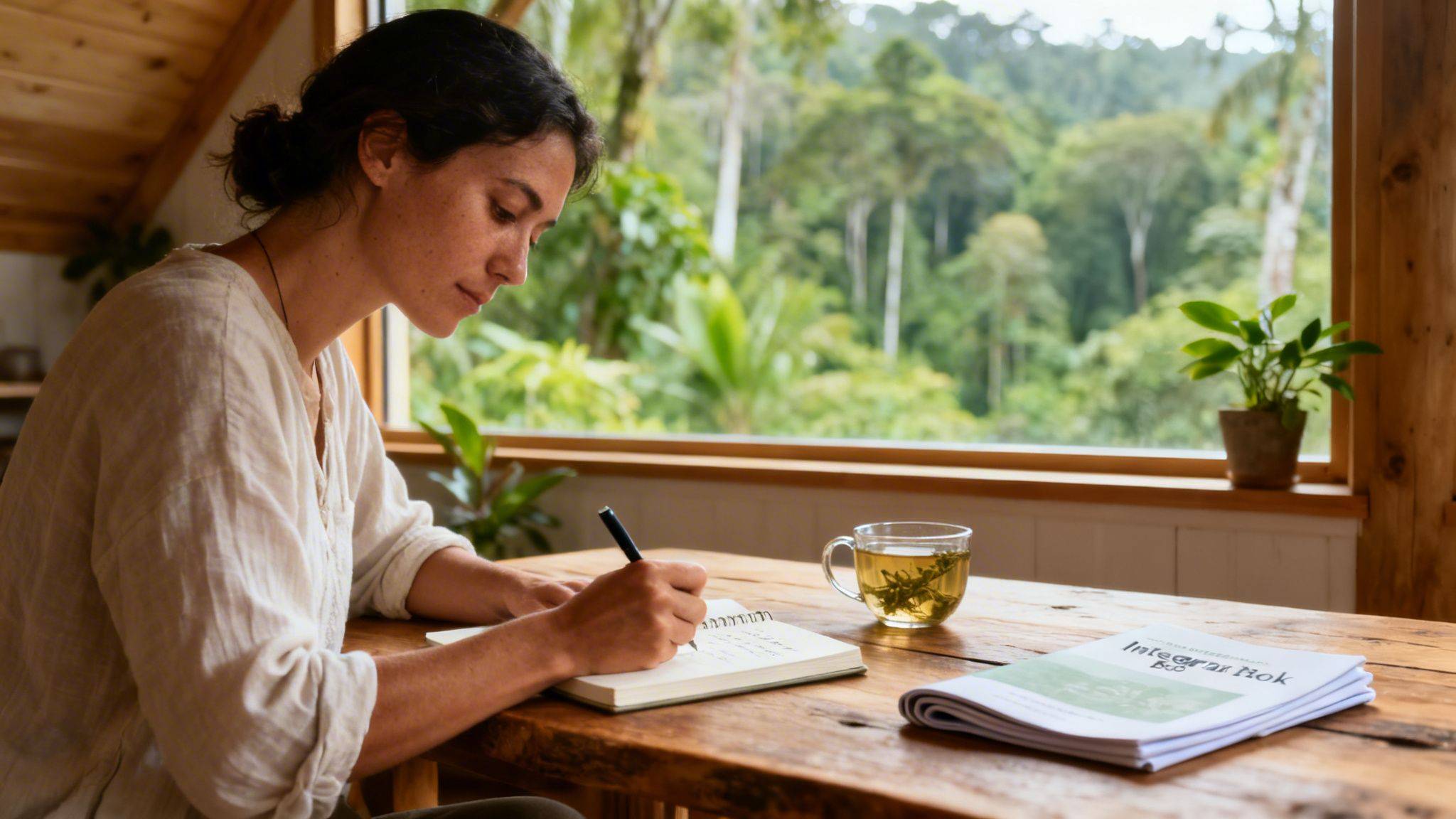
It’s completely normal to feel emotionally sensitive or wide open after a retreat. Grounding your insights requires some practical tools. Journaling is invaluable here; just writing down feelings, memories, and thoughts from your ceremonies can help you process everything and spot new patterns.
Community is another massive piece of the puzzle. It’s so important to connect with others who get it, who have walked a similar path. That’s why many of the best retreats now offer post-retreat integration calls or private online groups.
Finally, consider getting ongoing support from a therapist or coach who understands plant medicine work. They can help you make sense of your breakthroughs and turn them into tangible, lasting shifts in your relationships, career, and how you show up in the world every day.
Planning Your Trip: Costs, Logistics, and What to Pack
Getting the practical details squared away is a huge part of setting yourself up for a powerful and focused journey. When you handle the logistics ahead of time, you can show up to your Ayahuasca retreat in Costa Rica feeling relaxed and ready, not frazzled. Your budget, travel plans, and packing list are the three main things to sort out.
The investment for an Ayahuasca retreat here can swing pretty widely. You’ll find everything from rustic, budget-friendly centers to premium, all-inclusive spots with all the bells and whistles. The key is to understand exactly what you’re paying for: how many ceremonies, what kind of lodging, meals, and any extra offerings like yoga, breathwork, or bodywork. Getting clear on that will help you make a choice you feel good about.
Breaking Down the Costs
On the ground, you can expect to see prices range from a few hundred dollars for a basic week-long program to several thousand for a more luxurious stay. It’s common to hear past participants say the value they received went far beyond the money they spent, with many calling the experience life-changing.
For instance, some of the more well-known centers have tracked impressive results. Rythmia, a medically licensed facility, reports that 97.84% of its 22,583 guests have reported a life-changing miracle. That same center has also put $1 million toward scholarships for 156 people, which is a great step toward making this work more accessible. You can dig deeper into the costs and value of Costa Rican retreats on Retreat.guru.
Travel and Ground Transportation
Your first big decision is which airport to fly into. Costa Rica has two international airports, and each serves a different part of the country.
- Juan Santamaría International Airport (SJO): This is near the capital, San José. It’s usually the best bet if your retreat is in the Central Valley, on the Caribbean coast, or down in the southern Pacific region.
- Daniel Oduber Quirós International Airport (LIR): This airport is in Liberia. Fly here if your retreat is in the Guanacaste province or on the Nicoya Peninsula, famous for its beautiful beaches and dry tropical forests.
Any solid retreat center will give you clear instructions on which airport to use. They can almost always help you arrange a shuttle or give you good directions for public transport. Just make sure to lock these details in with your center well before you travel to make your arrival smooth and simple.
What to Pack for Your Journey
Packing for an Ayahuasca retreat is all about being comfortable, practical, and respectful of the space. You’re going on an inward journey, so less is definitely more.
“Your suitcase should support your process, not distract from it. Pack items that make you feel comfortable, grounded, and ready to focus inward without worrying about physical discomfort.”
Here’s a simple packing list to get you started:
- Comfortable, Loose Clothing: Think light layers. You’ll want loose-fitting pants, t-shirts, and a warm sweater or shawl for ceremonies, as your body temperature can fluctuate and it can get cool at night.
- White or Light-Colored Ceremony Attire: Many facilitators ask participants to wear white. It’s a symbol of purity, and on a practical level, it helps them see you more easily in the darkened ceremony space. Always check your retreat’s specific guidelines on this.
- Journal and Pen: An absolute must-have. You’ll want to capture the flood of insights, thoughts, and feelings that come up during your stay.
- Reusable Water Bottle: Hydration is so important throughout this process.
- Natural Toiletries: Go for biodegradable and unscented products. It’s a small way to respect the environment and the sensitivities of others in your group.
- Headlamp or Small Flashlight: A red-light setting is perfect for finding your way around the maloca (ceremony space) without disrupting the vibe for everyone else.
Don’t forget, you’ll be following a special dieta before and during your retreat. It’s really important to know which foods and medications can have dangerous interactions with Ayahuasca. For a comprehensive list, check out this guide on foods and meds to avoid with MAOIs.
Common Questions About Ayahuasca Retreats in Costa Rica
As you get closer to choosing a retreat, it’s completely normal for a few last-minute questions to pop up. Getting straight answers can give you the clarity and confidence you need to take the next step. Let’s tackle some of the most common things people ask when considering an iowaska retreat costa rica.
Is Ayahuasca Legal in Costa Rica?
This is usually the first question on everyone’s mind. The short answer is that Ayahuasca sits in a legal gray area in Costa Rica. There are no specific laws that either ban or officially regulate its use, which has created a unique situation.
For decades, the medicine has been used here in traditional, spiritual, and wellness settings. Because of this long-standing cultural acceptance, reputable retreat centers operate openly and without any legal trouble. Costa Rica’s general vibe of Pura Vida, combined with its focus on eco-tourism and spiritual wellness, makes it a surprisingly safe and welcoming place for this work.
How Many Ceremonies Should a First-Timer Do?
If this is your first time, you’ll find that most week-long retreats offer three or four Ayahuasca ceremonies. There’s a really good reason for this specific number. This schedule is intentional; it’s designed to allow for a gradual, deepening process.
Think of the first ceremony as a handshake, a way for you and the medicine to get acquainted. It often just scratches the surface. The ceremonies that follow are where you can really dive in, building on what came up the night before. This rhythm creates a powerful journey over the week, allowing for real healing and insight to unfold.
What if I Have a “Bad Trip”?
The fear of a “bad trip” is real, but it helps to look at it differently in a ceremonial setting. Often, the most challenging experiences are also the most profoundly healing.
“Ayahuasca doesn’t always show you what you want to see, but it almost always shows you what you need to see. That can mean facing old fears, painful memories, or difficult emotions head-on.”
This is where having a skilled facilitator is absolutely crucial. Their role is not to shield you from the hard stuff, but to guide you through it. They’re there to help you breathe, to stay centered, and to remind you that whatever is coming up is doing so to be released. In a properly held space, these tough journeys almost always lead to the biggest breakthroughs.
Disclaimer: The information provided on Ayahuasca.com is for educational purposes only and is not intended as medical advice, diagnosis, or treatment. Ayahuasca is a powerful traditional Amazonian medicine and may not be suitable for everyone. Always consult with a qualified healthcare professional before making decisions related to health, mental well-being, medications, or the use of Ayahuasca.