
Ecuador is home to some of the world’s most authentic and deeply rooted Ayahuasca retreats. For travelers searching for ayahuasca retreats ecuador, the country offers a rare blend of living indigenous tradition, legal recognition, and striking natural beauty. Here, ancient Amazonian traditions meet the serene, powerful energy of the Andean highlands, creating a setting that many people find ideal for profound healing and spiritual work.
If you feel called to work with this sacred plant medicine, choosing the right place is everything. This guide is here to help you navigate ayahuasca retreats ecuador with clarity and confidence.
Your Guide to Ayahuasca Retreats in Ecuador
Deciding to sit with Ayahuasca is a big step, and where you choose to do it matters immensely. An ayahuasca retreats ecuador experience is special. It’s not just about the incredible natural beauty, it’s about a deep, cultural respect for shamanism that you can feel in the land itself. For many, it’s a place where the line between the everyday world and the spiritual realm feels unusually thin.
You can find yourself in the dense, vibrant jungles of the Amazon basin or in the quiet, majestic presence of the Andes mountains. Each environment offers a completely different energy for your journey, and what’s right for one person might not be for another.
What This Guide Will Cover
Think of this as an insider’s look. We’re going to get past the basics and give you the real tools you need to find a safe, reputable, and truly impactful retreat. The goal is for you to feel completely informed and empowered in your choice about ayahuasca retreats ecuador.
Here’s what we’ll dig into:
- Regional Differences: We’ll break down the pros and cons of Amazonian versus Andean retreats.
- Safety and Vetting: You’ll get a clear framework for checking out centers, asking the right questions, and spotting potential red flags.
- Ceremonial Expectations: I’ll walk you through what really happens before, during, and after a ceremony, so there are no surprises.
- Preparation and Integration: We’ll cover practical steps for getting ready and, just as importantly, for weaving the lessons into your life afterward.
“It’s worth remembering that the growing interest in plant medicine has changed things on the ground. To get a better sense of this, you can read about the four transformations Ayahuasca tourism is producing and how it affects the traditions themselves.”
At the end of the day, I want you to have the knowledge and confidence to move forward. It doesn’t matter if this is your very first time thinking about Ayahuasca or if you’ve sat in ceremony before, this guide will help you find a meaningful path in Ecuador.
Let’s start by looking at what makes this incredible country such a special place for this work.
Why Choose Ecuador for Your Ayahuasca Experience?
When you’re thinking about an Ayahuasca journey, the place you choose is just as important as the intention you set. While you have options in several countries, ayahuasca retreats ecuador stands out for its unique mix of authentic tradition, legal clarity, and stunningly diverse landscapes.
This isn’t a place where the medicine is simply tolerated; it’s deeply woven into the fabric of the country’s indigenous heritage.
Unlike some destinations where Ayahuasca sits in a legal gray area, Ecuador’s government officially recognizes its use in traditional contexts as a protected part of its cultural heritage. This creates a grounded, secure atmosphere for anyone participating. It means that established Ayahuasca retreats in Ecuador can operate with confidence, free to focus entirely on providing a safe and profound healing experience without looking over their shoulder.
This deep-seated reverence for the medicine is especially strong among indigenous groups like the Shuar, who have worked with Ayahuasca for countless generations. For them, it’s a sacred tool for healing the body and spirit, seeking guidance, and connecting with the unseen world. This unbroken lineage means many retreats are guided by shamans with a lifetime of experience, offering a direct line to the ancient roots of the practice found in Ecuador.
A Land of Contrasting Energies
One of the biggest draws of Ecuador is the choice of environments it offers. The setting where you drink Ayahuasca can have a huge impact on your journey, and Ecuador gives you two powerful and very different options to choose from. That variety is a defining feature of ayahuasca retreats in Ecuador.
Comparing Ayahuasca Retreat Locations in Ecuador
To help you decide, let’s break down the key differences between the Amazon and the Andean highlands. Think about what you’re looking for in your experience—is it a raw, traditional immersion, or a more gentle, contemplative journey?
| Location | Environment & Vibe | Experience Focus | Ideal For |
|---|---|---|---|
| The Amazon Basin | Raw, intense, vibrant. Rustic and deeply immersed in the jungle’s powerful energy. | Traditional shamanism, deep connection to the plant’s origins, and powerful purges. | Those seeking a rugged, authentic jungle immersion and aren’t afraid of a challenge. |
| The Andean Highlands | Serene, majestic, tranquil. Often more comfortable, with expansive mountain views. | Gentle healing, introspection, and clarity. Often blends Ayahuasca with other wellness practices like yoga. | Individuals wanting a supportive, peaceful container for their work, with more modern comforts. |
| The Pacific Coast | Grounding, expansive, cleansing. Coastal breezes and the rhythm of the ocean. | Rejuvenation, emotional release, and connecting with the elemental power of water. | People drawn to the ocean’s energy who want a unique setting that combines plant medicine with coastal nature. |
Ultimately, this choice is about more than just the view. It’s about the energetic container for your journey. The jungle’s raw intensity can bring up deep-seated issues for a powerful release, while the mountains’ tranquility might support a more gentle, heart-centered opening. This is why comparing ayahuasca retreats ecuador by setting is so important.
An Authentic and Accessible Destination
Ecuador’s reputation as a top-tier destination for Ayahuasca is growing, and for good reason. The country is home to over 89 specialized centers listed for 2026, offering everything from short, intimate ceremonies to longer stays in pristine nature reserves.
This incredible variety is built on the wisdom of over 70 Amazonian groups, including the Shuar, who have used Ayahuasca ritually for millennia. This makes Ecuador an authentic gateway to this ancient tradition and helps explain the rising interest in ayahuasca retreats.
The Shuar tradition, in particular, offers a powerful look into the medicine’s potential. To understand this connection on a deeper level, you can explore the relationship between Ayahuasca and mental health among the Shuar people and see how ancient knowledge informs modern healing.
When you choose Ecuador, you’re stepping into a land where the medicine is respected, the traditions are alive, and the natural world itself becomes part of your healing journey.
Vetting Your Retreat for Safety and Authenticity
Choosing an Ayahuasca retreat in Ecuador is a huge decision, and frankly, it’s one that demands a different level of research than your average vacation. As interest in ayahuasca retreats ecuador grows, the landscape is crowded. You’ve got everything from deeply experienced traditional healers to newer, less-proven operators. Your job is to cut through the noise and make sure the center you choose puts your physical and psychological well-being above all else.
Think of this vetting process as the first real step in your journey. It’s an act of self-care that builds the container for a profound and, most importantly, protected experience. The goal is simple: find a place where you feel so secure that you can let go and fully surrender to the medicine.
To get your bearings on where to even start looking, this chart breaks down the main settings for Ayahuasca work in Ecuador.
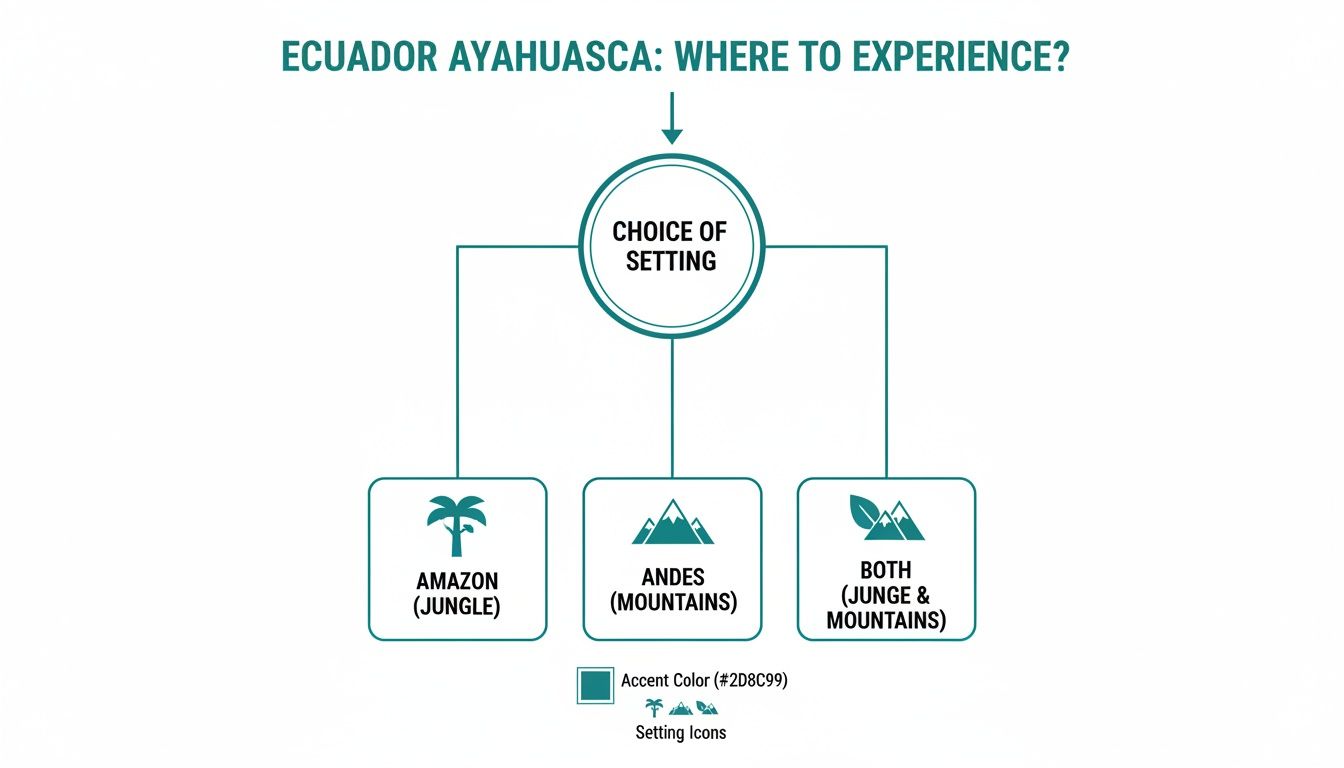
As you can see, your choice between the Amazon, the Andes, or a blend of both will shape the style of retreat you find—from rustic and deeply traditional jungle centers to more comfort-focused mountain lodges.
Essential Questions to Ask Any Retreat Center
Before you even think about putting down a deposit, you need to have a list of critical questions ready. How a center answers them—or if they answer them at all—will tell you everything you need to know about their integrity.
- What is your medical screening process? This is the absolute first thing you should ask. A safe retreat will require a detailed medical and psychological questionnaire. They need to know about heart conditions, mental health history (especially psychosis or bipolar disorder), and every single medication you’re on. This is non-negotiable.
- What is the shaman’s lineage and experience? Don’t be shy here. Ask how long the shaman has been serving medicine, who their teachers were, and what specific tradition they practice. True healers have a deep, lifelong relationship with this work, not a certificate from a weekend course.
- What are your emergency protocols? What happens if something goes wrong? A good center has a clear, rehearsed plan for both medical and psychological emergencies. Find out if they have medically trained staff on-site, how far the nearest hospital is, and if they have reliable transportation to get there.
- What is the ratio of facilitators to guests? A safe ceremony isn’t a packed concert. You need adequate support. Look for a ratio of at least one facilitator for every five to seven guests. This ensures everyone gets the attention and help they might need during a challenging moment.
These questions are your first line of defense. If a center gets defensive, is vague, or just can’t give you straight answers, consider it a major red flag and walk away.
Red Flags to Watch Out For
Knowing what to look for is only half the battle; knowing what to avoid is just as crucial. Some warning signs are subtle, but others scream that a center is prioritizing profit over people.
“This level of diligence isn’t an overreaction. Tragically, of 58 media-reported deaths linked to Ayahuasca from 1994-2022, 40% were connected to retreat centers. This statistic underscores why finding properly vetted providers is so critical. You can read the full research about Ayahuasca tourism and its risks to understand the complexities here.”
Be very wary of slick, aggressive marketing that makes grand promises of “guaranteed” healings or instant life-changing epiphanies. Ayahuasca is a powerful catalyst for healing, but it’s not a magic pill. The process is personal, often difficult, and completely unpredictable, even at respected ayahuasca retreats ecuador centers.
Another huge red flag is a center that doesn’t ask enough questions about you. If they’re ready to take your money without a thorough intake process, they are not doing their due diligence for your safety. This includes a serious discussion about contraindications. For example, Ayahuasca is an MAOI, and its interaction with certain antidepressants can be incredibly dangerous. A responsible center will make this crystal clear and provide a comprehensive list of what to avoid. You can learn more by reading our guide on foods and medications to avoid with MAOIs, along with this overview of ayahuasca medical guidelines and this peer reviewed article on acute adverse events and contraindications.
Finally, listen to your gut. If the communication feels off, if the staff seems unprofessional, or if something just doesn’t sit right with you, trust that feeling. The right center will feel aligned and trustworthy from the very first email when researching ayahuasca retreats ecuador.
What to Expect During Your Ayahuasca Retreat
It’s completely normal to feel a mix of excitement and apprehension before your first Ayahuasca ceremony. Knowing what a retreat actually looks like day-to-day can help calm those nerves and let you walk into the experience with a sense of grounded confidence. A reputable center provides a safe, structured container for this deep work, from the daily schedule to the ceremony itself.
When you first arrive at most Ayahuasca retreats in Ecuador, the first day is all about settling in. You’ll get a feel for the grounds, meet the facilitators, and connect with your fellow participants. This initial community-building is incredibly important; these are the people you’ll be sharing this profound journey with.
A Typical Retreat Schedule
While every retreat has its own unique flavor, most follow a rhythm designed to balance intense inner exploration with crucial periods of rest and reflection. You won’t be drinking Ayahuasca every day—the time you spend integrating the experience is just as vital as the ceremony.
A common weekly schedule often includes:
- Three Ayahuasca Ceremonies: These are almost always held at night. They’re typically spaced out with at least one recovery day in between to help you process everything.
- Integration Circles: The morning after each ceremony, the group comes together to talk. Sharing your experience and hearing from others is a powerful way to make sense of the visions and emotions that came up.
- Supportive Activities: To help you stay grounded, many centers offer practices like yoga, meditation, guided jungle walks, or traditional floral baths. These aren’t just add-ons; they help you connect with your body and the incredible nature of Ecuador.
This structure gives your mind and body the time they need to recover and absorb the work. The “off days” are perfect for journaling, quiet contemplation, or just resting in a hammock, letting the lessons sink in.
Inside the Ayahuasca Ceremony
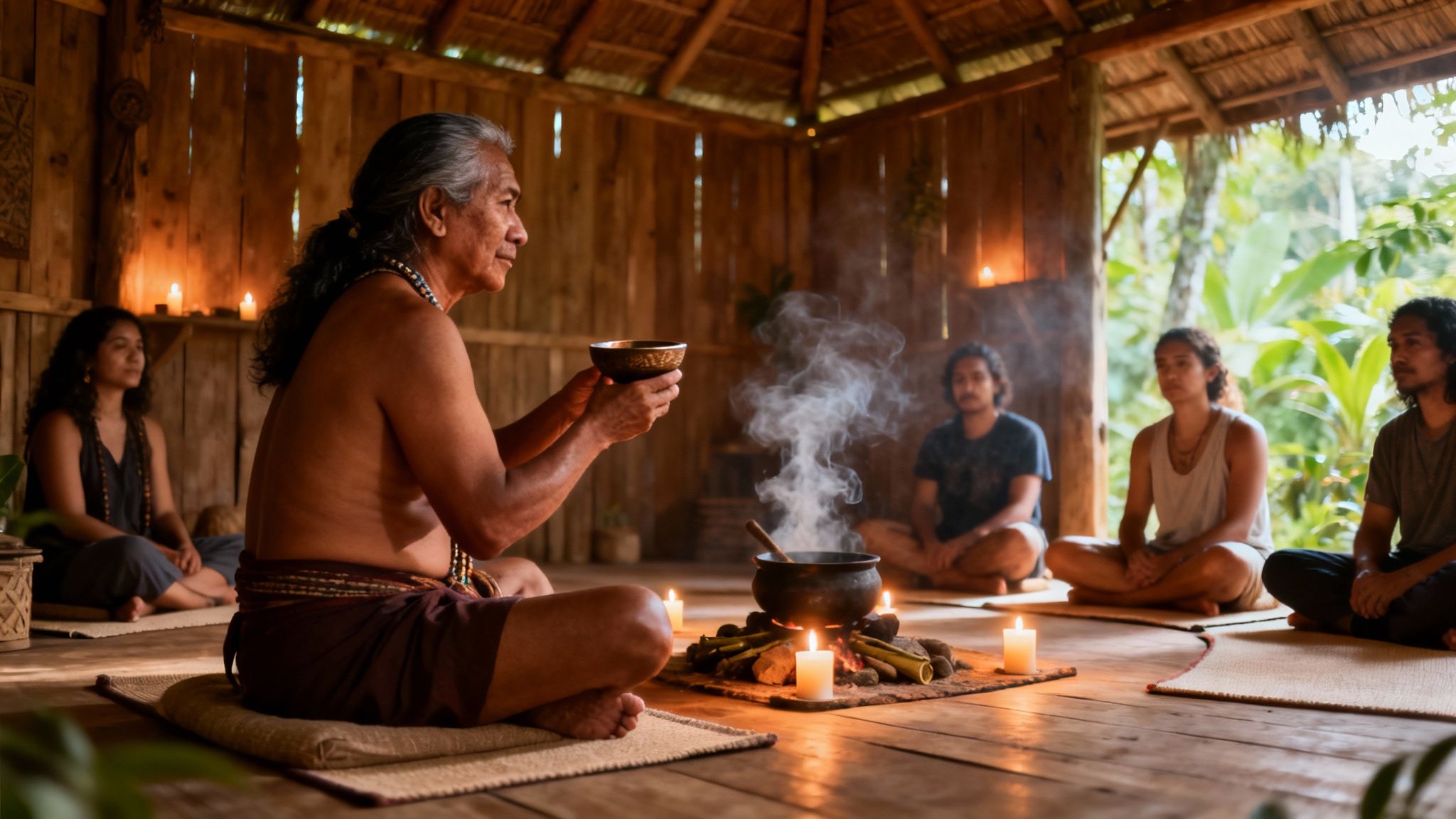
The ceremony is the very heart of the retreat. It takes place in a sacred space, often a traditional circular hut called a maloca, and is a highly structured event led by the shaman and their team of facilitators.
“The shaman, or curandero, isn’t just a guide—they are the energetic anchor for the entire group. Through sacred songs and an intimate connection with the medicine, they hold the space, navigate the spiritual landscape, and support each person’s healing journey.”
Things usually kick off with the shaman opening the ceremony, often using prayers and sacred tobacco (mapacho) to cleanse the space and the participants. One by one, you’ll be called up to drink a small cup of the Ayahuasca brew. Be prepared—the taste is notoriously strong and earthy.
After you drink, you’ll head back to your mat. The effects can begin anywhere from 20 minutes to over an hour later. As the medicine takes hold, the shaman starts to sing the icaros, or sacred songs. It’s best to think of these not as music, but as vibrational medicine. The icaros guide the ceremony’s energy, call on protective spirits, and can help you move through difficult emotions or energetic blocks.
A common—and essential—part of the experience is what’s known as “la purga,” or the purge. This physical release, usually through vomiting, is viewed as a deep cleansing of both physical toxins and stuck emotional baggage. It might sound unpleasant, but it’s a welcomed and healing part of the process. Facilitators are always on hand to offer quiet, respectful support if you need it.
The visionary journey itself is unique to each person. It can range from seeing intricate geometric patterns to reliving powerful memories or receiving profound spiritual clarity. The most important thing is to surrender to the experience and trust that you are being held in a safe, expertly-managed space.
Preparation and Integration: The Real Work Before and After Ceremony
A powerful Ayahuasca journey doesn’t just happen during the ceremony. The work—the real, lasting work—begins weeks before you even pack your bags for Ecuador and continues long after you’ve returned home. This whole process is framed by two critical stages: preparation and integration.
Think of it like this: preparation is clearing the ground and planting a seed. Integration is the patient, ongoing work of watering that seed, giving it sunlight, and helping it grow into something strong and beautiful in your daily life. One without the other just doesn’t work.
Laying the Groundwork: How to Prepare
Proper preparation is an act of respect—for the medicine, for the tradition, and most importantly, for yourself. It’s how you signal to your own body and mind that you’re taking this experience seriously. This phase usually starts two to four weeks before your retreat and covers three main areas.
The Dieta
First, there’s the dieta, the traditional food regimen. This isn’t just about avoiding a few foods; it’s about purifying your system to make you more sensitive and receptive to the medicine’s teachings. You’re essentially creating a clean slate for the experience to unfold.
Most centers will ask you to avoid:
- Pork and red meat
- Spicy foods, fried foods, and anything heavily processed
- Fermented products (aged cheese, soy sauce, etc.)
- Excessive salt, refined sugar, and oils
- Caffeine and, of course, alcohol
Mental and Emotional Clearing
Next comes mental and emotional readiness. This is about consciously reducing the noise and negativity you’re exposed to. Cut back on social media, skip the news for a bit, and avoid violent movies or draining conversations. Replace that time with things that ground you—walks in nature, meditation, or journaling. You’re trying to create a calm, stable inner space.
Setting Your Intention
Finally, it’s crucial to set your intention. This is more than just a vague wish. It’s a focused, heartfelt question you bring to the medicine. A good intention acts as a compass, helping to guide your journey toward a specific area of healing, growth, or clarity you’re seeking.
The Art of Integration: Bringing the Lessons Home
Coming home from an Ayahuasca retreat in Ecuador can be a strange experience. One minute you’re deep in the Amazon having profound cosmic revelations, and the next you’re back in traffic or sitting through a work meeting. This is where integration becomes the most important work you’ll do.
“Integration is the bridge between the visionary world of the ceremony and the practical reality of your daily life. It’s the process of weaving what you learned into who you are. Without it, even the most earth-shattering insights can fade away like a half-remembered dream.”
It’s completely normal to face challenges here. You might feel disconnected from your old life, experience big emotional swings, or struggle to articulate your journey to people who haven’t been through it. That’s all part of the process.
Here are a few practices that can make all the difference:
- Journal Everything: Write it all down—the visions, the feelings, the confusing parts, the clear-as-day insights. This helps you process the experience and spot patterns as they emerge over the following weeks and months.
- Stay Embodied: Ayahuasca works through the body, so stay connected to it. Practices like meditation, yoga, tai chi, or simply taking quiet walks help ground the healing and keep you present.
- Find Your People: Connect with others who have experience with plant medicine. Sharing what you’re going through with people who “get it” is incredibly validating and provides a vital support system as you navigate your new perspective on life.
Integration isn’t a race to the finish line; it’s a slow, gentle unfolding. The true success of an Ayahuasca journey isn’t measured by how wild your visions were, but by the positive, lasting changes you integrate into the fabric of your life.
Planning Your Trip Logistics and Costs
Getting to your Ayahuasca retreat in Ecuador is an adventure in itself, but a little bit of planning makes all the difference. Sorting out the travel, costs, and what to pack ahead of time means you can arrive feeling grounded and ready, instead of frazzled. It lets you focus on the real reason you’re there: the inner work. For many travelers researching ayahuasca retreats ecuador, logistics are a major part of the decision.
For almost everyone flying in, the journey starts at one of two main airports. You’ll either land at Mariscal Sucre International Airport (UIO) near Quito, which is your best bet for retreats in the Andes, or José Joaquín de Olmedo International Airport (GYE) in Guayaquil, the hub for the coast and southern regions. Your final destination will dictate which airport makes the most sense when booking ayahuasca retreats ecuador. If your retreat is in the Amazon or other lowland areas, it is worth checking current CDC health recommendations for Ecuador, especially for vaccines, mosquito borne illness, and altitude considerations.
Breaking Down the Costs
So, what does an Ayahuasca retreat in Ecuador actually cost? The price tag can swing quite a bit, depending on the length of your stay, the creature comforts offered, and the included activities. Understanding what’s covered in the price helps you budget for the whole trip, including flights and any side travel you might do.
Most reputable centers offer all-inclusive packages. Here’s what you can generally expect to be included:
- Accommodations: Your place to sleep, which could be anything from a rustic hut in the jungle to a private room with all the modern amenities.
- Meals: All your food, which will be specially prepared to align with the traditional Ayahuasca dieta.
- Ceremonies: The cost covers the Ayahuasca ceremonies, which are guided by the shaman and their team of facilitators.
- Group Activities: This often includes things like integration circles, yoga, meditation, or guided walks in nature.
As for the numbers, you might find a basic, week-long retreat starting around $1,200. For a more high-end experience with private rooms and a wider range of wellness options, prices can climb to $3,500 or more.
Essential Packing and Transportation Tips
When it comes to packing, think practical and comfortable. Layers are your best friend. The Amazon gets steamy during the day but can get surprisingly cool after sundown. The Andes, on the other hand, are pretty much guaranteed to have chilly nights. For the ceremonies themselves, you’ll want loose, comfortable clothing, often in light colors.
“A few small things can be lifesavers. Don’t forget a good headlamp with extra batteries, a solid natural insect repellent, a reusable water bottle, and a journal and pen. You’ll be glad you have them.”
Figuring out how to get from the airport to a secluded retreat center is a crucial last step. Many centers will arrange an airport pickup for an extra fee or give you very specific directions for a trusted taxi service. If you’re headed deep into the Amazon, your trip might involve a bus and then a canoe. It’s absolutely essential to confirm all these travel details with the retreat staff well before you land. This ensures you get there safely and without any unnecessary stress.
Frequently Asked Questions About Ayahuasca in Ecuador
It’s completely normal to have a lot of questions when you’re thinking about a journey with Ayahuasca, especially in a foreign country. To help clear things up and put your mind at ease, here are some straight answers to the most common questions we hear about ayahuasca retreats ecuador has to offer.
Is Ayahuasca Legal for Tourists in Ecuador?
This is probably the number one question people ask, and the answer is nuanced. In Ecuador, Ayahuasca sits in a special legal gray area. It’s not a scheduled or controlled substance, and its use in traditional indigenous ceremonies is legally protected as a part of the country’s cultural heritage.
This means that as a tourist, you can legally and safely participate in ceremonies at a recognized retreat center. The key thing to remember, though, is that while drinking the medicine in a ceremonial context is fine, trying to take the brew out of the country is absolutely illegal. Ecuador opens its doors for this experience, but it expects you to respect the boundaries and engage with the medicine only within the safe container of a legitimate retreat.
What Medical Conditions Conflict with Ayahuasca?
Safety first, always. This is non-negotiable. Ayahuasca contains potent compounds called Monoamine Oxidase Inhibitors (MAOIs), which can have very dangerous, even fatal, interactions with certain medications and pre-existing health issues.
Generally, Ayahuasca is not for anyone with a personal or family history of psychosis, schizophrenia, or bipolar disorder. But the most critical contraindication involves antidepressants.
“Crucial Safety Warning: Combining Ayahuasca with SSRIs or SNRIs can trigger a life-threatening condition called serotonin syndrome. There is zero wiggle room on this.”
Any responsible retreat will have a very thorough medical screening process. They’ll insist you be completely off these medications for a substantial amount of time, typically 4-6 weeks, before you can safely sit in a ceremony. Be 100% honest and transparent on your medical forms—your life literally depends on it.
How Do I Choose Between Regions?
Ecuador offers two very different settings for retreats: the Amazon jungle and the Andean highlands. The right choice for you really boils down to what kind of experience you’re looking for.
- The Amazon: This is the birthplace of Ayahuasca. A retreat here will be raw, rustic, and deeply immersed in the potent energy of the jungle. It’s an unfiltered, traditional experience, often with fewer creature comforts but a powerful focus on the shamanic work itself.
- The Andes & Coast: Centers in the highlands (often near cities like Cuenca) or on the coast tend to offer a bit more comfort. They might blend Ayahuasca ceremonies with other healing practices like yoga, meditation, or San Pedro cactus ceremonies, providing a more well-rounded “wellness” container.
So, ask yourself what you truly want. Are you seeking deep, rustic authenticity? Head to the Amazon. Would you prefer a gentler introduction with more amenities and complementary practices? An Andean or coastal center might be a better fit.
Will I Be Safe During the Ceremony?
Holding a safe space during a ceremony is the absolute core duty of any retreat center worth its salt. When you choose a well-vetted center, you’re placing your trust in experienced shamans and facilitators who know how to manage the ceremonial space.
These guides are your lifeline. They’re trained to support you through challenging moments, help you navigate the visionary realms, and maintain a calm, grounded environment for everyone. A key sign of a safe operation is a proper facilitator-to-participant ratio; you should never feel like you’re lost in a crowd. This is exactly why doing your homework and choosing a center with a solid reputation is the single most important step you can take to protect your physical and psychological well-being.