
Your First Step Into The Ayahuasca Experience
If this powerful medicine is calling to you, your first question is probably, “What is this really going to be like?” While each person’s journey with Ayahuasca is unique, there are a few core elements that shape the experience for everyone: your preparation, the ceremony setting, and the support you have.
Imagine preparing for a trek through the jungle. You wouldn’t set off without a plan. You’d learn about what you need to bring, study the terrain, and most importantly, rely on your guide. The same principle applies here.
The journey doesn’t begin the moment you drink the brew—it starts weeks, sometimes even months, beforehand. This preparation phase is a significant act of respect for yourself and the medicine. It’s when you set the groundwork for a meaningful experience by adjusting your diet, clarifying your personal intentions, and being completely honest about your medical history.
“The aim here is to offer a compassionate and respectful overview. With the right guidance, setting, and intention, the Ayahuasca experience can be a powerful catalyst for profound healing and self-discovery.“
This guide will walk you through each phase, from the diligent preparation and the ceremony itself to the crucial integration that follows. Understanding these stages provides insight into the process, showing you how to navigate every step with awareness and support.
The Three Phases of an Ayahuasca Journey
To gain a better understanding of what to expect, it’s best to view the Ayahuasca experience not as a single event, but as a complete process with three distinct, interconnected phases. Each phase is essential for a safe, grounded, and impactful journey.
The table below outlines this progression, from preparation in advance to integrating the lessons into your everyday life.
| Phase | What It Involves | Primary Focus |
|---|---|---|
| 1. Preparation | Following a specific diet (dieta), setting a clear intention, and completing a thorough medical screening. | Cleansing the body and clarifying the mind. |
| 2. The Ceremony | Taking part in the ritual, drinking the brew, and navigating the deep inner experience that follows. | Surrendering to the process and being open to insights. |
| 3. Integration | Translating the visions and lessons from the ceremony into tangible, lasting changes in your everyday life. | Grounding the experience and fostering real growth. |
Seeing it this way—as a structured process—shifts the focus from a one-night event to a longer, more cohesive path of personal development. It highlights that what you do after the ceremony is just as important as what happens during it. When you fully commit to all three phases, you create the ideal conditions for healing and insight to truly take root in your life.
Preparing Your Mind, Body, and Spirit for The Ceremony
Embarking on an Ayahuasca journey involves more than just the initial sip; it requires preparation that may span weeks or even months in advance. Think of this as tilling the soil of your consciousness; the care you put in now creates fertile ground for the insights and healing you’re seeking.
This process goes beyond simply completing tasks. It represents a significant act of self-respect, demonstrating to yourself and the medicine that you’re genuinely committed to this journey. By purifying your body, focusing your mind, and opening your spirit, you actively engage in shaping the experience rather than being a passive observer.
The Mental and Spiritual Foundation
Your inner world is the landscape where this entire journey will unfold. Preparing this space begins with one essential element: your intention. This is your “why” for sitting with Ayahuasca, and it acts as a lighthouse—a guiding light you can return to when the waves of the experience feel overwhelming.
An intention does not have to be elaborate or poetic. It can be as simple and heartfelt as asking, “What is holding me back from true connection?” or expressing a clear desire such as, “I want to heal my relationship with myself.”
“To get into the right headspace, focus on two words: trust and surrender. Simple practices like meditation, journaling, or just spending quiet time in nature can help calm that over-analytical part of your brain. This builds a sense of openness to whatever the medicine may bring.“
This diagram helps visualize how this crucial preparation phase fits into the bigger picture of your Ayahuasca journey.
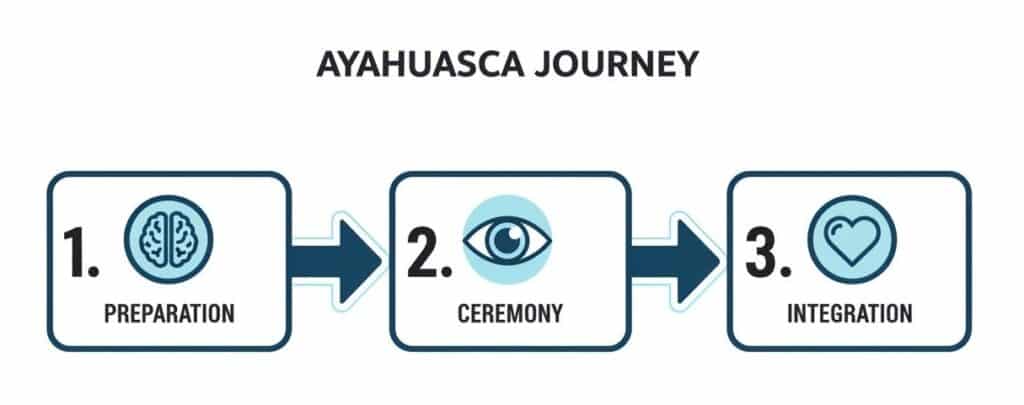
As you can see, preparation is the bedrock. It directly influences what happens in the ceremony and lays the groundwork for bringing the lessons back into your life afterward.
Physical Cleansing Through the Dieta
Next, let’s discuss the body. The traditional physical preparation centers on the ‘dieta,’ which is a specific diet intended to cleanse your system and enhance your sensitivity to the medicine. This extends beyond merely avoiding certain foods; it serves as a spiritual practice that purifies your physical vessel.
Although specific guidelines may differ slightly among retreat centers, the fundamental principle remains consistent: eliminate foods that are heavy, overly stimulating, or chemically complex. Such foods can generate distractions that disrupt the delicate process of Ayahuasca.
Generally, you’ll want to avoid these for at least one to two weeks before your ceremony:
Pork and red meat: They are considered energetically heavy and are more difficult to digest.
Salt, refined sugar, and spicy foods: These can easily overstimulate your nervous system.
Fermented foods: Examples such as aged cheeses, soy sauce, and kimchi often contain high levels of tyramine, which can have a dangerous interaction with the MAOI component in Ayahuasca.
Caffeine and alcohol: As potent psychoactive substances themselves, they can complicate your experience.
Sexual activity: Many traditions advise abstaining from any sexual activity in order to conserve your vital energy for the journey ahead.
By simplifying what you put into your body, you’re quieting the physical static, which allows the medicine’s signal to come through much more clearly.
Mandatory Medical Screening
The last step, which involves medical and psychological assessments, is crucial. It is an essential safety measure, and being completely transparent with your facilitator about your health history is vital for your well-being.
Ayahuasca contains a Monoamine Oxidase Inhibitor (MAOI), which can cause dangerous, sometimes even fatal, interactions with certain medications and substances. You must disclose every medication you are taking, particularly antidepressants like SSRIs, SNRIs, and other MAOIs. Any reputable facilitator will insist on a thorough screening to keep you safe.
This also applies to your mental health history. Be upfront about any personal or family history of conditions such as psychosis, schizophrenia, or bipolar disorder, as these are often serious contraindications. The purpose is to ensure your safety and provide a safe container for your experience.
You can learn more by exploring this comprehensive guide to preparing for your Ayahuasca journey, which delves deeper into these crucial steps. This entire process ensures that you enter the ceremony with the full support and awareness of the people holding space for you.
Inside the Ceremonial Circle: How the Experience Unfolds
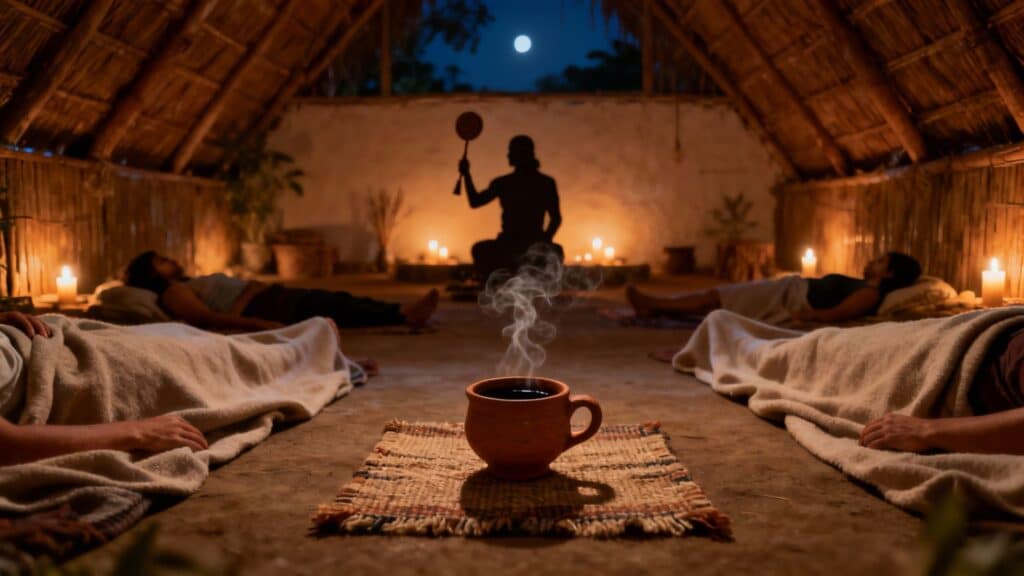
When you step into the ceremonial space, often a round hut called a maloca, the shift is immediate. It feels like you’ve entered another world entirely. The air is usually still, fragrant with incense or the earthy aroma of sacred tobacco. A few flickering candles often provide the only light, casting long shadows and creating an atmosphere of deep reverence. This is the sacred container for your journey, held and protected by the shaman or facilitator who acts as the anchor for the entire night.
You’ll find your spot—usually a small mat or mattress with a bucket and some tissues nearby. As everyone settles in, a profound quiet often descends, a shared understanding that you’re all on the brink of a deep, personal journey. The energy is one of respect and quiet anticipation.
The facilitator’s role here is absolutely central. They aren’t just serving the brew; they are the energetic guardians of the circle. Their experience, their presence, and their deep connection to the plant spirits are what create the safe, supportive environment this vulnerable work demands.
The Ritual of Drinking the Brew
When the moment arrives, the shaman begins the ritual. One by one, they will call each person forward to receive their cup. The brew itself is an earthy and potent liquid—often thick, dark, and known for its distinct and challenging taste which is bitter, strong, and quite unique.
The shaman carefully pours a portion into the cup, often guided by their intuition for what each person needs. They may also blow sacred tobacco smoke over the cup or whisper a prayer into it. As you receive the cup, you have a moment to center yourself, silently state your intention one last time, and then drink. The best approach is to drink it down quickly and decisively.
After everyone, including the shaman, has consumed the brew, the candles are usually extinguished. Now, all there is to do is wait, breathe, and trust the process.
The Onset and the Physical Purge
Within 20 to 60 minutes, you’ll likely start to feel the first effects. The initial sensations are often physical—a warmth spreading through your body, a buzzing energy, or a feeling of pleasant heaviness. As the medicine takes hold, you might begin to see faint geometric patterns or fractals with your eyes closed.
Soon after, what’s known as ‘la purga,’ or the purge, often begins. This is the physical cleansing Ayahuasca is famous for, and it most commonly happens through vomiting or diarrhea. It’s incredibly important to reframe this: you are not getting sick, you are getting well.
“The purge is a powerful and deeply respected part of the experience. It’s seen as a release of not just physical toxins but also stagnant emotional energy, old traumas, and negative thought patterns that are holding you back. It’s a cleansing on every level.”
While it can be intense, the purge is almost always followed by a feeling of incredible relief, clarity, and lightness, as if a huge weight has been lifted. An extensive survey of over 10,000 Ayahuasca drinkers found that while 69.9% reported physical effects like vomiting, only 2.3% needed any medical attention afterward. This indicates that the process is typically very manageable and safe within a proper ceremonial context. You can explore more findings from this extensive study on Ayahuasca experiences.
Navigating the Visionary Realms
As the journey deepens, you may enter visionary states. These are not hallucinations; they often feel more real than everyday reality, like stepping into the living library of your own mind and soul. What you see varies immensely from person to person and even from one ceremony to the next.
Your visionary journey might include:
Geometric Patterns: Intricate, kaleidoscopic visuals of light and color that dance and morph, often in time with the music.
Symbolic Imagery: Encounters with animals, spirits, or archetypal figures that feel deeply personal and carry important messages.
Biographical Review: Reliving significant memories from your life, but with a new perspective that brings profound understanding and resolution.
Cosmic Journeys: Experiences of flying through space, exploring other dimensions, or feeling a direct, tangible connection to the entire universe.
These visions are the language of the medicine, offering insights and lessons that go far beyond your analytical mind. The key is not trying to control or decipher them in the moment, but simply observing with curiosity and an open heart.
The Deep Emotional Currents
Along with the visions, Ayahuasca often opens the emotional floodgates. This is where some of the most profound healing can happen. You might experience a cathartic release of long-suppressed grief, crying for losses you never truly had a chance to mourn.
You might also be guided to face difficult truths about yourself—your shadow aspects, limiting beliefs, or unhealthy patterns. As challenging as this can be, these encounters are always in service of your healing, bringing what’s hidden in the dark into the light of your awareness.
The experience can also bring moments of overwhelming love, bliss, and a strong sense of connection to yourself, others, and all of life. Many people report feeling a divine presence or an unconditional love wash over them, leaving them with a renewed sense of purpose and belonging.
Throughout this unfolding, the shaman’s voice and their sacred songs, known as icaros, serve as your guide. These songs go beyond music; acting as vibrational medicine, weaving a container of sound that can calm a turbulent journey, deepen a vision, or offer comfort when you need it most. The icaros are the rudder that helps you navigate through the vast ocean of the Ayahuasca experience, always guiding you back toward healing. In this sacred space, surrender is the universal key.
Navigating Safety And Choosing A Reputable Retreat
As Ayahuasca gains more attention worldwide, the need for careful discernment is increasingly important. Choosing where you partake is one of the most important decision you’ll make, because the safety and integrity of the people holding the space will significantly shape your experience. Prioritizing your well-being is essential.
The first step involves being completely honest about your health. It’s important to acknowledge that Ayahuasca may not be suitable for everyone, and understanding any contraindications is a key aspect of preparing responsibly. Some pre-existing health conditions can present serious risks, which could potentially be severe or life-threatening.
This includes any personal or family history of psychiatric conditions like schizophrenia, psychosis, or bipolar disorder. Similarly, serious heart conditions or uncontrolled high blood pressure are serious concerns. It is imperative to disclose these factors during the screening process with any retreat you’re considering.
Critical Medication Interactions
Just as important is being aware of the dangerous interactions Ayahuasca can have with certain pharmaceutical medications. The brew contains a powerful Monoamine Oxidase Inhibitor (MAOI), which can trigger a hypertensive crisis or serotonin syndrome when mixed with specific drugs—especially common antidepressants like SSRIs and SNRIs.
Abruptly discontinuing these medications can pose significant risks, so it’s essential to consult with with your healthcare provider and create a tapering plan well in advance of any ceremony. A reputable facilitator will require a full disclosure of all medications and supplements you are taking. To better understand these important protocols, you can find additional information on foods and meds to avoid with MAOIs.
“While media headlines can spark fear, it’s helpful to ground ourselves in the data. A comprehensive 2023 report analyzing 58 deaths worldwide associated with Ayahuasca found something remarkable: not a single autopsy attributed the fatality to acute intoxication from the traditional brew itself. This strongly suggests that in a properly screened and supervised setting, the risks are far lower than public perception might lead you to believe. You can find more details about these important safety findings on psychedelichealth.co.uk.”
This distinction highlights the importance of thoroughly evaluating your retreat options. A professional and ethical center is equipped to mitigate potential risks by implementing thorough screening processes and providing skilled on-site care.
How To Vet A Retreat Center
Knowing what to look for helps you separate a well-held, ethical space from one that may be compromising standards. Think of it as an interview. After all, you’re entrusting people with your well-being while you’re in a profoundly vulnerable state.
There are a few key areas to focus your questions on:
Facilitator Experience and Lineage: How long have they been serving medicine? Who did they train with, and for how long? A clear, respected lineage often indicates deeply earned experience.
Thorough Screening Process: A detailed medical and psychological intake form is a huge green flag. If a center is willing to accept your money without asking important questions, that’s a serious red flag.
Facilitator-to-Participant Ratio: Having a smaller group with adequate support is ideal. For a ceremony with 15 people, having at least two or three experienced facilitators or dedicated assistants is advisable. This ensures that each participant receives the necessary attention, especially during more intense moments.
Medical Support: What are their emergency procedures? Is there a doctor or nurse available on-site or on call? How close is the nearest hospital? A well-prepared center has these details clearly outlined and can respond confidently.
Integration Support: The journey continues beyond the last song. Inquire about the support available after the retreat. Do they offer integration circles, individual consultations, or other resources to assist you in processing everything when you return home?
To help you organize your research, here is a checklist to guide your vetting process:
Retreat Vetting Checklist
| Area of Inquiry | What to Look For (Green Flags) | What to Avoid (Red Flags) |
|---|---|---|
| Screening Process | Mandatory, detailed medical & psychological intake forms. A personal call or interview. | Vague or non-existent screening. Accepting anyone who can pay. |
| Facilitator Experience | Clear lineage, years of dedicated training, humility, and experience with difficult situations. | Vague or self-proclaimed titles. Lack of long-term apprenticeship. Evasive answers about their background. |
| Group Size & Support | Small groups with a low participant-to-facilitator ratio (e.g., 5-to-1). | Large, unmanageable groups. One facilitator for 20+ people. |
| Safety Protocols | Clear emergency plan, medically trained staff available, and proximity to a hospital. | No clear plan for medical emergencies. Location is extremely remote with no access to care. |
| Integration Support | Structured post-retreat support (circles, calls, resources) is included or offered. | Integration is not mentioned or is treated as an afterthought. “You’re on your own” attitude. |
| Communication | Transparent, responsive, and willing to answer all questions openly and patiently. | High-pressure sales tactics. Evasive or defensive responses to questions. Unprofessional communication. |
Using a structured approach like this can help you feel confident and empowered in your decision.
Traditional vs. Neoshamanic Retreats
As you research, you’ll notice different styles, which can be broadly grouped into traditional indigenous-led ceremonies and more modern, “neoshamanic” retreats. Neither is inherently superior, but they offer very different containers.
Traditional ceremonies, often led by indigenous healers (like the Shipibo curanderos of Peru), are steeped in a specific cultural and cosmological worldview. The focus is typically on deep energetic cleansing and healing. These experiences can be more rustic, intense, and less focused on verbal processing.
Neoshamanic retreats, often run by Westerners, tend to blend traditional Amazonian practices with other modalities like yoga, meditation, or Western psychology. They might offer more comfortable accommodations and place a greater emphasis on psychological processing, which can be a helpful bridge for the Western mind.
Choosing the right option is a deeply personal decision. It’s based on what you’re seeking, the kind of environment you need to feel safe, and where you feel the most trust. By asking these important questions upfront, you empower yourself to find a setting that truly honors you and your journey.
Weaving The Wisdom Into Your Life Through Integration
The last icaro has faded, the candles are out, and the ceremony is officially over. But in reality, the real work is just getting started. An Ayahuasca journey doesn’t end when the sun comes up; it simply moves into a new, incredibly important phase. This is what we call integration—the conscious, deliberate process of taking the profound, often otherworldly insights from your ceremony and translating them into real, lasting change in your daily life.
Without this step, the insights you’ve gained can feel like a beautiful but fading dream. Integration is how you weave the threads of that experience into the fabric of who you are, ensuring the healing and clarity you found in the ceremony can truly take root and grow back home. It’s a journey that asks for patience, self-compassion, and gentle, steady effort.

Grounding Your Insights
For days, or even weeks, after a ceremony, you may feel incredibly open, sensitive, and raw. This is a sacred window of opportunity. Your usual mental walls and defenses are often lowered, creating the perfect conditions to build new, healthier patterns of thinking and being. The key is to start simple with grounding practices that bring you back into your body and into the present moment.
Imagine it as landing a plane. You have to gently guide the elevated insights from your Ayahuasca journey back down to earth. It’s not necessary to analyze every detail of your visions; instead, focus on nurturing the feeling and the state of being the medicine showed you was possible.
Here are a few practices you can being immediately:
Journaling: Write everything down on paper without any filter or judgment. Note fragmented visions, feelings, memorable phrases, even physical sensations. This acts as an anchor, helping you remember and process the experience long after the initial intensity has passed.
Time in Nature: Go for a quiet walk in a park, sit by a stream, or simply pay attention to the trees outside your window. Nature has an incredible ability to stabilize the nervous system and help you integrate deep energetic shifts.
Mindful Movement: Gentle activities like yoga, simple stretching, or a slow walk can help you reconnect with your body. This physical grounding is absolutely essential after such a profound journey of the mind and spirit.
Maintain a Clean Diet: Continuing the dieta for a few days or weeks after your ceremony supports your body as it continues its physical and energetic cleansing. Consuming simple, wholesome foods helps maintain the clarity and sensitivity you have cultivated.
The Power of Community and Support
Integration isn’t a path you have to walk alone. In fact, sharing what you experienced with people who “get it” can be one of the most powerful ways to make sense of everything. The visions and feelings from an Ayahuasca ceremony can be quite difficult to explain to friends or family who haven’t had a similar experience. Finding the right support system is crucial.
“The process of translating a non-ordinary state of consciousness into everyday life is a delicate one. Having a supportive container to hold your process can make the difference between a fleeting memory and lasting transformation.”
This is where finding your community becomes vital. Maybe it’s an integration circle offered by your retreat center, a trusted therapist who has experience with psychedelic work, or few of close, non-judgmental friends. Having a space to share your insights and be heard helps to make them feel real and solid. This practice, known as psychointegration, is a cornerstone of responsible plant medicine work. You can take a deeper look into the importance of psychointegration.
Ultimately, integration is an ongoing practice, rather than reaching a finish line. It’s a commitment to showing up for yourself with kindness as you slowly unpack the gifts from your ceremony. By dedicating time and intention to this final phase, you honor the medicine and, most importantly, you honor the deep healing journey you’ve so bravely undertaken.
Common Questions About the Ayahuasca Experience
As you near an upcoming ceremony, it’s entirely normal for both practical questions and deep-seated fears to surface. This final section addresses these common questions, providing you with clear, straightforward answers to help you feel more grounded and prepared for what lies ahead.
Interest in Ayahuasca has significantly increased in recent years. In fact, research indicates that over four million people around the world have sat in a ceremony. To illustrate the scale, in 2019 alone, an estimated 820,000 people took part in a ceremony. This practice has become a global phenomenon. You can review more of the data on the global consumption of Ayahuasca at ICEERS.org.
How Long Does an Ayahuasca Experience Typically Last?
After consuming the brew, the most intense effects are generally experienced for four to six hours, with the peak typically occurring around the two-hour mark.
But the ceremony itself is an all-night journey. It typically starts in the evening and concludes after sunrise, giving the medicine plenty of time and space to do its work.
Will I Lose Control of Myself?
This is probably one of the biggest fears people have, and it’s a valid one. The short answer is that a complete loss of control is incredibly rare, especially when you’re in a ceremony with a skilled facilitator.
You will enter an altered state of consciousness, but most people remain aware of who and where they are.
“A facilitator’s most important job is to hold a safe space for everyone. That feeling of ‘losing control’ usually comes from fighting the experience. This is where your preparation comes in—learning to surrender allows you to move with the medicine, not against it.”
What if I Have a “Bad Trip”?
In the world of Ayahuasca, the term “bad trip” is not commonly used. Instead, people refer to these moments as a “challenging journey” or a “difficult teaching.” It’s a subtle but important shift in perspective.
These intense experiences, though challenging, are often where the deepest healing happens. They bring up old wounds or heavy emotions so they can be acknowledged and released. A good facilitator is trained to guide you through these moments with music, gentle reminders to breathe, and energetic support, helping you remember that the intensity will pass and it has a purpose.
Is It Safe to Do an Ayahuasca Ceremony Alone?
Absolutely not. This is a strict rule within the community. Drinking Ayahuasca alone, particularly for newcomers, is strongly discouraged by all experienced practitioners.
The shaman or facilitator is more than a guide; they are your anchor, responsible for your physical and energetic safety. They manage the energy within the space, help people navigate through difficult moments, and ensure the well-being of the group as a whole. Consuming Ayahuasca without their support exposes you to significant psychological and physical risks. With their presence and guidance, participants can experience a safer journey that fosters personal growth and healing.
Disclaimer:The information provided on Ayahuasca.com is for educational purposes only and is not intended as medical advice, diagnosis, or treatment. Ayahuasca is a powerful traditional Amazonian medicine and may not be suitable for everyone. Always consult with a qualified healthcare professional before making decisions related to health, mental well-being, medications, or the use of Ayahuasca.