
Ketamine treatment offers a remarkably fast-acting path to relief for tough conditions like depression, PTSD, and anxiety, often working in hours instead of the weeks or months required by traditional antidepressants. At its core, it works by jumpstarting neuroplasticity, the brain’s incredible ability to forge new connections and find new ways of operating. For anyone exploring powerful tools for healing, it stands as a significant clinical option alongside spiritual medicines like Ayahuasca.
How Ketamine Treatment Reshapes the Brain for Healing
If you’ve been on the journey to mental wellness for a while, it can start to feel like you’re stuck walking the same worn-out trails in your mind. These old, negative thought patterns can be incredibly hard to escape. While traditional antidepressants can help, they often just shore up the existing paths. Ketamine offers a completely different approach.
Think of those stubborn thought patterns as deep, hard-packed grooves in the earth. Ketamine doesn’t just pave over them. Instead, it acts like a gentle, soaking rain. By working on a specific neurotransmitter system, it softens the entire landscape, making the soil fertile and ready for new growth. This creates the perfect conditions for new rivers and pathways, fresh ways of thinking and feeling, to emerge.
The Science of Neuroplasticity
What makes ketamine so effective is its powerful ability to stimulate neuroplasticity. This is simply the brain’s innate capacity to rewire itself by building new neural connections. It’s how we learn and adapt. When we’re struggling with our mental health, though, the brain can get stuck in rigid, negative loops.
Ketamine helps shatter these cycles. It works mainly by blocking a specific type of receptor in the brain (NMDA receptors), which in turn boosts levels of a neurotransmitter called glutamate. This sets off a chain reaction that encourages the growth of new synapses, the vital connections between our brain cells.
“This rapid burst of new connections allows for such a quick and often dramatic shift in mood and perspective. The brain is literally given a chance to build healthier, more resilient networks and break free from the patterns of depression or trauma.”
This unique mechanism is why interest in this therapy is exploding. The ketamine clinic market was valued at around USD 1.44 billion in 2025 and is projected to more than double to USD 3.03 billion by 2032. This isn’t just hype; it reflects ketamine’s proven ability to help people feel better in hours, filling a huge gap for those who haven’t found relief with other treatments. You can dig deeper into the ketamine clinic market’s rapid growth on coherentmarketinsights.com.
A New Perspective on Healing
This neurological “reset” creates an incredible window of opportunity for deep psychological work. It’s during this time of heightened brain flexibility that therapy and integration become so effective. The insights that surface during a ketamine session are not just fleeting thoughts; they can be anchored into daily life, helping to build new, positive habits and emotional responses that actually stick.
For those who are familiar with the profound shifts that plant medicines can provide, ketamine offers a distinct, clinically supported way to access similar states of openness and self-reflection. The experience is different, but the goal is the same: to create the internal space needed for genuine healing to take root. Many people find that both pathways can be powerful allies in supporting mental well-being and neurogenesis. You can learn more about how Ayahuasca supports neurogenesis and its effects on depression in our detailed article.
Comparing the Different Ketamine Therapy Methods
If you’re considering ketamine treatment, one of the first things you’ll discover is that the approach is not one-size-fits-all. The way ketamine is administered can dramatically shape the experience, influencing everything from its intensity and duration to the environment where you receive it. Understanding these nuances is crucial for having a meaningful conversation with your doctor and choosing the path that feels right for you.
Intravenous Infusions: The Gold Standard
When people talk about ketamine therapy in a clinical setting, they’re often referring to intravenous (IV) infusions. This method is widely considered the gold standard for a simple reason: precision and control.
During an IV session, a precisely measured dose of ketamine is delivered directly into your bloodstream over about 40 to 60 minutes. This gives it 100% bioavailability, meaning every bit of the medication is put to work. This direct route allows the clinical team to monitor you closely and even adjust the dose in real-time, ensuring the experience is both safe and therapeutically effective. The slow, steady drip creates a gradual onset and a smooth journey, which many find reassuring.
Intramuscular Injections: A Potent Alternative
Intramuscular (IM) injections offer a completely different dynamic. Instead of a slow infusion, the entire dose is delivered at once into a large muscle, usually the shoulder or thigh. The result? A much faster and more intense onset, often taking hold within just a few minutes.
While the bioavailability is a touch lower than IV at around 93%, it’s still incredibly effective. The experience can feel more abrupt and powerful, which some people prefer. Clinics may opt for IM administration due to its simplicity and shorter session time, but the choice between IV and IM really boils down to the specific goals of the treatment and what the patient is comfortable with.
This is a great visual for what’s happening on a neurological level. Ketamine works by encouraging the brain to form new connections, essentially helping it build healthier pathways around old, stuck patterns of thinking and feeling.
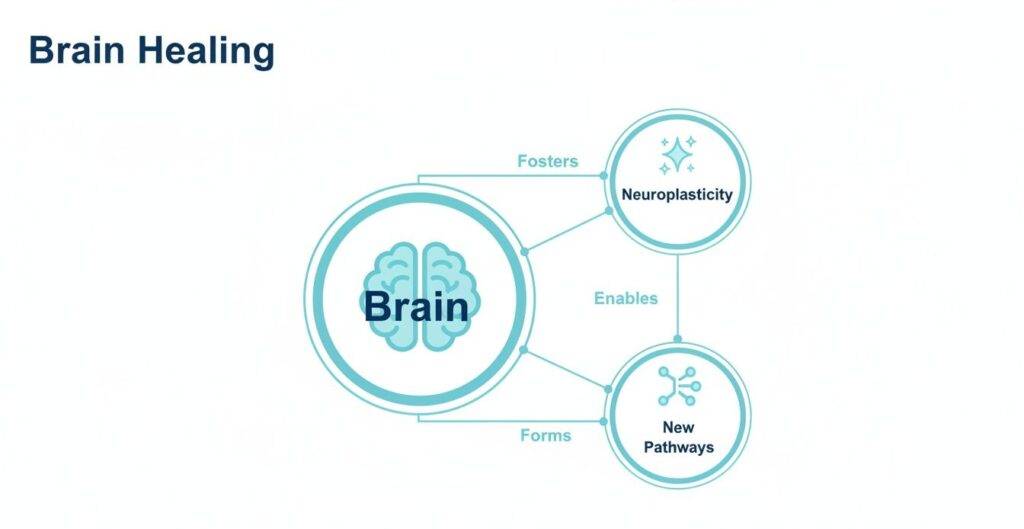
The ultimate goal here is to help the brain rewire itself for more resilience and well-being.
Oral and Intranasal Options
Beyond infusions and injections, there are less invasive methods that play a key role in ketamine therapy, often for maintaining progress between more intensive sessions.
- Esketamine (Spravato): This is a nasal spray containing esketamine, a specific molecule from the ketamine compound. It holds the distinction of being the only form of ketamine that is FDA-approved for treating both treatment-resistant depression and major depression with suicidal thoughts. Spravato is always administered in a certified clinic where you’ll be monitored for at least two hours afterward.
- Lozenges and Troches: Some practitioners prescribe ketamine in the form of lozenges or troches that dissolve under the tongue. This allows for at-home use, typically as part of a longer-term maintenance plan. It’s a convenient option, but it’s important to know that bioavailability drops significantly to around 25-30% because much of it is broken down by the digestive system.
To help you see the differences at a glance, here’s a quick comparison of the common clinical methods.
A Snapshot of Ketamine Treatment Methods
| Method | Administration | Bioavailability | Clinical Setting | Common Use Case |
|---|---|---|---|---|
| Intravenous (IV) | Slow infusion into a vein | 100% | Clinic or hospital | Initial treatment series for depression, PTSD, chronic pain |
| Intramuscular (IM) | Single injection into a muscle | ~93% | Clinic or hospital | Acute symptom relief; alternative to IV |
| Intranasal (Spravato) | Self-administered nasal spray | ~48% | Certified clinic (required) | FDA-approved for treatment-resistant depression |
| Sublingual (Lozenges) | Dissolved under the tongue | ~25-30% | At home or in-clinic | Maintenance therapy; lower-dose psychedelic psychotherapy |
Each of these methods has a clear purpose, from the deep, immersive work possible with IV and IM to the sustained support offered by at-home lozenges.
“The method of administration directly influences the therapeutic experience. IV and IM routes provide a more profound dissociative state that is conducive to deep psychotherapeutic work, while oral and nasal forms are often used to sustain the benefits between more intensive sessions.”
Learning about these different approaches is a lot like researching other powerful healing tools. For example, people interested in plant medicines quickly learn that each one offers a unique path. You can learn more about the comparisons between Ayahuasca and other powerful plant medicines to see how intention and substance align. In the end, the right ketamine method for you will depend on your specific needs, your clinician’s guidance, and your own comfort level.
Who Is an Ideal Candidate for Ketamine Treatment?
Ketamine isn’t the first thing a doctor will prescribe. Think of it as a powerful, specialized tool for those who feel like they’ve hit a wall with conventional treatments. It offers a new kind of hope, particularly for people who have already tried standard antidepressants and talk therapy but are still struggling to find relief.
The therapy is best suited for specific, often severe, mental health challenges where its ability to work quickly can be a game-changer.
Finding Relief From Treatment-Resistant Depression
The most common reason people turn to ketamine is for treatment-resistant depression (TRD). This is not just feeling down for a while; TRD is the clinical term for major depression that hasn’t improved after trying at least two different antidepressants at the right dose for the right amount of time. Living with TRD can feel like a lonely, exhausting cycle of failed treatments and fading hope.
This is where ketamine’s unique approach comes in. It works on completely different brain pathways than traditional SSRIs, giving it a way to succeed where other medications have stalled. It’s a lifeline for people who have felt stuck for years.
In 2019, the FDA officially approved a ketamine-based nasal spray called esketamine (Spravato) specifically for TRD. The results from clinical trials were striking: when combined with a standard oral antidepressant, esketamine brought rapid relief to about 70% of patients who hadn’t responded to other therapies. For those exploring healing through Ayahuasca, ketamine’s quick action shows how modern medicine is opening new doors for addressing deep-seated pain. You can read more on ketamine’s role in modern psychiatric care to see its growing impact.
Providing Rapid Help for Suicidal Ideation
One of ketamine’s most critical uses is for managing acute suicidal thoughts. When someone is in a crisis, waiting weeks for a traditional antidepressant to kick in simply is not an option. Ketamine can often dial down or even eliminate suicidal ideation within hours of a single dose.
This provides an immediate and life-saving window of safety. It gives a person the breathing room and mental clarity needed to engage with therapy and build long-term coping skills, stabilizing the crisis so the deeper work can begin.

Expanding Applications for Other Conditions
While depression is its main claim to fame, researchers are finding that ketamine can help with a whole spectrum of other challenging conditions. Its ability to disrupt rigid, negative thought patterns and encourage the brain to form new connections makes it a remarkably versatile tool.
Other conditions now being treated with ketamine include:
- Post-Traumatic Stress Disorder (PTSD): For someone haunted by traumatic memories, ketamine can help lower the emotional charge, making those memories less overwhelming and easier to process in therapy.
- Anxiety Disorders: Certain types of anxiety, like social anxiety and generalized anxiety disorder, have shown promising responses, especially when other treatments haven’t worked.
- Chronic Pain Conditions: Ketamine is also used to manage notoriously difficult-to-treat neuropathic pain, such as complex regional pain syndrome (CRPS).
“It’s crucial to understand that ketamine is not a magic bullet. It’s a powerful catalyst for change that works best as part of a complete treatment plan, including ongoing therapy and integration work. The goal is to use the brain’s flexible state after a session to build new, healthier habits and thought patterns that last.”
This integrated approach is very similar to the philosophy in the Ayahuasca community, where the ceremony is understood as just the start of a much deeper healing journey. Ketamine can open the door, but it’s the individual, with the guidance of a skilled therapist, who does the essential work of walking through it.
Understanding the Risks and Side Effects
Every powerful medicine comes with its own set of rules and potential effects, and ketamine is no different. Knowing what to expect, both the good and the challenging, is essential. When you walk into treatment with your eyes wide open, you’re not just giving informed consent; you’re setting yourself up for a safer, more effective experience.
Think of it like preparing for a deep-sea dive. You wouldn’t just jump in; you’d check your equipment, understand the currents, and have a guide. A professional ketamine clinic serves as that guide and support system, there to manage any challenges that come up so you can focus on the inner work.
Most of the side effects are temporary, popping up during or just after a session and fading quickly. They’re a normal part of the process, and your clinical team is watching over you the entire time.
What to Expect During and Right After a Session
During a ketamine session, your perception of the world, and yourself, can shift dramatically. These feelings are part of the medicine’s effect and typically resolve within an hour or two after your treatment is complete.
Here’s what many people experience:
- Dissociation: This is central to how ketamine works. You might feel like you’re in a dream, watching your thoughts from a distance, or gently floating away from your body. This separation is what often allows for a breakthrough, creating a safe space away from the usual grip of anxiety or depression.
- Blood Pressure and Heart Rate Spikes: Ketamine often causes a temporary bump in your heart rate and blood pressure. This is precisely why you’re hooked up to monitors in a clinical setting. Your team keeps a close eye on these vitals to make sure they stay well within a safe zone.
- Nausea or Dizziness: Some people feel a bit queasy or lightheaded. It’s a common, manageable side effect, and most clinics will offer you anti-nausea medication beforehand to prevent it.
- Feeling Groggy: It’s normal to feel a bit foggy or tired afterward. This is why you absolutely cannot drive yourself home. Plan to have a trusted friend or family member pick you up and take it easy for the rest of the day.
Your medical team is there to manage all of this. Their job is to keep you comfortable and physically safe, so you can fully surrender to the psychological and spiritual journey.
Who Isn’t a Good Candidate for Ketamine?
Ketamine can be an incredible tool, but it simply is not the right fit for everyone. That’s why the first and most critical step is a thorough medical and psychological screening. For people with certain health conditions, ketamine could pose serious risks.
Treatment is generally not recommended for individuals with:
- Uncontrolled High Blood Pressure: Because ketamine temporarily raises blood pressure, it’s not safe for those whose hypertension isn’t already well-managed with medication.
- A History of Psychosis: If you or a close family member has a history of schizophrenia or other psychotic disorders, ketamine could potentially trigger or worsen symptoms.
- Serious Heart Problems: The temporary stress on the cardiovascular system means ketamine is often not an option for people with a history of heart attack, stroke, aneurysms, or other severe heart conditions.
“I can’t stress this enough: a comprehensive medical evaluation is non-negotiable. A good clinic will dig deep into your health history, both physical and mental, to ensure ketamine is truly a safe and appropriate path for you.”
This rigorous commitment to safety is the bedrock of any reputable healing practice, whether it’s a modern ketamine clinic or a traditional Ayahuasca ceremony with a vetted facilitator. The goal is always the same: to open a door to healing while protecting your well-being above all else. When you understand the complete picture, you can make a powerful, informed choice for your own journey.
Ketamine Clinics vs. Ceremonial Healing
The path you take toward healing is just as important as the medicine itself. The environment where you have these profound experiences truly matters. With both clinical ketamine and traditional plant medicines like Ayahuasca gaining attention, it’s crucial to understand their very different worlds. While both can open doors to deep insights, the setting, intention, and entire framework of a ketamine clinic are worlds apart from a sacred medicine ceremony.
A clinical ketamine treatment is firmly planted in modern medicine and psychology. It happens in a controlled, often sterile environment built for one thing: safety. The focus is usually quite specific, targeting diagnosed conditions like severe depression or PTSD with the clear goal of reducing symptoms and getting your mental health back on track.
An Ayahuasca ceremony, on the other hand, is a spiritual practice with deep roots in indigenous traditions. It’s held in a sacred space, almost always with a group, and is led by a shaman or experienced facilitator. The intention is often much broader, touching on spiritual growth, connecting with the natural world, and healing wounds that feel ancestral or communal.
The Clinical Model: Precision and Safety
The non-negotiable feature of a ketamine clinic is medical supervision. Before you ever receive a dose, you go through a detailed screening to make sure the treatment is physically safe for you. During the entire session, trained medical staff are right there, tracking your vital signs and ready to handle any side effects that might pop up. This creates a secure container for your psychological journey.
The therapeutic approach is also highly structured. The experience is often bracketed by psychotherapy, a therapist helps you prepare for the session and, critically, helps you make sense of it all afterward. The whole point is to translate the insights from your ketamine journey into real, lasting changes in how you think, feel, and behave.
You could almost think of it as a guided surgical procedure for the mind. It’s precise, targeted, and focused on getting a specific, measurable result within a medical context.
The Ceremonial Path: Spirit and Community
The ceremonial use of a sacred plant medicine like Ayahuasca comes from a completely different worldview. The setting is not a clinic; it’s a temple or a traditional maloca, a space deliberately filled with spiritual intention. A facilitator guides the experience, but their role is to hold the energetic space, lead the group with traditional songs called icaros, and offer support through a spiritual lens.
Here, the intention is less about “fixing symptoms” and more about finding a holistic connection to yourself, to spirit, and to the community around you. Healing is viewed as a process of bringing things back into balance and harmony, not just inside one person, but with the entire web of life.
“The core difference really boils down to the guiding philosophy. Ketamine treatment works within a scientific, psychotherapeutic model that focuses on an individual’s brain and mind. Ayahuasca ceremonies are guided by a spiritual cosmology, where healing involves connecting with plant spirits, ancestors, and the collective energy of the group.”
Choosing is not about which one is “better.” It’s about figuring out which framework resonates with your personal beliefs, your current needs, and what you’re hoping to achieve.
Comparing the Core Elements
To make the distinction crystal clear, let’s break down the key elements side-by-side:
- Guidance: In a clinic, your guides are licensed medical professionals and therapists focused on your physical and psychological safety. In a ceremony, your guide is a shaman or facilitator who works with spiritual energies and long-held traditions.
- Setting: A ketamine clinic is a private, controlled medical space. An Ayahuasca ceremony is a communal, sacred space, often held in nature.
- Intention: Ketamine treatment is usually aimed at specific mental health diagnoses. Ayahuasca ceremonies often have broader intentions, like spiritual exploration, personal growth, or resolving deep energetic patterns.
- Framework: The clinical model is built on neuroscience and psychotherapy. The ceremonial model is built on indigenous wisdom, spiritual cosmology, and energetic healing.
Ultimately, both paths offer powerful gateways to healing. The medical model of ketamine provides a structured, safe, and scientifically grounded approach that can be a game-changer for mental health. The ceremonial path of Ayahuasca offers a spiritually rich, communal experience aimed at a much more holistic realignment. By understanding and respecting both, you can make an informed choice that truly honors your own unique journey.
The Critical Role of Integration After Treatment
A powerful ketamine session can feel like a massive breakthrough, but the experience itself is really just the starting line. The real work, the kind that creates deep, lasting change, happens in the days and weeks that follow. This crucial aftercare phase is known as integration, and it’s arguably the single most important factor in turning profound insights into a new reality.
Ketamine treatment triggers a remarkable state of heightened neuroplasticity. The simplest way to think about this is to picture your brain as freshly tilled soil, soft and ready for new seeds. This period is an incredible window of opportunity where your mind is exceptionally receptive to forming new, healthier thought patterns and behaviors. But without careful attention, that fertile ground can just as easily become overgrown with the same old weeds.
Integration is the process of consciously tending to that garden. It’s the bridge connecting the abstract wisdom you gained during a session to concrete actions in your everyday life.
What Does Effective Integration Look Like?
Good integration is not passive; it requires you to show up and participate. It’s about taking the raw material from your experience, the feelings, the images, the ideas, and intentionally weaving it into the fabric of who you are. The whole point is to build new habits and perspectives that support your well-being long after the immediate effects of the ketamine have faded. This idea is central not just to ketamine therapy, but also to the traditions surrounding plant medicines like Ayahuasca.
Here are a few actionable ways to support your integration process:
- Work with a Therapist: This is the cornerstone of successful integration. A trained therapist can help you make sense of the complex emotions, challenging memories, and profound insights that might have come up. They give you a safe space to process everything and help you create a practical game plan for implementing changes.
- Embrace Journaling: Right after a session, your thoughts can feel abstract and dream-like. Writing them down helps capture their essence before they fade away. Journaling is a fantastic tool for tracking your progress, noticing recurring themes, and clarifying your newfound understanding of yourself.
- Practice Mindfulness: Things like meditation, gentle yoga, or even just spending quiet time in nature can help you stay connected to the present moment. These practices ground you, cut down on overstimulation, and allow those new neural pathways you’re building to get stronger.
“Your subconscious often reveals exactly what you’re ready to see during a session. Integration is the conscious work of engaging with that material. When difficult things come up, it’s a positive sign that the medicine is working effectively to highlight what needs your attention.”
Making Supportive Lifestyle Changes
This period of heightened brain flexibility is the perfect time to introduce positive adjustments to your lifestyle. The small, healthy choices you make during this window can have an outsized impact on your long-term healing.
Consider focusing on a few key areas:
- Nourish Your Body: Prioritize whole foods, stay hydrated, and make sure you’re getting enough restful sleep. A well-cared-for body provides a solid foundation for a well-cared-for mind.
- Mindful Media Consumption: Be intentional about what you feed your mind during this neuroplastic window. Try to minimize exposure to stressful news, negative social media, and overly stimulating entertainment.
- Connect with Your Support System: Share what you’re going through with trusted friends or family who can offer encouragement without judgment. Feeling understood and supported is a vital part of the healing process.
Ultimately, integration is about honoring the journey you’ve undertaken. This essential practice is deeply understood within plant medicine communities, and you can learn more about psycho integration and its importance on our site. By actively engaging in this work, you ensure that your ketamine treatment becomes more than just a momentary experience; it becomes a genuine turning point in your life.
Answering Your Questions About Ketamine Treatment
It’s completely normal to have questions when you’re exploring a new path to healing. Let’s walk through some of the most common ones that come up for people considering ketamine treatment.
How Long Do the Effects of a Ketamine Treatment Last?
The remarkable thing about ketamine is how quickly it can work. Many people feel a significant lift in their mood within just a few hours of a single treatment, and this initial antidepressant effect can stick around for anywhere from a few days to two weeks.
This rapid but temporary benefit is why most clinical protocols start with a series of sessions, often called an induction or stabilization phase, to build on that initial progress. From there, you might move to a maintenance schedule, with sessions spaced further apart as needed. But the real key to making these changes last is the integration work you do between sessions. That’s where you solidify the new perspectives and make them part of your daily life.
Will My Insurance Cover Ketamine Treatment?
This is a big question, and the answer is… it depends. Coverage can be a bit of a mixed bag.
The one form of ketamine treatment that is often covered is the FDA-approved nasal spray, Spravato (esketamine), specifically for treatment-resistant depression.
“The more common IV infusions and IM injections, however, are typically considered “off-label.” This means that most people pay for them out-of-pocket. Some clinics are great about providing you with the necessary paperwork (a “superbill”) that you can submit to your insurance company for potential reimbursement, but it’s not a guarantee.”
It’s always best to talk directly with your insurance provider and the clinic to understand your options.
What Does a Ketamine Session Actually Feel Like?
While everyone’s journey is a little different, most people describe the experience as a kind of dream-like, “dissociative” state. It’s a feeling of being gently disconnected from your body and the usual chatter in your mind.
For some, it’s like a deep, powerful meditation. For others, it can feel more like a spiritual voyage where your sense of time and reality shifts. The most important thing to know is that you’re in a completely safe and medically supervised environment the entire time. Your comfort and well-being are the absolute priority, which allows you the freedom to surrender to the experience and let the healing process unfold.