
Some readers arrive here late at night, after another week of white-knuckling through work meetings, waking at 3 a.m., or feeling their chest tighten for reasons they can’t fully explain. They may have tried therapy, medication, breathwork, supplements, exercise, or all of the above. Some have found partial relief. Others have found enough relief to function, but not enough to feel free.
That search can become lonely. It can also become risky, because anxiety makes certainty feel urgent, and the internet is full of simple promises for a complex problem.
Plant medicine for anxiety deserves a steadier conversation than that. Some plant medicines are gentle daily supports. Others can open intense psychological material and require careful preparation, screening, and integration. Both can matter. Both can be misunderstood.
When Conventional Anxiety Treatments Are Not Enough
A familiar story goes like this. A person starts with the standard path. They speak with a therapist, then a doctor. They try one medication, then another. They cut caffeine, improve sleep, download a meditation app, and carry on. Friends say they seem better, yet inside they still feel braced for danger.
That gap matters. Anxiety doesn’t only show up as panic. It can look like overthinking, irritability, perfectionism, social avoidance, digestive tension, or the inability to rest even when life is objectively safe. When treatment helps only halfway, many people start looking beyond the familiar menu of options.
Plant medicine often enters the picture at that point. Not as a miracle. As a different framework.
Some people are drawn toward gentle herbal supports that can fit into ordinary life. Others become curious about deeper experiences involving ceremony, guided introspection, and major psychological shifts. Readers exploring psilocybin for anxiety options often discover that the core question isn’t “Does this work?” It’s “What kind of process is this, and what does it ask of the person entering it?”
Why This Search Deserves Care
The strongest reason to approach plant medicine carefully is that anxiety itself can distort decision-making. A desperate mind tends to grab at intensity. A frightened mind tends to avoid anything unfamiliar. Neither reaction is a reliable guide on its own.
“Practical Rule: The more severe the anxiety, the more important it becomes to choose support based on fit, safety, and context, not novelty.”
Plant medicine for anxiety can be meaningful when it is matched to the person, their history, their current medications, and the level of support around them. A cup of lemon balm tea and an Ayahuasca ceremony do not belong in the same mental bucket. They may both be “plant medicine,” but they operate at very different levels of intensity.
A More Useful Question
Instead of asking which plant is best, a better starting point is this:
- Current Stability: Is the person mostly functional but chronically tense, or actively destabilized?
- Depth Of Work: Are they seeking symptom support, deeper emotional processing, or spiritual inquiry?
- Risk Tolerance: Can they handle uncertainty, strong emotions, and a structured preparation period?
- Support System: Is there a therapist, physician, facilitator, or grounded community involved?
These questions slow the process down. That’s a good thing. The safest plant medicine journey usually starts with less urgency and more honesty.
The Landscape Of Plant Medicines For Anxiety
The simplest way to understand plant medicine for anxiety is to sort it into two broad categories. This mental map prevents a lot of confusion.
One category includes supportive herbal remedies. These are the plants people may use for ongoing nervous system support, sleep, stress, and general anxiety. The other category includes psychedelic plant medicines, which tend to involve powerful altered states, deeper emotional processing, and far greater demands around setting, screening, and aftercare.
A comprehensive review analyzing over 1,500 papers identified distinct categories of plant-based medicines. It found clinical support for chronic use of herbs like kava and ashwagandha for anxiety, while noting that psychotropic plants such as Ayahuasca (Banisteriopsis caapi) and Psilocybe mushrooms offer a different therapeutic application, highlighting the diverse ways plants can be used for mental health.
Supportive Herbal Remedies
These are often the entry point for people who want a lower-intensity approach. Think of them as daily nervous system allies, not dramatic reset buttons.
Herbal remedies may be used as teas, tinctures, capsules, or standardized extracts. In plain terms, they’re usually meant to support regulation over time or soften acute stress in a manageable way. A person might use them while continuing therapy, adjusting sleep habits, or building better coping tools.
This category often appeals to readers who want:
- Gentle Daily Support: Something that can fit into an ordinary routine
- Lower Psychological Intensity: Relief without an altered-state experience
- Practical Experimentation: A way to learn what the body responds to before making bigger decisions
Psychedelic Plant Medicines
These medicines belong to a different class of experience. They are less like taking a calming supplement and more like entering a carefully held psychological and spiritual process.
A useful analogy is the difference between physical therapy and surgery. Both may relate to healing. They differ in intensity, risk, preparation, and recovery. Psychedelic plant medicines can bring buried grief, fear, memory, or insight to the surface quickly. For some people, that can be life-altering. For others, especially without support, it can be destabilizing.
“Some paths are designed to gently steady the nervous system. Others are built to disrupt familiar patterns so a person can meet what lies underneath them.”
These medicines are often pursued by people who feel that their anxiety is tied to deeper material. This may include trauma, existential fear, rigid self-protection, or a persistent sense of disconnection that doesn’t shift through symptom management alone.
The Core Difference
The difference between these two categories isn’t just chemistry. It’s commitment.
Supportive herbs usually ask for consistency. Psychedelic medicines ask for preparation, surrender, and integration. One may help a person sleep better or feel less activated during a stressful week. The other may confront the underlying story that keeps their anxiety alive.
That’s why plant medicine for anxiety should be evaluated on a spectrum of intensity:
- Mild Support for day-to-day stress and mood balance
- Structured Herbal Work for sustained anxiety management
- Deep Transformational Work for people ready for significant psychological process
Choosing the right category matters more than chasing the strongest medicine. Many people don’t need the deepest intervention. Some do. Wisdom lies in matching the tool to the terrain.
Psychedelic Medicines A Deeper Dive
Psychedelic plant medicines are often discussed as if they all do the same thing. They don’t. Ayahuasca, psilocybin mushrooms, and iboga each carry distinct traditions, effects, and risk profiles. What they share is intensity. They are not casual remedies for a rough week.
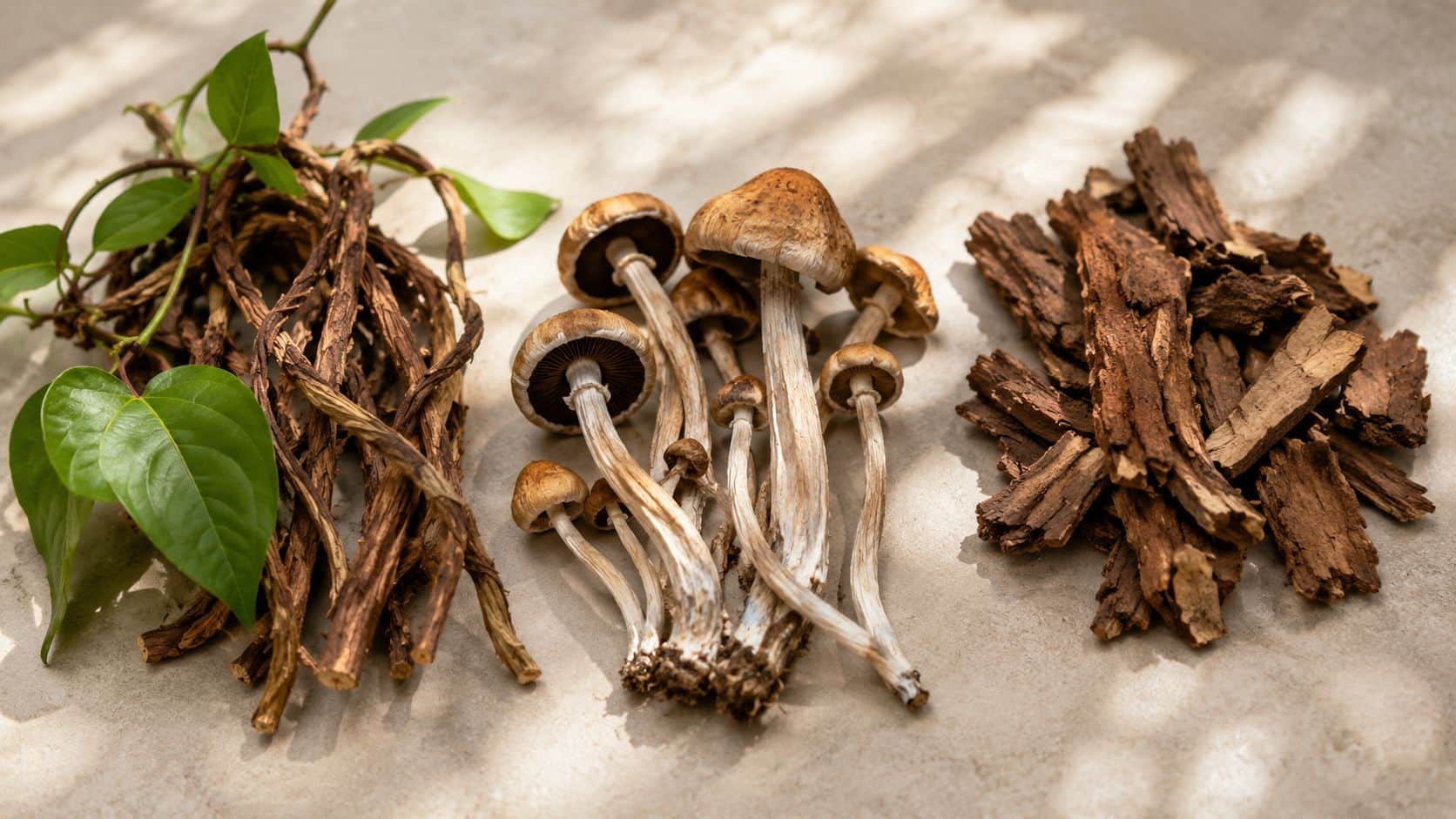
For anxiety, their potential often lies in how they interrupt rigid loops. People with chronic anxiety can become trapped in repetitive fear narratives, body vigilance, and defensive habits that feel permanent. Psychedelic experiences may temporarily loosen those patterns, allowing suppressed emotion, new insight, or a broader sense of perspective to emerge.
Ayahuasca
Ayahuasca is a traditional Amazonian brew with a strong ceremonial context. People are often drawn to it when anxiety feels connected to unresolved grief, spiritual disconnection, trauma, or a painfully overactive inner critic.
Its effects are rarely neat or purely soothing. Ayahuasca can be physically demanding and emotionally exposing. Some ceremonies involve fear, tears, nausea, vivid memories, and profound symbolic material. That intensity is exactly why context matters. The same experience that helps one person feel released may leave another overwhelmed if screening, facilitation, and integration are weak.
Readers who want a research-oriented overview can explore effects of Ayahuasca on psychometric measures of anxiety, panic-like and hopelessness in Santo Daime members.
Psilocybin Mushrooms
Psilocybin mushrooms often work through a different emotional texture. Many people describe them as amplifying what is already present, then shifting the vantage point from which that material is seen. Fear can become grief. Control can become tenderness. Avoidance can become clarity.
That doesn’t mean the experience is easy. Psilocybin can intensify anxiety in the moment, especially when a person fights the experience or enters with poor preparation. But under the right conditions, it may help people relate differently to their own thoughts. The anxious mind often treats every thought like an emergency alert. Psychedelic states can weaken that automatic identification, at least temporarily.
Iboga
Iboga is usually discussed less often in anxiety circles, and that caution makes sense. It is a powerful plant with a serious physiological profile and an intense introspective quality. Some people seek it because they want uncompromising self-confrontation. Others are drawn to its traditional role in rites of passage and deep personal reckoning.
For a person with anxiety, iboga may feel less like emotional release and more like a long internal audit. That can be valuable, but it also means this path requires especially careful medical and psychological screening. It is not a common first stop.
Set, Setting, And Skilled Guidance
The phrase set and setting gets repeated so often that it can sound abstract. In practice, it means something very concrete.
- Set is the person’s inner condition. Their expectations, mental health history, fears, intentions, and current life stress.
- Setting is the outer container. The people present, the physical environment, the screening process, the emergency planning, and the quality of support before and after the experience.
A person taking a strong psychedelic while secretly hoping to force anxiety to disappear is entering with a fragile set. A retreat with poor screening and little integration support is a poor setting. Both increase risk.
A closer look at ceremonial context and preparation can help make this real:
What These Medicines Actually Ask Of A Person
Psychedelic plant medicine for anxiety usually asks for more than courage during the ceremony itself. It asks for:
- Preparation: Honest screening, medication review, and realistic expectations
- Capacity To Surrender: Willingness to feel what has been avoided
- Aftercare: Time and support to digest what surfaces
- Discernment: Knowing when a profound experience is appropriate and when a gentler approach is wiser
“A powerful ceremony can open the door. It can’t walk the person through daily life afterward.”
That is why people who benefit most are often those who approach these medicines with respect, patience, and a real support structure, not with the hope of bypassing the hard work of healing.
Herbal And Adaptogenic Allies For Daily Support
Not everyone needs a life-altering journey to work with anxiety. Many people need steadier ground. That is where herbal and adaptogenic supports can be useful.
These plants are often better understood as daily companions than dramatic interventions. They may help take the edge off nervous system activation, support sleep, or make the body feel less locked in a stress response. For some readers, this is the right starting point. For others, it remains the long-term foundation even if deeper work happens later.
What The Current Evidence Supports
A clinical review of botanicals for psychiatric symptoms reports several findings relevant to anxiety. A landmark randomized double-blind controlled trial involving 270 participants with 135 in the kava-kava group and 135 in the placebo group initially showed no statistical difference in anxiety improvement, suggesting kava-kava was not superior to placebo for general anxiety. A subsequent randomized double-blind study by Sarris et al. then demonstrated a significant reduction in anxiety specifically in the kava-kava treatment group, with the effect most pronounced in individuals with moderate to severe generalized anxiety disorder.
The same review notes that a 2021 meta-analysis concluded that evidence from multiple randomized clinical trials supports the effectiveness of lemon balm (Melissa officinalis) supplements in improving anxiety and depression symptoms, particularly those of an acute nature. It also states that a daily dose of 500 mg of aqueous dry extract taken for 14 days showed efficacy in a trial of 71 volunteers. The review further reports that Silexan, a standardized oral lavender oil preparation, reduced the Hamilton Anxiety Scale score by more than 50% in 60% of treated patients, with adverse event rates comparable to the placebo group.
For readers comparing traditional use with modern data, this overview of evidence for ashwagandha is a useful starting resource.
Herbal Medicines For Anxiety At A Glance
| Herb | Primary Use Case | Level Of Evidence | Common Forms |
|---|---|---|---|
| Kava | Ongoing anxiety support, especially where tension feels physical and persistent | Mixed but clinically supported in some human trials, with response varying by severity | Capsules, tinctures, prepared beverages |
| Lemon Balm | Acute stress, anxious restlessness, mood support | Supported by meta-analysis and human trial evidence | Tea, capsules, aqueous dry extract |
| Lavender (Silexan) | General anxiety support for people seeking a standardized oral option | Strong clinical support among the herbs discussed here | Standardized oral lavender oil capsules |
| Ashwagandha | Stress-related anxiety and broader adaptogenic support | Clinical support noted in large review literature | Capsules, powders, tinctures |
How To Think About Choosing An Herb
Different herbs fit different patterns of anxiety. A person whose anxiety feels buzzy, situational, and stress-linked may look for a different ally than someone whose body feels chronically clenched and overstimulated.
A practical way to sort options:
- For Acute Unease: Lemon balm is often discussed when the goal is to soften immediate nervousness.
- For Standardized Support: Lavender in standardized oral form stands out because the preparation is consistent.
- For More Entrenched Tension: Kava is often considered when anxiety feels embodied and persistent.
- For Stress Load And Resilience: Ashwagandha is often grouped with adaptogens that support the stress response over time.
“Clinical Lens: Daily herbs tend to work best when they are paired with sleep hygiene, therapy, and realistic expectations. They are supports, not substitutes for comprehensive care.”
People often get confused here and assume “natural” means “mild.” That isn’t always true. Herbs can affect the nervous system, interact with medications, and vary by preparation. Standardization, sourcing, and professional guidance matter.
Navigating The Risks And Contraindications Safely
This is the part many readers want to skip. It is also the part that protects them.
Plant medicine for anxiety can be helpful. It can also be the wrong choice for the wrong person, in the wrong setting, at the wrong time. Anxiety itself can create urgency, and urgency often leads people to minimize warning signs. A safety-first mindset is not pessimistic. It is responsible.
Psychological Risks
Psychedelic medicines can bring intense fear, disorientation, traumatic memory, grief, or spiritual crisis to the surface. That may be therapeutic in a well-held context. It may also be destabilizing.
People with a history of severe mental health instability, dissociation, or periods of losing touch with reality need especially careful evaluation before considering high-intensity plant work. Even herbal approaches deserve caution when someone is medically or psychologically fragile.
Red flags that call for professional consultation include:
- Recent Destabilization: Sharp worsening of anxiety, panic, sleep, or functioning
- Unprocessed Trauma: A strong suspicion that overwhelming material may surface quickly
- Poor Support: No therapist, trusted guide, or grounded support system available
- Fantasy Of Rescue: Expecting one ceremony or one herb to erase a complex condition
Physical Risks And Interactions
Not all plant medicines carry the same physical burden. Some are relatively gentle. Others can affect blood pressure, heart rate, digestion, or medication metabolism. This is one reason “natural” should never be mistaken for universally safe.
The most serious warning in this space involves MAOI-containing plants and medications. Ayahuasca requires special attention because of interaction risk. A direct review of foods and meds to avoid with MAOIs is essential reading for anyone considering this path.
“This is not optional. Mixing MAOI-containing plants such as Ayahuasca with SSRI or SNRI antidepressants can be dangerous and requires expert medical guidance.”
Other safety issues can include cardiovascular strain, dehydration, vomiting, prolonged overstimulation, and unpredictable reactions when plants are combined with supplements, psychiatric medication, or recreational substances.
A Simple Self-Screen Before Going Further
Before pursuing any plant medicine, a careful reader should be able to answer these questions clearly:
- What exactly is being taken? Whole herb, standardized extract, or ceremonial brew
- What medications and supplements are currently in the body?
- Who has screened the medical and psychiatric history?
- Who will help if fear, confusion, or adverse reactions arise?
- What support exists after the experience or trial period?
If the answer to most of those questions is vague, the situation is not ready.
The Safety Standard That Matters
The right standard is not whether a medicine is traditional, trendy, legal in a certain place, or described as sacred. The right standard is whether the person, preparation, and container are appropriate.
Some readers will decide that the safest next step is a physician consult and a low-intensity herbal trial. Some will realize that psychedelic curiosity should wait. Both decisions can reflect wisdom.
Choosing Your Path Retreats Clinics And Practitioners
Once a person decides to explore plant medicine for anxiety, the next challenge is choosing the container. This choice often matters as much as the medicine itself.
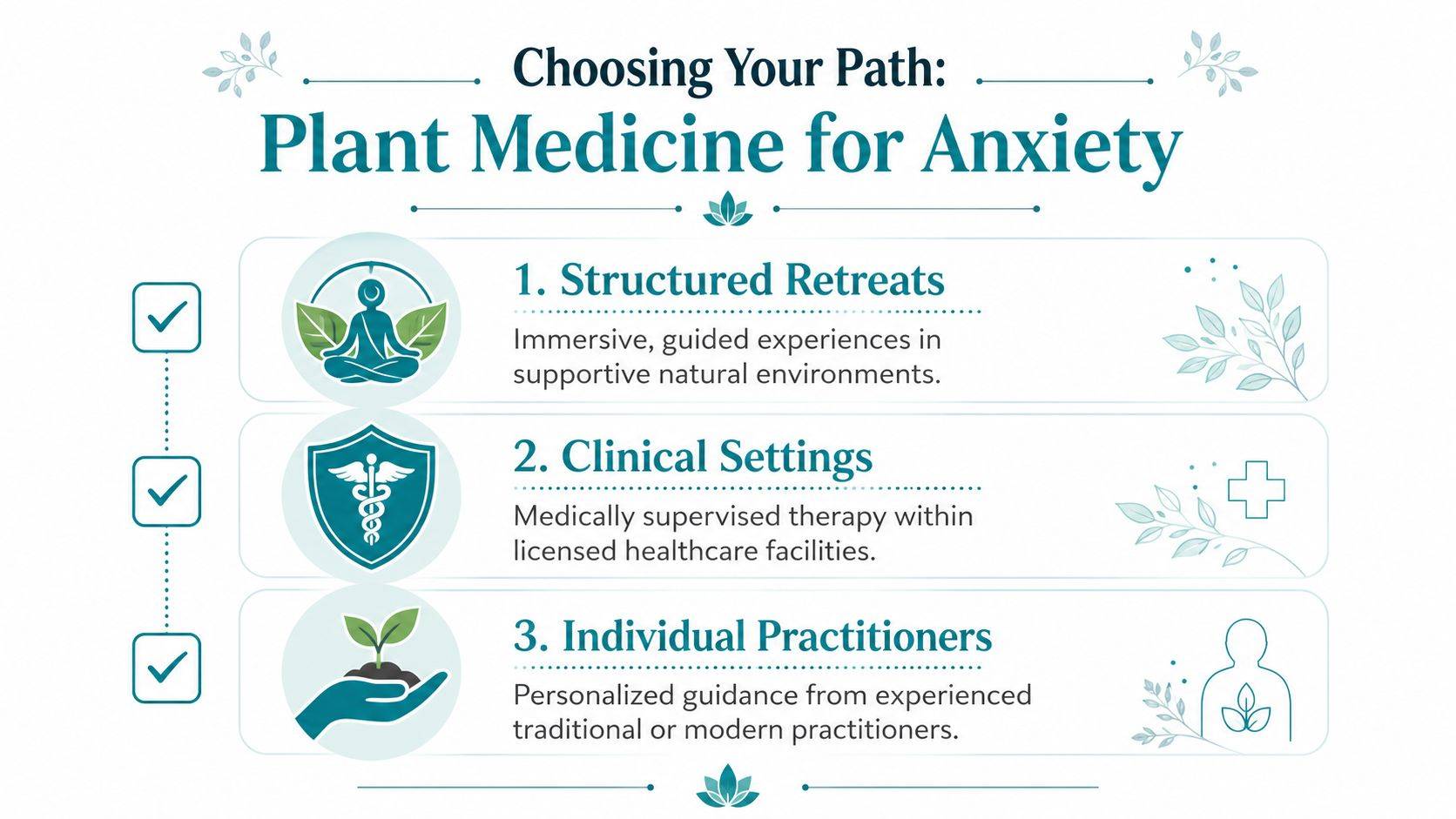
A retreat, a clinical setting, and an individual practitioner can all offer value. They also create very different experiences. One may emphasize ceremony and spiritual context. Another may emphasize medical oversight and tightly structured protocols. A third may offer highly personalized guidance but vary widely in training and safety standards.
Structured Retreats
Retreats usually appeal to people seeking immersion. They can provide focused preparation, communal support, and the sense of stepping out of daily life long enough to do serious inner work.
That said, retreat quality varies enormously. A polished website or spiritual language proves very little. Practical due diligence matters far more than atmosphere.
Questions worth asking:
- Medical Screening: Who reviews health history, medications, and contraindications?
- Facilitator Presence: How many experienced guides are physically present during ceremonies?
- Emergency Planning: What happens if a participant has a psychiatric or medical crisis?
- Integration Support: Is there structured follow-up after the retreat ends?
Readers comparing logistics may find this guide on how much an Ayahuasca retreat costs useful, not just for budgeting but for understanding what a reputable program may include.
Clinical Settings
Clinical pathways often suit people who want a more formal healthcare frame. This can be especially reassuring for those with complex mental health histories, active medication questions, or strong concerns about medical supervision.
A clinical setting may offer:
- Formal Assessment: Clear intake, diagnosis review, and contraindication screening
- Defined Protocols: More predictable procedures and documentation
- Medical Oversight: Immediate access to licensed healthcare personnel
- Structured Follow-Up: Integration through therapy or monitored aftercare
This path may feel less ceremonial and more contained. For some anxious people, that added structure lowers fear enough to make the work possible.
Individual Practitioners
Some people feel safest in a one-on-one relationship with a skilled practitioner. This can allow for nuanced support and a more individualized pace. It can also create risk if the practitioner lacks proper training, overstates their abilities, or works without screening and backup.
A good practitioner welcomes careful questions. A poor one gets vague, grandiose, or defensive.
Signs of a stronger fit include:
- Transparent Background: Clear training, lineage, or clinical qualifications
- Scope Awareness: Willingness to say when a case is beyond their capacity
- Referral Network: Access to medical, psychiatric, or therapeutic backup
- Respect For Consent: No pressure, coercion, or inflated promises
The safest guide is rarely the one making the biggest claims. It is usually the one who screens carefully, communicates clearly, and treats limits with respect.
A Decision Filter That Helps
A simple framework can keep the process grounded:
Match Intensity To Need
A person looking for mild daily anxiety support probably doesn’t need a multi-day immersive experience.Match Setting To History
Someone with medication complexity or a fragile mental health history may need stronger clinical oversight.Match Provider To Values
Tradition, spirituality, privacy, medical structure, and integration style all matter. The right fit is never one-size-fits-all.
The best next step is often the one that feels both supportive and boringly well-organized.
Integration The Key To Lasting Change
Relief rarely comes from the peak moment alone. It comes from what a person does with what that moment reveals.
Integration means turning insight into structure. After a ceremony, that may involve making sense of powerful imagery, grief, or realizations that surfaced. After working with herbs, it may mean noticing that the body has a little more calm available, then using that opening to build new habits.
What Integration Looks Like In Practice
Integration is less mystical than many people expect. It often includes ordinary actions repeated with care.
- Journaling: Recording what was felt, remembered, or understood before it fades
- Therapeutic Support: Working with a therapist or integration-informed guide to organize the experience
- Behavior Change: Translating insight into sleep routines, boundaries, relationships, and stress management
- Community: Staying connected to grounded people who can reflect reality back clearly
A person may leave a powerful experience convinced that everything has changed. Anxiety often returns in subtler forms when daily life resumes. That doesn’t mean the medicine failed. It means the nervous system is learning a new pattern slowly.
“Healing becomes durable when insight is practiced, not just remembered.”
The Real Measure Of Progress
The most useful question after any plant medicine work is not whether the experience felt profound. It is whether life becomes more workable.
Can the person pause before spiraling. Can they rest more easily. Can they tell the difference between intuition and fear. Can they stay with discomfort without immediately trying to escape it. Those are the markers that matter.
Plant medicine for anxiety can open doors, soften defenses, and support regulation. Lasting change usually grows in the quieter weeks that follow. That is where responsibility, support, and humility do their best work.
For readers ready to continue with a safety-first, tradition-honoring approach, Ayahuasca.com offers educational resources, preparation guidance, scientific context, and vetted retreat support for exploring this path with care.
Disclaimer: The information provided on Ayahuasca.com is for educational purposes only and is not intended as medical advice, diagnosis, or treatment. Ayahuasca is a powerful traditional Amazonian medicine and may not be suitable for everyone. Always consult with a qualified healthcare professional before making decisions related to health, mental well-being, medications, or the use of Ayahuasca.