
When you think of Ayahuasca, it’s impossible to separate it from shamanism. The two are deeply intertwined, with shamanism providing the ancient ritual container and expert guidance that turns a potent psychedelic experience into a profound healing ceremony.
Imagine Ayahuasca as a powerful, high-performance vehicle. Shamanism is both the roadmap passed down through generations and the skilled driver who knows how to navigate the terrain. This sacred partnership isn’t new; it has roots stretching back centuries, deep within the indigenous cultures of the Amazon.
The Essential Partnership of Shamanism and Ayahuasca
Taking Ayahuasca without understanding its shamanic context is like trying to navigate a vast, stormy ocean without a captain or a compass. The brew is famous for its power to unlock deep parts of the mind and spirit, but the setting—the container for the journey—is just as crucial as the medicine itself. This is where shamanism comes in.
Shamanism isn’t a religion; it’s one of the oldest spiritual practices known to humanity. Found in indigenous cultures all over the world, it’s built on the understanding that unseen spiritual worlds directly influence our physical reality. Shamans are the ones who learn to bridge these worlds. They are trained to journey into non-ordinary states of consciousness to find information, spark healing, and bring balance back to individuals and their communities.
Why Shamanism is So Critical for an Ayahuasca Ceremony
The shamanic framework provides the structure and safety needed for such an intense inner journey. It is what transforms the simple act of drinking a brew into a focused, intentional ceremony aimed at healing and deep insight. Without that guidance, the experience can feel chaotic, confusing, or simply lack the therapeutic power it’s revered for.
This traditional approach is built on several core practices:
- Creating a Sacred Space: The shaman meticulously prepares the ceremonial space, often a traditional roundhouse called a maloka. They cleanse it of disruptive energies and set up a field of spiritual protection, creating a safe bubble for participants to explore their inner worlds.
- Calling in Spirit Allies: Through specific rituals, prayers, and intentions, the shaman calls upon the help of plant spirits, ancestors, and other benevolent spiritual guides. These allies are invited to protect the ceremony and assist in the healing work.
- Guiding the Journey with Song: The shaman’s sacred songs, known as icaros, are the true heart of the ceremony. These are more than just melodies; they are vibrational tools used to steer the visions, clear emotional blockages, and weave healing energy through the space.
“The shaman is the ‘captain of the ship,’ skillfully steering participants through both the calm and the turbulent waters of the spirit world. Their deep experience ensures the journey is a guided expedition toward real healing and self-discovery, rather than a random trip into the unknown.”
Ultimately, this powerful synergy between shamanism and Ayahuasca makes deep, lasting change possible. The shaman’s presence ensures the plant’s immense power is channeled with clear intention, profound respect, and meticulous care. This partnership honors the ancient wisdom of the Amazon, where Ayahuasca is revered not just as a plant, but as a sacred teacher and a master healer.
Exploring the Roots of Ayahuasca Shamanism
The story of Ayahuasca is not a single, linear tale. It’s a living, breathing tapestry woven from countless cultural, cosmological, and traditional threads stretching across the vast Amazon basin. While it’s often talked about as one practice, Ayahuasca shamanism is incredibly diverse. Each indigenous group and spiritual lineage has contributed its own unique pattern and color to the whole.
To think of Amazonian shamanism as a single entity is like saying all European music is the same. Just as a German symphony is worlds apart from an Irish folk song, the way one tribe works with Ayahuasca can be fundamentally different from its neighbors. These are not just minor stylistic differences; they’re rooted in distinct worldviews, languages, and ancient relationships with the spirits of the forest.
At its heart, though, the process often shares a core structure. A guide, a vehicle, and a journey toward healing.
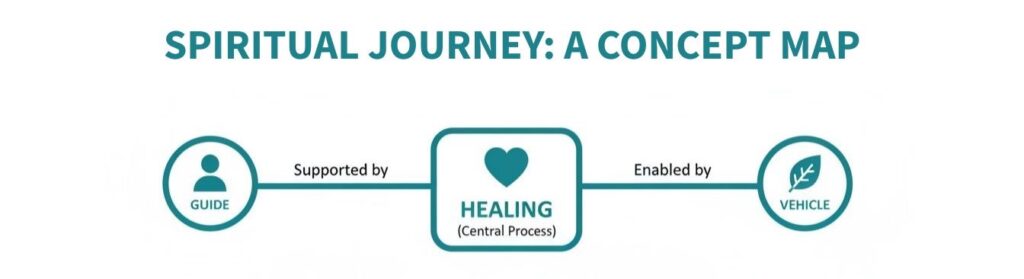
This simple map reminds us that no matter the specific tradition, the relationship between the healer (the shaman), the medicine (Ayahuasca), and the participant is the foundational framework for any deep inner work.
Indigenous Lineages of the Amazon
The practice of using Ayahuasca in a shamanic context began with the indigenous peoples of the upper Amazon. For these communities, Ayahuasca is not just a psychoactive brew; it’s a sentient teacher, a spirit, and a direct line to the invisible world. Two of the most widely recognized traditions come from very different regions and cultures.
- The Shipibo-Conibo of Peru: The Shipibo people possess one of the most well-known and intricate Ayahuasca traditions. Central to their ceremonies are the icaros—sacred, elaborate songs believed to be taught directly by the plant spirits themselves. A Shipibo shaman, known as an Onanya, navigates the visionary space with these songs, using them to diagnose spiritual illness and perform complex energetic healing. Their cosmology is made visible in the geometric kené patterns that adorn their textiles and pottery, which they understand as maps of the spiritual reality they perceive in ceremony.
- The Tukano of Colombia: For the Tukanoan peoples of the Colombian Amazon, Ayahuasca—which they call yagé—is foundational to their social and spiritual lives. Their ceremonies are often more communal affairs, essential for maintaining cosmic balance and passing down ancestral knowledge through the generations. The shaman’s role here is crucial for interpreting the collective visions and guiding the entire community.
These are just two examples among many others. You can learn more about the diverse indigenous groups that traditionally use Ayahuasca and get a better sense of the rich cultural landscape this medicine comes from.
Syncretic Religions of Brazil
As Ayahuasca’s use began to move beyond purely indigenous contexts during the 20th century, it started to blend with other belief systems. This fusion gave rise to unique syncretic religions in Brazil that are now global movements. These churches weave together Amazonian shamanism with elements of Christianity, European Spiritism, and African traditions, creating highly structured, community-oriented religious practices.
“The blending of these traditions showcases Ayahuasca’s remarkable ability to adapt. It finds new cultural containers while holding onto its core purpose: facilitating spiritual connection and profound healing.”
The two most prominent branches are:
- Santo Daime: Founded in the 1930s by Raimundo Irineu Serra, Santo Daime ceremonies, called trabalhos (works), are very structured. Participants, or fardados, wear special uniforms and sing devotional hymns for hours while drinking Daime, their name for Ayahuasca. The collective energy of the music is what guides the spiritual experience, fostering an incredible sense of unity and reverence.
- União do Vegetal (UDV): Established in 1961 by José Gabriel da Costa, the UDV places a strong emphasis on mental concentration and the study of spiritual principles. In their sessions, members drink Ayahuasca (called vegetal) while seated, listening to the teachings of a guide, or Mestre. The goal is to achieve mental clarity and spiritual insight through focused, quiet contemplation.
From the ancient jungle traditions of the Shipibo to the hymn-filled churches of Brazil, the roots of Ayahuasca shamanism are as varied as they are deep. Each lineage offers a different lens for experiencing this powerful medicine, reminding us that there is not one “right” way—only a deep and abiding respect for the spirit of the vine.
The Shaman’s Role in an Ayahuasca Ceremony
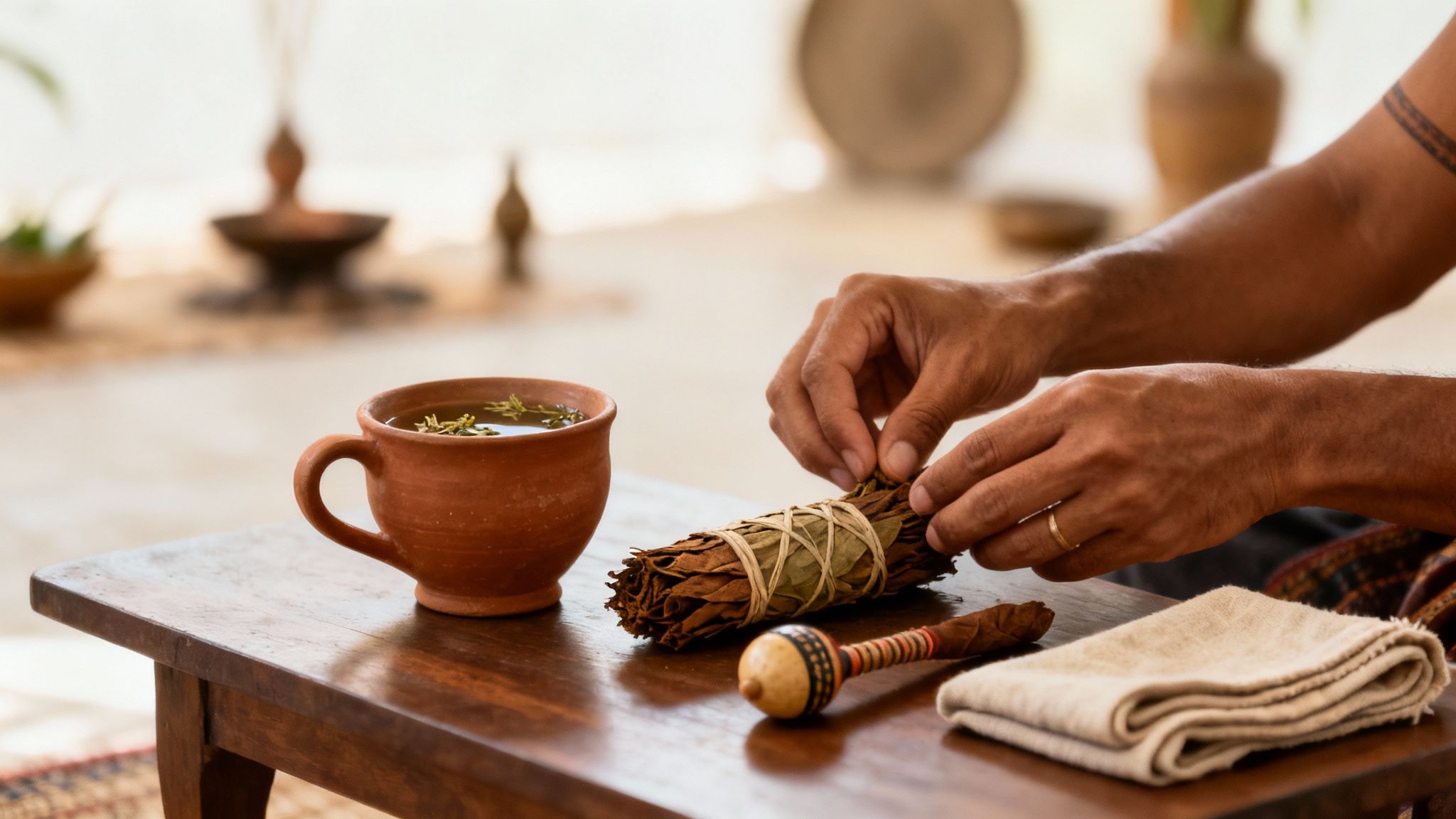
In the world of Ayahuasca, the shaman is so much more than a facilitator. They are the anchor, the energetic protector, and the skilled navigator of a journey into realms far beyond our everyday awareness. Grasping their function is the key to understanding the difference between a potentially chaotic trip and a deeply healing ceremony.
Think of it this way: if the Ayahuasca ceremony is a voyage across a vast and unpredictable spiritual ocean, the shaman is the captain of the ship. They’ve spent years, often decades, learning to read the subtle currents of energy, communicate with the spirits of the medicine, and steer the entire group safely through both calm waters and turbulent storms.
Their presence creates the very container that makes profound healing possible. It is an intricate and demanding practice, one that requires immense spiritual stamina, deep integrity, and an unshakeable connection to the plant spirits they serve.
Guardian of the Sacred Space
Long before the first cup is poured, the shaman’s most important job begins: preparing and protecting the ceremonial space. This is more than just tidying up; it’s a meticulous form of energetic architecture often called “opening the space.” The shaman works to cleanse the area of any heavy or disruptive energies, effectively building a safe, sacred container for everyone inside.
They rely on several key tools to do this:
- Mapacho (Sacred Tobacco): You’ll almost certainly see the shaman smoking mapacho during the ceremony. This is not recreational. The smoke is a powerful tool for energetic cleansing and protection, used to create a shield around the ceremonial circle and each individual.
- Prayers and Intentions: The ceremony starts with the shaman setting a clear intention and calling upon their spiritual allies—the spirit of Ayahuasca, ancestral healers, and other benevolent guides—to be present and assist. This forges a direct line to the spiritual support system that will watch over the night.
“A shaman’s ability to hold a strong, clear, and protected space is arguably the most important element of a safe Ayahuasca ceremony. It provides the foundation of trust that allows participants to surrender to their own deep process without fear of external interference.”
This protective field is actively maintained for the entire ceremony, which can last for many hours. The shaman remains vigilant, constantly scanning the energetic state of the room and each person in it. You can learn more about these demanding responsibilities by exploring the world of an Ayahuasca shaman.
The Master of Icaros
At the heart of many Amazonian traditions are the sacred songs known as icaros. These are not just background music; they are the shaman’s primary healing tools. Each icaro is a vibrational technology, a specific frequency sung to call in certain spirits, clear energetic blockages, or guide the visionary experience.
The shaman essentially acts as a spiritual surgeon, using these songs to perform precise energetic work. They might sing one icaro to help someone purge a dense emotion, another to offer comfort during a difficult patch, and a third to bring in light and clarity. The songs literally weave the fabric of the ceremony, directing the flow of energy and guiding the collective journey.
The table below breaks down the key responsibilities a shaman manages throughout the ceremony, from start to finish.
Core Responsibilities of a Shaman in Ceremony
| Ceremonial Phase | Shaman’s Primary Role | Key Actions and Tools |
|---|---|---|
| Preparation | Guardian & Protector | Cleansing the space, setting intentions, calling in spiritual allies, using mapacho for protection. |
| During the Ceremony | Navigator & Healer | Singing icaros, monitoring individual and group energy, performing energetic interventions, holding a steady presence. |
| Integration & Closing | Grounding Force | Closing the sacred space, offering blessings, providing initial guidance for post-ceremony integration. |
Ultimately, a shaman’s role is also that of a diagnostician. With their perception heightened by the medicine, they can often “see” the energetic or spiritual root of a person’s struggles. They then use this insight to direct their healing work, applying specific icaros or other techniques to address the core imbalance. This combination of protection, navigation, and targeted healing is what makes the shaman’s role so absolutely essential.
Why Has Ayahuasca Captured the World’s Attention?
It’s truly remarkable how a sacred brew, once a well-kept secret of Amazonian traditions, has stepped onto the global stage. What was once confined to the jungle is now a topic of conversation in wellness communities, scientific journals, and personal growth circles across the planet. This is not just some fleeting trend; it points to a deep, collective yearning for healing and meaning that our fast-paced modern lives often leave unfulfilled.
Many people find their way to Ayahuasca after feeling let down by conventional approaches to mental and spiritual wellness. We live in a world filled with digital noise and relentless pressure, and with that comes a growing hunger for real connection—connection to ourselves, to each other, and to something bigger than our own ego. The ancient partnership between shamanism and Ayahuasca offers a pathway to that connection. It is an invitation for profound, honest inner work, rather than a quick fix.
The Modern Search for Ancient Wisdom
Science is now catching up to what indigenous cultures have known for centuries. Early research into Ayahuasca’s potential for treating conditions like depression, PTSD, and anxiety is starting to build a bridge between ancient plant wisdom and modern neuroscience. This has given the Western world a new language to understand these powerful experiences, lending a kind of scientific validation to the brew’s healing capabilities.
This rising curiosity has given birth to what’s often called “shamanic tourism.” As stories of transformation spread, more and more people are journeying to the Amazon and other parts of the world to sit in ceremony. The desire for a direct, personal experience is a powerful motivator, fueling a global movement of seekers looking for answers that lie just beneath the surface of ordinary life. You can dive deeper into this complex trend in our article about shamanic tourism in Iquitos, Peru.
“The globalization of Ayahuasca really speaks to a universal human need for healing and spiritual awakening. It’s a testament to the enduring power of these ancient shamanic practices to address the deepest questions of the human heart, even in our modern context.”
A Global Phenomenon with Deep Roots
The statistics behind this movement are quite revealing. Back in 2019, it was estimated that around 820,000 people worldwide took part in Ayahuasca ceremonies, consuming close to 5.5 million doses. Researchers suggest that over four million people from the Americas, Europe, and Australasia have tried Ayahuasca at least once, with only about 10% of users belonging to the indigenous groups where the traditions began.
And while the media often highlights rare, tragic incidents, forensic reports haven’t directly blamed the brew itself for fatalities. Instead, these cases usually involve dangerous interactions with other substances or undisclosed health problems.
This rapid growth is a double-edged sword. On one hand, greater access means more people have the chance to experience incredible healing. On the other hand, it opens the door to serious risks like commercialization and cultural appropriation, where the sacred container of the ceremony gets watered down or completely lost.
As Ayahuasca’s profile continues to rise, the need for careful discernment becomes absolutely critical. The sacred bond between shamanism and Ayahuasca is what keeps the practice anchored in safety, respect, and integrity. Choosing a path that honors its indigenous origins is essential for making sure the journey is both safe and genuinely healing.
How to Choose an Ethical Ayahuasca Retreat
Trying to find the right Ayahuasca retreat can feel like navigating a maze. As the medicine’s popularity has exploded worldwide, so has the number of centers offering it—and they are definitely not all created equal. Your most important job is to make a careful, informed choice to ensure your journey is safe, meaningful, and genuinely healing.
This is not like booking a hotel. You’re entrusting your psychological and spiritual well-being to the people running the retreat. The goal is to find a place that operates with deep integrity, has iron-clad safety protocols, and shows profound respect for the indigenous traditions that are the heart and soul of this work. Knowing how to spot the difference between a genuine center and a tourist trap is everything.
Ultimately, your own discernment is your best tool. If you arm yourself with the right questions and know what to look for, you can cut through the marketing hype and find a path that truly honors your intentions for healing.
Vetting the Shaman and Their Lineage
The entire experience hinges on the skill, experience, and character of the shaman (or facilitator) leading the ceremonies. An authentic guide has dedicated years—often their entire life—to rigorous training within a specific tradition. This is not something you learn in a weekend workshop; it’s earned through a deep apprenticeship, personal sacrifice, and years of service.
When you’re looking at a retreat, check for total transparency about the shaman’s background.
- Who were their teachers? A legitimate shaman will be proud to share their training and the lineage they belong to, whether it’s Shipibo, Tukano, Mestizo, or another tradition.
- How long have they been serving medicine? Experience is crucial here. Look for facilitators who have been holding ceremonies for many years and have guided hundreds, if not thousands, of people.
- What is their connection to their community? Do they actively support the culture their knowledge comes from? The best centers often have programs that give back directly to the local indigenous communities.
“A shaman’s lineage is like a deep root system, connecting them to a vast store of ancestral wisdom and proven practices. A facilitator without these roots may lack the depth and experience needed to navigate the complexities of a powerful Ayahuasca ceremony.”
Asking these kinds of questions helps you figure out if you’re looking at a practice grounded in real tradition or just something that looks good on the surface.
Prioritizing Safety and Medical Screening
Safety is the one thing you absolutely cannot compromise on. Ayahuasca has serious contraindications with certain medical conditions (especially heart issues) and many medications, particularly SSRIs and other antidepressants. A responsible center will treat this with the utmost seriousness.
Their medical screening process should be mandatory and incredibly thorough.
- Comprehensive Medical Forms: You should expect to fill out a detailed questionnaire covering your entire physical and mental health history. Be 100% honest here—this information is for your own protection.
- Pre-Retreat Consultation: A trustworthy center will almost always schedule a call or video chat to go over your health history and talk about your intentions. This is also a perfect chance for you to ask them questions.
- On-Site Support: Ask them directly about their protocols for handling medical or psychological emergencies. Is there medically trained staff on-site? How close are they to a hospital?
If a center downplays the importance of screening or seems casual about contraindications, consider it a giant red flag. Their first and most important job is to create a safe container for you, and that work begins long before you ever set foot on their property.
Assessing the Quality of Integration Support
The Ayahuasca ceremony itself is just one piece of the puzzle. The real, lasting change happens in the weeks and months that follow, during a process called integration. This is where you take the incredible insights and lessons from your journey and weave them into the fabric of your daily life.
A high-quality retreat knows its responsibility doesn’t end when the last ceremony is over. They will offer solid support to help you make sense of your experience and carry the momentum forward. Look for centers that provide:
- Post-ceremony group sharing circles to help process the experience with others.
- Opportunities for one-on-one time with the facilitators.
- Resources for finding integration coaches or therapists in your home country.
- Follow-up calls or emails after you’ve left the retreat.
Without proper integration support, people can be left feeling confused, ungrounded, and overwhelmed when they return to “normal” life. A retreat that prioritizes this final, critical step is showing a true commitment to your long-term well-being. It’s a hallmark of an ethical, professional, and genuinely caring operation.
Integrating Your Ayahuasca Experience
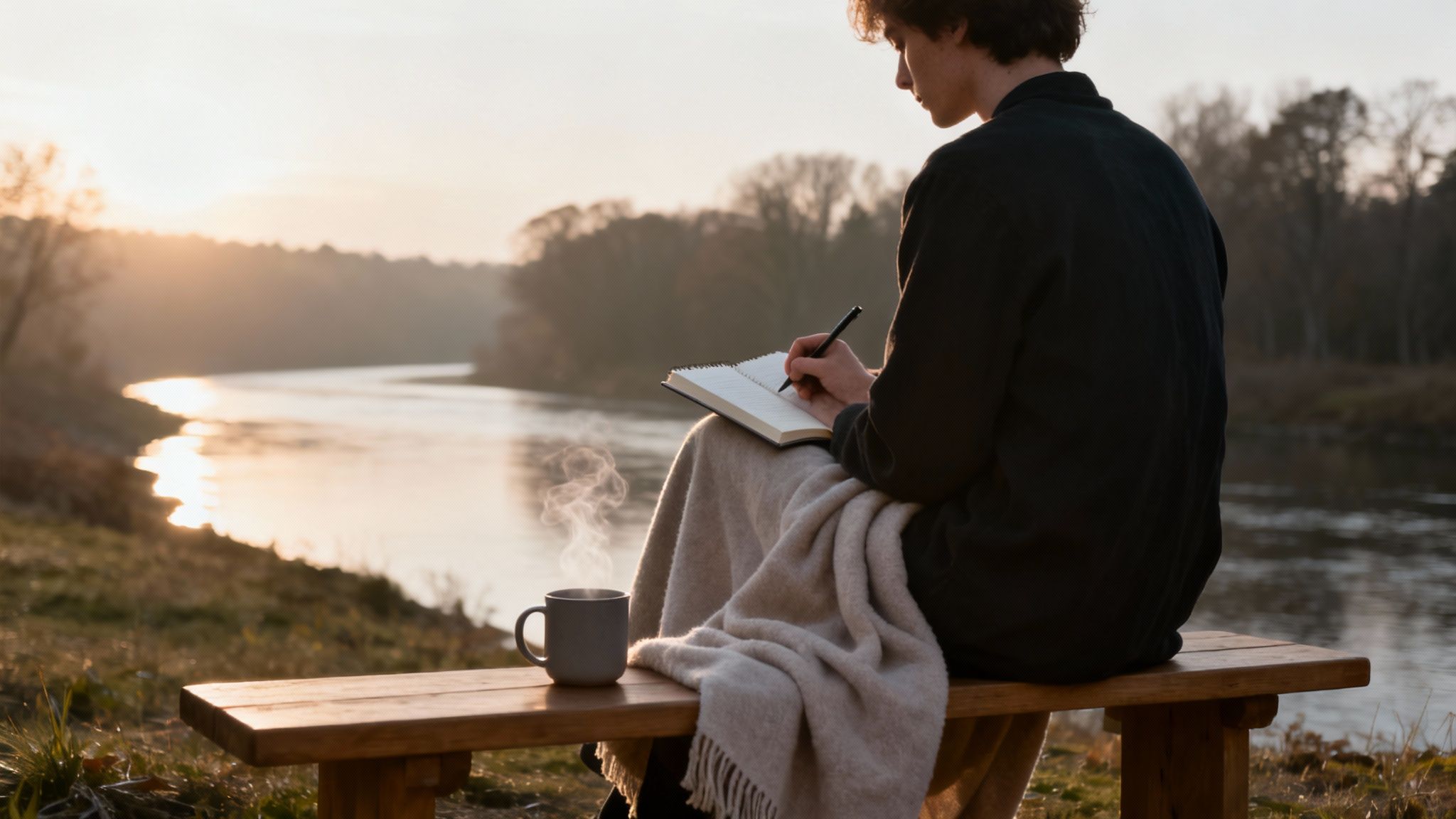
An Ayahuasca ceremony doesn’t end when the sun comes up. In fact, that’s where the most important work begins. The insights and emotional breakthroughs you encounter are just the starting point; what comes next, when you return to your daily life, is what truly matters. This essential process is called integration.
Think of it like this: the ceremony opens a door to a new way of seeing yourself and the world. Integration is the process of consciously walking through that door and bringing those new perspectives into your relationships, your work, and your core sense of self.
Without this follow-through, even the most profound revelations can evaporate, becoming little more than a fading memory. Integration is the bridge between the extraordinary world of the ceremony and your ordinary, day-to-day life.
Building Your Integration Toolkit
There’s no single “right” way to integrate an Ayahuasca experience, but a few core practices can help anchor the lessons and nurture the changes that began in the ceremony. It’s all about finding what feels supportive and right for you.
These practices are not complicated. They’re simply ways to create a bit of quiet space to make sense of everything that came up, from confusing emotions to crystal-clear insights.
Here are a few powerful places to start:
- Journaling: Writing is one of the best ways to capture the raw material of your experience before it slips away. Don’t worry about making it perfect—just get it down. Visions, phrases, feelings, questions… it all belongs on the page.
- Meditation or Mindfulness: A simple, consistent mindfulness practice can be a game-changer. It helps you stay grounded and observe the new feelings or energetic shifts that can follow a ceremony without getting swept away by them.
- Time in Nature: After an experience that often highlights our connection to the living world, spending quiet time outdoors can feel deeply healing and grounding. A walk in the woods or sitting by the water can help regulate your nervous system and provide a peaceful space for reflection.
“Integration is learning to embody the wisdom you received, allowing it to gently reshape your perspective and guide your actions in the real world. This is different from trying to cling to the peak moments of the ceremony.”
Seeking Support on Your Path
While personal practices are crucial, you absolutely do not have to do this alone. The weeks following a ceremony can be disorienting, and old emotional patterns can resurface with surprising intensity. Having the right support can make all the difference.
Finding a therapist or an integration coach who is knowledgeable about plant medicine can provide a steady hand. These professionals can help you decode complex visions, work through difficult emotions, and create a real-world plan for putting your insights into action.
This kind of skilled support gives you a safe container to explore your journey without judgment. It is having a guide who can help you translate profound spiritual lessons into tangible, positive changes in your life. A real commitment to integration is what turns a powerful experience into lasting growth.
Common Questions About Shamanism and Ayahuasca
Stepping into the world of Ayahuasca can feel overwhelming, and it’s completely normal to have a lot of questions. Let’s walk through some of the most common ones to bring a little more clarity to the path ahead.
Is Ayahuasca Safe?
This is often the first question people ask, and the answer is: it depends entirely on the context. In a proper ceremonial setting, led by an experienced and well-trained guide, Ayahuasca is generally safe for people who are in good health.
But that safety is conditional. The brew has serious, potentially dangerous interactions with certain health conditions, particularly heart issues, and with common medications like SSRIs.
“A non-negotiable hallmark of any reputable retreat is a mandatory, in-depth medical screening. Your safety must be the absolute top priority, and any facilitator who skips this step is not operating responsibly.”
What’s the Shaman’s Role in an Ayahuasca Journey?
So, what’s the real difference between just drinking Ayahuasca and experiencing it in a ceremony with a shaman? The shaman provides the sacred container—the energetic protection and skilled guidance that turns a potentially chaotic psychedelic experience into a focused healing journey.
A huge part of this is their use of sacred songs, known as icaros. These are not just background music; they are tools used to guide the visions, navigate the spiritual realms, and clear heavy or stuck energies. Taking this journey without a trained guide means you’re missing the very heart of what makes an Ayahuasca ceremony a profound opportunity for healing.
How Can I Find an Authentic Guide?
With so many options out there, how do you know if a shaman or retreat center is the real deal? True authenticity is rooted in the guide’s lineage, the depth of their training, and a genuine, respectful connection to the indigenous traditions this medicine comes from, rather than marketing.
When you’re looking into a center or a guide, look for real transparency.
- Who were their teachers? What specific tradition do they practice?
- Do they have crystal-clear safety protocols and a thorough medical screening process?
- How do they honor and give back to the Amazonian communities where this knowledge originates?
Be wary of centers that feel purely commercial or focused on psychedelic tourism. Look for those that emphasize deep healing and offer solid support for integrating the experience afterward. The integrity of your guide is what shapes the integrity of your entire journey.
For broader context, readers may also find it helpful to review external resources from the Multidisciplinary Association for Psychedelic Studies, the National Center for Complementary and Integrative Health, and the World Health Organization.