
The ‘vine of the soul’ is a name that beautifully captures the essence of Banisteriopsis caapi, the foundational master plant in the sacred Amazonian brew, Ayahuasca. While other plants bring the visionary component, DMT, the vine itself is revered as the ‘teacher’ or ‘spirit’ that guides the entire spiritual and psychological journey.
Think of it as the key that doesn’t just unlock a door but also illuminates the path on the other side.
Unlocking The Secrets Of The Vine Of The Soul
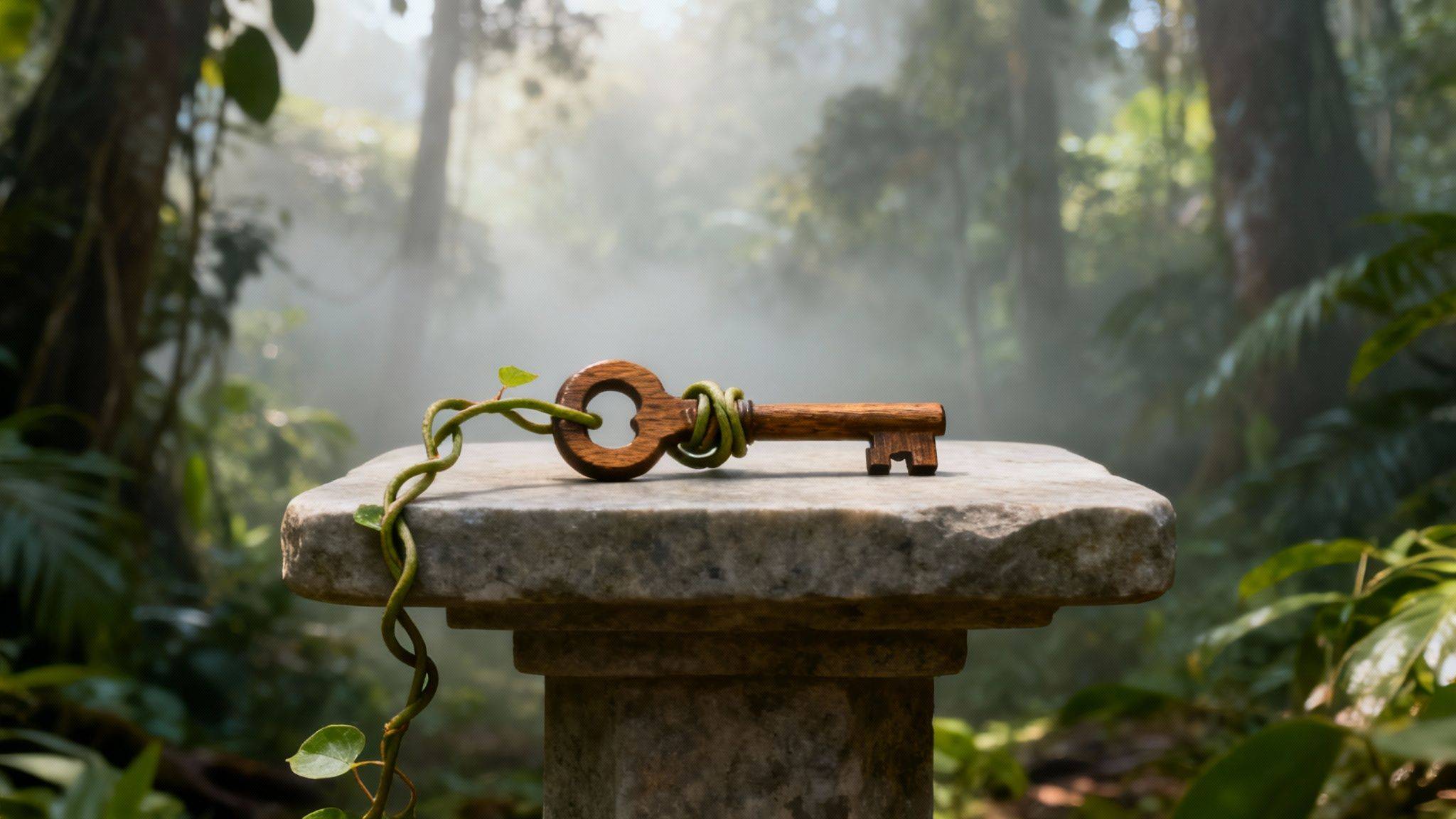
Deep in the Amazon rainforest, there’s a woody vine known for centuries by indigenous cultures as a sacred guide. This is Banisteriopsis caapi, the plant that truly is the heart of Ayahuasca.
It forms the very backbone of the traditional brew. Its partner plants, like Chacruna (Psychotria viridis), provide the powerful visionary compound DMT, but B. caapi plays a different—and arguably more central—role. It’s often considered the true ‘spirit’ of the medicine, the gatekeeper and guide for the entire experience.
To help you grasp its fundamental role, here’s a quick look at its core attributes.
Key Aspects Of The Vine Of The Soul
| Attribute | Description |
|---|---|
| Botanical Name | Banisteriopsis caapi |
| Common Names | Ayahuasca, Yagé, Caapi, Vine of the Soul |
| Primary Role | The ‘spirit’ and ‘teacher’ of the Ayahuasca brew. |
| Key Compounds | Harmala alkaloids (Harmine, Harmaline, Tetrahydroharmine). |
| Function | Acts as an MAO-inhibitor, allowing oral DMT to be active. |
| Traditional View | A sentient intelligence that offers healing, guidance, and wisdom. |
This table gives a bird’s-eye view, but the vine’s significance goes much deeper than these facts alone.
The Conductor Of The Inner Orchestra
Imagine your consciousness is a grand orchestra. The visionary plants might provide the powerful, soul-stirring music, but the vine of the soul is the conductor. It directs the flow, sets the pace, and ensures each instrument is heard with clarity and purpose.
Without it, the potent compounds from other plants would be quickly neutralized by enzymes in our gut, making them completely ineffective when taken orally. This unique biochemical action is what makes the entire Ayahuasca experience possible.
“The vine is often described not just as a plant, but as a sentient intelligence—a wise teacher that offers guidance, healing, and profound insight. Its presence shapes the character and depth of the ceremony.”
More Than Just A Key
But the role of B. caapi goes far beyond being a chemical facilitator. For those who have worked with Ayahuasca for years, the vine has its own distinct healing properties and personality.
Many traditions believe the vine itself provides the grounding, the wisdom, and the core teachings of the journey. For a closer look at its botanical traits and its place within ancient traditions, you can find more on our resource page about the plants used in Ayahuasca shamanism.
Understanding this is vital for anyone thinking about an Ayahuasca journey. The experience is about what you learn and how you heal under the guidance of this ancient teacher plant. Recognizing the vine’s central importance helps foster a much deeper respect for the medicine and the sacred traditions it comes from.
The Sacred Vine In Indigenous Culture
To really grasp what the “vine of the soul” is, you have to travel deep into the Amazon. Down there, its roots aren’t just in the soil—they’re woven into the very fabric of indigenous cosmology. For generations beyond counting, Banisteriopsis caapi has been seen as so much more than a plant. It’s a teacher, a wise ancestor, a living entity that speaks directly to people.
This deep reverence is captured in the names given to the vine. While we in the West tend to call the final brew Ayahuasca, the communities who live with it have a whole lexicon of names. Each one tells a story about their unique relationship with it.
Names like Yagé, Caapi, Natem, or Hoasca aren’t just synonyms. They’re a direct acknowledgment of the spirit they believe lives within the plant. Often, these names translate to phrases like “vine of the spirits” or “vine of the dead,” pointing to its role as a bridge between our world and the next. That connection is the absolute heart of its purpose in ceremony.
A Gateway To The Spirit World
In many Amazonian traditions, the vine is the master key—the one that unlocks the doors of perception. It allows the shaman, or curandero, to see the unseen, to diagnose illnesses that are both spiritual and physical in nature. It’s how they communicate with ancestors and receive guidance for their entire community. This is a powerful spiritual technology.
The origin stories and myths surrounding the vine only deepen its sacred status. These are cosmological maps, charting the plant’s divine origins and explaining how it came to be a gift for humanity.
“A common thread running through these stories is that the vine was given directly by the gods, or that it grew from the body of a celestial being. This forever binds B. caapi to the divine, casting it as a sacred teacher meant to heal and connect us.”
This profound belief system shapes every single interaction with the plant. From the way the vine is grown and harvested to the careful, ritualized preparation of the brew, every step is filled with intention and respect. The ceremony itself is a sacred space, built on a foundation of trust between the participants, the healer, and the spirit of the vine itself.
The Vine As Community Healer
Beyond its work with individuals, the vine of the soul is a powerful force for social cohesion. Ceremonies are often communal affairs, designed to strengthen social bonds, help resolve conflicts, and keep ancient traditions alive.
- Divination: Community leaders might drink the brew to see into the future, asking for guidance on where to find game or the right time to plant crops, ensuring the group’s survival.
- Healing Rituals: Sometimes the entire village will gather to support one person’s healing journey, which powerfully reinforces empathy and collective connection.
- Knowledge Transmission: The vine acts as a living library. Through the visionary experience, sacred songs (icaros), myths, and ancestral wisdom are passed from one generation to the next.
The intricate bond between this plant and the people who’ve been its stewards for millennia is everything. To learn more about this lineage, exploring what indigenous groups traditionally use Ayahuasca provides a much richer context for these ancient practices.
Ultimately, to engage with this plant without acknowledging its sacred cultural roots is to miss the point entirely. Honoring this ancient lineage is the only way to approach Ayahuasca respectfully, recognizing it for what it is: a profound gift carrying generations of wisdom.
The Science Behind The Master Plant
While indigenous traditions have long revered the vine of the soul as a living, intelligent guide, modern science is starting to catch up, painting a fascinating picture of the neurochemistry that makes it all possible. The pharmacological story of Banisteriopsis caapi perfectly complements the ancient wisdom. At its heart are the harmala alkaloids—a powerful group of beta-carbolines that include harmine, harmaline, and tetrahydroharmine.
These compounds are the real keyholders to the Ayahuasca experience. Think of your digestive system as being protected by a vigilant gatekeeper called Monoamine Oxidase (MAO). This enzyme’s primary job is to break down certain compounds, including the potent visionary molecule DMT, which is found in common Ayahuasca admixture plants like Chacruna.
If you were to consume DMT on its own, the MAO enzyme would neutralize it almost instantly, long before it could reach the brain. The journey would be over before it even began.
The Key To The Visionary Kingdom
This is where the genius of the vine of the soul comes in. The harmala alkaloids it contains are potent Monoamine Oxidase Inhibitors (MAOIs). In simple terms, they temporarily tell that MAO gatekeeper to stand down and take a break.
With the MAO enzyme occupied, the DMT from the partner plant is free to pass through the digestive system, enter the bloodstream, and travel across the blood-brain barrier. This beautiful, symbiotic dance of biochemistry allows the profound, visionary states of Ayahuasca to unfold. The vine quite literally unlocks the door.
“The harmala alkaloids in B. caapi don’t just enable the visionary experience—they actively shape it. Many experienced practitioners believe the vine itself provides the grounding, wisdom, and emotional depth of the journey.”
More Than A Chemical Assistant
But seeing the vine as merely a chemical helper is to miss its deeper, more profound role. A growing body of research is beginning to confirm what Amazonian shamans have insisted on for centuries: the harmala alkaloids in B. caapi have significant healing properties of their own.
These very compounds are being explored for their potential antidepressant, anxiolytic (anti-anxiety), and even neuroprotective effects. Some studies have shown they can stimulate neurogenesis—the actual growth of new brain cells. This suggests the vine of the soul is a direct contributor to the psychological healing and renewed sense of clarity many people report after their experiences.
This concept map breaks down the sacred roles the vine plays, which are supported by both ancient belief and modern scientific understanding.
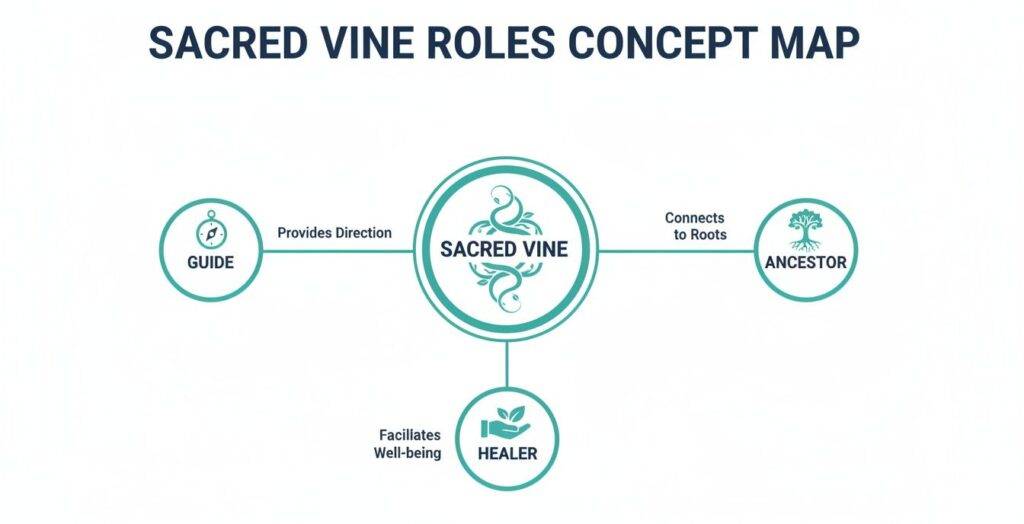
It’s easy to see how the vine acts as a Guide, Ancestor, and Healer all at once, highlighting its central, multifaceted importance in the Ayahuasca ceremony.
Scientific Validation Of Ancient Healing
The powerful effects of Ayahuasca, with the vine of the soul at its core, are gaining significant attention. The largest-ever Global Ayahuasca Survey involved 10,836 participants from over 50 countries. After analyzing data from 7,576 individuals, the study linked frequent Ayahuasca use to markedly better mental health outcomes, including lower distress and greater wellbeing.
In a world where 1 in 8 people grapple with mental disorders, this is a hopeful sign. This is especially true for those surveyed with a history of depression (19.7%) and anxiety (14.2%). The results offer a compelling glimpse into the brew’s potential.
The science is becoming clearer: the vine is not a passive ingredient but an active, healing force. To go deeper, you can learn more about the beta-carbolines and their specific functions in our dedicated article.
How To Approach Your Journey With Respect And Safety
Stepping into a ceremony with the vine of the soul is a serious commitment. It’s a deep dive into your own consciousness, and that kind of journey demands a safe, supportive container. The very first step, long before you even book a retreat, is to be radically honest with yourself. Ayahuasca simply isn’t for everyone.
Some medical and psychological conditions are clear contraindications. If you have a personal or family history of psychosis, bipolar disorder, or schizophrenia, this work can carry significant risks and might amplify underlying issues. Similarly, serious heart conditions are a major concern, as the brew can affect both blood pressure and heart rate.
Being completely transparent with your facilitator isn’t just a suggestion—it’s non-negotiable. This is especially true when it comes to any medications you’re taking.
The Critical Role Of Screening
A reputable, experienced facilitator will always have a thorough screening process. This is the first and most important sign that you’re in good hands. Trying to hide any part of your health history or medication use is a gamble you should never take.
Antidepressants, particularly SSRIs and MAOIs, are known to have dangerous interactions with the compounds in Ayahuasca. This combination can trigger a rare but life-threatening condition called serotonin syndrome. Honesty about your medications is a fundamental requirement for your own safety.
“Approaching this sacred medicine requires a level of honesty that might feel uncomfortable, both with yourself and with the people guiding you. Your safety doesn’t start in the ceremony circle; it begins the moment you decide to be truthful about your own situation.”
While we take safety seriously, it’s also important to have a balanced view of the risks. Media headlines can often create more fear than clarity. A deep analysis by ICEERS examined 58 deaths worldwide that were sensationally linked to Ayahuasca. Their findings were striking: zero autopsies confirmed a death was caused by an acute intoxication of the traditional brew itself. The 2023 report highlights the brew’s relative safety profile among an estimated 4 million lifetime users, urging us to rely on evidence over alarmism. You can explore the full details in their report on Ayahuasca consumption and safety findings.
Preparing The Body And Spirit: The Dieta
Beyond the essential medical screening, traditional preparation involves a dieta. Think of it as a specific diet designed to cleanse the body and quiet the mind, making you more open and receptive to the spirit of the medicine. The dieta is far more than a physical detox; it’s a spiritual practice in its own right.
For at least one to two weeks before a ceremony, you’ll typically be asked to avoid certain things to purify your system:
- Pork and red meat
- Spicy, fried, and heavily processed foods
- Fermented foods (like aged cheese or soy sauce)
- Excessive salt, sugar, and oils
- Sexual activity and overconsumption of media
This practice is about reducing the “noise” in your body and mind, which helps you tune in more deeply. It shows respect for the medicine and prepares your entire being for the profound work ahead. By simplifying what you take in, you create a clearer internal space for the vine to share its wisdom.
Choosing A Safe And Ethical Retreat
Finding the right place to drink Ayahuasca is arguably the single most important decision you’ll make. The integrity, experience, and energy of the facilitators and the space they hold will form the very foundation of your journey.
Here are the essential questions you should be asking any retreat center or facilitator you’re considering:
- What’s their lineage and training? How many years have they been serving medicine? Who did they learn from? True expertise is built over decades of dedicated practice, not a few weekend workshops.
- Where does the medicine come from? Do they brew it themselves or source it ethically from a known tradition? Understanding the medicine’s origin is vital.
- How big are the groups? Smaller groups, usually under 15-20 people, allow facilitators to provide individual attention and support when it’s needed most.
- How many assistants are present? You want to see a healthy ratio of experienced helpers to participants. This ensures everyone is looked after.
- Do they have a proper medical screening? A detailed health questionnaire followed by a personal conversation is the hallmark of a responsible operation.
- What kind of integration support do they offer? The work doesn’t end when the ceremony music fades. Ask if they provide support after the retreat, like integration circles or access to trained coaches, to help you make sense of your experience.
Asking these questions empowers you to make an informed choice. It helps you find a container that is not only safe but also holds the deep respect that this sacred vine of the soul truly commands.
The Vine’s Teachings Go Global
The wisdom of the Amazon, carried within the vine of the soul, is no longer a secret whispered only in the rainforest. Over the last few decades, its teachings have traveled across continents, finding new homes in the hearts and minds of people from every imaginable background. This ancient plant medicine, once the exclusive domain of indigenous communities, has now stepped onto the world stage.
This global journey is speaking to a deep, collective hunger in modern cultures. So many of us are searching for something more than what conventional life offers—a real sense of meaning, healing from wounds that won’t seem to close, and a genuine connection in an increasingly disconnected world. The vine of the soul is answering a call for something profound.
A Worldwide Phenomenon
The sheer scale of this movement is hard to wrap your head around. Picture this: around the world, an estimated 4 million people have participated in an Ayahuasca ceremony, a brew where the vine of the soul is the essential ingredient. That incredible number covers people all across the Americas, Europe, Australia, and New Zealand, painting a clear picture of the medicine’s rapid globalization.
What’s even more telling is that only about 10% of those millions are from the indigenous groups who have traditionally worked with the vine for centuries. The other 90%? They are seekers from all over the planet, drawn in by personal stories, retreat centers, and a growing body of scientific research that hints at its incredible potential. The comprehensive 2023 ICEERS report that compiled this data really highlights this massive shift, marking a brand new chapter in the vine’s long story.
“The global interest in Ayahuasca reflects a wider search for healing and purpose. It represents a turning away from purely materialistic values and a turn toward introspection, connection, and spiritual wellness.”
Of course, as this ancient tradition travels, it’s bound to change. The setting and intention of a ceremony in the Peruvian Amazon are a world away from one held in a retreat center in Portugal. This globalization brings a tangled web of challenges and responsibilities that we have to navigate with our eyes wide open.
The Complexities of Going Global
This explosion in demand for Ayahuasca and the vine of the soul is forcing some tough conversations. With retreat centers popping up everywhere to meet the growing interest, we have to ask ourselves some important ethical questions about how to approach this sacred tradition with the respect it deserves.
Here are just a few of the critical issues we need to think about:
- Sustainability: The Banisteriopsis caapi vine takes years to mature. Is it being harvested in a way that ensures it will be around for future generations, both in its native Amazon and for practitioners abroad?
- Cultural Appropriation: How do we honor the deep indigenous roots of this practice without watering it down or, worse, disrespecting its sacred context? The commercialization of shamanism is a very real and growing concern.
- Safety and Integrity: As Ayahuasca’s popularity grows, so does the risk of running into inexperienced or unethical facilitators. Making sure people have access to safe, well-held spaces has never been more critical.
Navigating this new territory requires a conscious and thoughtful approach. It’s about taking part in a cultural exchange with reverence and integrity. That means choosing to support centers that give back to local communities, source their medicine ethically, and truly honor the lineage they claim to represent. The global journey of the vine’s teachings is a powerful story, and it’s one we all have a responsibility to help write with respect.
Integrating Your Experience For Lasting Change
The last icaros may have faded and the ceremonial circle is closed, but the real work is just beginning. The journey with the vine of the soul doesn’t truly end when the ceremony does; it starts the moment you step back into the rhythm of your everyday life. This crucial next chapter is called integration, and it’s the bridge between the profound visions you witnessed and the world you live in.
Think of the experience like a powerful, intricate dream. If you just jump out of bed and race into your day, the details will slip through your fingers, leaving behind nothing more than a hazy, confusing feeling. Integration is the practice of sitting with that dream, unpacking it, and finding the lessons it holds for your waking self.
Weaving The Threads Of Your Journey
The days and weeks following a ceremony are a uniquely tender and open time. Your mind is more pliable, your heart more receptive, and the grip of old, stubborn patterns is temporarily loosened. This is fertile soil where lasting change can take root, but it requires mindful cultivation. The goal is to weave the threads of insight from your journey into the very fabric of your being.
There’s no one-size-fits-all formula for this, but certain practices provide a much-needed container for the process. They offer structure and support as you translate powerful feelings and visions into new ways of being and seeing. The process is about grounding the spiritual flight into your earthly walk.
“Integration is the sacred responsibility that comes with receiving the teachings of the vine. It is the commitment to honor the healing you were shown by actively embodying it in your life, relationships, and choices.”
This follow-through is what separates a beautiful, fleeting mystical experience from one that genuinely reshapes your life.
Practical Tools For Integration
Putting together a personal integration toolkit can make a world of difference. Think of these not as chores, but as acts of self-care—ways to nurture the seeds planted by the vine.
Here are a few foundational practices to get you started:
- Journaling: Get it all down on paper without filtering or judging. The beautiful, the terrifying, the confusing—all of it. This creates a map of your journey and helps you spot the patterns and messages you might otherwise miss.
- Connecting with Nature: Spend quiet, intentional time outside. The grounding energy of the earth provides a perfect counterbalance to the vast, otherworldly states you may have touched.
- Mindfulness and Meditation: Even a few minutes of simple, daily meditation can help you stay present and connected to the inner stillness or clarity you found. It keeps that channel open.
- Creative Expression: Draw, paint, sing, dance, or play an instrument. Art provides a non-verbal language to process emotions and visions that are simply too big for words.
Seeking Continued Support
You don’t have to walk this path alone. In fact, sharing your process with a trusted guide can amplify your growth and help you navigate any turbulence that comes up. An integration coach or a therapist who understands this specific work can be an invaluable ally.
They can help you make sense of challenging visions, hold you accountable to your intentions, and offer tools for working with old emotional wounds that may have surfaced. This kind of support system reinforces your inner work, ensuring the healing that began in the ceremony continues to flourish long after, creating change that is not only deep but also durable.
Answering Your Questions About The Vine Of The Soul
As we’ve explored the world of the vine of the soul, you’ve probably had a few questions pop up. Let’s tackle some of the most common ones to clear things up and make sure you have a solid understanding of these powerful plants.
Can You Experience Ayahuasca Without DMT?
Yes, absolutely. In fact, many indigenous traditions work with the vine of the soul, Banisteriopsis caapi, all by itself. When you drink a brew made only from the vine, you don’t get the intense, colorful visions that DMT is famous for, but the experience can still be profound.
People who work with just the vine often describe it as a deeply grounding, heart-opening journey. It’s said to bring emotional clarity, a powerful sense of connection, and a deep, quiet peace. Many consider the vine itself to be the true “teacher” or spirit of the medicine.
Is The Vine Of The Soul Legal?
This is where things get tricky, as the laws are different all over the world. The vine itself, Banisteriopsis caapi, doesn’t contain DMT, which is the substance most governments regulate. This often puts the vine in a legal gray area.
In many countries, it’s legal to buy and own the raw vine for collection or botanical study. However, the moment you prepare it for drinking, you could be breaking the law. The full Ayahuasca brew—the one that includes a DMT plant—is illegal in most Western nations, although some specific religious groups have won legal exemptions. It’s crucial that you research the laws in your own area.
“Understanding the legal landscape is a critical part of approaching this work responsibly. The laws are often ambiguous and subject to change, making thorough personal research essential before acquiring or working with the plant.”
What Is The Difference Between The Vine And The Brew?
This is one of the most important distinctions to grasp. “The vine of the soul” refers to one specific plant: Banisteriopsis caapi. “Ayahuasca,” on the other hand, is the name for the finished brew made by combining the vine with a second plant that contains DMT, like Chacruna (Psychotria viridis).
Here’s a simple way to think about it:
- The Vine of the Soul (B. caapi): This is the foundation. It provides the essential MAO-inhibiting compounds that “turn on” the DMT for the body to process. It also has its own unique spirit and healing properties.
- Ayahuasca: This is the complete brew. It’s the powerful combination of the vine and its DMT-containing partner, working together to create the full visionary experience.
Without the vine, the DMT in the brew would be inactive when consumed orally. The vine is truly the heart of this sacred alchemy.
Disclaimer: The information provided on Ayahuasca.com is for educational purposes only and is not intended as medical advice, diagnosis, or treatment. Ayahuasca is a powerful traditional Amazonian medicine and may not be suitable for everyone. Always consult with a qualified healthcare professional before making decisions related to health, mental well-being, medications, or the use of Ayahuasca.