
Approaching an ayahuasca ceremony isn’t something you just show up for. True preparation is an act of deep respect—for the medicine, for the ancient traditions it comes from, and most importantly, for yourself. This isn’t about a last-minute diet; it’s a holistic commitment to physical cleansing, mental conditioning, and spiritual alignment that should begin weeks, if not months, before you ever sit in the circle.
A Framework for a Safe and Meaningful Ayahuasca Journey
Think of your preparation not as a rigid checklist, but as the process of building a strong, stable container for what can be one of the most profound experiences of your life. Without putting in this foundational work, you’re not just risking a difficult or confusing journey; you could be opening yourself up to real physical and psychological harm. This isn’t about being perfect. It’s about showing up with reverence and taking responsibility for your own well-being.
The entire process is really built on three core pillars. Each one supports the others to help purify your body, clarify your mind, and open your spirit. When you dedicate yourself to this framework, you’re doing everything in your power to stay safe and unlock the potential for deep healing and insight.
The Three Pillars of Ayahuasca Preparation
This journey demands a serious, multi-faceted approach. Each of these pillars is non-negotiable and they build on one another, creating a solid foundation for your experience. Understanding why each part matters will give you the motivation to commit to the process fully.
Let’s break down the essential components.
| Pillar of Preparation | Primary Focus | Typical Timeline |
|---|---|---|
| Medical Safety | Screening for health conditions and, most critically, stopping contraindicated medications like SSRIs—always with a doctor’s guidance. | 2-8 weeks before ceremony, depending on the medication. |
| Dietary Cleanse (Dieta) | Cutting out specific foods (like aged cheeses, pork, alcohol, and heavily processed items) to purify the body and prevent physical complications. | 1-4 weeks before ceremony. |
| Mental & Spiritual Readiness | Getting clear on your intention, building a mindfulness or meditation practice, and developing the resilience to surrender to whatever comes up. | Ongoing, with a stronger focus in the weeks leading up to it. |
This upfront commitment is more critical now than ever. As ayahuasca has moved beyond its Amazonian roots, its popularity has exploded. A 2023 report found that of the more than four million people who have tried ayahuasca, an estimated 90% did so in non-traditional settings like commercial retreats. Back in 2019 alone, around 820,000 people took part in ceremonies. Those numbers show just how massive this modern spiritual movement has become. You can learn more about the global rise of ayahuasca ceremonies and what it means for people seeking healing.
“The point of all this preparation isn’t to control the experience. It’s to prepare yourself to gracefully surrender to it. You’re clearing out the internal static so you can actually hear what the medicine has to teach you.”
Navigating Medical and Pharmaceutical Safety
Let’s be direct: this is the most critical, non-negotiable part of your preparation. While diet and intention are vital, getting this piece wrong can lead to a serious health crisis. This isn’t about fear-mongering; it’s about taking full responsibility for your own well-being.
The reason for such caution lies in the biochemistry of ayahuasca itself. One of its core ingredients, the Banisteriopsis caapi vine, is a potent Monoamine Oxidase Inhibitor (MAOI). MAOIs block an enzyme that breaks down neurotransmitters like serotonin. This is exactly what allows the DMT from the other plants in the brew to become orally active, but it also creates significant risks when mixed with certain medications and health conditions.
The Serious Risk of Serotonin Syndrome
Many common antidepressants, especially SSRIs (Selective Serotonin Reuptake Inhibitors) like Prozac, Zoloft, and Lexapro, work by increasing the amount of available serotonin in your brain.
Combine an SSRI with a powerful MAOI like ayahuasca, and you can flood your system with serotonin. This can trigger a dangerous condition known as serotonin syndrome. The symptoms can range from agitation and tremors to life-threatening issues like high fever, seizures, and unconsciousness. This is not a risk worth taking.
Stopping these medications isn’t just a suggestion—it’s an absolute requirement. But it has to be done carefully.
“Never, ever stop taking a prescribed medication cold turkey or without consulting the doctor who prescribed it. Abruptly quitting SSRIs can trigger severe withdrawal and create major mental health challenges. This requires a strategic, supervised tapering plan.”
Creating a Safe Tapering Plan with Your Doctor
You have to have an honest conversation with your doctor. I know, bringing up “ayahuasca ceremony” can feel awkward, but you can frame the conversation around safety. You’re not asking for their spiritual endorsement; you’re asking for their medical expertise to help you safely discontinue a medication.
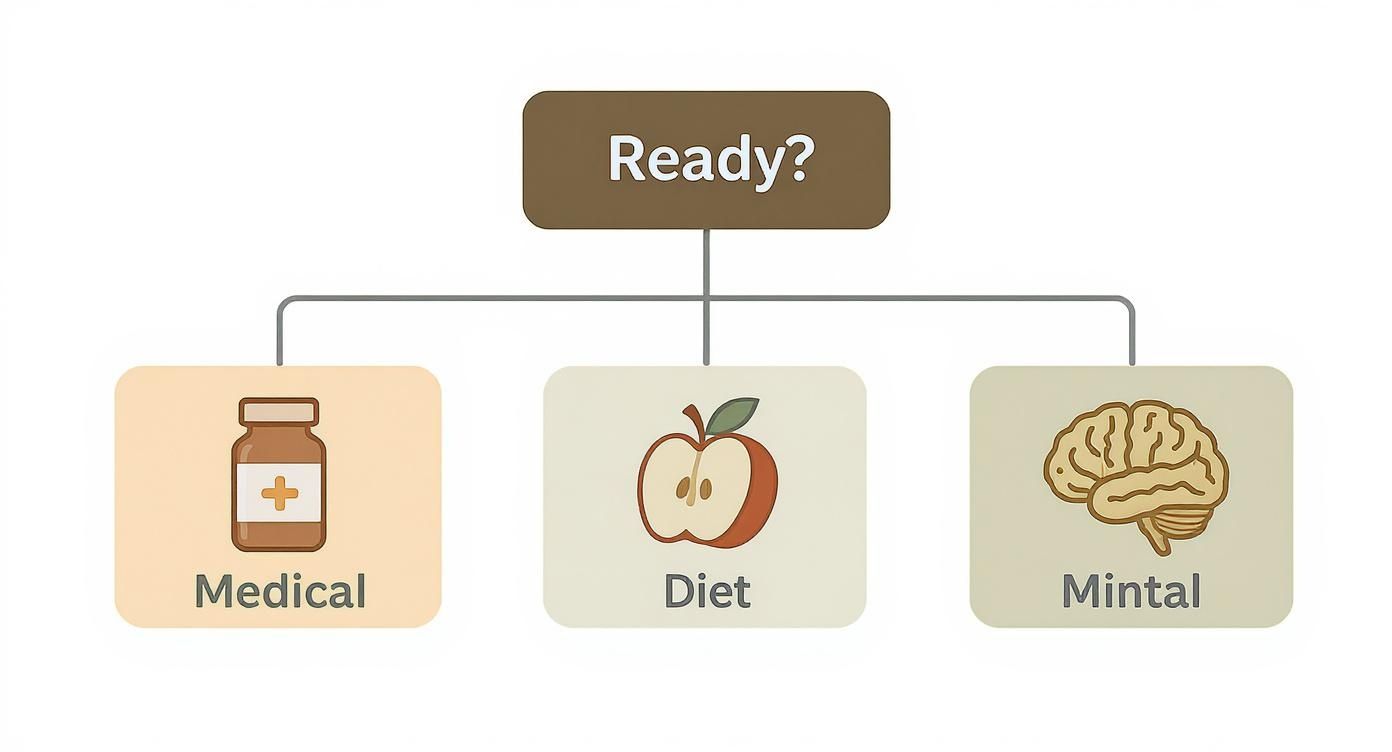
As this flowchart shows, your medical readiness is deeply connected to your dietary and mental preparation. They are all pillars supporting a safe journey.
A typical tapering plan for an SSRI might last anywhere from four to eight weeks, sometimes longer, depending on the drug, your dosage, and how long you’ve been on it. Your doctor is the only person qualified to create a schedule that minimizes withdrawal symptoms and ensures the drug is completely out of your system before you sit in a ceremony. Be totally transparent about your timeline so they can give you the right advice.
Medications and Conditions to Screen For
It’s not just about antidepressants. A whole range of other pharmaceuticals and health issues are incompatible with ayahuasca. Any reputable retreat center will have you fill out a detailed medical form, but the responsibility for honesty is on you.
Key Medication Categories to Avoid:
- All psychiatric medications: This isn’t limited to SSRIs. It includes SNRIs, tricyclics, and antipsychotics.
- Certain blood pressure medications: Some can cause dangerous interactions.
- Opioids and other pain relievers: This goes for prescription painkillers and even over-the-counter drugs containing dextromethorphan (found in many cough syrups).
- Stimulants: ADHD medications like Adderall or Ritalin are a definite no.
This isn’t a complete list by any means. For a more detailed breakdown, I strongly recommend reviewing a comprehensive list of the specific foods and meds to avoid with MAOIs. It is also wise to cross-check medication safety guidance from authoritative medical sources such as the U.S. National Library of Medicine, the NHS, and the Mayo Clinic.
Beyond medications, certain pre-existing health conditions can make an ayahuasca ceremony incredibly risky.
Critical Health Conditions to Disclose:
- Cardiovascular issues: A history of heart disease, high blood pressure, or stroke.
- Neurological disorders: Epilepsy or a history of seizures.
- Serious mental health conditions: A personal or family history of bipolar disorder, schizophrenia, or psychosis.
- Liver or kidney problems: These organs do the heavy lifting of processing the brew.
Radical honesty with your doctor and your retreat facilitators is your best safety tool. Hiding a medication or a health condition doesn’t just put you at risk—it can endanger the entire ceremony space. Get this foundational step right, and you’ll be building your entire experience on solid ground.
Embracing the Traditional Ayahuasca Dieta
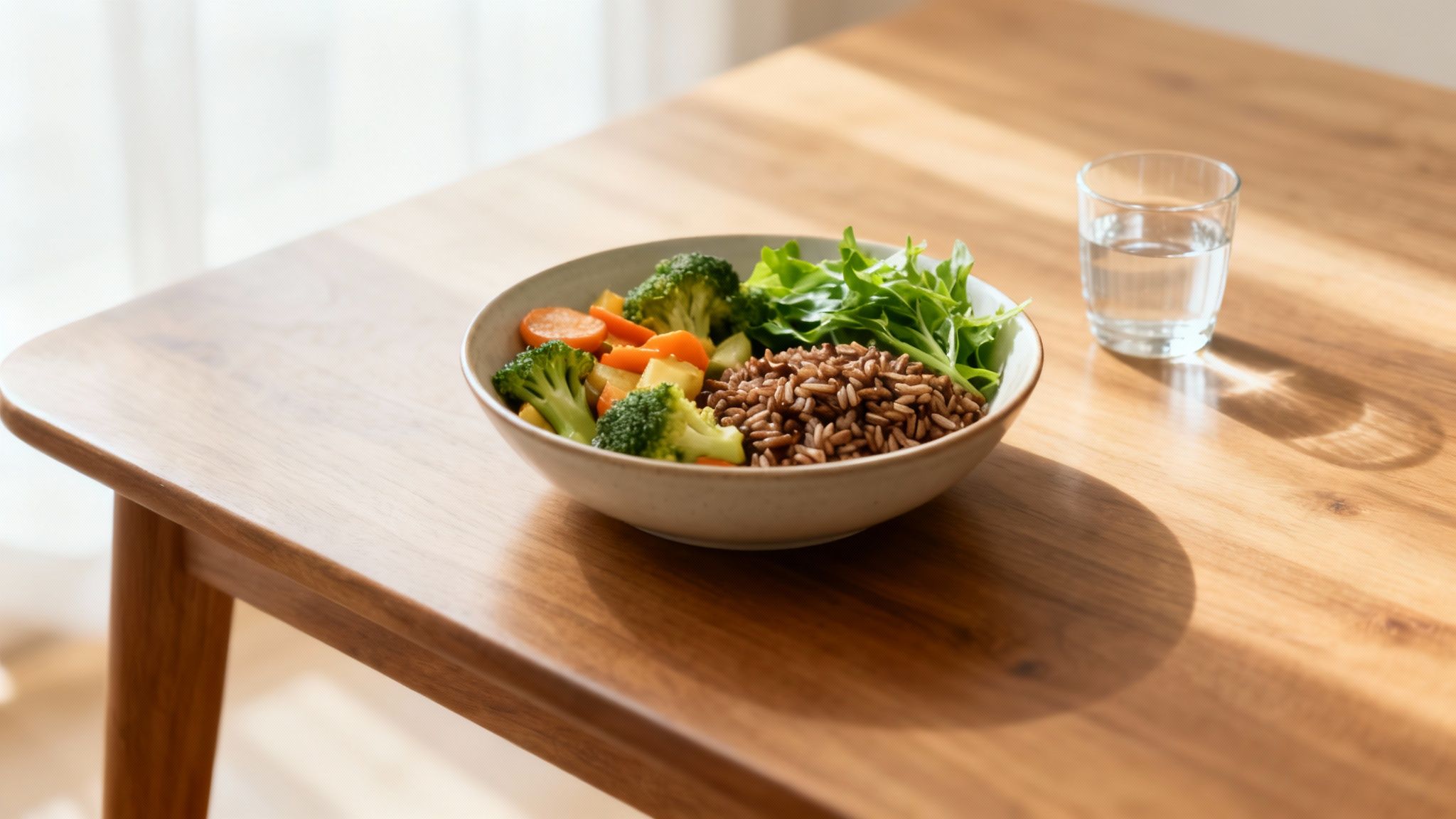
Once you’ve cleared the medical hurdles, it’s time to focus on the dieta. This isn’t just a diet in the Western sense of losing weight or a trendy cleanse. It’s a foundational practice of physical, mental, and spiritual purification that’s been part of this tradition for centuries.
Think of it as preparing the soil before planting a seed. By simplifying what you eat and do, you’re clearing out the static and making your body and mind more sensitive and receptive. It’s a profound act of respect for the medicine, the tradition, and for yourself, signaling that you’re truly ready to listen.
Why Certain Foods Are Strictly Off-Limits
The dietary rules aren’t arbitrary; they’re rooted in both biochemistry and shamanic tradition. The most critical reason comes down to an amino acid called tyramine. Many of the foods on the “no” list are loaded with it.
The ayahuasca brew contains a powerful MAO-inhibitor (MAOI) from the B. caapi vine. This is the “activator” component that allows the DMT to work. But it also blocks the enzyme that breaks down tyramine in your body. If tyramine builds up, it can trigger a hypertensive crisis—a sudden, dangerous spike in blood pressure that can cause blinding headaches and other serious health events. This isn’t just a suggestion; it’s a non-negotiable safety rule.
“The dieta is the process of becoming a clean vessel. You are removing physical and energetic blockages to create a clear channel for the spirit of ayahuasca to work with you.”
The brew itself is a testament to meticulous preparation, often boiled for 6 to 12 hours. This reverence is reflected in its widespread, respected use. In Brazil, for example, it’s estimated that nearly 600,000 people have engaged with ayahuasca, with religious communities alone serving over 2.5 million doses annually.
Below is a quick reference for the major tyramine-rich foods to steer clear of.
Tyramine-Rich Foods to Avoid
| Food Category | Specific Examples to Avoid | Reason for Restriction |
|---|---|---|
| Aged & Fermented | Aged cheeses (cheddar, blue, feta), tofu, soy sauce, miso, sauerkraut, kimchi, kombucha | Fermentation and aging dramatically increase tyramine levels. |
| Cured & Processed Meats | Salami, pepperoni, bacon, smoked fish, pickled meats | Curing, smoking, and processing concentrate tyramine. |
| Certain Produce | Overripe bananas, avocados, fava beans, red wine, tap/draft beer | Tyramine content increases as fruits and vegetables over-ripen. |
| Leftovers | Any food, especially high-protein, that is more than a day old | Tyramine levels rise in leftover foods as proteins break down. |
This list isn’t exhaustive, but it covers the most common and high-risk items. When in doubt, always stick to fresh, whole, and unprocessed foods.
Your Dieta Timeline: A Practical Guide
Most experienced facilitators will tell you to start the dieta at least two weeks out, but I find that a full month really helps your system settle. The closer you get to the ceremony, the cleaner your diet needs to be.
Four Weeks Out:
- Start by cutting out pork and red meat. These are considered energetically heavy and are usually the first things to go.
- Eliminate all hard alcohol and recreational drugs. It’s time to start clearing the slate.
- Begin reducing processed foods. Swap out chips, sugary sodas, and fast food for simple, whole foods.
Two Weeks Out:
- No more alcohol of any kind, including beer and wine.
- Remove all fermented foods from your diet. This means saying goodbye to soy sauce, aged cheeses, and kimchi for a little while.
- Avoid overripe fruits and all cured meats.
- Dial way back on heavy oils, excessive salt, and strong spices. Bland is the goal. A little coconut oil and a pinch of salt are usually fine.
One Week Out:
- Cease all sexual activity, including self-pleasuring. Traditional wisdom holds that this conserves vital energy for your journey inward.
- Cut out all caffeine. For many, this is the hardest part. Taper down beforehand if you’re a heavy coffee drinker to avoid withdrawal headaches.
- Eliminate all refined sugar. Let fresh fruit be your only source of sweetness.
This is more than just a food plan. To go deeper into the spiritual side of this practice, you can learn more about what an ayahuasca dieta truly is.
Navigating the Dieta in the Real World
Let’s be honest: sticking to the dieta while juggling a job, social life, and family can be tough. Your best friend here is preparation. Cook your meals in batches—think simple dishes like quinoa, steamed veggies, and grilled fish—so you’re never caught hungry and tempted.
Don’t be shy about speaking up when you eat out. Call the restaurant ahead of time and ask if they can prepare something simple like plain rice and steamed broccoli. Most places are happy to accommodate. With friends, you don’t need to give a full lecture on MAOIs. Simply saying you’re on a “strict health protocol” for a while is usually enough. The discipline you practice now will pay dividends in the clarity and depth of your ceremony.
Cultivating Your Mindset and Setting Intentions
Once you’ve handled the medical and dietary groundwork, the real inner work begins. The physical cleanse clears the runway, but it’s your mindset that ultimately determines how the flight will go. This isn’t about forcing yourself to “think positive.” It’s about cultivating a state of radical openness, curiosity, and, most importantly, surrender.
The medicine has a funny way of showing you what you need to see, which isn’t always what you want to see. If you go in with a rigid, demanding attitude, you’re just setting yourself up for a fight. The goal is to loosen your grip, drop the expectations, and approach the experience with a deep sense of humility and trust.
From Expectation to Intention
A huge mistake people make is confusing an intention with a goal. A goal is a fixed outcome: “I want to fix my anxiety.” An intention, on the other hand, is more of a heartfelt question you pose to the medicine, to yourself, and to whatever you believe in.
Think about the difference in energy here:
Goal-Oriented: “I want to get over my fear of public speaking.”
Intention-Oriented: “I am open to understanding where my fear of public speaking comes from.”
Goal-Oriented: “I need to know what my life’s purpose is.”
Intention-Oriented: “I ask for clarity on the next right step for me.”
This subtle shift in how you frame your “ask” is everything. It moves you out of the driver’s seat and into a receptive, collaborative space with the medicine. You’re not making a demand; you’re starting a conversation.
“Your intention is the compass for your journey, not the map. It gives you a direction to head in, but it allows the path to unfold in ways you could never have planned. Holding it lightly is key—it lets the medicine guide you to places you didn’t even know you needed to go.”
Practices for Mental and Spiritual Attunement
Getting your mind right doesn’t happen the night before. You’ve got to put in some gentle, consistent effort in the weeks leading up. Integrating a few simple practices into your daily life can make a world of difference in how you navigate the intense and often confusing terrain of an ayahuasca journey.
These aren’t complicated rituals. They’re about quieting the noisy, analytical part of your brain so you can hear what your deeper self is trying to tell you.
Mindfulness and Meditation
Even just 10-15 minutes a day can be a game-changer. What you’re really practicing here is the skill of observing your thoughts and feelings without getting tangled up in them. When a massive wave of emotion or a bizarre vision comes through in ceremony, this practice is what allows you to be the calm observer instead of getting swept away. A simple focus on your breath is all you need to start.
Journaling for Self-Inquiry
This is one of the best tools for digging up what you’re truly seeking. Journaling helps you bypass the surface-level stuff and get to the heart of the matter. Forget about grammar or making it sound good—just let it all flow out.
If you’re stuck, try some of these prompts:
- What patterns keep showing up in my life that are causing pain?
- If I could let go of one big fear, what would it be? How would my life look without it?
- Which relationships in my life feel like they need healing or clarity?
- What is the one question my heart is really asking right now?
Read back over your entries as you get closer to your ceremony date. You’ll almost certainly see a theme emerge, pointing you toward a clear, honest intention.
Connecting with Nature
Remember, ayahuasca is a plant medicine from the Earth. One of the most simple and profound ways to tune into its frequency is to spend quiet time in nature. Go for a walk in the woods, sit by some water, or just pay attention to the clouds in the sky. This helps ground your energy and reminds you that you’re part of something so much bigger than yourself. It brings a sense of awe and humility—the perfect state of mind to carry into the ceremony space.
Building Resilience Through Breathwork
Your breath is your anchor. Full stop. When things get intense in a ceremony, the single most reliable tool you have for staying centered is right under your nose. Practicing simple breathing exercises beforehand trains your nervous system to stay calm under pressure.
A really effective one is box breathing:
- Breathe in slowly through your nose for a count of four.
- Hold your breath for a count of four.
- Breathe out slowly through your mouth for a count of four.
- Hold at the bottom for a count of four.
Do this for a few minutes every day. It not only calms you down in the moment but also builds a kind of physiological muscle memory for resilience that you can tap into when you really need it. By committing to this inner work, you’re not just getting ready for a ceremony—you’re building skills for a more conscious and centered life long after you leave the retreat.
Choosing a Safe Retreat and Packing Essentials
Once you’ve done the inner work, it’s time to tackle the logistics of your journey. I can’t stress this enough: choosing a retreat isn’t like booking a hotel. This decision is one of the most critical factors for your safety and the overall quality of your experience. As ayahuasca has grown in popularity, the quality of centers has become incredibly varied, so you need to do your homework.
Your goal is to become a thoughtful investigator. You’re looking for a safe, supportive container held by people you can trust with your well-being. When you’re in a deeply vulnerable state, that trust is absolutely everything.
Vetting Your Retreat Center
Don’t get pulled in by a slick website or glowing marketing copy. You have to dig much deeper and ask direct, specific questions. Any center worth its salt will welcome your diligence and answer with total transparency.
Key Questions to Ask Potential Retreats:
- Medical Screening: How do they screen participants? Is there a doctor or qualified medic on staff or at least on call? This is a non-negotiable.
- Facilitator Experience: What is the actual background of the shaman and facilitators? Ask how many ceremonies they’ve led and what tradition they trained in.
- Group Size: How many people are in a ceremony at once? What’s the facilitator-to-guest ratio? I’ve found that smaller groups, ideally under 15 people, allow for much more personal attention if things get difficult.
- Emergency Protocols: What is their concrete plan if a medical or psychological emergency happens? How far away is the nearest hospital?
- Integration Support: What happens after you leave? Do they offer anything to help you process the experience, like access to integration specialists, group calls, or a community forum?
The rise of ayahuasca tourism has created a complex dynamic. To get a better feel for this landscape, it’s worth reading about shamanic tourism in Iquitos, Peru, which has long been an epicenter for this work: https://ayahuasca.com/news/from-medicine-men-to-day-trippers-shamanic-tourism-in-iquitos-peru/
Packing for Comfort and Practicality
After you’ve locked in your retreat, your focus can shift to packing. You are almost certainly heading somewhere rustic and remote, so think function and comfort, not fashion.
A thoughtfully packed bag means you won’t be distracted by minor discomforts, freeing you up to stay present with your inner work. Remember, you’re packing for intense ceremony nights and for the quiet, reflective downtime in between.
“Your packing list is more than just a checklist; it’s an act of self-care. Each item you choose should support your comfort, focus, and ability to surrender to the experience without needless distraction.”
The Essential Packing List
Beyond your passport and toiletries, a few key items can make a huge difference in your comfort and the smoothness of your experience.
Ceremony Night Must-Haves:
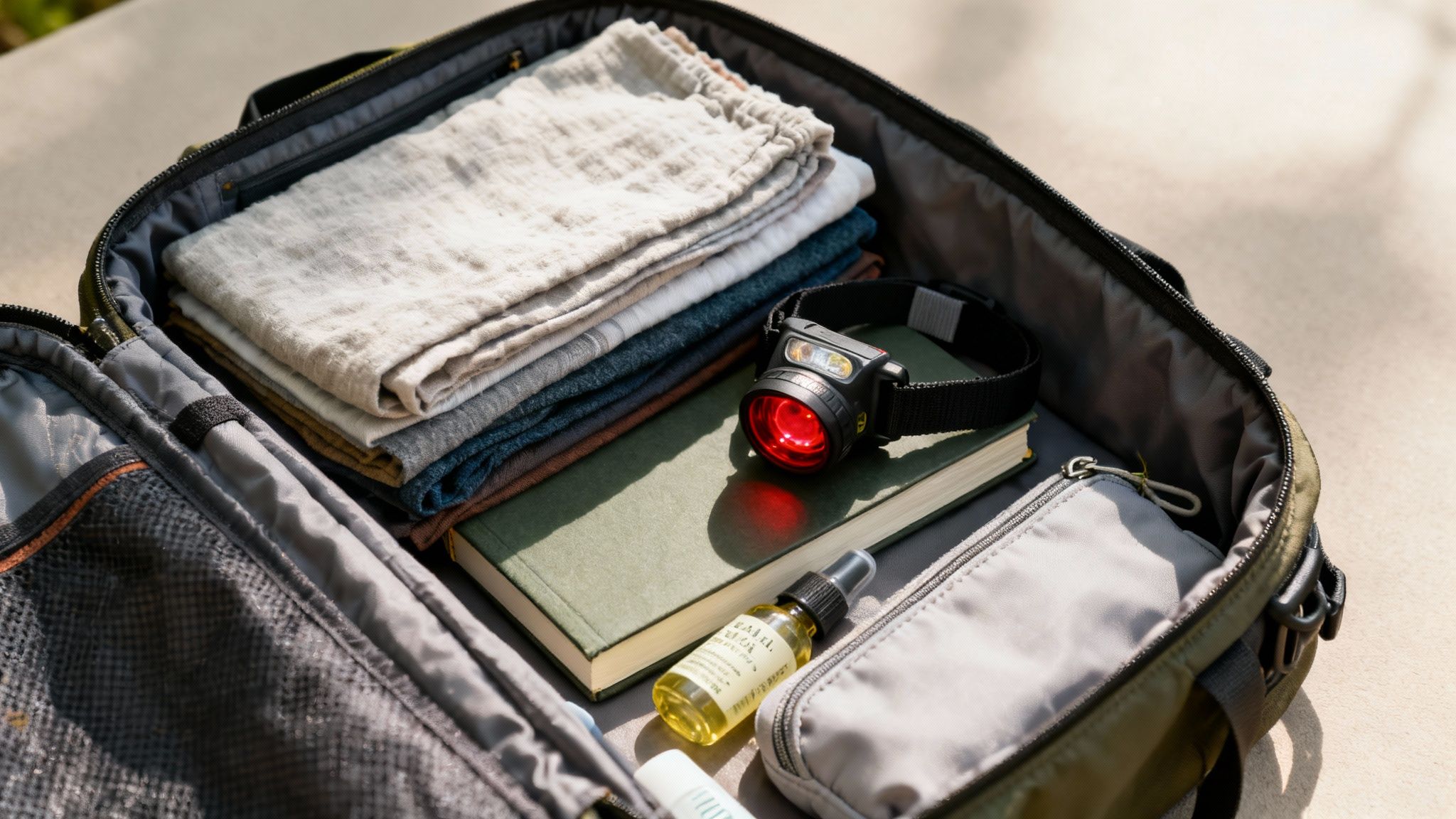
- Headlamp with a Red-Light Setting: This is probably the most important item on the list. A red light protects your night vision and won’t blast your neighbors in the eyes when you need to move around the dark maloca (ceremony space).
- Comfortable, Layered Clothing: You’ll be sitting or lying down for hours, and it’s common for your body temperature to swing from hot to cold. Loose, soft fabrics are best (white or light colors are traditional). Bring a cozy sweater, shawl, or blanket you can easily add or remove.
- A Dedicated Journal and Pen: Insights can vanish like dreams. Have a journal right by your mat to jot down key feelings, images, or words as soon as you’re able.
General Retreat Essentials:
- Natural Insect Repellent: Most centers discourage harsh chemicals like DEET. Look for a quality natural repellent that works for you.
- Refillable Water Bottle: Hydration is essential, especially in the jungle.
- Slip-On Shoes: You’ll be taking your shoes on and off constantly. Easy footwear like flip-flops, sandals, or Crocs is a true sanity-saver.
- Small, Meaningful Item: Bringing a small personal object—a crystal, a photo, a piece of jewelry—can be a powerful grounding tool. You can place it on your mat or personal altar space to serve as a familiar touchstone.
The Real Work Begins with Post-Ceremony Integration
The last icaros fades, the jungle goes quiet, and you’re left with the profound, shimmering echoes of your journey. It’s a common misconception to think the work is over. In truth, it has just begun.
The ceremony itself is the catalyst, not the cure-all. The real, lasting change happens in the days, weeks, and even months that follow. This is the art of integration.
Integration is simply the process of weaving the lessons, insights, and feelings from your ayahuasca experience into the fabric of your everyday life. Without it, even the most mind-blowing revelations can fade like a strange dream, leaving you with little more than a wild story. Think of it this way: the ceremony cracks the door open; integration is the lifelong practice of walking through it.
Gently Re-Entering Your World
In the immediate aftermath of a ceremony, your entire system—body, mind, and spirit—is incredibly raw and open. The first order of business is to be exceptionally kind to yourself and allow for a soft landing. This is a huge reason why continuing a modified version of the dieta is so critical.
Jumping right back into your old habits of heavy foods, coffee, or alcohol can be a massive shock to your system, both physically and energetically. Continuing to eat clean, simple foods for at least a week honors the deep cleansing work you’ve just undertaken and helps ground your energy.
A Few Post-Ceremony Dieta Pointers:
- First 3 days: Try to stick as closely as you can to the pre-ceremony diet. Simple broths, steamed veggies, and some lean fish or chicken are perfect.
- First week: You can slowly start reintroducing other foods, but hold off on pork, heavy red meat, alcohol, and anything highly processed or fermented. Pay close attention to how your body responds.
- Listen to your body: Don’t be surprised if your tastes have changed. This is incredibly common. Your body is recalibrating, so honor what it’s telling you it needs.
This gentle re-entry isn’t just about what you eat. It’s about creating a quiet, low-stimulus cocoon for yourself. If you can possibly avoid it, don’t dive straight back into a chaotic work schedule, loud social events, or the 24/7 news cycle. Give yourself the gift of space.
Creating Your Integration Roadmap
Integration is an active verb. It’s not something that just happens to you. The raw material from your journey—the visions, the emotional purges, the downloads of insight—needs to be tended to carefully. Otherwise, it can feel overwhelming or just drift away.
Your journal is probably the single most powerful tool you have right now. In the first few days after your experience, just write. Get everything down on paper without trying to analyze or make sense of it. Capture the feelings, the colors, the strange symbols, and the moments of piercing clarity.
“The ceremony provides the raw data. Integration is where you translate that data into wisdom. It’s the bridge between the mystical experience and your everyday reality. Taking the time to process is non-negotiable for lasting transformation.”
This “brain dump” becomes your personal source code. As you revisit it over the coming weeks, you’ll start to see patterns and connect dots you couldn’t see before.
Tools for Weaving Insights into Daily Life
It’s one thing to have a profound insight like, “I need to stop being so hard on myself.” It’s another thing entirely to turn that into real-world action. This is where the rubber meets the road, and it often requires practical tools and support.
Practical Integration Techniques:
- Find Your People: Connecting with others who have been on this path is invaluable. This could be an integration circle (many centers offer them online), or even just keeping in touch with a couple of people from your ceremony group. Sharing your experience with people who just “get it” is a powerful antidote to feeling isolated with such a big experience.
- Get Professional Support: An integration coach or a therapist who is knowledgeable about psychedelics can be a game-changer. They provide a safe space to unpack challenging material, help you identify concrete next steps, and hold you accountable.
- Get Back in Your Body: Ayahuasca is a deeply somatic experience. It’s not all in your head. Practices like yoga, tai chi, ecstatic dance, or even just long walks in nature are crucial for helping you process everything on a cellular level and ground the new energy in your body.
- Practice Radical Self-Compassion: Integration is not a straight line. You will have days of incredible clarity followed by days of confusion, emotional turmoil, or just feeling… normal. That’s all part of it. Be patient with yourself. You are fundamentally recalibrating your entire being.
Ultimately, integration is about living differently, not just thinking differently. It’s taking that feeling of universal love and applying it to how you care for yourself. It’s taking the courage you found in the ceremony and using it to finally have that difficult conversation you’ve been putting off. The ceremony opens the door, but you are the one who has to walk through it, one intentional step at a time.
Disclaimer: The information provided on Ayahuasca.com is for educational purposes only and is not intended as medical advice, diagnosis, or treatment. Ayahuasca is a powerful traditional Amazonian medicine and may not be suitable for everyone. Always consult with a qualified healthcare professional before making decisions related to health, mental well-being, medications, or the use of Ayahuasca.