
Think of an Ayahuasca ceremony as a journey to a locked room holding deep, visionary states. The Ayahuasca vine (Banisteriopsis caapi) is the lock on the door, preparing the way. But you still need a key to actually open it. Chaliponga (Diplopterys cabrerana) is one of the most powerful keys known.
What Is Chaliponga and Why Is It So Important?
Chaliponga is a revered plant whose leaves are often added to traditional Ayahuasca brews. The magic of Ayahuasca comes from a famous two-part partnership: a plant containing harmala alkaloids (the vine) and another containing DMT. While Chacruna (Psychotria viridis) is widely used, many experienced traditions turn to chaliponga for its unique strength and character.
The power is all in the leaves. They contain a potent concentration of N,N-DMT, the compound that fuels the medicine’s profound visionary effects. The vine’s job is to inhibit certain enzymes in our gut, which in turn allows the DMT from the chaliponga to become orally active and begin the journey.
The Source of Visionary Power
Chaliponga, known to botanists as Diplopterys cabrerana, is a cornerstone of traditional Ayahuasca, with its use documented for thousands of years among indigenous Amazonian cultures. It grows natively throughout the Amazon Basin—spanning Brazil, Colombia, Ecuador, and Peru—and is packed with psychoactive alkaloids.
Just how potent is it? Studies show chaliponga leaves can contain anywhere from 0.17% to 1.75% N,N-DMT by dry weight. This makes it one of the richest natural sources of this compound, and it’s a huge reason why so many shamans and seasoned practitioners consider it a “stronger” admixture plant. The decision to use chaliponga over Chacruna is a deliberate choice; it completely changes the texture and direction of the ceremony.
“Chaliponga isn’t just an ingredient; it’s a spirit partner to the Ayahuasca vine. Understanding this relationship reveals how the specific plants chosen for a brew define the depth, character, and spiritual direction of the entire experience.”
For a quick reference, here’s a look at the plant’s core attributes.
Chaliponga Quick Facts
| Attribute | Description |
|---|---|
| Scientific Name | Diplopterys cabrerana |
| Common Names | Chaliponga, Oco-yagé, Chagropanga |
| Primary Alkaloid | N,N-DMT |
| Typical Concentration | 0.17% – 1.75% N,N-DMT by dry weight |
| Role in Ayahuasca | Provides the visionary DMT component |
| Traditional Region | Amazon Basin (Colombia, Ecuador, Peru, Brazil) |
This table helps illustrate why this particular plant is so central to many powerful Ayahuasca brews.
A Deeper Look at Its Role
The significance of chaliponga goes far beyond its chemistry. In shamanic worldviews, the plant possesses its own spirit, its own “way of teaching.” This is a crucial concept for anyone hoping to understand Ayahuasca on a deeper, more respectful level.
- Intensity and Depth: Brews made with chaliponga are widely reported to be more intense, powerful, and immersive. They often lead to more cosmic or abstract visions, as opposed to the more personal, jungle-oriented visions sometimes linked to Chacruna.
- Unique Alkaloid Profile: On top of N,N-DMT, chaliponga also contains other trace alkaloids, including 5-MeO-DMT. This adds another layer of complexity and depth to the journey.
- Honoring Indigenous Wisdom: Recognizing chaliponga’s specific role is a way of honoring the incredible botanical knowledge of the Amazonian peoples who have worked with this plant for millennia. You can learn more about other sacred plants in Ayahuasca shamanism.
By understanding what chaliponga brings to the brew, seekers can approach Ayahuasca with a much greater appreciation for the intricate alchemy at play. This remarkable plant is a key that unlocks a very specific kind of door, and its importance simply can’t be overstated.
The Cultural Roots of Chaliponga in Amazonian Shamanism
To really get to the heart of what chaliponga is, you have to look past the chemistry and into its soul—its deep and storied history in Amazonian shamanism. For countless generations, this plant has been so much more than an ingredient. It’s a sacred tool, a spiritual ally, and a revered elder in the botanical world. Indigenous communities have long understood its power not just for healing the body, but for divination, connecting with ancestral spirits, and navigating the invisible realms.
This sacred relationship is built on centuries of direct, hands-on experience and wisdom passed down from one generation to the next. In these traditions, plants aren’t just things; they’re living beings with their own consciousness and lessons to teach. Chaliponga, in particular, is often seen as a potent teacher—one that offers direct, powerful, and sometimes tough lessons. It acts as a bridge, allowing the shaman and the participant to speak with the spirit world, diagnose spiritual sicknesses, and get guidance from a higher intelligence.
A Sacrament for Healing and Divination
In its traditional setting, chaliponga is a cornerstone of ceremonial life. It’s the key that unlocks states of consciousness where the usual rules of reality seem to melt away, making space for profound insight and life-changing healing.
Shamans, or curanderos, work intimately with the spirit of the plant to:
- Diagnose Illness: The visionary states brought on by chaliponga are believed to show the spiritual or energetic root of a person’s suffering.
- Perform Spiritual Cleansing: The experience often comes with a physical purge, which is seen as a way to shed negative energies, emotional baggage, and spiritual intrusions.
- Seek Guidance: Community leaders would consult the plant to find answers to big questions, get a glimpse of future events, or talk with nature spirits for advice on hunting or harvesting.
This traditional use couldn’t be more different from a recreational approach. It’s a disciplined, intentional practice aimed at bringing balance back to the individual and the community.
Tracing a Millennia-Old Legacy
The use of Ayahuasca admixtures like chaliponga is anything but new. While the exact origins of chaliponga’s use are lost to the mists of time, archaeological finds suggest psychoactive plant brews have been part of South American cultures for a very, very long time. For instance, researchers have found traces of key psychoactive compounds in hair samples from mummies over a thousand years old.
While we’re still studying which specific plants they used, ethnographic accounts tell us that more than 70 different Amazonian ethnic groups have traditionally used Ayahuasca. They’ve given the sacred brew over 40 distinct vernacular names. You can read the full research on these ancient findings.
“This extensive history underscores that our modern understanding of Ayahuasca is built upon a foundation of immense indigenous knowledge. Engaging with this medicine is to participate in a lineage that stretches back through uncounted generations of healers, seekers, and stewards of the Amazon.”
Over this long history, chaliponga’s role has shifted. What began as a sacrament used only within tribal communities eventually made its way into the practices of syncretic churches in Brazil, like the Santo Daime and União do Vegetal. These groups blended indigenous shamanism with Christian ideas and helped carry the knowledge of Ayahuasca beyond the Amazon.
More recently, this powerful plant has caught the attention of Westerners, becoming a key player in neo-shamanic circles and modern Ayahuasca retreats. This global journey speaks to a growing recognition of the plant’s incredible potential. But it also comes with a profound responsibility to honor its cultural origins, ensuring the ancient wisdom that protected chaliponga for millennia is respected and preserved for the future.
Unpacking Chaliponga’s Unique Chemical Signature
To truly understand why chaliponga is held in such high regard, you have to look beyond the surface and into its distinctive chemical makeup. Think of an Ayahuasca brew as a kind of living orchestra. In this orchestra, the star visionary molecule, N,N-DMT, is the lead vocalist—it sings the main melody that guides the powerful, otherworldly visions.
While other classic admixture plants like Chacruna (Psychotria viridis) also provide this lead vocalist, chaliponga brings an entire backing choir and a full string section. Its unique power flows from a richer, more complex blend of alkaloids that all work together, shaping the entire journey.
The Alkaloid Symphony
Chaliponga is famous for its high concentration of N,N-DMT, often containing substantially more than its cousin, Chacruna. But that’s only the beginning of the story. It also contains other crucial compounds, most notably 5-MeO-DMT and a variety of other trace alkaloids.
These additional compounds are the harmony and rhythm that give the music its depth and emotional color. They support the main melody of N,N-DMT, and this unique “alkaloid signature” is precisely what makes a chaliponga experience feel so different.
- N,N-DMT (The Lead Visionary): This is the engine of the experience, the primary psychoactive compound responsible for the vivid, immersive visionary states Ayahuasca is known for.
- 5-MeO-DMT (The Cosmic Deepener): Even in small amounts, this powerful compound is known for producing experiences of profound unity, ego dissolution, and a feeling of cosmic connection. Its presence adds an incredible layer of depth.
- Other Trace Alkaloids: A host of other compounds contribute subtle nuances that further define the character, texture, and feel of the medicine.
This rich chemistry is why so many indigenous traditions see these plants not just as sources of molecules, but as living beings with their own wisdom.
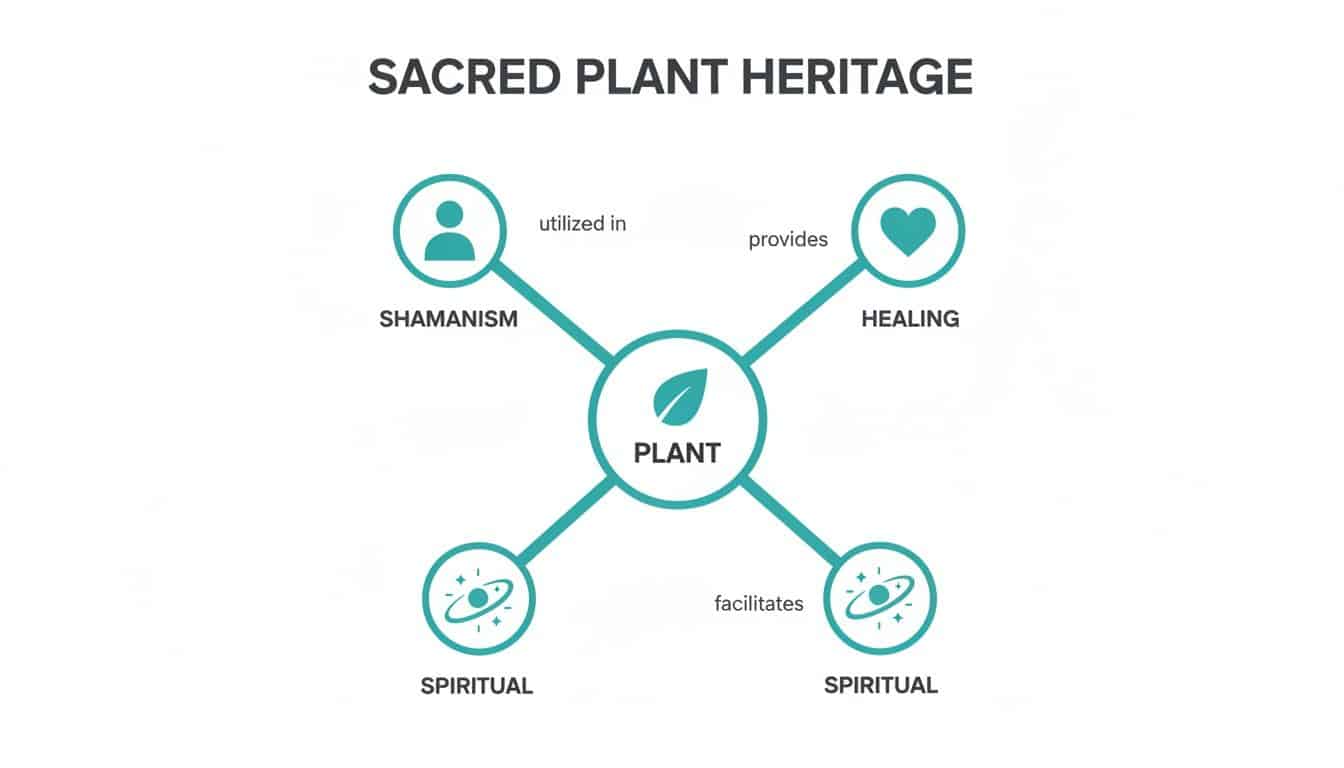
The map above hints at these deep connections, showing how plants like chaliponga are woven into the very fabric of shamanic healing and spiritual practice across generations.
Chaliponga vs Chacruna (Psychotria viridis)
The choice between using chaliponga or chacruna is one of the most critical decisions an ayahuasquero makes when preparing the brew. A minor tweak it is not; it fundamentally shifts the entire energetic landscape of a ceremony. While both are profound teachers, they speak in very different voices.
“The specific DMT-containing plant chosen for a brew profoundly shapes the nature, intensity, and therapeutic direction of an Ayahuasca ceremony. The art of the brewmaster is knowing which plant spirit is needed for the work at hand.”
To put this into perspective, let’s compare these two celebrated admixture plants side-by-side.
| Feature | Chaliponga (Diplopterys cabrerana) | Chacruna (Psychotria viridis) |
|---|---|---|
| Primary Alkaloid | N,N-DMT | N,N-DMT |
| Secondary Alkaloids | Contains 5-MeO-DMT and other trace alkaloids | Primarily N,N-DMT with fewer other compounds |
| Reported Potency | Generally considered more potent and intense | Milder and often described as more gentle |
| Visionary Style | Often described as cosmic, abstract, or otherworldly | Frequently described as colorful, nature-based, and personal |
| Energetic Feel | Direct, powerful, and sometimes more challenging | Nurturing, gentle, and emotionally supportive |
This table helps illustrate why a seasoned facilitator might choose chaliponga for deep diagnostic work or for someone who is ready for a more direct, powerful spiritual encounter.
Of course, none of this would be possible without the Ayahuasca vine itself. Its beta-carbolines act as the key that unlocks chaliponga’s visionary potential. You can learn more about this crucial interaction by reading our detailed guide on beta-carbolines. This beautiful chemical synergy is the very foundation of the Ayahuasca experience.
Experiential Effects and Therapeutic Potential
If you’re preparing for an Ayahuasca journey with chaliponga, get ready for a deep dive. This is a profound and often incredibly intense exploration of consciousness. People frequently describe the visionary state as more cosmic or abstract compared to brews made with other plants. You might find yourself navigating intricate geometric patterns, encountering what feel like otherworldly intelligences, or traveling through different dimensions altogether.
But these visions are almost never just a passive light show. They tend to carry deep personal meaning, reframing your life events, relationships, and internal struggles from a completely new angle. It’s this shift in perspective that often leads to powerful “aha” moments—the kind of personal insights that feel unshakably true and deeply integrated.
Beyond the visuals, a common thread in the chaliponga experience is a powerful feeling of interconnectedness. Many people describe a complete dissolution of the self, leaving behind a sense of unity with nature, the universe, and every living thing. This can be a profoundly moving and healing experience, instilling a sense of belonging and purpose that stays with you long after the ceremony is over.
Exploring the Visionary Journey
The unique character of a chaliponga-driven Ayahuasca experience comes down to its potent and complex mix of alkaloids. The journey often comes in waves, with distinct phases that can feel completely different from one another.
Here’s what people often report:
- Intense Visuals: The visual side of things is typically powerful and all-encompassing. Unlike the more earthly, jungle-themed visions people sometimes associate with Chacruna, chaliponga’s visions often lean toward the abstract—think complex sacred geometry, celestial landscapes, and encounters with what feel like non-human entities.
- Deep Introspection: The journey frequently turns inward, kicking off a “life review” where old memories, traumas, and ingrained behaviors bubble to the surface to be examined. It can be a real challenge, but it also presents a rare opportunity for resolution and healing.
- Emotional Release: A major part of the journey is often a deep emotional purge. This can come out as intense waves of joy, grief, love, or fear, creating a powerful and cathartic release of long-suppressed emotions.
The Emerging Therapeutic Landscape
While Amazonian cultures have worked with Ayahuasca as a healing tool for centuries, modern science is just now starting to catch up and investigate its therapeutic potential. A growing body of research is looking into how these experiences might open new doors for treating complex mental health conditions.
Early studies and a mountain of anecdotal reports suggest that Ayahuasca, especially within a supportive ceremonial container, may help people struggling with:
- Depression: The medicine seems to help people break out of rigid, negative thought loops and see their lives from a fresh, more hopeful perspective.
- PTSD: By allowing someone to revisit and reprocess traumatic memories in a safe space, Ayahuasca may help strip away the heavy emotional charge tied to them.
- Anxiety: The profound sense of interconnectedness and the deep personal insights gained in a ceremony can help soothe existential anxiety and foster a greater sense of peace.
It’s important to approach this with both hope and responsibility. The research is still young, and Ayahuasca is not a magic bullet. Still, the initial findings are incredibly promising, pointing to a future where plant medicines could play a much bigger role in mental healthcare.
“The therapeutic power of an Ayahuasca journey often lies in its ability to facilitate a direct, felt experience of one’s inner world, offering insights that traditional talk therapy might take years to uncover.”
This potential is showing up in community-level data, too. A comprehensive study in Spain involving 380 regular Ayahuasca participants found that they reported more positive perceptions across multiple public health indicators than the general population. The research linked regular, intentional Ayahuasca use with significantly better mental health outcomes. You can dig into these findings from the ICEERS technical report for a closer look.
For anyone seeking Ayahuasca for healing and growth, understanding both its visionary nature and its therapeutic possibilities is key to setting realistic and respectful expectations for the journey ahead.
Essential Safety and Harm Reduction Practices
Working with a powerful plant medicine like chaliponga demands a great deal of respect, careful preparation, and an absolute commitment to safety. This is a profound journey that requires you to put your physical and mental well-being first. The groundwork for a safe experience is laid long before you ever sit in a ceremony, and it all starts with understanding the risks involved.
The first thing to know is that Ayahuasca isn’t for everyone. A responsible approach always begins with a thorough and honest screening process, which means having a frank conversation about your medical and psychological history with a trusted facilitator.
Certain pre-existing health issues can create serious dangers. For instance, anyone with a history of cardiovascular problems, like severe high blood pressure or heart disease, should not drink Ayahuasca. The same goes for those with a personal or family history of psychotic disorders, such as schizophrenia or bipolar disorder, as these are major contraindications.
The Importance of the Dieta
Beyond the initial screening, the most critical part of your preparation is the ‘dieta’. This is a traditional set of dietary and lifestyle guidelines that you follow in the days and weeks leading up to a ceremony.
The dieta is much more than a simple detox; it’s a spiritual and physical cleansing meant to prepare your body and mind. By abstaining from certain foods, substances, and even certain activities, you purify your system and become more sensitive to the medicine’s effects.
A key reason for the dietary restrictions is to avoid foods high in tyramine. This amino acid can interact dangerously with the MAO inhibitors in the Ayahuasca vine. With MAOIs active in your system, tyramine levels can shoot up, potentially causing a hypertensive crisis—a sudden, severe spike in blood pressure that can be life-threatening.
Foods you’ll need to cut out completely include:
- Aged Cheeses and Meats: Things like parmesan, blue cheese, salami, and pepperoni are loaded with tyramine.
- Fermented Products: This covers a lot, including soy sauce, tofu, miso, and sauerkraut.
- Certain Fruits and Vegetables: Overripe bananas, avocados, and fava beans are on the “avoid” list.
- Alcohol and Processed Foods: Red wine, beer, and anything with a lot of salt, sugar, or preservatives should be avoided.
Medication and Substance Interactions
Just as important is knowing the severe risks of mixing Ayahuasca with certain medications. The brew’s MAOIs can lead to dangerous, sometimes fatal, interactions with a whole host of pharmaceuticals.
The most notorious and dangerous combination is with Selective Serotonin Reuptake Inhibitors (SSRIs), a very common type of antidepressant. When mixed with Ayahuasca, SSRIs can trigger serotonin syndrome, a condition where the brain is overwhelmed with serotonin. This can cause anything from agitation and confusion to seizures and even death. It is absolutely critical to speak with a doctor about safely tapering off these medications well before any ceremony.
“Working only with experienced, vetted, and trustworthy facilitators is the single most important safety measure you can take. A reputable guide will conduct a thorough screening, provide clear dieta instructions, and create a safe, supportive container for your journey.”
This is one area where you can’t cut corners. If a facilitator ever dismisses the importance of a proper screening or preparation, consider it a massive red flag. For a more detailed breakdown, you can learn more about which foods and meds to avoid with MAOIs to make sure you’re fully prepared.
By taking these harm reduction practices seriously, you honor both the medicine and yourself, creating the right conditions for a safe and deeply meaningful experience.
Ethical Sourcing and Legal Considerations
As the world’s interest in Ayahuasca and powerful plants like chaliponga grows, so does our responsibility to approach them with respect. Your journey does not need to unintentionally harm the very cultures and ecosystems that steward these traditions. We’re stepping into a complex world where legal lines can be blurry and our choices really matter.
The legality of plants containing DMT is a tricky, patchwork quilt of laws that changes drastically from country to country. In places like Peru, Ecuador, and Brazil, Ayahuasca is a legally protected part of the cultural heritage. But in many other nations, any plant with DMT, including chaliponga, gets swept into a legal gray zone or is flat-out illegal, often lumped in with synthetic drugs.
“Conscious participation means ensuring your journey contributes positively to the traditions and ecosystems that make it possible. It’s about moving from a consumer mindset to one of respectful exchange.”
This legal maze means you absolutely have to do your homework. Always investigate the specific laws in your home country and any country you plan to visit for a retreat. Pleading ignorance won’t hold up in court, and the consequences can be incredibly serious.
The Heart of the Matter: Ethical Sourcing
Beyond the strict letter of the law is the spirit of how we engage. The explosion in demand for Ayahuasca has put incredible strain on the Amazon rainforest and the indigenous communities who have protected this knowledge for millennia. When the Ayahuasca vine and admixture plants like chaliponga are harvested unsustainably, it disrupts the fragile ecosystem and threatens the long-term future of the medicine itself.
Truly ethical sourcing is so much more than just getting your hands on a plant; it’s about building a relationship. It’s about committing to practices that support both the land and its people. This brings us to the core concept of reciprocity—the idea of a balanced, two-way exchange where everyone involved benefits.
When you’re looking for a retreat or a facilitator, don’t be shy about asking direct, important questions about how they operate:
- Sustainable Harvesting: Do they cultivate their own plants or partner with local growers who use sustainable practices? Wild-harvesting chaliponga without care can be incredibly destructive.
- Community Relationships: What is their real relationship with the local indigenous communities? Do they hire local people, pay them fairly, and invest in community projects like schools or healthcare?
- True Reciprocity: How are they giving back? Does a real portion of their income go directly to the communities who are the original guardians of this knowledge?
Choosing a center that can answer these questions with transparency is one of the most powerful things you can do. It’s a way of voting with your wallet, ensuring your personal journey of healing also contributes to preserving the culture and environment you’ve come to learn from. This creates a positive cycle of respect that can last for generations.
Common Questions About Chaliponga
As we’ve explored, chaliponga is a deeply respected and powerful plant teacher. To wrap things up and clear up any lingering questions, let’s dive into some of the most common things people ask when they’re learning about its place in Ayahuasca ceremonies.
Is Ayahuasca With Chaliponga Stronger Than With Chacruna?
In a word, yes—most of the time. Many seasoned practitioners and participants will tell you that Ayahuasca brewed with chaliponga packs a much bigger punch. It’s often a significantly more potent and intense experience.
This reputation comes from its higher concentration of DMT and its unique cocktail of other alkaloids, including trace amounts of 5-MeO-DMT. This specific chemical profile can lead to a more all-encompassing visionary state.
But remember, the strength of any brew depends on a whole host of things. The age of the plants, how they were prepared, and the experience of the brewer all play a huge role. The golden rule is simple: always approach the medicine with respect, start with a smaller dose, and keep an open line of communication with your facilitator.
How Do The Visionary Experiences Typically Differ?
Every Ayahuasca journey is intensely personal, so there are no hard-and-fast rules. That said, people often report some general differences in the “flavor” of the experience depending on which admixture plant is used. Think of it like choosing a guide with a very different teaching style.
- Chacruna Experiences: People often describe these visions as colorful, full of nature imagery, and emotionally gentle. The spirit of the plant can feel nurturing, almost maternal.
- Chaliponga Experiences: These journeys are frequently associated with more abstract, cosmic, or “extradimensional” visuals. They can feel faster-paced, more intricate mentally, and sometimes more direct or instructional in their lessons.
Because of this intensity, some find a chaliponga journey can be disorienting if they aren’t ready for it. It’s not uncommon to hear experienced shamans talk about the “spirit” of each plant having a completely distinct personality and a different way of guiding the healing process.
“For any responsible seeker, one of the most vital questions is ensuring the medicine they sit with is sourced with integrity. The best way to do this? Ask direct questions of any retreat or facilitator you’re considering.”
How Can I Find a Ceremony Using Ethically Sourced Chaliponga?
This is one of the most important questions you can ask, and the answer comes down to one thing: transparency.
Start by asking about their relationship with the communities where the plants are harvested. Do they work directly with local growers? Do they have sustainable harvesting practices in place to ensure the plants aren’t being depleted?
Follow up by asking how they practice reciprocity—how do they make sure the local communities are benefiting from this exchange? Reputable, ethical providers will not only welcome these questions but will be happy to share the details of their sourcing. As a conscious seeker, making sure your chosen center is committed to these principles is essential.
Disclaimer:
The information provided on Ayahuasca.com is for educational purposes only and is not intended as medical advice, diagnosis, or treatment. Ayahuasca is a powerful traditional Amazonian medicine and may not be suitable for everyone. Always consult with a qualified healthcare professional before making decisions related to health, mental well-being, medications, or the use of Ayahuasca.