
For centuries, hidden deep in the rainforests of Central Africa, the Tabernanthe iboga shrub has been a spiritual cornerstone for the Bwiti people. To them, this isn’t just a plant; it’s a sacred teacher. Its root bark, rich in powerful alkaloids, is the key ingredient in their most profound healing ceremonies and initiation rites.
Now, this ancient medicine is making waves far beyond its traditional roots, capturing the attention of the Western world. The reason? Its astonishing potential to break the grip of severe addiction.
What Is Iboga and Why Is It Gaining Attention
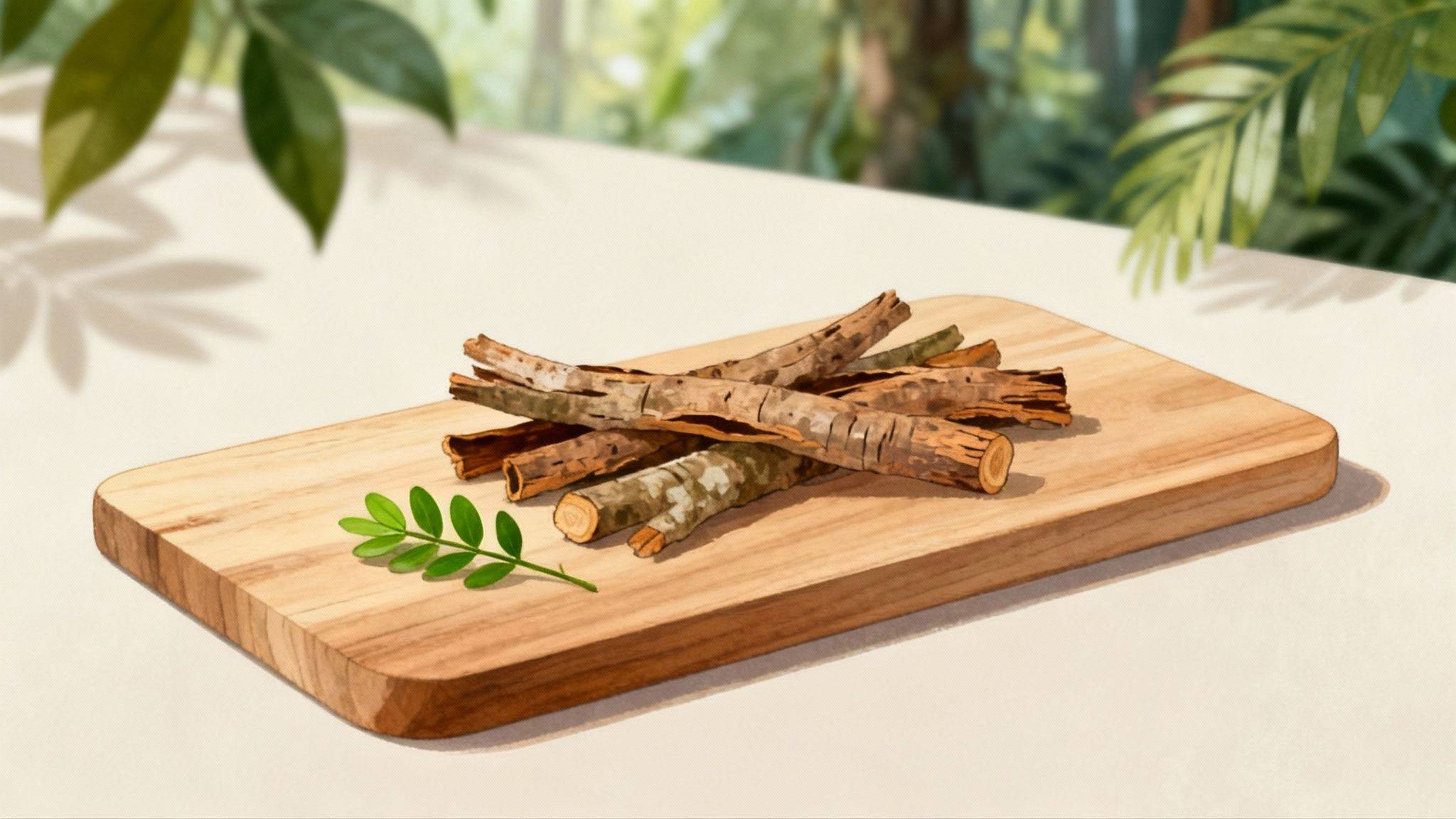
The power of iboga comes from a compound called ibogaine, found concentrated in the plant’s root bark. For generations, Bwiti practitioners have used it to connect with their ancestors, gain deep spiritual insight, and strengthen their community bonds.
Its journey from a ceremonial sacrament to a subject of intense scientific study is remarkable. Iboga has become a beacon of hope for people wrestling with substance use disorders, particularly opioid dependency. Many describe the experience not as a treatment, but as a complete “psychological reset.”
What’s truly turning heads is the report that a single, medically supervised session can dramatically reduce—or in some cases, completely eliminate—crippling withdrawal symptoms and cravings. This effect can last for weeks or even months, offering a critical window for genuine recovery.
From Sacred Tradition to Modern Science
Iboga’s arrival in modern therapeutic circles represents a major shift in how we think about healing. As conventional methods struggle to keep pace with crises like the opioid epidemic, more people are turning to plant medicines that work on the whole person—mind, body, and spirit.
Researchers are just beginning to unpack how ibogaine interacts with the brain. Early studies suggest it might promote the repair of neural pathways and essentially “rewire” parts of the brain impacted by addiction. This neuroplasticity could also explain why it’s being explored for other conditions like PTSD, depression, and even some symptoms of traumatic brain injury.
“Iboga offers a completely different model of healing. While many treatments focus on managing symptoms, iboga aims to get to the root of the problem. It prompts a deep, introspective journey, helping people confront and reprocess the traumas and patterns that fuel their suffering.”
A Unique Path to Healing
People often lump iboga in with other plant medicines like Ayahuasca, but the experience is fundamentally different. An iboga journey is typically less about kaleidoscopic visuals and more about a grounded, almost analytical, “life review.”
Many describe it as watching their life play out from a detached, objective perspective, allowing them to see their history and choices with stunning clarity. This direct, no-nonsense character is precisely why it’s carved out its own niche in psychedelic-assisted therapy. It’s a powerful and demanding experience that requires immense respect, caution, and expert guidance, but its potential to spark lasting personal change is undeniable.
Understanding the Cultural Roots of Iboga
To really get what iboga is all about, you have to look past the chemistry and travel deep into the rainforests of Central Africa. For centuries, the Tabernanthe iboga shrub has been the spiritual backbone of the Bwiti tradition, a rich tapestry of beliefs and rituals woven by peoples like the Fang and Mitsogo in Gabon.
In this context, iboga isn’t just a plant—it’s a revered teacher, a key to unlocking the spiritual realm. The root bark is consumed in tightly structured ceremonies, especially during life-changing initiation rites. These rituals are designed to forge a direct line to spiritual guides, ancestors, and the divine itself.
The Bwiti hold that this powerful medicine peels back the layers, allowing a person to see the unvarnished truth of their own soul. It’s their tool for profound healing, for diagnosing the root causes of illness, and for tightening the very bonds that hold their community together. Every modern use of iboga we see today stems from this sacred foundation.
The Bwiti Initiation Rite
The Bwiti initiation is a monumental, multi-day ceremony that symbolizes a spiritual rebirth. To get there, an initiate consumes a massive dose of iboga root bark, launching them into an intense, visionary journey. The whole point is to confront the biggest questions we face: life, death, and our purpose in the grand scheme of things.
A few core elements define the Bwiti tradition:
- Community Connection: These ceremonies are anything but a solo trip. They are vibrant, collective experiences filled with music, dance, and storytelling that reinforce everyone’s place in the community.
- Ancestor Veneration: Iboga is seen as a bridge to the ancestral plane, opening a channel for communication and guidance from those who came before.
- Spiritual Healing: The Bwiti believe most physical and mental problems start as spiritual sickness. Iboga is used to find and purge these root causes.
This is a living tradition, a deep well of indigenous knowledge passed down through generations, built on a relationship of reverence and respect for the natural world.
From Sacred Sacrament to Global Commodity
Iboga’s journey from a regional spiritual sacrament to an international phenomenon started around the mid-20th century. But its popularity has absolutely exploded in recent years, fueled almost entirely by Western interest in its main alkaloid, ibogaine, as a potential addiction interrupter.
This sudden surge in demand has created a messy and often difficult situation. The iboga plant, which only grows in a few countries like Gabon and Cameroon, is now a hot commodity. Between 2001 and 2006 alone, there was a reported four-fold increase in the global use of ibogaine for addiction treatment, and that number just keeps climbing. You can dig deeper into the timeline and data by checking out the history of ibogaine on Wikipedia.
“This new global demand has placed immense pressure on the very cultures that have stewarded this medicine for centuries. The commercialization of a sacred plant raises profound ethical questions about benefit-sharing, cultural appropriation, and sustainability.”
All this demand has sparked a serious conservation crisis. The slow-growing iboga shrub is being pulled from the wild at a rate that simply isn’t sustainable, often illegally, just to feed the international market. This over-harvesting doesn’t just threaten the plant’s survival; it threatens the cultural survival of the Bwiti, whose entire spiritual identity is intertwined with it. As we explore iboga’s incredible potential, we have a responsibility to face these critical ethical and ecological realities head-on.
How Ibogaine Is Used in Addiction Treatment
Unlike conventional addiction treatments that often manage symptoms over the long haul, ibogaine operates on a completely different level. It’s best described as an “addiction interrupter”—a powerful catalyst that gives the brain a hard reset, especially for people struggling with severe opioid dependency.
This interruption creates a priceless window of opportunity. By dramatically dialing back, or even silencing, withdrawal symptoms and cravings, ibogaine gives a person the breathing room they desperately need. It clears the physical and mental fog, allowing the real work of recovery to begin without the constant, crushing weight of addiction.
Resetting the Brain’s Reward System
At its core, addiction is a hijacked reward system. Substances like opioids essentially hotwire the brain’s circuitry, making the drug feel necessary just to function normally. Ibogaine seems to engage with several key neurotransmitter systems at once—including dopamine, serotonin, and glutamate—which helps nudge the brain back toward its pre-addicted state.
Imagine the brain’s reward pathway as a path worn deep into a forest floor. Addiction turns that path into a trench, making it almost impossible to stray. Ibogaine is like a downpour that softens the earth, filling in the rut and making it possible to carve out new, healthier trails.
“This reset is more than just biochemical. It’s profoundly psychological. Many people report undergoing a “life review”—a vivid, panoramic replay of their past that offers stunning clarity on the roots of their addictive behaviors. This newfound perspective can be an incredible motivator for change.”
This is precisely why ibogaine is seen as such a potent tool for detoxification. Instead of a drawn-out, agonizing withdrawal, a single session can help someone navigate the worst of the physical symptoms far more comfortably, setting the stage for what comes next.
A Tool in the Opioid Crisis
The need for new approaches has never been more urgent. The global opioid crisis has left a trail of devastation, creating a desperate search for effective solutions. In the United States, the situation has become a full-blown epidemic. Since 1999, opioid overdose deaths have quadrupled. By 2016, the crisis had hit a horrifying peak, with ninety-one US residents dying from an opioid overdose every single day. You can find more details on how ibogaine is positioned within this crisis by reading the full report from ICEERS.
Against this grim backdrop, ibogaine offers a glimmer of hope for countless people who feel they’ve exhausted all other options. Both personal stories and observational studies consistently point to its potential to help people finally break the cycle and find lasting sobriety.
Beyond Detox: The Need for Integration
It’s critical to see ibogaine for what it is: a powerful tool, not a magic bullet. The experience can open a door, but it’s up to the individual to walk through it and keep moving forward. Lasting success almost always hinges on what happens after the treatment.
This is where thoughtful aftercare and psychological integration become non-negotiable. The key ingredients for long-term success include:
- Psychological Support: Working with therapists who understand the experience and can help you turn the profound insights you’ve gained into real-world changes.
- Lifestyle Adjustments: Intentionally building new habits, routines, and a social circle that reinforces a healthy, sober life.
- Community Connection: Finding support groups or recovery communities that provide a sense of belonging, accountability, and encouragement.
Without a solid integration plan, the clarity and motivation from the ibogaine experience can start to fade, and old patterns have a way of creeping back in. The true healing begins when that biochemical reset is followed by dedicated psychological and emotional work. You can explore more about how indigenous knowledge can inform modern addiction treatment in our related article.
Navigating Critical Safety Risks and Contraindications
While people talk a lot about iboga’s healing potential, it’s a conversation that has to start with its profound risks. This isn’t a substance to experiment with or take without serious, expert medical oversight. Iboga is one of the most physically demanding plant medicines out there, and its effects on the body—especially the heart—demand absolute respect.
Taking the time to understand these risks is the most critical step you can take if you’re even remotely considering this path. The number one concern with ibogaine, iboga’s main active alkaloid, is cardiotoxicity. It’s known to affect the heart’s electrical cycle by prolonging what’s called the QT interval.
Think of the QT interval as the tiny pause your heart muscle takes to recharge between beats. If this recharging phase gets too long, it can throw the heart’s rhythm into chaos, leading to a dangerous and sometimes fatal arrhythmia called Torsades de Pointes. This isn’t just a theoretical possibility; it’s a well-documented, serious danger.
Why Medical Pre-Screening is Non-Negotiable
Because of these serious cardiac risks, a thorough medical evaluation before an iboga experience isn’t just a good idea—it’s an absolute must. Any responsible provider will refuse to move forward without a comprehensive screening process. This is, without a doubt, the single most important factor in keeping you safe.
A proper pre-screening protocol always includes:
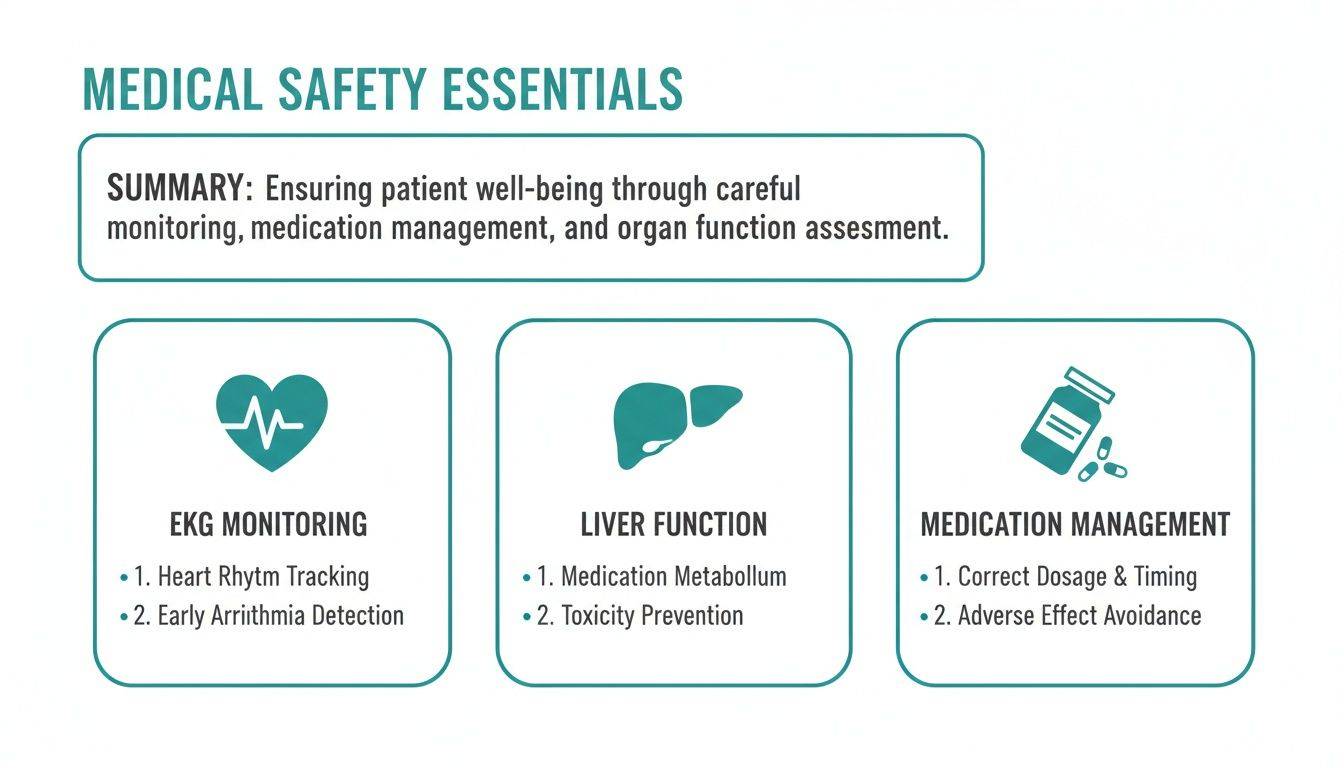
- An Electrocardiogram (EKG): This is the gold standard for checking your heart. It directly measures the QT interval and can flag underlying issues, like Long QT Syndrome, that would immediately rule someone out for treatment.
- Comprehensive Blood Work: You need a full metabolic panel to check your liver and kidney function. Since the liver has to process ibogaine, any weakness or impairment means the substance could hang around in your system for too long, dramatically increasing the risk of something going wrong.
- A Full Medical and Psychiatric History: This means being completely honest about all current and past health conditions. It also requires a complete list of every medication and supplement you take, because many of them—especially psychiatric meds—can have dangerous interactions with ibogaine.
Absolute Contraindications You Must Know
Some pre-existing conditions and medications simply create too high a level of risk, making iboga treatment unsafe. We call these contraindications.
“The decision to go forward with iboga should only happen after a medical professional has meticulously reviewed your complete health profile. Being 100% honest and transparent during screening is all about protecting yourself.”
Key contraindications include:
- Any pre-existing heart condition (like arrhythmias, bradycardia, heart murmurs, or a past heart attack)
- A prolonged QT interval spotted on an EKG
- Impaired liver or kidney function
- Certain psychiatric conditions like schizophrenia or bipolar disorder
- Use of specific medications, especially SSRIs, MAOIs, and some antipsychotics
Ibogaine’s tricky relationship with the heart is a major reason it hasn’t been widely accepted in mainstream medicine. Documented fatalities have, understandably, made clinicians and regulators extremely cautious. Between 1990 and 2008, 19 fatalities were linked in time to taking ibogaine, with six of those people dying from acute heart failure or cardiopulmonary arrest. Since then, more reports of sudden death have emerged, along with many documented cases of QT interval prolongation on EKGs—a clear red flag for dangerous heart rhythms. You can dive deeper into the findings on ibogaine-related cardiac events in the published research.
Beyond the heart, other potential risks include ataxia (a severe loss of coordination) and, in rare instances, seizures. This is precisely why a safe setting must have continuous medical monitoring and staff trained in advanced cardiac life support (ACLS). While many plant medicines have their own set of risks, iboga’s specific safety profile puts it in a class of its own. You can get more context on this by reading about the general risks and challenges of plant medicine traditions.
Comparing Iboga and Ayahuasca Experiences
People often lump sacred plant medicines together, but when it comes to iboga and Ayahuasca, they couldn’t be more different. Think of it less like comparing apples and oranges and more like comparing a microscope and a telescope. Both reveal incredible unseen worlds, but they operate on completely different planes of consciousness.
The iboga journey is intensely personal and often quite grounding. It’s famous for inducing a “life review”—a state where you can look back at your life’s pivotal moments with a sense of stark, unemotional clarity. You’re not reliving the trauma; you’re reviewing the data to understand the root of your patterns and behaviors. It’s direct, analytical, and deeply introspective.
Ayahuasca, on the other hand, tends to be far more cosmic and emotional. The experience is often characterized by vibrant, symbolic visions and a powerful sense of connection to nature, the universe, or spiritual entities. While iboga forces you to look inward at your own history, Ayahuasca often pulls you outward to feel your place in the vast web of existence.
Distinct Therapeutic Focus
These fundamental differences in experience lead to very different therapeutic strengths. Iboga’s almost surgical precision in dissecting personal history makes it an incredible tool for breaking deep-seated behavioral loops. This is precisely why it’s renowned as an “addiction interrupter“—it clears the slate in a way few other things can.
Ayahuasca’s gift often lies in healing matters of the heart. Its ability to generate overwhelming feelings of love, empathy, and interconnectedness can be profoundly healing for those struggling with depression, anxiety, or PTSD. It helps rebuild emotional bridges, both to oneself and to others. For a more detailed breakdown, you can explore how Ayahuasca and iboga differ in shamanic practice.
“Choosing between them isn’t a matter of which is “better.” The real question is, which medicine’s approach aligns with the healing you need right now? One is a direct confrontation with the self; the other is a gentle dissolution into the universal whole.”
Contrasting Safety Profiles
Just as their experiences differ, so do their safety concerns—and they are not interchangeable. As we’ve discussed, iboga’s primary medical risk is cardiotoxicity. It affects the heart’s electrical rhythm, which is why a thorough cardiac screening isn’t just a suggestion; it’s an absolute, non-negotiable requirement.
Ayahuasca’s main safety issue comes from its Monoamine Oxidase Inhibitor (MAOI) content. This creates a risk of dangerous interactions with a long list of medications (especially SSRIs) and certain tyramine-rich foods, like aged cheeses or cured meats. Both medicines demand rigorous medical screening, but the specific protocols are worlds apart.
To give you a clearer picture, we’ve outlined the key differences in a simple table.
Iboga vs. Ayahuasca at a Glance
This table provides a high-level comparison, highlighting the distinct nature of each plant medicine—from its origin and primary use to its unique safety protocol.
| Characteristic | Iboga | Ayahuasca |
|---|---|---|
| Origin | Central West Africa (Bwiti tradition) | Amazon Basin (Indigenous traditions) |
| Primary Alkaloid | Ibogaine | DMT & Harmala alkaloids (MAOIs) |
| Typical Experience | Grounding, introspective life review | Visionary, cosmic, emotional |
| Therapeutic Focus | Addiction interruption, pattern-breaking | Emotional healing, PTSD, depression |
| Primary Safety Risk | Cardiotoxicity (heart rhythm issues) | MAOI interactions (meds & food) |
| Medical Screening | EKG, liver function tests required | Strict dietary and medication review |
As you can see, their paths to healing are entirely separate. Understanding these distinctions is the first step toward making a responsible and informed decision.
This infographic lays out the critical medical checkpoints for anyone considering iboga, emphasizing the non-negotiable need for cardiac, liver, and medication screening.
Ultimately, both of these powerful plant teachers deserve immense respect. A safe and beneficial experience depends entirely on honoring their unique properties and following the specific safety protocols each one demands.
Finding a Responsible Iboga Provider
The path to finding iboga treatment can feel like navigating a maze. Since it’s a controlled substance in many places like the United States, your search for a safe, legal setting will likely take you abroad. Most of the long-standing, reputable clinics are found in countries with a more open legal stance, such as Mexico, Costa Rica, or Portugal.
This patchwork of laws puts the burden of responsibility squarely on your shoulders. You have to do the digging. The gap between a professional, medically-sound clinic and a risky, under-equipped operator can be massive, and your choice is the single most important factor for your safety. A good provider isn’t just offering a psychedelic experience; they are providing serious medical care.
Key Questions to Ask Any Iboga Clinic
Before you even think about putting down a deposit, you need to put on your investigator hat. A solid, reputable clinic will expect and welcome tough questions. If a provider gets defensive, vague, or brushes off your concerns, that’s a giant red flag. Walk away.
Your vetting process should be built around a few crucial areas that reveal everything you need to know about their safety protocols and how they support their clients.
Here are the non-negotiable questions you need to ask:
- What’s your medical screening process? At the absolute minimum, they must demand a recent EKG and full blood work to check your liver function. No exceptions.
- Who is on-site during the actual treatment? You’re looking for a clear answer: doctors or nurses with ACLS (Advanced Cardiac Life Support) certification. This is the gold standard for emergency cardiac care.
- What is your staff-to-participant ratio? The lower, the better. A smaller ratio means more eyes on you and more personal support during what can be a very vulnerable experience.
- How do you monitor people during the session? The right answer is continuous cardiac monitoring. Spot checks with an EKG aren’t enough. They should be tracking your vitals throughout the entire process.
- What’s your emergency plan? They need a well-rehearsed protocol for what to do if something goes wrong, including their relationship with and distance to the nearest hospital.
- What about psychological support? Ask what they offer before you arrive for preparation and, just as importantly, what kind of integration support is available after you leave. The work doesn’t end when the medicine wears off.
“Choosing a provider is the most critical decision you’ll make in this entire process. A clinic’s unwavering commitment to medical safety and robust psychological support is what separates a potentially life-changing experience from a dangerous one.”
Hallmarks of a Trustworthy Provider
Beyond the specific answers to your questions, pay attention to the overall vibe. A trustworthy provider operates with a deep sense of integrity and professionalism. They understand the power of this medicine and treat the entire process with the seriousness it deserves.
You’ll know you’re in the right place if the center:
- Communicates transparently: They are upfront and honest about their procedures, their staff’s credentials, and all associated costs. No hidden surprises.
- Offers personalized care: They get that everyone walks in with a different story and a different set of needs. They don’t use a one-size-fits-all approach.
- Prioritizes integration: They view the iboga session not as a magic bullet, but as a powerful catalyst that kicks off a much longer journey of healing and growth.
In the end, it all comes down to doing your homework. Be patient, be persistent with your questions, and listen to your gut. Your goal is to find a team you can truly trust with your physical and psychological well-being.
Your Iboga Questions, Answered
After digging into the science, culture, and safety of iboga, you probably still have a few practical questions. Let’s get right to them. This section tackles some of the most common things people ask, offering clear, straightforward answers.
What Does an Iboga Experience Actually Feel Like?
This is a tough one to pin down because it’s so personal, but there are common threads. Most people describe it as a deeply introspective journey, almost like a “life review” plays out in their mind. You might find yourself observing pivotal moments from your past, but with a sense of detachment, like watching a film from a third-person view. It’s often more analytical and cognitive than the vibrant, kaleidoscopic visuals of other psychedelics.
Be prepared, though—it’s physically demanding. A significant loss of coordination and balance, known as ataxia, is almost universal. This, along with potential nausea, means you’ll spend most of the time lying down. It’s a journey you take with your body at rest.
How Long Do the Effects of Iboga Last?
A full “flood dose” is a marathon, not a sprint. The most intense, immediate effects can last anywhere from 12 to 36 hours. People who work with this medicine usually break the experience down into three distinct stages:
- The Acute Phase: This is the peak of the experience. It’s when the visionary state or the intense life review happens.
- The Evaluative Phase: Once the acute phase winds down, you enter a long, quiet period of processing what you’ve just seen. This reflective stage can last another 8 to 20 hours.
- The Residual Phase: For up to 72 hours after dosing, you might feel a lingering sense of stimulation and wakefulness as your mind and body recalibrate.
But the real magic isn’t just in those hours. The profound reduction in cravings and the mental clarity can stick around for weeks, sometimes months. This creates a critical window of opportunity to build new habits and do the hard work of recovery.
Is Microdosing Iboga a Safe Alternative?
Taking tiny, sub-perceptual doses of iboga has definitely gained traction. People are drawn to it for reported boosts in mood, focus, and a general sense of well-being, all without the grueling, multi-day commitment of a flood dose.
But here’s the crucial part: the risks don’t just disappear with smaller doses. The cardiac concerns are still very much in play.
“Ibogaine builds up in your system over time. This means that even with a microdosing schedule, a thorough medical screening—including an EKG—is non-negotiable. It’s the only way to know if it’s a safe path for you. Never assume microdosing is risk-free.”
Treating even small amounts of this powerful plant with respect and caution is key to minimizing any potential for harm.