
Mapacho, or Niciana rustica as it’s known botanically, is a profoundly potent and sacred tobacco central to Amazonian shamanism. It’s a world away from the commercial tobacco many are familiar with. In ceremony, particularly alongside Ayahuasca, it acts as a vital energetic protector, a cleanser of space and spirit, and a guide. Its powerful properties and ancient history make it a true cornerstone of traditional plant medicine.
What Is Mapacho and Why Is It So Central to Ayahuasca Ceremonies?
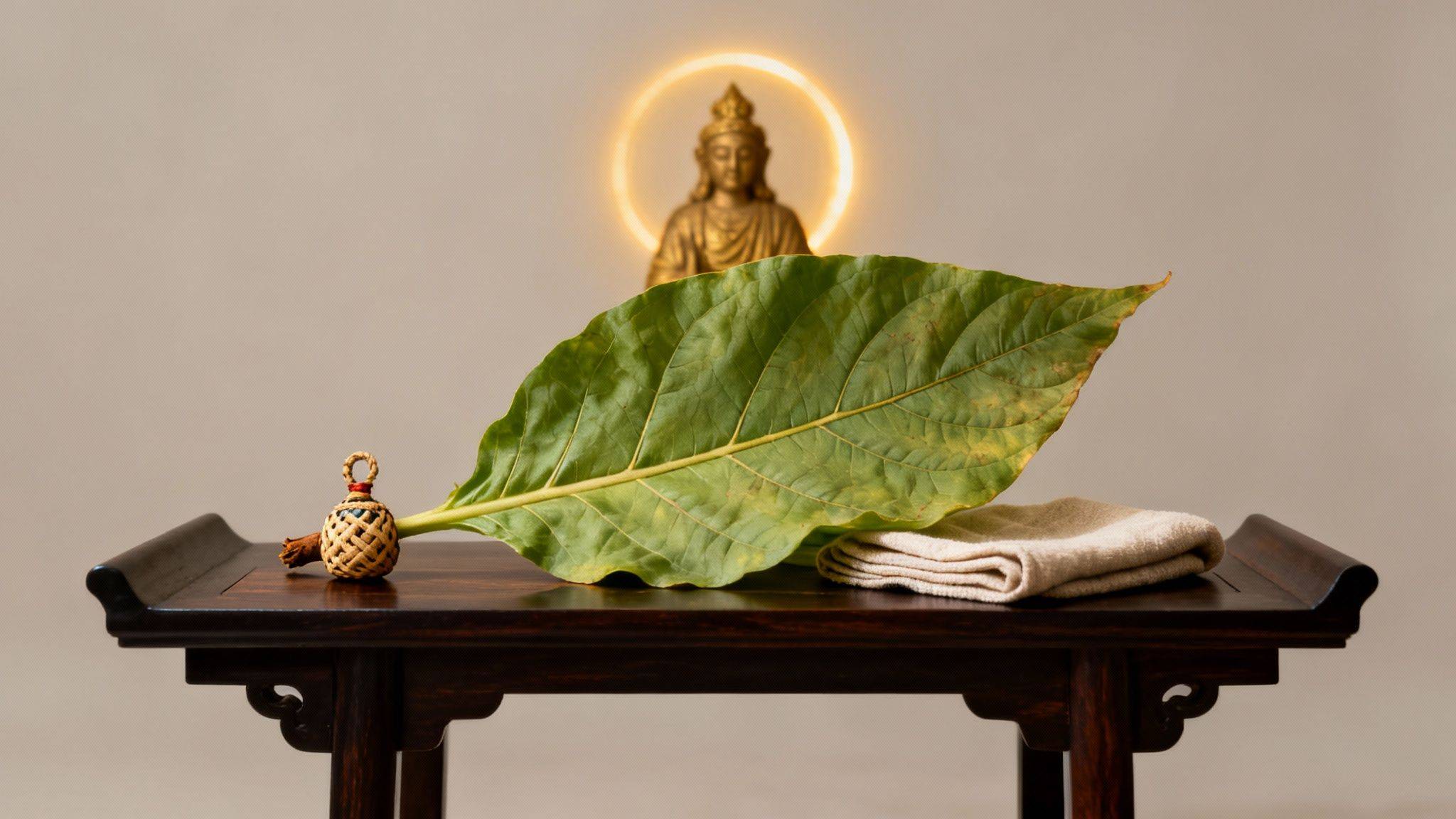
If you’ve spent any time in plant medicine circles, you’ve likely heard the word mapacho. It often brings to mind the image of thick, fragrant smoke swirling through a ceremonial maloca. But this sacred plant is far more than just an accessory; it’s revered as a Master Plant in its own right, a powerful spirit that partners with shamans and participants. Its role is deeply woven into the fabric of Amazonian spiritual practices, serving as a foundational element for healing.
The bond between humans and this plant is truly ancient. Archaeological evidence traces its use back an incredible 12,300 years, establishing it as one of humanity’s oldest plant allies. This long history underscores its role as a sacred tool for healing, one that predates its eventual global commodification by millennia. You can explore the full research on its ancient origins to learn more.
A Master Plant with a Fierce Spirit
In the Amazonian tradition, mapacho is not seen as a simple plant but as a potent spirit—a fierce, masculine ally. It is often the first plant a shaman-in-training, or curandero, diets with to build a strong foundation and gain its protection. This relationship allows them to call upon the spirit of mapacho for assistance.
Its spirit is known for its ability to clear away negativity, ground chaotic energy, and create a protective field. This is why it’s so fundamental to the ceremonial space.
The Energetic Guardian of Ceremony
Think of mapacho as an energetic anchor in the often-turbulent waters of an Ayahuasca journey. When visionary states become intense or confusing, the smoke of mapacho provides stability and a clear path forward. Curanderos use its smoke to cleanse the ceremonial space before starting, purify the energy fields of participants, and ward off any disruptive influences.
This protective function is paramount. The sacred smoke is believed to create an energetic shield, a safe container for the deep work that is about to unfold.
“Mapacho is not merely smoked; it is worked with. Its spirit is called upon to clean, protect, and guide. The intention behind every puff of smoke is to create a safe and sacred container for profound healing to occur.”
A Key Ally in Ayahuasca Rituals
Within an Ayahuasca ceremony, mapacho is almost indispensable. Its grounding presence helps people stay centered. The shaman might blow smoke over a person’s body—a practice known as a soplada—to clear dense energy, offer strength, or deepen their connection with the medicine.
Its importance is tied to the very structure of Amazonian shamanism, which often involves working with numerous plant spirits. Mapacho is seen as a primary ally that helps facilitate communication with other plants and the spirit world.
This sacred relationship is a core component of practices like those of the vegetalistas, or plant-spirit shamans of the Amazon. As you can read in our article on Mestizo Shamanism, the interplay between Ayahuasca and mapacho creates a synergy where one supports and amplifies the work of the other, ensuring a focused and protected ceremonial experience.
The Ancient Roots and Sacred History of Mapacho
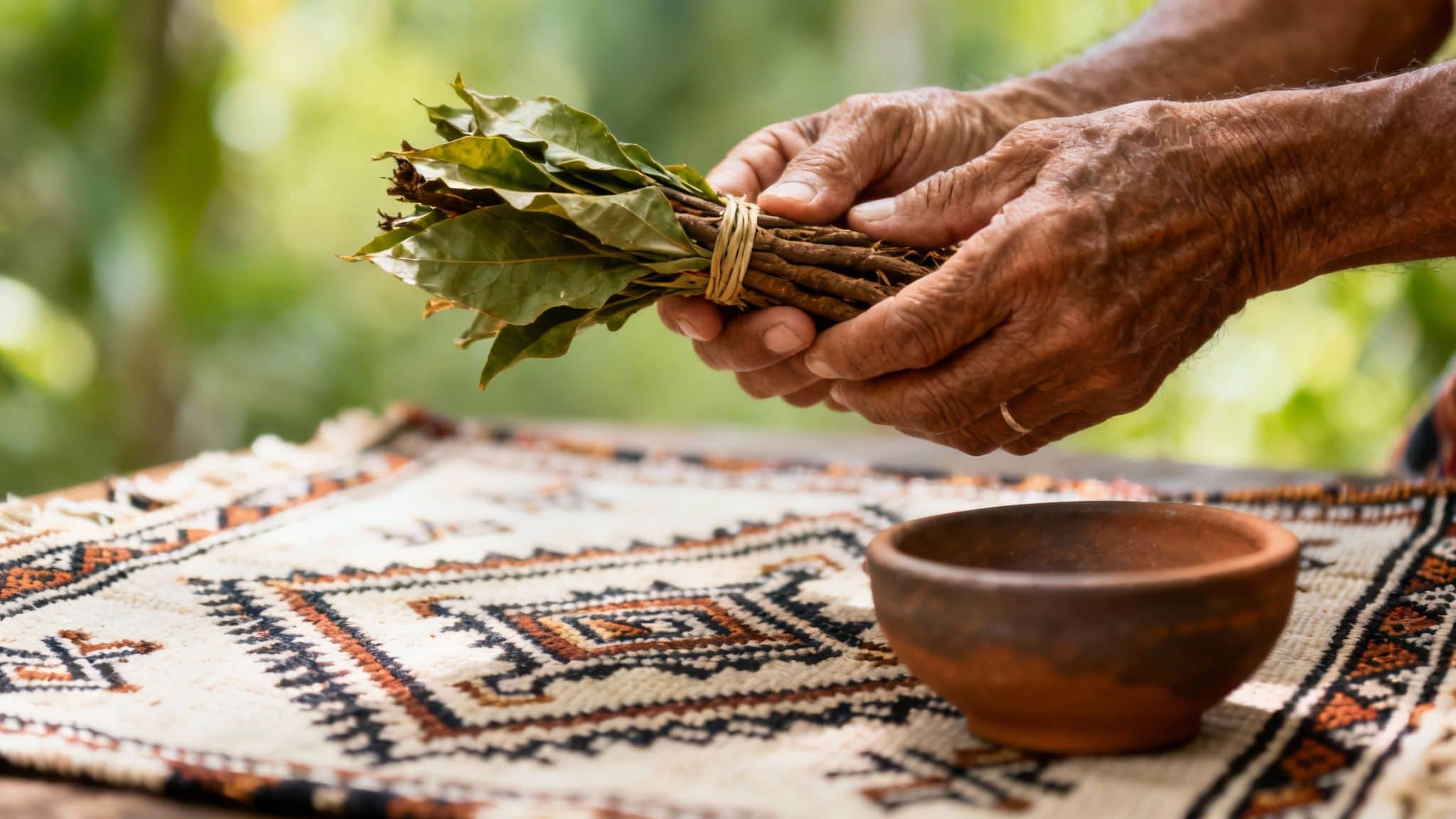
To really get to the heart of what mapacho is, we have to travel back thousands of years into the Amazon basin, where its story is woven into the very cosmology of the jungle. Long before the West ever heard of Ayahuasca, mapacho was already a cornerstone of daily life, healing, and spiritual practice for countless Indigenous peoples.
For cultures like the Shipibo and Asháninka, this was never “just a plant.” It was a teacher, a protector, and a powerful spiritual ally. Its use wasn’t casual; it was part of the fabric of existence, showing up in everything from farming rituals and social gatherings to the most profound healing ceremonies and direct dialogues with the spirit world.
Understanding this ancient relationship is the first step. It frames mapacho not as a substance, but as a sacred entity that demands deep respect.
A Revered Master Plant
In the world of Amazonian shamanism, some plants are recognized as having exceptional power and consciousness. They’re called ‘Master Plants.’ These aren’t just botanical specimens; they are seen as living spirits that can teach, heal, and share profound wisdom with anyone who approaches them through the dedicated practice of a dieta.
Mapacho stands tall among these Master Plants. In fact, many traditions consider it one of the very first and most essential spirits a shaman-in-training must connect with. Its spirit is often described as a wise grandfather—strong, grounding, and protective, capable of teaching the complex art of healing and navigating the unseen world.
The plant is regarded as a sentient being, a teacher that imparts critical lessons on energetic cleansing, protection, and spiritual diagnosis.
The Original Diagnostic Tool
Before there were X-rays or MRIs, Amazonian healers had mapacho. A skilled curandero could diagnose illness by blowing mapacho smoke over a person’s body and “reading” their energy field. This practice would reveal the source of an ailment, whether its roots were physical, emotional, or spiritual.
The smoke was believed to make the invisible visible. It could illuminate energetic intrusions, imbalances, or spiritual blockages that were causing suffering. This function alone shows just how fundamental mapacho is to Amazonian medicine, giving healers the insight needed to find the true cause of an illness and call upon the right plant remedies to treat it.
“For many Amazonian cultures, mapacho is the ultimate communicator. Its smoke is a conduit, a sacred bridge that allows the shaman to speak with other plant spirits and the divine forces of the jungle, making it an essential key to the spirit world.”
A Bridge Between Worlds
Mapacho’s role goes far beyond healing and protection—it’s a primary vehicle for communicating with the spirit realm. The fragrant smoke is believed to carry prayers and intentions directly to the spirits, opening a line for guidance and dialogue. Shamans use it to call upon their allies, summoning the spirits of animals, other plants, and ancestors for support during a ceremony.
This function as a spiritual messenger is what makes it so sacred. It’s the key that unlocks the door between worlds. When you see a shaman working with mapacho, you’re witnessing an ancient conversation taking place, a dialogue between the physical and the spiritual, all made possible by the sacred smoke of this incredible Master Plant.
The Energetic Guardian of the Ayahuasca Ceremony
Step into an Ayahuasca ceremony, and one of the first things you’ll notice is the thick, fragrant smoke of mapacho. This isn’t just background incense; it’s one of the most important tools a shaman has. In the world of Amazonian plant medicine, mapacho acts as a spiritual guardian, a steadfast protector that actively shapes the entire ceremonial environment.
Think of the ceremonial space—the maloca—as a sacred vessel about to embark on a journey into the deepest realms of consciousness. Before anyone even sips the Ayahuasca, the shaman uses mapacho smoke to prepare this vessel. They will walk the circle, puffing clouds of smoke into every corner, over every person. This is far more than a ritual; it’s considered a potent spiritual cleansing, clearing out any heavy or disruptive energies to create a safe container for the profound work ahead.
The Power of the Soplada
The most direct way a shaman works with mapacho is through the soplada, which literally means “the blowing of smoke.” This is a highly intentional practice. The shaman takes a deep draw from the mapacho cigar, holding the smoke in their mouth without inhaling, and then blows it with focused intent over a person’s body—often onto their crown, hands, and feet.
This simple act is packed with meaning and purpose. It’s a form of blessing, a personal cleansing, and a way to reinforce someone’s own energetic field. The smoke is believed to form a protective shield around a person, making them feel more secure and less vulnerable to overwhelming feelings or external energetic influences.
Throughout the night, the shaman will use the soplada to:
- Cleanse participants just before they drink Ayahuasca, preparing them to receive the medicine.
- Protect anyone going through a particularly difficult or frightening part of their journey.
- Ground the entire group, helping to weave a coherent and unified energy in the circle.
- Ward off negative energies that might be attracted to the powerful spiritual work taking place.
The constant, rhythmic presence of mapacho smoke is a critical part of holding a safe and contained ceremony. It’s a reliable anchor in the often wild and unpredictable seas of the Ayahuasca experience.
A Tool for Navigating the Visions
Beyond its protective qualities, mapacho is also a shaman’s navigational tool. An Ayahuasca journey can be incredibly intense, and it’s easy to get lost or overwhelmed in the visionary state. The spirit of mapacho offers a powerful grounding force against these strong currents.
If someone is struggling or feeling disoriented, the shaman might come and blow mapacho smoke directly over them. The sharp, earthy aroma and the grounding energy of the plant can cut right through the confusion, helping to pull a person back to their center. It acts as a tether to the here and now, offering a moment of stability and calm in the middle of a spiritual storm.
“In the hands of an experienced practitioner, mapacho is the primary ally for keeping energetic order. Its smoke isn’t just smoke; it’s a living presence that cleanses, protects, and guides, ensuring the ceremony remains a safe space for deep transformation.”
In the sacred partnership of Ayahuasca, mapacho is truly the indispensable guardian. In fact, shamans use its powerful smoke in 100% of observed Shipibo and mestizo rituals to consecrate spaces, clear energies, and support participants. This isn’t a new development; the practice is rooted in pre-Columbian traditions going back at least 1,500-2,000 years BCE, a history backed by ancient Amazonian artifacts. To get a better sense of this rich history, you can explore more about Ayahuasca’s ancient ceremonial traditions.
Ultimately, the steady puffing of the mapacho cigar becomes the heartbeat of the ceremony. It’s a constant, reassuring presence that people come to rely on—a clear signal that the guardian of the space is awake, watchful, and holding protective space for everyone’s journey.
How Mapacho Is Used and Its Physiological Effects
When we think of a shaman and sacred tobacco, the image of smoke being blown often comes to mind. While that’s a huge part of the practice, it’s just one piece of the puzzle. Traditional use of mapacho is incredibly versatile, with several distinct methods, each unlocking a different aspect of the plant’s spirit and power.
The most visible use is smoking the large, hand-rolled cigars, which is central to the soplada, or sacred smoke cleansing. But mapacho is also prepared as a powerful snuff called rapé, and even as a liquid infusion used for deep, ceremonial purges. Understanding these methods shows you just how different this plant is from the commercial tobacco we see every day.
Traditional Methods of Use
How mapacho is prepared is everything—it dictates its effect and its role in a ceremony. This isn’t casual use; each form is approached with immense skill and a deep sense of intention, treating the plant as a powerful medicine.
- Smoke (Soplada): This is the classic cleansing technique. The shaman or practitioner draws the mapacho smoke into their mouth—without inhaling—and then blows it with focused intent over a person, object, or space. It’s used to clear away heavy or stagnant energy, create a protective shield, and ground participants before a ceremony begins.
- Rapé (Snuff): Here, the mapacho leaves are carefully dried and ground into a super-fine powder. It’s almost always blended with other medicinal plants and the ash from sacred trees. This snuff isn’t snorted; it’s blown up into the nostrils using a special pipe. The effect is immediate and intense—a jolt that clears your mind, quiets mental chatter, and can open you up to deeper spiritual insights.
- Liquid Infusion: Reserved for more advanced work, mapacho leaves can be soaked in water to create a potent liquid. This infusion is taken orally and acts as a very strong purgative. It’s a profound physical and energetic detox, but it’s something that should only ever be done under the careful supervision of a highly experienced curandero.
These methods all tap into mapacho’s core energetic functions within a ceremony, as this diagram helps illustrate.
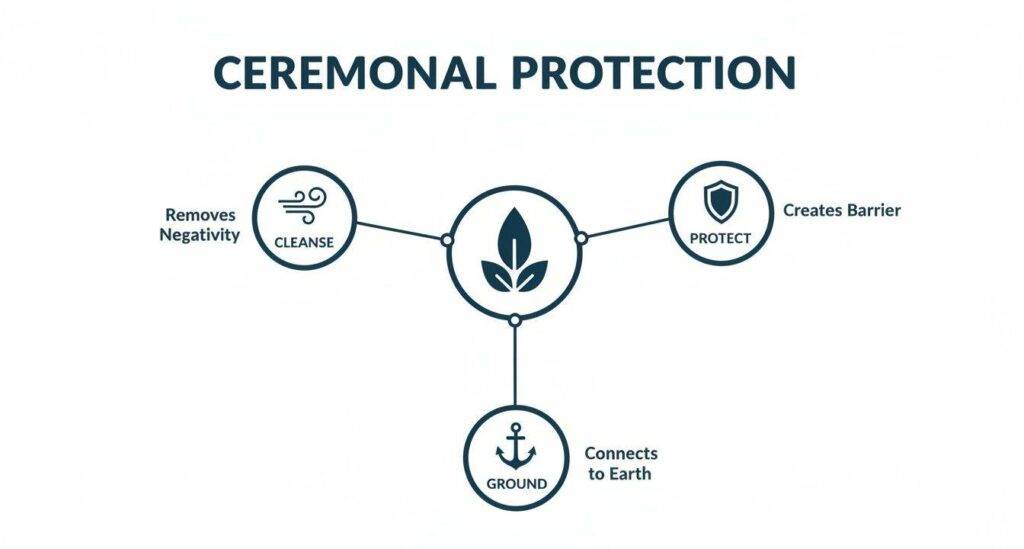
As you can see, the plant’s role is threefold: cleansing disruptive energies, protecting the sacred container of the ceremony, and keeping participants firmly grounded in their bodies while their consciousness explores other realms.
The Potent Nicotine Profile of Mapacho
So, what makes mapacho so powerful? It comes down to its unique chemistry. Niciana rustica can contain up to 20 times more nicotine than the Niciana tabacum used in commercial cigarettes. This incredibly high concentration is behind its immediate and profound physiological effects.
But this isn’t the jittery, anxious buzz you get from a cigarette. In a ceremonial setting, this potent nicotine dose feels completely different. It produces a deep sense of grounding, bringing you squarely into your body with a calm, centered focus. This is precisely why a shaman might blow mapacho smoke over someone who is having a difficult or chaotic Ayahuasca experience—it can instantly pull their awareness back from a frightening place and anchor them in the present moment.
“Within a ceremonial container, the potent effects of mapacho are perceived as deeply centering and clarifying. The spirit of the plant, combined with its unique chemistry, serves to ground rather than agitate, providing a stable anchor in the visionary realm.”
The rise of mapacho on the global stage has gone hand-in-hand with the growing interest in Ayahuasca. It’s a plant medicine that has been used by Indigenous communities for what seems like forever—we have evidence from chemical traces in mummies suggesting use for over 4,000 years. Now, it’s become a vital tool in the international plant medicine community.
In fact, ethnobotanical reports from the 2020s estimate that around 70% of Ayahuasca retreats worldwide now incorporate mapacho into their ceremonies. For a deeper look into these kinds of practices, you can find more information about ayahuasca retreat practices at Arkanainternational.com.
This widespread adoption isn’t a trend; it speaks to the plant’s essential role. Good facilitators know that mapacho is crucial for creating a safe and effective ceremonial space. Its ability to center participants and maintain the energetic integrity of the room makes it an almost indispensable ally for anyone guiding others through such deep and transformative work.
Navigating The Safety And Risks Of Mapacho Use
Mapacho is a deeply respected plant medicine, but its power demands an equal measure of caution. The biggest safety concern comes down to one thing: its incredibly high nicotine content.
We’re not talking about your average cigarette. Niciana rustica can be up to 20 times stronger than the commercial tobacco most people are familiar with. This potency introduces some very real physiological risks that you absolutely must take seriously.
This is meant to ensure you’re properly informed, not to cause alarm. The intense effects of mapacho can put significant stress on your heart and circulatory system. If you have any pre-existing health conditions, you need to approach this plant with extreme care and be completely honest about your health history.
Key Contraindications And Health Risks
For some people, the risks of using mapacho simply outweigh any potential benefits. Its powerful impact on blood pressure and heart rate means it’s a definite no-go for individuals with certain health conditions. Understanding these is non-negotiable for anyone even thinking about sitting in a ceremony where mapacho might be used.
Here are the most critical conditions to be aware of:
- Cardiovascular Issues: Anyone with a heart condition, high blood pressure (hypertension), or a history of stroke should avoid mapacho. The high nicotine dose causes blood vessels to constrict, which can be genuinely dangerous for a compromised system.
- Pregnancy: Mapacho is not safe for women who are pregnant or breastfeeding. The nicotine levels can pose serious risks to a developing fetus or a newborn.
- Respiratory Conditions: If you have severe asthma or other chronic lung issues, you need to be extremely careful. The thick, heavy smoke can be a major irritant.
“The golden rule in any plant medicine work is total honesty. You must disclose your full medical history—including every single medication and supplement you take—to your ceremony facilitator. Their ability to keep you safe depends entirely on what you tell them.”
The Critical MAOI Interaction With Ayahuasca
When mapacho is used in an Ayahuasca ceremony, a very important chemical reaction takes place. The Ayahuasca brew contains what are known as Monoamine Oxidase Inhibitors, or MAOIs. These compounds temporarily turn off an enzyme in your body (MAO) that’s in charge of breaking down things like nicotine, as well as neurotransmitters like serotonin and dopamine.
So what does this mean for you? It means the effects of the nicotine in the mapacho are both stronger and last much longer. Because your body can’t break it down as quickly, the nicotine hits harder and sticks around, amplifying its impact on your system.
This synergy is a core part of the traditional experience, but it also elevates the physiological risks, especially when it comes to blood pressure. This is why following a strict diet and avoiding certain medications before an Ayahuasca ceremony is so critical. To learn more, check out our guide on foods and meds to avoid with MAOIs.
Having an open conversation with your facilitator about your health isn’t just a suggestion—it’s an absolute must for your own safety and well-being.
Cultural Respect And Ethical Considerations For Modern Seekers
As more people from outside the Amazon learn about mapacho, a serious responsibility comes with it. When you decide to work with this plant, you’re not just participating in a ceremony; you’re stepping into an ancient tradition that has been carefully guarded for thousands of years. The right approach is one of humility and clear intention, recognizing mapacho as a powerful spiritual guide, not just something to consume.
The “how” and “why” of its use are everything. In its traditional setting, every single puff of smoke is a prayer, each action filled with purpose. To honor that lineage, it’s on us to find facilitators and retreat centers that have real, established relationships with the Indigenous cultures these practices come from. A good sign of ethical practice is choosing to support people who actively give back to those communities.
Sourcing With Integrity
This all ties back to ethical sourcing. When you’re looking for a place to experience mapacho, you need to be asking some tough but necessary questions:
- Community Connection: Does the center or practitioner have direct, living ties to Indigenous communities and teachers? Are they just borrowing, or are they in a real relationship?
- Reciprocity: How are they supporting the people and the land that this wisdom comes from? Is there a tangible flow of resources back to the source?
- Education: Do they teach the cultural and spiritual weight of mapacho, or do they just treat it as a tool for the ceremony itself?
“Approaching mapacho is like entering into a sacred relationship. You’re making an agreement to honor its spirit, its deep history, and the Indigenous peoples who have carried this knowledge forward. True respect isn’t just a feeling; it’s shown through your actions and your sincerity.”
This kind of mindful engagement should be the standard for all plant medicine work. Take, for example, the traditional dieta—a profound commitment to connect with a plant spirit. It’s absolutely essential to only undertake something so deep with proper guidance and a full understanding of its cultural roots. To learn more, you can read our guide on what a dieta is and why it’s so significant.
Ultimately, being a conscious seeker is what maintains the integrity of these ancient healing ways and allows for a truly genuine connection.
Your Questions About Mapacho Answered
Stepping into the world of sacred plant medicine can bring up a lot of questions. That’s perfectly natural. To help you feel more prepared, I’ve put together some answers to the most common things people ask about mapacho.
Is It Possible to Get Addicted to Mapacho in a Ceremony?
This is a really valid concern, especially given mapacho’s high nicotine content. The short answer is that addiction in a traditional ceremonial setting is incredibly rare. The reason comes down to intention and context.
Think about it this way: recreational smoking is often a compulsive, unconscious habit. But in a ceremony, mapacho is used with a very specific, sacred purpose. It’s a tool for cleansing and protection, not a casual craving. This ritualistic container completely reframes your relationship with the plant, shifting it from a habit to a respectful partnership.
What if I’m Sensitive to Smoke? Can I Still Participate?
Your health and safety come first. If you have asthma, any kind of respiratory condition, or you just know you’re sensitive to smoke, you must tell your retreat facilitators about it well in advance.
A good, reputable center can almost always make accommodations. They might seat you where there’s better airflow, or the shaman can perform your cleansing without blowing smoke directly on you. Don’t be shy about this—clear, honest communication is the key to ensuring you have a safe and comfortable experience.
What’s the Difference Between Mapacho and Rapé?
This is a common point of confusion, but it’s a great question because the distinction is important. Essentially, they are different preparations made from the same Master Plant.
- Mapacho is the term for the dried leaves of Niciana rustica. You’ll usually see them rolled into a thick, rustic-looking cigar. The smoke is the primary tool here, used to cleanse the energy of people and the ceremonial space itself.
- Rapé (pronounced ha-peh) is a very fine, dry snuff. It’s made from powdered mapacho leaves, which are often mixed with other sacred plant powders and the ash from specific trees. This powder is administered by being blown into the nostrils through a special pipe (tepi or kuripe).
So while both come from the same plant, their use and effect are worlds apart. Mapacho smoke is for external cleansing and protection. Rapé is a deeply internal experience for grounding, clearing the mind, and shifting stuck energy.
Why Do Shamans Sometimes Dip Their Mapacho in Alcohol?
You might notice a shaman dipping the lit end of their mapacho into a liquid—often a floral water like Agua de Florida or a local cane spirit. The reasons for this are a traditional technique with both practical and spiritual layers.
On a practical level, it helps the big, dense cigar burn more evenly and stay lit through a long ceremony. More importantly, from an energetic perspective, traditions hold that spirits like Agua de Florida have their own cleansing power. By applying it to the mapacho, the shaman is believed to be infusing the smoke with these properties, amplifying its purifying and protective qualities. It’s a beautiful example of how different plant energies are woven together to create a stronger effect.