
You might hear the term “psychotropic plants” and think of something complex, but at their heart, they are simply nature’s keys to the mind. These are plants, fungi, and other botanicals that contain compounds capable of influencing our consciousness, shifting perception, and altering mood, often in ways that open the door to profound personal insight.
Their rising popularity is part of a much larger collective search for deeper meaning and new approaches to mental and spiritual wellness.
What Are Psychotropic Plants and Why Are They Gaining Attention?
For thousands of years, indigenous cultures across the globe have cultivated deep relationships with these plants. They were not seen as drugs or recreational escapes, but as sacred tools for healing, spiritual connection, and guiding their communities. You can find this wisdom everywhere, from the Amazonian jungles where Ayahuasca is brewed to the North American deserts where the Peyote cactus grows.
These ancient traditions hold a massive repository of knowledge about the human mind and spirit, knowledge that the modern world is only just beginning to rediscover.
We’re now seeing a major resurgence of interest in these ancient practices, and it’s happening for a few key reasons. Many people feel let down by conventional treatments for depression, anxiety, and PTSD, and they’re looking for more effective and meaningful alternatives. Others are simply driven by a desire for personal growth, hoping to better understand themselves and their place in the universe.
This modern curiosity is building a bridge between ancient spiritual wisdom and contemporary wellness needs. It’s fueling a growing recognition that our mental and spiritual health are not separate; they’re deeply intertwined. As a result, plants once known only to small, remote communities are now part of a global conversation.
A Journey of Respect and Responsibility
Exploring this world requires more than just a passing interest. It demands a genuine commitment to safety, respect, and making informed choices. Working with psychotropic plants is not a casual undertaking; it’s a deeply personal process that calls for careful preparation beforehand and thoughtful integration of the experience afterward.
“The core principle here is to approach these traditions as a humble student. Taking the time to understand the cultural origins, the sacred context, and the psychological impacts is absolutely fundamental to a safe and meaningful journey.”
This guide is designed to give you a trustworthy foundation for that journey. We’ll explore the major classes of these plants, from psilocybin mushrooms to the sacred vine of Ayahuasca, and shed light on their history, therapeutic potential, and the practical steps for engaging with them responsibly.
Our goal is to arm you with the knowledge you need to make choices that honor both the ancient traditions and your own well-being. Any exploration you undertake should be grounded in awareness and deep respect for these powerful natural allies.
The Four Major Classes of Sacred Psychotropic Plants
When you first start learning about psychotropic plants, the sheer variety can be a bit staggering. To make sense of it all, it helps to think of them in four main groups, categorized by the primary active compound that gives each its unique character. This simple framework lets us understand what makes the visionary journeys of DMT different from the introspective paths of mescaline.
Think of each class as holding a different chemical key, each one unlocking a specific door in the mind. Let’s walk through these four major categories to get a real feel for their effects, their history, and how they’re used.
The diagram below gives a simple visual for how these plants work on the mind, influencing both our perception and our mood.
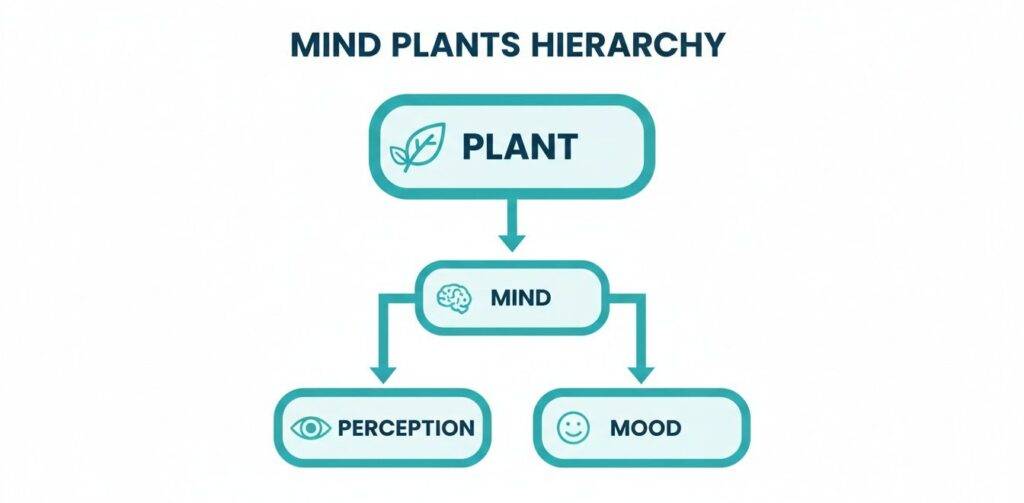
It’s a straightforward but powerful idea: the plant world directly engages with our inner world, shaping both what we see and how we feel.
DMT: The Spirit Molecule
N,N-Dimethyltryptamine, or DMT, is famous for creating short but incredibly powerful visionary states. It’s often called the “spirit molecule” for a reason. DMT is found all over nature, in thousands of plants and even in trace amounts in the human body, though its purpose there is still a mystery. In the world of plant medicine, it’s the signature compound of the Amazonian brew Ayahuasca.
The Ayahuasca brew is actually a sophisticated combination of two plants. It uses the DMT-rich leaves of the Psychotria viridis shrub, but on its own, the DMT would not work when consumed orally. That’s where the Banisteriopsis caapi vine comes in; it contains compounds that act as an MAO-inhibitor, “activating” the DMT and allowing for a profound journey that can last for hours.
Psilocybin: The Heart Opener
Psilocybin is the active ingredient in what are commonly called “magic mushrooms,” a group of over 200 species of fungi. These mushrooms have been part of sacred ceremonies for thousands of years, especially in Mesoamerica, where the Aztecs revered them as teonanácatl, or “flesh of the gods.”
Once you ingest it, your body converts psilocybin into psilocin, which then interacts with your brain’s serotonin receptors. This is what opens the door to deep feelings of connection, emotional release, and powerful new perspectives. While DMT can feel like a journey to other dimensions, psilocybin experiences are often more emotionally focused and deeply introspective.
“Many people find that psilocybin helps dissolve the ego’s usual boundaries, leading to a profound sense of unity with others and the natural world. It can be an incredible tool for working through emotional baggage and cultivating genuine empathy.”
Mescaline: The Gentle Teacher
Mescaline is a naturally occurring alkaloid found in a few specific cacti, most famously the Peyote (Lophophora williamsii) cactus and the San Pedro (Echinopsis pachanoi) cactus. Peyote, in particular, has been at the center of Native American spiritual life for at least 5,500 years, making it one of the oldest unbroken religious traditions in the Americas.
People often describe the mescaline experience as gentler and more grounding than DMT or psilocybin. It’s known for producing vivid visual patterns, a heightened sense of the world around you, and a feeling of radiant, heart-centered warmth. It’s a journey that tends to clarify your purpose and help you feel your place in the grand scheme of things.
Ibogaine: The Deep Healer
Ibogaine is a uniquely powerful compound that comes from the root bark of the Tabernanthe iboga shrub, which grows in West Africa. It’s the central sacrament in the Bwiti spiritual tradition, where it’s used for profound healing and as a rite of passage. Ibogaine is known for inducing a oneirogenic state, a dream-like condition where you remain fully conscious.
In this state, people often undergo a deep life review, witnessing their past experiences from a neutral, objective viewpoint. Ibogaine has gained significant attention for its remarkable potential in treating substance use disorders by interrupting addiction cycles and easing withdrawal symptoms. The experience is undeniably intense, but for many, it provides psychological breakthroughs that would be difficult to achieve otherwise.
For a closer look at how these powerful medicines differ, you might be interested in a comparison of Ayahuasca and Iboga to better understand their distinct approaches to healing.
Comparing Major Psychotropic Plant Compounds
To tie this all together, here’s a quick-reference table that summarizes the key features of these four incredible compounds. It’s a simple way to see, at a glance, where they come from and what you might expect.
| Compound | Primary Plant Source(s) | Common Experience Type | Typical Duration |
|---|---|---|---|
| DMT | Psychotria viridis (in Ayahuasca) | Intense, immersive visionary states | 4-6 hours (Ayahuasca) |
| Psilocybin | Psilocybe genus fungi (“magic mushrooms”) | Emotional, introspective, heart-opening | 4-6 hours |
| Mescaline | Peyote & San Pedro cacti | Gentle, grounding, sensory-enhancing | 8-12 hours |
| Ibogaine | Tabernanthe iboga root bark | Deeply oneirogenic (dream-like), life review | 12-36 hours |
This table provides a starting point, but remember that every individual’s experience is unique, shaped by their mindset, the setting, and the guidance they receive.
The Growing Global Community of Ayahuasca Seekers
Of all the psychotropic plants making waves today, none has a more fascinating story than Ayahuasca. This sacred Amazonian brew has traveled from remote jungle communities to cities all over the globe, pulling in a diverse and ever-growing crowd of people looking for something more. This is a movement fueled by a deep, collective hunger for healing and connection.
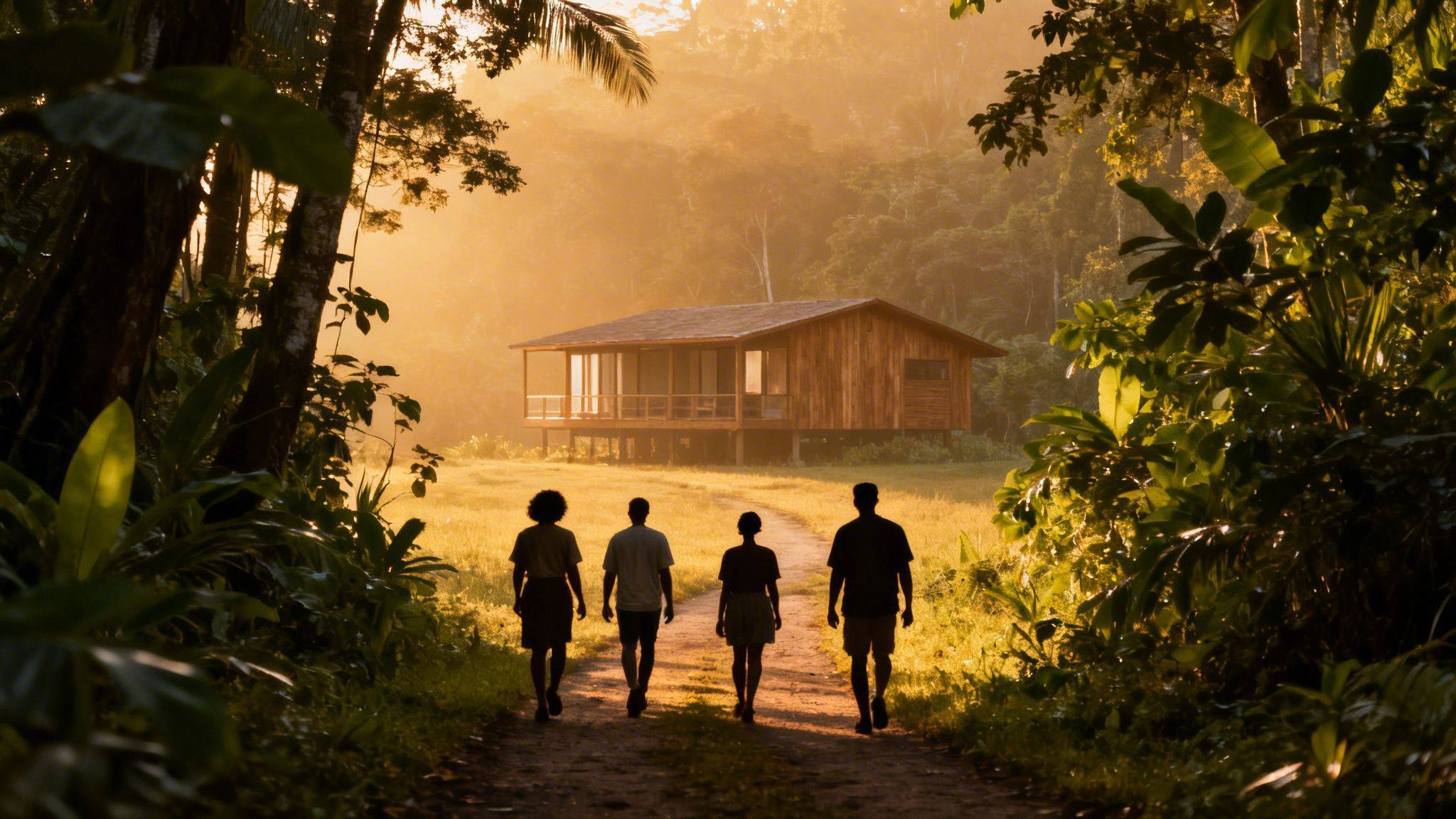
Many of the people who find their way to an Ayahuasca ceremony feel let down or unheard by conventional mental health systems. They’re often wrestling with stubborn conditions like depression, anxiety, or the long shadow of post-traumatic stress. For them, Ayahuasca is a chance to get to the very heart of their suffering.
This modern-day pilgrimage marks a significant shift. The story of Ayahuasca is no longer confined to the Amazon. It has become a truly international phenomenon, creating a bridge between ancient indigenous wisdom and the urgent needs of our modern world.
A New Wave of Seekers
The sheer scale of this movement is staggering. By 2019, an estimated 820,000 people around the world had taken part in nearly 5.5 million servings of this sacred brew. This is part of a much bigger picture, with over 4 million people across the Americas, Europe, Australia, and New Zealand having tried it. You can dig into the specifics in a comprehensive 2023 ICEERS report on global Ayahuasca consumption.
What’s truly striking is the profile of these modern seekers. While Ayahuasca has been a spiritual cornerstone for indigenous cultures for centuries, these groups now make up only about 10% of current users.
The other 90% are non-indigenous people, mostly from Western countries. In the United States alone, roughly 1.5 million people have experienced it, positioning the U.S. as a major hub in this global community. This data paints a clear picture of a powerful cross-cultural exchange that’s well underway.
The Importance of Cultural Respect
This demographic shift carries with it a profound responsibility. As more people from outside its traditional context seek out Ayahuasca, the need for cultural awareness and respect becomes absolutely critical. Working with these plants is about more than personal healing; it is about honoring the lineage of wisdom that has protected this medicine for generations.
“The journey with Ayahuasca is not just an internal one. It is also a step into a living cultural tradition that deserves to be approached with humility, gratitude, and a commitment to reciprocity.”
This means putting in the work to learn about the practice’s origins and supporting the indigenous communities who are its rightful stewards. It also means carefully choosing facilitators and retreat centers that operate with integrity and a deep, genuine respect for the medicine’s sacredness.
Here are a few ways to walk this path with intention:
- Educate Yourself: Take the time to learn about the specific traditions, tribes, and history tied to Ayahuasca.
- Seek Authenticity: Look for practitioners who have a clear and respectful connection to an established indigenous lineage.
- Practice Reciprocity: Think about how you can give back to the communities that have shared this powerful knowledge with the world.
When we approach this work thoughtfully, we help ensure that Ayahuasca’s healing potential can continue to flourish in a way that is sustainable and honors its sacred roots. This creates a balanced, respectful exchange where the modern world can benefit from ancient wisdom without causing harm.
Therapeutic Potential and Scientific Evidence
While indigenous cultures have understood the profound healing power of psychotropic plants for centuries, the modern scientific world is just beginning to catch up. Researchers are now dedicating serious effort to understanding what shamans and healers have long known: these plants can be powerful catalysts for change. The conversation is shifting from stories and anecdotal reports to rigorous, controlled clinical studies, and the results are incredibly promising.
This is a way of building a bridge. By exploring the biological mechanisms at play, we can gain a new appreciation for these ancient practices and learn how to work with these plants more safely and effectively. The evidence is mounting, and it’s painting a clear picture of real therapeutic value.
Rewiring the Brain for Wellness
One of the most fascinating ideas coming out of this research is neuroplasticity. Think of it as your brain’s ability to physically change and reorganize itself by creating new connections between brain cells.
Our minds can get stuck in ruts. Over time, we develop rigid patterns of thought and behavior, like deep grooves worn into a trail. Conditions like depression, anxiety, and PTSD often reinforce these negative loops, making it feel impossible to escape.
Psychotropic plants seem to disrupt these rigid patterns. They act as a catalyst for neuroplasticity, essentially shaking up the system and allowing the brain to form new, healthier pathways. This creates a window of opportunity where new insights can emerge, old emotional wounds can be processed, and more flexible ways of thinking can take root long after the experience is over.
Evidence from Ayahuasca Studies
Ayahuasca, in particular, has captured the attention of the scientific community, and the findings are backing up generations of traditional use.
The world’s largest study on the Amazonian brew, published in 2023, is a perfect example. Researchers surveyed 7,576 people across more than 50 countries who had participated in Ayahuasca ceremonies. The results were striking: participants consistently reported significant, lasting improvements in their overall well-being and psychological health. This massive dataset adds serious weight to Ayahuasca’s reputation as a tool for mental and emotional healing.
This lines up perfectly with smaller studies, like one on regular users in Europe, which found they were less dependent on psychiatric medications and made healthier lifestyle choices. The research consistently points toward long-term benefits.
“These studies highlight a crucial point: the benefits of psychotropic plants often extend far beyond a single experience. They seem to foster sustained improvements in mental health, acting less like a quick fix and more like a catalyst for ongoing personal growth.”
Clinical Trials on Psilocybin and Beyond
The exciting results are not limited to Ayahuasca. Psilocybin, the active compound in “magic mushrooms,” has become a star player in clinical research, showing remarkable potential for some of our toughest mental health challenges.
- Depression: Multiple high-profile studies have shown that psilocybin-assisted therapy can lead to rapid, dramatic, and lasting reductions in depressive symptoms, even for people who haven’t responded to any other treatment.
- Anxiety and PTSD: Research has shown it can significantly ease the end-of-life anxiety faced by terminally ill patients, and it’s also being explored as a powerful tool to help people process and heal from deep-seated trauma.
- Addiction: Early trials are showing incredible promise. Studies on smoking cessation and alcohol use disorder suggest psilocybin can help people break the powerful grip of addiction.
This is just the beginning. Similar investigations are underway for other plant-derived compounds, building a solid foundation of evidence. This work is absolutely essential for moving these powerful natural medicines from the fringes into the mainstream as legitimate therapeutic options. For anyone looking to go deeper, a review of past and current research provides valuable context on the scientific investigation of Ayahuasca.
Navigating Safety, Preparation, and Integration
Working with powerful psychotropic plants is an intensely personal journey, and it demands far more than just casual curiosity. The real benefits do not just happen; they grow from a solid foundation of careful planning, respectful participation, and dedicated follow-through. While the experience itself is potent, it’s just one piece of a much larger process that unfolds across three distinct, yet deeply connected, phases.
Think of it like this: preparation, the ceremony, and integration are the three pillars that support the entire structure. Trying to skip one is like building a house without a foundation, it simply will not hold. Each step is absolutely essential for a safe, meaningful, and genuinely lasting experience.
The Pillar of Preparation
The journey starts long before you ever take a sip of the medicine. Preparation is all about laying the groundwork, setting the stage for everything to come. It’s a time for cultivating the right mindset, purifying your body, and getting crystal clear on why you’re seeking this path in the first place.
A huge part of this is setting a clear intention. This process is not a list of demands for what you want to see or feel. Instead, think of it as a guiding question or a heartfelt theme for your journey. Your intention becomes an anchor, something you can return to that helps you navigate the experience with focus and purpose.
Another crucial piece of the puzzle is the dieta, a special diet often required before an Ayahuasca ceremony. This usually means cutting out foods like red meat, pork, fermented products, and anything overly spicy or processed for a set period. The idea is to cleanse the body, which helps the medicine work more cleanly and reduces physical distractions. If you’re getting ready for your first time, you can learn more about the Ayahuasca dieta in our comprehensive guide.
The Ceremony Itself
This is where the work goes deep, and the safety of the ceremonial space is non-negotiable. The environment has to be a container built on trust, respect, and solid support. This is where the classic concept of “set and setting” becomes very real.
- Set (Your Mindset): This is everything happening inside you, your thoughts, your mood, your intentions. Approaching the experience with a mindset of openness, trust, and positivity can dramatically influence the journey.
- Setting (Your Environment): This is the physical and social space. It must be comfortable and safe, guided by an experienced and ethical facilitator who truly knows how to hold space for people in vulnerable states.
The role of the facilitator or shaman cannot be overstated. A good guide does more than just pour the medicine. They are the guardians of the group’s energetic and physical safety, using traditional songs (icaros) and time-honored practices to steer the journey and help people through difficult moments.
“Choosing a retreat and facilitator requires serious homework. A reputable center will be upfront about their lineage, how they screen participants, and what their emergency plans are. They always put safety first.”
The Pillar of Integration
The ceremony might be over, but the real work is just getting started. Integration is the essential process of making sense of what you experienced and carefully weaving those insights into the fabric of your daily life. This is where real, lasting change takes root.
The downloads and visions from a journey can be profound, but without a conscious effort to integrate them, they can fade away like a half-remembered dream. Integration is all about translating those abstract feelings into concrete, actionable shifts in your thoughts, habits, and relationships.
There are many simple, powerful ways to practice integration:
- Journaling: Get it all down on paper. Writing helps you process and solidify the memories and insights before they slip away.
- Time in Nature: Spending quiet time outdoors is incredibly grounding and can help you maintain the connection you felt during the ceremony.
- Mindful Practices: Things like meditation or yoga keep you present and tuned in to your inner world.
- Community: Talking about your experience with a trusted friend, a therapist, or an integration group provides priceless support and perspective.
Integration is not a one-and-done task; it’s an ongoing practice. It’s the bridge that connects the extraordinary world you visited back to your everyday reality, ensuring the journey leads to genuine, sustainable growth.
The Legal and Ethical Landscape of Plant Medicine
If you’re exploring psychotropic plants, you’re also stepping into a complicated legal and ethical maze. The laws around these substances are a messy patchwork, changing dramatically from one country to the next. What’s considered a protected religious sacrament in one region might land you in serious trouble just across the border.
To make sense of it all, you have to start with the United Nations. The 1971 UN Convention on Psychotropic Drugs put compounds like DMT, psilocybin, and mescaline on the controlled substances list. But, and this is a huge but, it specifically does not control the plants that naturally produce them. This created a massive legal gray area, leaving individual countries to figure it out on their own, which is why the rules are so inconsistent today.
A Complex Global Legal Status
Look at Ayahuasca, for example. In parts of South America, like Brazil, Peru, and Colombia, its use is legal within established religious and cultural frameworks. But in the United States, DMT is a Schedule I drug. The only exceptions are for specific religious groups, like the União do Vegetal, who fought for and won the right to use Ayahuasca as a sacrament under religious freedom laws.
You see a similar pattern with mescaline-containing cacti. The use of Peyote is legally protected in the U.S. for members of the Native American Church, a right reinforced by the American Indian Religious Freedom Act Amendments of 1994. Meanwhile, other plants like psilocybin mushrooms remain illegal almost everywhere, though decriminalization movements are slowly starting to gain traction in certain cities and states.
“This legal inconsistency highlights a crucial point for any seeker: thorough research into the specific laws of your destination is not just recommended, it is an essential part of responsible preparation. Assuming legality can have serious consequences.”
Beyond the Law: Ethical Considerations
Navigating the law is just the first step. The ethical side of engaging with these ancient traditions is arguably even more important. As plant medicine becomes more popular, we have to face the very real risks of cultural appropriation, over-commercialization, and damage to the environment.
A truly ethical approach is built on respect and reciprocity. It starts with seeing these practices not as trendy wellness products, but as sacred traditions that indigenous communities have generously shared with the world.
- Honor the Source: Take the time to actually learn about the cultural roots of the medicine you’re considering. Understand its history and the people who have been its guardians for generations.
- Ensure Sustainability: The exploding demand for plants like Ayahuasca and Peyote is putting incredible strain on their natural habitats. Look for centers and facilitators who are serious about sustainable harvesting and cultivation.
- Practice Reciprocity: Think about how you can give back to the indigenous communities that have made this healing possible. This could mean directly supporting their community projects or donating to organizations focused on cultural preservation.
By walking this path with integrity, we can do our part to ensure these powerful traditions are honored respectfully and preserved for the generations to come.
Frequently Asked Questions About Psychotropic Plants
Even after going through a detailed guide, it’s completely normal to have more questions pop up. This section tackles some of the most common curiosities and concerns I hear, with the goal of giving you clear, direct answers. Think of it as a quick-reference spot for the essentials.
Are Psychotropic Plants Addictive?
This is a big one. The classic plant medicines, like the brew for Ayahuasca, psilocybin mushrooms, and peyote, are not considered physically addictive. They don’t trigger the compulsive, must-have-it-again cycle you see with substances like opioids or nicotine.
In fact, some of these plants are being seriously studied for their ability to treat addiction. Ibogaine and Ayahuasca, for instance, have shown remarkable promise in helping people break free from substance dependency.
That said, it’s possible to develop a psychological attachment to any profound experience. This is exactly why the work doesn’t stop with the ceremony. Setting a clear intention beforehand and having solid integration support afterward are crucial for maintaining a healthy relationship with these experiences.
What’s the Difference Between a Psychotropic Plant and a Synthetic Psychedelic?
It really comes down to their origins and the nature of the experience. Psychotropic plants are, well, plants. They grow from the earth and contain a complex cocktail of compounds that work together to alter consciousness. Many people describe the experience as connecting with the unique “spirit” or intelligence of the plant itself.
Synthetic psychedelics, like LSD, are born in a lab. While they might activate some of the same receptors in your brain, the felt sense of the journey is often worlds apart. For those who follow traditional paths, there’s an irreplaceable value in working directly with the living wisdom of a plant.
“The core distinction is origin. One is a product of nature, steeped in ecological and cultural history. The other is a product of human chemistry.”
How Do I Know if I’m Medically and Psychologically Ready?
This is easily the most important question you can ask, and it demands complete honesty with yourself and any facilitator you work with. Any responsible retreat center will have a rigorous medical and psychological screening process; if they don’t, that’s a major red flag.
There are some hard stops. A personal or family history of psychosis, schizophrenia, or bipolar disorder is typically a firm contraindication. These conditions can be dangerously destabilized by a psychedelic experience.
On the physical side, serious cardiovascular issues can also pose significant risks. And it’s absolutely vital to talk about medications. SSRIs and other antidepressants, in particular, can have dangerous interactions with these plants. You must be 100% transparent during your screening and have a conversation with both the retreat provider and your doctor to make sure you’re safe.
Disclaimer: The information provided on Ayahuasca.com is for educational purposes only and is not intended as medical advice, diagnosis, or treatment. Ayahuasca is a powerful traditional Amazonian medicine and may not be suitable for everyone. Always consult with a qualified healthcare professional before making decisions related to health, mental well-being, medications, or the use of Ayahuasca.