
Wachuma, more widely known as the San Pedro cactus, is a sacred plant medicine that has called the Andes mountains home for millennia. It’s often spoken of as a gentle, heart-opening teacher, guiding those who sit with it toward profound connection and clarity. As one of the oldest continuous spiritual traditions in the Americas, a journey with this cactus is often felt as an expansive opening, connecting you outward to the world around you.
An Introduction to the Sacred Cactus
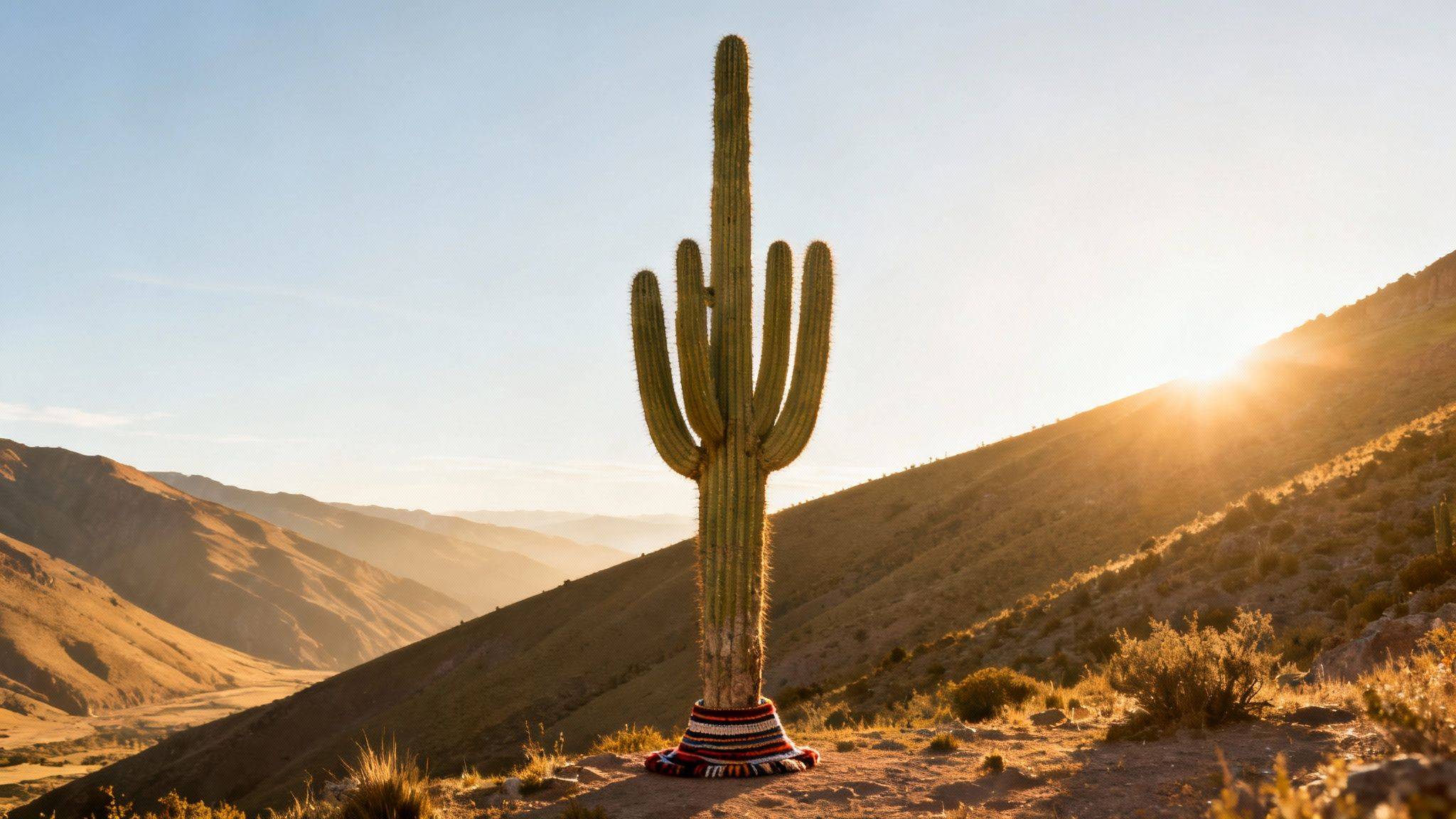
Let’s step into the world of Wachuma, a sacred cactus whose spiritual roots run thousands of years deep in Andean tradition. Known to botanists as Echinopsis pachanoi, this plant is regarded as a master teacher, yet one that offers its lessons with a characteristically gentle and compassionate spirit.
If you have any experience with other plant medicines, like Ayahuasca, you’ll find that Wachuma offers a very different kind of journey. Where Ayahuasca often pulls you inward for a deep, sometimes turbulent, dive into the subconscious, Wachuma is almost universally described as a heart-centered guide. Its energy fosters an outward expansion of consciousness, building a palpable sense of connection to nature, to other people, and to your truest self.
What Makes Wachuma Unique
The experience with this sacred cactus is typically marked by a sense of crystalline clarity and a gentle, emotional warmth. Instead of an overwhelming flood of visions, many people report that insights unfold softly, making it a very approachable teacher for newcomers to sacred plant work. It’s no wonder its spirit is often lovingly called “Grandfather Wachuma,” a name that perfectly captures its wise, grounding, and supportive presence.
“Wachuma isn’t a medicine for escape; it’s a medicine for presence. It helps you see the world, and your place within it, with a clearer mind and a more open heart.”
The Wachuma journey is deeply intertwined with its ceremonial use. Traditionally, these ceremonies are held during the day and often outdoors, which allows participants to connect directly with the elements and the vibrant beauty of the natural world. This daytime setting is a stark contrast to the often nocturnal ceremonies of its Amazonian counterpart, Ayahuasca. You can learn more about how different sacred plant spirits are used in various ceremonial brews.
Think of this guide as a map to help you navigate this ancient tradition. Together, we’ll explore:
- The rich cultural and historical roots of Wachuma in Andean shamanism.
- The unique nature of the Wachuma experience and its effects on the mind and spirit.
- How to approach this sacred medicine with the respect, intention, and preparation it deserves.
Our goal here is to give you a clear, respectful, and solid foundation to begin your journey of understanding.
The Ancient Roots of Wachuma
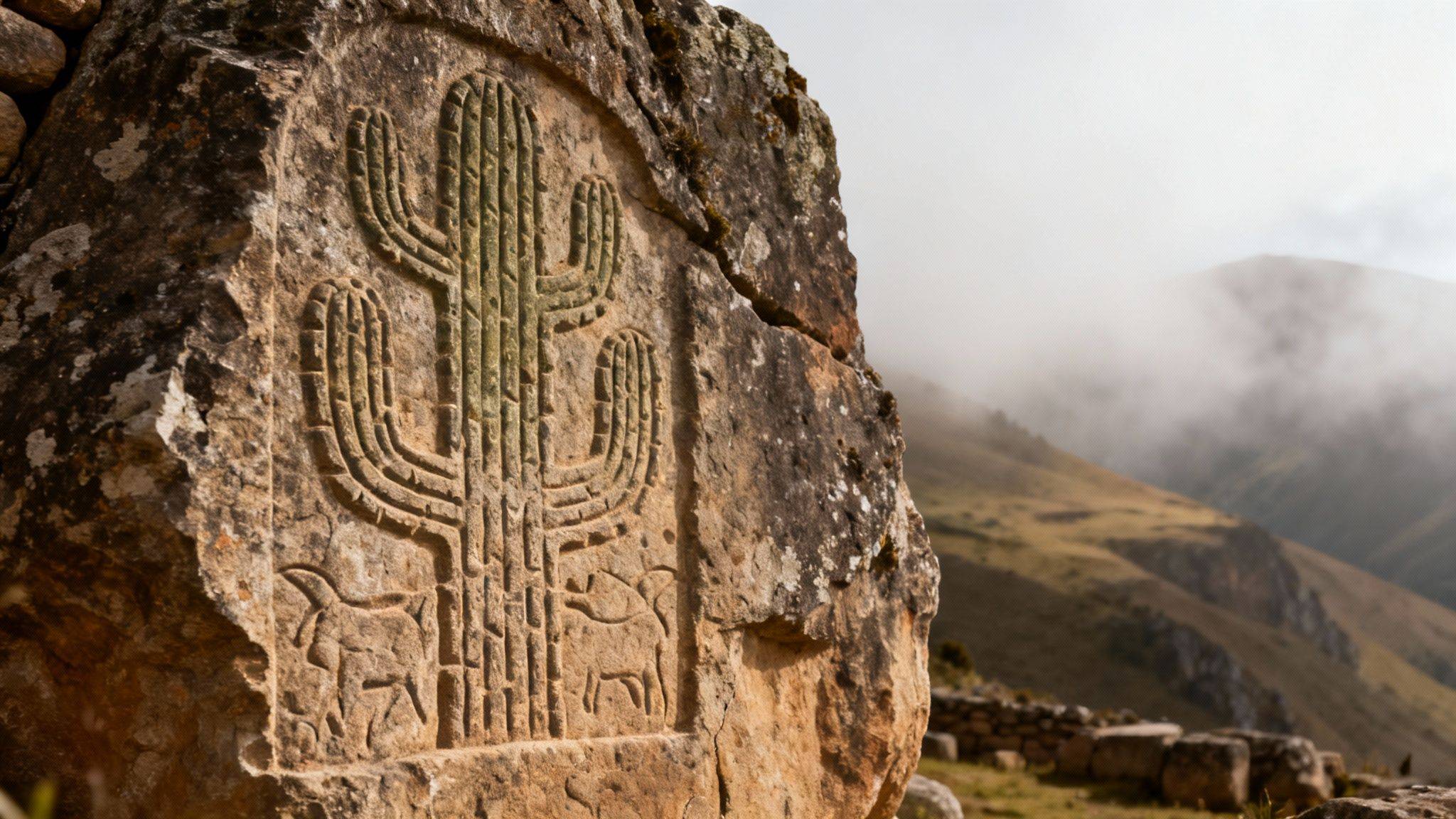
To really get to the heart of Wachuma, you have to travel back thousands of years. This is not a new-age wellness fad; it’s an ancient spiritual technology with roots buried deep in the soil of the Andes. Its story is one of profound resilience, wisdom, and an unbroken bond between people and the land.
The lineage of Wachuma use is ancient, stretching back further than many of the world’s major religions. As one of the oldest sacred plants in the Americas, its history is confirmed not just by oral tradition but by hard archaeological evidence, adding a real sense of weight and reverence to its modern use.
The Dawn of a Tradition in Chavín Culture
The first clear proof we have of Wachuma’s central role in ceremony comes from the Chavín culture, a civilization that thrived in Peru’s northern highlands long before the Inca Empire. The Chavín were master stone carvers, and their art gives us a direct window into their spiritual world.
Archaeological sites near the Cordillera Blanca mountains, for instance, have turned up some incredible artifacts. One is a stone carving of a figure, likely a shaman or huachumero, holding the unmistakable ribbed stalk of the San Pedro cactus. This piece dates back to at least 1500 B.C., making it one of the oldest known depictions of psychedelic plant use on the planet.
Think about that for a moment. For over 4,000 years, people in this region have been building a relationship with this plant, seeking its guidance for healing, divination, and spiritual connection.
“Wachuma’s legacy is etched in stone, ceramics, and textiles a testament to its central role in the spiritual and cultural fabric of Andean societies for millennia.”
And it wasn’t just the Chavín. Later pre-Inca societies, like the Moche and Nazca, also left behind a rich artistic record showing the cactus’s importance. Their pottery is often decorated with ceremonial scenes featuring Wachuma, clearly showing its continued use in healing rituals and as a bridge to the spirit world.
Survival Through Centuries of Change
When the Spanish conquistadors arrived in the 16th century, they brought a worldview that had no place for indigenous spirituality. The Catholic Church, in particular, saw plant medicines like Wachuma as a threat, labeling their use as idolatry and witchcraft. Ceremonies were forced into hiding as colonial authorities actively tried to stamp them out.
But despite the immense pressure, the traditions didn’t die. Indigenous communities became the secret keepers of this ancient knowledge, quietly passing down ceremonial practices from one generation to the next in remote mountain villages. It was this quiet preservation that ensured the wisdom of Wachuma wasn’t lost.
The shamans and healers who carried this torch did so at great personal risk, a powerful demonstration of their dedication to their ancestral ways. This legacy of resilience is something you can still feel in the plant’s spirit today. You can explore more about the rich traditions of mestizo shamanism and the vegetalistas who kept this knowledge alive.
The growing interest in Wachuma we see today is not a new discovery. It’s simply the next chapter in a story that has been unfolding for thousands of years, a tradition carried forward by the enduring strength and wisdom of the Andean people.
What Does a Wachuma Journey Actually Feel Like?
Trying to put a psychedelic experience into words is a bit like trying to describe a dream; the language never quite captures the feeling. But we can get a sense of the journey by looking at the common threads people report about how Wachuma affects the mind, body, and spirit.
The magic behind the experience lies in its main active ingredient, mescaline, which has a unique relationship with the brain’s serotonin receptors. Imagine these receptors are like locks on the doors of your perception. Mescaline is the key that gently unlocks them, allowing your brain to see, feel, and connect information in ways that are usually out of reach. This is what creates those profound shifts in consciousness.
A Gentle Unfolding of a Heart-Centered Journey
Wachuma doesn’t hit you like a freight train. Unlike other psychedelics that can have a jarring, rapid onset, this medicine tends to arrive softly, like a slow sunrise over the mountains. You can expect to feel the first effects within one to two hours, and from there, it gradually builds into a state of warm, heightened awareness.
Most people describe the peak, which can last for several hours, as a profoundly heart-opening experience. It’s as if old emotional armor starts to melt away, making space for deep feelings of compassion, forgiveness, and a powerful sense of love for yourself and everyone around you. It’s known for creating a feeling of being woven into the fabric of everything, from the smallest insect to the cosmos itself.
“The spirit of Wachuma is often felt as a wise and grounding presence. It doesn’t pull you out of your body; instead, it brings you more fully into it, helping you feel deeply rooted in the present moment.”
Heightened Senses and a Connection to Nature
One of the most remarkable parts of a Wachuma journey is how it sharpens the senses. Colors seem to pop with an impossible vibrancy, sounds take on new depth and complexity, and the world just feels more alive. This is a big reason why ceremonies are so often held outdoors, in the daylight.
This sensory amplification acts as a bridge to the natural world. You might find yourself completely captivated by the delicate veins on a leaf or feel a real sense of connection with the sun, the wind, or the earth beneath your feet. It’s more than just a cool visual; it’s a deep, gut-level feeling of being an inseparable part of nature’s web, a feeling that can stick with you long after the journey is over.
The Physical Dimensions of the Experience
A Wachuma journey is a marathon, not a sprint. The entire experience typically lasts 8 to 12 hours, and it’s not uncommon to feel some lingering effects the next day, so you need to be prepared for the duration.
A crucial part of that journey can be the purge. This might mean nausea, vomiting, or other kinds of physical release. In the shamanic view, this is not a bad side effect; it’s a vital part of the healing. Think of it as your body and spirit clearing out old, heavy energies, emotional baggage, or toxins you no longer need. This cleansing often clears the path for deeper insights and emotional breakthroughs.
This ceremonial approach is not new; it has roots stretching back thousands of years. We know Wachuma was central to ceremonies at least 3,500 years ago, thanks to ancient ceramics from Peru’s Nazca culture (100 B.C. to 800 A.D.). This pottery vividly shows shamans in deep trance, connecting with the spirit world during Wachuma rituals a practice that Andean communities have carried for millennia. You can learn more about these sacred rituals of Wachuma and their incredible history.
In the end, though, every journey is deeply personal. While these descriptions give you a general map of the territory, your own experience will be uniquely shaped by your intentions, your mindset, and the wisdom of the plant itself.
Comparing Wachuma and Ayahuasca
For anyone starting to explore plant medicine, Ayahuasca is often the first name they hear. But as you dig deeper, you’ll inevitably come across Wachuma, and it’s natural to wonder how they stack up. While both are powerful teachers from South America, their energies, ceremonies, and the very nature of the journeys they offer couldn’t be more different.
A good way to think about it is that they have distinct personalities. Ayahuasca is the quintessential introspective guide. She takes you deep inward, often through challenging terrain, to explore your subconscious, heal old wounds, and face your own shadow. Wachuma, on the other hand, is the expansive guide. His journey is an outward one, opening the heart and connecting you to the world in a profound way.
Two Paths, One Purpose
Both medicines are ultimately here to help us heal and expand our consciousness, but they take very different roads to get there. The Ayahuasca experience is often described as a descent into the self. It can bring intense visions, emotional purges, and earth-shattering internal revelations. It’s a powerful tool for deep psychological and spiritual excavation.
The journey with Wachuma, however, feels more like a gentle ascent. It slowly builds a sense of unity, clarity, and emotional warmth. The medicine encourages a state of being deeply present and connected to nature, to other people, and to the divine. The insights you gain tend to arrive as deeply felt states of being, rather than being delivered through complex visual narratives.
This diagram helps visualize the outward, heart-centered flow of a Wachuma journey.
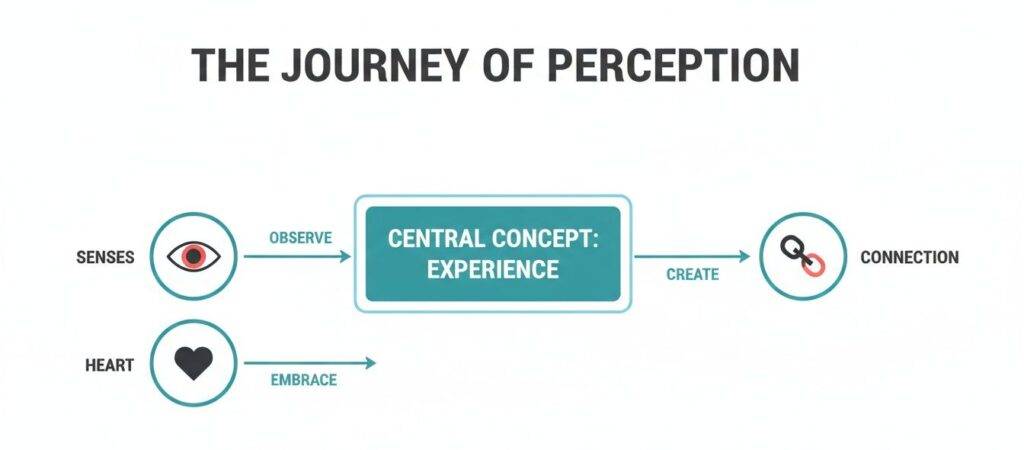
As you can see, the experience often starts with the senses coming alive, moves through the heart to cultivate compassion, and blossoms into a profound sense of connection with everything.
Core Differences in Ceremony and Spirit
These differences run deep, extending all the way back to their origins and ceremonial use. Wachuma has been a central part of Andean rituals for nearly 3,000 years, a history that predates the Inca Empire and is backed by solid archaeological evidence. In Quechua cosmology, it’s revered as a holy cactus and a potent ‘cardiac opener’ a heart-opener which stands in stark contrast to the deep dive into the subconscious that Ayahuasca is known for. You can find more details on the rich history of Wachuma and its comparison to Ayahuasca on Pumadventures.com.
This fundamental distinction shows up in every single aspect of the ceremonies themselves.
“Ayahuasca is often called “Grandmother” for her deep, nurturing, and sometimes stern wisdom that guides you through inner darkness. Wachuma is “Grandfather,” a wise, grounding, and gentle presence that helps you find your place in the light of the outer world.”
To make things clearer, let’s break down the key differences side-by-side.
Wachuma vs. Ayahuasca Key Differences at a Glance
This table compares the core characteristics of Wachuma and Ayahuasca to help you better understand their distinct properties and how their ceremonies work.
| Characteristic | Wachuma (San Pedro) | Ayahuasca |
|---|---|---|
| Origin | Andean Mountains of Peru, Ecuador, Bolivia | Amazon Basin |
| Primary Compound | Mescaline | DMT & MAOIs |
| Ceremony Setting | Typically held during the daytime, often outdoors in nature to connect with the elements. | Almost always held at night, in darkness, to facilitate deep inner journeying. |
| Journey Nature | Outward, expansive, and heart-centered. Promotes connection to nature and community. | Inward, introspective, and visionary. Focuses on subconscious exploration and shadow work. |
| Energetic Feel | Grounding, gentle, and clarifying. Often described as a warm and loving presence. | Can be intense, visionary, and challenging. A powerful teacher demanding surrender. |
| Physical Experience | Can involve a purge, but often milder. Effects last longer, typically 8-12 hours. | The purge is a central element for many. The peak experience is shorter but very potent. |
Ultimately, choosing between them really comes down to what you’re looking for. If your intention is to do deep internal healing, confront old trauma, and work with your shadow, Ayahuasca might be the more direct path. But if you’re seeking connection, a sense of belonging, and a gentle opening of the heart to find your place in the world, Wachuma may offer exactly the guidance you need.
How to Prepare for a Safe Journey
Working with Wachuma is so much more than just showing up on the day of the ceremony. It’s an intentional process that asks you to prepare your body, mind, and spirit for the deep work ahead. This is not just about following a checklist; it’s about creating a framework for your experience that includes crucial safety checks, mindful readiness, and a plan for what comes after.
Think of your physical and mental state as the vessel for this journey. The cleaner the vessel, the more clearly and profoundly the spirit of the medicine can work with you.
Critical Safety and Medical Considerations
Before you even commit to a ceremony, the first and most important step is a completely honest self-assessment. Wachuma is an incredibly powerful plant medicine, and it simply isn’t for everyone. Certain medical and psychological conditions can create serious risks.
This is why it’s absolutely essential to be transparent with your facilitator about your entire health history. I mean everything every medication you’re on, every diagnosis you’ve ever had, both physical and mental, past and present.
Key Medical Contraindications:
- Heart Conditions: If you have serious heart issues like high blood pressure, heart disease, or a history of heart attacks, Wachuma is not for you. The cactus can raise both heart rate and blood pressure significantly.
- Medication Interactions: This is a big one. SSRIs, MAOIs, and some other psychiatric drugs can have dangerous, even fatal, interactions with the alkaloids in Wachuma. You must speak with your doctor about safely tapering off these medications well in advance of any ceremony.
- Severe Mental Health Issues: Anyone with a personal or family history of psychosis, schizophrenia, or bipolar disorder is generally advised to avoid psychedelic ceremonies.
“Your safety is the absolute priority. Being upfront about your health is not just a formality it’s a non-negotiable part of creating a responsible and protective space for yourself and everyone else in the circle.”
The Importance of the Dieta
In the traditions that work with these plants, preparation often involves a “dieta.” This is not just about what you eat; it’s a holistic practice of purifying your system to make you more sensitive and open to the spirit of the Wachuma. The best analogy is tuning an instrument before a performance, you want to be perfectly resonant.
The dieta usually starts at least a week before the ceremony, sometimes longer. The whole point is to quiet all the noise physical, mental, and emotional so you can hear the medicine’s subtle guidance more clearly. To go deeper on this, you can explore our detailed guide on preparing for a journey with sacred plants.
A typical dieta asks for a few key lifestyle shifts:
- Dietary Purification: This means cutting out certain foods to cleanse the body. The usual suspects are red meat, pork, heavily processed foods, excess salt and sugar, spicy foods, and anything fermented. The goal is a clean, simple diet based on fruits, vegetables, and whole grains.
- Abstinence: It’s standard to abstain from sexual activity (including masturbation), alcohol, and other recreational drugs. The idea is to conserve your energetic and spiritual resources for the journey itself.
- Mental and Emotional Clearing: The dieta is also a time for a mental detox. This might look like limiting your time on social media, avoiding the news, and stepping back from stressful social situations. It’s an invitation to turn inward through practices like meditation, journaling, or just spending quiet time in nature.
Integration: The Bridge Back to Daily Life
The ceremony doesn’t end when the medicine’s effects fade. In many ways, that’s when the real work truly begins. Integration is the vital, ongoing process of taking the insights, lessons, and feelings from your journey and weaving them into the fabric of your everyday life.
Without intentional integration, even the most earth-shattering experience can become just a cool story, a distant memory with no real lasting impact. You have to build a bridge from that ceremonial space back to your reality so the healing can actually take root and grow.
This process is unique to each person and can take weeks, months, or even longer. It’s all about giving yourself the time and space to digest what you went through.
Practical Steps for Successful Integration:
- Rest and Reflect: Don’t just jump back into your hectic schedule. Give your body and mind plenty of time to rest in the days after the ceremony.
- Journal: Write down everything you can remember feelings, images, strange thoughts, profound realizations. This helps anchor the experience before it starts to fade.
- Connect with Nature: Wachuma is a plant of the earth. Spending time outside can help you stay tuned in to the expansive, heart-opening state it often brings.
- Share Intentionally: Talk about what happened with trusted friends, a therapist, or an integration group. Voicing your experience is a powerful way to make sense of it.
- Embrace Change: Be open to making small, real changes in your life based on what you learned. Maybe it’s starting a creative hobby, or maybe it’s changing the way you speak to your partner. It’s the small steps that make the healing stick.
The Enduring Wisdom of the Cactus
Our journey through the world of Wachuma reveals a plant medicine with a gentle spirit yet profound depth. Its legacy, stretching back thousands of years through the Andes, is not just history it’s a testament to its consistent and powerful role as a teacher for humanity.
We’ve walked through its heart-opening nature, touched on its deep cultural roots, and outlined the practical steps for approaching it with the respect it deserves. The wisdom of this sacred cactus offers a unique path toward connection, not just with the world around us, but with our own inner selves and with each other.
A Path of Mindful Connection
Unlike some plant medicines that pull you deep into the subconscious, Wachuma often guides your awareness outward. It fosters a state of grounded presence, gently dissolving the self-imposed barriers that make us feel isolated. This very quality makes it an incredibly potent ally for personal growth and spiritual clarity.
“The journey with any plant medicine is a deeply personal one. The wisdom of Wachuma lies in its ability to meet you where you are, offering lessons in compassion, presence, and unity. Understanding its history is the first step toward honoring its spirit.”
To approach this medicine is to walk a path of intention and mindfulness. We hope this guide has given you a solid foundation a deep respect for the tradition and the clarity to make informed decisions if your path ever leads you toward this ancient teacher. The first step is always understanding. From there, a journey of true discovery can begin.
Got Questions About Wachuma?
As you start to learn about this sacred plant medicine, you’re bound to have questions. It’s only natural. Let’s walk through some of the most common ones to give you a clearer picture of what this ancient teacher is all about.
Is Wachuma the Same Thing as San Pedro?
Yes, they are one and the same. Wachuma is the original Quechua name used by indigenous communities for thousands of years. The name San Pedro, or Saint Peter, came much later from Spanish colonists, referencing the Christian saint said to hold the keys to heaven.
Today, many people are returning to the name Wachuma to honor the plant’s deep indigenous roots and move away from its colonial-era label.
How Long Does a Wachuma Ceremony Actually Last?
Plan for a full-day commitment. After drinking the medicine, you’ll typically start to feel the effects within an hour or two.
The core of the journey usually lasts anywhere from 8 to 12 hours, with the peak experience happening for a few hours within that timeframe. It’s also normal to feel gentle, lingering effects the next day, so make sure you clear your schedule and give yourself plenty of time to rest and integrate.
“Every journey with Wachuma is personal. While this timeline is a good general guide, the experience will unfold in its own time, guided by the medicine and your own intention.”
Is Wachuma Considered a Drug?
This really depends on your perspective. From a legal standpoint in countries like the United States, its primary active compound, mescaline, is a Schedule I substance.
However, in the shamanic and indigenous traditions where it originates, Wachuma is not seen as a recreational drug at all. It’s a sacred plant medicine, a spiritual tool used for profound healing, self-discovery, and connecting with the world around you. The intention, respect, and ceremonial setting are what make all the difference.
Is a Wachuma Journey Always a “Good” Experience?
People often describe Wachuma as a gentle, heart-opening, and even blissful experience, but that doesn’t mean it’s always easy. The medicine works by helping you clear out old emotional and energetic baggage.
Sometimes, that process can bring up difficult feelings, buried memories, or physical discomfort like nausea. You might find yourself crying or facing things you’ve long avoided. These moments are not “bad trips” they are a crucial part of the healing, clearing the way for new clarity and peace. This is why having a skilled, trustworthy guide is so important to help you navigate whatever comes up.