
A traveler scrolls through retreat websites late at night, moving between polished villas, quiet ashrams, and clinics promising detoxification, balance, or relief from long-standing symptoms. One program highlights oil massage and organic meals. Another advertises intensive Panchakarma. A third looks like a luxury spa with Ayurvedic language added to the menu. The choice can feel impossible because the word Ayurveda appears across very different experiences.
A well-chosen Ayurvedic health retreat can offer a valuable reset through routine, rest, supervised treatments, nourishing food, movement, and meditation. It can also expose travelers to avoidable risks when marketing claims replace clinical screening, practitioner oversight, and informed consent. The most reliable way to choose is to examine how a center operates, not how dramatic its testimonials sound.
Understanding What an Ayurvedic Health Retreat Actually Is
An Ayurvedic health retreat is a residential program built around Ayurvedic principles of individualized care. Guests commonly receive an intake consultation, a dosha assessment, dietary guidance, herbal preparations, bodywork, yoga, breathing practices, and meditation. The exact combination varies widely, which is why two retreats using the same label may feel entirely different.
A genuine clinical program usually begins with a practitioner reviewing a guest’s health history, symptoms, medications, sleep, digestion, and current goals. That assessment should influence the treatment plan. For example, a guest seeking support during burnout might receive a quiet schedule, gentle movement, oil-based bodywork, regular meals, and sleep-focused routines. Another guest might receive a different plan because of allergies, mobility limitations, or existing medical conditions.

Tradition And Superficial Branding
Ayurveda views health through relationships among the body, mind, habits, food, environment, and constitution. Doshas provide a traditional framework for describing those individual patterns. In practice, however, a retreat should explain how its interpretation becomes a safe, concrete plan rather than using dosha language as a decorative feature.
A center may offer authentic Ayurvedic medicine with trained practitioners, or it may provide standard wellness services under an Ayurvedic name. Warm oil massage, vegetarian meals, and yoga can be beneficial parts of a restorative holiday, but those services alone don’t establish that a program delivers individualized Ayurvedic care.
“Practical rule: A retreat earns credibility through assessment, documentation, qualified staff, and transparent treatment boundaries. A beautiful setting can support recovery, but it can’t replace those controls.”
Travelers comparing broader wellness experiences may also find useful context in Haute Black wellness itineraries, particularly when considering how a retreat fits within a larger health-focused journey. The central question remains simple: does the program provide a coherent, supervised care process, or only a relaxing atmosphere with traditional terminology?
The Evidence Behind Ayurvedic Retreat Benefits
A guest may return from an Ayurvedic retreat sleeping more regularly, eating simpler meals, moving gently, and feeling less burdened by daily demands. Those changes can matter, but they are not the same as proving that a particular oil treatment, herb, or cleansing procedure caused a lasting health improvement.
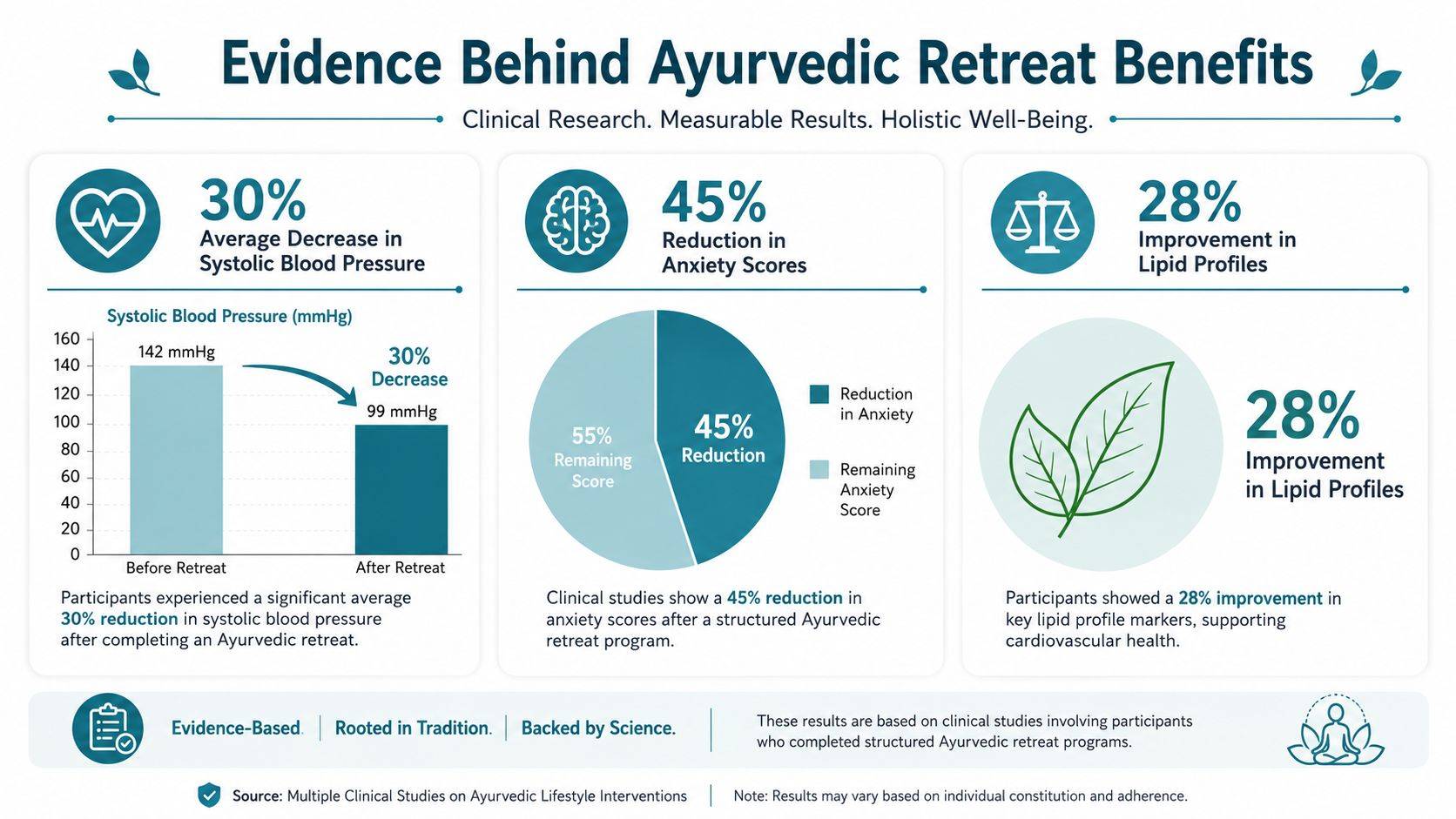
The strongest evidence in this section concerns behavior, routine, and short-term physiological change. A controlled six-day Ayurveda-based well-being program combined a vegetarian diet, meditation, yoga, and massage. Participants showed measurable decreases in blood metabolites associated with inflammation, cardiovascular risk, and cholesterol regulation, as described in this report on the controlled program.
The design also sets a boundary around the conclusion. Because several elements were delivered together, researchers could not identify which treatment produced the observed changes. A retreat can therefore offer conditions that support healthier routines without demonstrating that its branded method treats disease.
What Panchakarma Evidence Can Support
A separate five-day Panchakarma study reported no serious side effects and described milder effects, including gastrointestinal upset and brief insomnia. Adverse effects rose from 21% at baseline to 26% after five days, but the change was not statistically significant. The study also found no significant improvement in overall quality of life.
Those findings support a measured expectation. A short retreat may help someone establish a calmer schedule, observe eating patterns, or notice changes in sleep and digestion. It should not be marketed as a guaranteed cure, a universal detox, or a substitute for care for a diagnosed disease.
A systematic review of residential retreats found no reported adverse effects in the included studies, while also finding no safety data about adverse events. No reported harm isn’t proof of safety, especially when a program combines fasting-like diets, steam, massage, yoga, altered sleep, and herbal products.
Use process controls to judge the gap between a testimonial and an outcome. Ask which study supports each numerical claim, who was studied, what the intervention included, and how results were measured. A retreat that cannot answer those questions offers marketing language rather than evidence you can evaluate.
The video below provides additional visual context. It does not replace advice from a qualified healthcare professional or review of the retreat’s safety documentation.
Typical Treatments And Daily Schedule At A Retreat
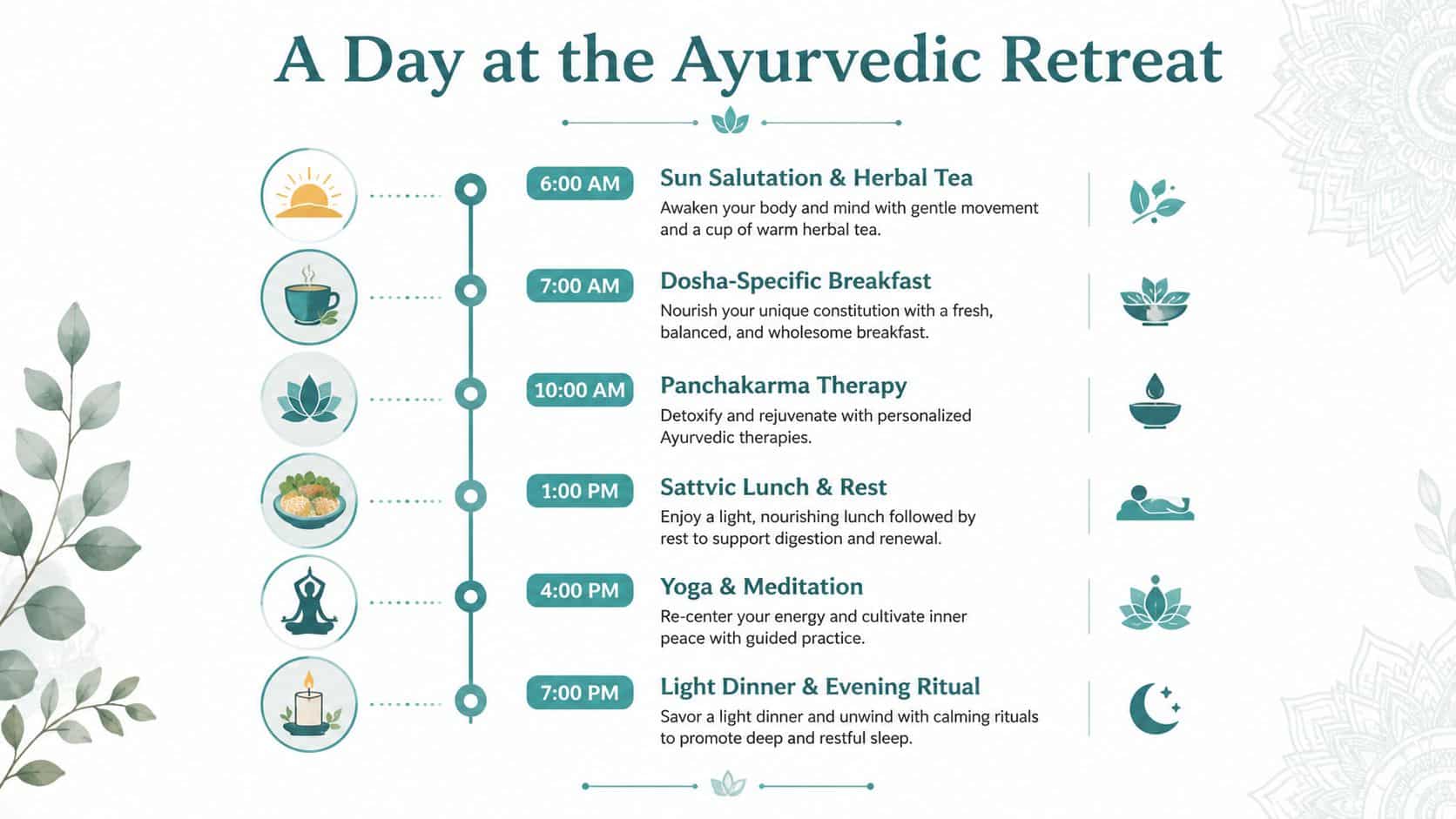
A typical Ayurvedic retreat day runs from early-morning breathing exercises through evening wind-down rituals, with treatments scheduled between meals and rest periods. Quiet movement, breathing practice, or herbal tea may come first, followed by a practitioner-approved breakfast. The pace usually slows at night, although the exact routine depends on the center and the guest’s assessment.
A Representative Day
A schedule may include:
- Early morning: Sun salutations, gentle mobility, breathing exercises, and herbal tea.
- Breakfast: A warm, simple meal adjusted to the center’s assessment of the guest’s needs.
- Late morning: A consultation, bodywork session, or Panchakarma-related treatment.
- Afternoon: Lunch, quiet rest, walking, journaling, or an educational session.
- Late day: Yoga, meditation, or guided pranayama.
- Evening: Light food, a calming ritual, and reduced screen use before sleep.
Treat this as an example, not a promise of what every retreat provides. Before booking, request the actual timetable and ask which activities are required, optional, or changed when symptoms arise. Clear answers show that the program follows a process rather than relying on a polished testimonial.
Common Therapies And Their Purpose
Abhyanga is a warm oil body treatment delivered by one or more therapists. Guests may experience it as soothing bodywork, while practitioners place it within a broader Ayurvedic care plan. Shirodhara uses a steady stream of oil applied to the forehead. Swedana uses herbal steam or heat, which may feel relaxing but can be unsuitable for guests vulnerable to dehydration or dizziness.
Panchakarma may include several cleansing procedures and dietary changes. Because the term is sometimes used loosely in marketing, ask the center to list each included procedure. Fasting, purgation, enemas, nasal treatments, and concentrated herbs require clear consent, appropriate screening, and an explanation of how staff will respond to adverse symptoms. As discussed in the evidence section, the absence of reported adverse effects does not confirm safety.
Meals may include kitchari, seasonal vegetables, warm broths, and digestive spices. Guests with allergies, diabetes, eating disorder histories, or medication-related dietary needs should confirm accommodations in writing. For readers comparing structured plant-medicine experiences with other retreat work, this guide to what an Ayahuasca experience may involve offers a separate framework for evaluating preparation, setting, and support.
Safety Standards And Credential Verification
A serene setting can hide weak safety controls. As noted in the evidence section, the systematic review found no reported adverse effects but also no safety data. Guests therefore need to judge a retreat by its procedures, not by polished photography, reassuring testimonials, or the absence of alarming stories.
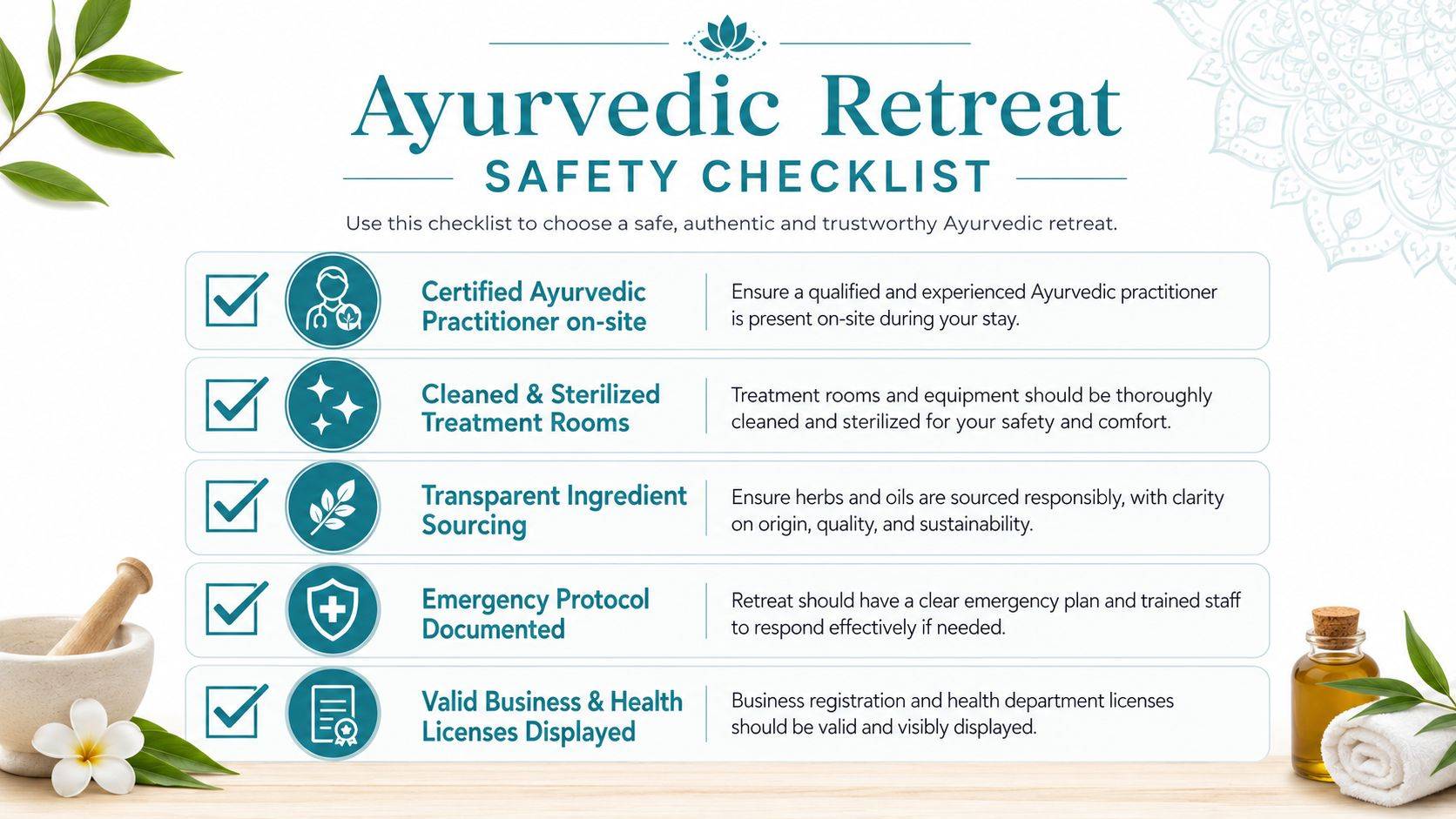
Before payment becomes nonrefundable, the center should explain its intake process. The form should cover diagnoses, allergies, medication use, pregnancy status, previous reactions, and relevant physical or mental health concerns. A qualified practitioner should review those answers and confirm whether the program fits the guest’s situation. Treating the form as routine administration leaves important decisions unexamined.
Process Controls That Matter
Ask the center to describe these controls in practical terms:
- Pre-screening: Staff assess health status before confirming participation and before the payment becomes nonrefundable.
- Medication reconciliation: Practitioners record prescription and over-the-counter medicines, identify possible concerns, and state who handles medication decisions.
- Exclusion criteria: The center explains when pregnancy, acute infection, frailty, or unstable cardiometabolic disease makes intensive treatment unsuitable.
- Adverse-reaction monitoring: Staff check for nausea, insomnia, dehydration, dizziness, orthostatic symptoms, and other changes throughout the stay.
- Escalation procedures: The retreat has a clear route to outside medical care and knows when a treatment must stop.
These controls work like guardrails. They do not prove that every therapy will help, but they show how the center limits avoidable harm and responds when a guest’s condition changes.
Ingredient handling deserves the same scrutiny. Some Ayurvedic supplements sold online have contained harmful levels of lead, mercury, or arsenic. Ask whether products are tested, whether ingredient lists are available, and who reviews them against the guest’s medicines. “Herbal” describes an origin, not a safety guarantee.
Accreditation And Accountability
Regulation can provide another layer of accountability. Goa’s 2026 wellness, Ayurveda, and yoga policy introduced tiered quality labels, quarterly inspections, and a state committee responsible for accreditation, according to coverage of Goa’s wellness policy. The policy also indicates that state-led marketing will exclude unaccredited centers.
Travelers should ask which licenses apply, whether certificates are current, who performs each treatment, and how complaints are handled. They should also ask what hygiene checks, consent procedures, and emergency arrangements are in place. A center that cannot answer clearly about credentials or urgent medical support deserves careful reconsideration, regardless of its testimonials.
Costs, Duration, And Choosing The Right Retreat
The right retreat depends less on a universal price point than on what the fee covers. Ashram-style programs may emphasize shared accommodation, group activities, and simple meals. Higher-priced centers may add private rooms, individual consultations, broader treatment menus, and more staff support. Luxury, however, doesn’t guarantee clinical quality.
Program length also changes the experience. A short stay may focus on rest, food, yoga, and introductory treatments. Longer programs allow more time for assessment, gradual dietary changes, treatment adjustments, and post-treatment observation. One source says Panchakarma is usually a multi-day cleanse, while another states that a minimum of seven days is required for effectiveness, so travelers should ask the provider to explain the rationale for its duration rather than accepting a fixed promise.
| Duration | Primary Focus | Typical Cost Range | Best For |
|---|---|---|---|
| Short stay | Rest, routine, introductory therapies, and lifestyle education | Varies by accommodation, location, and services | Guests seeking a gentle reset |
| Multi-day program | Individualized treatments, dietary structure, and supervised cleansing | Varies according to practitioner access and treatment intensity | Travelers able to commit to a more immersive schedule |
| Extended stay | Ongoing assessment, treatment refinement, and habit development | Varies substantially with room type and clinical support | Guests seeking deeper structure and continuity |
Compare Value, Not Decoration
Before comparing prices, separate the fee into practical components:
- Clinical access: Is a qualified practitioner available throughout the stay?
- Treatment scope: Are therapies included, or charged individually?
- Accommodation: Does the room support rest, privacy, and mobility needs?
- Food and supplements: Are meals, herbs, and consultations covered?
- Safety infrastructure: Does the center maintain screening, monitoring, and referral procedures?
The global Ayurveda tourism market is estimated at $12.1 billion in 2025 and projected to reach $52.8 billion by 2034, with a projected CAGR of 16.2%, according to the Ayurveda tourism market analysis. The same source identifies wellness services as the largest segment at 42.3%, Asia-Pacific as responsible for 65.2% of revenue, and international wellness tourists as generating 62.1% of global volume and $7.5 billion in 2025 revenue. Growing demand can increase choice, but it can also widen variation in quality.
Travelers comparing formats may benefit from a complete 2026 yoga retreat guide, while those evaluating retreat pricing more broadly can consult this guide to Ayahuasca retreat costs. Neither replaces direct questions about accreditation, staffing, and included care.
Preparation And Integration For Lasting Results
An Ayurvedic retreat can feel demanding from the first morning. A new menu, earlier schedule, reduced caffeine, heat, massage, fasting-like practices, or cleansing procedures may affect digestion, sleep, and energy before any claimed benefit becomes clear. Preparing gradually gives the body a fairer test and makes it easier to judge whether the program is helping.
Before Arrival
Set a modest, observable goal. Improving sleep regularity, practicing calmer meals, or creating a sustainable evening routine offers a clearer measure than trying to remove every toxin. Marketing language often promises transformation, while a useful preparation plan defines what change would look like in daily life.
Review the retreat’s food plan and begin adjusting familiar habits before departure if appropriate. A person with allergies, religious dietary restrictions, diabetes-related needs, or a history of disordered eating should avoid treating restrictive meals as proof of treatment intensity. The practical question is whether the program can support adequate nutrition and tolerable routines.
If the center recommends reducing caffeine, alcohol, or particular foods, make changes gradually rather than altering several habits at once. Abrupt shifts can produce headaches, fatigue, digestive discomfort, or poor sleep, which may later be mistaken for evidence that a cleansing process is working. Keep a brief baseline record of sleep, digestion, energy, and any symptoms before leaving. It becomes a useful comparison after returning home.
Prepare for participation, not passive compliance. During the stay, note which practices feel beneficial, which create discomfort, and which are difficult to continue outside the retreat. A treatment that works only under highly controlled conditions may offer relaxation without producing a lasting health change.
Guests who also participate in Ayahuasca ceremonies need separate planning. Ayurvedic herbs, supplements, fasting, disrupted sleep, and ceremony diets may interact with prescription medicines or increase physical stress. Anyone considering both should disclose the full plan to the relevant practitioners and review this guide to preparing for an Ayahuasca journey.
After Returning Home
Integration works best through gradual re-entry. Resume ordinary meals, alcohol, intense exercise, and a crowded schedule in stages rather than trying to recreate retreat conditions indefinitely. Keep one or two practices that fit normal responsibilities, such as gentle movement, breathing exercises, an evening screen break, or a consistent bedtime.
Review the baseline notes after several weeks. Look for sustained changes in sleep, digestion, mood, or energy, and separate those observations from the retreat’s testimonials or promises. If symptoms worsen, new reactions appear, or prescribed treatment seems affected, contact an appropriate healthcare professional instead of assuming the change represents a healing crisis.
Essential Questions To Ask Before Booking
Before paying a deposit, ask the center to explain who provides care, how decisions are made, and what happens when a guest’s condition changes. A reputable provider answers plainly. Evasive replies, pressure to book quickly, or promises of guaranteed disease reversal call for caution.
Practitioner And Program Questions
- Who conducts the initial assessment, and what formal training and registration do they hold?
- Is a qualified Ayurvedic practitioner present on site during treatment days?
- How does the center assess a guest’s dosha and create the treatment plan?
- Which therapies are included in the quoted price, and which incur extra charges?
- What does a typical day involve, and how much time is available for rest?
- How are meals adapted for allergies, medication needs, or dietary restrictions?
- What written description of the program is provided before booking?
These answers help distinguish a defined care process from attractive marketing language. A treatment list alone does not show how consistently staff assess, document, or adjust care.
Safety And Consent Questions
- Which health records and consent forms must guests provide before arrival?
- Which conditions or circumstances make intensive cleansing unsuitable?
- How are adverse reactions, including nausea, insomnia, dehydration, or dizziness, documented and escalated?
- What emergency procedure is followed, and which external medical facility receives referrals?
- Are treatment rooms cleaned and sterilized between guests?
- Can staff show current business, health, practitioner, and accreditation documentation?
- Who is responsible for reviewing a concern or complaint during the stay?
Practical And Follow-Up Questions
- What happens if a guest chooses to stop treatment?
- What written information explains the program’s limits and expected outcomes?
- What are the cancellation and refund terms?
- Can the center provide references from guests with comparable health needs, while protecting their privacy?
- Are supplements tested, and can guests review ingredient information, batch details, and usage instructions?
“A trustworthy provider explains limitations as clearly as benefits.”
The strongest choice is the center that documents its procedures, identifies accountable practitioners, and describes realistic outcomes rather than relying on testimonials alone. Before booking, readers seeking grounded education on plant medicine, retreat preparation, and integration can explore Ayahuasca.com, then apply the same standards of safety, transparency, accreditation, and informed consent to every provider.
Disclaimer: The information provided on Ayahuasca.com is for educational purposes only and is not intended as medical advice, diagnosis, or treatment. Ayahuasca is a powerful traditional Amazonian medicine and may not be suitable for everyone. Always consult with a qualified healthcare professional before making decisions related to health, mental well-being, medications, or the use of Ayahuasca.