
How to prepare for Ayahuasca ceremony starts with understanding that booking a retreat is only the beginning. The excitement is often joined by a more practical knot of questions. What can you eat? Which medications matter? What happens if anxiety surfaces? Is a traditional dieta enough to make the experience safe?
A responsible answer begins with a change in perspective. Ayahuasca preparation is a structured safety process, not a last-minute food checklist. In practical terms, learning how to prepare for Ayahuasca ceremony means combining medical screening, medication review, dietary transition, psychological readiness, careful facilitator selection, ceremony-day planning, and integration support arranged before the cup is served.
Why Preparation Determines Your Ceremony Experience
You can follow every dietary rule and still arrive unsafe if you have not disclosed an antidepressant. You can spend weeks refining a spiritual intention and still be unready because you are sleep-deprived, emotionally unstable, or returning home without support. These situations point to the same gap: preparation is often reduced to traditional food rules while medication safety and psychological screening receive less attention.
Modern clinical and safety guidance treats psychedelic administration as a sequence of screening, preparation, dosing, and integration. A 2024 review emphasizes psychiatric evaluation before approval for therapy. Controlled trials have also described Ayahuasca dosing ranges from 0.5 mg DMT/kg to 1.4 mg DMT/kg, which is why fasting alone cannot substitute for medical oversight (ICEERS safety guidelines).
Start planning several weeks before the ceremony. First, disclose your health history, psychiatric history, cardiovascular concerns, seizure history, and every prescription, over-the-counter product, and supplement. Then arrange a medication review with the clinician who understands your treatment. If a washout is clinically appropriate, it needs supervision and enough time. Do not stop prescribed medication to attend a retreat.
Dietary changes come after those questions are addressed. That order helps you distinguish cultural practices from restrictions intended to improve comfort or reduce possible MAOI interactions. A facilitator can collect information, but should not make medication decisions without appropriate clinical input.
Preparation Shapes Set And Setting
Psychological preparation affects how you respond to intensity. A ceremony may involve strong physical sensations, fear, grief, memories, or emotional activation. In a large ceremonial study, about 40% of non-veterans reported some reexperiencing of adverse life events, while more than 25% reported more severe reexperiencing (Scientific Reports study). Stable sleep, honest self-assessment, and support for the days afterward therefore serve as practical safeguards.
Preparation cannot control the journey. It gives you anchors. A clear intention, rested body, reviewed medication list, and reliable support structure reduce avoidable complications and leave more capacity for what arises.
“Practical rule: A retreat that asks about food but not medication, psychiatric history, emergency planning, and post-ceremony support has not completed a meaningful safety screen.”
Use a phased plan:
- Screening: disclose medical, psychiatric, medication, and substance-use information.
- Preparation: follow the center’s dieta and any medically approved washout plan.
- Dosing: participate only after the facilitator confirms that the setting and support are appropriate.
- Integration: process the experience with qualified support before making major decisions.
This foundation respects traditional practice while giving clinical risk, medication timing, and psychological readiness the attention they require.
Medical Screening And Medication Safety Protocols
A participant can follow every dieta rule and still face avoidable danger if medication timing has not been reviewed. Ayahuasca contains harmala compounds that act as reversible MAO-A inhibitors. Combining MAO inhibition with serotonergic substances can create a clinically significant risk of serotonin syndrome, as described in this peer-reviewed interaction review.
The concern extends beyond antidepressants. SSRIs, SNRIs, tricyclic antidepressants, trazodone, St. John’s wort, tryptophan, some antimigraine medicines, and certain opioid drugs require individual assessment. Stimulants, decongestants, cardiovascular medicines, sedatives, anticonvulsants, and herbal products also belong on the review list. A retreat intake form can flag a concern, but it cannot replace advice from the clinician who prescribes or manages the medicine.
A Safer Review Process
Start with a complete medication inventory. Include:
- Prescriptions: Record the name, dose, frequency, and reason for every medicine.
- Over-the-counter products: Include cold remedies, sleep aids, pain medicines, and allergy products.
- Supplements: List herbs, amino acids, stimulants, weight-loss products, and mood-support formulas.
- Recent changes: Note medicines started, stopped, increased, or reduced recently.
- Medical conditions: Include cardiovascular disease, seizure history, liver concerns, and current psychiatric symptoms.
Send the inventory to the retreat’s medical screening team and the prescribing clinician. The clinician can decide whether a medicine should continue, be substituted, tapered, or followed by a supervised washout. Do not stop a psychiatric prescription abruptly to meet a retreat deadline. Withdrawal, rebound symptoms, and relapse may create greater danger than the suspected interaction.
Ask who has final authority over participation. Staff who tell someone to stop medication without asking about dose, duration, half-life, diagnosis, or previous tapering practice are showing a serious safety gap. A participant may consult the Ayuna patient assistance guide for general medication-navigation information, but ceremony decisions belong with the prescribing clinician and a qualified retreat team.
Medication Categories And Practical Concerns
| Medication Category | Examples | Risk Level | Washout Period | Notes |
|---|---|---|---|---|
| Serotonergic antidepressants | SSRIs, SNRIs, tricyclic antidepressants, trazodone | Clinically significant interaction concern | Individualized | Never stop without prescriber supervision |
| MAO-inhibiting medicines | Prescription MAOIs and related agents | High interaction concern | Individualized | Requires direct medical review |
| Herbal and amino-acid products | St. John’s wort, tryptophan | Clinically significant interaction concern | Individualized | Supplements still count as active substances |
| Opioid and antimigraine medicines | Some opioid and antimigraine drugs | Potential serotonin syndrome concern | Individualized | Review the exact product |
| Stimulants and decongestants | ADHD stimulants and some cold remedies | Cardiovascular and sympathomimetic concern | Individualized | Same-week disclosure is insufficient |
| Sedatives and anticonvulsants | Benzodiazepines and seizure medicines | Withdrawal, sedation, or seizure-management concern | Individualized | A taper may be necessary, or participation may be unsuitable |
A recent safety review describes serious adverse effects as rarely reported in healthy people in controlled contexts, while emphasizing individualized medication screening. “Rare” does not mean impossible. Controlled research conditions also differ from a retreat with variable staffing, emergency access, and participant health.
Psychiatric And Physical Screening
A reputable center should ask about bipolar disorder, schizophrenia, psychosis, panic attacks, suicide attempts, self-harm, severe trauma symptoms, seizures, and serious cardiovascular conditions. An Ayahuasca administration safety study identifies serious psychiatric histories as potential exclusion factors or reasons for closer psychological supervision.
Answer every screening question fully, even if disclosure could lead to postponement or refusal. A retreat that accepts everyone may appear welcoming, yet indiscriminate acceptance can reflect weak safety governance. The appropriate outcome may be delaying participation until a clinician confirms stability, selecting a setting with closer supervision, or deciding that Ayahuasca is unsuitable.
Use the Ayahuasca foods and medicines guidance to prepare questions about interactions for the clinician and facilitator. It is not permission to alter a prescription independently.
The Ayahuasca Dieta Timeline And Food Restrictions
A participant may follow every food rule and still arrive medically unprepared. The traditional dieta usually combines dietary limits with abstinence from alcohol and recreational drugs, reduced caffeine, and, in some lineages, sexual abstinence. A useful explanation of what an ayahuasca dieta involves distinguishes its spiritual meaning from the practical preparation expected by a particular retreat.
Preparation windows commonly range from 14 to 30 or more days, but the exact schedule depends on the tradition, retreat, brew, and individual health considerations (published preparation guide). Ask for written instructions early. That gives you time to clarify substitutions, disclose dietary needs, and avoid turning the final days into an improvised cleanse.
Food restrictions also have a pharmacological basis. MAO-inhibiting compounds can affect the breakdown of tyramine, a compound associated with aged, fermented, cured, or overripe foods. This mechanism underlies the specific restrictions outlined below, including the MAPS newsletter explaining tyramine restrictions with MAOIs.
Three Weeks Before Ceremony
Begin with a gradual transition rather than an abrupt cleanse. Retreat rules may ask you to avoid alcohol, recreational drugs, pork, red meat, peanuts, soy, and fava beans during this period. Processed foods, heavy meals, and excessive sugar are also commonly removed.
The reason is practical. Alcohol and recreational drugs can complicate assessment and recovery, while some foods may create interaction concerns or digestive discomfort. These lists are not universal, so obtain the retreat’s exact policy instead of assuming another center’s rules apply.
Two Weeks Before Ceremony
The second phase may become more restrictive. A retreat may ask you to remove:
- Aged and cured foods: Aged cheeses, cured meats, smoked products, and other concentrated foods.
- Fermented products: Soy sauce, fermented vegetables, miso, and similar items.
- Stimulants: Caffeine, energy drinks, and other stimulating beverages.
- Highly processed foods: Refined sugar, fried foods, and heavily salted meals.
- Abstinence triggers: Alcohol, recreational drugs, and sexual activity, where required by the retreat tradition.
One retreat guideline recommends avoiding alcohol, recreational drugs, pork, red meat, peanuts, soy, and fava beans for at least 3 weeks. It then recommends avoiding caffeine, energy drinks, refined sugars, fermented or smoked foods, overly ripe foods, dairy, nicotine, and sexual activity for at least 2 weeks (retreat dietary and medical guidelines).
The Final Forty-Eight Hours
Keep the final days simple, familiar, and moderate. Plain rice, oats, fresh vegetables, light soups, and simple broths may suit many participants, provided they match personal medical needs and the retreat’s rules. Avoid experimenting with fasting, supplements, unfamiliar herbal products, or extreme detox practices.
A practical grocery plan can include plain grains, fresh vegetables, fresh fruit that is not overripe, filtered water, and non-caffeinated beverages. People with diabetes, eating-disorder histories, gastrointestinal conditions, or other dietary needs should seek medical guidance instead of forcing a standard menu.
The dieta may carry spiritual meaning within a traditional lineage. It does not replace medication screening. Dietary compliance cannot make an unsafe drug combination, undisclosed psychiatric condition, or poorly supervised ceremony safe.
Psychological Readiness And Intention Setting Practices
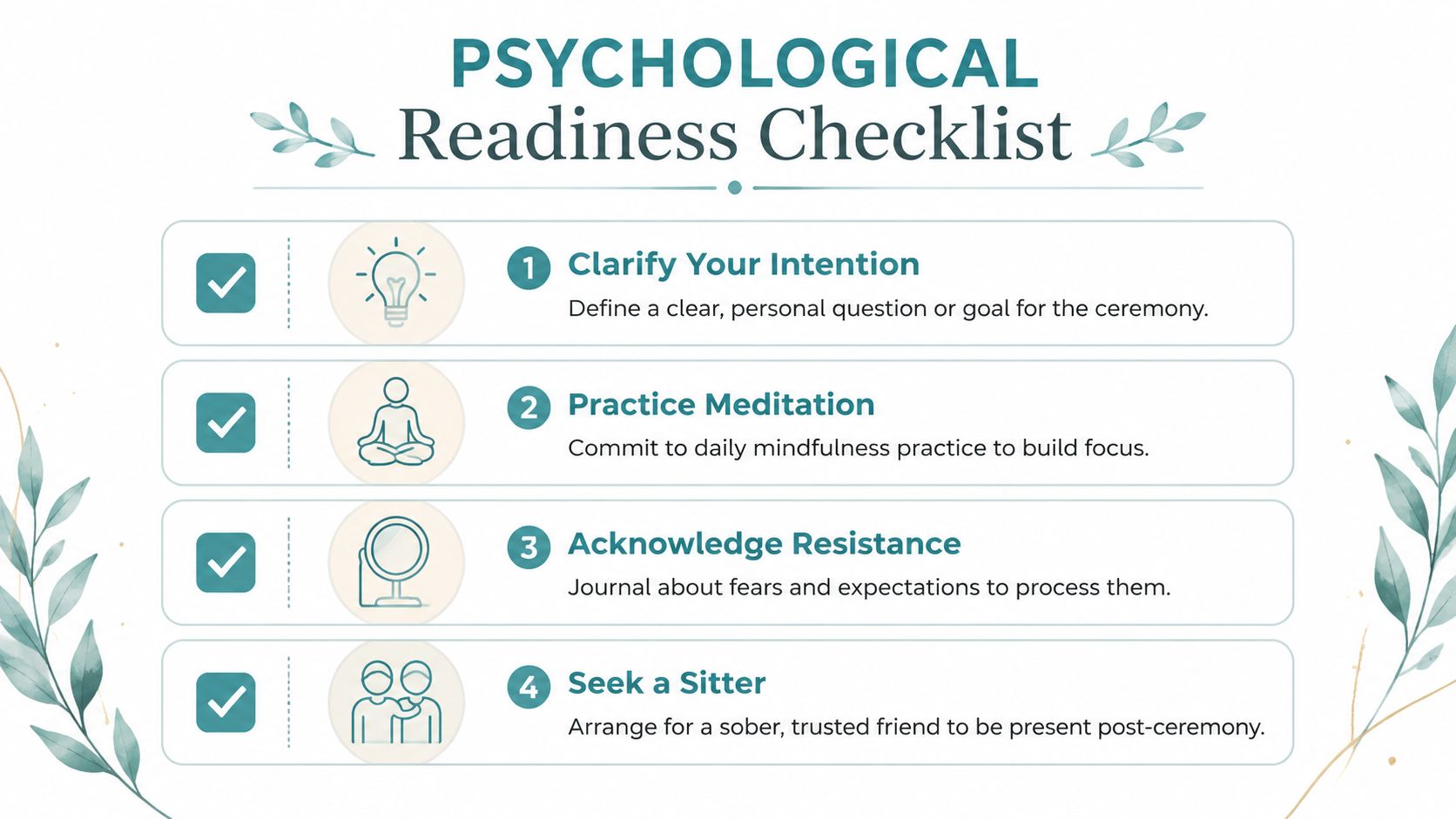
Psychological readiness starts with a difficult question: Is the participant stable enough for an experience that may intensify emotion, memory, bodily sensation, and fear? Anxiety before ceremony is common, but active psychosis, unstable mania, severe dissociation, uncontrolled panic, recent self-harm, or acute trauma destabilization calls for clinical assessment before participation.
A large ceremonial study found that adverse life-event reexperiencing was common among participants, including about 40% of non-veterans reporting some reexperiencing and more than 25% reporting more severe reexperiencing (Scientific Reports findings). That doesn’t mean trauma history automatically rules someone out. It means the participant and clinician should distinguish a stable history from symptoms that remain active and overwhelming.
Intention Without Performance Pressure
An intention should guide attention without becoming a demand for a particular vision, revelation, or cure. “Help reveal what needs attention in my relationship with work” is more workable than “Make every problem disappear tonight.”
Useful prompts include:
- What pattern keeps repeating in daily life?
- What emotion feels difficult to approach while sober?
- What support will be needed if grief or fear surfaces?
- Which expectation should be held lightly?
- What would responsible change look like after the ceremony?
Daily journaling can reveal whether the intention comes from curiosity, desperation, pressure from others, or a wish to avoid professional treatment. If the participant feels compelled to drink because the ceremony is being treated as the only remaining option, that deserves careful attention.
Building Emotional Anchors
Meditation, slow breathing, body scans, gentle walking, and brief periods away from digital stimulation can build familiarity with present-moment attention. The aim isn’t to become calm on command. The aim is to recognize activation early and practice returning to breath, body, sound, or contact with the room.
A participant with a trauma history may benefit from discussing preparation with a qualified trauma therapist before departure. A service such as Kelowna counselling for trauma recovery may be relevant for someone seeking professional support around trauma-related symptoms, though local clinical suitability should always be assessed directly.
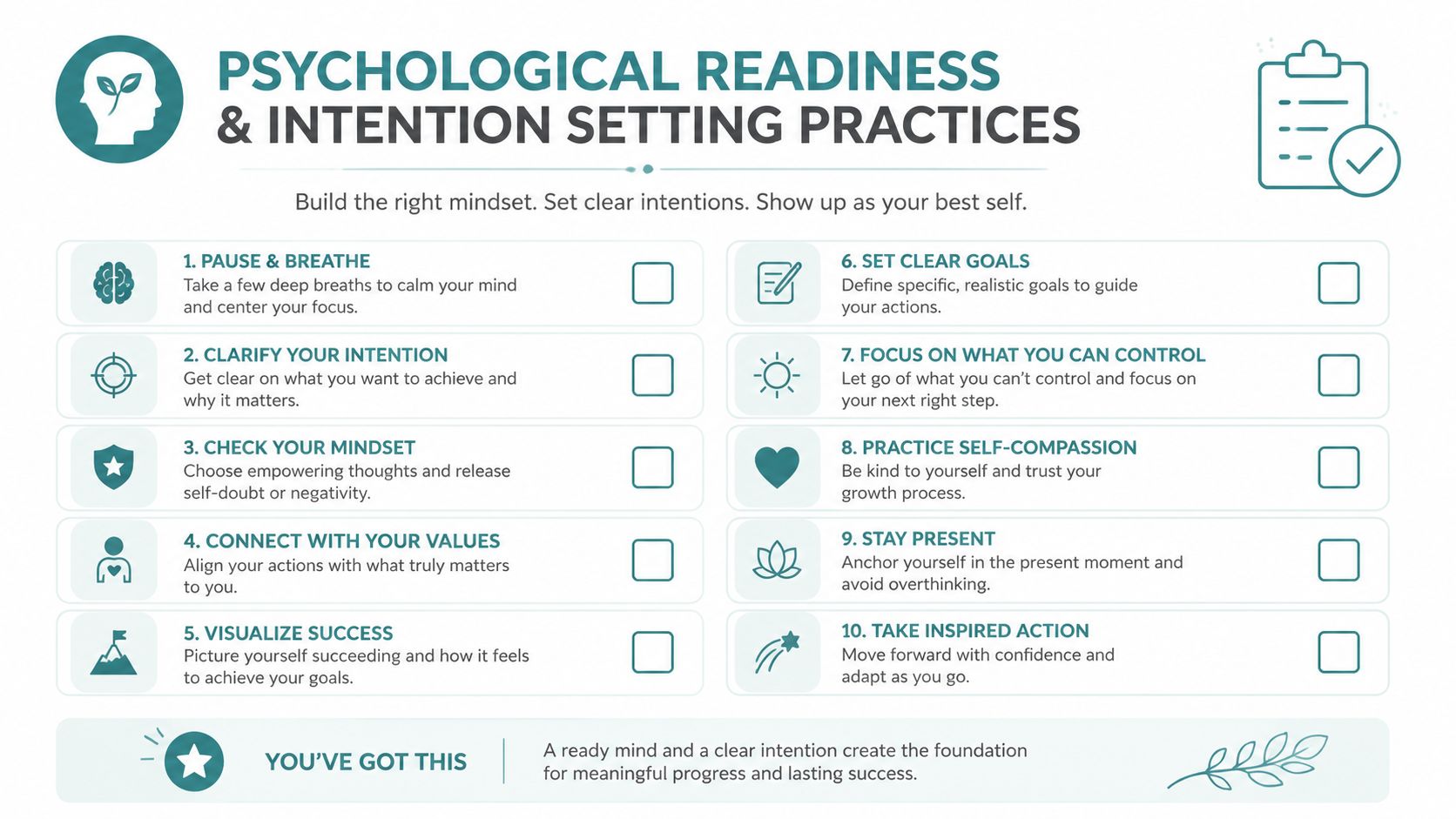
Participants should also reduce avoidable external pressure. Resolve urgent logistical problems, communicate boundaries with close contacts, and avoid scheduling major decisions immediately around the retreat. A 2025 analysis found that most reported adverse states did not negatively affect current mental health, while survey research describes adverse effects as generally mild and transient, but those findings don’t justify ignoring vulnerability or assuming every difficult experience will resolve without support (survey and analysis of Ayahuasca adverse states).
“A difficult moment during ceremony isn’t automatically a failure. The safety question is whether the participant has enough support, stability, and skilled supervision to move through it.”
Choosing A Reputable Retreat And Facilitator
Retreat selection is part of medical preparation. A center’s atmosphere, screening process, staffing, emergency plan, and integration policy shape the conditions in which your ceremony takes place. Review those systems before you judge the setting by photographs, testimonials, or spiritual language.
A responsible facilitator answers direct questions without defensiveness. Ask who reviews health information, how medication concerns are handled, what staff do during a panic reaction, how emergencies are escalated, and what support remains available afterward. The team should also describe its relationship to Shipibo, mestizo, or other traditional frameworks with specificity and humility, rather than using cultural language as decoration.
Compare Safety Signals
| Red Flags Avoid | Green Flags Seek |
|---|---|
| No health or medication screening | Written screening that covers medical, psychiatric, medication, and substance history |
| Promises of a guaranteed healing outcome | Clear language acknowledging variability and uncertainty |
| Pressure to drink again after a difficult or incomplete experience | Respect for consent, pacing, and the right to decline |
| No clear emergency procedure | Staff know how to respond, communicate, and escalate medical concerns |
| Vague facilitator background | Transparent training, lineage, experience, and role definitions |
| No post-ceremony support | Integration referrals, follow-up processes, and practical aftercare |
| Dismissive responses to psychiatric history | Individual assessment and appropriate exclusion or enhanced support |
Structured screening should be routine, not an optional add-on. A questionnaire has value only when staff review the answers, clarify uncertainty, and change the plan when a participant’s medical, psychiatric, medication, or substance history raises concern. Ask how far in advance the center needs this information, especially if a clinician must guide medication changes or washout timing.
Questions Worth Asking Before Booking
Ask how the brew is prepared, who is present during dosing, how many participants each facilitator supports, and whether medically trained help is available or reachable. Ask whether you may leave the ceremony space, refuse another serving, or request assistance without being shamed. These answers reveal how the retreat treats consent under pressure.
Also ask what happens if screening identifies a contraindication. A clear refusal, referral, or request for further medical clearance is safer than vague reassurance. Do not stop prescribed medication on a retreat’s instruction alone. Medication changes require appropriate clinical guidance and enough time for safe monitoring.
Legal conditions vary across jurisdictions, including Peru, Brazil, the Netherlands, and the United States. Research the law that applies to the specific location. A retreat’s religious or cultural claims do not automatically remove your personal legal exposure.
The Ayahuasca.com resource library includes comparative guides for evaluating retreats, such as this overview of Iquitos-based programs. Use educational material to prepare questions, then verify answers directly with the center.
A video can show atmosphere and expectations, but it cannot verify medical standards or emergency readiness.
Read testimonials for evidence of screening, consent, staff responsiveness, and aftercare. Dramatic transformation stories reveal little about risk management. A center that markets intensity more heavily than safety may be prioritizing memorable experiences over responsible care.
What To Bring And How To Prepare On Ceremony Day
Ceremony day rewards simplicity. The participant’s body should be rested, the clothing should be comfortable, and the mind should have enough quiet to arrive without rushing from airports, work messages, or social obligations.
A retreat may set its own meal and hydration rules. Unless medical needs require otherwise, many centers ask participants to eat a light, simple breakfast and avoid heavy meals before ceremony. One practical plan is to finish a modest meal by noon, hydrate steadily earlier in the day, and taper fluids by mid-afternoon so physical discomfort doesn’t become a distraction.
A Practical Packing List
- Clothing: Loose, breathable layers that allow temperature changes and extended sitting.
- Lighting: A headlamp with a red-light mode for moving through dark spaces without disturbing others.
- Comfort: A small blanket or shawl, plus any approved personal comfort item.
- Writing materials: A journal and pen for immediate notes after the ceremony.
- Hygiene: Unscented hygiene products, since strong fragrances can affect the shared space.
- Medical information: A current medication and emergency-contact record, already disclosed to staff.
Leave phones, cameras, jewelry, perfumes, and uncomfortable synthetic fabrics behind unless the center specifically requires or permits them. A phone can pull attention away from the ceremony and create privacy concerns for the group.
Calibrating The Body And Attention
Gentle walking or stretching is usually more suitable than strenuous exercise on ceremony day. A participant should arrive early enough to learn the room, locate bathrooms, identify staff, and settle before dosing.
A digital detox beginning at least 24 hours before ceremony can reduce stimulation and social comparison. Breathing should remain natural and familiar. If anxiety rises, lengthening the exhale gently, noticing the feet on the floor, and telling a facilitator directly can be more useful than forcing an advanced breathwork technique.
The participant should clarify consent boundaries before the ceremony begins. Ask whether touch is used, how assistance is offered, and how to request space. Respectful conduct also means keeping voices low, protecting other participants’ privacy, and following the facilitator’s instructions about movement, purging, and leaving the room.
Planning Your Integration Before The Ceremony Begins
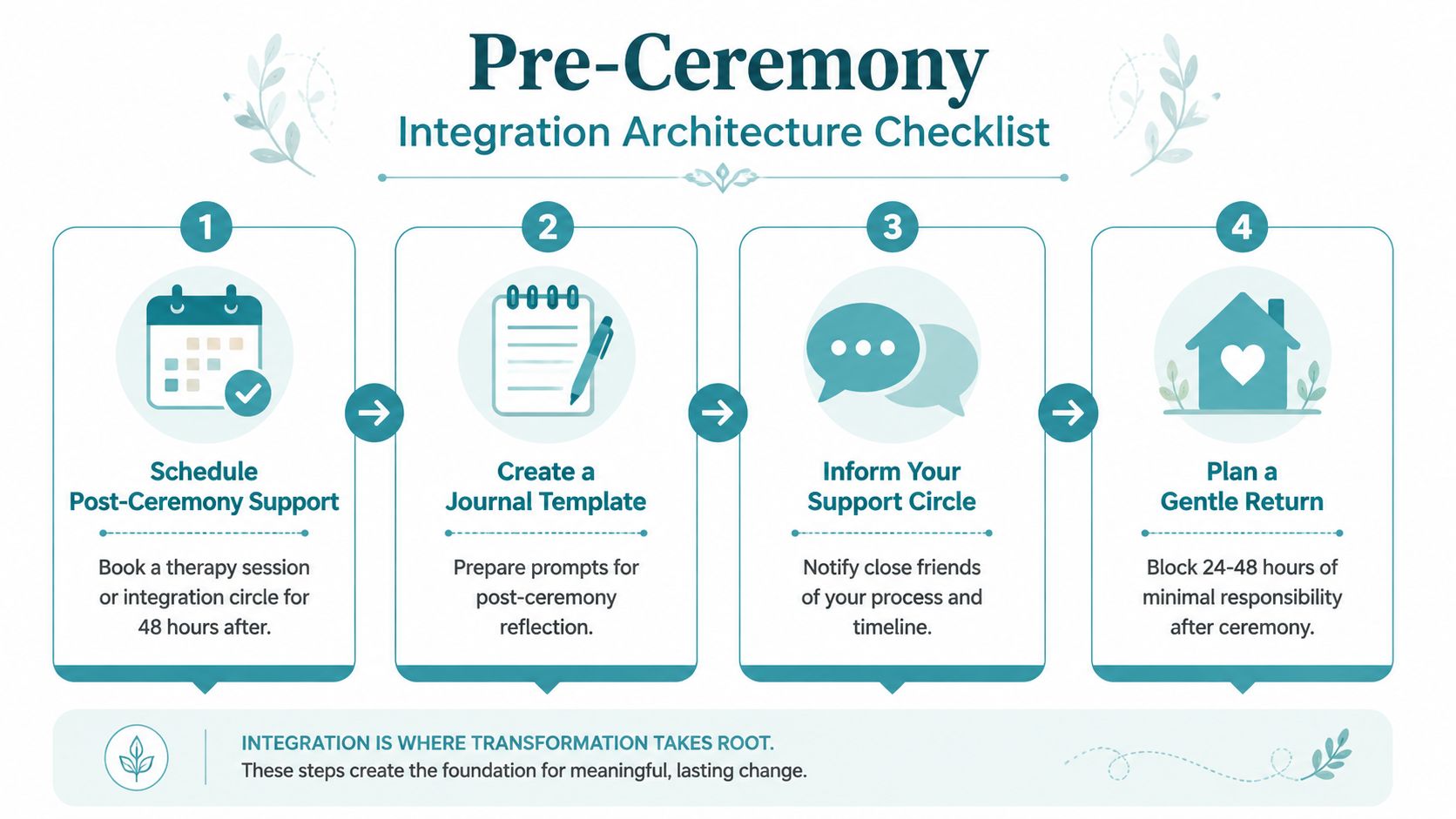
Integration works better when it starts before the experience. Once a participant returns home, ordinary responsibilities, family dynamics, work pressure, and uncertainty can crowd out reflection. Booking support while still clear-headed gives the participant a stable point of contact if the ceremony raises difficult questions.
A useful pre-departure plan includes a qualified integration therapist, an experienced support professional, or a carefully moderated integration group. The first appointment can be scheduled before travel, even if the session takes place after returning. The retreat should be able to explain what integration support it offers and provide referrals when its own staff aren’t clinically qualified.
Build A Support Map
Write down the people who can provide different kinds of help. One person may offer emotional presence, another may handle practical errands, and a clinician may help assess persistent anxiety, insomnia, unusual perceptions, or trauma activation.
Tell trusted contacts what the process involves and what kind of communication will be useful. They don’t need a detailed account of the ceremony. They do need to know whether the participant will want quiet, company, transportation, or help keeping normal routines.
Reserve a low-pressure period after returning. Avoid placing major work deadlines, relationship confrontations, financial decisions, or intense travel immediately after the retreat when possible. If the center’s program includes multiple ceremonies, ask how much rest and support are built into the schedule.
Choose A Processing Method
Journaling is a practical starting point. A participant can record sensations, emotions, memories, images, questions, and possible actions without deciding immediately what everything means. Interpretation becomes more reliable when it’s tested against daily behavior rather than treated as a command.
Other modalities may include somatic therapy, art-making, individual counselling, peer circles, or culturally respectful spiritual practice. The appropriate choice depends on the participant’s history, goals, access, and clinical needs.

A Pre-Departure Checklist
- Book support: Arrange a therapy, counselling, or integration appointment before departure.
- Prepare prompts: Keep questions ready about what changed, what remains unresolved, and which action is safe to take.
- Protect recovery time: Leave space for rest and reduced stimulation after ceremony.
- Inform trusted contacts: Explain the approximate timeline and preferred forms of support.
- Set decision boundaries: Delay irreversible choices until emotions and sleep have settled.
- Know escalation routes: Identify who to contact if distress persists or intensifies.
Integration isn’t a promise that every insight will become beneficial. It’s a process for separating meaningful learning from fear, grandiosity, projection, or impulsive interpretation. Serious adverse events are rare but real, and the broader safety workflow remains screening, preparation, dosing, and integration (ICEERS safety guidelines).
A participant who plans support before ceremony has more options afterward. That preparation protects the experience from becoming an isolated peak and gives the person a grounded way to translate reflection into responsible daily change.
Before booking or attending, complete a full medication and health review with the relevant clinician, require transparent screening from the retreat, follow the center’s dietary guidance without treating it as a substitute for medical safety, and schedule integration support in advance. If a facilitator discourages disclosure, promises certainty, or pressures participation despite unresolved risks, postpone the ceremony and choose safety over momentum.
Disclaimer: The information provided on _Ayahuasca.com is for educational purposes only and is not intended as medical advice, diagnosis, or treatment. Ayahuasca is a powerful traditional Amazonian medicine and may not be suitable for everyone. Always consult with a qualified healthcare professional before making decisions related to health, mental well-being, medications, or the use of Ayahuasca.