
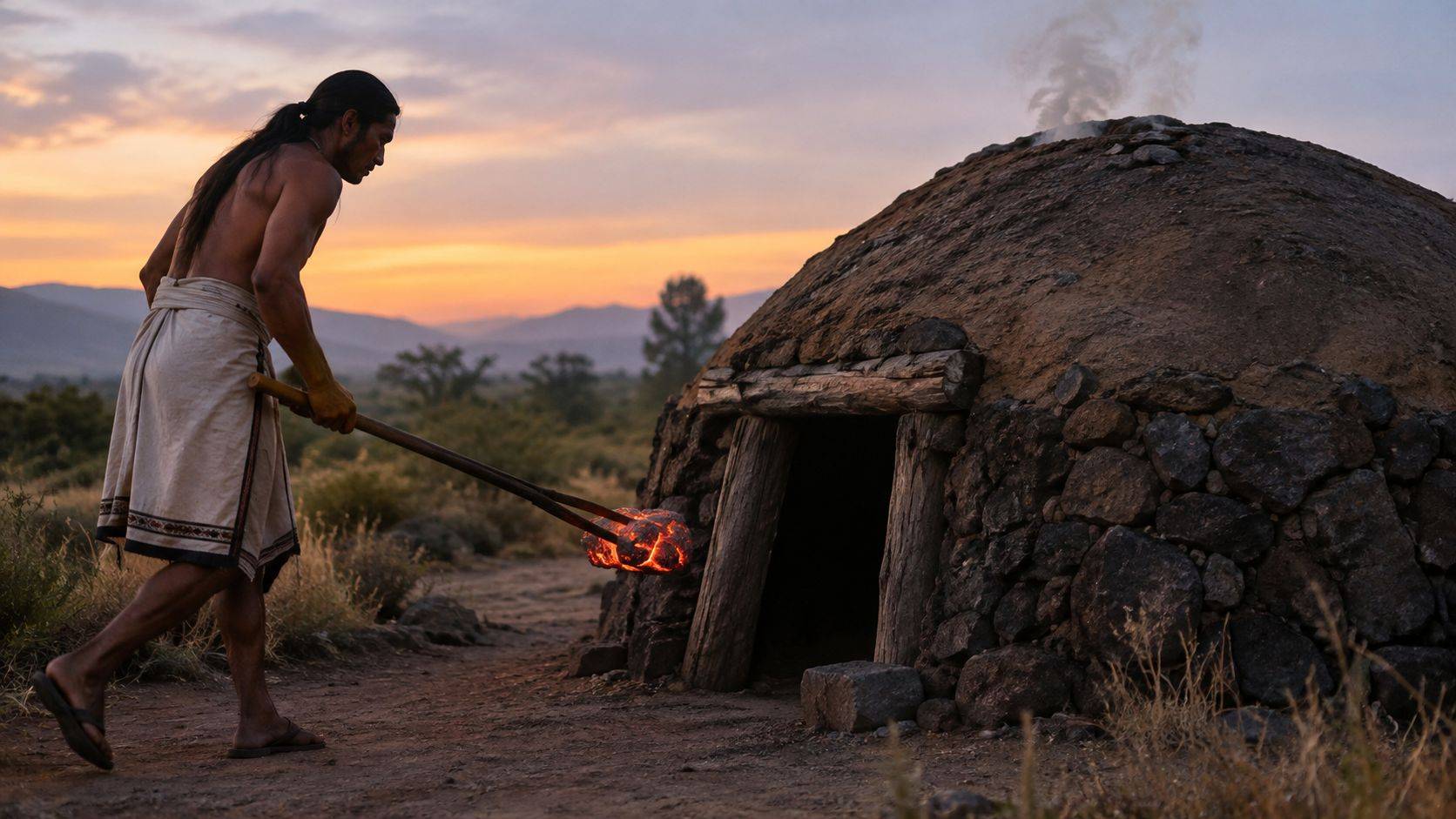
A dirt path ends at a low dome. Near the entrance, red-hot volcanic stones arrive one by one, carried with long wooden tongs. Copal smoke curls into the dusk, and conversation falls quiet as people prepare to crouch through the small doorway.
That first impression can make a temazcal ceremony seem mysterious, even gentle. Inside, however, the body meets concentrated heat, steam, darkness, and sustained cardiovascular strain. The tradition deserves respect as a serious Mesoamerican ritual first and a wellness experience second.
This guide explains where the temazcal comes from, how its four doors are commonly structured, what heat does to the body and mind, and how to assess safety before booking. It also examines a difficult modern question, whether a retreat preserves a living cultural practice or packages it as a premium product.
Many ceremonies unfold through four doors, or rounds of heat. Each door can carry a different prayer, direction, element, or stage of personal work. The details vary, but the experience remains traditional, communal, and heat-intensive rather than a gentle sauna session.
Arriving At The Temazcal
A temazcal usually appears lower and quieter than a first-time visitor expects. The structure may sit beside a forest path, in a village, near a retreat center, or within a larger ceremonial area. Its compact shape signals that participants are entering a deliberately enclosed environment, not merely walking into a room warmed for relaxation.
At the fire, a designated worker tends stones until they’re intensely hot. Those stones are then carried into the lodge, often with tongs, and placed in a central area. When water meets the heated rock, steam rises quickly. The room changes from warm to physically demanding in a short span.
The ceremony’s sensory details can distract from its seriousness. Darkness, herbal scents, chanting, drums, and shared silence create a powerful atmosphere, but they don’t remove the basic risks of heat exposure. A responsible guide must treat dizziness, nausea, faintness, and difficulty breathing as reasons to pause or leave, never as proof that a participant needs to endure more.
A Ritual With Deep Roots
Temazcal traditions date back at least to the Classic period, A.D. 250 to 900, and archaeological evidence shows that the structures continued to be built centuries later. A pre-Columbian ritual steam bath discovered in Mexico City was identified as a 14th-century temazcal measuring about 16 feet long by 9 feet wide. Archaeological research on ancient Mesoamerican wellness practices describes public temazcals as widespread before Spanish contact, with roles in cleansing, healing, and childbirth rituals.
That history changes how visitors should behave. The ceremony isn’t a themed attraction, and the person leading it isn’t merely operating a heated cabin. Participants enter a cultural and spiritual setting that may include indigenous, local, and syncretic elements.
“Practical rule: A participant can remain curious without treating the ritual as entertainment. Quiet attention, informed consent, and willingness to leave when necessary matter more than appearing fearless.”
What A Temazcal Actually Is
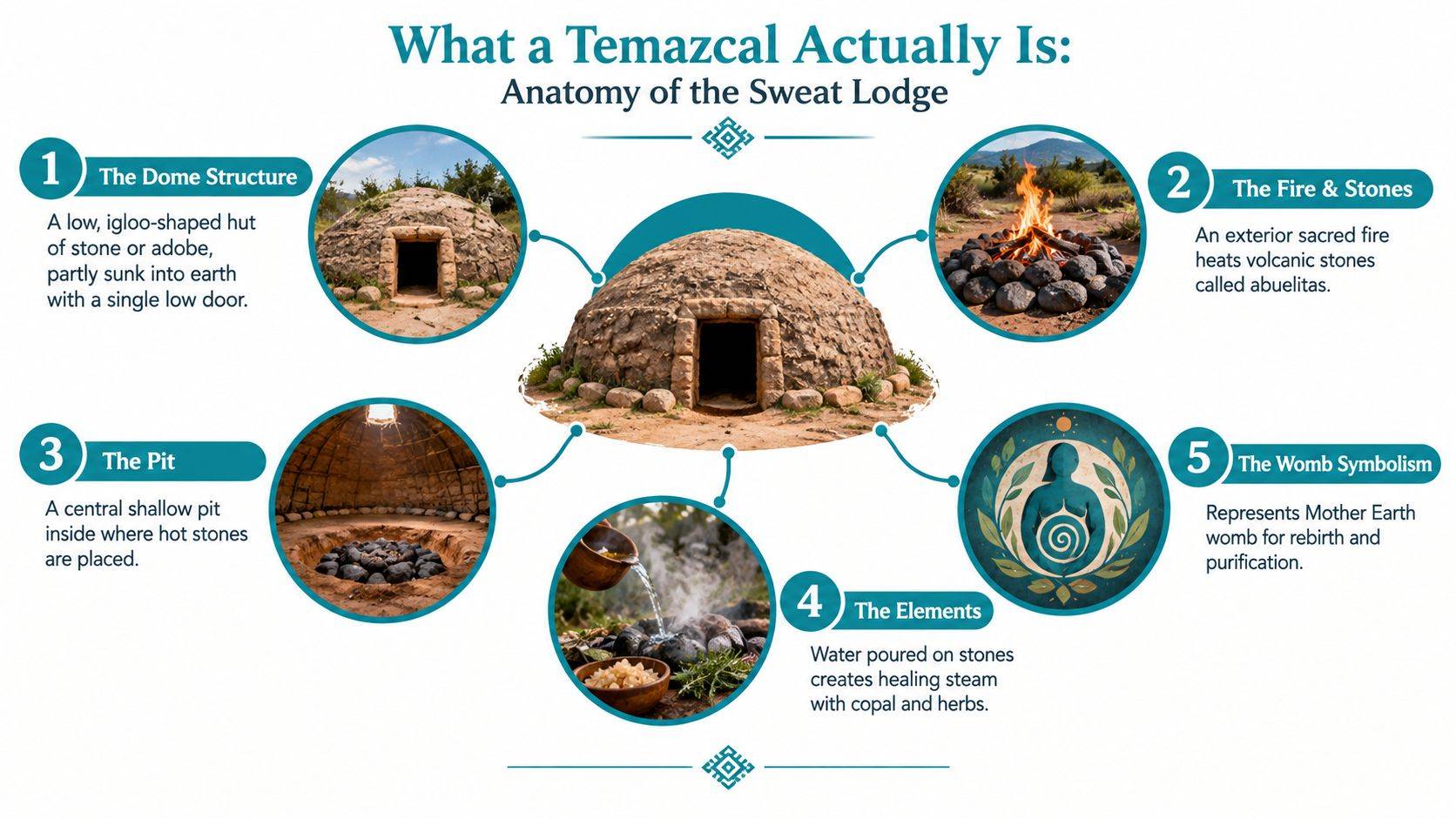
The word temazcal refers to a Mesoamerican sweat-bath tradition built around a low, enclosed dome. The structure may use stone, adobe, or brick, and it can be partly sunk into the earth. A small entrance helps retain heat and requires people to lower their bodies as they enter.
Inside, a shallow central pit receives volcanic stones heated in an exterior fire. Some lineages call these stones abuelitas or “grandmothers,” reflecting a relationship with the stones that goes beyond their physical function. The fire isn’t usually inside the dome. Instead, a fire-keeper heats the stones outside and brings them in as the ceremony progresses.
How The Steam Forms
A temazcal produces steam when water is ladled onto the hot stones. Herbal infusions may be used, and the scent can become part of the ritual, but the essential mechanism remains simple: hot rock, water, enclosed geometry, and limited air exchange.
That design has technical consequences. A low dome traps radiant and convective heat efficiently, while repeated additions of stones can raise the heat load in stages. The resulting stress comes from sustained exposure to heat and steam, not from ordinary washing or a casual warm bath. A detailed overview of temazcal structure and function describes the practice as a controlled steam-bath ritual associated historically with purification, healing, and childbirth.
The distinction from a Nordic-style sauna helps prevent a common misunderstanding. A sauna typically relies on a heated stove or room structure, while a temazcal ceremony uses stones brought from an exterior fire and water added during guided rounds. Related Mexican terms, including temascal and bath temazcal, may describe overlapping sweat-bath practices, but terminology and ceremony can vary by region and lineage.
For readers comparing traditions, this historical temazcal resource can provide additional cultural context. Contemporary ceremonies may combine inherited indigenous forms with regional customs, modern retreat practices, or explicitly syncretic prayers. That mixture doesn’t automatically make a ceremony insincere, but a facilitator should explain what tradition informs the session rather than presenting every element as universally ancient.
The Four Doors Inside The Ceremony
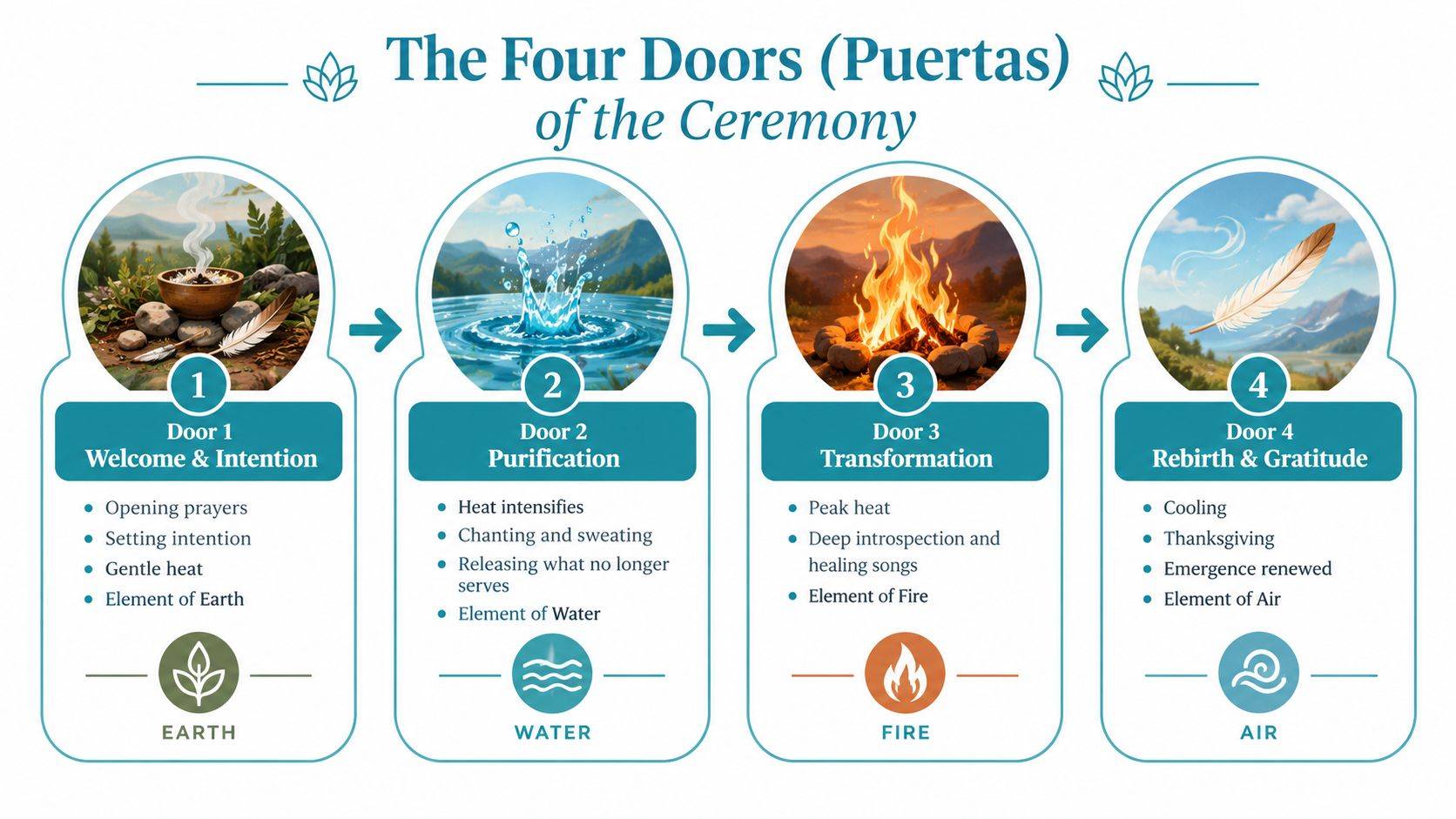
Many temazcal ceremonies follow four doors, or puertas. They provide a sequence for the session, rather than a universal script. The number of stones, heat, songs, prayers, timing, and symbolism can change with the facilitator, region, and lineage. A responsible guide explains those choices before anyone enters.
The temazcalero or fire-keeper usually works near the entrance, guiding the ceremony from outside the lodge. They may set an intention, address the directions, sing, pray, or signal a transition with a conch or whistle. Before the first door, participants should learn how to ask for the entrance to open, where to sit, and how the group will respond if someone needs help.
Door One
The first door establishes orientation. The guide may welcome the group, introduce the intention, acknowledge the fire and stones, and give participants time to adjust to the enclosed heat. Prayers may connect this stage with earth, a first direction, or an opening period of life.
The opening round can feel moderate. That feeling can mislead newcomers, because heat builds through the session, sweating reduces available fluids, and later stones may raise the intensity. Use the early minutes to notice breathing, dizziness, nausea, and your ability to remain comfortable. A calm beginning is a chance to set a limit, not a promise that the whole ceremony will feel the same.
Door Two
The second door often brings more heat and a stronger inward focus. Chanting, prayer, or silence may direct attention toward the breath and body. Some facilitators connect this round with water, purification, or releasing burdens.
Emotions can surface in darkness and close communal space. They remain personal responses, not tests that participants must pass. No one should be pushed to cry, sing, speak, or call a sensation spiritual progress. Consent covers emotional participation as well as time in the heat.
Door Three
The third door may be described as transformation or as the ceremony’s most demanding period. The guide might add stones, introduce healing songs, intensify prayer, or invite deeper reflection. Its symbolism could involve fire, adulthood, death and renewal, or another teaching from that lineage.
Heat is not proof of authenticity. People differ in age, health, conditioning, and tolerance, so a capable guide adjusts the pace and accepts a participant’s decision to leave.
Door Four
The final door commonly turns toward gratitude, cooling, integration, or rebirth. Air, emergence, or returning to ordinary awareness may shape the closing prayers. After the entrance opens, leave slowly. Let vision and balance settle before standing fully, and ask where water, shade, and assistance are available.
Some ceremonies include a rest period or an additional door for elders. Others use a different sequence. A guide to the commonly described four-door format notes that rounds often last about 15 to 25 minutes, while a complete ceremony frequently takes roughly 60 to 120 minutes, depending on its format.
How The Heat And Steam Affect Body And Mind
Heat affects the body before the mind assigns it a spiritual meaning. Blood vessels near the skin widen, sweating increases, and the heart works harder to move blood through a body trying to release heat. Enclosure and humidity can make cooling less effective because sweat evaporates less readily from the skin.
Steam also changes perception. Dense air, darkness, strong scent, chanting, and restricted movement can make time feel unusual and can sharpen attention toward breathing and bodily sensation. Herbal steam may feel soothing to some people, while it can irritate the airways of others, particularly participants with respiratory sensitivity.
Separate Physiology From Interpretation
The short-term physical responses are easier to identify than the long-term claims sometimes attached to ceremonies. Heat stress can produce sweating, fatigue, headache, weakness, lightheadedness, and changes in blood pressure. Dehydration can intensify those effects, especially when a participant arrives already depleted.
Emotional release, a sense of rebirth, visions, or purging belong to the realm of personal experience and traditional interpretation. They may feel meaningful, but they shouldn’t be presented as guaranteed medical outcomes or as evidence that a ceremony has healed a disease.
Carbon monoxide creates a separate concern in wood-fired settings. A Guatemalan study reported average carbon monoxide exposure of 431 ppm, while another found 661 ± 503 ppm, described as about 10 times the WHO 15-minute guideline. Measured carboxyhemoglobin in participants averaged 12 to 14% and reached 30%. The published study on carbon monoxide exposure in temazcales provides the relevant evidence.
Why The Group Setting Feels Powerful
Physiology alone doesn’t explain every reported experience. The ceremony gives sensations a shared frame, while darkness reduces visual distraction and chanting regulates attention. Breathing alongside others can also amplify emotional resonance.
That power requires restraint. A facilitator shouldn’t use spiritual language to override symptoms, and a participant shouldn’t interpret collapse, confusion, or chest discomfort as a necessary stage of transformation.
Preparing Your Body And Knowing Who Should Sit Out
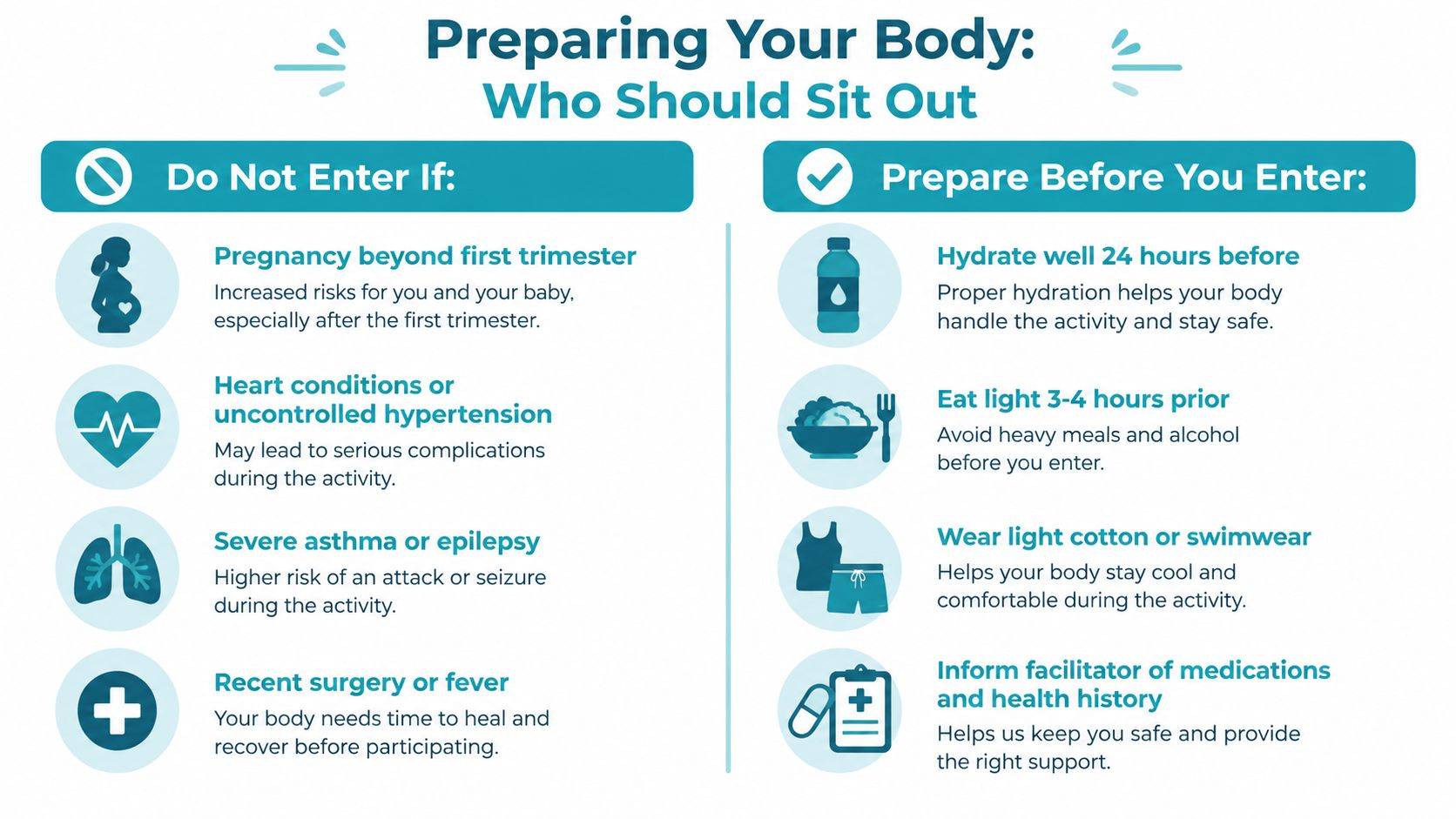
Before packing, decide whether your body can safely tolerate enclosed heat. Pregnancy, cardiovascular disease, uncontrolled blood pressure, epilepsy, acute illness, diabetes, and a history of heat injury all call for caution or avoidance. Severe claustrophobia and other conditions can also make a small, hot chamber unsafe. Ceremony preparation guidance covers screening, pacing, and the right to leave between rounds.
Anyone with a medical condition should consult a qualified clinician before participating. A facilitator’s confidence cannot replace medical assessment, and a first-time visitor should not guess at traditional adaptations.
Before Entering
Arrive hydrated and with enough energy to regulate heat. Drink steadily beforehand instead of waiting until thirst appears, avoid alcohol and intoxication, and choose light food that feels comfortable. Fasting may belong to a retreat’s ritual practice, but prolonged fasting alongside heat can increase the risk of weakness and fainting.
Wear light, breathable clothing. Natural fibers or simple swimwear are usually easier to tolerate than restrictive garments. Leave jewelry, watches, phones, perfumes, and unnecessary objects outside. Tell the team about medications, cardiovascular or blood-pressure problems, diabetes, seizures, pregnancy, respiratory conditions, and previous fainting so they can make an informed decision.
What A Safe Team Provides
Commercial sweat-lodge and temazcal settings have documented severe overheating when participants were discouraged from leaving. Prolonged exposure, poor ventilation, dehydration, and overcrowding can contribute to fainting, hypotension, and heat exhaustion. An independent discussion of temazcal and sweat-lodge safety describes these risks and advises immediate exit after dizziness, nausea, or lightheadedness.
Ask how the site manages ventilation, fuel, emergency access, and carbon monoxide. Oxygen availability and carbon monoxide monitoring deserve specific answers, not general reassurance. At least one attendant should remain outside the dome, and participants should be free to leave between doors without embarrassment or penalty.
Afterward, rehydrate slowly and replace lost salts. Rest instead of drinking alcohol, exercising intensely, or entering another demanding ceremony. For broader ceremonial planning, review this preparation resource.
Temazcal, Ayahuasca, And Other Sweat Traditions
Sweat traditions share a recognizable pattern: enclosed heat, communal vulnerability, ritual stages, and a designated leader. A Finnish sauna, Russian banya, Mexican temascal, and Sioux inipi each have their own histories, rules, materials, and cultural meanings. Grouping them together as interchangeable “detox” experiences erases important distinctions.
The temazcal’s specific features include volcanic stones heated in an exterior fire, water poured over those stones, a low dome, and a ceremonial progression often organized around four doors. The fire-keeper’s relationship to the stones and the cosmology taught by the facilitator can matter as much as the physical structure.
Ayahuasca belongs to a different category of ceremony. Both practices may involve intention, guidance, altered attention, and integration, but Ayahuasca centers a DMT-containing brew, along with a distinct pharmacological and dietary protocol. A retreat may offer a temazcal as preparation, integration, or a standalone practice, so participants should ask exactly how the experiences relate.
A Practical Comparison
| Tradition | Heat Source And Structure | Duration And Rounds | Leader’s Role | Primary Purpose |
|---|---|---|---|---|
| Temazcal | Fire-heated volcanic stones inside a low dome, with water added for steam | Often organized into four doors, with timing set by the facilitator | Tends the ritual, stones, prayers, songs, pacing, and exits | Purification, healing, community, and culturally specific ceremony |
| Sweat Lodge | Varies by indigenous nation and lodge tradition | Rounds and timing vary | Holds the ceremonial container and safety of the lodge | Prayer, community, spiritual practice, and purification |
| Sauna | Heated room and stones, with structure varying by region | Usually informal or locally structured | May guide the session, though a ceremonial leader isn’t always present | Heat, bathing, relaxation, and social practice |
| Ayahuasca Ceremony | No sweat-lodge heat structure, centered on a psychoactive brew | Ceremony length and sequence vary | Prepares, serves, and holds the ceremonial setting | Spiritual, therapeutic, religious, or personal exploration |
Food traditions can also shape how participants approach ceremonial preparation. A resource on nourishing the body through cultural food traditions offers a useful reminder that food, identity, and ritual deserve context rather than being reduced to a restrictive wellness rule.
Etiquette, Authenticity, And Choosing A Facilitator
A temazcal asks visitors to enter as participants, not spectators. Arriving sober, following the facilitator’s instructions, removing shoes or jewelry when requested, and avoiding photography help protect the shared space. Copal, water, prayers, and songs should be received respectfully, while offerings should only be brought when the facilitator or community has invited them.
Silence between doors may be part of the practice. So may direct participation in songs or prayers. A participant can ask questions before the ceremony and communicate clearly during it, but the group shouldn’t turn the lodge into a photo opportunity or a stage for personal performance.
Cultural Grounding Matters
Some contemporary temazcals maintain a meaningful relationship with Maya, Mexica, or another indigenous community. Others adapt the form for urban, middle-class, or international wellness audiences. Academic work on contemporary practice and the commodification of temazcal in modern settings shows why visitors need a more nuanced standard than visual style alone.
Useful questions include:
- Lineage: Who taught the facilitator, and what ongoing relationship supports the ceremony?
- Training: What practical and ceremonial training does the leader have?
- Translation: Are prayers and songs explained, or are they presented as decorative atmosphere?
- Screening: Does every participant complete a health questionnaire?
- Emergency planning: Who opens the door, monitors the outside, and responds to a collapse?
- Consent: Can anyone leave without being shamed or told that resistance is spiritually wrong?
- Commercial terms: Are pricing, group arrangements, and inclusions explained plainly?
The 2009 Sedona sweat-lodge deaths remain a cautionary case in which cultural claims and safety failures became inseparable. Participants seeking broader boundaries around intense spiritual work may also find practical psychic protection useful as a reflective resource, but no spiritual framework should replace medical safeguards. For readers studying how spiritual authority is represented, this guide to an Ayahuasca shaman offers related questions about role, training, and responsibility.
Finding A Safe Temazcal And Common Questions
A safe booking decision starts before payment. Ask who leads the ceremony, what training informs it, how health screening works, how participants can leave, and who remains outside the dome. A polished website cannot answer those questions by itself. The ceremony may carry Indigenous meaning, yet a retreat setting can also turn it into a packaged experience, so cultural language should never replace clear safety procedures.
The Pre-Booking Checklist
- Verify the facilitator: Ask about lineage, training, community relationships, and the exact form of ceremony offered.
- Confirm screening: A responsible provider should ask about cardiovascular disease, blood pressure, pregnancy, epilepsy, diabetes, respiratory conditions, acute illness, medications, and previous heat injury.
- Ask about capacity: Find out how many people enter, how the group remains observable, and whether the space can be evacuated quickly.
- Review emergencies: Request clear information about ventilation, carbon monoxide precautions, drinking water, cooling, first aid, and the outside attendant. Fire-heated stones and a closed dome can create both intense heat and dangerous air conditions.
- Test the pressure level: Leave if the provider treats endurance as a spiritual obligation or discourages anyone from exiting.
- Check the broader itinerary: Be cautious when a temazcal is bundled with intoxicants or when the schedule leaves no recovery time. Heat also places strain on circulation, especially for people with relevant health conditions.
Traditional temazcales are practiced in regions including Oaxaca, the Yucatan, and highland Guatemala, while diaspora centers operate in other countries. Geography does not prove quality. A nearby ceremony with transparent screening and an emergency plan may be safer to consider than a famous destination that presents the ritual mainly as entertainment.
Readers researching a Tulum option can review information about booking a Tulum temazcal with Irie as one point of comparison. Apply the same independent questions to any provider.
Common Questions
How long does a ceremony last? Many ceremonies use four doors. Each round commonly lasts about 15 to 25 minutes, and the full experience often takes roughly 60 to 120 minutes. Timing varies with the facilitator and format, so ask what the schedule includes.
What should participants wear? Light, breathable clothing that remains comfortable when wet is practical. Bring water and any personal recovery items the provider recommends, and leave valuables outside.
Can people talk inside? Communication about safety is always appropriate. Other conversation should follow the ceremony’s rules, which may emphasize prayer, chanting, or silence.
How does it compare with a sauna? Both expose the body to heat. A temazcal uses fire-heated volcanic stones, added water, an enclosed dome, and a guided ritual structure, so the atmosphere and risks are not identical.
What does it cost? Pricing varies by region, venue, group arrangement, facilitator, and inclusions. A transparent provider explains the fee plainly, without using cultural claims to pressure a booking.
When can the ceremony be repeated? There is no universal schedule. Recovery, health status, hydration, and the facilitator’s screening should guide any decision about another session.
Before arrival, ask for the screening process, ventilation details, emergency plan, group capacity, and explanation of lineage. If answers are vague or dismissive, choose another provider. A respectful temazcal ceremony leaves room for cultural humility, informed consent, and the freedom to step outside.
Disclaimer: The information provided on Ayahuasca.com is for educational purposes only and is not intended as medical advice, diagnosis, or treatment. Ayahuasca is a powerful traditional Amazonian medicine and may not be suitable for everyone. Always consult with a qualified healthcare professional before making decisions related to health, mental well-being, medications, or the use of Ayahuasca.