
9.5 million U.S. adults microdosed psilocybin, MDMA, or LSD in the past year, representing about 3.7% of U.S. adults, according to a 2025 survey analysis published in the medical literature. That figure changes the conversation. Microdosing mushrooms is no longer only a niche experiment discussed in psychedelic circles, yet popularity still runs ahead of certainty.
The central question remains simple: does taking a very small amount of psilocybin mushrooms improve mood, cognition, or creativity beyond placebo? Current evidence doesn’t provide a confident yes. A 2026 trial reported no significant behavioral or subjective benefits versus placebo, while a recent systematic review judged the overall evidence low-certainty and insufficient for causal conclusions in its PubMed record.
That gap between compelling stories and unsettled science deserves careful attention. The following guide defines the practice, explains the proposed biology, compares commonly discussed schedules, and offers a harm-reduction framework for adults who are considering lawful exploration.
What Microdosing Mushrooms Actually Means
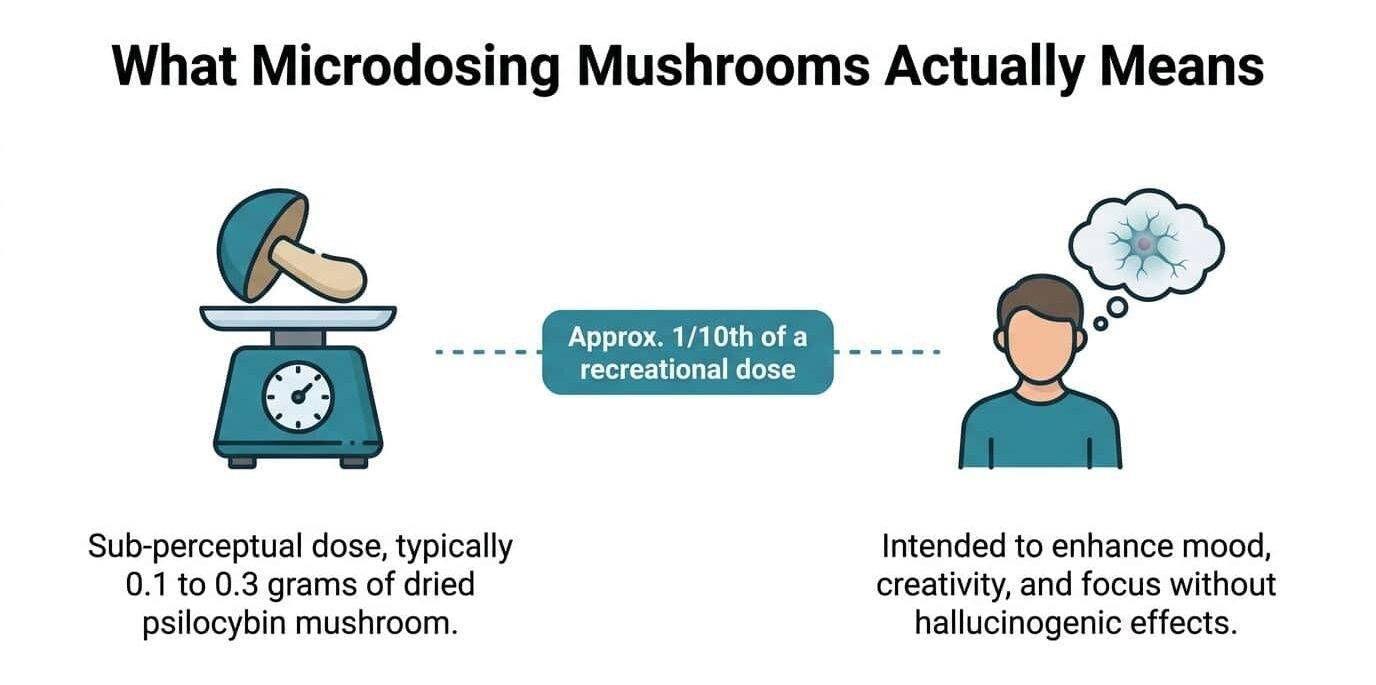
Microdosing mushrooms usually means taking a very small amount of dried psilocybin-containing mushroom material, intended to remain below the threshold of a full psychedelic experience. The literature commonly describes roughly 0.1 to 0.5 grams of dried mushroom material as a microdosing range, although the material’s potency can vary substantially according to a review in the medical literature.
The easiest analogy is coffee. A small espresso may alter alertness without producing the pronounced jitters associated with excessive caffeine. A microdose is intended to create a similarly subtle nudge, though the analogy has limits because psilocybin affects perception, emotion, and cognition through a different biological pathway.
Microdose, Mini-Dose, And Macro-Dose
A microdose aims to be sub-perceptual. A mini-dose sits closer to the threshold of noticeable effects, so changes in body sensation, attention, or emotion may become apparent. A macro-dose refers to a conventional psychedelic dose that can substantially alter perception, thought, time sense, and emotional experience.
The boundaries aren’t universal. A person’s sensitivity, the mushroom species, growing conditions, storage, preparation, and uneven distribution of active compounds can all change the experience. If perceptual changes are obvious, the amount no longer fits the everyday meaning of sub-perceptual microdosing.
Psilocybin, Psilocin, And Product Forms
Psilocybin is the compound found in the mushroom. After ingestion, the body converts it into psilocin, the active compound that interacts with serotonin receptors. Dried Psilocybe mushrooms therefore aren’t interchangeable with chocolate bars, capsules, or extracts. Those products may contain mushroom material, isolated compounds, other ingredients, or an inaccurately labeled mixture.
A registered clinical trial uses a more controlled benchmark, 2 to 3 milligrams of psilocybin per dose, four days per week for two consecutive weeks, specifically to test a low, sub-perceptual exposure strategy as described on ClinicalTrials.gov. That clinical benchmark shouldn’t be treated as a universal home protocol.
“Practical rule: “Sub-perceptual” describes the intended effect, not a guarantee of safety, consistency, or therapeutic benefit.”
A Brief History Of Psilocybin And Modern Microdosing
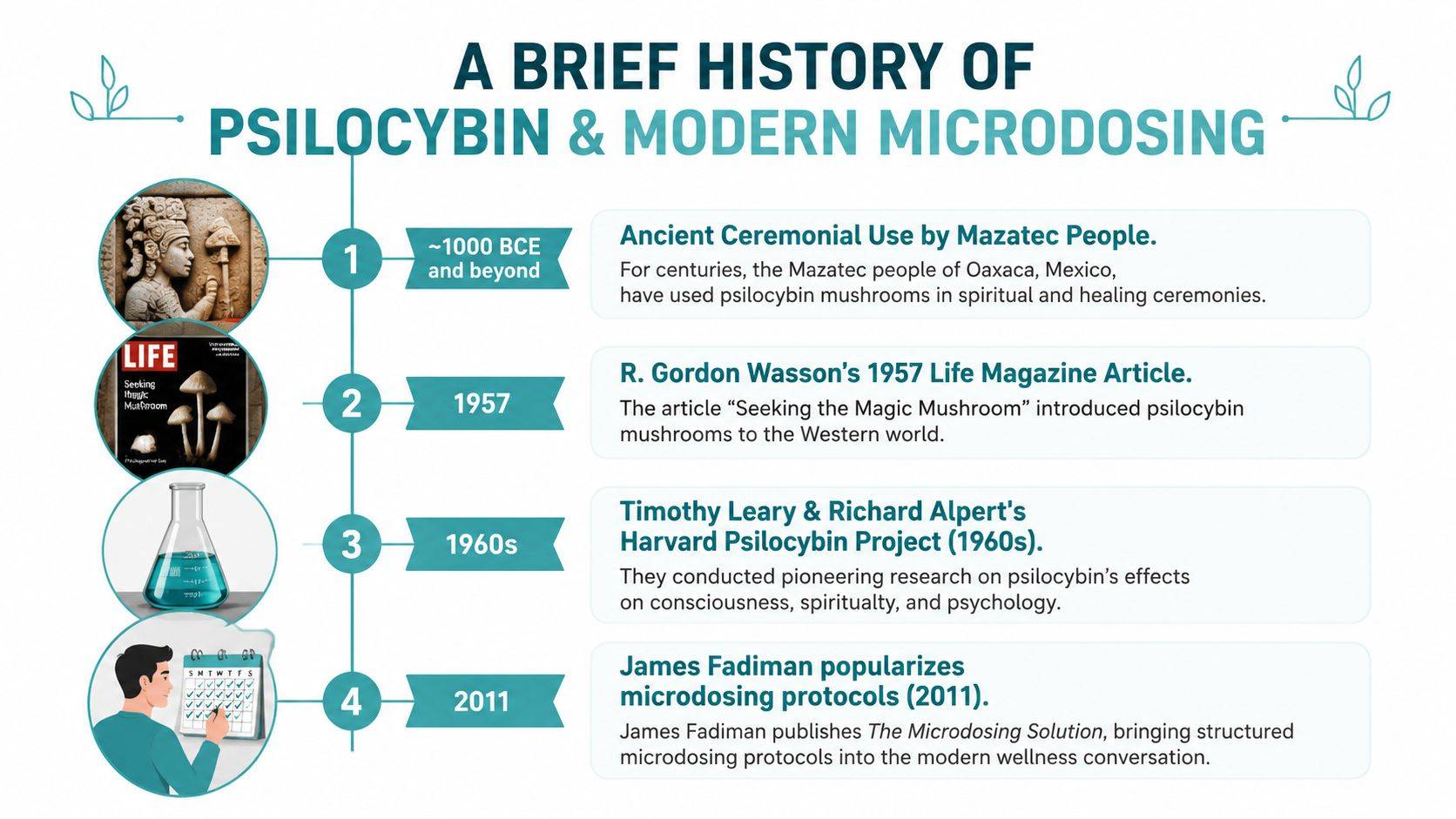
The modern microdosing movement grew from several different traditions rather than one invention. Indigenous communities in Mesoamerica used psychoactive mushrooms in ceremonial and spiritual contexts long before modern Western science gave psilocybin its current name. Those traditions carried knowledge about ritual, preparation, meaning, and community that shouldn’t be reduced to a productivity trend.
Western attention intensified after R. Gordon Wasson’s 1957 Life magazine article, which introduced many readers to Mazatec mushroom ceremonies. The article helped bring the subject into public view, while also raising enduring questions about cultural respect, extraction, and who controls knowledge about sacred medicines. Readers seeking broader context on psychotropic plants can consult this resource on sacred medicines and psychotropic plants.
Research, Suppression, And Revival
During the 1960s, Timothy Leary and Richard Alpert’s Harvard psilocybin project became a prominent part of psychedelic research history. Political backlash and concerns about uncontrolled use contributed to a sharp contraction in research, followed by the 1970 Controlled Substances Act, which placed psilocybin within a highly restrictive legal framework in the United States.
Academic interest gradually returned during the 1990s and 2000s. Controlled studies at Johns Hopkins and other institutions helped re-establish psychedelic research as a legitimate scientific field, particularly for carefully supervised full-dose experiences. That work differs from microdosing because clinical psychedelic therapy generally includes preparation, monitoring, psychological support, and structured integration.
A later wave focused on ordinary daily life rather than ceremonial or clinical sessions. James Fadiman’s 2011 self-report survey helped popularize a recurring low-dose schedule, while Paul Stamets became a prominent public advocate for a combination approach involving psilocybin, Lion’s Mane, and niacin. Online communities then turned these ideas into personal experiments, spreadsheets, and informal protocols.
The result is a contemporary subculture shaped by indigenous history, interrupted science, renewed clinical research, and a desire for alternatives to conventional self-improvement. The history supports curiosity, but it doesn’t turn modern claims into proof.
How Psilocybin Works At Sub-Perceptual Doses
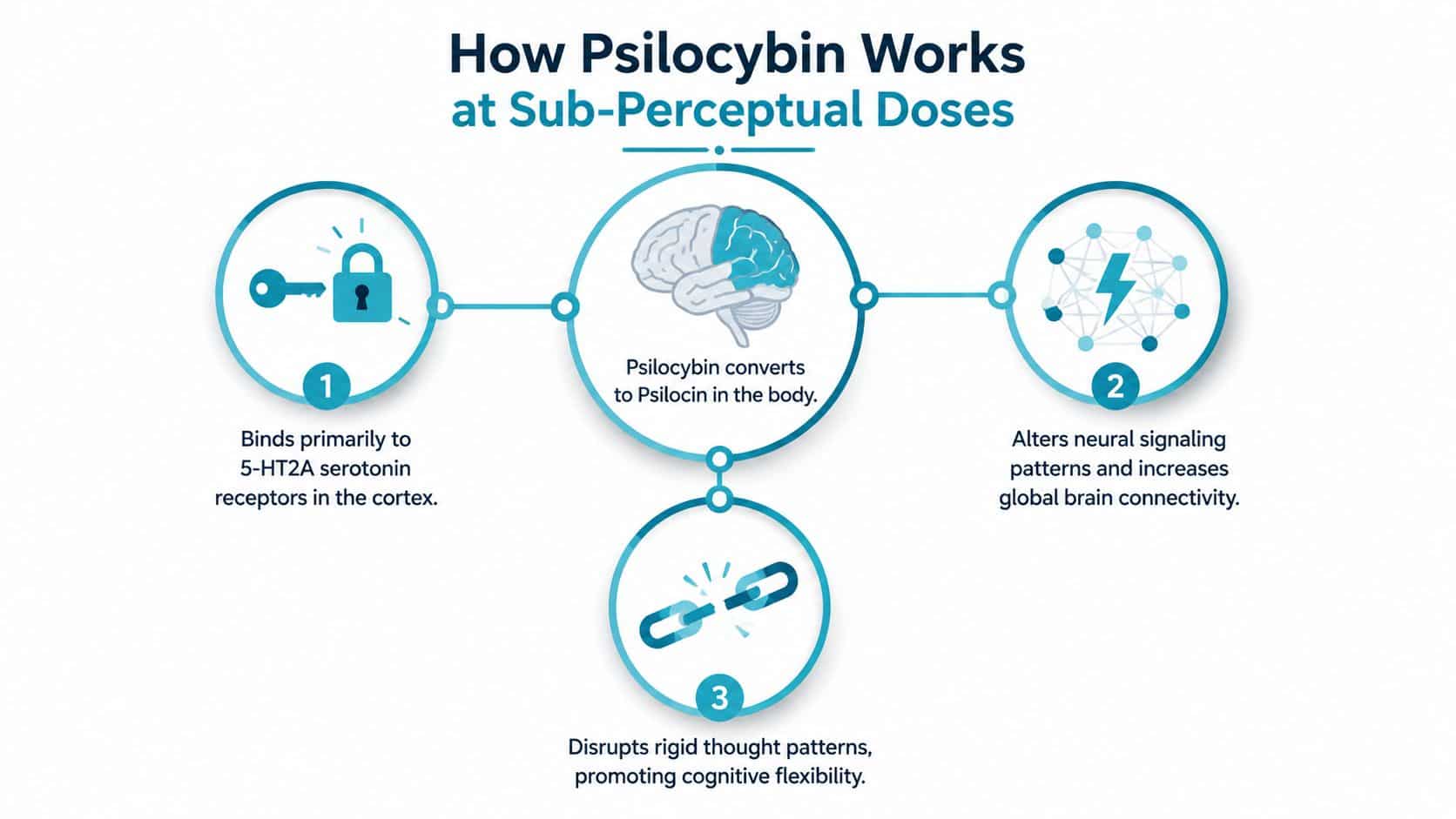
The biological story begins with conversion. Psilocybin becomes psilocin in the body, and psilocin interacts primarily with 5-HT2A serotonin receptors, especially in the cortex. Researchers think this receptor activity changes how neural networks communicate, but the exact consequences at very low doses remain uncertain.
A useful analogy is a guitar string tightened so far that it can produce only a narrow range of notes. A small adjustment might loosen the string enough to allow greater flexibility without making the instrument chaotic. Microdosing theories use a similar idea, suggesting that psilocybin may temporarily loosen rigid patterns of thought or emotional processing.
The Main Mechanistic Hypotheses
Researchers have proposed several explanations for why people might notice subtle effects:
- Serotonin signaling: Psilocin’s activity at 5-HT2A receptors may alter cortical communication.
- Network flexibility: Changes in large-scale brain-network coordination could make habitual thought patterns feel less fixed.
- Neuroplasticity: Some models propose downstream effects involving growth and adaptation processes such as BDNF expression.
- Mood circuitry: Altered signaling may influence circuits involved in emotional regulation, motivation, and salience.
These are mechanistic hypotheses, not confirmed outcomes. Findings from higher-dose psychedelic studies are often used to build models for microdosing, but that extrapolation has limits. A dose that produces dramatic network changes in a clinical setting may not produce the same effect at a much lower exposure.
Why “Sub-Perceptual” Is Hard To Measure
A dose can be below the threshold of hallucination and still be noticeable. A person may experience bodily activation, emotional sensitivity, nausea, restlessness, or a mild change in attention without seeing visual distortions. Those effects matter because they can reveal that the dose isn’t pharmacologically invisible.
A double-blind study of dried Psilocybe cubensis found that low doses produced noticeable subjective effects and altered EEG rhythms, but didn’t improve well-being, creativity, or cognition. Some performance measures were impaired, which illustrates the difference between changing brain activity and improving real-world function as summarized in the relevant PubMed record.
What The Research Says About Benefits And Limits
Microdosing research draws from surveys, observational studies, laboratory experiments, and placebo-controlled trials. Each design answers a different question. Surveys capture what people notice, while blinded trials test more directly whether psilocybin caused a change.
The overall picture remains cautious. Reviews describe a field dominated by observational work, with relatively few and inconsistent placebo-controlled trials. The certainty of evidence is low, so a reported association cannot be treated as proof of a causal effect through the review’s PubMed-linked record.
Reported Benefits Versus Demonstrated Effects
People often report improved mood, easier task initiation, greater creativity, calmer anxiety, and sharper focus. These experiences may be meaningful, but they do not show that psilocybin produced them. A person can feel better because of expectations, changes in routine, or other factors occurring at the same time.
Blinding creates a particular problem. Participants may recognize an active dose if they notice bodily or perceptual effects. Self-selected users may also differ from non-users in motivation, lifestyle, previous psychedelic experience, and expectations. In practice, expectation can act like a second ingredient, making the substance’s independent effect harder to isolate.
A controlled trial reported no significant behavioral or subjective benefits versus placebo, although participants in both conditions described positive feelings. Active dosing increased negative bodily sensations, and the researchers found no reliable improvement in cognitive or emotional functioning beyond placebo in the trial record.
Evidence At A Glance
| Evidence Source | Commonly Reported Outcomes | Key Limitation |
|---|---|---|
| Surveys and self-reports | Mood, focus, creativity, and emotional steadiness | Expectations and self-selection can shape reports |
| Observational studies | Associations with day-to-day well-being and functioning | No reliable randomization or causal inference |
| Laboratory studies | Noticeable subjective effects and altered neural measures | Short follow-up and inconsistent functional benefits |
| Placebo-controlled trials | Mixed results, with positive changes sometimes appearing in both groups | Difficult blinding and limited evidence |
| Full-dose clinical therapy | Potential benefits in supervised therapeutic contexts | Findings do not automatically transfer to microdosing |
Readers comparing supervised psychedelic treatment with low-dose self-experimentation can consult this overview of psychedelic therapy and mental wellness. The discussion of mushroom therapy for cancer patients addresses a separate setting, generally involving therapeutic research rather than routine microdosing.
The practical conclusion is measured: microdosing warrants further study, but current evidence does not support treating it as established therapy or a dependable performance enhancer. If someone chooses to experiment, protocols, safety screening, and careful integration matter because popular schedules are not the same as validated medical guidance.
Common Protocols And Typical Dosing Ranges
Popular schedules differ in both rhythm and philosophy. The Fadiman approach generally uses one dosing day followed by two non-dosing days, while the Stamets approach is commonly described as a four-day sequence involving psilocybin, Lion’s Mane, and niacin, followed by rest days. Neither approach has universal medical validation, and neither should be treated as a prescription.
A 2022 study found that surveyed practices generally converged on self-administration three to five times per week, often using 0.1 to 0.3 grams of dried mushrooms in Scientific Reports. Those figures describe reported practice, not a guaranteed safe or effective range.
Fadiman And Stamets Compared
| Protocol | Typical Schedule | Approximate Mushroom Range | Important Caution |
|---|---|---|---|
| Fadiman-style schedule | One dosing day followed by two non-dosing days | Reported dried-mushroom ranges commonly center on small amounts, but potency varies | Popularity doesn’t equal clinical validation |
| Stamets-style schedule | Four consecutive dosing days followed by three rest days | Reported ranges vary and may include additional ingredients | Combined ingredients introduce further uncertainty |
| Clinical research benchmark | A registered trial uses 2 to 3 milligrams of psilocybin four days weekly for two consecutive weeks | Measured psilocybin rather than mushroom weight | Trial conditions aren’t equivalent to home use |
Dried mushroom weight and purified psilocybin are different measurements. A mushroom’s weight doesn’t reveal its active-compound content, and caps and stems may not contain identical concentrations. Chocolate bars and capsules add another layer of uncertainty unless their contents have been independently verified.
A Conservative Decision Process
Where possession and use are lawful, a cautious adult would:
- Clarify the purpose. A vague hope for transformation makes evaluation difficult. A specific baseline goal, such as tracking anxiety or task initiation, creates a clearer comparison.
- Avoid false precision. A scale can improve consistency, but it can’t make an unknown mushroom batch uniform or reveal exact psilocybin content.
- Keep the dose below noticeable alteration. Visual changes, pronounced stimulation, or impaired judgment indicate that the amount isn’t functioning as a microdose.
- Record the response. Dose timing, mood, sleep, anxiety, physical symptoms, and next-day functioning provide better information than a dramatic anecdote.
- Avoid escalation. Increasing the amount because benefits aren’t obvious can turn an uncertain experiment into a more impairing experience.
“Dose boundary: Feeling clearly altered defeats the practical purpose of a microdose and should prompt stopping rather than automatic escalation.”
Safety Screenings And Harm-Reduction Practices
Microdosing can feel manageable while still carrying medical, psychological, legal, and environmental risks. A sensible screening process begins before any substance is taken, especially when the goal involves anxiety, depression, attention, or mood regulation.
Personal Screening
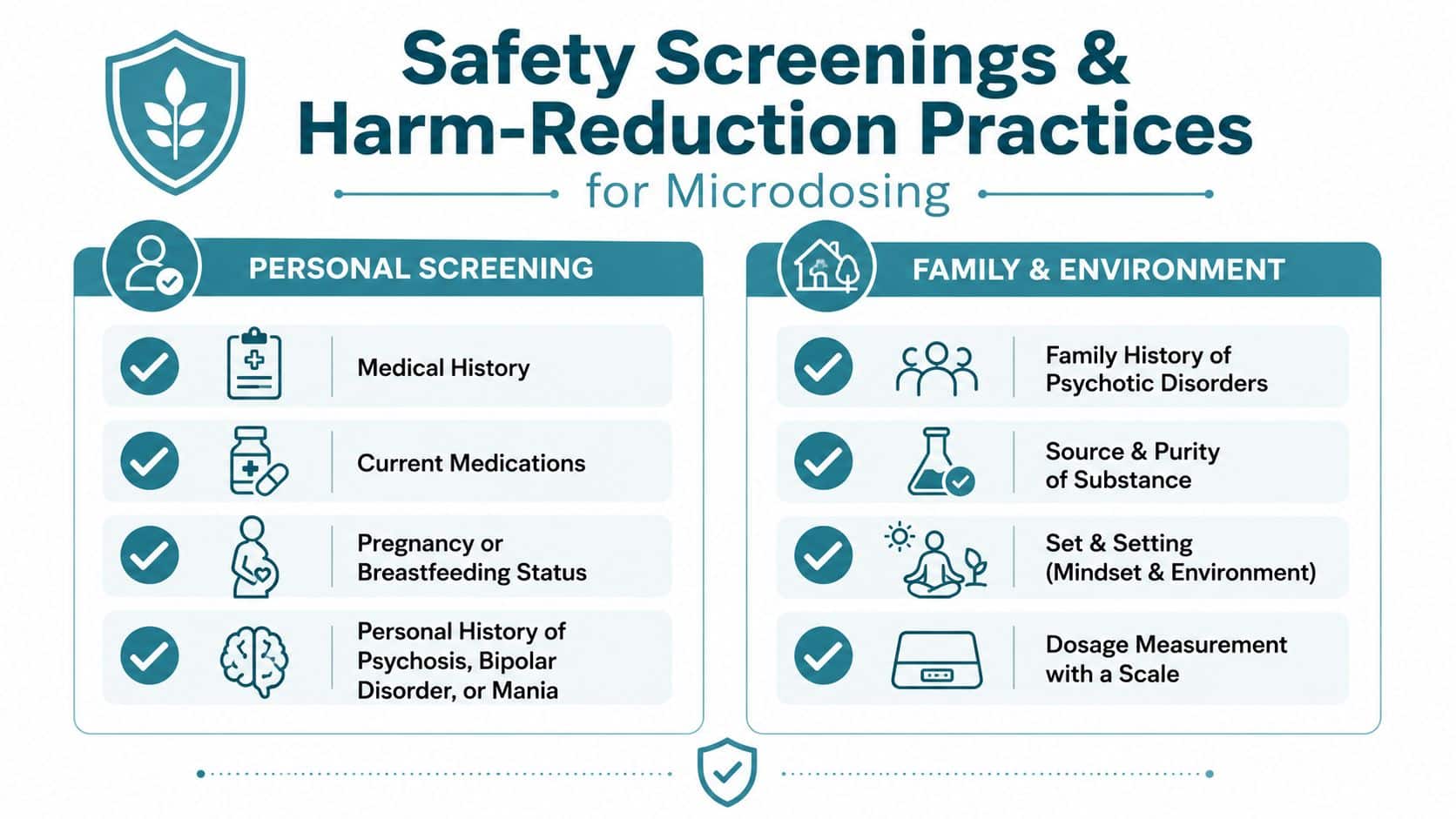
A qualified clinician or pharmacist can help review medical history and current medicines when lawful access makes that possible. Psilocybin may interact with serotonergic drugs, including some antidepressants, migraine medications, and MAO inhibitors, while interactions with many other medicines and supplements remain incompletely characterized.
Extra caution is warranted for anyone with a personal or family history of psychosis, bipolar disorder, or mania. Serious heart problems also belong in the screening conversation. Pregnancy and breastfeeding require medical advice rather than informal online guidance.
Microdosing shouldn’t replace prescribed treatment or become a way to manage urgent mental-health symptoms. Escalating depression, suicidal thinking, severe anxiety, paranoia, or detachment from reality requires professional care, not self-experimentation.
Substance And Setting Checks
The practical checklist below focuses on preventable hazards:
- Identify the material: Unknown wild mushrooms can be misidentified, contaminated, or poisonous.
- Check the setting: A familiar, calm environment reduces avoidable stress.
- Use sober support: A trusted sober person can notice changes that the user misses.
- Avoid combinations: Alcohol and other recreational drugs can make effects less predictable.
- Protect public safety: No driving, machinery, hazardous work, or high-stakes decisions if anything feels different from baseline.
- Log the experience: Record timing, mood, sleep, physical effects, anxiety, and changes in behavior.
When To Stop
Stopping makes sense when anxiety keeps rising, sleep deteriorates, irritability becomes persistent, or the practice starts to feel psychologically necessary for ordinary functioning. Confusion, fainting, chest symptoms, severe agitation, or concerning changes in thinking or behavior call for urgent medical help.
Emergency care shouldn’t be delayed because a substance was involved. Medical staff need accurate information about what was taken, how much was taken if known, and when it was taken.
Legal Status And Where To Learn More
Psilocybin law remains a patchwork. Federal restrictions can coexist with state, provincial, municipal, religious, or therapeutic exceptions, and those categories can change over time. Decriminalization isn’t the same as legalization, and a local policy may reduce enforcement for certain conduct without creating a legal retail market or authorizing possession in every context.
Oregon and Colorado have developed distinct state-level approaches, while selected municipalities have adopted enforcement changes. Australia has created narrow therapeutic pathways, Jamaica operates within a comparatively unregulated model, and the Netherlands is known for a tolerated truffle market rather than unrestricted legal mushroom possession. These examples don’t create a single global rule.
Legal Questions To Check
| Jurisdiction | Status | Key Caveat |
|---|---|---|
| United States federal system | Psilocybin remains federally restricted | State or municipal reforms don’t override federal law |
| Oregon | Therapeutic access framework | Access is structured and isn’t equivalent to retail legalization |
| Colorado | Decriminalization and regulated development | Local details and permitted activities matter |
| Australia | Narrow therapeutic exceptions | Eligibility and clinical conditions apply |
| Jamaica | Comparatively unregulated model | Unregulated doesn’t mean risk-free or universally lawful |
| Netherlands | Tolerated truffle pathway | Tolerated truffles aren’t the same as unrestricted mushrooms |
Travel creates another layer of risk. Carrying psilocybin across borders can trigger serious penalties even when the substance was permitted at the departure or destination location. Anyone considering lawful participation should verify current rules with an appropriately qualified local legal professional rather than relying on an old forum post.
For education, peer-reviewed journals, university research centers, cultural organizations, and established harm-reduction groups provide stronger foundations than anonymous social media claims. Readers can also look for integration circles and psychedelic-support training programs that emphasize preparation, boundaries, consent, and referral to clinical care when needed.
Integrating Microdosing Into A Bigger Wellness Picture
Microdosing works best as a question for structured reflection, not as a standalone identity or cure. Integration means examining what happened, what changed, and what didn’t change after the experience. A short log can track mood, sleep, anxiety, focus, social connection, and creative activity without turning every ordinary fluctuation into evidence.
The surrounding routine matters. Sleep hygiene, movement, nutrition, sunlight, meaningful work, and supportive relationships can affect the same outcomes people hope to influence with a microdose. A pharmacological routine can’t compensate for sustained exhaustion, isolation, untreated trauma, or an unsafe living environment.
A Simple Integration Practice
A useful review can include:
- Beforehand: Write a baseline goal and describe current mood, sleep, and functioning.
- During the period: Note dose timing, context, bodily effects, emotional changes, and task performance.
- Afterward: Compare dose days with non-dose days and look for patterns rather than isolated impressions.
- With support: Discuss meaningful changes with a therapist, trusted peer, or qualified integration practitioner.
- At reassessment: Decide whether the practice is helping, neutral, confusing, or harmful.
If the routine stops feeling useful, longer breaks, a reassessment of set and setting, or discontinuation may be appropriate. A person who feels pressure to continue despite worsening anxiety, sleep, or functioning has a strong reason to stop.
Readers seeking broader safety context around psychedelic-related care can review these health and safety guidelines for ketamine treatment, while remembering that different substances and settings have different risks.
“Integration checklist: Baseline goal, chosen protocol, tracking method, support contact, and a clearly defined re-evaluation date.”
The field is moving toward better testing. A Health Canada-approved Phase 2a trial is examining daily at-home microdose psilocybin for generalized anxiety disorder, with up to 60 participants over a four-week treatment period, followed by extension or placebo follow-up as described by Queen’s University. A separate phase II depression protocol is studying 2 milligrams weekly for eight weeks, with follow-up planned for up to two years in the published protocol. Those trials may clarify durability, masking, adverse effects, and who might benefit.
The responsible path is neither enthusiastic certainty nor reflexive dismissal. It is careful screening, lawful decision-making, honest tracking, and a willingness to stop when the evidence in a person’s own life points away from continued use.
For a grounded next step, explore the educational resources and safety guidance at Ayahuasca.com, then discuss any mental-health or medication concerns with a qualified clinician before considering psychedelic substances. Keep learning, verify local laws, and treat curiosity as a reason to proceed thoughtfully rather than quickly.
Disclaimer: The information provided on Ayahuasca.com is for educational purposes only and is not intended as medical advice, diagnosis, or treatment. Ayahuasca is a powerful traditional Amazonian medicine and may not be suitable for everyone. Always consult with a qualified healthcare professional before making decisions related to health, mental well-being, medications, or the use of Ayahuasca.