
A lot of people arrive at this question in the same place. They feel a real pull toward Ayahuasca, but they also feel cautious enough to stop and research what could go wrong.
That caution is healthy.
Ayahuasca’s side effects are not a minor detail. They are central to the experience, a key element of preparation, and a factor that distinguishes a mindful journey from a careless one. Anyone considering a ceremony should understand both the physical strain and the psychological intensity involved before making a decision.
Answering the Call with Awareness
People rarely search for the side effects of ayahuasca out of idle curiosity. Usually, they’re trying to answer a more personal question. Is this safe for this body, this mind, this season of life?
That’s the right question.
Ayahuasca asks for more than openness. It asks for honesty. A person has to look at their medical history, medications, emotional stability, and support system with clear eyes. The ceremony begins well before the first cup. It starts with screening, education, and a willingness to respect limits.
Why caution is a sign of readiness
The strongest candidates for this work usually aren’t the ones chasing intensity. They’re the ones willing to prepare carefully and ask better questions. They want to know how nausea, fear, exhaustion, grief, or confusion may show up. They also want to know which reactions are expected, which are manageable, and which are signs to step back.
That mindset matters because Ayahuasca can be both healing and demanding. The same process that opens insight can also surface discomfort. The same ceremony that feels profound can also involve vomiting, shaking, crying, or confronting painful memories.
“Grounded view: Respect for Ayahuasca includes respect for the body and nervous system that will be carrying the experience.”
Two lenses can both be true
One of the most useful ways to understand side effects is to hold two frameworks at once. Western medicine looks at symptoms such as vomiting, increased heart rate, or anxiety as effects that need monitoring. Traditional Amazonian lineages may view some of those same experiences, especially purging, as part of cleansing and healing.
Those views don’t have to compete. They can complement each other.
A mature approach avoids romanticizing every difficult moment as sacred, and it also avoids reducing the entire experience to a list of symptoms. Both mistakes lead people away from discernment. Good preparation stays balanced, practical, and respectful.
The Immediate Physical Side Effects
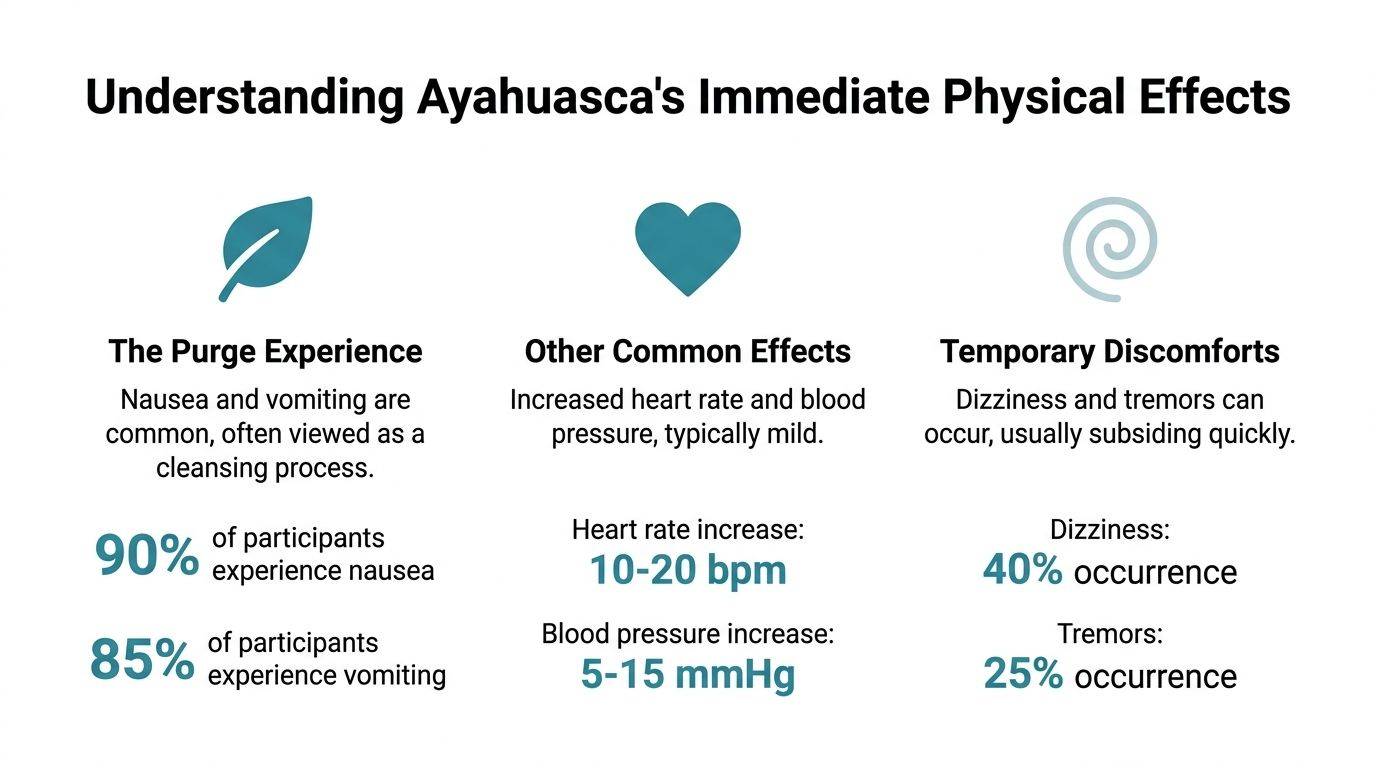
The bucket is beside the mat for a reason. Many people spend weeks worrying about visions or emotional intensity, then discover that the first challenge is physical. Nausea, heat, chills, trembling, stomach pressure, and vomiting are among the reactions people report most often in ceremony.
For some, vomiting happens once and passes. For others, the body works hard for part of the night.
Understanding the purge
In many ceremonial settings, vomiting is described as part of the purge. That word can also include sweating, shaking, crying, diarrhea, yawning, or a strong sense of release in the body. Traditional lineages may understand this as cleansing. In a medical frame, it is still a real physical stress response that needs observation and care.
Both views can be useful at the same time.
A participant does not need to choose between “this is meaningful” and “this is hard on my body.” The mature approach is to hold both. Respect the traditional context, and also watch hydration, breathing, level of distress, and the person’s overall stability. For readers who want a fuller explanation of this ceremonial process, this guide on Ayahuasca vomiting and the purge gives helpful context.
What else can happen in the body
Vomiting gets the most attention because it is visible, but it is not the only immediate physical effect. People may also feel stomach cramping, bloating, diarrhea, headache, dizziness, weakness, chills, sweating, jaw tension, tremors, or a pounding heartbeat. Some of these reactions are brief. Some come in waves with the peak of the experience.
A stronger heart rate or a sense of internal pressure does not always mean something is going wrong. Ayahuasca can increase autonomic arousal, which means the nervous system is activated and the body feels it. At the same time, facilitators should never dismiss chest pain, severe dehydration, fainting, trouble breathing, or persistent confusion as “just part of the medicine.”
That distinction matters.
Common immediate effects
- Nausea and vomiting: Frequent, sometimes intense, and often anticipated in ceremonial use.
- Digestive distress: Cramping, urgency, heaviness, bloating, or diarrhea can occur.
- Headache or pressure: This can be linked to dehydration, tension, poor sleep, or the overall strain of the night.
- Shaking, chills, or sweating: These can happen during energetic or physically demanding phases of the experience.
- Temporary cardiovascular activation: Some participants notice a faster pulse or a stronger heartbeat.
“Physical discomfort is common in ayahuasca work. Signs of medical risk need a different response, with calm assessment and appropriate care.”
What helps, and what creates problems
Good preparation reduces avoidable strain. Eat as instructed by the retreat or clinician overseeing the work. Arrive rested. Drink enough water before ceremony without overdoing it. Disclose medications, supplements, heart issues, blood pressure concerns, and any history of fainting, seizures, or severe gastrointestinal problems.
Poor decisions show up quickly in the body. People who hide medications, arrive depleted, mix substances, or treat vomiting as proof that the ceremony is “working” tend to have a harder night. In practice, the safest rooms are led by facilitators who can recognize the difference between expected discomfort and a participant who needs medical attention, as noted earlier in the published survey findings.
Ayahuasca’s physical side effects are often manageable. They still deserve respect, skillful supervision, and honest preparation.
Navigating Acute Psychological Effects
The psychological side effects of ayahuasca can be harder to prepare for because they don’t always look dramatic from the outside. A person may be sitting still on a mat while internally moving through terror, grief, shame, or a flood of old memories.
That inner intensity is one reason casual language like “bad trip” misses the point. Some journeys are difficult because the medicine is bringing buried material to the surface. Other situations are difficult because a person is becoming overwhelmed beyond what they can safely process in that moment. Those are not the same thing.

What a challenging journey can include
Acute psychological effects may include fear, confusion, paranoia, despair, guilt, disorientation, or the sense of losing control. Some people revisit formative memories with unusual vividness. Others encounter symbolic visions that stir deep existential questions or unresolved trauma.
A few patterns are common in challenging moments:
- Fear of letting go: The mind resists the loss of ordinary control.
- Emotional flooding: Grief, anger, or panic rises faster than expected.
- Trauma activation: Old memories or body sensations return with force.
- Identity destabilization: A person may feel temporarily unsure who they are, where they are, or what is happening.
These states can still be workable when the setting is strong.
How skilled support changes the experience
A capable facilitator doesn’t try to “fix” every difficult moment. They help the participant stay oriented, physically safe, and emotionally supported while the process unfolds. Sometimes that means a calm voice, simple reassurance, help with breathing, or reminding the person that the experience is time-limited. Sometimes it means more active containment, such as moving the person to a quieter space or helping them ground through posture and touch when appropriate and consented to.
““Difficult” doesn’t always mean harmful. The key question is whether the person remains supported, monitored, and able to move through the experience without losing all sense of safety.”
Useful responses during the peak
When someone enters a psychologically intense phase, a few responses tend to help more than others:
- Orient to the present. Simple reminders of place, time, and support can reduce spiraling.
- Loosen the fight. Trying to overpower the experience often increases fear.
- Return to the body. Slow breath, contact with the floor, or a hand on the heart can re-establish stability.
- Accept emotion without adding a story. Grief or fear may move through more cleanly when it isn’t analyzed mid-ceremony.
What usually doesn’t help is arguing with the participant’s experience, shaming emotional expression, or offering grand interpretations while they’re still in the middle of it. During ceremony, safety comes first. Meaning can wait.
Longer Term and Rare Psychiatric Risks
Most discussions of Ayahuasca focus on the night of the ceremony. That’s understandable, but it can miss the more serious question. What happens if the effects don’t fully resolve when the ceremony ends?
For some people, the days or weeks afterward may include lingering anxiety, emotional rawness, sleep disruption, confusion, or difficulty integrating what surfaced. That doesn’t always signal harm. Sometimes it reflects an unfinished psychological process. Still, if distress persists or functioning drops sharply, that needs attention.
Who should be especially careful
The most important psychiatric risk factor is vulnerability that already exists before the ceremony. People with a personal history of psychosis, mania, severe dissociation, or unstable bipolar patterns need careful evaluation and often should not drink at all. The same caution applies when there is a strong family history of schizophrenia-spectrum disorders or bipolar disorder.
Ayahuasca can destabilize a person who is already close to a threshold. That threshold may not be obvious to them, especially if they’ve been coping well enough in daily life.
A thoughtful screening process should ask about:
- Personal psychiatric history: Hospitalization, psychosis, mania, severe depression, or suicidality.
- Family history: Especially psychotic disorders or bipolar disorder.
- Current stability: Sleep, stress load, substance use, and emotional regulation.
- Existing support: Whether the person has a therapist, grounded community, or post-retreat care.
Rare but serious possibilities
A few risks deserve plain language.
One is the possibility of triggering a prolonged psychotic or manic episode in someone predisposed to it. Another is persistent perceptual disturbance, sometimes discussed under the broader category of Hallucinogen Persisting Perception Disorder. Some people also experience intrusive imagery, panic, or derealization after an overwhelming ceremony, especially when there was no proper integration afterward.
“Clinical caution: If someone has a history that suggests psychosis or mania, the wisest decision may be abstinence rather than adaptation.”
There’s also the issue of combining Ayahuasca with other substances. That concern belongs partly in the medical section below, but psychiatrically it matters too. Hidden stimulant use, unsupervised medication changes, or a pattern of mixing substances can raise both mental and physical risk.
The main point is simple. Rare psychiatric complications usually don’t appear out of nowhere. They tend to emerge where there was already vulnerability, poor screening, poor support, or unsafe mixing.
Critical Drug and Medical Contraindications
A common and dangerous scenario looks like this. Someone feels called to ceremony, assumes their daily medication is probably fine, skips one honest conversation with a doctor or intake team, and walks into a pharmacological risk they do not fully understand.
Ayahuasca is not just a psychedelic experience. It also has MAOI activity from its beta-carbolines, and that changes the safety picture in a very practical way. In Western medical terms, MAOIs can interact with medications, stimulants, and some health conditions in ways that raise blood pressure, strain the cardiovascular system, or contribute to serotonin toxicity. In traditional settings, respect for the brew includes respect for preparation, diet, and what the body is already carrying. Those two views are not in conflict. They point to the same conclusion. Hidden risk has to be addressed before ceremony, not during it.
Why these interactions matter
The problem is rarely “Ayahuasca is unsafe for everyone.” The problem is mismatch. A person may be stable on a medication that becomes risky in combination with an MAOI-containing brew. Another may have controlled hypertension or a cardiac history that makes the acute physiological stress of ceremony a poor fit. Someone else may underestimate the effect of combining prescribed medication with recent stimulant, cannabis, alcohol, or cocaine use.
I have seen the same pattern more than once. Trouble often starts with partial disclosure, self-directed tapering, or the hope that a center will not ask follow-up questions. Good screening protects people from exactly that.
For a closer look at interaction risks, read this guide to foods and medications to avoid with MAOIs.
Ayahuasca contraindications checklist
| Category | Examples | Why it can be unsafe |
|---|---|---|
| Antidepressants | SSRIs, SNRIs, MAOIs, and other antidepressant classes | Increased risk of serotonin toxicity, blood pressure instability, or other serious interactions |
| Stimulants and activating substances | Prescription stimulants, cocaine, amphetamines, some weight-loss compounds | Added strain on heart rate, blood pressure, and the nervous system |
| Other psychoactive medications | Certain mood stabilizers, antipsychotics, sedatives, and multi-drug psychiatric regimens | Unpredictable interactions, destabilization, or a more complicated emergency response |
| Cardiovascular conditions | Hypertension, arrhythmias, structural heart disease, prior cardiac events | Higher risk during acute changes in pulse and blood pressure |
| Neurological or seizure-related conditions | Seizure disorders or unclear neurological symptoms | A need for individualized medical review before any decision |
| Serious medical illness | Liver disease, unstable endocrine conditions, severe chronic illness | Reduced physiological reserve and more complex risk during ceremony |
| Polysubstance patterns | Recent or ongoing use of multiple substances | Hidden interactions and a less reliable screening picture |
What retreat applicants need to disclose
A safe intake depends on full disclosure, even when the details feel private or inconvenient.
Share every current medication. That includes prescriptions, over-the-counter drugs, supplements, herbal products, and occasional use such as sleep aids or anti-anxiety medication. Report recent medication changes too, especially any tapering of antidepressants, stimulants, or other psychiatric medications. Include heart history, blood pressure issues, fainting episodes, seizure history, and recent substance use.
Substance use needs special honesty. Many applicants do not think of weekend cocaine use, extra ADHD medication, frequent cannabis use, or mixing alcohol with other drugs as medically relevant to ceremony. It is relevant. For people unsure whether this pattern applies to them, this article on signs of polysubstance disorders can help with an honest self-check.
One more point matters. No retreat center should advise you to stop a prescription on your own. Medication decisions belong with the prescribing clinician, and the ceremony team should work from that information rather than guess around it.
The safest choice is sometimes postponement. Sometimes it is medical clearance. Sometimes it is a clear no. Respecting that limit is part of working with Ayahuasca responsibly.
How to Mitigate Ayahuasca’s Side Effects
The safest relationship with Ayahuasca starts before the ceremony and continues after it. People often focus on the brew itself, but the stronger predictor of how manageable the side effects of ayahuasca will be is the container around the experience.
That container has three parts. Screening. Setting. Integration.

Screening reduces avoidable risk
A proper intake process should feel thorough, not performative. It should ask about medications, diagnoses, trauma history, cardiovascular issues, previous psychedelic experiences, and current life stress. If a center waves people through with a short form and little follow-up, that’s a concern.
A strong preparation framework should also help participants understand diet guidance, medication review, sleep, hydration, and emotional readiness. This practical resource on preparing for an Ayahuasca journey is a useful example of the level of preparation people should expect.
Questions worth asking any center include:
- Who reviews medical forms: A trained screener should assess them, not just an administrator.
- How emergencies are handled: There should be a clear protocol, not vague reassurance.
- What support exists during ceremony: Trained facilitators should be present and attentive.
- What happens after ceremony: Integration should be part of the process, not an afterthought.
Set and setting shape the whole arc
A person’s mindset affects how intensity lands. Entering ceremony sleep-deprived, emotionally scattered, secretly ambivalent, or freshly destabilized by conflict can amplify both physical and psychological difficulty. The setting matters just as much. Noise, crowding, poor boundaries, chaotic facilitation, or an unsafe group dynamic can turn manageable side effects into overwhelming ones.
“A well-held ceremony doesn’t remove all discomfort. It makes discomfort easier to move through safely.”
Useful preparation often includes journaling, reducing outside stress, limiting overstimulation, and clarifying intention without rigid expectations. None of that guarantees an easy night. It does improve resilience.
A grounded conversation on preparation and safety can help people think through these choices:
Integration prevents avoidable fallout
Some of the most difficult side effects don’t happen in ceremony. They happen afterward, when a person returns home with heightened sensitivity, unresolved emotion, or life-changing insight and no support for what comes next.
Integration can include therapy, rest, routine, time in nature, community support, creative processing, and practical changes made slowly rather than impulsively. People who treat the ceremony as the whole journey often struggle more. People who treat it as one part of a longer process tend to stay more stable.
What works:
- Build support before drinking. Don’t wait until after a hard ceremony to look for help.
- Protect recovery time. Avoid jumping straight back into high-demand environments.
- Move slowly with major decisions. A powerful experience can be clarifying, but it can also leave someone raw.
The point of mitigation isn’t to sterilize Ayahuasca. It’s to meet it responsibly.
A Final Note on Safe and Intentional Use
The side effects of ayahuasca are real. Some are common and uncomfortable. Some are psychologically demanding. A smaller number are serious enough that the right answer for certain people is not to drink.
That doesn’t make Ayahuasca reckless in itself. It makes it something that requires respect.
When people approach it with honesty, proper screening, skilled facilitation, and committed integration, many of the most common difficulties become more understandable and more manageable. Physical purging can be held in both medical and traditional context. Psychological intensity can be worked with instead of feared. Contraindications can be identified before they become emergencies.
“Safety and depth don’t oppose each other. In serious ceremonial work, they support each other.”
Anyone preparing for this path should also strengthen the basics that support mental steadiness long before ceremony day. Broader holistic mental health advice can help create that foundation, especially for people who are already under stress or carrying unresolved emotional weight.
Ayahuasca is best approached as a relationship, not an event. Respect the medicine. Respect the traditions that carry it. Respect the body and mind that will meet it.
If a reader is looking for vetted retreat options, preparation support, and grounded educational resources, Ayahuasca.com offers a trusted place to continue the research process carefully.
Disclaimer: The information provided on Ayahuasca.com is for educational purposes only and is not intended as medical advice, diagnosis, or treatment. Ayahuasca is a powerful traditional Amazonian medicine and may not be suitable for everyone. Always consult with a qualified healthcare professional before making decisions related to health, mental well-being, medications, or the use of Ayahuasca.