
A seeker comparing Ayahuasca ceremonies may read retreat pages, study facilitators, and look for someone experienced enough to guide a profound encounter. A harder question follows: who has the right to speak for a tradition, and how can cultural authority be recognized responsibly?
A wisdom keeper is not just a charismatic teacher, an older facilitator, or a person using Indigenous language in promotional material. In many Indigenous and First Nations contexts, authority grows through community recognition, long learning, service, and accountability. It also includes knowing which teachings should remain private.

The title differs from knowledge keeper and elder. A knowledge keeper may carry expertise in plants, language, ceremony, stories, or law. An elder may also hold such knowledge, while receiving broader recognition and responsibilities in counsel, ceremony, or governance. Age alone does not create either role.
Ayahuasca makes these distinctions especially visible. A ceremony can bring together plants, songs, prayer, language, place, and relationships. Its guide remains responsible for participant welfare, cultural continuity, and knowledge that is not meant for public use, before and after the gathering.
This guide examines how authority is earned, how communities and consent shape recognition, and how Amazonian stewardship relates to ethical vetting and post-ceremony integration. It also addresses pressures on Indigenous communities and the legal realities surrounding ceremonies. The aim is practical understanding without romanticizing living traditions.
Who Wisdom Keepers Are and How Authority Is Earned
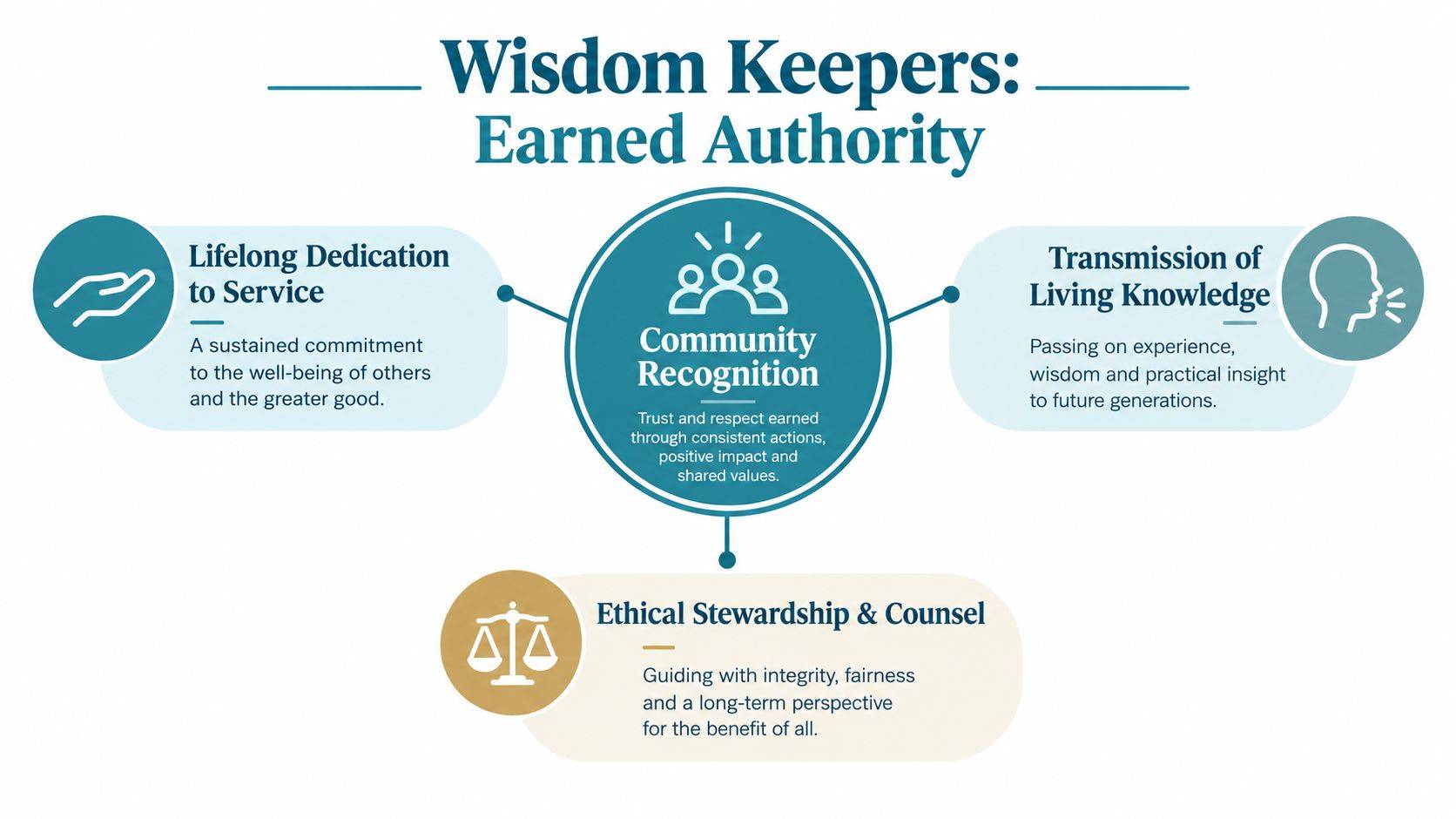
A ceremony participant may meet an older guide, a skilled storyteller, or a respected plant teacher and assume the person is a wisdom keeper. The title requires more than age, knowledge, or confidence. It describes someone recognized by a community to hold and steward cultural teachings, with responsibilities shaped by relationship, consent, and service.
That distinction also clarifies the difference between a knowledge keeper and an elder. A knowledge keeper may carry specialized expertise in language, plants, ceremony, stories, or law without being recognized as an Elder. An elder may hold those teachings too, but the title usually reflects wider community recognition and may include duties in counsel, ceremony, and governance. Community status and protocol, rather than age alone, give the role its meaning.
Stewardship Rather Than Ownership
A library steward offers a useful analogy. The steward did not write every book, yet protects the collection, understands its context, controls appropriate access, and helps others care for it. A wisdom keeper serves living knowledge in a similar way. Teachings are relationships and responsibilities, not products available for extraction.
A garden tender provides another image. The tender knows which plants belong together, when conditions are suitable, and which areas need protection. Patience and restraint are part of the work. Giving every seed to every visitor could harm the garden, just as sharing sacred or sensitive teachings without permission can weaken cultural continuity.
Authority often develops through long mentorship, repeated practice, close observation, language, ceremony, and community validation. Recognition is therefore a form of governance. The community, lineage, or tradition determines who may carry particular teachings and who may speak for them. The keeper must decide when, where, with whom, and how knowledge can be shared.
What Seekers Should Look For
A responsible seeker can ask:
- Who recognizes this person? A credible role should connect to a community, lineage, or governance process.
- What has been learned and practiced? Specific areas of knowledge matter more than broad claims of spiritual mastery.
- What boundaries are respected? A keeper should explain what cannot be photographed, recorded, repeated, or sold.
- Who can confirm the role? Independent community confirmation carries more weight than a certificate created by the facilitator.
- How are participants cared for? Cultural authority does not replace medical, psychological, or safeguarding responsibilities.
Consent applies to the seeker as well. A respectful participant asks before recording, follows limits on teaching, and accepts that some knowledge may remain private. Ethical authority includes the ability to say no.
Personal growth also requires distinguishing inner insight from borrowed authority. A wise self guide may support reflection and self-awareness, while personal development remains separate from cultural authorization.
“Practical rule: Someone can teach valuable material without holding the title of elder or wisdom keeper. The title should rest on community recognition, consent, and accountable service, not marketing language.”
Historical Roots and Modern Recognition of Wisdom Keepers
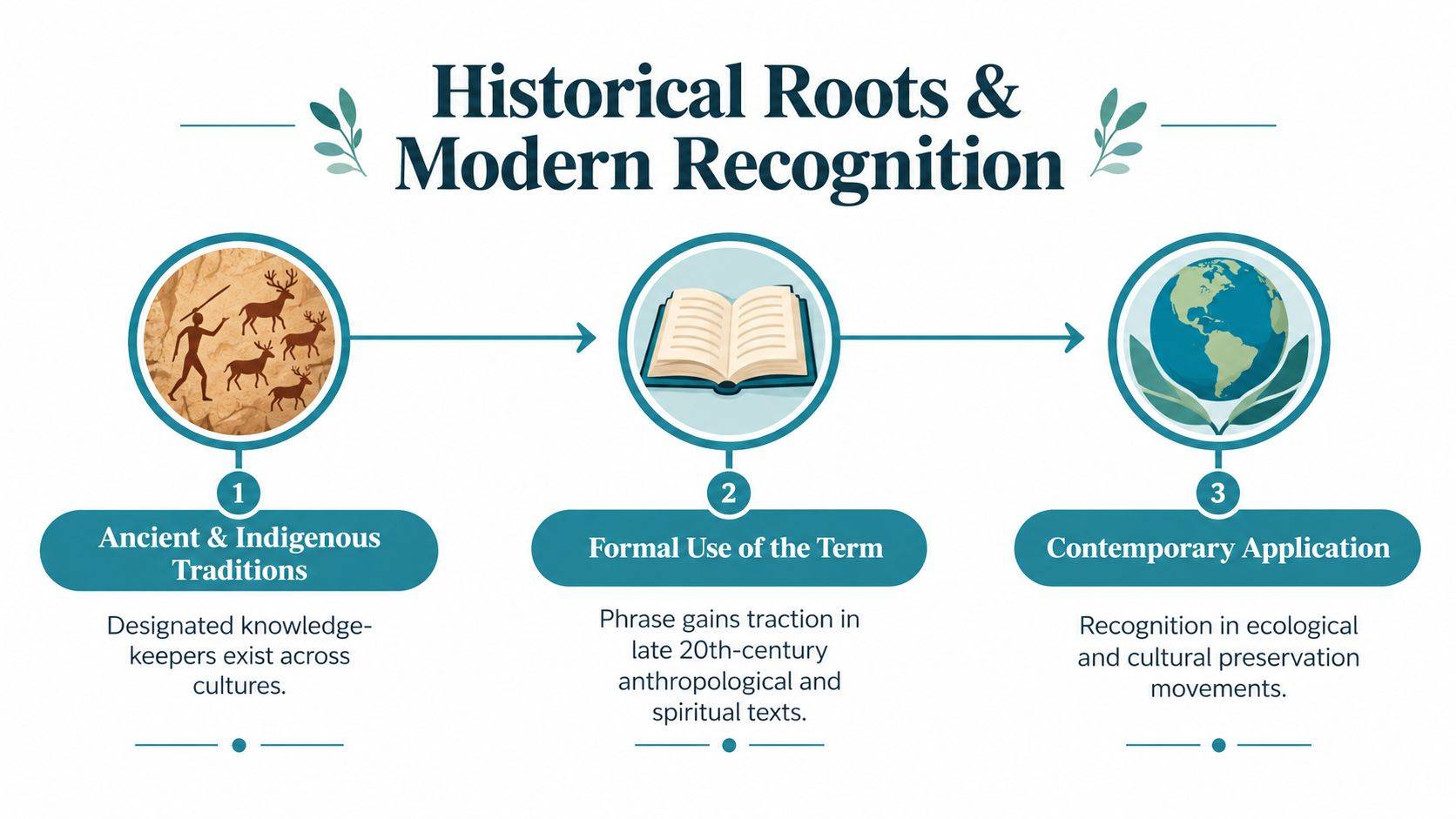
A community may ask one person to preserve a language, guide a ceremony, carry oral history, or protect knowledge about local ecology. That responsibility can pass through family lines, apprenticeships, ceremonial societies, or other community-governed pathways. The phrase wisdom keeper came later than these practices.
The English label has a relatively recent institutional history. Linguistic records found the phrase in several countries in the early 2000s, while historical review placed its firm establishment in Canada around 2015, after the Truth and Reconciliation Commission’s Calls to Action. As noted earlier, Canadian terminology guidance describes usage that became more common in Canada than in other former colonial countries.
The timeline matters because a modern label can resemble an old role without creating that role. An organization may use wisdom keeper in a policy, classroom, health-care setting, or research project. The authority still rests with the community that decides who may carry particular teachings. In that sense, the title works like a key issued by a community, not a badge someone can print for themselves.
Why Language Shapes Conduct
Words guide institutional behavior. Calling every spiritual influencer a “wisdom keeper” can hide the consent and governance behind the title. Treating it as a community-designated role leads to clearer questions about representation, compensation, access, protocol, and accountability.
The distinction also helps separate an elder from a wisdom keeper. An elder may be respected because of age, life experience, or community standing. A wisdom keeper carries particular teachings or responsibilities recognized through a community process. One person may hold both roles, but neither title should be assumed from age, appearance, online visibility, or personal claims.
Readers studying sacred traditions can use historical guidance on shamanism and Ayahuasca in Indigenous traditions for orientation. General information cannot grant permission to share a community’s specific teaching.
Recognition also creates obligations for institutions. Inviting a wisdom keeper to open an event, advise a project, or contribute knowledge should involve listening to their conditions, honoring protocol, and accepting refusal. A cultural role deserves a relationship, not symbolic inclusion on a stage.
Wisdom Keepers in Amazonian and Ayahuasca Traditions
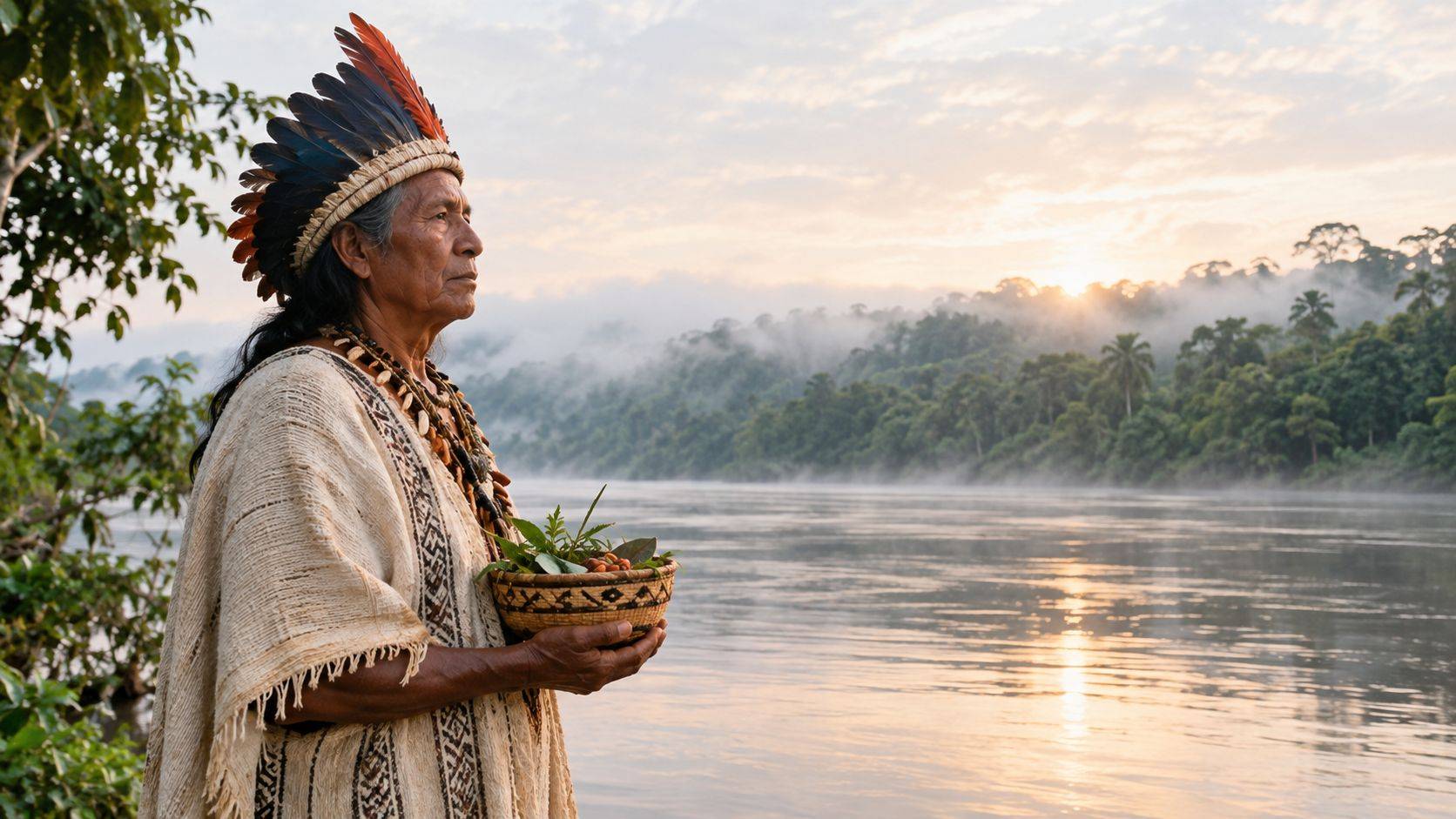
A visitor may arrive for an Ayahuasca ceremony expecting one person to lead a ritual. In many Amazonian traditions, that role rests within a wider web of plant knowledge, songs, language, territory, relationships, and community duties. A wisdom keeper may guide ceremony, yet their responsibility can also include preserving a song’s meaning, teaching through apprenticeship, and protecting boundaries around sacred knowledge.
The title does not describe an experienced elder. An elder may be respected for age, life experience, or standing in the community. A wisdom keeper carries particular teachings or responsibilities that a community has recognized and entrusted. One person can hold both roles, but age, appearance, online visibility, or personal claims do not establish either one.
Indigenous knowledge sources describe keepers as custodians rather than authors. Training may involve long mentorship, repeated practice, ceremonial discipline, and community validation. These processes keep a story connected to its place, a song to its language, and a plant to the responsibilities surrounding its use. Respectful engagement therefore begins with relationship, consent, and attention to community protocols, rather than collecting teachings as personal information.
A visitor might hear a healing song and remember its melody. That memory does not grant permission to perform the song publicly. The keeper understands when it belongs in ceremony, which context gives it meaning, and whether people outside the community may learn or repeat it. Knowledge remains tied to conduct and accountability.
The Role Of Place And Lineage
Apprenticeship and community review help determine whether a person can responsibly carry a teaching. A keeper’s standing grows through lived relationships, repeated instruction, accountability, and the community’s continuing ability to assess their practice. This process also helps protect the connection between ceremony, land, language, lineage, and social obligations.
Reference material on Indigenous and community-conserved knowledge describes gatekeepers as people who may be selected early, trained over many years, and entrusted with mediating access to sensitive teachings. Their role can support social coherence, land-based practice, language, and lived experience, while still requiring limits on what may be shared.
Peru designated Ayahuasca as part of Indigenous heritage in 2008, and Ayahuasca is legal there, according to BBC Future’s overview of psychedelic legal status. Cultural recognition and legal status do not, by themselves, confirm that a ceremony or facilitator represents an Indigenous lineage.
Readers seeking context can consult the guide to Shipibo shamanism. Ethical learning means using public material for orientation, avoiding claims of expertise after brief exposure, and asking whether teachings were shared with permission. The same care should guide decisions about ceremony, preparation, and integration.
Contemporary Challenges Facing Wisdom Keepers
Wisdom keepers often carry cultural responsibilities while their communities face serious health and social inequities. An Australian national aged-care report stated that Indigenous people represented 3.4% of the population. Indigenous Elders accounted for 1% of residential aged-care clients in June 2019 and 2.8% of Commonwealth Home Support Program clients in 2018–19. The report on transforming care pathways for Indigenous Elders presents these figures alongside wider concerns about access and health.
The report also stated that Indigenous Australians were 2.1 times more likely to have a profound or severe core activity limitation, 3 to 5 times more likely to have dementia, and 2.7 times more likely to live in disadvantaged areas. Life expectancy was 8.6 years lower for men and 7.8 years lower for women than for non-Indigenous counterparts in the report’s cited comparison. Such conditions affect elder care, cultural transmission, and the time available for teaching. A wisdom keeper may therefore be carrying responsibilities that formal institutions do not fully recognize.
Two Models Of Documentation
The pressure to preserve knowledge can produce very different outcomes. A respectful archive works less like a warehouse and more like a community-controlled library: access depends on the rules set by the people whose knowledge is held.
| Extractive Model | Respectful Model |
|---|---|
| Outsiders collect teachings for public databases | Communities define what may be recorded |
| Individuals are treated as sources of content | Knowledge keepers retain authority over context and access |
| Benefits flow mainly to institutions or commercial operators | Consent, compensation, and benefit-sharing are built into the relationship |
| Knowledge is separated from language and land | Archives preserve cultural context and community governance |
A practical community-led model can use tiered access. Public material may support education, while restricted teachings remain available only to authorized cultural members. The archive can also record who approved an item, where it may be used, whether it can be revised or withdrawn, and how benefits return to the community. These controls turn documentation into an accountable relationship rather than a one-time act of collection.
Legal Context For Ayahuasca
In the United States, Ayahuasca is federally illegal because DMT, its active ingredient, is classified as a Schedule I controlled substance under the Controlled Substances Act. The available legal overview identifies specific federal religious exemptions, including four exempt organizations, while other ceremonies lack federal legal protection. The legal overview of Ayahuasca explains this distinction.
Seekers should separate cultural respect from assumptions about legality. A retreat’s location, religious claim, or traditional branding does not by itself establish legal protection. Local and federal law, informed consent, safeguarding, medical screening, and emergency planning require separate review. The same principle applies to the title wisdom keeper. A respected elder may hold community standing without serving as a wisdom keeper, while a wisdom keeper’s authority depends on recognized responsibility, consent, and accountability rather than age or ceremonial presentation alone.
How To Ethically Engage And Vet Wisdom Keepers And Retreats
Vetting starts before any deposit, flight, or ceremony date. Ask who recognizes the facilitator, what lineage or training can be described openly, how the relevant community participates, and which boundaries govern songs, teachings, photographs, recordings, and touch. A person who refuses reasonable questions about accountability may be presenting a personal image rather than holding a trustworthy role.
Age and ceremonial confidence do not establish the title wisdom keeper. The role works more like a community-appointed stewardship position. Its authority depends on recognized responsibility, consent, and accountability. Seekers should ask whether the community has agreed to the person’s role, what duties come with it, and how concerns can be raised or addressed.
Ayahuasca retreats require practical safety questions as well. Ask about medical screening, medication review, mental health considerations, emergency procedures, supervision, consent, participant boundaries, and post-ceremony support. A 2022 global survey found that adverse effects were often mild and temporary, while nausea, vomiting, headaches, and short-lived cardiovascular changes were among reported reactions. The NIH-hosted survey paper supports a cautious, informed approach.
A 2024 systematic thematic review reported acute physical adverse effects among 69.9% of participants, subsequent medical attention for 2.3%, breathing difficulties at 7.3%, chest pains at 4.7%, fainting at 4.2%, and fits or seizures at 1.4%. The review in the Journal of Psychoactive Drugs shows why screening and emergency planning deserve direct answers.
A Practical Decision Matrix
| Evaluation Criteria | What To Look For | Red Flag To Avoid |
|---|---|---|
| Community recognition | Who recognizes the wisdom keeper and what responsibilities the role carries | Self-appointed authority without an accountable relationship |
| Lineage and training | Honest description of teachers, apprenticeship, cultural setting, and limits of knowledge | Grand claims that turn a complex tradition into a personal brand |
| Consent and privacy | Agreements covering touch, recording, photography, sexual boundaries, and disclosure | Pressure to surrender privacy as proof of commitment |
| Health screening | Questions about medical history, medications, mental health, and contraindications | One-size-fits-all intake or claims of universal safety |
| Emergency care | Trained support, escalation procedures, medical access, and clear communication | Ceremony used as a substitute for a safety protocol |
| Integration | Grounded follow-up and referral when clinical care is needed | Abrupt contact loss after the ceremony |
| Legal clarity | Plain explanation of local law and the retreat’s legal status | Claims that tradition alone guarantees protection |
A resource on Ayahuasca shaman roles and selection can help seekers form more precise questions. Ayahuasca.com may serve as one educational and retreat-discovery resource, while independent verification remains necessary.
“Consent standard: A respectful facilitator makes room for a clear yes, a clear no, and a change of mind without punishment or spiritual judgment.”
Integration Collaboration And Next Steps On Your Journey
The ceremony may be over, yet its lessons often surface later, during an ordinary conversation or a difficult choice. Integration gives those experiences a place to settle. Write memories privately, notice emotional and physical changes, and discuss distress with appropriately trained support before treating an intense insight as a command for immediate action.
A wisdom keeper can explain cultural meanings and responsibilities. A clinician or integration practitioner can address mental health, trauma, medication, or continuing distress. These roles may work together, like two maps showing different features of the same terrain. Cultural authority does not establish clinical competence, and clinical credentials do not confer authority over a tradition.
Integration also includes reciprocity. If a community invites support, seekers might contribute to community-led education, consent-based archives, language revitalization, or training for younger generations. Respect means declining to publish sacred details, identifying borrowed teachings transparently, and paying fairly for cultural labor.
A personal practice can make the learning more durable: pause before sharing an account, ask who may be affected, and choose actions that honor consent rather than visibility. For a broader reflection on values, service, and personal development, the explore the Journey page may complement tradition-specific learning.
Before booking a retreat, confirm community recognition, request safety and consent policies in writing, review the legal context, and arrange integration support in advance. Speak directly with organizers, then consult qualified medical or mental health professionals about personal risks. A safer journey rests on informed consent, accountable guidance, and respect for the wisdom keepers whose knowledge sustains the tradition.
Disclaimer: The information provided on Ayahuasca.com is for educational purposes only and is not intended as medical advice, diagnosis, or treatment. Ayahuasca is a powerful traditional Amazonian medicine and may not be suitable for everyone. Always consult with a qualified healthcare professional before making decisions related to health, mental well-being, medications, or the use of Ayahuasca.