
The sacred Amazonian brew ayahuasca, long revered by indigenous cultures for its profound healing and spiritual properties, has moved firmly into global consciousness. As interest grows, so does the need for reliable, nuanced information that goes beyond sensational headlines. Film has become a powerful medium for exploring this complex plant medicine, offering windows into traditional ceremonies, scientific inquiries, and personal transformation journeys. However, navigating the vast library of content can be overwhelming. Which films offer an authentic portrayal, and which lean into myth or misrepresentation?
This curated guide is designed to help you answer that question. We have selected and analyzed the most significant documentaries about ayahuasca, providing a clear roadmap for anyone curious about the subject. Whether you are a first-time seeker considering a ceremony, a seasoned journeyer looking for deeper context, or a wellness professional exploring plant-medicine modalities, this list provides the essential viewing you need.
Instead of just a simple list, we offer a structured pathway to understanding. We’ll explore each film’s core themes, production context, and key takeaways. You’ll find concise synopses, notes on credibility, and information on where to watch them. This guide organizes the films into a suggested viewing order: starting with foundational introductions, moving to deeper explorations of shamanism and science, and concluding with films that offer critical perspectives on the modern ayahuasca phenomenon. Our goal is to equip you with a comprehensive understanding, helping you separate insight from hype and approach this powerful tradition with the respect and knowledge it deserves.
1. Ayahuasca: The Spirit of the Vine
Often considered one of the seminal documentaries about ayahuasca for a Western audience, Ayahuasca: The Spirit of the Vine (2009) serves as a comprehensive and respectful introduction to this powerful Amazonian plant medicine. Directed by Richard Meech, the film balances personal testimonials with insights from experienced shamans and Western researchers, providing a well-rounded primer on the subject. It delves into the historical and cultural significance of ayahuasca within indigenous communities while exploring its modern applications for healing and self-discovery.
Core Focus and Key Themes
The documentary excels at demystifying the ceremonial experience. It follows several individuals on their personal journeys at a retreat center, documenting their motivations, their experiences during the ceremony, and the subsequent transformations. This narrative structure makes the abstract concepts of spiritual healing and psychological breakthroughs tangible for the viewer.
Key themes explored include:
- Healing Trauma: The film features compelling accounts from participants, including a war veteran, who report significant resolution of PTSD symptoms after their ayahuasca experiences.
- Overcoming Addiction: It highlights stories of individuals who found the ceremonial work instrumental in breaking cycles of substance abuse.
- Spiritual Connection: The documentary captures the profound sense of interconnectedness and spiritual awakening that many participants describe.
“The film bridges the gap between ancient shamanic wisdom and contemporary therapeutic needs, making it an essential watch for anyone new to the world of ayahuasca.”
Why It’s a Great Starting Point
This film is an excellent first watch because it provides foundational knowledge without sensationalism. It presents the medicine with reverence, emphasizing the importance of set, setting, and the guidance of a skilled facilitator. For those unfamiliar with the topic, it offers a solid educational base. If you are just beginning your research, you can learn more about this sacred plant medicine with this introductory guide to ayahuasca.
Watch it if you are:
- A newcomer seeking a balanced and informative overview.
- Interested in seeing real-life examples of ayahuasca’s therapeutic potential.
- Looking for a documentary that honors the indigenous roots of the medicine.
Viewing Tip: Approach this film with an open yet discerning mind. It provides powerful anecdotal evidence, which can inspire further research into the clinical studies and safety protocols surrounding ayahuasca use.
2. DMT: The Spirit Molecule
While not exclusively about the traditional brew, DMT: The Spirit Molecule (2010) is a foundational film for understanding ayahuasca’s primary psychoactive component. Based on the influential book by Dr. Rick Strassman, this documentary explores the first new human research with psychedelic drugs in the U.S. in over 20 years. Directed by Mitch Schultz and narrated by Joe Rogan, it presents a scientific yet deeply spiritual investigation into dimethyltryptamine (DMT).
Core Focus and Key Themes
The documentary centers on Dr. Strassman’s clinical research at the University of New Mexico, where he administered DMT to dozens of volunteers. It meticulously documents the study’s protocol, the volunteers’ profound and often life-altering experiences, and Dr. Strassman’s own reflections on the implications of his findings. The film juxtaposes this clinical perspective with insights from mathematicians, artists, and philosophers, creating a rich tapestry of scientific and metaphysical inquiry.
Key themes explored include:
- The Nature of Consciousness: The film probes whether DMT experiences are merely brain-generated hallucinations or glimpses into other dimensions of reality.
- Encounters with Non-Human Intelligence: Many of Strassman’s subjects reported coherent, structured interactions with seemingly autonomous entities, a central mystery the documentary examines.
- The Pineal Gland Connection: It explores Strassman’s hypothesis that the pineal gland, a tiny organ in the brain, may naturally produce and release DMT at pivotal moments like birth and death.
“This documentary takes a bold, scientific lens to the most ineffable of human experiences, challenging viewers to question the very nature of reality and consciousness.”
Why It’s a Great Scientific Deep-Dive
This film is essential for anyone interested in the pharmacology and neuroscience behind the ayahuasca experience. It moves the conversation from the purely ceremonial to the clinical, providing a rational framework for understanding one of the world’s most powerful psychedelics. For those seeking to bridge ancient wisdom with modern science, it is an indispensable resource. You can explore a broader overview of the scientific investigation of ayahuasca to complement the film’s findings.
Watch it if you are:
- Curious about the scientific and clinical research into psychedelics.
- Interested in the pharmacology of DMT and how it affects the brain.
- Intrigued by the intersection of science, spirituality, and consciousness.
Viewing Tip: Keep in mind that the film focuses on isolated, intravenous DMT, which produces a much faster, shorter, and more intense experience than the orally ingested ayahuasca brew. This context is crucial for understanding the differences in the reported experiences.
3. Shamans of the Amazon
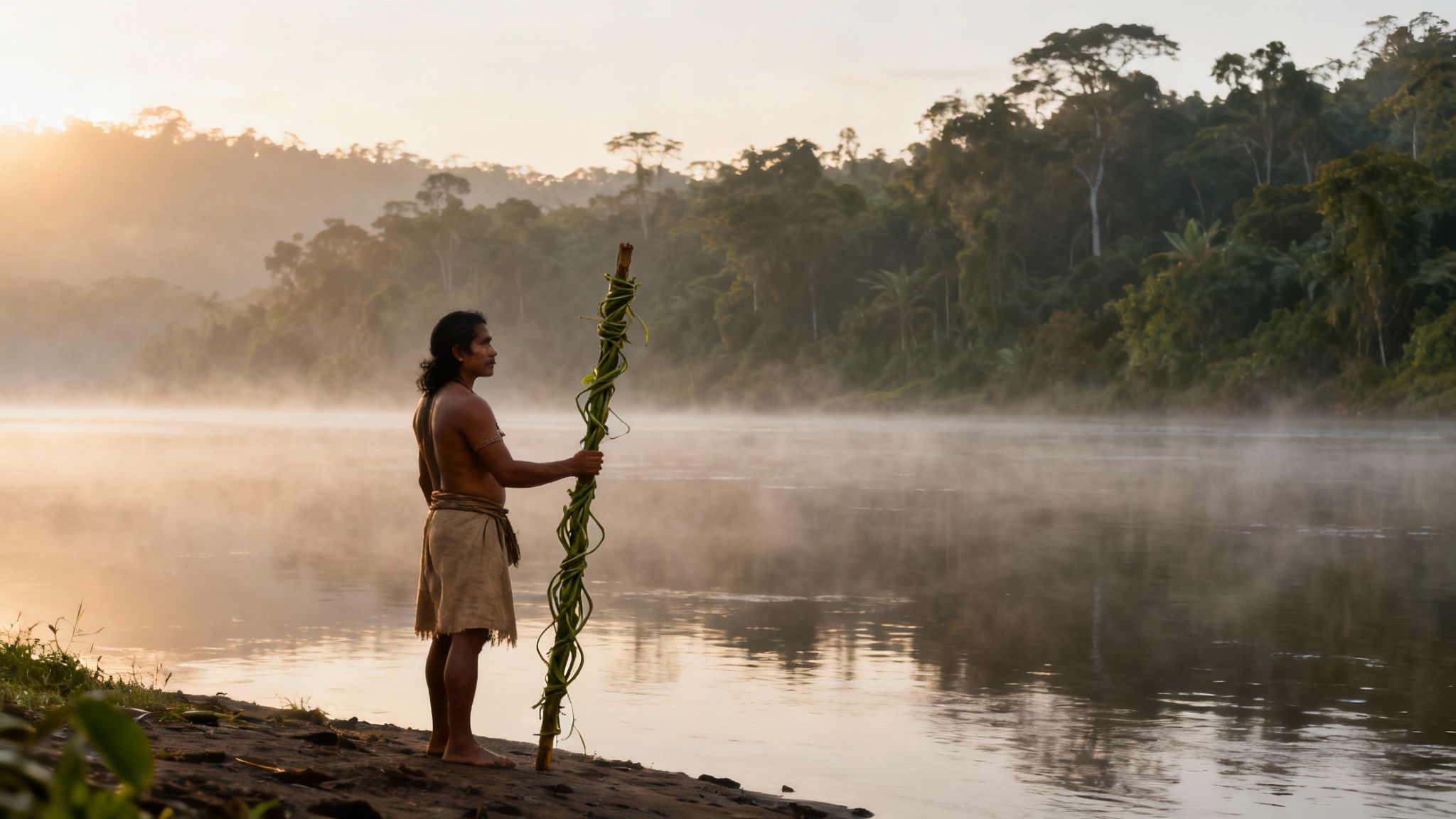
Shamans of the Amazon (2005) is a visually captivating documentary that offers an immersive look into the lives and spiritual practices of indigenous communities in the Peruvian Amazon. Directed by Dean Jefferys, the film places the ayahuasca ceremony within a much broader ecological and cultural context. It highlights the profound and inseparable relationship between the shamans, their community, the rainforest, and the sacred plant medicines they steward.
Core Focus and Key Themes
This documentary’s strength lies in its ethnographic approach, prioritizing the indigenous perspective. It moves beyond just the ceremonial experience to explore the worldview that underpins it, showing how shamanic knowledge is passed down through generations and used for community healing. The film connects the preservation of this ancient wisdom directly to the conservation of the Amazon rainforest itself.
Key themes explored include:
- Ecological Interdependence: It powerfully illustrates how indigenous spirituality, including the use of ayahuasca, is fundamentally linked to environmental stewardship and a deep respect for nature.
- Cultural Preservation: The film documents the challenges these communities face from modernization and external pressures, emphasizing the urgent need to protect their traditions and land.
- Community Healing: Viewers witness how shamanic practices serve the entire community, not just individuals, addressing collective ailments and reinforcing social bonds.
“This film is a poignant reminder that ayahuasca is not merely a substance but a sacred element of a living, breathing culture deeply intertwined with the fate of the Amazon rainforest.”
Why It’s an Essential Watch
Among the many documentaries about ayahuasca, this one is crucial for understanding the medicine’s origins and the cultural container it comes from. It grounds the viewer in the reality that shamanism is a complex, place-based tradition, not a commodity. The film encourages a more respectful and less extractive approach to seeking healing with plant medicines. To deepen your understanding of the shaman’s role, you can learn more about what an ayahuasca shaman is and does.
Watch it if you are:
- Interested in the cultural and ecological context of ayahuasca.
- Seeking to understand the indigenous perspective on plant medicine.
- Concerned with ethical engagement and the preservation of shamanic traditions.
Viewing Tip: Watch this film to cultivate a deeper appreciation for the people and places from which ayahuasca originates. Use it as a prompt to research ethical retreat centers and organizations that directly support the indigenous communities stewarding this knowledge.
4. The Last Shaman
The Last Shaman (2016) offers a deeply personal and emotionally raw look into the world of ayahuasca healing, told through the eyes of a young American man on the brink of suicide. Directed by Raz Degan, the film follows James Freeman, who, after exhausting conventional treatments for his severe depression, travels to the Amazon rainforest as a last resort. It documents his intense and often arduous apprenticeship with an indigenous shaman, providing an unflinching view of both the healing potential and the complex realities of seeking salvation in a foreign culture.
Core Focus and Key Themes
Unlike many documentaries that provide a broader overview, this film is a character-driven narrative focused on one individual’s desperate search for healing. Its power lies in its vulnerability, showing the moments of despair, doubt, and physical struggle alongside the profound breakthroughs. This immersive approach gives viewers a visceral sense of the commitment required for deep healing work with plant medicines.
Key themes explored include:
- Mental Health Crisis: The film puts a human face on the limitations of Western psychiatric models for treating severe, persistent depression, positioning ayahuasca as a powerful alternative for some.
- The Hero’s Journey: James’s story follows a classic narrative arc of trial and transformation, making his spiritual and psychological journey relatable and compelling.
- Cultural Crossroads: It critically examines the intersection of ancient shamanic traditions with the modern wellness tourism industry, highlighting potential ethical pitfalls and the commodification of sacred practices.
“More than just a film about ayahuasca, The Last Shaman is a poignant and powerful story about the human will to live and the lengths one will go to find a reason for it.”
Why It’s a Great In-Depth Watch
This documentary is ideal for those who have a basic understanding of ayahuasca and are ready to explore a more nuanced, personal story. It moves beyond the introductory level to showcase the grit, determination, and profound difficulty involved in the healing process. It serves as a necessary reality check, illustrating that the path is not always one of immediate bliss and cosmic insight, but often involves confronting one’s deepest pain.
Watch it if you are:
- Interested in a personal, first-hand account of healing severe depression.
- Ready to explore the challenging aspects of shamanic apprenticeship.
- Seeking a film that questions the commercialization of ayahuasca.
Viewing Tip: Pay attention to the dynamic between James and his shaman, Pepe. Their relationship highlights the critical importance of trust, tradition, and the mentor-student bond in authentic healing work, which is a crucial consideration when evaluating potential retreat facilitators.
5. Vine of the Soul: Encounters with Ayahuasca
Released in 2010, Vine of the Soul: Encounters with Ayahuasca offers a thoughtful and multi-faceted examination of the burgeoning Western interest in this sacred Amazonian medicine. Directed by Richard Meech, the film serves as a compelling follow-up to his earlier work, broadening the scope to include more scientific and ethnobotanical perspectives. It masterfully weaves together the personal stories of first-time participants with expert commentary from leading researchers like Dr. Gabor Maté and ethnobotanist Dennis McKenna, creating a rich tapestry of information.
Core Focus and Key Themes
The documentary stands out for its balanced approach, placing personal healing narratives alongside rigorous scientific inquiry and cultural context. It explores the journey of ayahuasca from its indigenous Amazonian roots to its modern-day application in retreat centers, effectively capturing the cultural exchange and its complexities. The film gives voice to a diverse group of individuals, from artists to therapists, each sharing their unique encounter with the vine.
Key themes explored include:
- Ethnobotanical Context: The film provides a solid foundation in the history and traditional use of ayahuasca, featuring insights from indigenous elders and shamans in Peru and Ecuador.
- Scientific Validation: It delves into the neurological and psychological effects of ayahuasca, with researchers discussing its potential to treat addiction, depression, and trauma.
- Creative and Spiritual Expansion: Several participants, including artists and writers, articulate how their experiences unlocked new levels of creativity and provided profound spiritual insights.
“This film acts as an intellectual and spiritual bridge, connecting the dots between ancient plant wisdom, modern neuroscience, and the universal human quest for healing.”
Why It’s a Great Deeper Dive
While accessible to newcomers, this documentary is particularly rewarding for those who already have a basic understanding of ayahuasca and are looking to deepen their knowledge. It moves beyond the introductory level to ask more nuanced questions about the integration of this medicine into Western culture. For those interested in the science behind the experience, this is one of the best documentaries about ayahuasca that provides credible, expert-led explanations. If you are ready to explore the intersection of science and spirituality, the film’s official website offers more resources.
Watch it if you are:
- Curious about the scientific research and ethnobotanical history of ayahuasca.
- Interested in hearing from a wide range of professionals, including doctors and artists.
- Seeking a film that thoughtfully considers the cultural implications of ayahuasca’s global spread.
Viewing Tip: Pay close attention to the interviews with Dennis McKenna and Dr. Gabor Maté. Their perspectives provide a crucial framework for understanding both the pharmacological action of the brew and its powerful psychotherapeutic potential.
6. Consciousness: A Hidden History
While not exclusively one of the documentaries about ayahuasca, Consciousness: A Hidden History (2013) places the potent brew within a much broader and fascinating context: the historical and scientific exploration of human consciousness itself. Directed by Ben Stewart, this film acts as a grand tour, connecting ancient mystery schools, shamanic practices, and the modern psychedelic renaissance. Ayahuasca features prominently as a key tool that cultures have used to access non-ordinary states and explore the very nature of reality.
Core Focus and Key Themes
The documentary’s primary strength is its ability to weave ayahuasca into a larger tapestry of human inquiry. It moves beyond the singular experience of a ceremony to ask bigger questions about why humanity has always sought to alter its consciousness. It examines the suppression of this knowledge and celebrates its modern re-emergence through science and guided spiritual practice.
Key themes explored include:
- The Science of Consciousness: The film interviews prominent figures and researchers who discuss how substances like ayahuasca challenge purely materialistic models of consciousness.
- Historical Context: It connects Amazonian shamanism to other ancient traditions, such as the Eleusinian Mysteries in Greece, suggesting a universal human drive to explore inner worlds.
- The Psychedelic Renaissance: Ayahuasca is presented as a central element in the current revival of psychedelic research for therapeutic and spiritual purposes.
“This documentary broadens the lens, showing that the quest for understanding unlocked by ayahuasca is part of a timeless human journey to know ourselves and our place in the cosmos.”
Why It’s a Great Deeper Dive
This film is perfect for viewers who have a basic understanding of ayahuasca and are ready to explore the philosophical and scientific implications. It elevates the conversation from “What does ayahuasca do?” to “What does ayahuasca reveal about the human mind and universe?” By contextualizing the medicine historically and scientifically, it provides a robust framework for appreciating its profound potential.
Watch it if you are:
- Interested in the intersection of science, spirituality, and history.
- Seeking to understand ayahuasca’s role in the broader psychedelic movement.
- Curious about the big questions concerning consciousness and reality.
Viewing Tip: Since the film covers a vast range of topics, take notes on the researchers and concepts that resonate most with you. This can provide excellent starting points for further reading on consciousness studies, ethnobotany, and psychedelic history.
7. Ayahuasca: Ancient Knowledge, Modern Minds
Bridging the divide between ancient shamanic wisdom and contemporary scientific inquiry, Ayahuasca: Ancient Knowledge, Modern Minds (2022) offers a compelling and balanced perspective. This documentary skillfully juxtaposes the traditional, sacred use of the medicine within indigenous communities with the modern, clinical understanding of its neurological effects. It travels deep into the Amazon to capture ceremonies in their authentic context and then moves into the lab to explore how neuroscience is beginning to validate what shamans have known for centuries.
Core Focus and Key Themes
The film’s strength lies in its dual-track narrative, presenting two seemingly different worlds that are asking the same questions about consciousness and healing. It respectfully interviews indigenous elders and knowledge keepers, giving weight to their ancestral wisdom, while also featuring neuroscientists and psychologists who are studying ayahuasca’s impact on the human brain. This approach provides a holistic picture of the medicine as both a spiritual sacrament and a powerful psychoactive compound.
Key themes explored include:
- Bridging Wisdom Traditions: The documentary highlights the fascinating parallels between ancient spiritual concepts and modern neuroscientific findings, suggesting a convergence of knowledge.
- Neuroplasticity and Healing: It visually explains how ayahuasca may promote neuroplasticity, offering a scientific lens through which to understand its therapeutic potential for conditions like depression and addiction.
- Cultural Preservation: The film underscores the importance of honoring and protecting the indigenous cultures that have safeguarded this knowledge for millennia.
“This documentary is a must-watch for the intellectually curious, as it masterfully connects the dots between spiritual experience and measurable brain activity, validating ancient practices with modern science.”
Why It’s a Great In-Depth Watch
For viewers who have a foundational understanding of ayahuasca, this film provides the perfect next step. It moves beyond the purely experiential and into the mechanics of how and why this plant medicine can facilitate profound change. It’s an ideal documentary for those who appreciate evidence-based explanations alongside spiritual testimonials, making it a standout among documentaries about ayahuasca.
Watch it if you are:
- Interested in the scientific research behind ayahuasca’s effects on the brain.
- Curious about how modern psychology and ancient shamanism are finding common ground.
- Seeking a documentary that treats both scientific and indigenous perspectives with equal respect.
Viewing Tip: Pay close attention to the interviews with both the shamans and the scientists. Note the different language they use to describe similar phenomena, which is a central and fascinating aspect of the film.
8. The Sacred Science
Venturing beyond personal testimonials and into the realm of documented healing, The Sacred Science (2011) presents a powerful and structured exploration of Amazonian plant medicine. Directed by Nick Polizzi, the film follows eight individuals, each battling a severe illness such as cancer, depression, or Parkinson’s disease, as they embark on a 30-day healing journey deep in the Peruvian Amazon. They work with indigenous shamans, using a variety of plant medicines, including ayahuasca, under the observation of a skeptical Western doctor.
Core Focus and Key Themes
The documentary uniquely frames the healing process as a “sacred science,” directly comparing ancient indigenous knowledge with modern medical paradigms. It meticulously documents the participants’ progress, including both their struggles and their breakthroughs, offering a raw and honest look at the demanding nature of this work. The film highlights the holistic approach of the shamans, which addresses the physical, emotional, and spiritual dimensions of illness.
Key themes explored include:
- Healing Chronic Illness: The film’s primary focus is on the potential of plant medicines to address conditions that Western medicine often struggles to treat effectively.
- Nature as Medicine: It emphasizes the deep connection between the natural world and human health, showcasing the jungle as a living pharmacy.
- Indigenous Wisdom vs. Modern Science: The narrative creates a compelling dialogue between two different worldviews on healing and disease.
“By putting ancient shamanic healing to the test, The Sacred Science provides a gripping and often-moving case for the power of plant medicine in a world searching for answers.”
Why It’s a Great Watch for Skeptics
This is one of the essential documentaries about ayahuasca for viewers who appreciate a more empirical approach. While not a formal clinical trial, its structure of following a specific group with documented ailments over a set period provides a compelling narrative of healing that is both emotional and evidence-based. It bridges the gap for those who may be skeptical of purely spiritual claims. You can learn more about their mission and ongoing work at the official website for The Sacred Science.
Watch it if you are:
- Interested in the application of plant medicine for specific physical and mental health conditions.
- Curious about the intersection of indigenous healing practices and Western medical perspectives.
- Looking for a story-driven documentary with measurable outcomes.
Viewing Tip: Pay attention to the role of “dieta” (the specific diet and lifestyle restrictions) and the use of other plants besides ayahuasca. The film effectively shows that healing is an integrated process, not just the result of a single ceremony.
Ayahuasca Documentaries: 8-Film Comparison
| Title | Implementation complexity | Resource requirements | Expected outcomes | Ideal use cases | Key advantages |
|---|---|---|---|---|---|
| Ayahuasca: The Spirit of the Vine | Moderate — portrays traditional ceremonial protocols | Travel to Amazon, experienced shamans, cultural preparation | Personal transformation narratives; educational insight with some risks underreported | Intro to indigenous ayahuasca practice and ceremony etiquette | Respectful blending of spiritual and scientific views; immersive visuals |
| DMT: The Spirit Molecule | Medium — focuses on clinical research protocols and pharmacology | Clinical/regulated settings for research; scientific expertise | Scientific data on DMT effects; philosophical questions about consciousness | Learning about neuropharmacology and research on psychedelics | Rigorous scientific framing; acclaimed and widely available |
| Shamans of the Amazon | Moderate — documents full ceremonial cycles and ecological practices | Field access across Amazon regions; community cooperation | Cultural and ecological understanding; immersive portrayal of ceremonies | Exploring indigenous stewardship and authentic shamanic practice | High production quality; authentic, sustainability-focused representation |
| The Last Shaman | Medium — practical ethical and safety complexities highlighted | Retreat participation, mental-health screening, ethical scrutiny | Candid account of benefits and harms; critique of tourism and appropriation | Critical overview before participating in retreats; ethics discussions | Honest, accessible narrative that foregrounds safety and authenticity |
| Vine of the Soul: Encounters with Ayahuasca | Medium — combines ethnobotany, testimony, and history | Ethnobotanical research, retreat access, integration support | Broad historical and experiential perspectives; emphasis on integration | Contextual study of ayahuasca history and post-ceremony integration | Comprehensive historical context and diverse participant viewpoints |
| Consciousness: A Hidden History | Low (viewer); high conceptual complexity | Scholarly sources and expert interviews (no field resources) | Wide-ranging theory on consciousness and psychedelics; dense material | Academic or broad-context study of consciousness and psychedelia | Broad educational scope with authoritative experts |
| Ayahuasca: Ancient Knowledge, Modern Minds | Medium — compares traditional practices with modern science | Access to neuroscientific research and traditional practitioners | Insight into therapeutic applications and cultural context | Understanding modern therapeutic uses grounded in tradition | Balanced presentation bridging neuroscience and indigenous knowledge |
| The Sacred Science | High — medically documented longitudinal case studies | Medical assessments, structured retreat programs, follow-up support | Documented individual health outcomes (small sample); not conclusive evidence | Investigating case-study outcomes for serious health challenges | Rigorous documentation, longitudinal follow-up, integration emphasis |
Beyond the Screen: How to Continue Your Journey Safely and Responsibly
The journey through the world of documentaries about ayahuasca offers a powerful, multifaceted glimpse into the brew’s potential for healing, spiritual awakening, and profound self-discovery. From the scientific explorations in DMT: The Spirit Molecule to the deeply personal healing quests in The Last Shaman and The Sacred Science, these films serve as a crucial first step. They are portals, not destinations, providing a map of a vast and complex territory. You’ve now seen the cultural reverence, the scientific curiosity, and the raw human vulnerability associated with this sacred plant medicine.
The most important takeaway is that ayahuasca is not a passive experience or a quick fix. It is a demanding, deeply personal process that requires immense respect, rigorous preparation, and a long-term commitment to integration. The stories of transformation are real, but so are the risks when this path is approached without caution and education. These documentaries collectively underscore a central truth: the real work begins long before the first ceremony and continues long after the last.
Your Actionable Next Steps: From Viewer to Seeker
Watching these films can ignite a powerful desire for personal experience. To channel that inspiration responsibly, consider these concrete actions before moving forward. This is not just about finding a retreat; it’s about building a foundation for a safe and meaningful journey.
1. Deepen Your Knowledge Base
Your education has just begun. The next layer involves moving from cinematic narratives to detailed, practical information from trusted sources.
- Read Foundational Texts: Explore books by authors like Gabor Maté (In the Realm of Hungry Ghosts), Dennis McKenna (The Brotherhood of the Screaming Abyss), and Jeremy Narby (The Cosmic Serpent). These provide deeper scientific, anthropological, and psychological contexts that films can only touch upon.
- Engage with Reputable Organizations: Follow the work of organizations like the Chacruna Institute for Psychedelic Plant Medicines and ICEERS (The International Center for Ethnobotanical Education, Research, and Service). They offer evidence-based research, articles on safety, and critical perspectives on the commercialization of ayahuasca.
2. Prioritize Vetting and Safety
The single most critical step is ensuring any potential retreat or facilitator is thoroughly vetted. The safety, integrity, and ethical framework of the container in which you drink ayahuasca will define your experience.
- Create a Vetting Checklist: Before contacting any retreat center, create a list of non-negotiable questions. Ask about their medical screening process, emergency protocols, the ratio of facilitators to participants, the shaman’s lineage and training, and their policies on diet and integration support. A reputable center will welcome this scrutiny.
- Seek Independent Reviews: Look for testimonials on third-party forums or communities, not just on the retreat’s own website. Be wary of centers with universally flawless reviews or those that use high-pressure sales tactics.
3. Focus on Preparation and Integration
The ceremony is just one part of the process. How you prepare your mind and body beforehand, and how you integrate the lessons afterward, are what create lasting change.
- Start a Journaling Practice: Begin documenting your intentions now. What are you seeking to heal or understand? What patterns do you want to change? This clarity is invaluable. After your research phase, if you choose to proceed, this journal will become your integration companion.
- Consult with Professionals: If you are seeking ayahuasca for mental health reasons, discuss your intentions with a qualified, integration-informed therapist. They can help you prepare emotionally and will be an essential resource for processing the experience afterward. Never stop prescribed medications without consulting your doctor.
These documentaries about ayahuasca are an invitation to look deeper, both at the medicine itself and within yourself. They reveal that the path of plant medicine is one of profound responsibility. By taking these deliberate, informed steps, you honor the traditions, prioritize your well-being, and create the best possible conditions for the healing and growth you seek. The journey beyond the screen is not about chasing a psychedelic experience; it’s about consciously and carefully stepping onto a path of lifelong learning and integration.