
The Amazon holds around 80,000 plant species, yet fewer than 5% have been studied for possible medicinal benefits, which is why medicinal plants Amazon rainforest is more than a wellness phrase, it’s a doorway into one of the largest unresolved questions in ethnobotany and pharmacology Milken Scholars. That gap matters because the forest’s botanical knowledge isn’t a fringe curiosity. It sits inside a living system where people, plants, soil, and ceremony have shaped each other for generations.
For seekers, that creates a real challenge. The Amazon is often described as a natural pharmacy, but traditional use, laboratory screening, and proven clinical benefit are three different things. A grounded reading starts with respect for indigenous knowledge, then adds scientific caution, conservation awareness, and practical safety.
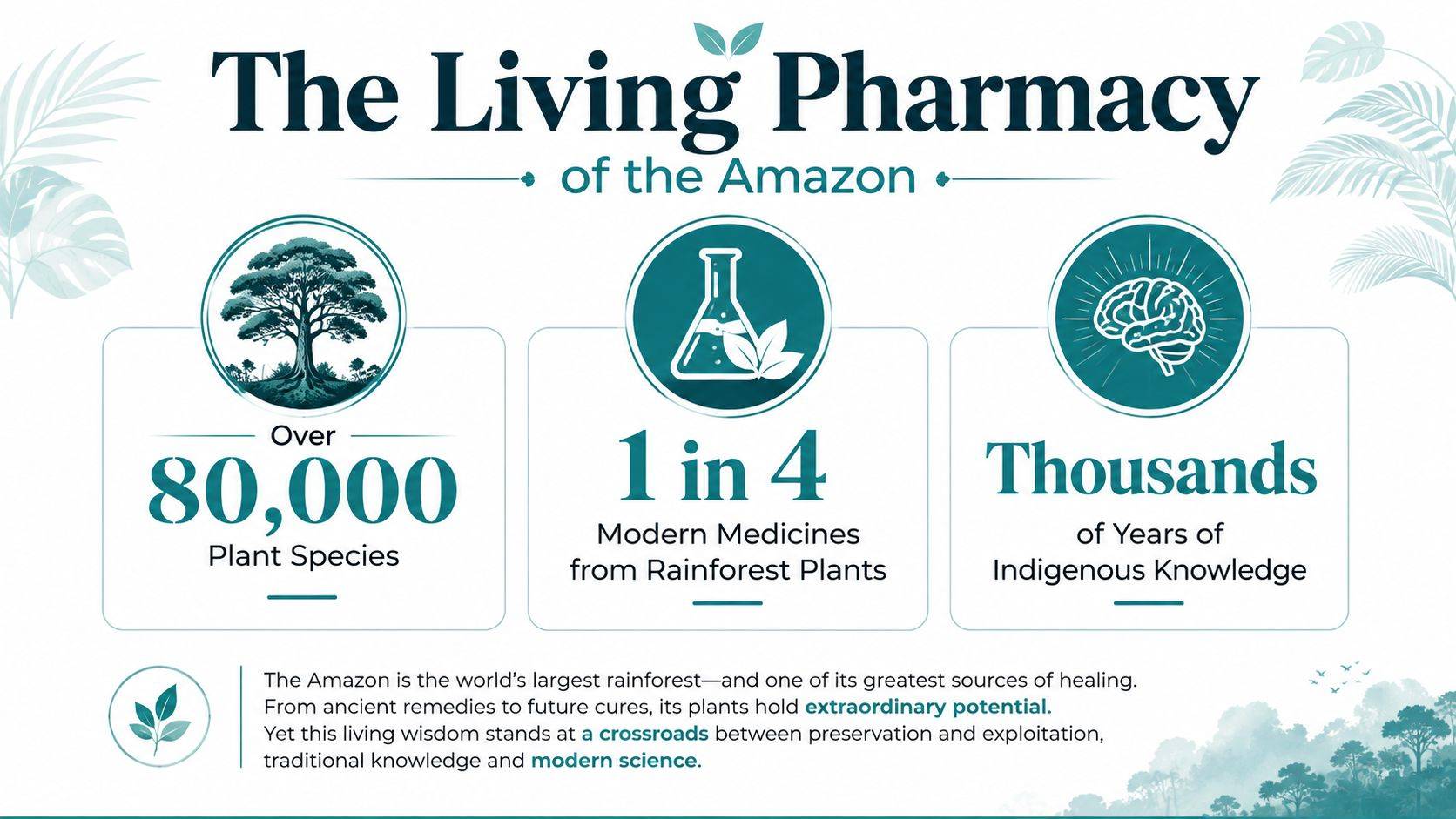
The Living Pharmacy Of The Amazon
The Amazon is often treated like a mythic medicine cabinet, yet the better view is more grounded. One major review found that 51% of Amazonian arboreal species in a large forest inventory were documented as useful to humans, and those useful species made up about 84% of all individual trees counted, roughly 253 billion out of 302 billion individuals PMC review. That means useful trees are not a side story. They are part of the forest’s structure at a massive scale.
Why That Scale Changes The Conversation
The same review reported that useful species had mean population sizes 6.4 times larger than non-useful species, which helps explain why the forest feels so intertwined with daily life PMC review. For ethnobotany, this is a strong clue. Human knowledge in the Amazon did not isolate a few rare remedies. It recognized a broad botanical network that also supports food, construction, ritual life, and medicine.
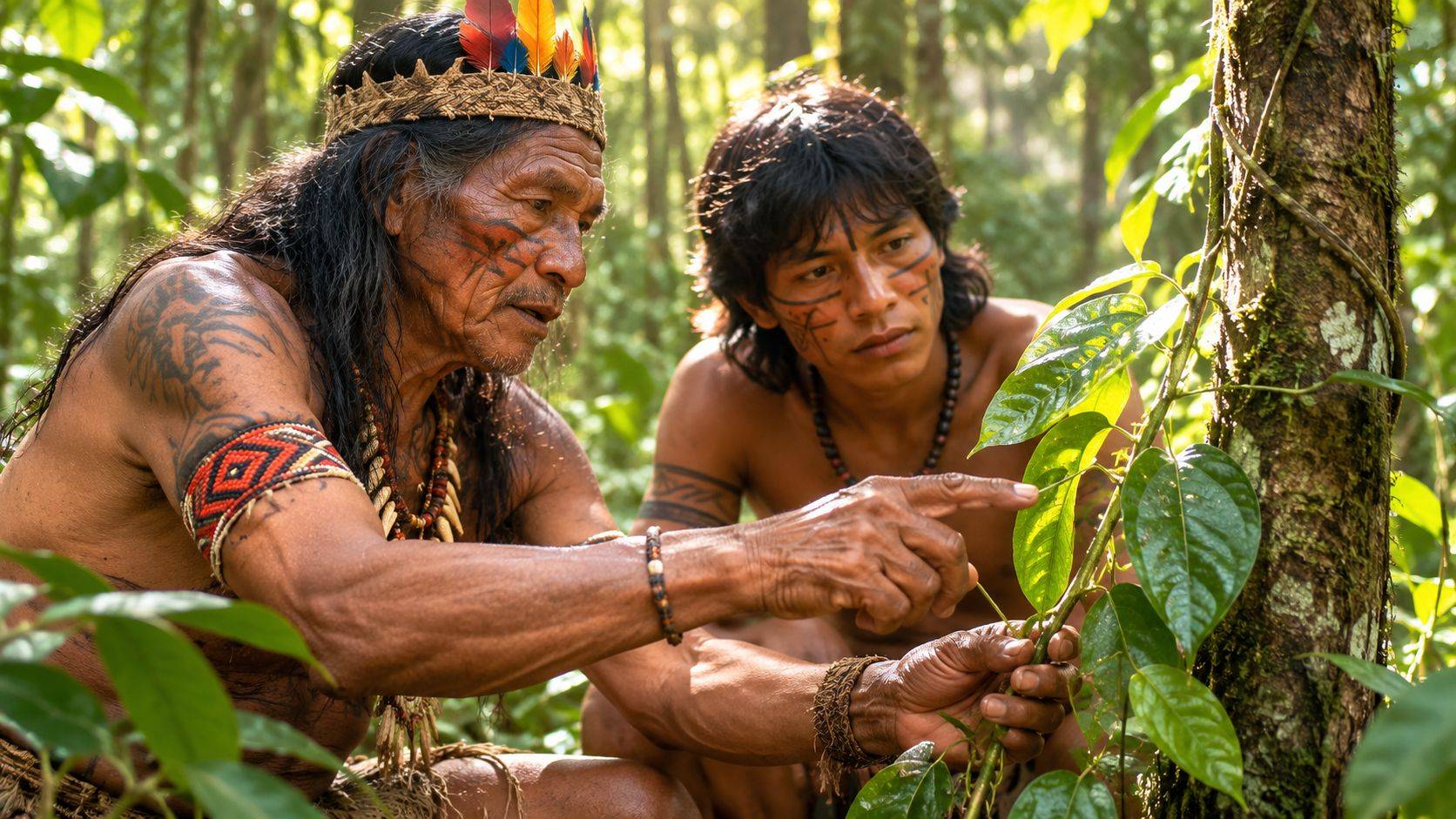
The practical takeaway is straightforward. Anyone exploring medicinal plants Amazon rainforest needs to think beyond individual species and ask how knowledge, habitat, and use fit together. A remedy is never only a leaf, bark, or root. It belongs to an ecological relationship maintained by communities who know when to harvest, how to prepare, and what not to take too much of.
“Practical rule: if a plant is discussed only as a product, and not as part of a living forest relationship, the understanding is already incomplete.”
For readers approaching this topic with curiosity, reverence helps, and so does precision. The Amazon’s plant knowledge matters because it is both cultural and ecological, and modern science is only beginning to map where those two dimensions overlap. For a useful starting point on indigenous plant traditions, A Guide To Ethnobotanicals And Ancient Plant Wisdom offers a clear introduction.
Indigenous Knowledge And The Roots Of Plant Medicine
Amazonian plant medicine didn’t begin in a laboratory, and it didn’t need one to become highly developed. Communities across the region developed detailed systems for identifying, combining, timing, and transmitting plant use through story, practice, ceremony, and apprenticeship. In many traditions, elders and healers hold the memory of which bark cools fevers, which vine belongs in ritual work, and which preparations require caution.
Knowledge Passed Through Use, Not Abstraction
What makes this knowledge remarkable is its depth of observation. A plant might be valued for one use in a household, another in healing, and another in ceremony, all without being separated into the neat categories that modern institutions prefer. The forest becomes a classroom, and repeated use becomes a form of testing.
The broader ecological context matters too. Because useful species account for such a large share of Amazonian trees, traditional medicine isn’t hovering on the edge of the forest. It sits inside everyday life and ecosystem management. That’s one reason the region’s botanical knowledge has endured, it works within a system of close attention, not detached extraction.
“The most reliable guide in the forest is often the person who learned the plants by living with them, not by reading about them.”
A common mistake is to treat indigenous knowledge as if it were only “traditional” while science is “real.” In practice, the two occupy different stages of understanding. Traditional knowledge tells researchers where to look, how plants are prepared, and what effects communities have long recognized. Science then asks narrower questions about chemistry, safety, dose, and mechanism.
The phrase medicinal plants Amazon rainforest can sound broad, even romantic. In reality, it points to a layered knowledge system built by people who know the forest as habitat, pharmacy, and sacred ground at once. That’s why respectful reading always begins with culture, not just chemistry.
Key Medicinal Species And Their Traditional Uses
Some Amazonian plants have become globally recognized because they sit at the intersection of tradition, ritual, and modern curiosity. The names change across regions, and market labels can be confusing, so clarity matters. The table below keeps the focus on what each plant is generally known for in traditional use, while leaving room for the differences that separate folk knowledge from clinical proof.
| Plant Name | Traditional Use | Key Active Compounds |
|---|---|---|
| Ayahuasca | Ceremonial brew for spiritual and healing work | Harmala alkaloids, DMT from admixture plants |
| Chacruna | Companion plant in ayahuasca brews | DMT |
| Sangre de Grado, Dragon’s Blood | Wound care and skin use in traditional contexts | Tannins, taspine |
| Cat’s Claw, Uña de Gato | Herbal support in Amazonian medicine | Alkaloids, glycosides |
| Coca | Chewed or infused in cultural and daily use | Alkaloids, including cocaine-related compounds |
| Toé | Ritual and highly cautious traditional use | Tropane alkaloids |
Plants People Ask About Most
Ayahuasca remains the most discussed Amazonian plant medicine, and the term usually refers to a brew made from Banisteriopsis caapi with an admixture plant such as chacruna. For readers seeking a more focused botanical background, Vine Of The Soul, A Guide To Banisteriopsis caapi is a useful companion reference.
Chacruna gets less attention, yet it matters because it contributes the visionary chemistry many people associate with the brew. Coca belongs to a different cultural lane, with a long history of chewing and tea use in Andean and Amazon-adjacent contexts. One concrete historical pathway from the region into global medicine is quinine, which is derived from cinchona bark and has long been tied to malaria treatment Amazonaid.
Sangre de Grado, also called Dragon’s Blood, is often discussed for its resin and skin applications. Readers looking at commercial formulas may also come across dragon blood serum for Swiss pharmacies, a reminder that Amazonian plant names can travel far from their original setting and into modern cosmetic language.
Cat’s Claw and Uña de Gato are commonly treated as the same plant family in marketplace language, but labels should still be checked carefully. Toé deserves special caution because traditional use does not mean casual use. Some plants are culturally important precisely because they are handled with strict knowledge, not broad experimentation.
What Modern Science Confirms
Modern research on Amazonian medicinal plants is real, but it still leans more toward discovery than proof. A Scopus analysis covering 2002 to 2022 found 1,850 publications, with 88.5% classified as articles, and most of the output came from Brazilian institutions. The field mapped heavily to Pharmacology, Toxicology, Pharmaceuticals, Medicine, and Biochemistry, which points to a clear pattern. Scientists are screening for activity, but the move from screening to validated therapeutics remains limited, especially when compared with the excitement often attached to these plants.
Extraction Method Changes What The Plant Seems To Do
A major technical point is easy to miss. Extract type drives observed pharmacology. Studies using hydrodistilled essential oils and oleoresins often isolate terpenes and phenolics, and those fractions have shown antimicrobial, anti-Plasmodium, anti-inflammatory, and antineoplastic activity in assay systems such as MTT viability tests and erythrocyte-based parasite screens PMC review. The plant name alone never tells the full story.
A leaf tea, a bark decoction, an essential oil, and a resin extract can point to very different chemistry. That is why a careful reader should always ask three questions. Which plant part was used? Which extraction method was used? Which assay or outcome was measured?
“Helpful filter: if a claim about an Amazonian plant does not name the preparation, it is too vague to evaluate.”
The literature also remains fragmented across species, preparations, and routes of administration. That fragmentation is why traditional knowledge should be treated as a research map, not as medical proof. It also explains why the common habit of folding “used traditionally,” “active in a lab,” and “clinically proven” into one claim is misleading.
A grounded view is simpler. The Amazon offers many candidates for further study, especially for anti-inflammatory, anti-infective, and anti-cancer research, but the evidence base still needs careful separation between culture, chemistry, and clinical validation. The same caution applies to ethnobotanical work that asks how forest stewardship and cultivation shape what can be studied responsibly, as explored in A Garden In Motion: Indigenous Amazonian Permaculture.
Conservation Pressures And Ethical Sourcing Challenges
The biggest blind spot in many conversations about Amazonian plant medicine is supply. A plant can be well known in the literature and still become hard to source ethically if forests degrade, habitats fragment, or harvest pressure rises. A classic review noted that over three decades, forest degradation in the Brazilian Amazon reduced the availability of some widely used medicinal species CIFOR-ICRAF PDF. That matters because scarcity changes everything, from local access to commercial pricing to quality control.
Harvesting Has Consequences
The same practical tension appears in research. The field is still heavily centered in pharmacology and neglected diseases, yet it pays less attention to conservation economics and cultivation resilience. The gap is plain. People keep asking whether a plant works, while fewer ask whether it can be sourced without harming the ecosystem or the communities that steward it.
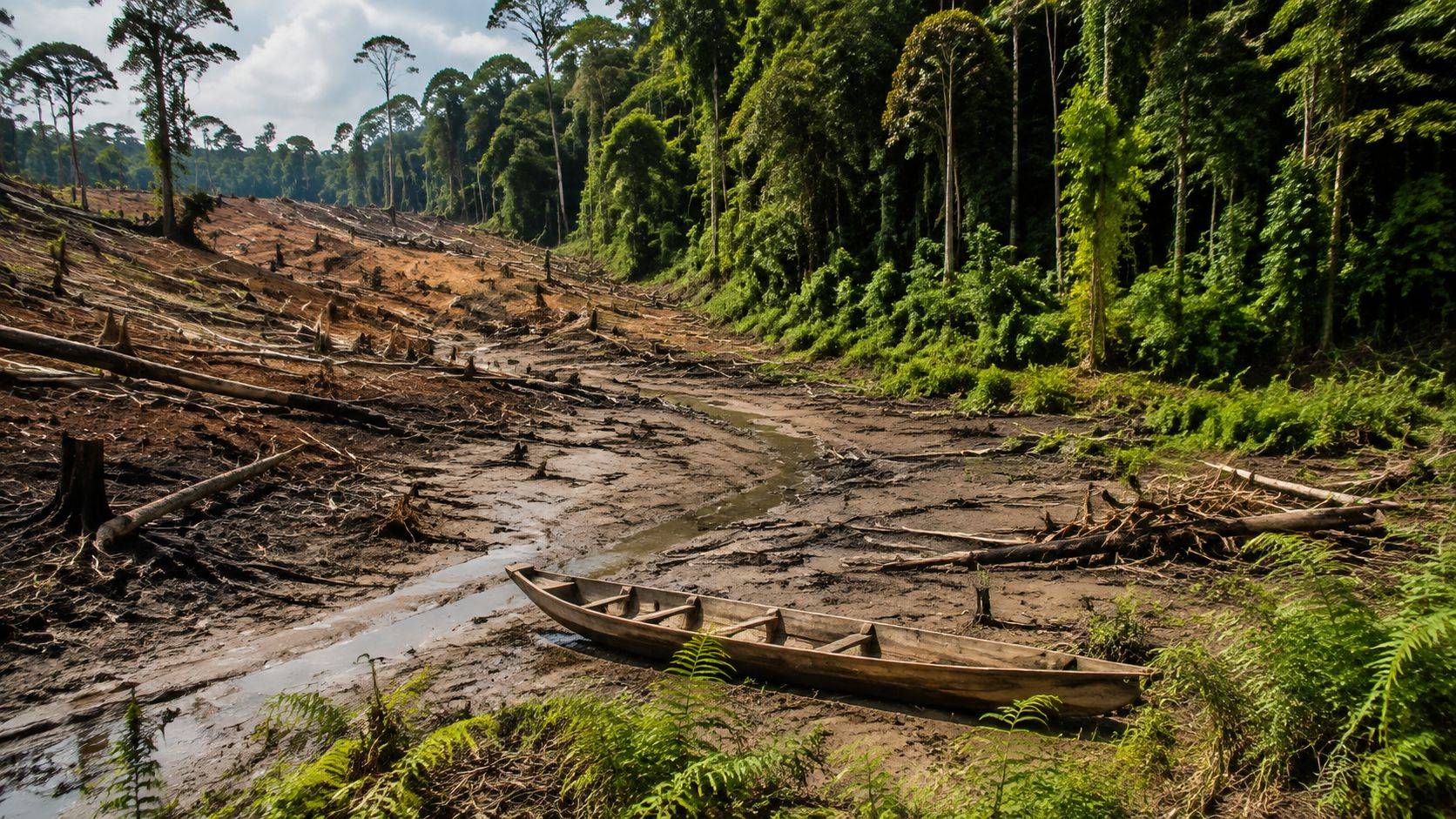
Ethical sourcing starts with restraint. It favors cultivated material when cultivation is appropriate, traceable supply chains when trade is involved, and community partnerships that do not strip local people of control over their own knowledge. The question is not only whether a plant can be bought. It is whether buying it supports the forest that made it possible.
Cultivation resilience gives a useful lens here. In traditional systems, gardens and managed plots often reduce pressure on wild stands, because the plant is tended in place instead of being taken from a shrinking habitat. A Garden In Motion, Indigenous Amazonian Permaculture offers a relevant example of how stewardship can work in practice.
For seekers, the ethical test is simple. If a source cannot explain origin, harvest practice, or stewardship, the safest assumption is that the plant’s journey is opaque. Amazonian medicine deserves better than opaque.
Guidance For Ayahuasca Ceremony Seekers
Anyone drawn to Ayahuasca should start with safety, not intensity. The ceremony is only one part of the experience, and the preparation and integration phases matter just as much as the night itself. That means looking for clear screening practices, sober facilitators, emergency planning, and honest explanations about who leads the work and how support is handled before and after.
What To Look For Before Committing
A responsible retreat or ceremonial setting should be able to explain several basics in plain language. That includes dietary preparation, medication screening, consent boundaries, and what happens if a participant becomes physically or emotionally overwhelmed. If the answers feel vague, the setting probably isn’t ready for vulnerable participants.
- Screening First: Medical and psychiatric screening should happen before participation, especially when medications or heart conditions are involved.
- Preparation Matters: Dietary restrictions and intention setting aren’t optional rituals, they help reduce avoidable complications and keep attention steady.
- Integration Is Part Of The Work: The days after ceremony often shape what the experience becomes in daily life.
For readers comparing options, compare ayahuasca retreat options can serve as a practical reference point for thinking through what organized retreat information should look like.
Ayahuasca.com can also be part of that research process, since it offers educational material and retreat listings centered on this tradition. Still, any listing or article should be checked against the same basic questions about safety, partnership, and preparation.
“A serious ceremonial setting treats participant welfare as a responsibility, not as an afterthought.”
The biggest misconception is that the ceremony itself does all the work. It doesn’t. Preparation determines readiness, the ceremony produces the experience, and integration determines whether anything useful carries forward into ordinary life.
Resources For Continued Learning And Exploration
A grounded path forward starts with a simple habit, read across categories. Ethnobotanical histories, conservation writing, pharmacology summaries, and ceremonial guidance each answer different questions. When they’re read together, the Amazon stops looking like a fantasy marketplace and starts looking like a complex living system with real human stakes.
For deeper study, it helps to focus on three kinds of material. First, work that explains indigenous plant knowledge in cultural context. Second, research that distinguishes extract type, assay system, and clinical relevance. Third, conservation-oriented writing that addresses supply, cultivation, and community ownership.
Ayahuasca.com bridges ancient sacred traditions with modern scientific research, and that makes it a useful home base for readers who want educational material alongside carefully vetted retreat information. For anyone still sorting curiosity from commitment, that combination can keep exploration grounded.
The cleanest next step is to choose one track and follow it sincerely. Academic readers can dig into ethnobotany and pharmacology. Spiritual seekers can prioritize preparation, integration, and ethical setting. Practical readers can focus on sourcing, conservation, and legal context. Each route is valid, as long as it respects the forest and the people who have known it longest.
Disclaimer: The information provided on Ayahuasca.com is for educational purposes only and is not intended as medical advice, diagnosis, or treatment. Ayahuasca is a powerful traditional Amazonian medicine and may not be suitable for everyone. Always consult with a qualified healthcare professional before making decisions related to health, mental well-being, medications, or the use of Ayahuasca.