
When people talk about microdose mushrooms, they are not talking about getting high. It’s the practice of taking a tiny, almost unnoticeable amount of psilocybin, just enough to subtly enhance your daily life, not escape it.
This is all about fine-tuning your perception. Think of it as a tool for sharpening focus, sparking creativity, or finding a bit more emotional balance, all without the classic psychedelic trip. For many, it’s a quiet, steady path to personal growth.
What Is Psilocybin Microdosing
At its heart, microdosing is about weaving a very small dose of a psychedelic into your regular weekly routine. It’s worlds away from a full-blown psychedelic journey. Instead of a life-changing expedition, it operates quietly in the background while you go about your day.
The key here is that the dose is sub-perceptual. That’s a fancy way of saying it’s too small to cause hallucinations, warp your senses, or make you feel like you’re in a different state of mind. You should still feel completely like yourself.
Imagine adjusting the contrast on your TV. The picture is the same, but the colors might seem a little richer and the details a bit clearer. That’s the idea behind microdosing mushrooms. You’re not trying to check out of reality; you’re trying to show up for it with more clarity and engagement.
A Different Path to Growth
If you’ve ever experienced deep ceremonial work like an Ayahuasca retreat, you’ll find microdosing to be a very different animal. An Ayahuasca ceremony is like a spiritual deep-clean, an intense, powerful overhaul of your psyche that happens in a matter of hours.
Microdosing, on the other hand, is more like daily spiritual hygiene. It’s a gentle, consistent nudge that encourages you to be a little more present and aware as you move through your life.
This practice is getting more attention because it offers a way to bring the insights from those big, profound journeys into your everyday existence. It’s a tool for integrating those lessons or simply cultivating a more mindful way of being, day in and day out. People who microdose are often hoping to see a few key shifts:
- Enhanced Creativity: Many report that it helps them think more flexibly and connect ideas in new ways, whether they’re tackling a work project or a personal hobby.
- Improved Mood: A common theme is a subtle but noticeable lift in spirits, a bit more resilience when facing stress, and a generally more positive outlook.
- Sharpened Focus: Users often describe feeling less scattered and more able to sink into tasks, finding a state of flow more easily.
“The goal isn’t to feel the mushrooms working. The goal is to look back at your day and notice that something was different. Maybe you were more patient with your kids, came up with a great idea at work, or just felt more connected. That subtlety is the whole point.”
Ultimately, to microdose mushrooms is to start a slow, intentional journey of self-discovery. It’s about building a better, more conscious relationship with your own mind, one tiny step at a time.
What Science Says About Microdosing (And Why People Do It)
So, why are so many people turning to microdosing mushrooms? To really get it, we need to take a quick look at what’s happening inside our heads. The secret sauce is psilocybin, the key compound in these fungi, and how it gets along with our brain’s serotonin system. You can think of serotonin as the brain’s master conductor, directing everything from your mood and focus to how you sleep and eat.
It turns out psilocybin looks a lot like serotonin on a molecular level. Because of this family resemblance, it can cozy up to specific serotonin receptors, especially the 5-HT2A receptor. When this happens, even with a dose so small you don’t consciously feel it, it can gently nudge your brain activity. This little shift is enough to encourage new ways of thinking and seeing the world, and it’s where all the reported benefits come from. For a deeper overview of psilocybin research, see Johns Hopkins Center for Psychedelic and Consciousness Research.
Turning Down the Volume on Your Inner Critic
One of the most profound things psilocybin seems to do is quiet down the Default Mode Network (DMN). Picture the DMN as your brain’s autopilot, it’s the network that lights up when you’re daydreaming, thinking about yourself, or worrying about the future. It’s basically the home of your ego and that relentless inner narrator.
Sometimes, this inner voice gets stuck on a loop, fueling things like anxiety, endless worrying, or a creative dry spell. Microdosing psilocybin appears to gently turn down the volume on the DMN, loosening its grip on your thoughts.
“By quieting this internal chatter, microdosing opens up mental real estate. It allows parts of your brain that don’t usually talk to each other to start making new connections, which is a perfect recipe for fresh ideas and a new outlook.”
This is the brain science behind the stories we hear. It’s how an entrepreneur might finally crack a problem that’s been bugging them for weeks. It’s also why someone who struggles with social anxiety might suddenly find conversations easier, free from the usual hamster wheel of self-conscious thoughts. The science gives us a framework for understanding these real-life experiences.
The Range of Reported Benefits
This subtle shift in brain activity can ripple out and touch many different parts of life. Of course, everyone’s experience is unique, but a few key themes keep popping up in personal stories and early scientific studies.
People are often exploring microdosing to see if it can help with a few specific things:
- A Boost in Creativity and Problem-Solving: By helping you think more flexibly, microdosing can be a tool for breaking out of old mental ruts and tackling challenges from a new angle.
- A Brighter Mood and Better Emotional Balance: Many people report a gentle but noticeable lift in their day-to-day mood. They feel a bit more optimistic, resilient, and better equipped to handle life’s little frustrations.
- Sharper Focus and Productivity: For some, a microdosing routine helps them tune out distractions and slip into a “flow state” more easily, making work feel more engaging and less like a grind.
- Deeper Social Connection and Empathy: When that self-focused DMN chatter is quieter, it can be a lot easier to be present with other people. This often leads to a greater sense of connection and empathy.
This isn’t just word-of-mouth, either. The money is following the interest. The global psychedelic mushrooms market was recently valued at US$1.5 billion and is expected to soar to US$3.3 billion, largely thanks to the buzz around microdosing. This growth is being driven by promising research into psilocybin for all sorts of mental health applications. Readers who want a broader public-health perspective can also review NIDA’s psilocybin drug facts.
For anyone who’s explored plant medicines, microdosing mushrooms can feel like a much gentler path than, say, a full-on Ayahuasca ceremony, yet it can point toward similar avenues of self-discovery. In fact, the scientific investigation of Ayahuasca shows some fascinating parallels in how these different compounds work with the brain to help us heal and grow.
Finding Your Protocol and Personal Dose
Let’s get one thing straight: there’s no magic formula for microdosing. Your body, your brain, and your life are unique, so figuring out how to microdose mushrooms is a deeply personal exploration. The goal is to land on two key things, a structured schedule, called a protocol, and your personal sub-perceptual dose, an amount so subtle it works in the background without disrupting your day.
Think of it like tuning a guitar. You don’t just crank the tuning pegs wildly. You make a tiny adjustment, listen, and then tweak it again until it’s just right. The same “start low and go slow” approach is the cornerstone of a safe and effective microdosing practice. The process is all about patience and paying attention.
Common Microdosing Protocols
Protocols are really just calendars for when you dose. They’re designed with built-in “on” and “off” days for a crucial reason: to prevent you from building up a tolerance. These breaks also give you a chance to see how you feel on your own, helping you notice the real, lasting changes.
While you could invent your own schedule, most people start with one of the established protocols because they’re well-balanced and have a track record.
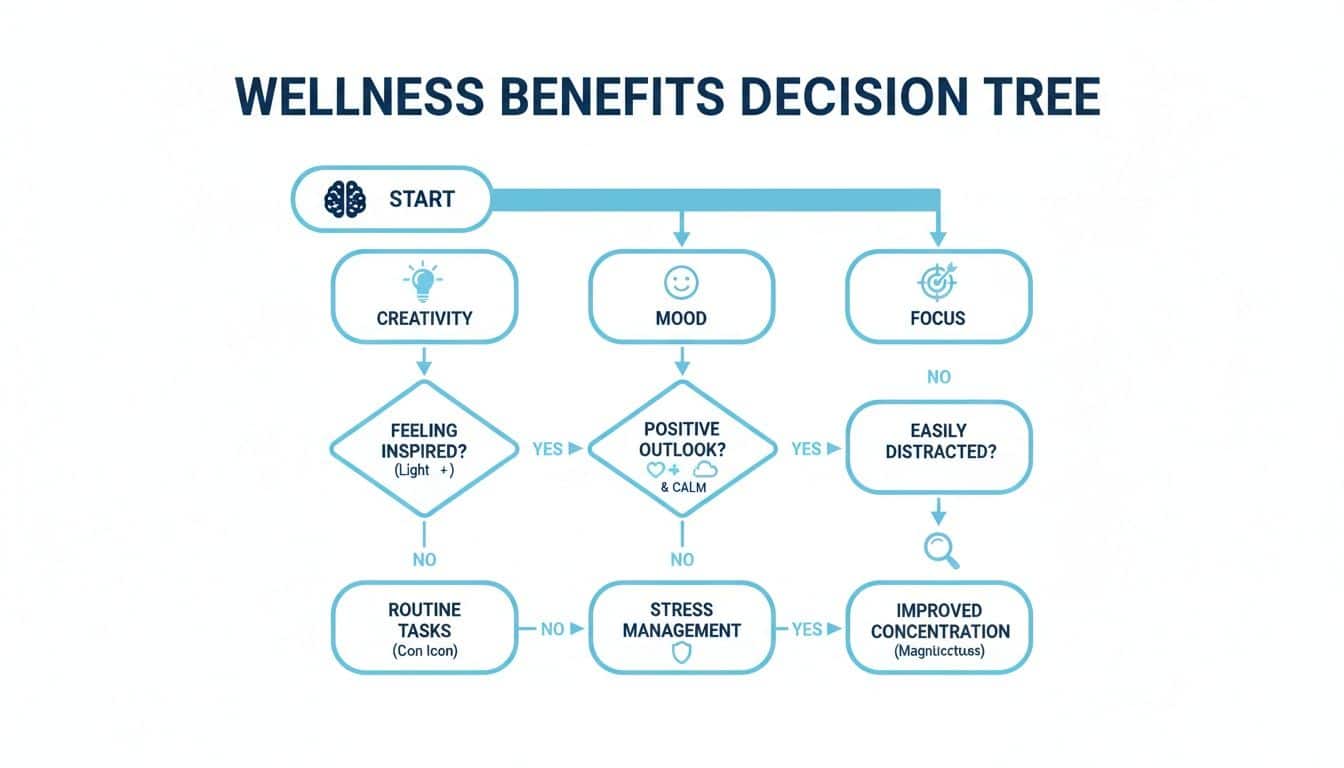
As this flowchart shows, people often come to microdosing with a specific goal in mind, whether it’s boosting creativity, stabilizing their mood, or sharpening their focus. Your intention can absolutely help steer the experience toward the outcomes you’re looking for.
Comparing Popular Microdosing Protocols
To help you get started, here’s a quick breakdown of the most common schedules. Think about your lifestyle and what you’re hoping to achieve to see which one might be the best fit for you.
| Protocol Name | Dosing Schedule | Best For | Key Feature |
|---|---|---|---|
| Fadiman Protocol | One day on, two days off | Beginners, general wellness | The “gold standard” with plenty of rest days to notice subtle effects and after-effects without building tolerance. |
| Stamets Stack | Four or five days on, two or three days off | Neurogenesis, cognitive enhancement | Often includes Lion’s Mane and Niacin for a synergistic effect aimed at brain health. More intensive schedule. |
| Intuitive Protocol | Dosing as needed | Experienced users | Requires deep self-awareness to dose only on days when you feel a specific need for focus or emotional support. |
Ultimately, choosing a protocol isn’t about finding the “right” one forever, it’s about finding what’s right for you right now. The structure is a guide, not a set of rigid rules. Don’t be afraid to adjust based on how you feel. If you want to compare protocol ideas from a well-known source, James Fadiman’s microdosing resources are often referenced by beginners.
Calibrating Your Sweet Spot
Now, let’s talk about the most critical piece of the puzzle: your dose. A true microdose is tiny, usually somewhere between 1/10th and 1/20th of a typical recreational dose. For most dried psilocybin mushrooms, this means you’ll be working in a range of 0.05 grams to 0.25 grams.
Your mission is to find your unique “sweet spot,” also known as your sub-perceptual threshold. This is the dose where you feel nothing acutely—no drowsiness, no jitters, no trippy visuals—but you start to notice positive shifts in your days and weeks.
Here’s a practical way to find it:
- Start Absurdly Low: On a day with no major commitments, take your first dose at the absolute bottom of the scale, like 0.05 grams (50 milligrams). Seriously, start small.
- Observe and Write It Down: Pay close attention to everything—your mood, how you interact with people, your energy, your focus. A journal is your best friend here; it helps you track the subtle changes you might otherwise completely miss.
- Adjust Incrementally: If you felt absolutely nothing, wait until your next scheduled “on” day and nudge the dose up just a tiny bit, maybe to 0.075 or 0.1 grams.
- Find the Edge: Keep this slow process up. If you ever feel a little “off”—distracted, anxious, or just plain weird—you’ve gone slightly too far. That’s a sign to dial it back to the previous dose that felt good. That right there is your sweet spot.
This entire process is about mindful self-experimentation. Just as someone on a profound Ayahuasca journey is taught to listen to their body and the medicine, the same principle applies here, just on a much quieter scale. Your body will give you all the feedback you need. Your only job is to learn how to listen.
Navigating Safety and Legal Considerations
So, you’re thinking about microdosing. It’s an exciting prospect, but stepping into this world requires more than just a good protocol. It’s a journey that demands a serious commitment to your own safety and a sober understanding of the law.
Even though the doses are tiny, the responsibility isn’t. You have to be brutally honest with yourself about your health and diligent about the rules where you live. Being smart and respecting the power of these substances, even at a sub-perceptual level, is paramount. A thoughtful self-assessment is always the first step.
Understanding Potential Risks and Contraindications
Even a small amount of psilocybin is going to interact with your unique body and brain chemistry. It can also interact with other things you might be taking. This is why it’s so critical to know about any potential red flags before you begin.
The biggest area of concern is usually psychiatric medications. If you’re taking SSRIs (Selective Serotonin Reuptake Inhibitors) or other antidepressants, you need to be extremely cautious. Psilocybin and these medications both work on the serotonin system. Mixing them can lead to some really unpredictable effects, or it could even make your medication less effective.
Another major contraindication is a personal or family history of psychotic disorders, like schizophrenia or bipolar disorder. Psychedelics, even in microdoses, are generally not recommended in these cases. The subtle shifts they create could potentially trigger a serious episode or worsen an existing condition.
“Responsible practice is grounded in self-awareness. It involves understanding your personal health landscape and making informed decisions that prioritize your long-term well-being above all else.”
This is a path you walk with intention, not one you rush into. Taking the time to consider these factors is a sign of respect—both for the mushrooms and for yourself.
The Importance of Set and Setting
You’ve probably heard about “set” (your mindset) and “setting” (your environment) in the context of full-blown psychedelic trips. Well, those concepts are just as crucial for microdosing. Think of your internal state and your physical surroundings as the container that holds the entire experience.
Even if you don’t “feel” anything dramatic, your intentions and environment absolutely shape the outcome.
- Your Mindset (Set): Why are you doing this? Are you approaching it with curiosity and an intention for growth, or are you just looking for a magic bullet? A patient, open-minded approach will serve you far better than a desperate search for a quick fix.
- Your Environment (Setting): Is your day-to-day life relatively stable and supportive? A calm, predictable backdrop makes it much easier to notice the subtle shifts and benefits without getting thrown off by external chaos.
Paying attention to these principles creates the best possible conditions for you to actually notice and integrate whatever comes up.
The Complex Legal Landscape
Let’s be clear: the legal status of psilocybin is a messy, evolving patchwork. In the United States, it remains a Schedule I controlled substance at the federal level, which means it’s illegal. Period.
However, the ground is shifting. State and local laws are changing fast, with some places decriminalizing psilocybin and others even moving toward legal, therapeutic access. This means what’s okay in one city could get you into serious trouble just a few miles down the road. It is your personal responsibility to know the laws where you are. Ignorance isn’t a valid defense.
As the laws change, psilocybin mushrooms are starting to reshape markets. In the US, where millions of adults deal with conditions like PTSD, microdosing products are gaining a lot of traction. We’re seeing similar trends in Europe and Latin America, with places like Brazil and Jamaica becoming hubs for psychedelic retreats, much like the traditional Ayahuasca centers. Despite the legal hurdles, strong public support for research is slowly pushing microdosing from the fringe into the mainstream.
Some spiritual groups have successfully argued for exemptions based on religious freedom. You can get a sense of this ongoing conversation by learning about the process for seeking a religious exemption from the DEA, which offers a fascinating look into the intersection of sacred plants and cognitive liberty.
Microdosing Mushrooms vs. An Ayahuasca Ceremony
If you’ve spent any time in the world of plant medicine, you might wonder how microdosing mushrooms stacks up against something as profound as an Ayahuasca ceremony. How can a dose you barely feel compare to a full-blown spiritual journey? It’s best not to think of them as competitors. Instead, see them as two completely different tools that can work on the same path toward healing and self-discovery.
Think of an Ayahuasca ceremony as a deep, intensive spiritual surgery. It’s an all-encompassing experience designed to help you confront deep-rooted patterns, uncover profound insights, and spark major life changes, all within a single, carefully held space.
Microdosing, on the other hand, is more like daily spiritual hygiene. It’s a gentle, consistent practice that subtly supports you in your day-to-day life. The goal is to enhance your presence, creativity, and emotional regulation while you go about your normal routine, rather than blast you into another reality.
Two Paths, One Destination
While their approaches are worlds apart, both practices often lead to the same place: greater self-awareness and a better quality of life. The real difference is in the intensity, duration, and intention behind them. One is a peak experience; the other is a steady, ongoing practice.
An Ayahuasca journey is built for breakthroughs. Microdosing is about the slow, incremental work of building healthier habits of mind.
- Intensity: A ceremony can be overwhelming, demanding complete surrender. A microdose is so subtle it shouldn’t be consciously felt.
- Setting: Ayahuasca is almost always taken in a ceremonial context with skilled facilitators. Microdosing is done as part of your everyday life—at the office, at home, or while running errands.
- Guidance: A shaman or facilitator guides you through a ceremony. Microdosing is a self-directed practice that depends entirely on your own intention and awareness.
Preparation and Integration: A Perfect Pairing
This is where the relationship between these two practices gets really interesting. Instead of an either/or choice, many people find that microdosing is a fantastic companion to the deeper work of an Ayahuasca ceremony, serving as a powerful tool for both preparation and integration.
For anyone feeling called to a deep psychedelic journey, microdosing can act as a gentle handshake. It helps you build a relationship with a psychedelic in a low-stakes way, which helps you practice the kind of mindfulness and self-reflection you’ll need for a more intense experience. Building that foundation can make all the difference. To explore this further, it’s a good idea to research how to decide if Ayahuasca is the right path for you.
“The lessons from a deep ceremony can feel vast and abstract. Microdosing acts as a bridge, helping you carry those insights from the ceremonial space back into the fabric of your daily life.”
After a ceremony, the real work begins: integration. This is the process of weaving the profound lessons from your journey into your daily habits, relationships, and worldview. Microdosing can be incredibly helpful here, acting as a subtle reminder of the clarity and connection you felt, keeping you aligned with your new perspective as you return to your regular life.
The practice of microdosing is filling a critical gap in modern wellness. With mental health disorders affecting 970 million people globally, according to WHO data, and conventional treatments failing for many, people are searching for gentle yet effective alternatives. For those exploring plant medicine, microdosing offers a way to build resilience before a deep dive or to integrate the lessons afterward, making the entire process more grounded and sustainable.
Your Microdosing Questions, Answered
As you start exploring how to microdose mushrooms, questions are bound to pop up. It’s completely normal to wonder about the specifics when you’re integrating something new into your routine. This section is here to give you clear, no-nonsense answers to some of the most common questions people ask.
Think of this as your quick-reference guide. We’ll revisit a few key ideas and get practical on everything from scheduling your cycles to handling daily life. The goal is to make sure you feel confident and well-informed as you move forward.
How Long Should My Microdosing Cycle Be?
This is easily one of the most frequent questions. A microdosing cycle is a structured period of use followed by a deliberate rest period. This on-and-off approach is key to preventing tolerance and actually integrating what you’ve learned.
Most experienced users find a sweet spot with cycles lasting between four to eight weeks. After that, they take a “reset” break for at least two to four weeks. This is a critical time for reflection and not just about letting your body’s tolerance go down. It gives you a chance to see how you feel on your own and notice which positive changes have stuck around.
Ultimately, your own body is your best guide. Some people thrive on shorter cycles, while others get more out of a longer stretch before taking a break. There’s no universal right answer, just what works for you.
What if I Don’t Feel Anything?
This is a common worry, but it usually stems from a misunderstanding of what a microdose is supposed to do. The whole point is for it to be sub-perceptual. This means the effects are so subtle that you notice them by looking back on your day or week, not by feeling a “kick” in the moment like you would with a cup of coffee.
If you’ve been at it for a few weeks and genuinely see no change in your mood, creativity, or focus, a couple of things might be going on. First, your dose could simply be too low. You might consider a tiny, incremental increase on your next dose day—and do it cautiously.
Second, take a look at the bigger picture. Microdosing often works best when it’s paired with intentional practices.
- Are you journaling to track the small shifts in your thoughts and reactions?
- Are you practicing mindfulness or meditation to create the quiet space needed for observation?
- Did you set a clear intention for what you hoped to get out of this experience?
Remember, microdosing is a supportive tool, not a magic bullet. Its power is often unlocked by the conscious effort you put into your own self-awareness.
Can I Mix Microdosing With My Other Wellness Routines?
Absolutely. In fact, I highly recommend it. Combining microdosing with other wellness practices can create a powerful synergy where everything works a little better. Think of the microdose as a gentle amplifier for the self-care work you’re already doing.
For example, when paired with meditation, it can sometimes help you drop into a mindful state more easily. In a therapeutic context, some people find it helps them connect with and process their emotions with more clarity and honesty. Journaling while microdosing can lead to profound insights about your own thought patterns that were previously just out of reach.
“Microdosing doesn’t replace the work; it supports it. The subtle mental flexibility it can foster may make your existing wellness routines feel more accessible, effective, and rewarding.”
Things like regular exercise, eating well, and spending time in nature also harmonize beautifully with a microdosing protocol. The key is to be intentional, using the subtle boost from the mushrooms to enhance the positive habits you’re already building.
Is It Safe to Work or Drive?
This question goes right to the heart of responsible use. A true microdose is sub-perceptual, which means it shouldn’t get in the way of your cognitive function, motor skills, or judgment. In fact, many people microdose specifically to improve their focus and creativity at work.
That said, safety always comes first. When you are first figuring out your ideal dose, it’s essential to do it on a day with zero major responsibilities. Pick a weekend or a day off so you can observe the effects without any pressure.
Once you’ve locked in a dose that causes no noticeable changes in your perception—no drowsiness, no anxiety, no visual weirdness—then engaging in your daily tasks is generally considered safe. But if you ever feel even slightly impaired, distracted, or just “off,” you should not drive or operate heavy machinery. That’s a non-negotiable rule. A successful microdosing practice is built on a foundation of safety and honest self-awareness.
Disclaimer: The information provided on Ayahuasca.com is for educational purposes only and is not intended as medical advice, diagnosis, or treatment. Ayahuasca is a powerful traditional Amazonian medicine and may not be suitable for everyone. Always consult with a qualified healthcare professional before making decisions related to health, mental well-being, medications, or the use of Ayahuasca.