
Costa Rica’s stunning natural beauty, thriving wellness culture, and community of experienced facilitators have made it a world-renowned destination for plant medicine work. For anyone feeling called to deep psychological and spiritual exploration, ayahuasca retreats in Costa Rica offer a safe, structured, and supportive container for this powerful Amazonian tradition.
This guide is built to be a clear, no-nonsense roadmap for your entire journey.
Why Choose Costa Rica for Your Ayahuasca Journey
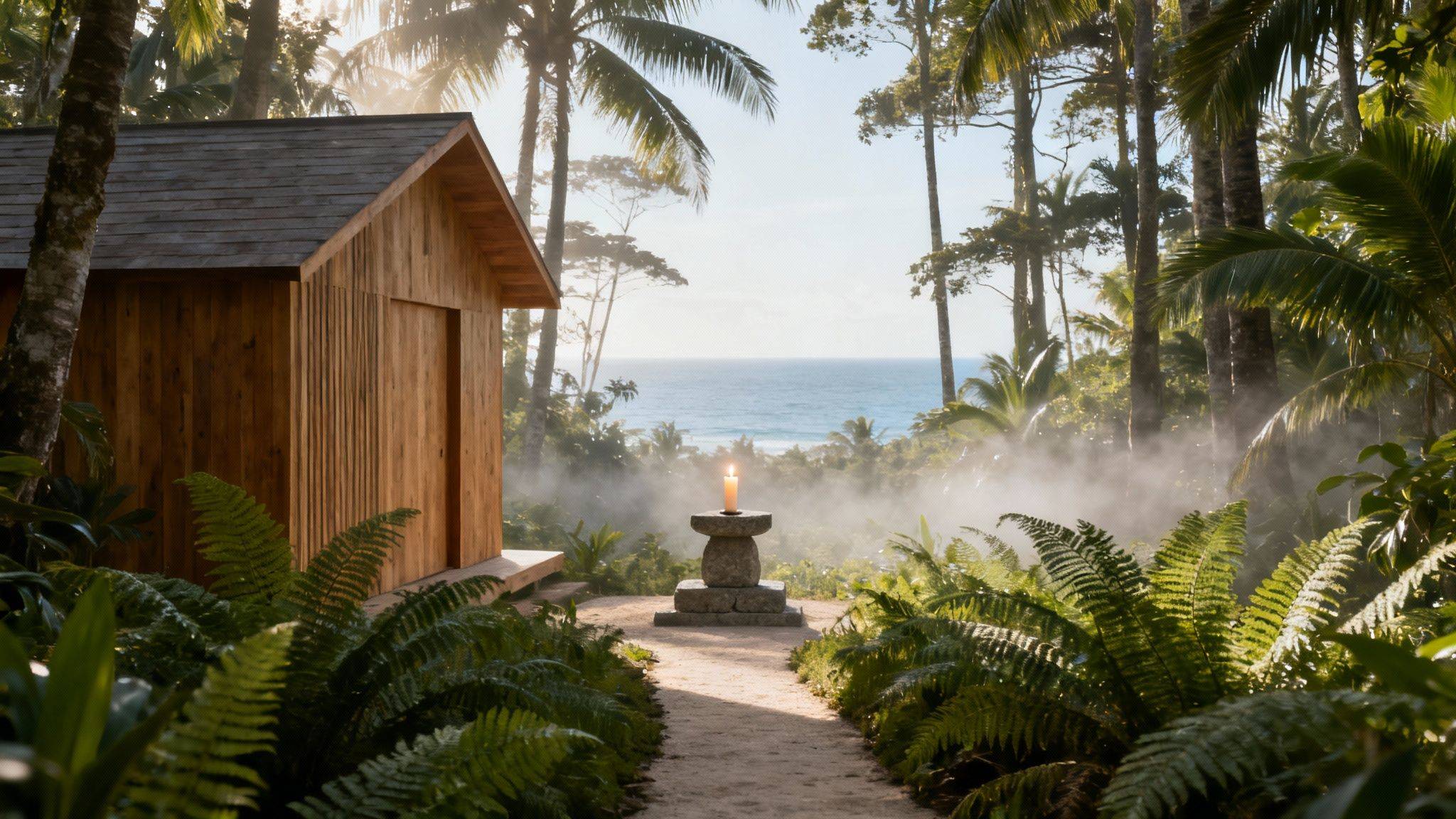
Picture a place where dense, vibrant rainforests spill out onto untouched coastlines. It’s a country whose national motto is “Pura Vida,” the pure life. This is the setting where more and more people are choosing to meet ayahuasca, a sacred plant medicine from the Amazon.
Costa Rica’s unique combination of profound natural serenity and a sophisticated wellness industry creates an almost perfect environment for this kind of deep, internal work.
This isn’t just some passing wellness trend. The interest in ayahuasca comes from its long-standing history of helping people find profound personal insights and release deep-seated emotional burdens. People from every background imaginable are drawn to it—some seeking healing from trauma, others looking for clarity on their path, or simply wanting a stronger connection to themselves and the world.
A Global Hub for Healing and Self-Discovery
Costa Rica has quietly become a major global hub for ayahuasca work. With an estimated 60 ayahuasca centers across the country, it’s now the second most popular destination for psychedelic retreats on the planet, just behind Peru. The financial side is significant, too; some of the largest centers reportedly bring in over $2 million per month. You can dive deeper into these figures in the ayahuasca tourism report from ICEERS.org.
All this growth gives you plenty of options, but it also means you have to be extra diligent. The country’s welcoming attitude toward alternative wellness has paved the way for some truly high-quality, safety-first centers to flourish.
“An ayahuasca retreat isn’t just a single ceremony. It’s a whole process—starting with preparation before you even leave home, continuing through the journey itself, and followed by the all-important post-retreat integration. Choosing the right center is the bedrock of a safe and meaningful experience.”
To give you a quick overview, here are some of the most critical factors to keep in mind as you begin your research.
Key Considerations for Ayahuasca in Costa Rica
| Factor | Key Details |
|---|---|
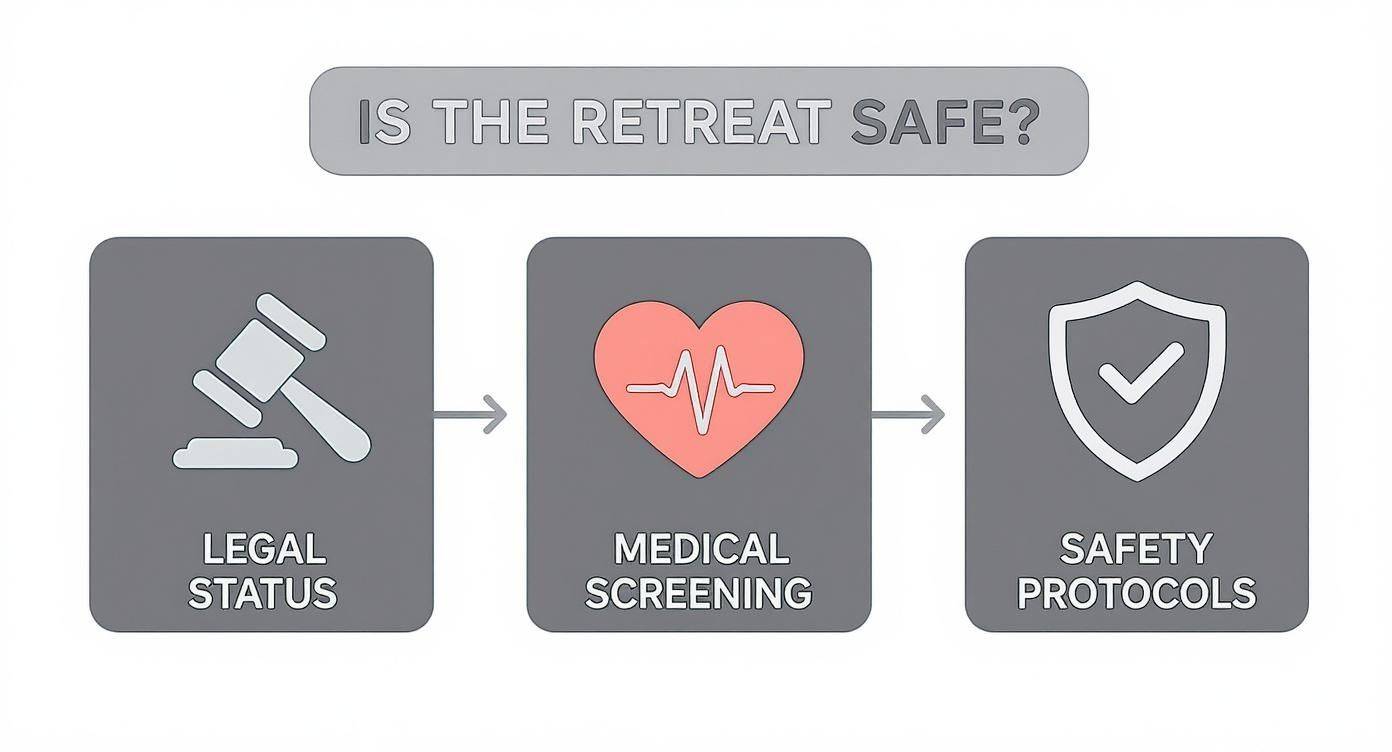
| Legal Status | Ayahuasca exists in a legal gray area. It’s not explicitly illegal but also not regulated. This means vetting centers is crucial. |
| Facilitator Lineage | Centers may follow Indigenous traditions (e.g., Shipibo) or Mestizo (mixed-heritage) lineages, each with different ceremonial styles. |
| Medical Screening | A reputable center will have a mandatory, in-depth medical and psychological screening process to ensure guest safety. |
| Integration Support | What happens after the ceremony is just as important. Look for centers that offer structured integration programs. |
| Safety Protocols | Ask about facilitator-to-participant ratios, medical staff on-site, and emergency procedures. |
This table is just a starting point, but it highlights the key areas where you’ll need to focus your attention.
What This Guide Will Cover
Think of this guide as your trusted companion for making a responsible and well-informed choice. We’re going to walk through every critical piece of planning your experience, step by step.
- Understanding the Ceremony: We’ll pull back the curtain on what actually happens in a ceremony, from the role of the shaman to the different styles you might encounter.
- Safety and Legality: You’ll get a clear picture of the legal situation, learn how to spot red flags, and understand what a proper medical screening looks like.
- Choosing a Vetted Retreat: We’ll give you the exact questions you need to ask about facilitators, safety protocols, and how they support you after the retreat.
- Preparation and Integration: Learn the best ways to prepare your mind and body beforehand, and how to bring the insights from your journey back into your everyday life.
Consider this your first step toward a safe, respectful, and potentially life-changing journey with ayahuasca retreats in Costa Rica.
What Really Happens in an Ayahuasca Ceremony?
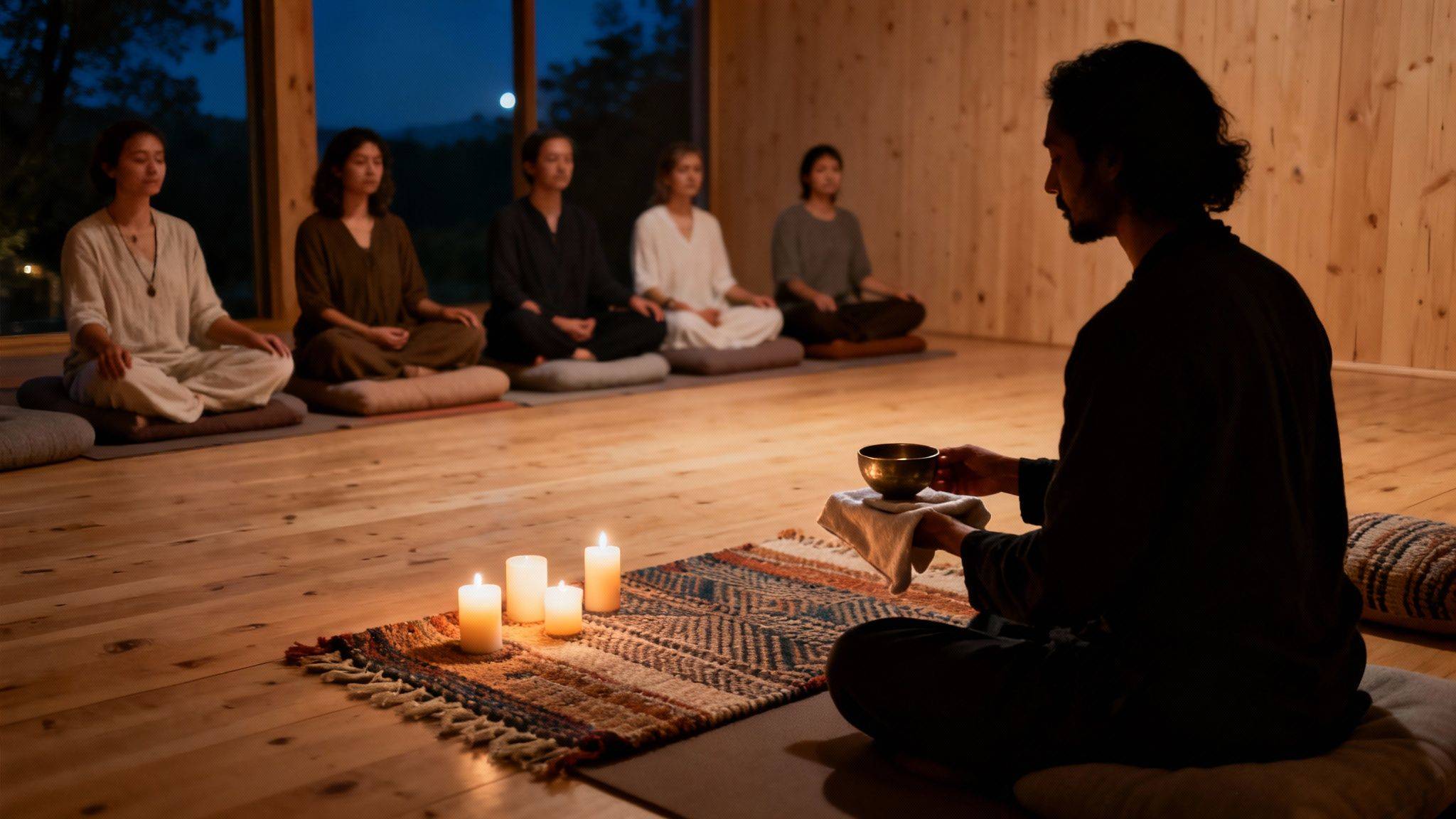
If you’re new to this world, the idea of an ayahuasca ceremony can feel pretty intimidating. But knowing what to expect can help shift that nervousness into a feeling of respectful curiosity. The ceremony is the absolute core of the retreat experience—it’s a sacred container built for deep, personal exploration. This isn’t a party or a casual trip; it’s a structured and often demanding spiritual practice.
It helps to think of the facilitator—who you might hear called a shaman or curandero—as an experienced guide, not a leader telling you what to do. Their real job is to hold a safe energetic space for everyone. They use sound and their presence to guide the group’s journey and step in to help if you hit a rough patch. They’re the captain of the ship, navigating potentially choppy waters so you can focus on your own inner voyage.
The General Flow of a Ceremony
While every facilitator has their own style, most ayahuasca ceremonies you’ll find in Costa Rica share a time-tested structure. This rhythm provides a sense of safety and grounding that helps you let go.
- Opening the Space: The night starts with everyone settling into their spot, which is usually a mat with a pillow, blanket, and a bucket for purging (it happens!). The facilitator then formally opens the sacred space, often with a prayer, setting intentions, or calling on protective spirits.
- Serving the Medicine: With great reverence, each person is called up one by one to receive their cup of ayahuasca.
- The Journey Begins: After everyone has taken the medicine, the lights go out, and the room settles into a deep, respectful silence. This is when the facilitator starts singing the sacred songs, known as icaros.
- Closing the Circle: Hours later, as the medicine’s effects gently fade, the facilitator will formally close the ceremony. This might be a final song, a prayer of gratitude, or simply a moment of shared silence before the lights come back on.
The entire process is carefully designed to create a secure environment where you feel safe enough to surrender to the experience. For a deeper dive into the kinds of things you might see and feel, you can get more detail about the ayahuasca experience.
The Role of Icaros and The Group
The soundscape of a ceremony is absolutely critical. The main tool facilitators use are the icaros, or sacred songs. These are much more than just background music; they are the primary instrument for directing and shaping the energy in the room.
“Think of an icaro as a vibrational key that unlocks different states of consciousness, or a sonic map guiding you through your visions. The facilitator sings to cleanse, to protect, to heal, and to navigate the collective energy of everyone in the circle.”
Being in a group is also a fundamental part of the experience. While your journey is intensely personal, sharing the space with others creates a powerful collective field. Even in total silence, just knowing you’re surrounded by people on a similar path can bring a profound sense of solidarity and support.
Ceremonial Styles You’ll Find in Costa Rica
Not all ceremonies are created equal. In Costa Rica, you’ll generally encounter two main approaches, and each brings a different flavor to the work.
- Indigenous Lineages: Many centers work directly with Indigenous healers, most often from the Shipibo tradition in Peru. These ceremonies are steeped in ancient Amazonian shamanism, relying almost entirely on icaros and a deep connection to the plant spirits.
- Mestizo or Blended Approaches: Other retreats are led by facilitators with mixed heritage or by Westerners who have gone through years of dedicated training. Their ceremonies might weave traditional elements together with other modalities like meditation, breathwork, or even modern psychotherapeutic techniques for integration.
Neither one is “better” than the other. The right fit comes down to your personal intentions and what kind of environment feels most supportive for your journey. Digging into a center’s lineage and ceremonial style is a vital step in choosing the right ayahuasca retreat in Costa Rica for you.
Navigating Safety and Legal Realities
When you’re planning to work with a plant medicine as powerful as ayahuasca, safety isn’t just a box to check—it’s the absolute foundation of your entire journey. Here’s the deal with Costa Rica: ayahuasca exists in a legal gray area. It’s not explicitly illegal to use it in a personal or ceremonial context, but it’s also not regulated by any official government body.
This unique legal situation puts a massive amount of responsibility on both the retreat centers and on you. You’re choosing to step outside of a conventional medical framework, which makes picking a reputable, safety-first operator the single most important decision you’ll make. Without clear government oversight, the quality and safety standards can vary wildly between different ayahuasca retreats in Costa Rica.
Increasing Government Scrutiny
The boom in plant medicine tourism hasn’t gone unnoticed. Recently, the Costa Rican government has started to look more closely at the wellness retreat industry, mostly in response to the explosion of new centers and some of the health claims being made.
For example, in 2023, the Costa Rican Minister of Health issued a memo voicing concerns about the potential risks of unregulated ceremonies, which was a clear signal that more scrutiny is coming. You can get more background on this evolving situation and what it means for the future of ayahuasca in Costa Rica at DoubleBlindMag.com. The best retreats are already ahead of this curve, proactively tightening up their safety protocols and medical screening processes.
“If there’s one thing to take away from this, it’s that your safety is your responsibility. The legal ambiguity means you can’t just assume a center is safe because its doors are open. You have to be an active, informed participant in vetting its practices.”
The Non-Negotiable Medical Screening
A thorough medical screening is the clearest sign you’re dealing with a professional and safe retreat center. This is non-negotiable. Ayahuasca contains Monoamine Oxidase Inhibitors (MAOIs), which can cause dangerous, and in rare cases fatal, interactions with a long list of prescription medications, over-the-counter drugs, and even some common foods.
A responsible center will always require you to fill out a detailed medical history form. It needs to cover:
- Prescription Medications: Especially antidepressants like SSRIs. These are known to have severe contraindications with MAOIs.
- Psychological History: A personal or family history of conditions like psychosis or bipolar disorder is a significant risk factor that needs to be taken seriously.
- Physical Health: Any conditions related to your heart, liver, or blood pressure must be carefully evaluated by a medical professional before you can be cleared to participate.
This isn’t just paperwork; it’s a critical safety measure. If a retreat you’re considering has a flimsy medical intake process—or none at all—that’s a huge red flag. Walk away. For a comprehensive list of what to avoid, our guide on the crucial foods and medications to avoid with MAOIs is a great resource.
Recognizing Unsafe Operators
Beyond the medical screening, other warning signs can tip you off to an unsafe or unprofessional operation. Learning to spot these red flags will empower you to make a better choice and protect yourself.
- Vague or Evasive Answers: Ask direct questions. If a center won’t give you clear details about their facilitators’ training, emergency protocols, or staff-to-guest ratios, be very cautious.
- High-Pressure Sales Tactics: This is a deeply personal decision. A good center understands that and will give you space, not pressure you with “limited-time offers.”
- Lack of On-Site Support: A safe retreat will have medically trained staff on-site or, at the very least, a clear and well-rehearsed emergency plan to get you to a local hospital quickly.
- Guarantees of Healing: This is a big one. No ethical facilitator will ever promise a specific outcome or guarantee a “cure.” The journey is yours, and its results are deeply personal and unpredictable.
Choosing a retreat isn’t about finding the most beautiful location or the fanciest accommodations. It’s about finding the safest, most supportive container possible for you to do your inner work. By prioritizing your due diligence and asking the tough questions, you can navigate the landscape with confidence.
How To Choose A Reputable Retreat Center
With dozens of ayahuasca retreats in Costa Rica popping up, picking one that’s safe, ethical, and actually right for you can feel like a huge task. The truth is, the responsibility for vetting a center lands squarely on your shoulders. This research is the single most important part of your preparation, as it lays the groundwork for a safe and meaningful journey.
Think of it like choosing a surgeon. You wouldn’t just go with the one whose clinic looks the nicest. You’d dig into their training, their track record, and their safety procedures. You need to apply that exact same level of care here. A truly professional retreat center will not only welcome your questions but will answer them with transparency and detail.
Evaluating Facilitator Experience and Lineage
The heart and soul of any retreat are its facilitators. These are the people holding the space, guiding the energy of the room, and supporting you when things get intense. Understanding their background is absolutely non-negotiable.
Start by asking direct questions. How long have they been serving the medicine? Who did they learn from, and for how many years did they apprentice? A seasoned facilitator will have a clear, verifiable history of deep study, often for a decade or more, within a specific tradition like the Shipibo or a Mestizo lineage.
Be cautious of vague answers or stories that are short on specifics. A facilitator’s experience is your primary safety net during the ceremony itself. Their ability to handle difficult situations and maintain a secure container for everyone comes directly from those years of dedicated training.
“A crucial detail to look for is the facilitator-to-participant ratio. The sweet spot is no more than one facilitator for every five to seven participants. This ensures that if you need personal attention during the ceremony, someone experienced is right there to help you.”
Scrutinizing Safety Protocols and Medical Screening
Beyond the facilitators, a center’s integrity really shows in its safety protocols. It all starts with a thorough medical intake process. As we’ve covered, ayahuasca has serious contraindications with many common medications and pre-existing health conditions.
A professional center will insist you fill out a detailed medical and psychological questionnaire. This isn’t just paperwork; that information should be reviewed by a qualified medical professional who can clear you for participation. If a center’s screening feels like they’re just checking a box, that’s a massive red flag.
You also need to ask about their emergency plans. What’s the protocol if someone has a medical or psychological crisis?
- Do they have medically trained staff on-site 24/7?
- Is there a clear, practiced plan for getting someone to a nearby hospital?
- Have they built relationships with local clinics and emergency services?
A reputable center will have immediate, concrete answers to these questions. It shows they’ve thought through the worst-case scenarios, even if they almost never happen.
The Critical Role of Integration Support
The insights you gain in an ayahuasca ceremony can be life-altering, but they’re just the starting point. The real work begins when you go home and start weaving those lessons into your daily life. This process is called integration.
A center’s commitment to your long-term well-being is best judged by its integration support. Look for retreats that offer a structured aftercare program. This might include:
- Group sharing circles during the retreat to begin processing your experiences.
- Access to integration coaches or therapists for weeks or even months after you return home.
- Online community groups or follow-up calls to stay connected with other participants.
A center that just waves goodbye after the last ceremony is only doing half the job. Robust integration support shows they’re invested in your lasting growth, not just your week-long experience. It’s a hallmark of a truly ethical and responsible ayahuasca retreat in Costa Rica.
To help you stay organized, here is a checklist you can use when comparing different retreat centers. This isn’t just about finding a good center; it’s about finding the right center for you.
Retreat Vetting Checklist
| Evaluation Criteria | What to Look For | Red Flags |
|---|---|---|
| Facilitator Experience | Clear lineage, 10+ years of apprenticeship, direct student of a known tradition (e.g., Shipibo, Mestizo). | Vague stories, claims of being “self-taught,” no verifiable teachers or long-term training. |
| Medical Screening | Mandatory, detailed medical and psychological questionnaire reviewed by a qualified medical professional. | A simple waiver, no questions about medications or mental health history, no medical staff involved. |
| Safety Protocols | Medically trained staff on-site 24/7, clear emergency plan, established relationship with local hospitals. | No clear answers on emergency procedures, no on-site medical support, remote location with no evacuation plan. |
| Participant Ratio | 1 facilitator for every 5-7 participants. Ensures individual support is available. | Ratios higher than 1:8, large groups with only one or two facilitators. |
| Integration Support | Structured program with post-retreat coaching, group calls, or community resources included. | No mention of integration, or it’s offered as a costly add-on with no clear structure. |
| Transparency | Openly answers all questions about safety, facilitators, and logistics. Provides testimonials and reviews. | Evasive answers, high-pressure sales tactics, reluctance to provide details. |
| Ethical Practices | Respectful sourcing of medicine, fair compensation for indigenous partners, clear ethical guidelines. | No information on where the medicine comes from or who benefits from the retreat’s operations. |
Taking the time to go through these points with any center you’re considering is the best way to ensure you’re putting your physical, mental, and spiritual well-being in capable hands.
Weaving the Ceremony Into Your Life: Preparation & Integration
The ayahuasca journey doesn’t start when you drink the first cup, and it’s certainly not over after the last ceremony. It’s a process. It begins weeks before you even step on a plane to Costa Rica and continues for months—or a lifetime—after you’ve returned home.
The real foundations for a life-changing experience are preparation and integration. Think of it this way: you wouldn’t plant a precious seed in rocky, unprepared soil. And you wouldn’t just walk away after it sprouts. You have to prepare the ground first, then lovingly tend to the new growth.
Proper preparation primes your mind and body to be more receptive, while thoughtful integration is what makes sure the profound insights you gain actually stick.
Why Pre-Retreat Preparation Matters So Much
Getting ready for ayahuasca is about much more than just packing a bag. It’s about intentionally clearing out the noise—physically, mentally, and emotionally. This isn’t just to make the experience more pleasant; it makes you more sensitive to the subtle lessons the medicine has to offer. The two biggest pieces of this puzzle are the dieta and your personal intentions.
The dieta is a traditional Amazonian practice that involves specific food restrictions in the weeks leading up to your retreat. It’s not just a physical detox to avoid bad interactions with the MAOIs in the brew; it’s a spiritual discipline.
“By simplifying what you eat—usually cutting out salt, sugar, oils, red meat, and processed foods—you quiet the body. This physical cleansing is believed to open up your energetic field, making you far more receptive to the plant’s wisdom.”
Setting your intention is just as crucial. It becomes your north star during the journey. This isn’t about making demands or expecting a specific outcome. Instead, it’s about creating a focus for your inner work. A good intention might be, “Show me the root of my anxiety,” or “Help me find the courage to forgive.” To dig deeper into this, our comprehensive guide to preparing for an ayahuasca journey has some fantastic exercises and advice.
Bringing the Lessons Back Home With You
Once you leave the beautiful, protective bubble of your ayahuasca retreat in Costa Rica, the real work begins. This next phase is called integration, and it’s the conscious effort of weaving your ceremonial visions and emotional breakthroughs into your actual life. Without it, even the most earth-shattering epiphanies can fade away like a dream.
Good integration isn’t a race; it requires patience and daily practice. You’re essentially building a bridge from that expanded state of awareness you touched in ceremony back to the routines and relationships of your everyday world.
Here are a few proven ways to make that happen:
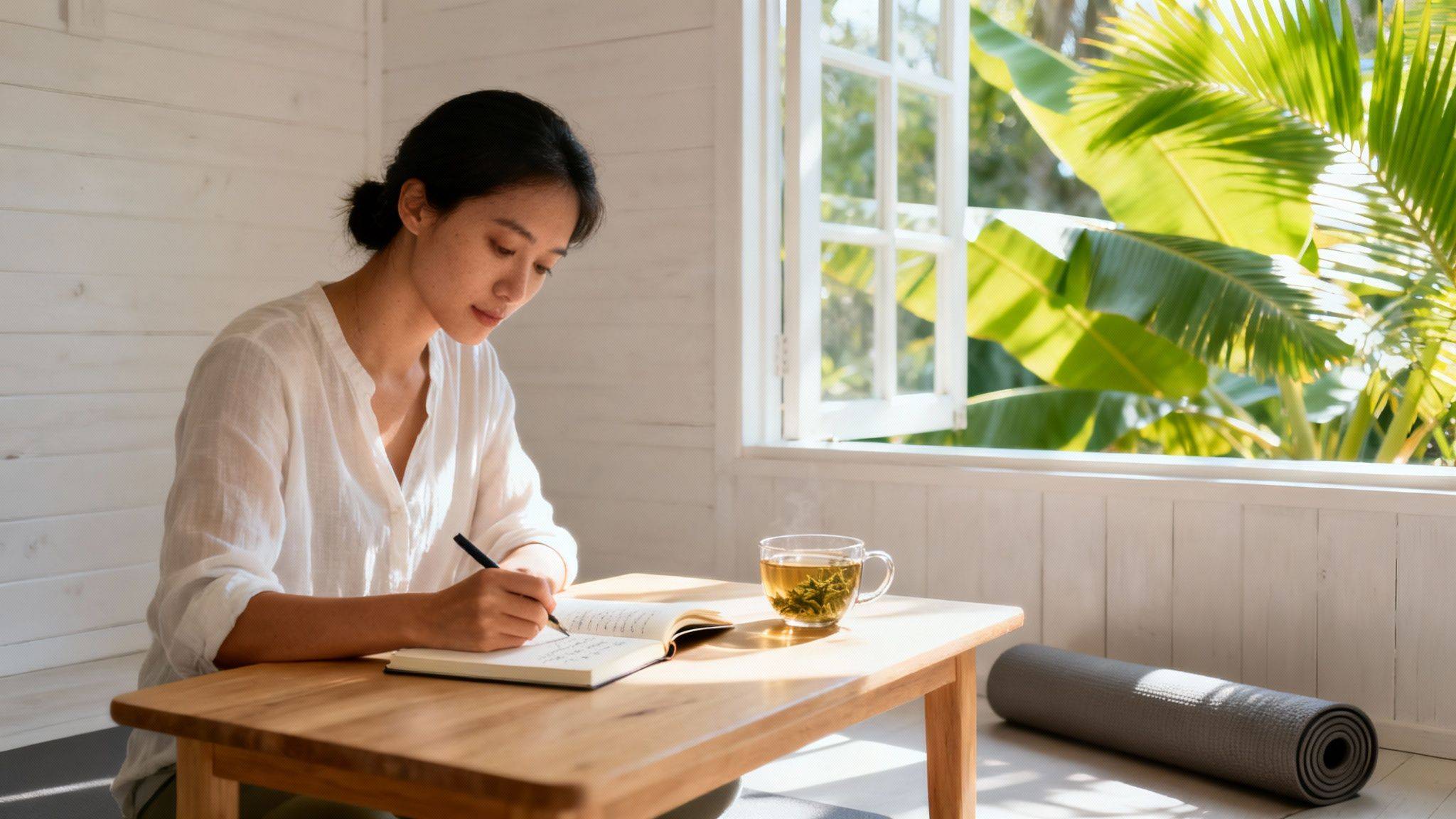
- Journal Everything: Write it all down. As soon as you can after your ceremonies, and in the weeks that follow, just get it on paper. Don’t edit or judge it. Capture the feelings, the strange images, the fragmented thoughts. This journal becomes your personal map to revisit later.
- Stay Grounded with Mindfulness: Simple practices like meditation, breathwork, or even just quiet walks in nature help you stay connected to that centered place you found. This is a game-changer for navigating the emotional ups and downs that can surface post-retreat.
- Find Your People: Connect with others who get it. This might be your retreat group’s alumni network or a local integration circle. Sharing your story with people who understand is incredibly validating and helps you feel less alone.
- Get Professional Support: Working with an integration coach or a therapist who understands psychedelics can provide invaluable structure. They can help you unpack the challenging parts and turn your insights into concrete, actionable steps.
Ultimately, both preparation and integration are acts of profound self-respect. You’re honoring the power of this work and creating the best possible conditions for genuine, lasting change to take root in your life.
Got Questions? Let’s Get Them Answered
Even after doing all your homework, a few practical questions always seem to pop up. This is where we get into the nitty-gritty of planning your trip. Think of this as your quick-fire FAQ for those last-minute details, so you can head to Costa Rica feeling prepared and confident.
What’s the Real Cost of an Ayahuasca Retreat in Costa Rica?
You’ll see a pretty wide price range for a typical 7-day ayahuasca retreat in Costa Rica, usually landing somewhere between $1,500 and $5,000 USD. That’s a big gap, and it really comes down to the kind of experience you’re looking for.
So, what’s behind the price tag? On the lower end, you might find more rustic, back-to-basics retreats with shared dorms, where the focus is almost entirely on the ceremonies themselves. At the higher end, you’re looking at premium centers that offer private rooms, gourmet meals tailored to the ayahuasca dieta, and a whole host of other wellness activities like yoga, breathwork, massage, and in-depth integration coaching.
When you’re comparing, don’t just look at the final number. Dig into what’s actually included. Are airport transfers covered? All meals? What about support after you get home? Knowing exactly what you’re paying for is the only way to figure out the true value and find a retreat that fits your budget and your needs.
Is Costa Rica Itself a Safe Place to Go for This?
Absolutely. Costa Rica has a stellar reputation as one of the safest, most stable, and tourist-friendly countries in all of Central America. It has solid infrastructure and a peaceful vibe, and most visitors feel completely at ease traveling around.
But here’s the crucial part: when it comes to an ayahuasca retreat, the safety of the country isn’t your main concern. Your safety and well-being are almost entirely in the hands of the retreat center you choose. A good center’s commitment to thorough medical screening, hiring truly experienced facilitators, and having clear safety plans is what makes the difference. So, your real focus should be on vetting the retreat itself—that’s the single most important thing you can do to ensure you have a secure experience.
How Do I Prepare for the “Purge”?
Let’s talk about the purge. It’s a very real, very common part of the ayahuasca experience, usually involving vomiting or diarrhea. In the tradition, this isn’t seen as some nasty side effect; it’s understood as a deep physical and energetic cleanse. The medicine is quite literally helping you get rid of old baggage—be it emotional blocks, stagnant energy, or physical gunk.
The best way to get ready is to follow the pre-retreat dieta your center provides. This isn’t just a suggestion; it’s a critical part of the preparation. By cutting out things like red meat, pork, alcohol, caffeine, and spicy or heavily processed foods, you’re already starting to purify your body. This simple step can make the purge much less intense and help the medicine work more effectively. On top of that, make sure you’re well-hydrated and rested in the days leading up to your first ceremony.
“A quick note on this: The purge is a natural release. If you can approach it with an attitude of surrender rather than fear, it can completely change your perspective. Your facilitators have seen it all before and will be there to support you with total compassion and zero judgment.”
What if I Have a Bad Trip or a Scary Experience?
It’s completely normal to have some tough moments during an ayahuasca journey. In fact, these challenging experiences are often where the most powerful healing and biggest breakthroughs happen. It’s important to remember that a well-run retreat is designed as a safe container specifically for you to navigate these intense feelings.
Good facilitators are trained to sense when someone is struggling. They know how to offer support without getting in the way of your process. This might be a gentle hand on your shoulder, a quiet reminder to breathe, or just a calm, grounding presence nearby. They aren’t there to “fix” anything for you, but to help you move through the fear.
This is exactly why the participant-to-facilitator ratio is so important. When groups are small, it means that if you need some one-on-one attention, there’s always an experienced guide available to provide it. Choosing a center that puts this kind of support first is key to feeling safe enough to truly let go.
Disclaimer: The information provided on Ayahuasca.com is for educational purposes only and is not intended as medical advice, diagnosis, or treatment. Ayahuasca is a powerful traditional Amazonian medicine and may not be suitable for everyone. Always consult with a qualified healthcare professional before making decisions related to health, mental well-being, medications, or the use of Ayahuasca.