
A person searching for a retreat Costa Rica option usually starts with a simple question, then quickly runs into a harder one. The first question is often, “Which place looks beautiful?” The harder one is, “Which retreat fits the work, the setting, and the level of support needed?”
That second question matters because Costa Rica sits inside a much larger retreat field. In 2019, researchers estimated there were at least 232 ayahuasca retreat centers operating across Amazonian countries and Costa Rica, serving about 62,000 people and offering around 210,000 experiences that year, with most retreats lasting about a week and including three to four ceremonies (ICEERS report on ayahuasca tourism). For a first-time traveler, that scale can feel reassuring and overwhelming at the same time.
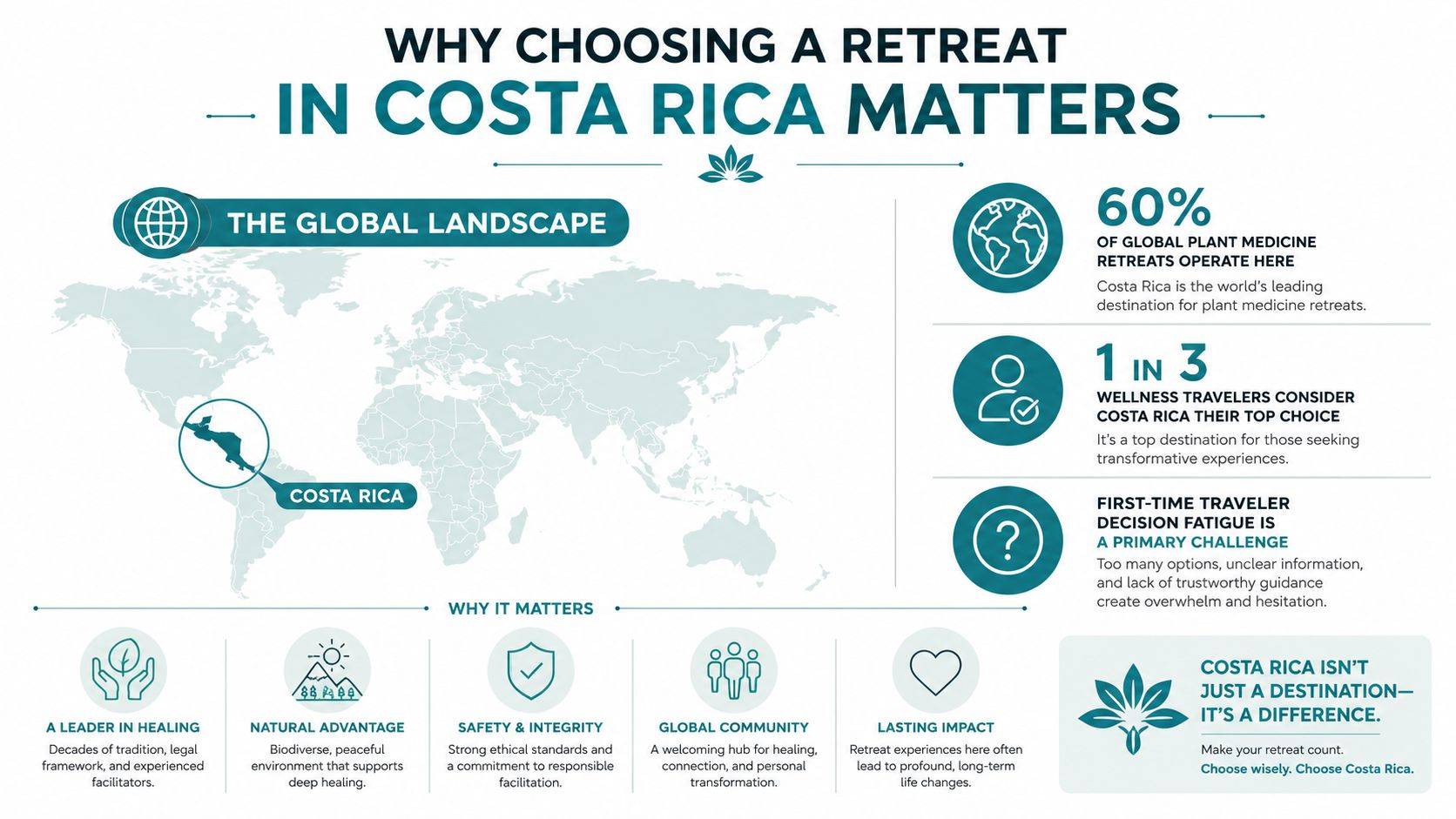
The best decision usually starts with fit, not with scenery. A quiet traveler, a therapeutic seeker, and someone looking for a traditional ceremonial container may all land in Costa Rica for very different reasons, and each one needs a different kind of retreat. A calm, careful selection process is part of the preparation.
“Practical rule: The right retreat usually feels clear on paper before it feels compelling in a sales page.”
Why Choosing a Retreat in Costa Rica Matters More Than Choosing a Destination
A traveler can spend hours comparing photos of jungle decks, pools, and mountain views, then still miss the detail that shapes the entire experience. The decision is about structure, screening, and fit, because those are the factors that determine whether the week feels contained or confusing. Costa Rica’s appeal is real, but the destination alone will not tell a person how safe, personal, or intensive a retreat will be.
The country’s broader travel base helps explain why retreat tourism took root there. Costa Rica’s population was estimated at 5,304,932 in 2025, the World Bank reported GDP of $102.9 billion in 2025, and life expectancy was 81 years in 2024, according to the country data summary. Tourism also gives retreat operators access to a large international flow, and the same country data summary shows 1,011,912 arrivals in 2020 compared with 3,139,008 in 2019.
That context matters because a market with more infrastructure usually offers more choice, but also more variation in quality. A first-time traveler can find a polished wellness property, a highly traditional ceremonial setting, or something in between. The challenge is matching the setting to the intention.
The First Filter Is Intent
A person looking for deep ceremonial work needs a different environment than someone seeking rest, sobriety, or emotional reset. Some retreats are built around isolation and silence, others around community and processing. The safest choice is often the one that states its purpose clearly and does not try to be everything at once.
Costa Rica rewards that kind of honesty. It has enough variety for a traveler to choose intentionally, which is useful only if the traveler is willing to slow down and compare carefully. That is why the destination question should always come after the fit question.
Legal and Cultural Status of Plant Medicine Retreats in Costa Rica
Costa Rica draws retreat seekers partly because its tourism sector is already set up to receive international guests. That infrastructure makes logistics easier, but it doesn’t remove the need for close screening or careful judgment. A traveler still has to look closely at what a center offers, how it is described, and how transparent it is about safety.
The legal and cultural picture is best understood in practical terms. Some plant medicine traditions are treated as part of broader spiritual or ceremonial practice, while other uses sit in a gray zone or remain restricted. That means participant responsibility stays high. A guest should never assume that a retreat’s marketing language is a guarantee of legal protection, medical oversight, or ethical conduct.
What Travelers Should Check First
A useful first step is to look for clarity, not mystery. A serious retreat usually explains its format, screening process, and who leads the work. If a page is vague about what happens before arrival, that vagueness usually continues on site.
Reputation also matters because the market has become more segmented. Some programs center traditional ceremony, others blend wellness, and some are built for a specific community or intention. A generic “spiritual reset” label can hide very different operating standards.
“A retreat that is clear about its limits is often safer than one that tries to sound universal.”
The broader takeaway is simple. A participant’s risk is shaped less by romantic language and more by the center’s structure, the screening behind the scenes, and the quality of the people running it. When legal status and cultural context are both complicated, careful vetting becomes part of personal safety.
Main Types of Retreats You Will Find in Costa Rica
Costa Rica’s retreat scene is easier to understand when it’s broken into categories by purpose. A traveler comparing centers by photos alone can miss major differences in intensity, community feel, and facilitation style. The useful question is not “which one looks nicest?”, but “which format matches the work that needs to be done?”
Traditional ceremonial programs often revolve around a fixed ritual container, a small group, and a strong emphasis on lineage or spiritual framing. Therapeutic or clinical-adjacent programs tend to focus more on emotional processing, preparation, and integration, sometimes with a stronger wellness or mental-health vocabulary. Jungle immersion retreats lean into isolation, nature, and a more stripped-down environment. Wellness-plus retreats blend ceremony with yoga, nutrition, movement, bodywork, or restorative travel.
The fit changes with the structure. A person who wants quiet and repetition may do well in a ceremonial program with a steady cadence. Someone who needs a gentler runway might benefit more from a wellness-plus setting that leaves more room for rest and grounding. Readers comparing the architecture of a retreat can also look at a guide to integrative mental health in Euless from Maverick Behavioral Health to see how structured support is described in another care context.
Comparing the Main Types of Costa Rica Plant Medicine Retreats
| Retreat Type | Typical Structure | Ceremony Cadence | Best Fit For |
|---|---|---|---|
| Traditional Ceremonial | Small, ritual-centered, lineage-forward | Often fixed and regular within the week | People seeking a clear ceremonial container |
| Therapeutic or Clinical-Adjacent | Screening-heavy, support-oriented, integration-focused | Often paced around processing needs | Guests who want a more structured support model |
| Jungle Immersion | Remote, nature-centered, simpler daily rhythm | Often less programmatic outside ceremony | Travelers who want quiet and minimal distraction |
| Wellness-Plus | Blends ceremony with yoga, meals, and body-based support | Usually balanced with rest and recovery time | Guests who want a softer, more rounded experience |
A traveler reading retreat descriptions should also notice how the day is organized. One helpful internal reference on the Rythmia way and retreat structure can help a reader think about support, rhythm, and container rather than just amenities. That kind of structure is often what determines whether the week feels stable or scattered.
Medical Screening and Safety Protocols to Look For
The most responsible retreats treat screening as a process, not a formality. They ask about medications, health history, mental health, and anything else that could make participation unsafe. That matters because a plant medicine retreat can place real demands on the body and mind, and a center that skips the screening step is asking guests to absorb risks they don’t fully understand.
A strong screening process usually asks direct questions about antidepressants, particularly SSRIs, MAOIs, blood pressure medication, and psychiatric history. It also gives the applicant a chance to explain any current treatment, recent crises, or unresolved medical concerns. If a center seems more interested in filling beds than understanding the person, that’s a warning sign.
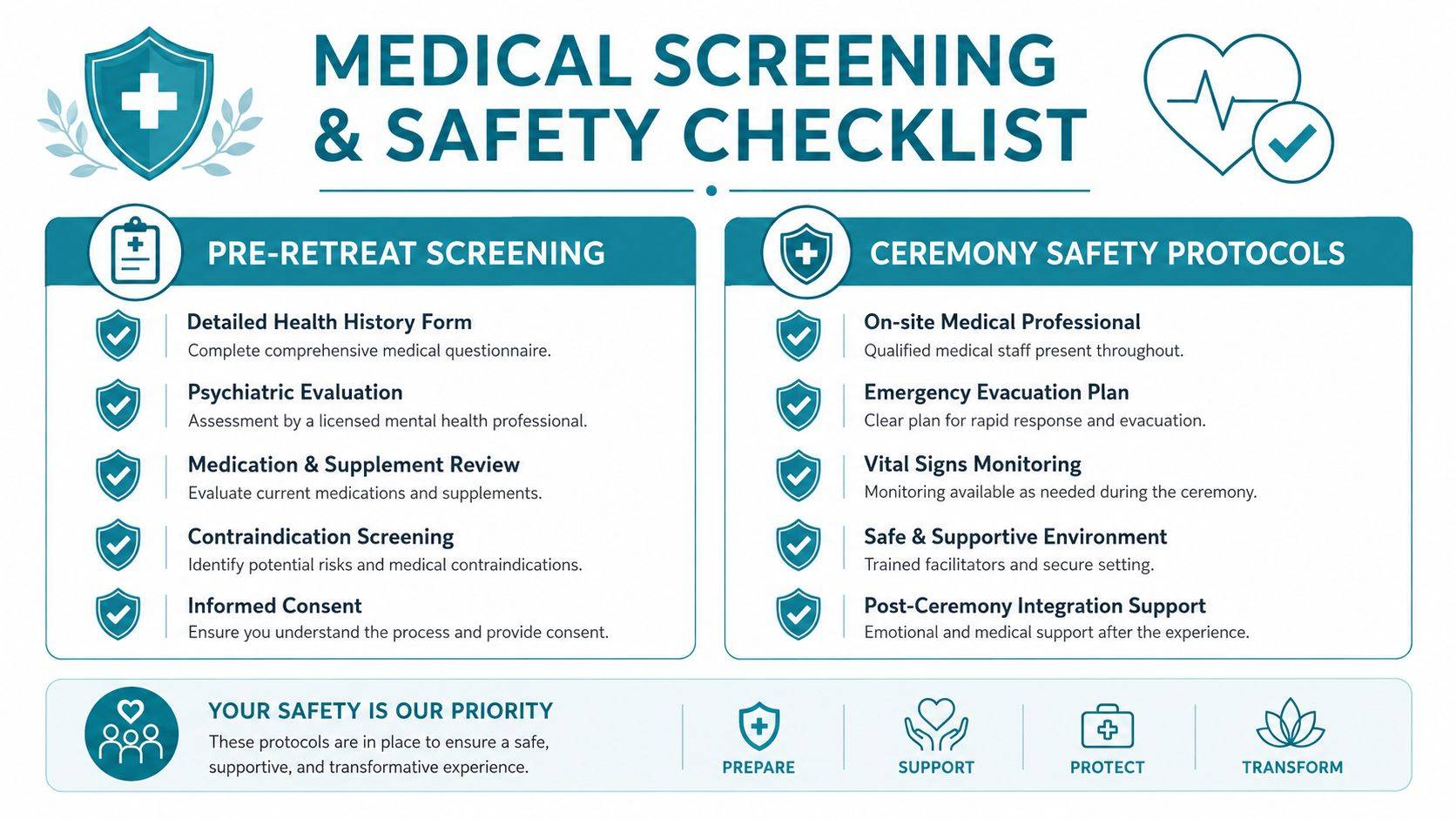
The on-site side matters too. Guests should look for an emergency response plan, staff who can respond quickly, and a clear explanation of what happens if someone becomes physically distressed. Formal medical training and traditional ceremonial experience are not the same thing, and good centers are honest about who is doing what.
Safety Questions That Need Direct Answers
A serious retreat should be able to explain:
- Who reviews the application: A person with enough training to understand medical red flags.
- What medications are disqualifying: Especially where antidepressants and blood pressure medication are concerned.
- Who is on site during ceremony: So a guest knows how support is staffed.
- What the emergency plan is: Including escalation, transport, and after-hours response.
For a traveler trying to understand the idea of structured screening, a practical reference like find a health screening in Bristol from The Lagom Clinic can make the logic feel more familiar. Screening is not a barrier for its own sake, it is the part of the process that separates thoughtful care from improvisation.
The safest retreat is usually the one that can explain its guardrails in plain language. If the answer sounds evasive, rushed, or overly spiritual when a concrete answer is needed, the applicant should keep looking.
A Vetting Checklist With the Right Questions to Ask
A good retreat call should feel like a careful interview, not a sales pitch. The easiest way to cut through polished language is to ask the same kinds of questions every time and compare answers side by side. That approach helps a traveler notice whether the center speaks with discipline or just confidence.
Ask About The People
Start with the facilitators. Ask who leads ceremony, what training they have, and how long they’ve been working in this format. If lineage is part of their story, ask how that lineage shows up in practice, not just in marketing copy.
Then ask who handles support if someone needs help during the night. A strong answer names roles clearly. A weak answer stays vague or hides behind broad phrases like “our team takes care of everything.”
Ask About The Screening
The screening process should be specific. Ask what health information is required, who reviews it, and what happens if the center decides someone isn’t a fit. A serious retreat won’t act offended by the question.
Also ask whether a preparation call is included before booking. That call usually shows how the center thinks about risk, fit, and communication. It can also reveal whether the retreat is built around one-size-fits-all enrollment or individual review.
Ask About Structure And Aftercare
The daily rhythm matters because structure affects nervous-system load. Ask how many participants are in the group, how the day is paced, and what support is offered after ceremony. Ask how integration is handled before departure and after guests return home.
A useful way to evaluate the answer is to listen for specificity. Good retreats can describe the shape of the week without sounding rigid. Weak ones often speak in vague promises about transformation but give little detail about the actual process.
Ask Before Booking
- Who is responsible for screening decisions?
- What happens if the center sees a medical or psychiatric concern?
- How many guests are in each group?
- What support is available between ceremonies?
- How are integration conversations handled before departure?
- What is included in the price, and what is extra?
- Can recent participants speak to the experience off marketing materials?
A traveler does not need perfect answers to every question. The goal is to see whether the retreat can answer clearly, consistently, and without pressure. That pattern tells a lot.
Preparation and Integration as Part of the Same Journey
Preparation and integration are often treated like side notes, yet they shape the quality of the retreat more than the ceremony alone. A person who arrives rushed, mentally scattered, or medically unprepared begins from a harder place. A person who leaves without a plan for the days after may find it difficult to hold onto what was opened during the retreat.
A reputable retreat usually gives clear guidance on food, medication, alcohol, cannabis, and other lifestyle factors before arrival. It also encourages the guest to set a grounded intention, not a fantasy. Readers who want a fuller preparation framework can compare their approach with a detailed preparation guide for your Ayahuasca journey to understand the logic of pre-arrival readiness.
Integration Starts Before The Flight Home
Integration works best when it begins as a decision, not a postscript. Journaling, quiet reflection, a follow-up therapy session, and a few days of low stimulation can help a person notice what changed and what still needs attention. These practices work like a bridge, giving the experience somewhere to land before ordinary routines pull attention elsewhere.
The point is continuity. A retreat may open something up, but daily life asks for a way to hold it. Without that bridge, the work can become hard to access later, even when the ceremony itself was meaningful.
“A retreat can open the door, but integration decides whether the person walks through it.”
Good centers usually explain how they support that bridge. They may offer a closing conversation, practical suggestions for the trip home, or language for what to do when emotions stay active after departure. Support like that belongs to the retreat experience itself.
What a Retreat in Costa Rica Costs
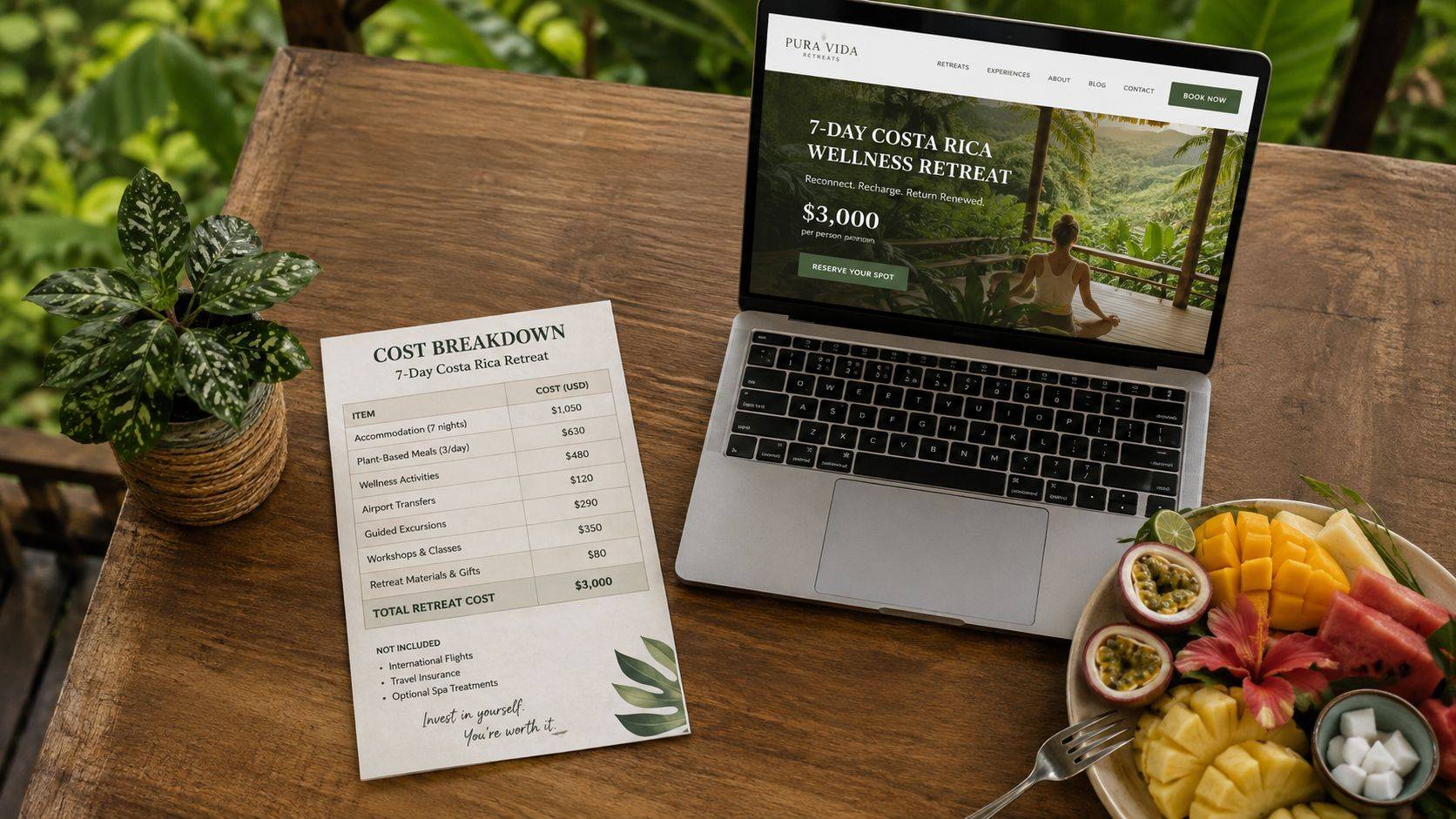
A retreat page may show one headline rate, while the actual bill includes transfers, add-ons, seasonal swings, and any extra nights needed for rest or integration. A careful budget has to cover the full trip, not only the room and the ceremony, because the parts around the ceremony often shape the final cost just as much as the retreat itself.
Timing changes the price first. Retreat venue pricing notes say that green season discounts from May through November can lower rates by 30 to 40%, and they also note that booking multiple retreats at the same venue can create further savings. Two guests can look at the same center and still end up with very different totals because one is traveling during a lower-demand period.
The Costs That Usually Slip Past First-Time Travelers
Transfers, extra ceremonies, integration sessions, and personal spending are the items that most often catch first-time travelers by surprise. Some retreats bundle much of this into one price, while others separate each piece. Before comparing two offers that look similar, ask what is included and what will be charged later.
Accommodation also changes both comfort and budget. A private room usually brings more quiet, more space to recover, and a different pace between ceremonies. Shared lodging can be more communal and sometimes easier on the wallet, but it may not suit a guest who needs solitude for reflection or rest.
For a fuller budgeting framework, review how much is an Ayahuasca retreat. The practical habit is simple. Ask for the total expected spend, then compare that total instead of chasing the lowest advertised fee.
Your Next Steps and How To Use Vetted Resources
A clear path beats a long wish list. The next seven days can be used to narrow the retreat type, write down medical questions, compare two or three centers, and confirm what support is included before booking. That keeps the decision moving without forcing it.
Ayahuasca.com offers retreat listings in Costa Rica and educational resources that help a traveler organize the search without starting from scratch. Used well, those resources make the vetting process cleaner, especially when the goal is to compare structure, preparation, and fit instead of just aesthetics.
A careful retreat Costa Rica decision starts with a clear intention, then moves through screening, structure, and cost with patience. A traveler who wants a safer, better matched experience should shortlist a few centers, ask direct questions, and review the available prep materials before sending a deposit. The next practical step is simple, compare options, ask for the screening process in writing, and use vetted educational resources to confirm whether the retreat fits the journey being sought.
Disclaimer: The information provided on Ayahuasca.com is for educational purposes only and is not intended as medical advice, diagnosis, or treatment. Ayahuasca is a powerful traditional Amazonian medicine and may not be suitable for everyone. Always consult with a qualified healthcare professional before making decisions related to health, mental well-being, medications, or the use of Ayahuasca.